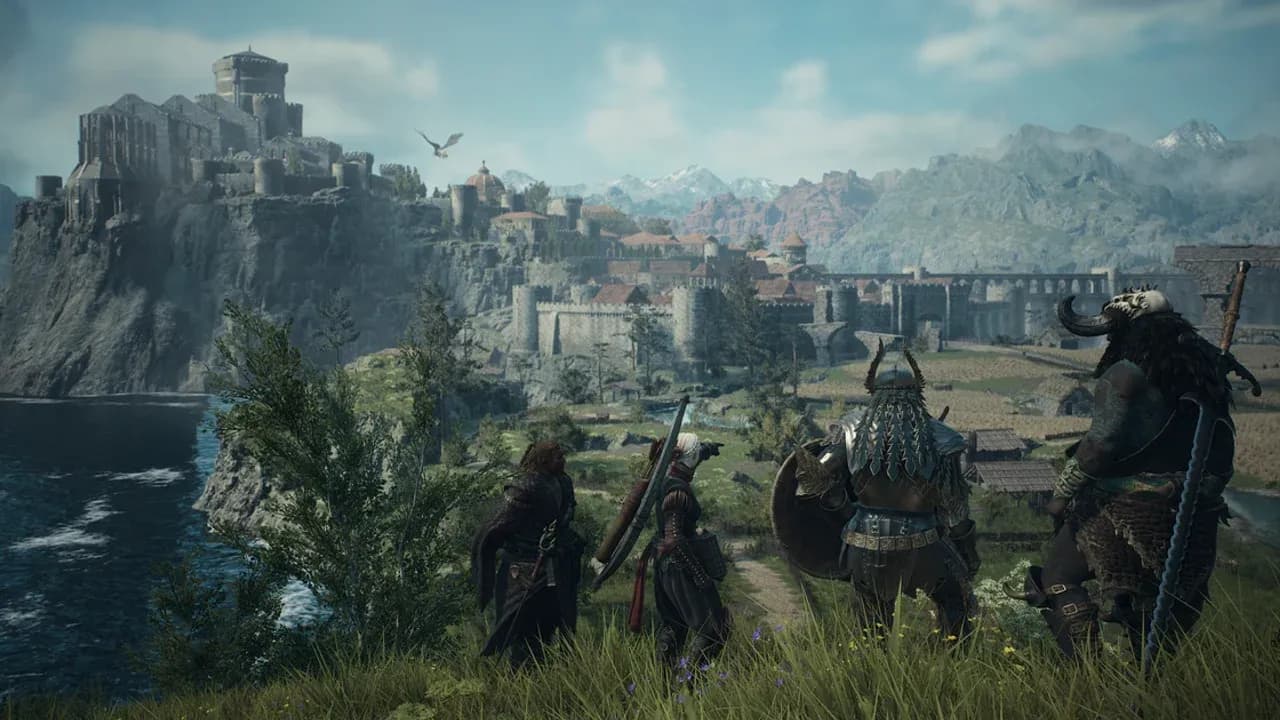
Dragon's Dogma 2 Identity: A Bold Defiance of Modern RPG Trends
In an era where open-world RPGs have largely settled into a comfortable rhythm of quest markers, fast-travel convenience, and player-centric power fantasies, Dragon's Dogma II arrives as a defiant, almost radical, counter-statement. This isn't a sequel that chases trends; it is a meticulously crafted, decade-old vision finally unleashed with modern tools, and it asks you to meet it on its own uncompromising terms. Director Hideaki Itsuno has delivered a game that feels less like a traditional follow-up and more like the definitive, fully realized version of the 2012 cult classic, doubling down on every idiosyncratic element that made the original unique while pointedly ignoring the design conventions that have since become industry standard.
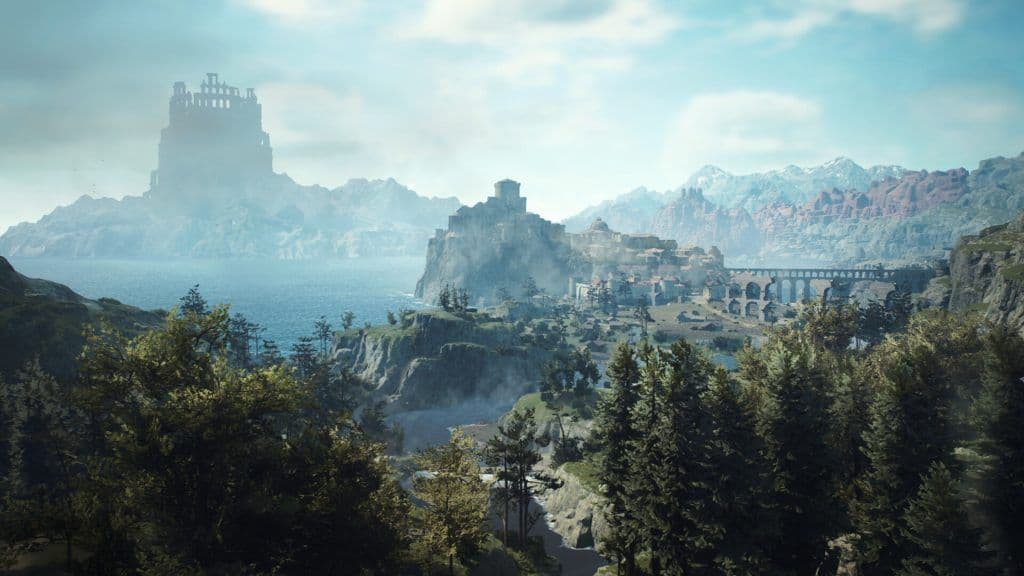
The birth of a new Arisen marks the start of a unique adventure.
The game's core design philosophy is a bold defiance of modern hand-holding, a commitment to emergent gameplay and player discovery that borders on the antagonistic. Where most contemporary RPGs would place a glowing icon on your map, Dragon's Dogma II trusts you to listen to NPC chatter, follow environmental cues, or rely on the hints of your AI companions. This philosophy extends to its punishing systems: a single save slot that autosaves frequently, locking you into consequences; a health system where damage permanently reduces your maximum HP until you rest; and a night cycle so brutally dark and dangerous it makes travel a genuine gamble. These aren't oversights—they are the pillars of a world designed to feel alive, consequential, and indifferent to your existence. The friction is the point.
This is a game that humbles you, not to be cruel, but to make every hard-won victory and every clever discovery feel earned in a way few modern titles dare to attempt.
This unwavering vision positions Dragon's Dogma II as a spiritual successor that feels more like a full-throated remake than a sequel. The narrative premise is tellingly identical: once again, you are the Arisen, a prophesied hero whose heart has been stolen by a dragon, granting you command over the loyal, soulless Pawns. You begin in a slave pit, your identity usurped, and must claw your way back to a destiny others claim as their own. While this may sound like a retread, it’s better understood as a statement of intent. Itsuno isn't interested in a new story gimmick; he’s using a familiar framework as a stable foundation upon which to build a vastly more complex and reactive world simulation. The focus isn't on what happens, but on how you navigate it and the unique, unscripted stories that emerge from its systems.
This confidence to ignore the last twelve years of open-world evolution is Dragon's Dogma II's greatest strength and the source of its divisive nature. It draws inspiration almost solely from its predecessor, resulting in a deeply personal, almost anachronistic experience. There is no attempt to mimic the environmental puzzle-boxes of Zelda or the curated melancholy of Elden Ring. Instead, it offers a different kind of magic: the thrill of latching onto a retreating Griffin for an impromptu flight, the chaos of a town square brawl spilling out from a monster ambush, or the quiet satisfaction of finally deciphering a quest clue without a single map marker to guide you. It is a game built not for universal appeal, but for a specific, resonant type of immersion—one that trusts player intelligence, punishes carelessness, and rewards patience with a sense of adventure that feels genuinely, and refreshingly, your own.
The Pawn System: Why Dragon's Dogma 2's AI Companions Are Essential
The true magic of Dragon's Dogma II isn't found in its sprawling map or its towering beasts, but in the four-person party that accompanies you on every step of your journey. The Pawn system is the game’s most ingenious and essential design pillar, an asynchronous multiplayer concept that transforms a solitary trek into a shared, communal adventure. This is where the game’s defiant philosophy crystallizes into something profound: you are never truly playing alone, even when you are offline. Your companions, a blend of your own creation and those borrowed from the global player base, are more than just AI meat-shields; they are a living, learning repository of collective knowledge that fundamentally shapes how you experience the world.
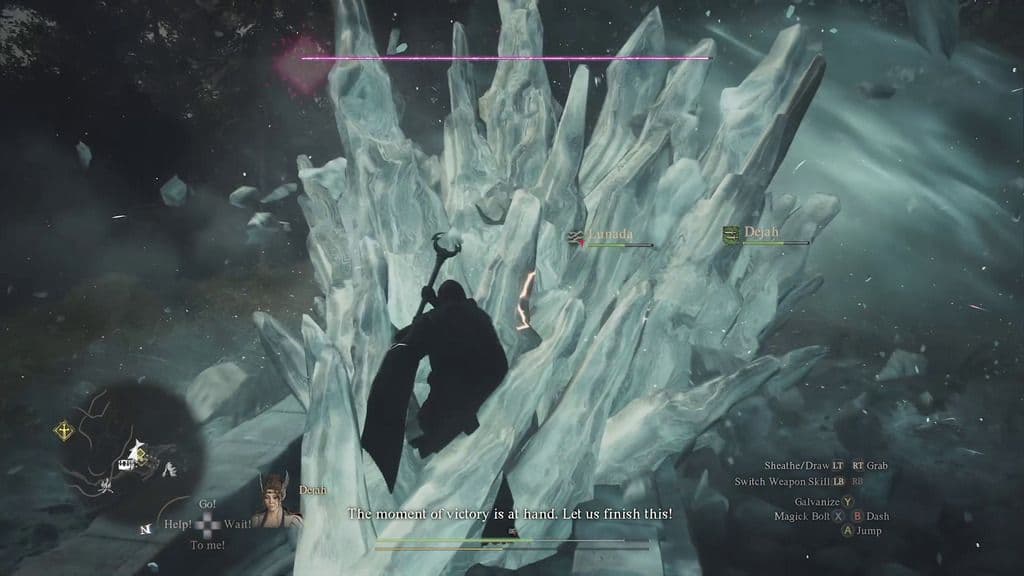
Pawns utilize complex tactics and magic to assist in combat encounters.
Dragon's Dogma II's Pawns are a masterclass in simulated social connection, a digital echo of the early internet bulletin board systems that inspired director Hideaki Itsuno. Your main Pawn, crafted with the same meticulous detail as the Arisen, is your constant companion. But the two additional slots are windows into thousands of other players' journeys. Hiring a Pawn isn't just about filling a party role; it’s about recruiting a scout who may have already completed the quest you're stumbling through. They’ll point out hidden paths, warn you of an upcoming Griffin ambush around a specific bend, or excitedly shout “’Tis weak to fire!” when you face a monster they’ve fought before. This creates an organic, player-driven hint system that feels earned and diegetic, replacing sterile UI markers with the excited chatter of a companion who’s been here before. It’s a brilliant solution to open-world guidance, rewarding exploration while fostering a genuine sense of a living, interconnected world.
The system’s genius lies in its delicate balance: Pawns are knowledgeable enough to be invaluable guides, yet flawed enough to feel like distinct personalities, not omniscient drones.
This utility is further deepened by Pawn Specializations. Beyond combat vocations, Pawns can possess unique traits like Forager (automatically gathering materials), Woodland Wordsmith (speaking Elvish to unlock secret dialogues), or the incredibly useful Logistician (who can remotely access your storage from camp). Discovering a Pawn with the perfect blend of combat style and utility specialization feels like uncovering a rare treasure, and it encourages constant rotation in your roster. Since hired Pawns don’t level with you, you’re incentivized to regularly visit a Riftstone, send your current allies back to their creator with a gift and a positive rating, and welcome new faces with fresh knowledge. This cycle is the heartbeat of the game’s social ecosystem.
However, for all its conceptual brilliance, the Pawn AI is where Dragon's Dogma II's infamous jank becomes most apparent. The companions can be frustratingly inconsistent. They possess moments of stunning tactical brilliance—a Fighter Pawn perfectly timing a shield bash to interrupt a monster’s charge, or a Mage launching you onto a Cyclops’s back with a well-placed Levitate spell. But they are equally prone to baffling incompetence. They’ll get stuck on geometry, fall off cliffs during tense chases, or stand idle while you’re being strangled by a zombie. Issuing commands with the D-pad can feel like shouting into the void, with Pawns often slow to respond or reviving you with agonizing lethargy. These aren’t deal-breaking flaws for the patient, but they are persistent reminders that you’re commanding complex automatons, not seamless extensions of your will.
The system’s most daring, and potentially devastating, layer is the Dragonsplague. This is a rare, contagious disease that Pawns can contract from other infected Pawns in the Rift. Visually signaled by glowing red eyes and more assertive, arrogant dialogue, an infected Pawn becomes temporarily stronger but also a ticking time bomb. If dismissed while ill, they return to their creator’s world and can trigger a cataclysmic event, potentially wiping out an entire town of NPCs and quest-givers. It’s a breathtakingly bold risk/reward mechanic that forces you to pay close attention to your companions’ behavior beyond their combat stats. Do you keep the powerful, plague-ridden warrior, or dismiss them and risk unleashing havoc on another player’s save? It’s a meta-narrative layer of consequence that perfectly embodies the game’s ethos of meaningful, permanent stakes.
Ultimately, the Pawn system is Dragon's Dogma II's soul. Its occasional AI clumsiness is far outweighed by the unparalleled sense of camaraderie and shared discovery it fosters. You’ll remember the Pawn who led you to a secret cave for hours after they’ve returned to their world, and you’ll craft your own main Pawn hoping they provide that same service for others. It transforms the loneliness of a single-player RPG into a whispered conversation with the entire community, making every victory feel communal and every piece of hard-won knowledge a gift to be passed on. This isn’t just a companion system; it’s the foundation upon which the game’s unique, unforgettable identity is built.
Dragon's Dogma 2 Combat: Visceral Action and Vocation Variety
If the Pawn system is Dragon's Dogma II's soul, then the combat is its beating heart—a visceral, weighty, and spectacularly varied action system that stands as the finest in its class. This is where the game’s defiance of modern RPG trends pays off most gloriously, trading passive stat-checking for a thrilling, physics-driven spectacle where every swing, spell, and grapple has tangible consequence. Dragon's Dogma II understands that combat isn't just a means to an end; it’s the primary source of the game’s emergent, unforgettable stories.
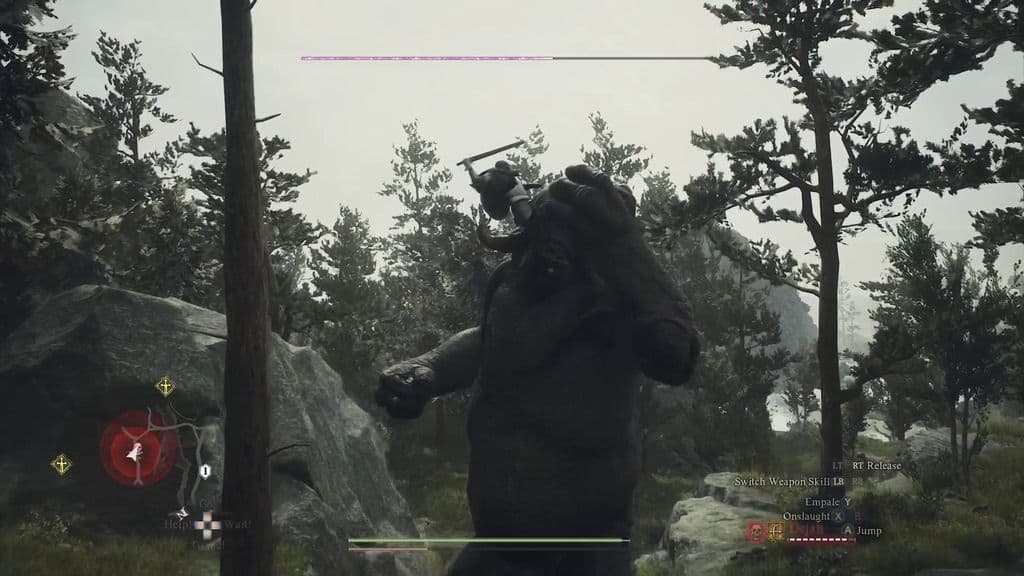
The Arisen uses the grab mechanic to target a Cyclops' weak point.
The foundation of this excellence is the Vocation system, a masterclass in class design that offers ten distinct playstyles, each feeling as deep as a standalone action game. The four starting vocations—Fighter, Mage, Archer, and Thief—are not simple archetypes but fully realized toolkits. The Thief’s zigzagging dagger combos prioritize agility and evasion, while the Warrior’s colossal hammer strikes carry a wind-up and impact that can send smaller foes flying. A crucial and welcome refinement from the original is the removal of vocation-locked stat growth; your core attributes now automatically adjust when you switch classes at any inn. This eliminates the paralyzing fear of “ruining” a build and unleashes pure experimentation. You can spend twenty hours as a glass-cannon Sorcerer, reveling in earth-shaking meteor spells, then seamlessly transition to a tanky Fighter without penalty. This freedom is the system’s greatest strength, actively encouraging you to experience the entire combat sandbox.
The new hybrid vocations are where Dragon's Dogma II truly flexes its creative muscle, offering playstyles you simply won't find elsewhere.
The Mystic Spearhand is a revelation, blending teleporting spear thrusts with magical barriers and sweeping energy slashes in a fluid dance that feels ripped from a character-action game. The Trickster, meanwhile, is a daring, support-focused class that wields an incense censer to conjure illusory clones, taunt enemies, and even create fake bridges over chasms. It’s a vocation that trades direct damage for battlefield control and pawn empowerment, demanding a completely different strategic mindset. These aren’t just new skills; they are fundamentally new ways to interact with the game’s systems, proving that Dragon's Dogma II's innovation extends far beyond its predecessor.
This mechanical diversity finds its ultimate expression in the game’s signature boss interactions. The much-lauded “grab and climb” mechanic isn’t a gimmick—it’s the core tactical loop for confronting massive foes. Facing a Cyclops isn’t about chipping at its ankles; it’s about scrambling up its leg, clinging on as it stumbles, and plunging your sword into its single, glaring eye. This physicality is breathtaking. You can sever a Saurian’s tail to disable its sweep attack, or burn a Griffin’s wings with fire spells to ground it permanently. The game teaches you that these creatures are not just health bars but puzzles with moving, destructible parts. The thrill of dangling from a dragon’s neck as it takes flight, hacking away while managing your stamina, is a peerless adrenaline rush that makes every colossal encounter a potential story to tell.
However, for all its towering strengths, Dragon's Dogma II's combat has one glaring, frustrating omission: the lack of a dedicated lock-on for melee vocations. In one-on-one duels against large monsters, it’s barely noticeable. But when you’re surrounded by a pack of goblins and harpies—a common occurrence—the camera and your character’s orientation can become a frantic, unwieldy mess. You’ll whiff powerful abilities because your Thief decided to lunge at a distant enemy instead of the one in front of you, or find yourself blindly swinging as the camera gets stuck on geometry. This isn’t a challenge born of smart enemy design; it’s a friction point that feels like an archaic oversight in an otherwise meticulously crafted system, disproportionately punishing melee players in chaotic skirmishes.
Yet, even with this flaw, the sheer physicality of the combat carries the day. The ability to pick up a goblin and hurl it off a cliff, or to watch your Mage pawn Levitate your Fighter onto an Ogre’s back, creates a constant sense of playful, systemic possibility. It’s combat that feels less like a menu of abilities and more like a dynamic, reactive playground. This is where Dragon's Dogma II earns its reputation—not through cinematic scripting, but by giving you the tools to create your own spectacular, physics-driven chaos, making you an active participant in every glorious, messy moment.
World Design and Exploration: The Friction of Travel in Dragon's Dogma 2
In Dragon's Dogma II, the journey isn't a loading screen you skip; it's the game's central, most demanding test. This is where the defiant design philosophy I praised earlier—the commitment to friction and consequence—transforms from a bold statement into a daily, physical reality. The world is not a canvas for your power fantasy; it is a sprawling, indifferent ecosystem where travel is a calculated risk, and preparation is the thin line between a successful expedition and a catastrophic failure. Capcom has crafted a map of breathtaking scale and density, but it demands you earn every inch of it on foot.
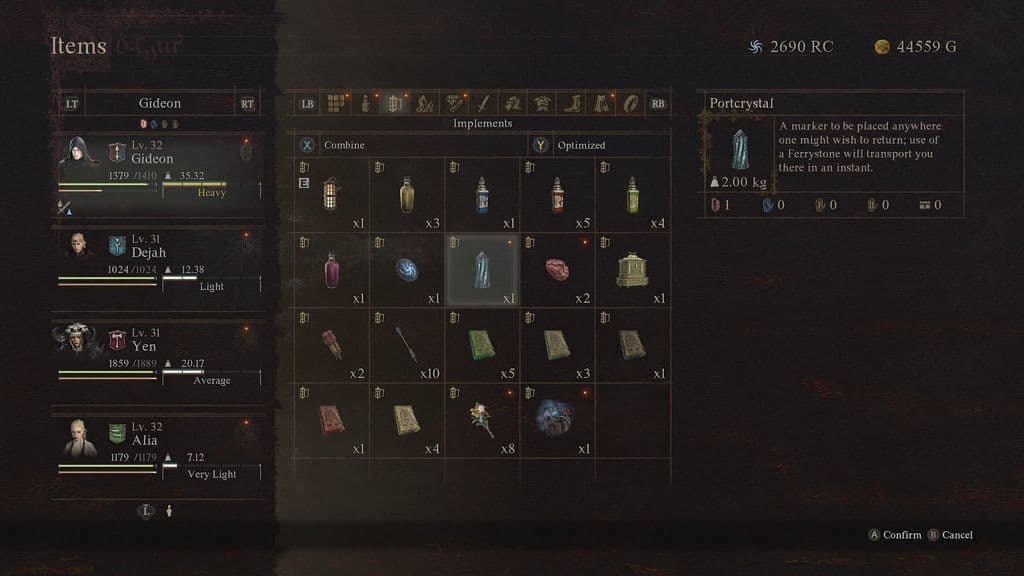
Managing inventory and weight is crucial for long journeys.
The game’s approach to fast travel is a masterclass in intentional inconvenience, a direct rebuttal to the teleportation-saturated norms of modern RPGs. You are not granted an Eternal Ferrystone. Instead, you must ration precious, single-use Ferrystones, often found as quest rewards or purchased at exorbitant prices, to warp between a handful of fixed Portcrystals. Placing your own crystals is possible but relies on finding the ultra-rare items in the world. This scarcity isn't a flaw; it's the engine of discovery. By making teleportation a luxury, the game forces you into the wilderness, where its emergent systems can truly sing. You don't fast-travel past the Griffin circling a canyon or the bandit ambush waiting on a mountain pass; you live through them, and those unscripted moments become your personal legend. The map is reportedly four times larger than the original's Gransys, yet it feels even more immense because you must traverse most of it manually, committing to the long, dangerous walk between verdant forests and dusty crags.
For those seeking a cheaper, scheduled alternative, Dragon's Dogma II offers oxcarts—a "fantasy bus network" that departs only once per in-game day. This is where the friction turns from rewarding to occasionally punitive. While dozing off during the ride skips the journey, you awake vulnerable if the cart is attacked, which happens with frustrating regularity. A routine trip can erupt into chaos as a Cyclops smashes the cart or Goblins swarm the ox, leaving you stranded miles from your destination, often in the dead of night. The unreliability of this system means it fails at its core purpose: predictable transit. It becomes less a travel option and more a random encounter generator with a high chance of stranding you, undermining the very convenience it purports to offer.
This is the game’s most brutal, and brilliant, environmental rule: when the sun sets, Dragon's Dogma II transforms from a challenging adventure into a survival horror experience.
Nighttime is not an aesthetic change; it's a fundamental shift in the game's contract with the player. Visibility plummets to just a few meters beyond your lantern's glow, and the spawn tables flip to unleash more ferocious, often spectral foes. The health penalty incurred from taking damage persists until you rest, making a nighttime skirmish a potentially crippling setback. Venturing out after dark without a clear goal and a Camping Kit is pure folly. This enforced rhythm—planning your excursions around the sun, seeking shelter as dusk falls—creates a tangible, almost primal connection to the world. It’s a punishing system, but it makes the dawn feel like a genuine relief and a safe inn room feel like a hard-won sanctuary.
The payoff for enduring this friction is an exploration loop of unparalleled organic reward. Because you are always walking, you are always discovering. A collapsed bridge isn't a dead end; it's an invitation to find the hidden cave behind the waterfall that bypasses it. A distant plume of smoke might lead to a hidden camp, a treasure-filled ruin, or a battle between a Griffin and an Ogre that you can tip in your favor. The guiding statues point towards vistas and secrets, but there are no map icons for the sheer, emergent joy of watching a pawn you hired from another player excitedly point out a Seeker's Token they found in their creator's world. The world feels alive precisely because it doesn't wait for you. Quests progress, NPCs live and die, and monsters roam on their own schedules. Your journey from point A to point B is never just a commute; it's the main event, filled with more genuine, unscripted stories than most games' curated side content. In Dragon's Dogma II, the destination is almost irrelevant. The struggle, danger, and wonder of the trek is the entire point.
Quest Design and Narrative: Respecting Player Autonomy and Intelligence
Dragon's Dogma II’s narrative isn't a story it tells you; it's a story you uncover, often by accident, and with consequences that are as permanent as they are surprising. This is a world that breathes, decays, and evolves with or without your permission, and its quest design is the primary engine of that beautiful, often brutal, autonomy. The game treats you not as a quest-log-filling protagonist, but as an investigator, a problem-solver, and sometimes, a chaotic variable in a living equation.
The most immediate and refreshing departure from the norm is the complete absence of UI hand-holding. There are no floating exclamation marks above NPC heads. To find a quest, you must listen—to a whispered conversation in a tavern, to a town crier’s announcement, or to your own Pawns recounting a rumor they learned in another world. A quest to find a lost person might only give you the clue “last seen near the old mill,” leaving you to scour the landscape for visual hints like a trail of discarded belongings. This design philosophy, which I praised earlier as the game’s defiant core, finds its purest expression here. It transforms simple tasks into genuine detective work, making the moment of discovery—finding the hidden cave, intercepting the smuggler’s cart—feel earned in a way that checking off a map marker never could. The game trusts your intelligence, and in doing so, makes you feel genuinely clever.
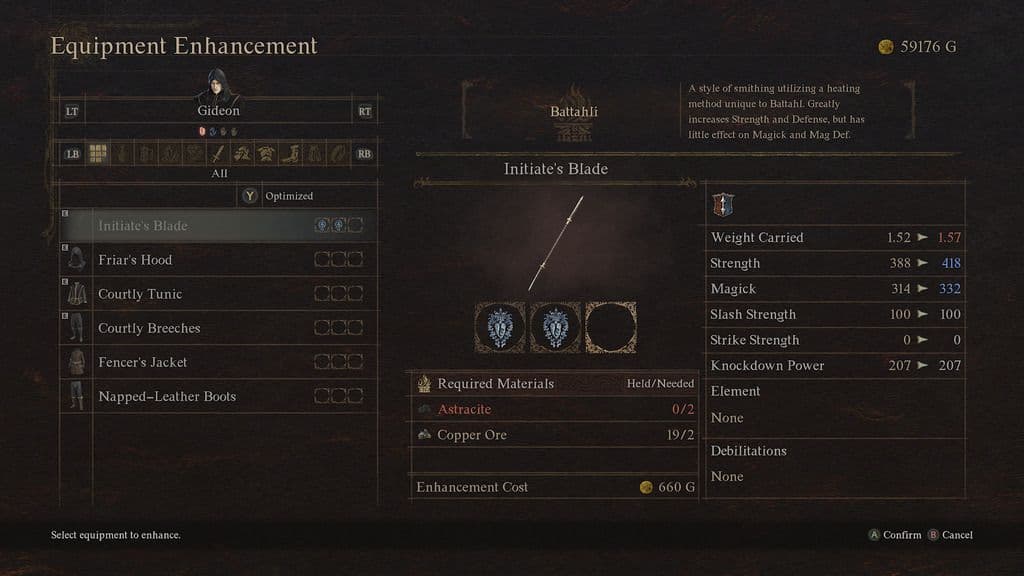
The game encourages organic discovery over traditional quest markers.
This respect for player autonomy extends to consequences, where Dragon's Dogma II commits to a vision of permanence that is both thrilling and terrifying.
The world operates on its own clock. Many quests, especially those involving NPCs in peril, are timed. If you accept a plea to rescue a kidnapped traveler and then spend three in-game days sightseeing, you may return to find only a corpse and a failed objective. This isn't a vague suggestion; the clock is always ticking, forcing you to prioritize and live with the results of your distractions. This system creates palpable urgency and makes the world feel authentically alive—people’s fates aren't frozen in amber, waiting for you. Furthermore, NPCs are not immortal set pieces. They can be killed in monster attacks, caught in your misplaced spell’s blast, or even succumb to the catastrophic Dragonsplague carried by an infected Pawn. To revive them, you must use a rare Wakestone at a morgue. This isn't just a narrative gimmick; it can permanently alter quest availability and close off story branches. The weight of this permanence makes every combat encounter in a populated area tense and every decision to travel with a sick Pawn a calculated risk.
The central political intrigue—the plot of a false Arisen usurping your rightful place on the throne of Vermund—serves as a competent, if somewhat familiar, backdrop for this systemic playground. Where the narrative truly excels is in its willingness to let that main thread become entangled with your side adventures. Helping a disgraced noble might later grant you an audience with the queen; failing a merchant’s delivery quest could see him absent from a crucial market later, locking you out of a key item. The main story can feel surprisingly brisk, clocking in around 40 hours if followed directly, and its conclusion has been criticized by some as abrupt or thematically dissonant. However, this criticism somewhat misses the point. In Dragon's Dogma II, the "main story" is merely the largest thread in a tapestry you are constantly weaving yourself. The memorable tale isn't about reclaiming a throne; it's about the time you got arrested to break someone out of jail, or the chain of events that began with following a suspicious beggar and ended with you throwing him off a cliff to loot his house.
This is where the occasional frustration with the design becomes a double-edged sword. The same opacity that makes discovery rewarding can lead to soft-locked progression. An NPC vital to a quest might have wandered off or died without your knowledge, and the game offers no journal marker to tell you why you can’t advance. You are left to deduce, investigate, or, in some cases, resort to a guide. For players accustomed to clear signposting, this can feel like an oversight. But for those who buy into the philosophy, it’s the ultimate expression of the game’s respect for your agency—it will not save you from your own mistakes or inattention. Dragon's Dogma II doesn’t want to tell you a story. It wants to give you the tools, the world, and the unwavering commitment to consequence so that you can stumble into a better one yourself.
Technical Performance in Dragon's Dogma 2: A Beautiful but Heavy Burden
The grand, systemic ambitions of Dragon's Dogma II come at a heavy, tangible cost. While its world is a stunning technical achievement on a macro scale—a seamless, simulation-heavy landscape teeming with life—the game stumbles, sometimes severely, under the weight of its own vision. This is a title that prioritizes complex, living-world calculations over a consistently smooth frame rate, a trade-off that will define your experience more than any other single factor.
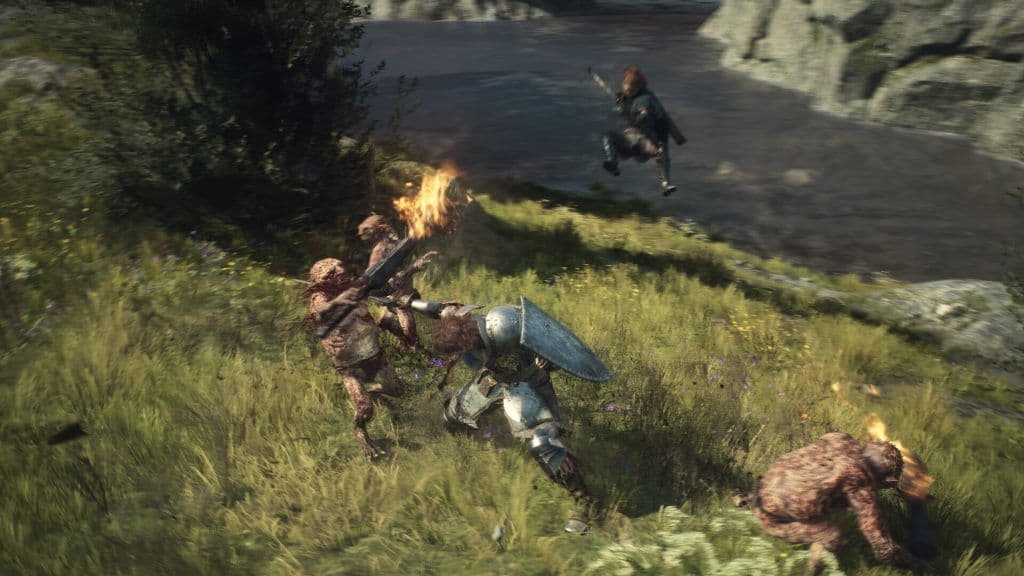
Dragon's Dogma 2 features impressive detail that can impact performance.
Dragon's Dogma II is a breathtakingly beautiful game, powered by Capcom's RE Engine, which renders everything from the individual strands of fur on a Beastren's face to the way a Griffin's wingbeats flatten entire fields of grass. The lighting, particularly during the game's punishingly dark nights where your lantern is your only salvation, creates a palpable, oppressive atmosphere. Character models are incredibly detailed, and the world's density—packed with foliage, architecture, and NPCs—sells the fantasy of a living, breathing realm. However, this visual splendor is shackled to a performance profile that can only be described as demanding to the point of being poorly optimized, especially on PC. Even titanic rigs, like those sporting an RTX 4090 and a Ryzen 7 7700X, are reported to struggle, with frame rates frequently dipping below 60 FPS in the first major city of Vernworth. The game is notoriously CPU-bound, taxing processors with its myriad background simulations for NPC routines, monster behaviors, and physics interactions. For a game where split-second timing in combat can be the difference between a glorious victory and a costly reload, these performance hits are more than a visual blemish; they directly compromise gameplay fluidity.
The RE Engine delivers a world of staggering beauty, but asking it to also simulate a thousand autonomous lives in real-time appears to be a bridge too far for current hardware.
On consoles, the situation is more standardized but equally problematic. Both PlayStation 5 and Xbox Series X|S versions target an uncapped frame rate that hovers around 30 FPS, but "targets" is a generous term. In practice, the frame rate is unstable, chugging noticeably in dense urban areas and during large-scale battles with multiple spellcasters and particle effects. One source notes it can become "illegible" during these hectic moments, a critical flaw for an action RPG. While a VRR-capable display can smooth out some of the judder, the experience is far from the locked performance one expects from a AAA title in 2024. The issues extend beyond frame pacing to include distracting NPC pop-in at medium distances and occasional AI pathfinding glitches, where Pawns or townsfolk get stuck on geometry. These aren't game-breaking bugs in the traditional sense, but they consistently chip away at the immersion the game works so hard to build.
It's impossible to discuss the technical state without addressing the optional microtransactions. At launch, the in-game store sells items like Wakestones (for reviving the dead), Portcrystals (for creating fast-travel points), and Rift Crystals (for hiring high-level Pawns). From a design perspective, their inclusion is baffling. Dragon's Dogma II is a game meticulously built around scarcity and consequence—the preciousness of a Ferrystone, the weight of permanent NPC death, the grind to afford better gear. To then sell solutions to these deliberately placed friction points feels philosophically dissonant. However, the critical consensus is clear: these items are entirely ignorable. They are not necessary for progression, can be earned in-game through play, and their purchase does not meaningfully alter the intended, challenging balance. They exist as a baffling, cynical footnote on an otherwise artistically confident project, but thankfully one that is easy to scroll past.
The technical verdict on Dragon's Dogma II is one of profound compromise. You are trading silky-smooth performance for a world that feels genuinely, unpredictably alive in a way few games achieve. The stutters in Vernworth are the price you pay for a city where every NPC has a schedule and monsters can chase you through the gates. Whether that trade-off is worth it is the most personal question a prospective Arisen must answer. For some, the unstable frame rate will be a constant, frustrating reminder of the game's unpolished edges. For others, the sheer ambition of the simulation will justify the occasional slide show during a meteor spell cataclysm. This isn't a case of simple bad optimization; it's the sound of a game's ambitions audibly straining against the limits of current technology.
Final Verdict: Is Dragon's Dogma 2 the Best Open-World RPG Since Elden Ring?
Dragon's Dogma II is not a game you finish; it's a world you leave, reluctantly, carrying the weight of its stories and the sting of its shortcomings. The final verdict hinges entirely on your willingness to embrace a specific, uncompromising philosophy—one that trades convenience for consequence, polish for possibility, and a curated power fantasy for the messy, emergent thrill of being just another part of a living ecosystem. To ask if it’s the best open-world RPG since Elden Ring is to ask the wrong question. It doesn’t compete in that arena. Instead, it carves its own, offering a unique brand of adventure that is simultaneously unforgettable and, at times, undeniably frustrating.
The game’s most glaring structural weakness reveals itself in the late hours: a complete lack of meaningful difficulty scaling. Around level 30, a tipping point is reached where your power begins to drastically outpace the world’s threats. This isn’t a gradual mastery; it’s a sudden breaking of the game’s core tension. The intricate dance of climbing a Cyclops to stab its eye, the desperate resource management during a long trek, the tactical use of Pawn vocations—all of these beautifully crafted systems become redundant when a basic combo melts a boss in seconds. The loot you meticulously scavenge for upgrades feels pointless, and the thrill of discovering a new, complex vocation like the Trickster is dampened because you’ll never face an enemy durable enough to demand its nuanced toolkit. This scaling failure undermines the very friction the game so painstakingly builds, turning its challenging early and mid-game into a hollow victory lap that can cheapen a 40-50 hour main quest and make the prospect of a 100+ hour completionist run feel like a grind against boredom, not adversity.
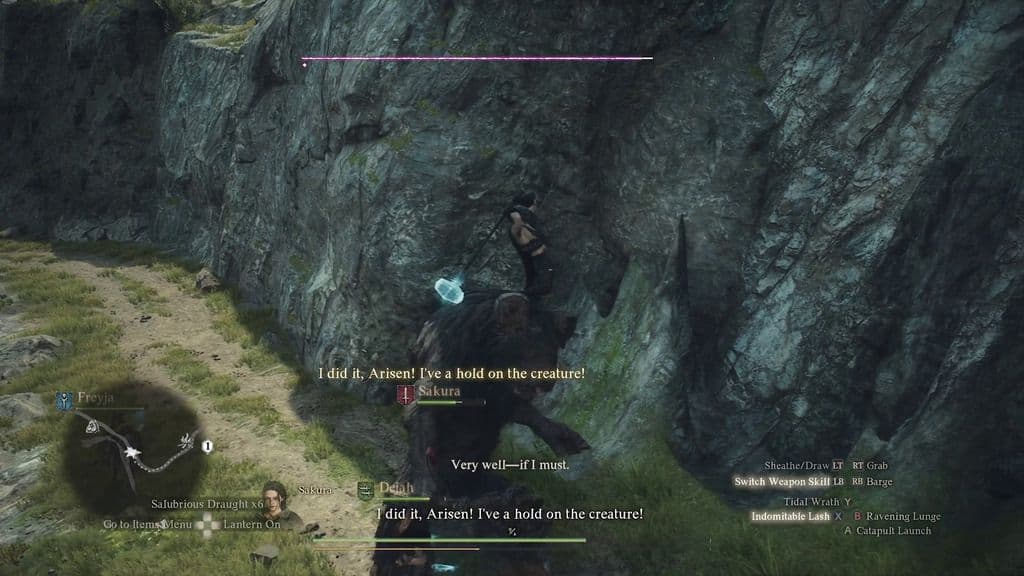
Dragon's Dogma 2 delivers intense, high-stakes combat encounters.
This is the game’s tragic flaw: it builds a magnificent, reactive playground of combat and exploration, then forgets to provide adversaries that can keep you playing in it.
Yet, to dismiss Dragon's Dogma II based on this imbalance is to overlook its monumental achievements. The sense of adventure it fosters is unparalleled in the modern landscape. This stems directly from its three pillars: the best-in-class, physics-driven action combat; the endlessly innovative Pawn system that transforms solitary play into communal discovery; and a world that steadfastly refuses to hold your hand. Your most cherished memories won’t be of a cutscene, but of the time a stray fire spell ignited a tar-covered Griffin mid-flight, sending it crashing into a bandit camp you hadn’t even noticed, while your Pawn—on loan from a player across the world—cheered because they’d seen this trick before. That emergent, systemic storytelling is the game’s true endgame, and it remains compelling long after the challenge has faded.
The target audience, therefore, is crystal clear. This is not a game for those seeking a polished, accessible power trip. It is for the patient player who finds satisfaction in the friction itself—in preparing for a journey, in deciphering a quest without markers, in building a party of eclectic Pawns, and in accepting that failure carries permanent weight. You must be willing to forgive its sins: the severe and frequent performance dips that muddy its beautiful vistas, the janky camera that turns climbing a dragon into a disorienting struggle, and the aforementioned scaling that robs the late game of its teeth. These are not small concessions.
So, is Dragon's Dogma II worth your time? Absolutely—but with significant caveats. It is a masterpiece of ambition and a masterclass in immersive world-building, yet it is also a deeply flawed artifact that often feels at war with itself. It offers a type of adventure no other game dares to provide, wrapped in a technical presentation that sometimes struggles to deliver it. For the right player, its highs will redefine the genre. For others, its stubborn idiosyncrasies will be a bridge too far.
Pros:
- Fosters an unparalleled, emergent sense of adventure through its systemic, friction-heavy world.
- Combat is visceral, varied, and peerless in its physicality and vocation depth.
- The Pawn system is a generation-defining innovation, creating genuine social connection in a single-player game.
Cons:
- Severe performance issues plague all platforms, destabilizing combat and immersion.
- A lack of difficulty scaling after the mid-game trivializes its deep mechanics and loot progression.
- Several friction points (oxcart ambushes, no melee lock-on) feel more punitive than purposeful.