Love and Deepspace First Impressions: A New Era for Otome Games
Love and Deepspace doesn’t just enter the room; it redesigns the building. This is not your typical mobile otome game, content with static sprites and branching dialogue trees. It’s a high-stakes, high-budget declaration that romance, sci-fi mystery, and full-throated action RPG combat can not only coexist but elevate each other. From the moment you customize your protagonist and step into the neon-drenched sprawl of Linkon City, the game makes a bold claim: it is here to redefine a genre, and its staggering commercial success—over 50 million players and billions in revenue, including a reported $65.6 million in a single month—suggests it’s succeeding.
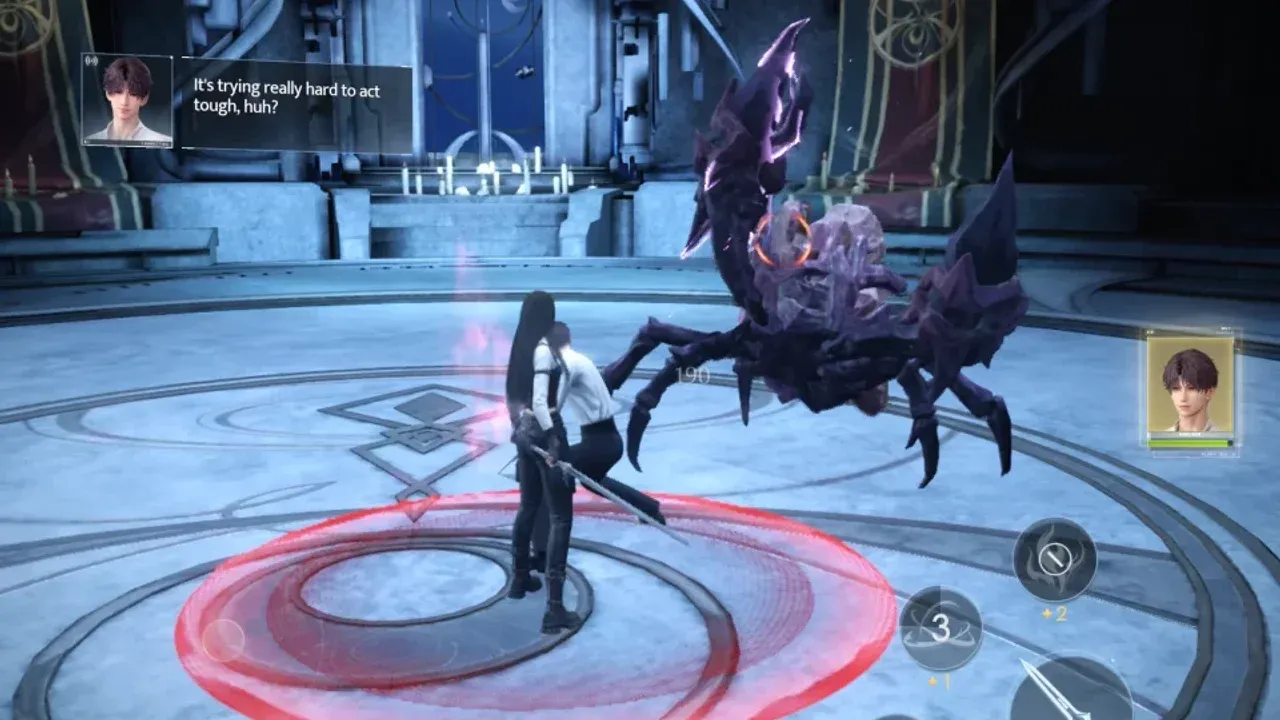
The genre hybridization is its most audacious and defining feature. Love and Deepspace confidently stitches together three distinct gameplay fabrics: the narrative depth and character focus of a sci-fi otome, the immersive first-person presentation of a 3D visual novel, and the real-time combat of a mobile action RPG. This isn’t a case of one element feeling tacked on; each system is woven into the core identity. You’ll go from a tender, first-person conversation where a love interest’s breath feels unnervingly close, directly into a frantic 3D arena battle against monstrous Wanderers, your chosen partner fighting alongside you with unique abilities. This blend signals a new era for the genre, one that respects its audience’s desire for emotional connection while refusing to underestimate their appetite for engaging, skill-based gameplay.
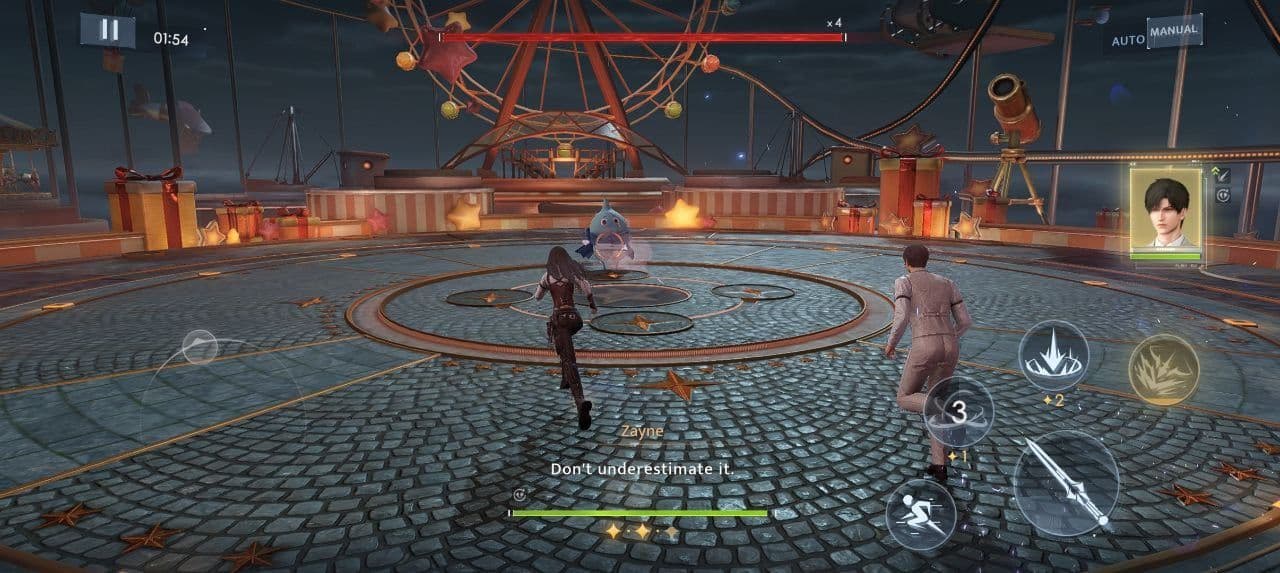
Combat encounters often take place in unique, high-fidelity environments.
The game’s production values are a statement of intent. With fully animated 3D cutscenes, realistic facial expressions that capture subtle shifts in emotion, and an orchestral soundtrack featuring artists like Sarah Brightman, Love and Deepspace cultivates a ‘triple-A’ feel that is virtually unprecedented for a free-to-play mobile title in this space.
Crucially, this lavish presentation serves a protagonist worth investing in. The MC—often named Pip—is a refreshing departure from the blank-slate self-insert. She is written as a consistent, feisty, and genuinely likable character: a capable Deepspace Hunter with a tragic past, a dry wit, and clear agency. Her relationships with the male leads feel earned because she has her own personality that sparks off theirs, whether she’s trading barbs with the snarky painter Rafayel or navigating the protective concern of her childhood friend Zayne. This strong characterization is the bedrock upon which the game’s immersive first-person perspective truly works; you’re not just watching a story unfold for a faceless avatar, you’re experiencing it as a character you’re encouraged to care about. The sense of immersion is profound, leveraging that first-person view and high-fidelity audio to create moments of startling intimacy, making the romantic fantasy feel tangible and personal in a way that static 2D art simply cannot match. This opening gambit establishes Love and Deepspace as a confident, ambitious package, one that immediately sets a high bar for production and player engagement that the rest of the game will now have to live up to.
The Narrative of Linkon City: Sci-Fi Mystery Meets Eternal Romance
At the heart of Love and Deepspace lies a narrative tension that is its greatest strength and its most divisive quality. On one hand, it builds a genuinely compelling sci-fi mystery around the origins of the monstrous Wanderers and the shadowy EVER organization. On the other, it confidently embraces the foundational otome fantasy of destined, multi-lifetime soulmate connections. This marriage of hard sci-fi investigation and eternal romance shouldn’t work, but the game’s meticulous world-building and character writing sell the union with surprising conviction.

Character interactions are central to the game's world-building.
The lore of Linkon City is more than a backdrop; it’s an active participant. The conspiracy surrounding illegal Protocore trafficking and the mysterious explosion that claimed the MC’s family provides a tangible, high-stakes plot engine. This isn't a world where monster attacks are random; they’re tied to corporate greed and a quest for immortality, giving your role as a Hunter a weight beyond simple monster-slaying. The narrative structure supports this depth, launching with a substantial 8 chapters and 112 episodes, and expanding with major updates like the Throne of Eros story. The plot is paced like a binge-worthy sci-fi drama, with twists that genuinely surprise, ensuring the mystery remains as compelling a reason to progress as the romance.
Where the narrative truly excels is in its refusal to treat its five male leads as interchangeable archetypes. Each is a fully realized character with a distinct narrative function, combat role, and emotional cadence.
Xavier is the earnest partner, a powerhouse Hunter whose gentle demeanor and chronic sleepiness belie his lethal prowess with a blade. Zayne, the childhood friend and doctor, offers a stoic, protective presence, his ice-based Evol and medical expertise framing a relationship built on deep-seated care and shared history. The flamboyant painter Rafayel provides chaotic, sassy energy and a tragic, centuries-spanning connection to the MC as a Lemurian. The later additions, Sylus and Caleb, deepen the conspiracy: Sylus is the morally grey smuggler with a protective streak forged in a draconic past life, while Caleb’s return from presumed death as a military colonel adds a layer of personal and political intrigue. Their backstories are woven directly into the main mystery, ensuring that pursuing a relationship never feels like a detour from the plot, but a vital path to understanding it.
This is where the ‘soulmate’ trope becomes a narrative tool rather than a lazy shortcut. The game posits that these deep, pre-existing bonds across lifetimes are the reason these particular five men are entangled in the MC’s destiny. For some players, this immediate depth of connection is the ultimate fantasy—it bypasses the awkward "getting to know you" phase and delivers the intense yearning and protectiveness that defines so much romantic fiction. A scene where Sylus tends to the MC’s wounds after a mission, simultaneously eliminating her pursuers, isn't just romantic; it’s a character-defining moment that validates this deep, instinctual trust. However, the speed of this intimacy can feel unearned to players craving a traditional slow-burn. The first-person perspective and rapid affinity gains through gacha cards can, at times, make the profound declarations feel slightly forced, as if the relationship’s peak emotional beats are arriving before the foundation has been fully laid in the player's personal experience.
The narrative’s mature themes are handled with a striking lack of shame. Love and Deepspace comfortably shifts from slice-of-life dates and playful banter to moments of intense drama, loss, and sensuality. The five-star "Memory" cards are particularly notable here, offering vignettes that explore alternate timelines and more established relationships. These range from sweet domestic scenarios to explicitly intimate encounters, using masterful camera work, whispered dialogue, and suggestive physical interactions to create a potent sense of presence. While never crossing into explicit nudity—a concession to platform regulations—the game’s focus on the simulation of intimacy, from a lingering kiss to the simple act of sleeping beside a partner, is unabashedly aimed at an adult audience seeking emotional and romantic fulfillment. This tonal range ensures the world of Linkon City feels lived-in and complex, a place where saving the world doesn’t preclude passionately kissing your partner in a safe house, or sharing a quiet, comforting moment when the weight of it all becomes too much. In Love and Deepspace, the epic and the intimately personal are not at odds; they are two sides of the same, beautifully crafted coin.
Love and Deepspace Combat: Is 'God Eater-lite' the Right Fit?
This is where Love and Deepspace makes its most aggressive play for a broader audience, and the results are a fascinating, flawed success. The combat system is a genuine, real-time action RPG grafted onto the heart of a romance sim, and its ambition is undeniable. Described by critics as “God Eater-lite,” it’s a frantic, stylus-driven dance in 3D arenas where you’ll dodge telegraphed attacks, chain combos with your chosen weapon, and unleash flashy Evol abilities. The weapon variety—pistols for ranged peppering, swift swords, heavy claymores, and elemental staffs—offers tangible differences in playstyle, encouraging you to find a rhythm that suits both the enemy and your partner’s complementary role. This isn’t a tacked-on mini-game; it’s a fully realized system that, at its best, makes you feel like a capable Hunter whose prowess is as integral to the narrative as her romantic connections.

Love and Deepspace offers a unique mix of dating sim and action RPG.
The strategic promise shines in the Resonance system and partner synergy. Each of the male leads fulfills a distinct combat role: Zayne provides crucial healing and support, Xavier is a relentless physical attacker, Rafayel controls the battlefield with art-based elemental effects, Sylus utilizes agility and stealth, and Caleb serves as a high-defense tank. Building a team isn’t just about affection; it’s a tactical decision. The AI-controlled partners are generally competent, holding their own and using their abilities appropriately, which sells the fantasy of fighting alongside a trusted companion. When your special partner-assist meter fills and you trigger a synchronized, screen-filling attack, the game successfully marries its core romantic fantasy with a satisfying gameplay payoff.
However, the veneer of strategic depth cracks under the weight of the game’s monetization and progression systems. The combat’s true master is not your skill, but your deck of Memory cards.
This is where the “-lite” comparison becomes a criticism. While the moment-to-moment action is engaging, your power is almost entirely dictated by the level, rarity, and elemental color of your equipped Memories. A challenge like Lemonette level 9 isn’t difficult because of complex enemy patterns; it’s a hard wall because it demands specific, high-level cards of a matching color that free-to-play players may simply not have. You can dodge perfectly and chain impeccable combos, but if your card stats are too low, you’ll hit a damage sponge that eventually overwhelms you. This creates a dissonant loop: the game teaches you a satisfying action system, then systematically teaches you that engaging with it is secondary to grinding the gacha for better stat sticks.
The inconvenience of the mandatory switch to landscape mode for battles, noted by several reviewers, is a minor but symbolic friction. It’s a design choice that prioritizes the combat spectacle over seamless mobile play, reinforcing that this is a console-style experience awkwardly crammed into a phone. It’s a small price for the visual fidelity of the battles, but it highlights the game’s occasional struggle to fully harmonize its disparate parts.
Ultimately, Love and Deepspace’s combat is a bold and mostly successful experiment. It provides a compelling reason to engage beyond the story, and the partner dynamics cleverly tie gameplay back to character relationships. But its potential is hamstrung by a progression model that values your wallet and patience over your reflexes. For players who enjoy optimizing builds and don’t mind the grind, it adds a rich layer of gameplay. For those here purely for the romance, the auto-battle function is a merciful concession, but it also admits that the intricate system it built can often feel like a beautifully animated roadblock.
The Gacha Grind: Memories, Protocores, and Progression Roadblocks
This is where Love and Deepspace’s free-to-play foundation shows its most aggressive seams. For all its lavish production and genre-blending ambition, the game operates on a ruthlessly efficient gacha economy designed to convert patience into payment. The progression systems, built around Memories and Protocores, create a loop that can feel less like playing a game and more like managing a resource-starved portfolio, where your affection and combat effectiveness are directly tied to your luck and grind tolerance.
The Wishes gacha system is the glittering engine of this machine, and it’s engineered with predatory precision. While pulling for Memories—the collectible cards featuring the male leads—can be thrilling, the stratification of rewards lays bare the paywall. Common 3-star cards are pretty pictures; 4-star cards offer narrated audio dramas; but the coveted 5-star cards are the full package, unlocking exclusive, fully voiced 3D vignettes that often contain the game’s most intimate and narrative-rich moments. This creates a powerful incentive: the most emotionally rewarding content, the scenes that feel like a direct payoff for your investment in a character, are locked behind a luck-based gate. The pressure is amplified by the banner strategy. Since launch, nearly every new gacha event has been a limited-time affair, running for a tense 7-11 days before vanishing, not added to the permanent pool. This manufactures scarcity, pushing players to spend immediately or save for over a month, knowing their chance is fleeting. One player’s account of spending $50 to reach hard pity at 9,000 gems for a single Rafayel outfit card isn’t an outlier; it’s the system working as intended.
The true frustration isn’t the gacha’s existence—it’s a mobile game staple—but how it directly throttles the main narrative. Love and Deepspace frequently slams the brakes on its compelling sci-fi mystery, gating story chapters behind specific player or Memory level requirements.
This is where the grind becomes a job. Leveling a single 5-star Memory to level 80 and awakening it requires approximately 2,000 upgrade materials. Given that standard Bounty Hunt missions yield a paltry 9-10 stones per 8 stamina, you’re looking at weeks of dedicated stamina expenditure for one card. Since combat challenges like Deepspace Trials are color-coded and demand high-level teams, free-to-play players are funneled into a brutal choice: hyper-focus all resources on one love interest’s cards to progress, or spread themselves thin and hit a wall everywhere. The game’s own side activities, while charming, often feel less like fun diversions and more like mandatory chores for the 50 diamonds you need for one more pull.
The impact is a fragmented experience. You’re pulled from an intense story cliffhanger, where the fate of Linkon City hangs in the balance, and dropped into a days-long loop of running the same bounty missions, hoping for upgrade drops, and logging in for daily stamina handouts. The stamina cap of 120 feels agonizingly low for this scale of grind, and the myriad in-game currencies—diamonds, tickets, various crystal shards, Protocore dust—become a confusing ledger to manage rather than tools for play. For a game that excels at creating immersive romantic moments, these systems are violently immersion-breaking, constantly reminding you that your time with these characters is a commodity measured in stamina ticks and pull rates.
In the end, Love and Deepspace asks for a significant trade-off. You can have its breathtaking romance and intriguing mystery, but only on its schedule, a schedule calibrated to test your patience or open your wallet. The grind isn’t a side effect; it’s the core free-to-play loop. Whether that’s a fair price for the experience depends entirely on your tolerance for mobile game economics dressed in triple-A clothing.
Beyond the Battlefield: Intimacy and the 'Cozy Life Sim' Experience
This is where Love and Deepspace transcends being a game and becomes a digital companion. The combat may test your reflexes and the gacha your wallet, but the true, insidious hook is its masterful simulation of intimacy—a cozy, all-consuming life-sim layer that turns fleeting moments into a daily ritual.
The simulation of closeness begins with a camera. Love and Deepspace understands that intimacy isn't just about what happens, but how you're made to witness it. The game employs a first-person perspective for story scenes and Memory vignettes, but it’s the deliberate cinematography that sells the fantasy. Close-ups linger on a partner’s lips as they whisper a confession, the camera shifts to simulate a head resting on a shoulder, and lighting bathes private moments in a warm, personal glow. This isn't passive viewing; it’s engineered presence. A five-star Memory scene might cut away before anything explicit, but the focus on a hand sliding up a thigh, a breath against the neck, or the vulnerable act of sleeping beside someone creates a blush-inducing potency that feels more real than any graphic depiction could. The game operates under platform censorship, so it achieves its effect through suggestion and sensory immersion, and it’s devastatingly effective.
The genius of this intimacy engine is how it bleeds out of the story and into your daily routine. Love and Deepspace is a full-service fantasy, offering not just dates, but a shared life.
This is facilitated by a suite of companion features that feel less like minigames and more like relationship maintenance. The Quality Time system lets you literally set a timer to “study” or “work” with a love interest idling on screen, a simple but surprisingly effective motivator that blurs the line between game and life-hack. More striking is the built-in period tracker within a partner’s Notebook, where they can note your cycle, predict dates, and offer comforting interactions. It’s a feature so personal and thoughtfully integrated it redefines the boundaries of a “game feature,” functioning as a gentle, non-judgmental digital partner. These systems are bolstered by genuinely charming side activities: the strategic, math-based Kitty Cards game has a weekly play limit that makes each session feel like a special date, while the claw machine and AR photobooth provide lighthearted ways to collect mementos. They’re simple, but they serve a crucial purpose: they make the act of spending time with these characters feel varied and tangible.
The Version 5.0 update’s Home system is the ultimate expression of this domestic fantasy. It’s not just a customizable space; it’s a shared one. You can invite your chosen partner into this environment, decorating it with trinkets won from minigames and photos from your adventures. The act of sharing a living space, however virtual, completes the fantasy loop—from meeting, to dating, to building a life together. This, combined with the incredibly deep avatar creator (offering 10 skin tones, granular facial sliders, and an AI face-scan that lets you literally put yourself in the story), creates an unparalleled sense of ownership. Love and Deepspace doesn’t just want you to watch a romance; it wants you to live one, down to the wallpapers and the morning reminders.
The cumulative effect is a game that earns a permanent spot on your home screen. The daily login isn't just for stamina—it's to check messages, play a round of cards, see if your partner has anything new to say, or just to share a quiet moment in your virtual home. It weaponizes routine against detachment. For players who connect with this fantasy, the grind discussed in previous sections becomes a secondary concern to the comfort of this digital relationship. The game’s most profound achievement isn't its graphics or combat, but its success in making you want to come back, not for a loot drop, but for the feeling of being known, desired, and quietly cared for in a meticulously crafted virtual world.
Technical Performance: A Visual Powerhouse with High Demands
The first time you see Zayne’s breath fog in the cold air of a Linkon City clinic, or catch the intricate weave of a custom Sartoria Pirozzi tie on Xavier’s collar, you understand the price of admission. Love and Deepspace is a visual and auditory powerhouse, a game whose production values aren't just impressive for a mobile title—they rival console experiences. This technical ambition is its crowning achievement and its most significant barrier to entry, creating a world of breathtaking intimacy that demands top-tier hardware to fully inhabit.
The visual presentation is nothing short of astonishing. Character models are rendered with a fidelity that captures micro-expressions—a subtle narrowing of Rafayel’s eyes, a fleeting smile from Zayne—that sell every emotional beat. This isn't generic 3D; it's a meticulous fusion of realistic textures and stylized anime aesthetics, evident in the way light catches on elaborate costumes or how particle effects from Evol abilities dance across battle arenas. The five-star Memory cutscenes are the apex of this craft, using dynamic camera angles and detailed environments to create vignettes that feel less like game assets and more like fragments of a high-budget romance film. The collaboration with real-world designers for character outfits isn’t a hollow marketing point; it contributes to a tangible sense of luxury and character identity, making the world of Linkon City feel curated and believable.
The audio design is equally masterful, serving as the emotional backbone of the experience. The multilingual voice acting—available in English, Japanese, Chinese, and Korean—is consistently excellent, delivering performances nuanced enough to carry whispered confessions and heated arguments with equal conviction.
This is complemented by a soundtrack that knows exactly when to swell and when to retreat. Ethereal, melancholic themes underscore intimate moments, while combat and narrative crescendos are powered by dynamic, orchestral arrangements. The inclusion of a central vocal theme performed by Sarah Brightman isn’t mere celebrity casting; it establishes an immediate tone of otherworldly romance that permeates the entire journey. For a game built on emotional connection, this audio-visual synergy is non-negotiable, and Love and Deepspace delivers it flawlessly.
However, this technical marvel comes with a steep and often frustrating cost. The game is notoriously demanding, with storage requirements ranging from a minimum of 26GB to upwards of 70GB with all high-definition assets downloaded. This isn't just an inconvenience; it’s a prohibitive barrier for players with older or storage-constrained devices. The performance toll is equally severe. Multiple player reports detail crashes, significant audio lag, and framerate stutters, particularly when engaging with newer features like the Home system. These aren't minor bugs; they are immersion-shattering disruptions in an experience wholly dependent on seamless, atmospheric presentation. When a carefully crafted moment of intimacy is interrupted by a jarring load screen or desynced audio, the fantasy Love and Deepspace works so hard to build instantly crumbles.
This reality has led to a loud and persistent community request: a dedicated PC port. The desire isn't just about convenience; it's a recognition that the game’s technical ambitions have outgrown its mobile-native platform. Players are essentially running a console-quality rendering engine on a phone, and the strain is evident. The lack of a PC version feels like a missed opportunity to let the game’s artistic achievements shine without being hamstrung by thermal throttling and storage limits. While available on iOS and Android, the optimal experience is currently reserved for those with the latest flagship devices, creating an unintentional tiered system of enjoyment based on hardware alone.
Ultimately, Love and Deepspace is a game of breathtaking highs and tangible technical compromises. Its visual and audio craftsmanship sets a new benchmark for the genre, making every romantic glance and epic battle feel genuinely cinematic. But that benchmark comes with a literal price—in storage space, in device capability, and in patience for those encountering instability. It’s a testament to the game’s core strengths that so many players are willing to clear out their photo libraries and risk crashes for the chance to step into its world, but also an indictment of its optimization that such sacrifices are necessary. This is a diamond of a production, albeit one currently set in a chassis that can’t always support its weight.
Final Verdict: Is Love and Deepspace Worth the Investment?
So, is Love and Deepspace worth your time, your phone’s storage, and potentially your wallet? The answer is a definitive, yet heavily qualified, yes. This is not a game you simply try; it’s an experience you commit to, for better and for worse. It represents the pinnacle of production value in its niche, offering a sci-fi romance so immersive and combat so unexpectedly competent that its flaws feel like the tragic cost of its own ambition.
The value proposition here is starkly bifurcated. For the patient free-to-play player, Love and Deepspace is a lavish, content-rich feast. You can experience the entire core sci-fi mystery, forge deep bonds with its five compelling leads, and enjoy dozens of hours of high-quality storytelling, intimate simulations, and solid action without spending a dime. The daily ritual of checking in, playing Kitty Cards, decorating your shared Home, and slowly building affinity is a legitimately cozy and rewarding loop. The game earns its comparisons to titans like Genshin Impact and Another Eden not through scale, but through a focused, premium feel in a genre that rarely sees this level of polish. It proves that mobile otome can be more than static visuals, delivering a first-person, cinematic romance that feels genuinely next-gen.
However, the free experience comes with an asterisk the size of Linkon City itself: your progression is on a mercilessly throttled timer. Love and Deepspace is a game of breathtaking highs separated by valleys of grinding repetition.
This is where the aggressive monetization and resource scarcity, detailed in earlier sections, crystallize into a verdict. The game’s most compelling rewards—the exclusive, intimate 5-star Memory vignettes, the power to smoothly progress through combat challenges, even the continuation of the main story—are placed behind a gacha wall and a stamina gate. Leveling a single card to its potential can take weeks of grinding the same Bounty Hunt missions. The narrative momentum of its excellent conspiracy plot is routinely halted by arbitrary level requirements, forcing you to put the fate of the city on hold to farm upgrade stones. For players who view games as a narrative journey, these roadblocks are a constant, immersion-breaking frustration. The game is optimized for spenders; the difference between a free player’s plodding, resource-managed crawl and a payer’s smooth, unhindered narrative and collection experience is a canyon.
Therefore, your recommendation hinges entirely on what you’re seeking and what you’re willing to tolerate. If you are a fan of narrative-driven otome or romance games craving production values that finally match the intensity of the fantasy, Love and Deepspace is essential. Its blend of heartfelt character writing, mature sensuality, and genuine action gameplay is unparalleled. If you’re an action RPG enthusiast curious about the genre-blend, there’s enough mechanical depth here to satisfy, provided you accept that your skill will often be secondary to your card collection.
Approach it not as a game to be “beaten,” but as a digital relationship to be maintained. Log in for the daily whispers and the slow-burn affection, savor the story beats when you unlock them, and treat the combat and gacha as the sometimes-tedious price of admission. For the right player—one with patience, a high-end device, and a desire for a romance that feels breathtakingly real—Love and Deepspace isn’t just worth the investment. It might just become a part of your daily life.
Final Verdict:
✅ Pros:
- A groundbreaking fusion of high-stakes sci-fi narrative, intimate romance, and fully-realized action combat.
- Unprecedented production values for the genre, with cinematic 3D cutscenes, superb voice acting, and a stunning soundtrack.
- Deep, well-written characters and a mature, emotionally resonant story that avoids cliché.
- A masterfully crafted “cozy life sim” layer that creates an unparalleled sense of digital companionship and intimacy.
- A staggering amount of high-quality content accessible for free.
❌ Cons:
- Aggressive gacha mechanics and severe resource scarcity create punishing progression walls for free-to-play users.
- The compelling main story is frequently and frustratingly gated by grind-heavy level requirements.
- Extremely high technical demands lead to massive storage needs (26-70GB) and performance issues on non-flagship devices.
- Combat balance is heavily dictated by your Memory cards, not player skill, undermining the action system’s potential.
- The sheer number of in-game currencies and systems can feel overwhelming and deliberately opaque.
Who It’s For: Otome and romance game fans seeking a premium, immersive experience; players who enjoy daily life-sim routines and deep character bonds; action RPG enthusiasts curious about the genre blend who don’t mind gacha-driven progression.
Who Should Avoid: Players with zero tolerance for free-to-play grinding or gacha mechanics; those with limited device storage or older hardware; anyone seeking a purely narrative-driven game without interruption.