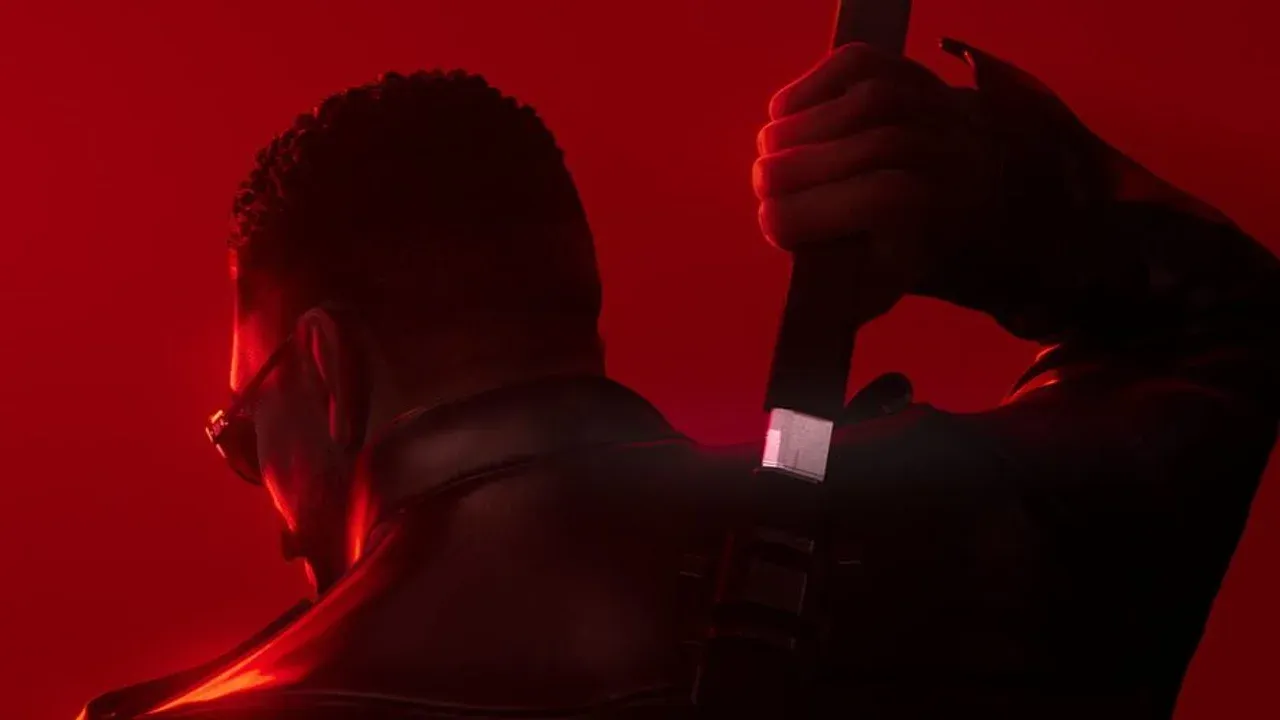
Marvel's Blade: Arkane Lyon's Bold Take on the Daywalker
The most surprising thing about Marvel's Blade isn't that it exists, but that it feels so utterly inevitable. A third-person action-adventure starring the brooding dhampir, set against a stylized Paris under supernatural quarantine, is exactly the kind of bold, left-field swing a studio like Arkane Lyon would take with a major license. This isn't a safe, paint-by-numbers superhero romp; it’s a game that wears its developer's signature on its sleeve, confidently grafting the systemic, player-driven DNA of the Immersive Sim onto the sturdy frame of a character action title. The result is a premise that feels less like a corporate synergy play and more like a creative match made in heaven.
Arkane’s pedigree is the game's most potent ingredient. This is the team behind the clockwork level design of Dishonored 2 and the looping, puzzle-box narrative of Deathloop, and their philosophy of empowering player choice through systems is immediately apparent. While the core loop is built around Blade’s brutal combat, early glimpses suggest the quarantined districts of Paris are built not as linear corridors but as intricate sandboxes. The promise isn't just to fight vampires, but to hunt them, using the environment, verticality, and Blade’s unique dhampir abilities to approach each encounter as a tactical predator. This is a crucial translation of Arkane's signature: moving the genre’s focus from pure spectacle to considered, player-authored action.
The setting itself is a masterstroke. A quarantined, supernatural Paris provides a fresh, gothic-tinged canvas far removed from the familiar skylines of New York or Metropolis. It allows Arkane to build a world dense with environmental storytelling—a city frozen in a moment of vampiric crisis, where every blood-splattered alley and barricaded boutique tells a story—while giving the art team license to render the City of Light through a lens of stylized realism and eerie, perpetual twilight.
This foundational identity is what makes Marvel's Blade so compelling on paper. It represents a studio using a beloved IP not as a crutch, but as a vehicle to execute its own distinct vision. The risk, of course, is in the marriage of these two potent elements: will the need for a tight, character-driven narrative clash with Arkane's typically open, systemic playgrounds? The answer to that question will define the entire experience, but for now, the premise alone establishes this as one of the most intriguing and confident takes on a Marvel property in years.
Marvel's Blade Combat: A Bloody Blend of Swords and Gunplay
At its heart, Marvel's Blade is a game about rhythm. Not the rhythm of a dance floor, but the brutal, percussive rhythm of a hunter closing in on his prey. The core combat loop is a symphony of steel and gunpowder, a bloody ballet where Blade’s iconic katana and his arsenal of firearms aren't just tools—they are two sides of the same lethal coin, woven together with a fluidity that feels instinctive after the first hour.
The genius of the system lies in its seamless integration. A sword combo naturally flows into a hip-fired shotgun blast to stagger a charging brute, which immediately chains back into a lunging finisher. There’s no dedicated "gun mode" or clunky weapon-swap animation to break the flow; the transition is as smooth as extending your arm. This creates a dynamic, improvisational feel to every fight. You aren’t choosing between melee or ranged—you are using both in a continuous, devastating conversation. The Blood Meter, which builds with successful hits, acts as the conductor for this orchestra. Once full, it enables a temporary state of heightened power and speed, but more crucially, it unlocks context-specific, cinematic takedowns on weakened enemies. These aren't just flashy kills; they are vital crowd-control tools and health-restoring moments that directly tie the game’s vampiric fiction to its mechanical needs.
This is where Arkane’s "player-authored action" philosophy, established in the first section, pays its biggest dividend. While you can certainly charge in, the sandbox DNA encourages you to use the environment. A well-placed silver nitrate grenade can create a choking cloud that weakens a pack, a silenced pistol shot can shatter a distant light source to disorient foes, and Blade’s enhanced agility lets you pounce from rooftops to initiate combat with a devastating advantage. The stealth approach is entirely viable, but it feels less like a mandatory, slow-paced alternative and more like the first, calculated move in a violent chain reaction.
Where the combat shows some strain is in its long-term sustainability. While the act of fighting feels phenomenal, the enemies you fight against can begin to feel overly familiar. The quarantined districts of Paris are populated by a solid roster of vampire archetypes—swarmers, brutes, spellcasters—but their attack patterns and AI behaviors don’t evolve significantly enough across the 20-hour campaign. By the final act, you’ve mastered the dance, but your partners haven’t learned any new steps. Encounter design also leans heavily on arena-style battles, and while the environmental toys help, a greater variety of objective-based or time-pressured scenarios would have alleviated the creeping sense of repetition.
This potential monotony is, however, consistently counteracted by the sheer quality of the production. The animation work is nothing short of stellar. Every swing of the katana has tangible weight, and the takedown animations are visceral, brutal, and uniquely tailored to both the enemy type and your positioning. Seeing Blade fluidly dismantle a foe with a series of precise strikes before calmly sheathing his sword is a power fantasy delivered with chilling elegance. It’s a constant, satisfying reminder of who you are playing—not just a superhero, but the definitive predator.
Ultimately, Marvel's Blade’s combat system is a triumphant fusion of Arkane’s systemic thinking and character-action spectacle. It empowers you to feel like a tactical, unstoppable force of nature. The lack of deep enemy variety is a noticeable flaw that keeps it from achieving true genre immortality, but the foundational mechanics are so strong, so fluid, and so faithfully tied to the fantasy of being the Daywalker that the act of hunting never loses its core thrill.
Exploration and Level Design in Marvel's Blade's Quarantined Paris
Paris in Marvel's Blade isn't a backdrop; it's a character, a gothic sandbox frozen in a moment of supernatural terror. Arkane Lyon’s greatest triumph here is transforming the City of Light into a dense, vertical playground where the act of moving through the world is as considered and rewarding as the combat. This is a quarantined district designed not for sightseeing, but for hunting, and its intricate, multi-layered architecture is a direct translation of the studio’s immersive sim philosophy into a third-person action framework. You are given objectives, but the path is yours to carve through a cityscape that feels authentically abandoned and strategically rich.
The level architecture is classic Arkane, executed with a predator’s precision. Each district is a dense web of interconnected routes, with sewer grates, fire escapes, crumbling balconies, and interior apartments all serving as viable paths. A mission to eliminate a vampire nest in a central plaza might be approached head-on through the main gates, or by silently clearing the rooftops for a high-ground advantage, or by navigating the flooded catacombs beneath to emerge directly in the heart of the enemy formation. This multi-pathing empowers player choice and directly feeds into the tactical hunting fantasy. It makes you feel clever, rewarding environmental observation with a tangible combat edge.
The environmental storytelling is the silent, pervasive star of the show. The "vampire emergency" isn't just a plot point; it’s etched into every corner. You'll find hastily erected barricades inside chic cafés, medical tents overflowing with blood-stained supplies, and poignant vignettes of final stands in apartment hallways. One of the most memorable moments isn't a cutscene, but discovering a rooftop garden where survivors attempted to grow garlic, only to be overrun—the story of a futile last hope told through scattered pots and a single, discarded stake. This density of detail makes the world feel lived-in and tragically real, elevating the setting from a cool concept to a compelling reason to explore every alley.
This praise, however, must be tempered by the game's traversal limitations. While the level design encourages vertical thinking, Blade’s movement kit feels restrictive compared to the acrobatic freedom of peers like Marvel's Spider-Man. His parkour is functional and context-sensitive—he’ll vault over low walls, shimmy along ledges, and use his strength to pull up onto rooftops—but it lacks fluidity and player-driven expression. You can’t chain moves together in a satisfying flow; traversal is more about holding a button to automatically navigate predefined paths. This creates a dissonance: the world is built for a nimble hunter, but moving through it can sometimes feel like following a guided tour. It doesn’t break the experience, but it does mean the joy is found in arriving at a vantage point and surveying your options, not in the journey to get there.
The day/night cycle is more than an aesthetic filter; it’s a fundamental gameplay modulator that directly ties into Blade’s dhampir nature. During the day, the quarantined streets are eerily quiet, populated only by desperate human scavengers and the occasional dormant vampire hiding from the sun. This is the time for safe exploration, puzzle-solving, and gathering resources, with Blade operating at his base power level. When the sun sets, the city transforms. Streets once cautiously navigable become hunting grounds, teeming with stronger, more aggressive vampire variants. Blade’s connection to the night feeds his Blood Meter more quickly, and certain high-level abilities only unlock after dark. This creates a compelling risk-reward loop: do you scour a dangerous area at night for greater rewards, or play it safe during the day? It’s a brilliant system that makes the world feel dynamic and reinforces the core fantasy of being a creature uniquely adapted to the darkness.
Ultimately, the exploration and world design in Marvel's Blade are a masterclass in atmospheric, player-driven sandbox design, slightly hamstrung by conventional movement. The quarantined Paris Arkane has built is a place worth getting lost in, not despite the horror, but because of it. Every rooftop, every blood-spattered courtyard, tells a story and offers a tactical opportunity. While you may not feel like a superhero navigating its spaces, you consistently feel like the world’s most prepared and deadly hunter, which, for the Daywalker, is precisely the point.
Narrative and Character: A Mature Marvel Story
The most surprising thing about Marvel's Blade isn't its stylish violence, but the quiet, weary conviction in Eric Brooks's voice. This isn't a quipping Avenger; it's a man who has spent a century cleaning up a mess that is, in part, his own inheritance. Arkane Lyon's narrative achievement is crafting a story that feels mature within the Marvel Universe—not through gratuitous gore, but through a tone of grim responsibility and a protagonist whose heroism is a burden, not a calling.
Eric Brooks is portrayed with a grounded, gritty realism that immediately distances him from the MCU's cadence. His dialogue is terse, practical, and often laced with a bone-deep fatigue. In one early scene, after dispatching a nest of fledgling vampires, he doesn't crack a one-liner; he stares at a faded family photo on the wall and mutters, "Wasteful." This isn't a superhero reveling in his power; it's a exterminator lamenting the cost of the infestation. The performance captures Blade's iconic stoicism without making him a caricature, allowing moments of dry, situational humor to feel earned rather than scripted. His motivation isn't to save the world in a grand, cosmic sense, but to contain a plague—a more intimate, horrifying, and ultimately more compelling stakes.
The narrative tone expertly walks a razor's edge between supernatural horror and superhero action. The quarantined districts of Paris, previously praised for their environmental storytelling, are the primary vehicle for this. You aren't fighting alien armies on a rainbow bridge; you're navigating claustrophobic apartments where the horror is domestic and recent. The game is at its best when these elements collide: a spectacular, acrobatic duel with a vampire lord in a grand cathedral is undercut by the discovery of drained priests hidden in the confessionals. The action makes you feel powerful; the context reminds you why that power is necessary, and often, too late.
This careful balance, however, falters in the story pacing during the middle acts. After a strong opening that establishes the quarantine and Blade's mission, the narrative enters a protracted investigation phase. You are tasked with hunting down several key vampire lieutenants, and while each hunt offers excellent, player-driven gameplay (leveraging the sandbox design discussed earlier), the overarching plot loses momentum. The game falls into a predictable "go here, kill this boss, get a clue" loop for nearly ten hours, with minimal advancement of the central mystery or Blade's personal arc. It feels less like a tightening noose and more like a checklist, a noticeable sag in tension where the superb gameplay has to carry weight the narrative has dropped.
Where the narrative recovers is in its lore integration. Marvel's Blade doesn't just name-drop comic elements; it weaves them into the fabric of its world with reverence and smart adaptation. Familiar factions like the Vampire Nation and MI-13 aren't mere cameos; they are active players with conflicting agendas within the quarantined zone. Supporting characters like Dr. Zoe Culloden are reimagined not as info-dumps, but as pragmatic allies with their own resources and limitations, selling the scale of the crisis. The game smartly avoids drowning you in decades of continuity, instead selecting key concepts—like the different houses of vampires with their own hierarchies and weaknesses—and making them gameplay relevant. You learn about the Tomb of Dracula not through a codex entry, but by tracking its symbols in a vampire's hideout to unlock a secret weapon cache.
Ultimately, the narrative of Marvel's Blade is a bold, mostly successful attempt to tell a mature Marvel story. It gives us a Blade who feels authentically world-weary and a horror-tinged conflict that suits him perfectly. While the mid-game pacing is a tangible drag on the overall momentum, the strength of the character work and the respectful, intelligent use of deep-cut lore ensure that when the story does snap back into focus for its final act, you are invested not just in saving Paris, but in the fate of the man burdened with the job.
Technical Performance and Art Direction in Marvel's Blade
The visual and technical craft of Marvel's Blade is a double-edged sword—one side is a masterclass in atmospheric presentation that elevates the entire experience, while the other shows a few unpolished seams that occasionally cut through the immersion. This is a game that looks and sounds phenomenal, even when it stutters.
The art direction is the game's most consistent triumph, a perfect marriage of Arkane's signature style and the property's gothic heart. This isn't the bright, plastic sheen of other Marvel titles; it's a world rendered in "stylized realism," where the shadows are deep enough to hide monsters and the perpetual twilight of quarantined Paris is painted with sickly neon and the warm, dangerous glow of emergency flares. Character models, especially Blade himself, are detailed with a tangible grit—you can see the wear on his leather coat and the subtle, inhuman sharpness in his features. This aesthetic choice pays dividends in environmental storytelling; a grand, opulent ballroom becomes a scene of horrific contrast when lit only by the cold moonlight streaming through shattered windows, illuminating dried blood on marble floors. It’s a world that feels both fantastical and horrifically plausible.
The sound design is equally instrumental in selling the fantasy. The shink of Blade's katana being drawn is a cold, metallic promise, and its impacts against vampire flesh have a wet, punishing thud that never gets old. More subtle is the brilliant use of diegetic sound: the distant, panicked screams that echo through the sewer grates, the unsettling skittering of unseen creatures in adjacent apartments, and the way the ambient score—a brooding mix of synth and strings—swells imperceptibly as you enter a nest, tightening the tension without a single visual cue.
On a technical level, Marvel's Blade targets a solid 60 frames per second on both Xbox Series X and S, with the former rendering at a dynamic 4K resolution and the latter at a dynamic 1440p. For the most part, it holds this target, and the combat's fluidity is a direct beneficiary. However, this stability has a cost. The performance metrics reveal a noticeable, if not catastrophic, inconsistency. During dense, effects-heavy night encounters in the rain-soaked streets of the 13th Arrondissement, the frame rate can dip into the low 50s on Series X, with more frequent and severe drops on the Series S. These hitches are brief, but in a combat system built on precise parries and seamless flow, they are disruptive. They pull you out of the hunter's rhythm at the worst possible moments.
These performance wrinkles are compounded by a handful of technical bugs that, while not game-breaking, chip away at the world's polished veneer. The most common are AI pathfinding issues, where a vampire hunter ally might get stuck on a piece of debris during a scripted sequence, forcing a reload. More immersion-breaking are the occasional texture pop-in during fast traversal cuts and, in one memorable late-game bug, a key vampire lieutenant T-posing gloriously in the middle of his dramatic introduction speech. These glitches are infrequent enough to avoid ruining the experience, but they are a reminder that the intricate simulation of this Parisian sandbox can occasionally buckle under its own ambition.
Ultimately, the presentation of Marvel's Blade is a powerful argument for artistic vision over raw graphical horsepower. The art and sound design are so cohesively brilliant that they consistently pull you back into its grim, stylish world, making the supernatural horror feel tangible. The technical execution, while largely competent, isn't flawless. The frame rate dips and sporadic bugs are the price of admission to this dense, atmospheric playground—a price that most will be willing to pay, but one that prevents this aspect of the game from achieving perfection.
Final Verdict: Is Marvel's Blade the Ultimate Vampire Hunter Experience?
In its final moments, Marvel's Blade delivers a character-defining choice that is both mechanically simple and thematically profound. It's a culmination of the game's core tension: the clash between the burden of the dhampir and the power fantasy of the hunter. This moment, more than any cinematic, crystallizes the entire experience—a bold, atmospheric, and deeply satisfying action game that, despite a few fumbles, stands as a definitive take on the character and a triumph for its developer.
When evaluating its value proposition, the game presents a compelling case. The critical path clocks in at a focused 18-20 hours, a welcome restraint in an era of bloated open worlds. This length feels perfectly calibrated to the core loop of hunting, exploring, and story advancement, ensuring the combat and environmental puzzles rarely overstay their welcome. However, completionists can easily double that time by scouring every quarantined arrondissement for lore-heavy collectibles, weapon blueprints, and secret encounters that tie directly into the deep-cut Marvel lore. While the $69.99 price tag is standard for a major release, the density of Arkane's world design—where every rooftop and sewer pipe feels deliberately crafted—justifies the investment. You're paying for a curated, handcrafted sandbox, not an endless expanse of copy-pasted content.
This focus on quality over quantity is the clearest signal of the game's target audience. Marvel's Blade is, first and foremost, an Arkane game wearing a Marvel skin. It will resonate most powerfully with fans of Dishonored and Deathloop who crave systemic playgrounds, intricate level design, and player-authored solutions. For them, the thrill isn't just in killing a vampire lord, but in discovering the path through the flooded catacombs that lets you bypass his entire guard. Conversely, Marvel fans expecting the breezy, acrobatic spectacle of Spider-Man may find the pace more deliberate, the tone grim, and the movement (as noted earlier) less liberating. This is a game for players who want to think like a predator, not just look like one.
This distinction becomes stark in a genre comparison. Against the cinematic, set-piece-driven action of God of War, Marvel's Blade trades narrative grandeur for tactical flexibility. Where Kratos's journey is a directed epic, Eric Brooks's hunt is a sandbox puzzle. Compared to Marvel's Spider-Man, the difference is even more pronounced. Insomniac's title is about the joy of movement and being a hero; Arkane's is about the weight of duty and being a hunter. Blade doesn't swing through the city for fun; he navigates it with purpose, using its architecture as a tactical tool. The game doesn't seek to out-muscle its peers in scale or sentiment, but to outsmart them in depth and atmosphere. It carves its own niche by being less of a power fantasy and more of a mastery fantasy.
The game's strengths and weaknesses are now fully apparent. On one hand, you have the visceral combat—that brilliant fusion of swordplay and gunfire that makes every encounter a dynamic, improvisational dance. You have the incredible art direction, which paints a quarantined Paris in shades of perpetual twilight and neon-soaked horror, creating an atmosphere that sticks with you long after the credits roll. And you have the deep environmental storytelling, where a single, abandoned rooftop garden can tell a more poignant story than pages of exposition. These elements coalesce into a world that feels uniquely tangible and ripe for exploration.
On the other hand, the occasional pacing issues in the narrative's middle act create a tangible lull where the gameplay must shoulder the burden alone. The potential combat repetition, stemming from a finite roster of enemy behaviors, means that while the act of fighting remains superb, the contextual challenges you face don't evolve as much as one might hope over a full playthrough. These aren't fatal flaws, but they are the seams in an otherwise immaculately tailored coat.
Final Verdict: Marvel's Blade is a resounding success. It confidently asserts that a licensed game can be a powerful vehicle for a studio's unique voice. Arkane Lyon has not just made a great Blade game; they've made a great Arkane game that happens to star Blade. It is a must-play for fans of the developer's signature style and for anyone craving a mature, tactical, and atmospheric action experience. For those solely seeking Marvel's trademark lightness or endless, mindless spectacle, the perpetual night of Paris may feel a bit too long. But for the right player, this is the ultimate vampire hunter experience—a game where every drop of blood spilled feels earned, and every shadowy corner of its world begs to be mastered.
Pros:
- Visceral, seamlessly integrated sword-and-gun combat that feels incredible to execute.
- Incredible art direction and sound design that create a uniquely oppressive, stylish atmosphere.
- Deep environmental storytelling and classic Arkane level design that reward clever exploration.
- A mature, grounded take on Blade and the Marvel universe that feels refreshingly distinct.
- A perfectly paced campaign length that respects your time without feeling sparse.
Cons:
- Mid-game narrative pacing sags, creating a noticeable lull in story momentum.
- Enemy variety and encounter design can lead to a sense of combat repetition in the later hours.
- Traversal mechanics feel functional but lack the fluidity and expressiveness of top-tier action games.
- Occasional technical hiccups and frame rate dips can disrupt the otherwise seamless combat flow.