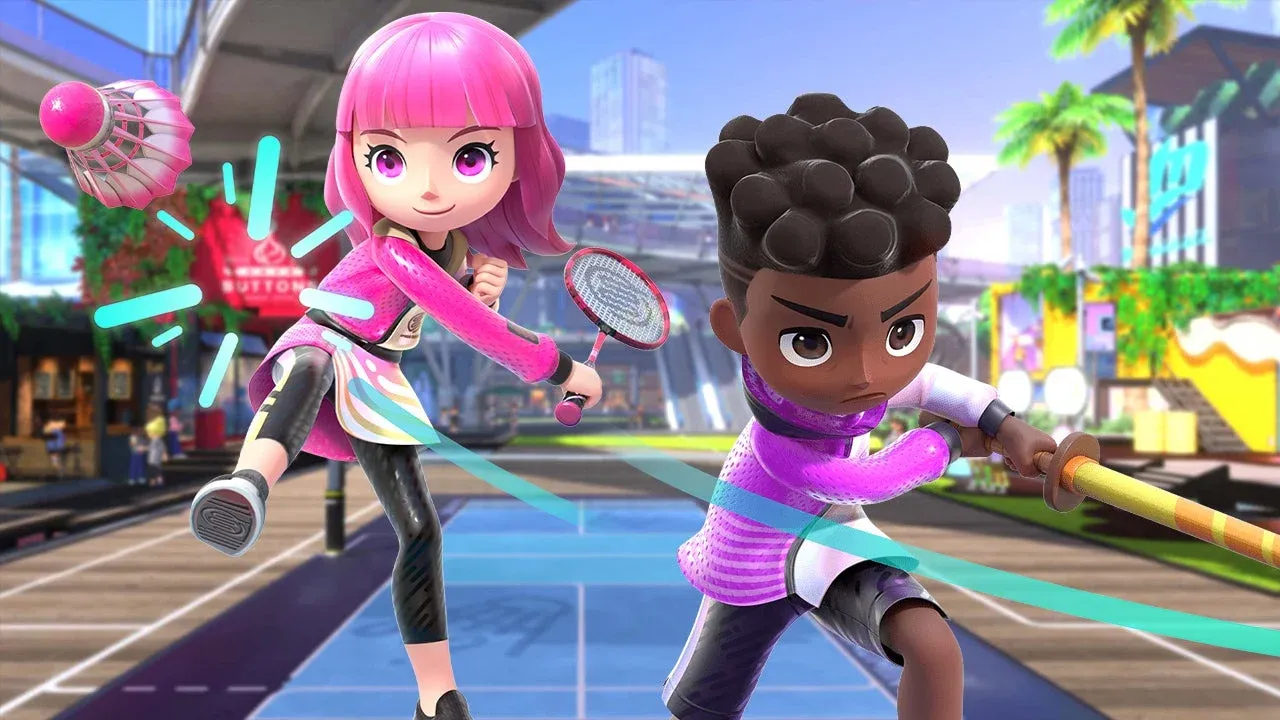
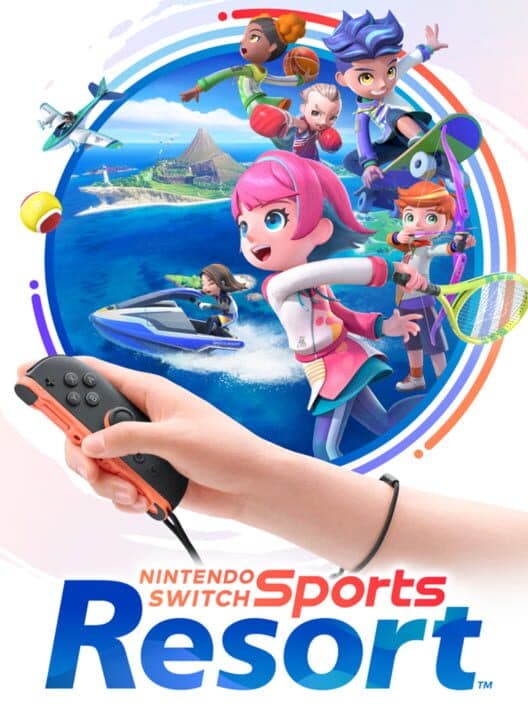
Nintendo Switch Sports: A Nostalgic but Thin Return to Spocco Square
Nintendo Switch Sports Resort arrives with a simple, powerful promise: to recapture the living-room lightning of its Wii-era predecessors. The moment you boot it up, the DNA is unmistakable. The cheerful fanfare, the clean, inviting menus, and the immediate physicality of swinging a Joy-Con to serve a tennis ball are all engineered to trigger a wave of nostalgic muscle memory. This is a game that understands its legacy, trading on the pure, uncomplicated joy of making on-screen actions happen with a flick of your wrist. That immediate, intuitive appeal is its greatest strength, and for a few glorious hours, it feels like a triumphant homecoming.
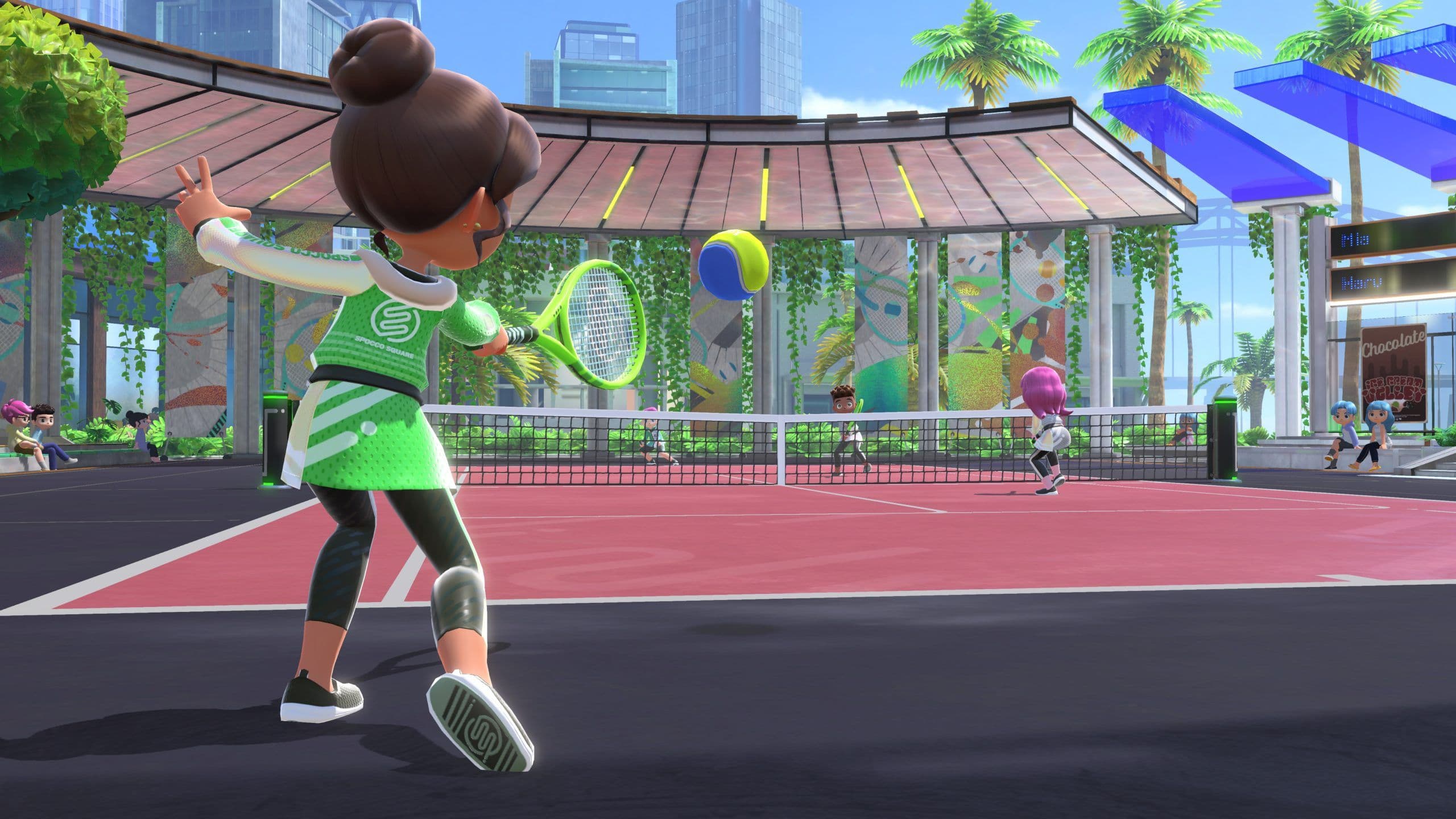
The game's visual style emphasizes a lively, social atmosphere for its motion-controlled sports.
The core loop of Nintendo Switch Sports Resort is built on that accessibility. Like its forebears, it requires zero tutorial to understand; you pick up a Joy-Con, you swing, and your avatar on screen responds. This is the game’s foundational magic, and it works beautifully for the first round of any sport. Bowling feels like bowling, with a satisfying heft to the roll. Tennis rallies are initiated with a simple forehand motion. The barrier to entry is nonexistent, making it the perfect catalyst for a mixed group of gamers and non-gamers. The new hub, Spocco Square, presents this all with a slick, modern sheen. It’s a bright, colorful, and vaguely futuristic sports complex that replaces the tropical charm of Wuhu Island with a more sterile, Apple Store-esque aesthetic. Your avatars, the Sportsmates, are more detailed and expressive than the classic Miis (though you can still use those), with smoother animations that make your victories and failures feel more personal.
This is where the game earns your initial trust: within minutes, you're not just playing a video game; you're pantomiming sports in your living room, and the connection between your movement and the on-screen action feels satisfyingly direct.
However, the moment that initial glow fades, the scope of the package comes into sharp, and somewhat disappointing, focus. Where Wii Sports Resort launched with over a dozen distinct activities, Nintendo Switch Sports Resort arrives with only six: Tennis, Bowling, Chambara (swordplay), Soccer, Badminton, and Volleyball. For a full-priced sequel releasing over a decade later, this feels anemic. The absence of beloved staples like Boxing, Baseball, and the incredibly deep Table Tennis from Resort is a tangible loss, creating a sense that you’re paying for a foundation rather than a fully realized sequel. While the visual presentation in Spocco Square is pleasant, its six mostly static arenas can’t compensate for the lack of gameplay variety. The clean look and new avatars are a surface-level upgrade that quickly highlights how little has been added beneath the hood. The identity crisis is clear: it wants to be both a nostalgic callback and a modern evolution, but it leans so heavily on the former that the latter feels conspicuously thin.
Analyzing the Roster: Which Nintendo Switch Sports Actually Work?
The true test of any sports compilation is whether its individual events are worth returning to, and in Nintendo Switch Sports Resort, the answer is a sharply divided one. Where its predecessor offered a sprawling buffet, this game presents a carefully curated—and alarmingly small—tasting menu. Some dishes are exquisite, refined versions of classic recipes. Others feel like undercooked concepts rushed to the table. The six launch sports don’t just vary in quality; they represent a fundamental split in design philosophy, with a clear hierarchy emerging between timeless crowd-pleasers and forgettable filler.
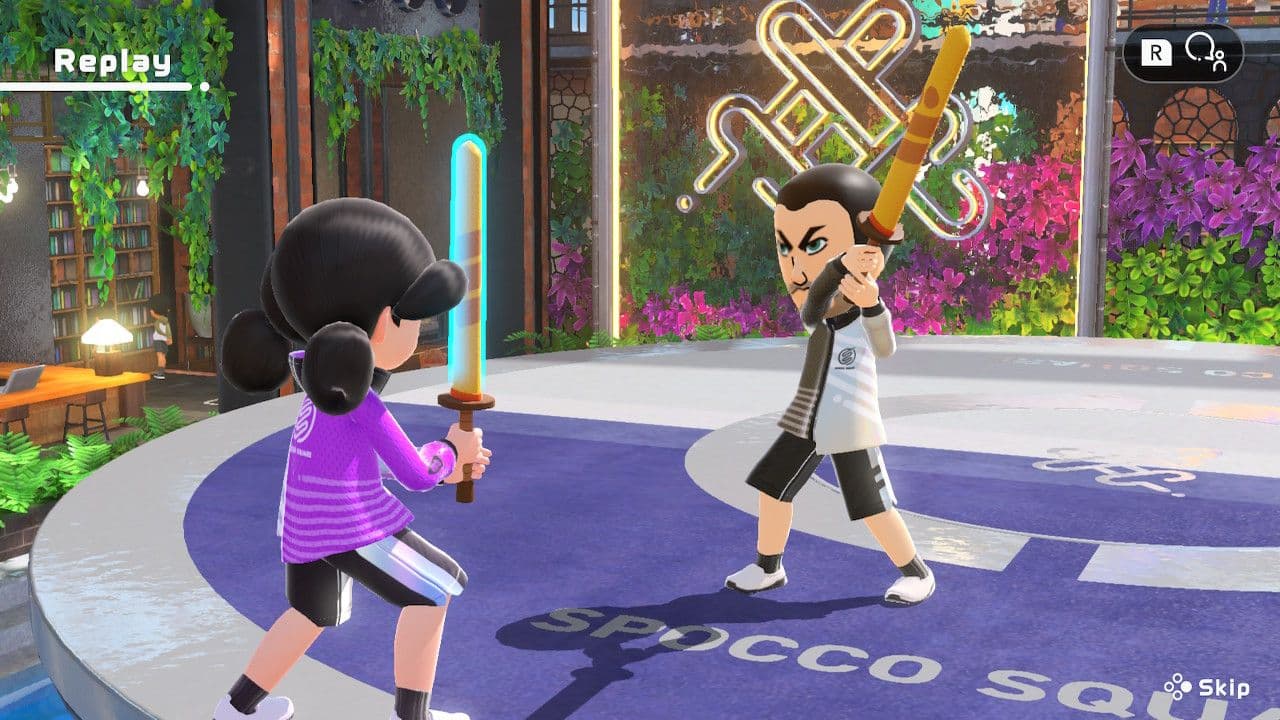
Chambara offers accessible but mechanically simple sword fighting.
Bowling remains the undisputed king, the one sport that feels genuinely evolved. The core roll is as satisfying as ever, but the new Survival Bowling mode is a masterstroke of online tension. Throwing you into a 16-player elimination bracket where the field narrows after each frame, it transforms a solitary activity into a communal spectacle. Watching half the lobby gutter a ball on a tricky split while you line up your spare is electric. This, coupled with the offline “Special” lanes filled with moving obstacles, shows a developer willing to innovate within a proven framework. It’s the only sport that feels richer for its transition to the Switch.
On the opposite end of the spectrum lies Soccer, the roster’s most glaring misstep. Described by critics as “Rocket League for babies,” the comparison is damningly accurate but undersells the frustration. The ball is comically oversized, player movement feels sluggish and imprecise, and the fixed third-person camera often leaves you scrambling just to locate the action. The four-on-four online requirement turns matches into a chaotic, stamina-draining slog where meaningful strategy is scarce. While the leg-strap Shoot-Out mode is a novel gimmick, it highlights the sport’s core problem: it’s too simple for competitive play yet too mechanically awkward for casual fun.
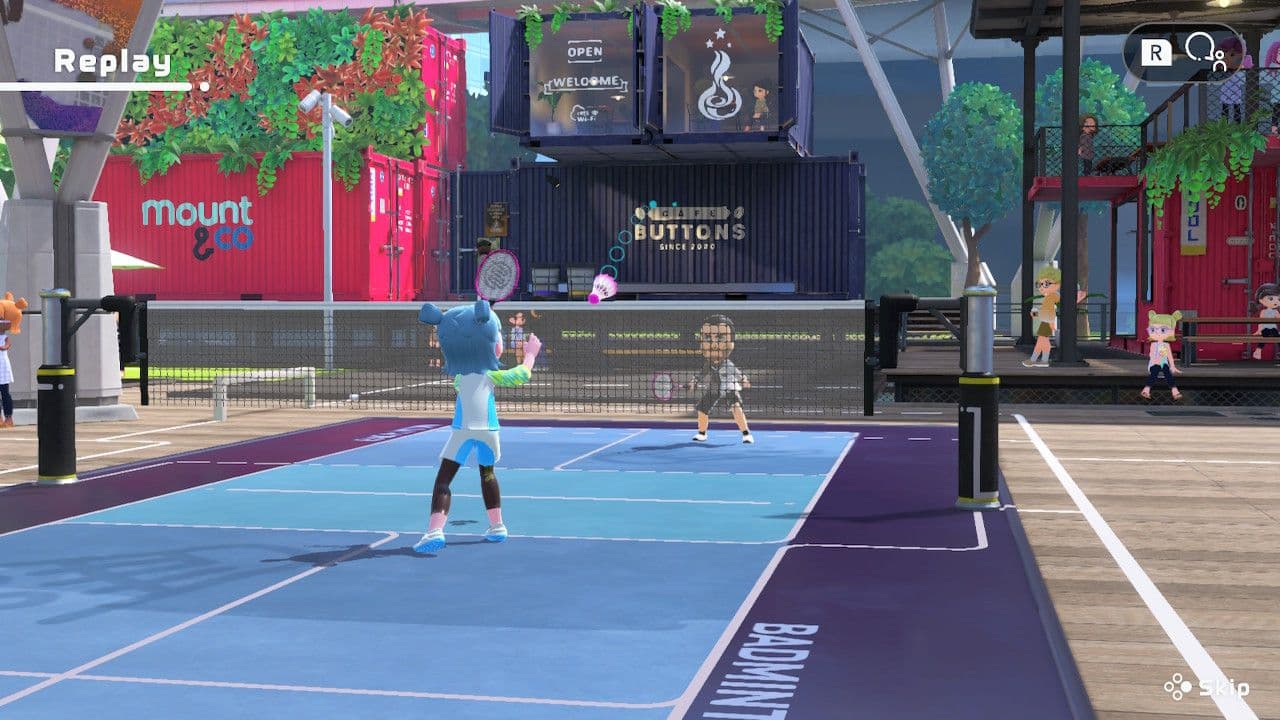
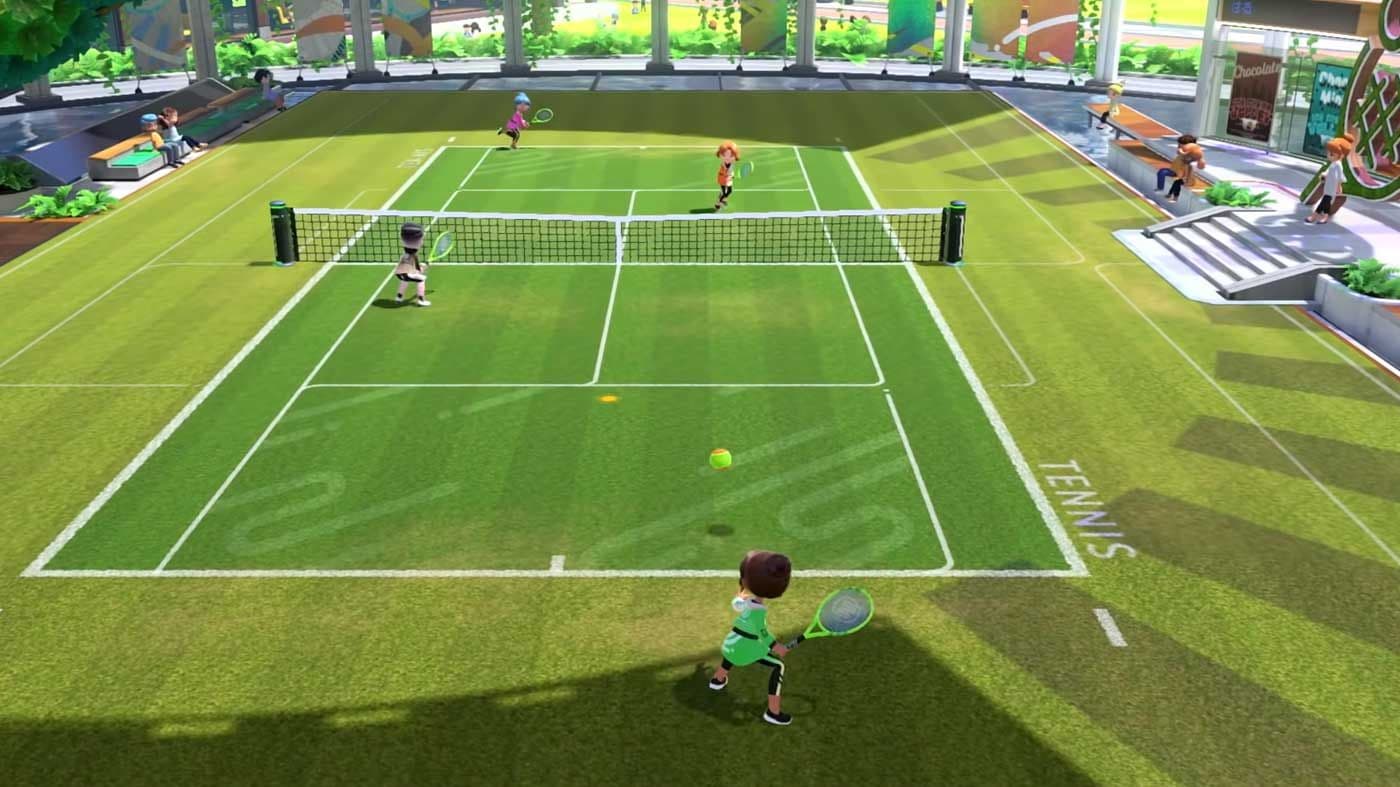
Badminton emerges as the surprise MVP, a sport that justifies its own slot with sheer mechanical elegance. It’s here that the Joy-Cons feel most precise, rewarding wrist-flick timing and strategic shot placement. The ability to hold a trigger for a delicate drop shot adds a layer of mind games completely absent from Tennis, forcing opponents to rush the net. It’s also the only sport to effectively utilize HD Rumble, with a distinct, satisfying thwack confirming a well-executed smash. This is Nintendo Switch Sports Resort at its best: intuitive, deep, and physically engaging.
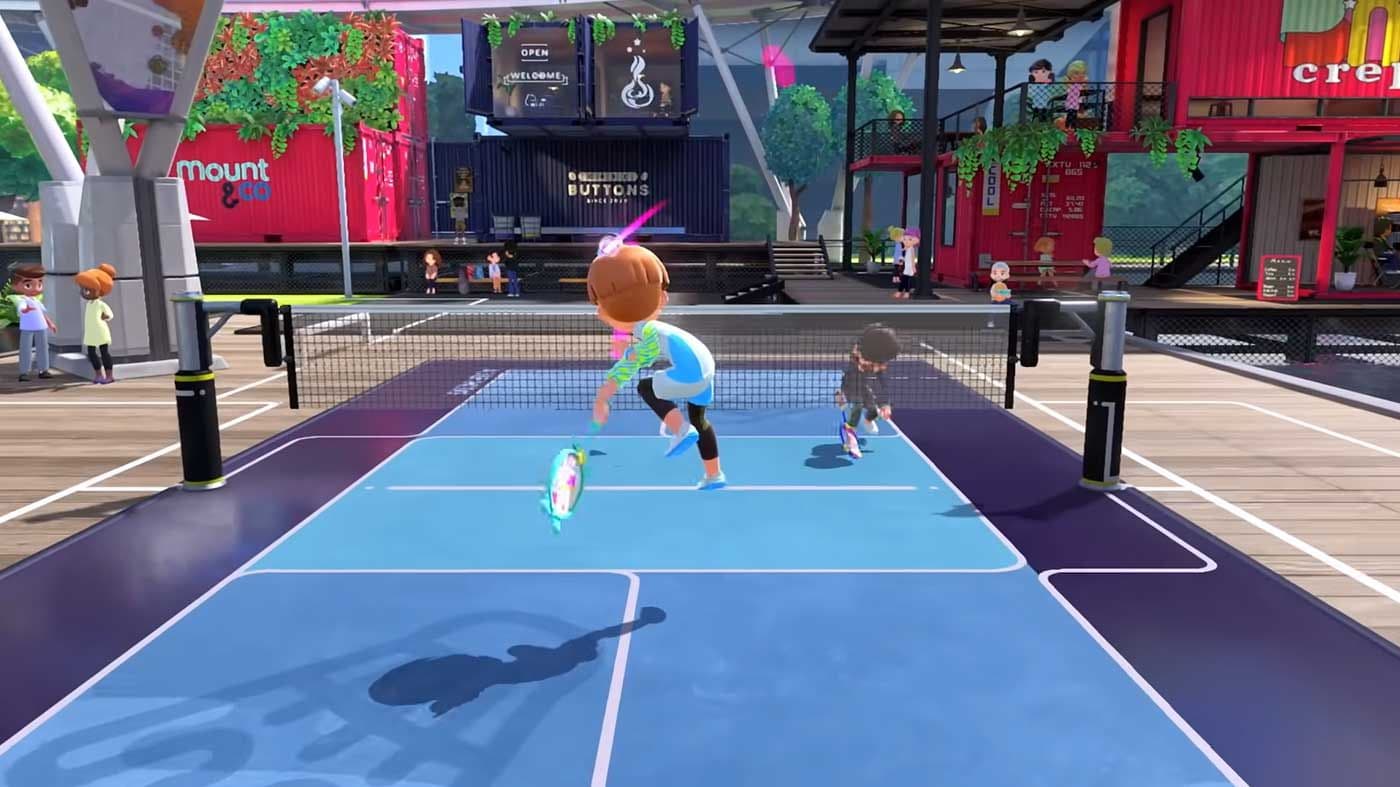
The remaining sports occupy a messy middle ground. Chambara, the successor to Swordplay, introduces welcome variety with its Charge and Twin swords, rewarding defensive play and powerful counters. However, matches are frequently undermined by finicky input detection; a swing that visually connects can inexplicably whiff if your opponent’s pose changed a frame earlier, a problem exacerbated in online play. Volleyball is the most complex, operating like a strict rhythm game with its bump-set-spike routine. Mastering the timing with a partner is uniquely rewarding, but its rigid structure makes it the least “pick-up-and-play” option, often feeling like rehearsing a dance rather than playing a sport. Finally, Tennis feels like a slighted legacy act. While polished and familiar, the forced doubles-only format and lack of a true singles mode are baffling omissions. It’s a competent rendition of the Wii Sports classic, but it’s ultimately overshadowed by the more nuanced and controllable Badminton.
This uneven roster creates a stark reality: you’re likely to spend 80% of your time with Nintendo Switch Sports Resort playing just two or three of its six offerings. The highs of Badminton and Bowling prove the concept still has legs, but the lows and middling entries highlight how a thin launch lineup magnifies every weakness. When the party ends, you’re not left with a dozen diversions to explore—you’re left wondering why so few of them truly stuck.
The Joy-Con Dilemma: Motion Control Precision vs. Bluetooth Lag
The promise of motion control is a simple one: you move, the game responds. Nintendo Switch Sports Resort inherits this fundamental contract from its Wii forebears, but the fine print reveals a crucial technological downgrade. The game expects you to trust the hardware implicitly, yet the hardware itself—the Switch's Joy-Con controllers—often proves to be an unreliable partner. This isn't a question of game design, but of raw technical execution, and it's where the experience most frequently stumbles.
The game's reliance on motion controls makes it incompatible with handheld mode.
The core issue is one of precision versus latency. The Wii Remote, especially with the Wii MotionPlus add-on, communicated with its sensor bar via infrared, creating a direct, responsive link. The Joy-Con, however, relies entirely on Bluetooth and internal gyroscopes, introducing a layer of wireless processing that can't be ignored. The result, as noted by multiple critics, is a perceptible lag and a frustrating lack of one-to-one accuracy. In Bowling, this manifests as "herky-jerky" avatar movements where your on-screen arm might stutter or fail to follow the full arc of your real-world swing. A perfectly executed backswing and release can result in a ball that veers wildly offline, a problem rarely encountered in the Wii original. The game tries to compensate with generous input windows, but this creates its own dissonance; your physical motion and the digital result feel disconnected.
This inconsistency is the silent killer of immersion. In Tennis or Chambara, a match can hinge on a single, perfectly timed swing. When that swing registers a half-beat late or not at all—despite your confident motion—it doesn't feel like you made a mistake. It feels like the game betrayed you.
This technological shortcoming is exacerbated by a glaring lack of in-game tools to manage it. Nintendo Switch Sports Resort offers no dedicated calibration menu or practice range to "tune" your Joy-Cons mid-session. Players are left to the system-level calibration, which is a blunt instrument ill-suited to the nuanced demands of sports simulation. Contrast this with Wii Sports Resort, where placing the Wii Remote on a flat surface to recalibrate was a quick, integrated fix. Here, when your sword swings start feeling floaty or your bowling ball refuses to hook, your only recourse is to stop playing and dive into system settings—a flow-breaking solution that highlights the problem rather than solving it.
The game's attempt to leverage unique hardware, the Leg Strap accessory, further illustrates this gap between concept and execution. Bundled with physical copies, the strap is used exclusively in Soccer's Shoot-Out mode, where you physically kick to take penalty shots. In theory, it's a novel extension of the motion control fantasy. In practice, it feels like a shallow tech demo. The mode itself is simplistic, and the strap's functionality wasn't even added to the main Soccer game until a post-launch update. It stands as a symbol of the game's broader technical approach: an interesting idea hamstrung by inconsistent implementation and a lack of meaningful integration.
For players coming from the Wii era, this will be the most tangible regression. You're not just playing a game with fewer sports; you're playing it with less precise instruments. The magic of Wii Sports was the near-instantaneous, believable feedback loop between your body and the screen. Nintendo Switch Sports Resort often breaks that loop, replacing wonder with a low-grade uncertainty. You stop thinking about strategy and start second-guessing your equipment. In a game built entirely on the joy of physical play, that’s a critical flaw.
Online Progression: Why Nintendo Switch Sports is a 'Heavily Online' Experience
Nintendo Switch Sports Resort positions its online features not as an optional extra, but as the core engine driving its longevity. This is the uncomfortable truth that defines the post-launch experience: the game is structured to funnel you toward its online servers, and the value proposition crumbles if you resist. The design intent is clear—to create a persistent, competitive ecosystem—but its execution often feels punitive toward casual or offline players, turning a family-friendly premise into a heavily online grind.
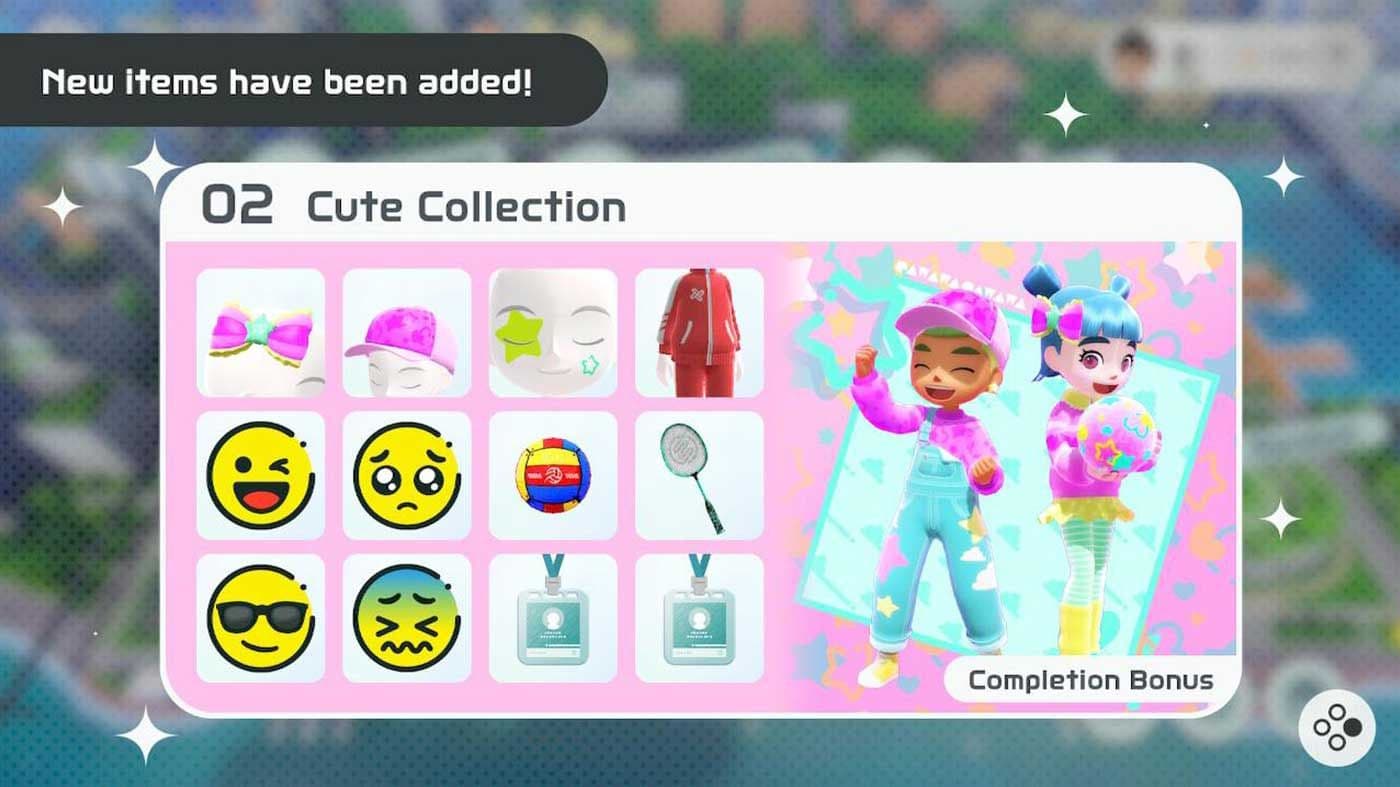
The game's progression system is heavily dependent on online participation.
The progression system is the most glaring example of this philosophy. Nearly all meaningful rewards—cosmetic gear for your Sportsmate, new equipment like rackets and balls, and even celebratory emotes—are locked behind the online play grind. You earn points primarily by playing against matchmade opponents over the internet. This creates a direct, and frankly cynical, link between your engagement with Nintendo’s online service and your sense of accomplishment within the game. Playing locally with friends on your couch, the very scenario that made Wii Sports a phenomenon, yields nothing. No points, no unlocks, no progression. It’s a baffling decision that actively disincentivizes the social, living-room play the series is famous for.
For offline-only players, the offering is even more threadbare. They are relegated to a limited tier where they can play against CPU opponents to unlock a paltry two items per week. This feels less like a feature and more like a free-to-play mobile game’s daily login bonus, a jarringly stingy model in a full-priced Nintendo release.
This content gating extends to the competitive structure. The Pro League, a 12-tier ranking system unlocked after a few online wins, is where the game theoretically offers its deepest challenge. However, locking this entire skill-based ladder—the only form of structured long-term goals—behind the online wall means solo players have no equivalent aspirational path. Your progression isn’t measured by mastering a sport’s mechanics against clever AI, but by your willingness to navigate the online matchmaking pool. Furthermore, accessing any of this requires a paid Nintendo Switch Online membership, adding a recurring, real-world cost to what is presented as the game’s primary endgame.
The online infrastructure itself has been a point of contention. While many reports praise its stability and quick matchmaking when it works, others highlight persistent connectivity issues. Critics noted instances where the game failed to connect to its servers even when other Nintendo titles like Mario Kart 8 Deluxe worked flawlessly on the same network. For a game that so aggressively ties progression to being online, such instability isn’t just an annoyance—it’s a barrier to accessing the core loop. Compounding this is a noted inadequacy in Nintendo’s username filters for online lobbies, allowing potentially inappropriate names to appear before matches. In a game explicitly marketed for all ages, this lack of a safe, curated online space feels like a significant oversight, placing an additional burden on parents.
In essence, Nintendo Switch Sports Resort’s online focus creates a stark divide in the player experience. For those with a stable connection, a paid subscription, and a tolerance for its grind, it offers a structured, if repetitive, path forward with the tense highlight of modes like Survival Bowling. For everyone else—the families playing together locally, the solo player, or someone without a reliable internet connection—the game feels abruptly hollow after the first few hours. It’s a design that prioritizes data-driven engagement metrics over the spontaneous, inclusive joy that built the franchise’s legacy in the first place.
Nintendo Switch Sports vs. Wii Sports Resort: Is it a Worthy Successor?
The most damning comparison for Nintendo Switch Sports Resort isn’t with its direct predecessor, Wii Sports Club, but with the 2009 classic Wii Sports Resort. That game set the standard for content volume and variety in a motion-sports package, launching with over a dozen distinct activities on a single disc. In that light, Nintendo Switch Sports Resort’s launch lineup of just six sports feels less like a sequel and more like a regression, a foundation built on nostalgia rather than ambition. The value proposition becomes strained when you realize you’re paying a premium price for a fraction of the content that defined the series’ peak.
Nintendo Switch Sports aims to recapture the magic of the original Wii Sports.
The sheer reduction in minigames is staggering. Where Wii Sports Resort offered a dozen diverse pursuits—from the precise calm of Archery to the chaotic fun of Power Cruising—Nintendo Switch Sports Resort launched with only six. This isn't just a smaller number; it's a fundamental shift in the package's identity. The original was a sprawling resort you could get lost in, filled with surprises like Island Flyover and the frantic Speed Slice. This sequel is a curated, and frankly anemic, sports complex. The absence of fan-favorite modes like Boxing and Baseball, staples of the very first Wii Sports, is a palpable omission that strips away a layer of nostalgic appeal. Even more egregious is the lack of Wii Sports Resort’s brilliant Table Tennis, a mode praised for its one-to-one motion precision that would have been a perfect showcase for the Joy-Cons. Launching without these classics makes the package feel incomplete, as if you’re buying a sampler platter when you were promised a full meal.
This content deficit is the single greatest factor undermining the game's long-term appeal. You can experience everything Nintendo Switch Sports Resort has to offer in an hour or two, and the lack of a deep single-player career or challenge mode means repetition sets in far sooner than it ever did on the Wii.
Nintendo’s post-launch support, while commendable, functions as a tacit admission of this initial shortfall. The free addition of Golf in November 2022 and Basketball in July 2024 did bolster the roster, but these updates arrived years apart and felt like re-incorporating content that should have been there from the start. Golf, a cornerstone sport from the original Wii Sports, was a glaring omission at launch. Its addition was welcome but reactive, a patch on the package’s most obvious wound rather than an expansion of an already robust offering. This piecemeal approach to content highlights the game's core problem: it launched as a bare-bones framework, asking players to pay full price for the promise of a complete experience later.
This brings us to the uncomfortable question of value. At a $40 digital or $50 physical price point, Nintendo Switch Sports Resort asks a significant investment for what many critics rightly labeled an "anemic" selection. When you compare it to the $50 Wii Sports Resort, which included a $20 MotionPlus accessory and twice the content, the modern offering feels disproportionately expensive for what's in the box. The game’s polished presentation and smooth online infrastructure don’t fully compensate for the sheer lack of things to do. For a family or group of friends, the limited roster means you’ll be cycling through the same few sports repeatedly, a reality that accelerates the erosion of novelty. While the core gameplay of its best sports remains satisfying, Nintendo Switch Sports Resort ultimately fails to justify its price as a standalone package when held against the richer, more complete experience of its direct ancestor.
Final Verdict: Is Nintendo Switch Sports Worth Your Time?
Nintendo Switch Sports Resort’s final verdict isn't found in its menus or its unlockable gear, but in the living room. This is a game built for the moment when the Joy-Con is passed to a skeptical parent or a competitive sibling, when the rules are understood instantly, and the room fills with laughter over a gutterball or a triumphant smash. That magic—the pure, uncomplicated joy of shared physical play—remains potent and is the single strongest argument for its existence. When it clicks, Nintendo Switch Sports Resort delivers exactly what its legacy promises: a fantastic, accessible party game. However, the moment the guests leave and you’re left alone with the package, the cracks in the foundation become impossible to ignore.
Nintendo Switch Sports is a strong recommendation for family gaming sessions.
The game’s success as a social catalyst is its greatest triumph. The six sports are perfectly calibrated for group play, requiring zero tutorial and fostering immediate, exaggerated competition. A session of Chambara devolves into wild, clashing flurries, Badminton rallies become intense personal duels, and the communal tension of Survival Bowling is a masterclass in shared spectacle. For families or casual gatherings, this is the game’s raison d'être, and it executes it with Nintendo's typical polish. The clean presentation, cheerful music, and intuitive controls create an environment where anyone can participate and feel accomplished. It’s here, in these social bursts, that the game justifies its purchase.
Yet, this strength is also its most glaring limitation. Nintendo Switch Sports Resort is a phenomenal event game, but a shallow experience game. Once the party ends, there’s remarkably little to sustain a solo player.
The lack of meaningful single-player content is the package’s most significant failing. There is no career mode, no engaging challenge ladder against AI, and no creative objectives beyond beating your own score. The offline offering is essentially a practice mode, with the paltry “two items per week” unlock system feeling like a cruel joke for those who prefer to play alone or locally. This design actively funnels players toward the online grind, which, while stable for many, is built on repetitive loops and cosmetic rewards that do little to deepen the mechanics. The novelty of swinging your arm is potent, but it wears thin after a few hours when you realize you’ve seen everything the game has to offer. Compared to the sprawling, explorable world of Wii Sports Resort, this feels like a demo kiosk.
This dichotomy between commercial success and critical reception is telling. With over 16 million copies sold, Nintendo Switch Sports Resort is undeniably a hit, proving the enduring power of the brand and the market's hunger for accessible, social play. The 72 Metacritic score, however, reflects the critical consensus that the package is thin, overpriced, and technically flawed compared to its ancestors. Both can be true: it sold because it perfectly serves a specific, casual audience—families looking for an easy, fun group activity—while critics rightly judged it as a lackluster sequel that failed to evolve or expand the formula meaningfully.
Ultimately, Nintendo Switch Sports Resort is best understood not as a game for you, but as a game for your living room. Its target audience isn't the solo completionist or the hardcore motion-control enthusiast; it's the parent, the casual group, or the host looking for a guaranteed icebreaker. For that audience, it delivers brilliantly in short, vibrant bursts. For anyone seeking depth, longevity, or a worthy successor to the content-rich Wii Sports Resort, the experience feels frustratingly hollow and compromised by its technical quirks and online-centric progression.
Pros:
- Unmatched Party Energy: The instant accessibility and physical fun create perfect conditions for family and social gatherings.
- Polished Core Gameplay: When the controls cooperate, sports like Badminton and Bowling are intuitive and deeply satisfying.
- Excellent Online Modes: Features like Survival Bowling add a brilliant, tense twist that showcases the potential of online play.
Cons:
- Anemic Content: Only six launch sports feels like a fraction of a full game, especially at full price.
- No Solo Depth: A complete lack of engaging single-player or career modes leaves the game feeling empty after the party ends.
- Inconsistent Tech: Joy-Con motion detection can be laggy and imprecise, breaking the immersion at crucial moments.
- Punitive Progression: Locking almost all rewards behind online play disincentivizes the local, social play the series is famous for.