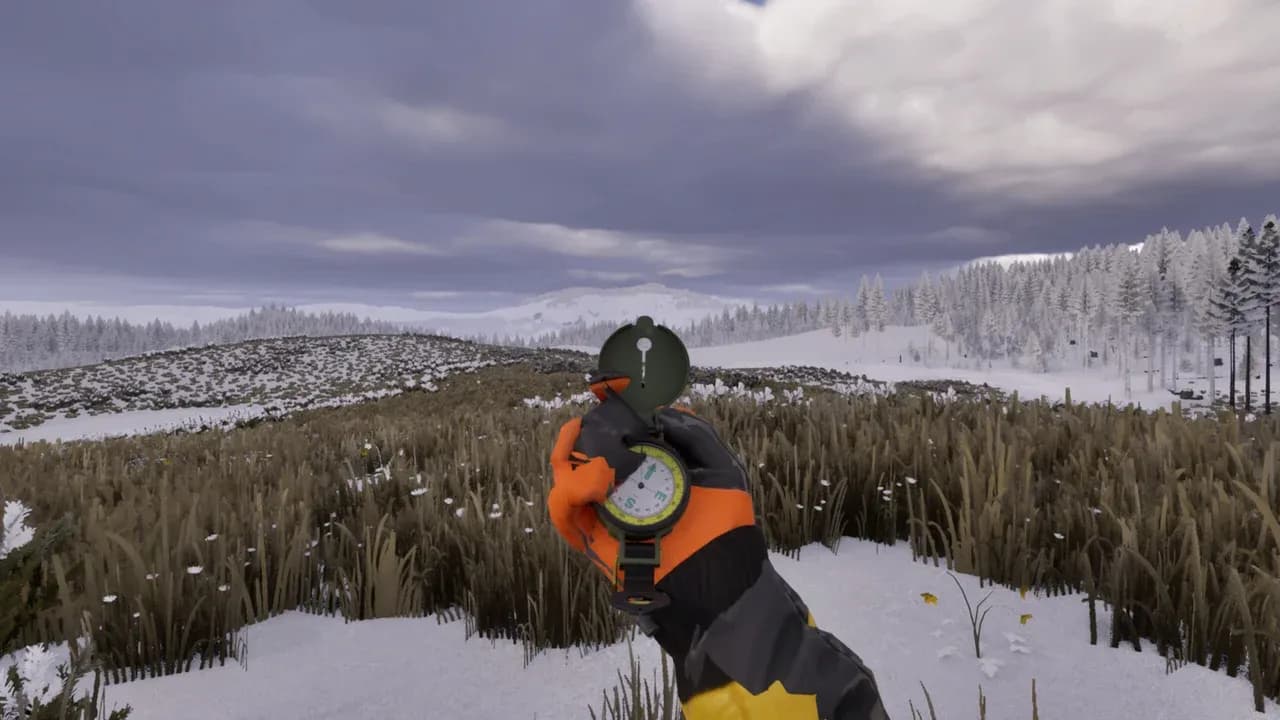

What is Prologue: Go Wayback? Brendan Greene’s Experimental Survival Vision
Brendan Greene, the architect of PUBG’s frantic last-man-standing chaos, has delivered a game where the most harrowing threat is a blank map. Prologue: Go Wayback! is less a traditional survival game and more a stark, uncompromising experiment—a tech demo in hiking boots, a walking simulator where the destination is secondary to the profound, often maddening, experience of getting there. From the studio that defined the battle royale, this is a deliberate, polarizing pivot into silence and solitude.

Prologue: Go Wayback! title screen and landscape.
The game’s identity is its most defining—and divisive—feature. To call Prologue: Go Wayback! a survival game feels incomplete; it strips the genre down to its barest philosophical bones. There are no zombies, mutants, or even wildlife to fight. Your adversaries are the cold, your own hunger, and the disorienting vastness of a 64km² wilderness. It borrows the tension of a walking simulator like The Long Dark but removes the comforting handrails of a narrative or recognizable landmarks. In practice, this creates an experience that is equal parts meditative and frustrating. You are not playing a story about survival; you are conducting a field test on your own capacity for it. This minimalist approach is a bold statement, but one that currently feels more like a proof-of-concept than a fully realized world.
This experimental nature is inextricably linked to its development pedigree. Prologue: Go Wayback! is the first public step from PLAYERUNKNOWN Productions toward the nebulous Project Artemis, a long-term vision for a “fully emergent digital world.” That ambition casts the current game in a specific light: it is a foundational testbed for terrain generation technology, not a destination product. Released into Early Access on November 20, 2025, following an Open Beta, its “Mixed” Steam reviews and peak of just 182 concurrent players at launch speak to a community grappling with this reality. Many players arrived expecting a game and found a prototype—a beautifully rendered, systems-driven sketch where the compelling “what if” is currently more potent than the “what is.”
The narrative minimalism underscores this experimental feel. You are Lucy, a lone survivor with zero backstory, no NPCs to meet, and no scripted dialogue. Your goal is simply to reach a distant Weather Tower. This isn't a flaw in storytelling so much as a deliberate design pillar; the story is meant to be the one you live through bad decisions and narrow escapes. Yet, in its current Early Access state, that story often lacks meaningful punctuation. You boil potatoes not for a grand tale of resilience, but because the clunky inventory system demands it, and your death from thirst feels less like a tragic end and more like a UI failure.
Greene’s vision is clear: to create a “lonely space” for contemplation, a digital woods to get lost in. Prologue: Go Wayback! achieves that atmosphere with startling success, building a world of swaying pines and howling winds that feels genuinely isolating. But as the opening act of a much larger project, it also lays bare the tension between technological ambition and engaging gameplay. This isn't just a game asking for your patience; it's a framework asking you to believe in a future its own systems have yet to earn.
The Tech Behind the Terrain: Machine Learning and Procedural Generation
The true star of Prologue: Go Wayback! is the world itself, a testament to a technological process that is both its greatest achievement and its most glaring weakness. The game’s 64km² wilderness, generated locally on your PC using an in-house machine learning model trained on real-world geospatial data, is an engineering marvel. Each playthrough births a unique landscape of staggering scale, where you can crest a ridge and see miles of untouched taiga stretching to a horizon defined by your own hardware. The ambition to move this processing offline, avoiding energy-guzzling data centers, is a quietly progressive design choice that feels philosophically aligned with the game’s back-to-basics survival ethos.
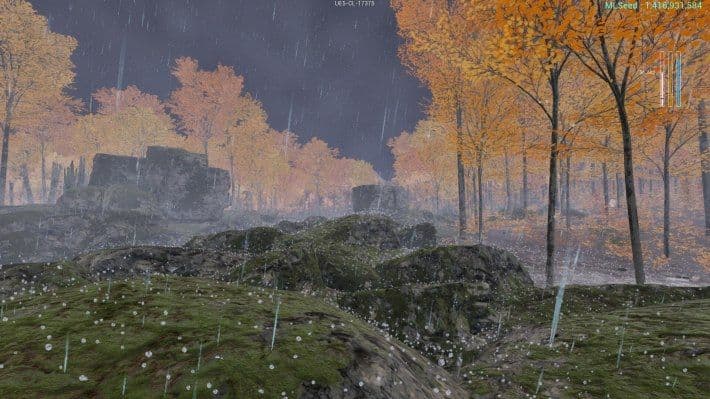
The game's engine generates complex weather patterns and shifting biomes.
This generation creates moments of genuine awe. Unreal Engine 5 renders a world of stunning, lonely beauty: individual blades of grass sway in unified wind, light filters through dense pine canopies, and a sudden blizzard can transform a sunny valley into a whiteout nightmare in minutes. The dynamic weather isn't just visual flair; it’s the core antagonist. You learn to read the sky, to feel the temperature drop in your gut before the UI tells you, and to seek shelter not because a quest marker says so, but because your survival depends on it. This environmental realism is Prologue: Go Wayback!’s most compelling argument for immersion.
However, the machine learning wizardry has a distinct, mechanical soul. The promise of a “meaningful” landscape often clashes with the reality of procedural generation. You’ll witness jarring biome transitions—a dense pine forest abruptly giving way to a barren tundra within a hundred meters, or a river that seems to flow uphill. These seams break the illusion of a real, living place, making the world feel “clipped together” rather than organically grown. While the map’s 8km x 8km footprint is comparable to Skyrim’s landmass, Prologue lacks the handcrafted density that makes Tamriel feel alive. Its vastness is often empty, a beautiful but hollow canvas.
The developer’s stance on AI adds a crucial layer to this analysis. Brendan Greene’s team has stated they “try not to use generative AI for the artistic process,” focusing their machine learning models solely on generating base terrain heightmaps from open-source data. This is a vital ethical distinction in an industry grappling with AI’s role, and it shows: the custom-made assets—the trees, rocks, and cabins—are clearly placed by human artists. Yet, this hybrid approach creates a dissonance. The hand-placed elements feel like set dressing on a machine-generated stage, never fully cohering into a believable ecosystem. The tech is impressive, but in its current Early Access state, Prologue: Go Wayback! feels like a breathtaking engine in search of a world worth driving through.
Hardcore Navigation: Why Getting Lost is the Main Gameplay Loop
Prologue: Go Wayback! doesn't have a difficulty slider; it has a map and a compass. The game’s most defining and punishing challenge isn't a monster or a storm, but the fundamental human act of orienting yourself in a world that refuses to help. Forget waypoints and glowing trails—here, navigation is the core gameplay loop, a brutal test of spatial reasoning that will either forge unforgettable emergent stories or leave you wandering in circles until you freeze. This is a game where getting lost isn't a failure state; it's the intended experience.
The system is deceptively simple and utterly uncompromising. You are given a physical paper map of the region and a compass. The map shows major terrain features—rivers, mountain ranges, clusters of cabins—but crucially, it does not show your position. To navigate, you must use the compass to take a bearing from a recognizable landmark, triangulate your rough position based on the terrain around you, and plot a course. It’s a method ripped from a backcountry survival manual, and it demands a level of engagement most games never ask for. The primary objective—reaching the distant Weather Tower, some 3 to 6 kilometers from your starting cabin—looms as a monumental task. I spent one run convinced I was mere minutes from the tower, only to crest a ridge and see its silhouette impossibly far on the opposite horizon, a soul-crushing moment of realization that was entirely my fault.
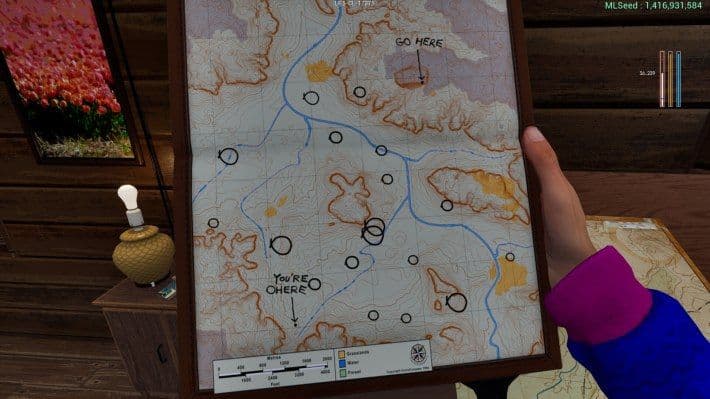
The paper map and compass system are central to the game's navigation loop.
This is where Prologue: Go Wayback!’s procedural generation transforms from a technical marvel into a philosophical design choice. In a static world like The Long Dark, you can learn landmarks over time. Here, every new run generates a fresh 64km² wilderness. That mountain you used as a guidepost last time is gone, replaced by a vast plain. The river you swore you’d follow next time might now be a series of disconnected ponds. This deliberate lack of persistent landmarks prevents you from ever developing muscle memory for the world, forcing you to rely solely on your real-time navigation skills. It’s a brilliant way to ensure each journey feels unique, but it also creates a steep, often alienating, learning curve.
For players without a natural sense of direction, this can be baffling and harrowing. The game provides no tutorials for map reading, and the interface offers no safety nets. My early hours were defined by a cycle of confident strides into the woods, growing unease as the terrain failed to match my expectations, and the slow, chilling dread of true disorientation. One memorable failure saw me wandering for an hour in a snowstorm, my map rendered useless by whiteout conditions, my character slowly succumbing to hypothermia because I couldn’t re-find a river I’d foolishly left behind. This death didn’t feel cheap; it felt like a direct, earned consequence of my poor planning and worse navigation.
Yet, it’s within these failures that Prologue’s most compelling stories are born. The emergent narrative isn't about Lucy, the silent protagonist; it's about you. It’s the tale of the time you misjudged a valley’s scale and had to desperately scavenge for mushrooms as your hunger meter flashed red. It’s the triumph of finally spotting the Weather Tower’s antenna through a break in the fog after what felt like a real-world day of trekking. The game’s minimalist framework becomes a canvas for these intensely personal journeys, where every near-miss and wrong turn writes a chapter. The design clearly intends for you to feel the weight of every decision—to appreciate the shelter of a cabin not because a quest gave it to you, but because you fought through a blizzard to find it.
However, this high-concept design also highlights the current emptiness of the world. While getting lost creates tension, the payoff for re-orienting yourself is often just… more walking. There are no hidden caves with lore, no dynamic wildlife encounters, no environmental puzzles to solve once you reach a point of interest. You correct your course simply to continue the grind of survival, making the navigation challenge sometimes feel like an end in itself rather than a means to a richer experience. Prologue: Go Wayback! has built a masterclass in immersive wayfinding, but in its Early Access state, it’s a class where the final exam is the only thing on the syllabus.
Survival Mechanics: Managing Fire, Hunger, and the Elements
In Prologue: Go Wayback!, you don't just start a fire; you perform a delicate, physics-driven ritual. This is the game's most fully realized survival mechanic, a moment where its commitment to realism crystallizes into something genuinely compelling. The process is methodical: you must find tinder, arrange sticks, place logs, and then manually strike your firestriker, watching sparks fly and praying they catch. The placement of materials and the current weather are critical—a sudden downpour or a poorly chosen, muddy patch of ground can render your efforts futile. This isn't a button press; it's a tense, tactile mini-game where success brings a profound wave of relief and warmth, and failure can mean a slow, shivering end. It’s a brilliant system that grounds you in the world, making you feel every variable in the fight against the cold.
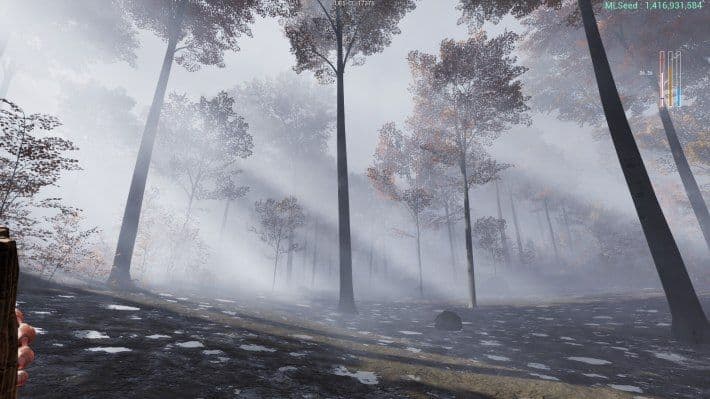
The muddy terrain can be a hurdle for players managing their survival.
This granular attention to fire-starting throws the rest of the survival mechanics into stark relief. Where the fire feels immersive, the management of your other vital stats—hunger, thirst, and body temperature—feels like a . While you must forage for mushrooms and berries to stave off starvation, the systems are surprisingly forgiving in the demo. I often found that a small cluster of mushrooms was enough to replenish my hunger meter significantly, removing the desperate, constant scavenge that defines the genre’s best moments. The threat of dehydration is similarly muted, as the game’s large rivers are a reliable, ever-present source. The tension comes not from scarcity, but from the clunky act of interacting with these systems.
And here is where Prologue: Go Wayback!’s promising foundation cracks. The user interface is a constant antagonist, turning basic survival tasks into frustrating puzzles. Your inventory is maddeningly small, forcing you to carry essential items like firewood under your arm—a charming idea that quickly becomes a logistical headache when you’re trying to manage multiple resources. More egregious is the interaction system. You can find a pot, a cabin with a tap, and a working hob, but the game provides no intuitive way to combine these elements to boil water or cook food. As one preview noted, you’re left clicking on everything in vain, watching your character starve with the tools for salvation sitting uselessly in your hands. This isn't a challenging survival simulation; it's a UI failure that breaks immersion and breeds frustration.
This clunkiness extends to the world itself. Many objects are purely decorative, creating a tantalizing but hollow sense of possibility. Containers don’t open, non-river water sources like puddles or rain are non-functional, and the cabins you fight so hard to reach often contain nothing but empty shelves. The world of Prologue is beautiful and dangerous, but it is not interactive in a meaningful way. You are surviving in it, but rarely with it, using only a narrow band of prescribed mechanics while the rest of the environment remains a stunning, untouchable diorama.
Where the systems do dynamically engage with you is through the masterful weather. A clear day can turn into a life-threatening blizzard in minutes, reducing visibility to zero and plummeting your core temperature. Rain doesn't just look pretty; it soaks your clothing, drastically increases the difficulty of starting a fire, and turns solid ground into slow, slogging mud. This is the game’s true environmental challenge, and it works. You learn to read the sky, to hustle for shelter before a storm hits, and to understand that a sunny ridge is a safer bet than a fog-shrouded valley. The weather provides the organic, unpredictable pressure that the simplistic hunger and thirst meters lack. It’s in these moments, fighting through a whiteout to find a lean-to you marked on your map hours before, that Prologue: Go Wayback! fulfills its hardcore survival promise. The tragedy is that you must wrestle with an obtuse interface to experience it.
Performance and Polish: A Technical Test in Early Access
Prologue: Go Wayback! is a game of profound silences, but the most damning quiet comes from its own systems. While the atmosphere hums with ambient dread, the gameplay loop often echoes with emptiness, and the technical execution on standard hardware can shatter immersion before you even step out the cabin door. This is the uncomfortable reality of its Early Access state: a compelling technological vision currently housed in a frustratingly unpolished and content-starved shell.
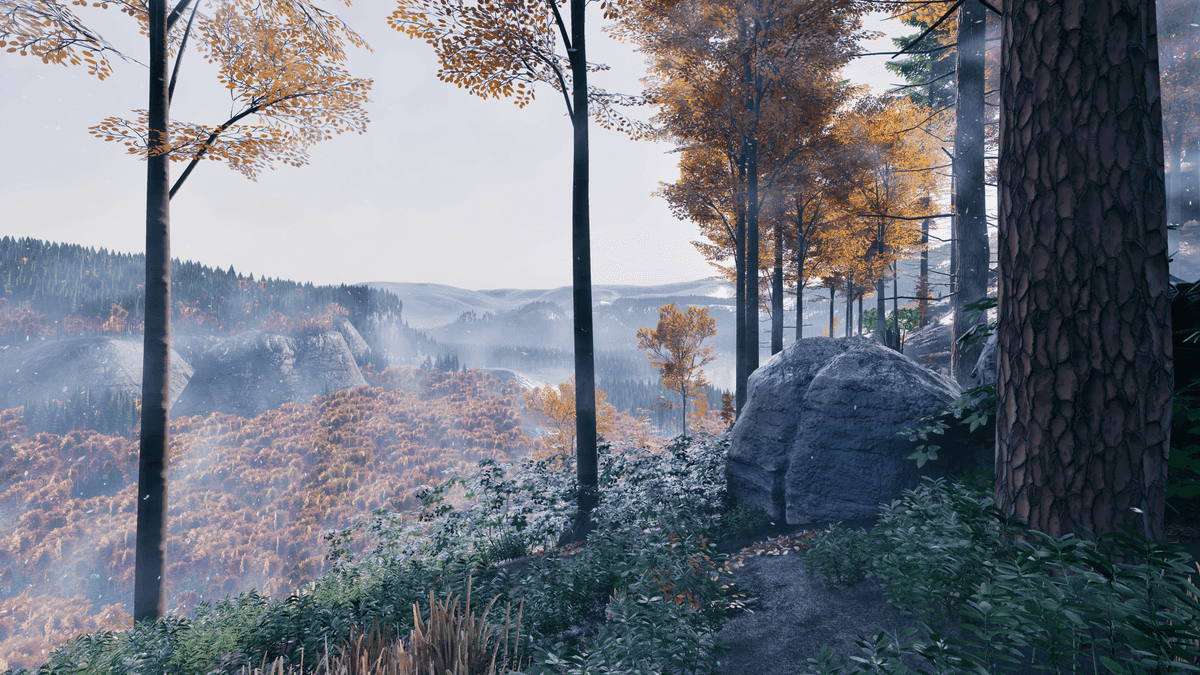
The game features impressive lighting and atmospheric effects.
The technical performance is the first and most immediate barrier. On recommended hardware like an RTX 2080, the Unreal Engine 5 landscapes can be breathtaking. Yet, on more modest setups hovering around the minimum GTX 1070 spec, the experience is riddled with instability. Players report frequent, jarring framerate drops, particularly when transitioning between dense forest and open plains—precisely the moments meant to inspire awe. Worse are the outright visual bugs: tree leaves flickering like strobe lights, a glitch so pervasive that players must manually disable certain graphical settings to play comfortably. These aren't occasional hiccups; they're persistent reminders that you're testing an engine, not inhabiting a world. The high system requirements (16GB RAM, a GTX 1070 minimum) feel less like a demand for visual fidelity and more like a warning of incomplete optimization.
This technical roughness mirrors the game’s foundational emptiness. Prologue: Go Wayback! generates a 64km² world, but populates it with almost nothing. There is no wildlife to hunt or evade, no enemies beyond the weather, and no secrets tucked into its countless hollow logs. The cabins you desperately seek for shelter are almost always barren, their shelves empty, their containers non-interactive. You can find a pot, a cabin with a tap, and a stove, but the game provides no logical way to combine them to boil water—a maddening UI failure that turns survival into pointless inventory tetris. The reward for a successful three-hour trek to a point of interest is often just the ability to continue walking.
This content void fundamentally alters the survival fantasy. In a genre defined by escalating threats and hard-won progression, Prologue offers only static maintenance. You forage for mushrooms not to craft medicines or prepare for a hunt, but simply to refill a meter. You reach a new ridge not to discover a hidden lore document or a new crafting blueprint, but to see more of the same beautiful, untouchable wilderness. The tension of navigation and weather management is undercut by the certainty that nothing dynamic or unexpected will ever emerge from the trees. It creates a peculiar, existential loneliness: you are not surviving in a world, but on a beautifully rendered, largely inert stage.
Where the game’s minimalism works brilliantly is in its sound design. Prologue: Go Wayback! features no musical score whatsoever. Your journey is scored by the relentless ambience of the environment: the groan of wind through pine needles, the distant creak of a cabin window, the oppressive silence of a heavy snowfall. This choice is a masterstroke, amplifying the isolation to almost unbearable levels. Every snapped twig underfoot is a personal event; the sudden onset of rain feels like a personal assault. The sound design does the heavy lifting that the absent content cannot, building a palpable, nerve-wracking tension out of thin air. It’s a testament to the power of restraint, proving that the scariest thing in the woods is often just the woods themselves.
Available on Steam and the Epic Games Store for 19,99€ (with a free demo that accurately represents the experience), Prologue: Go Wayback! positions itself as an affordable experiment. The price reflects its current reality: this is a paid technical demo, a glimpse at a process, not a finished product. The "Mixed" Steam reviews, citing a "poorly optimized tech demo" and a "non-glorified walking simulator," are harsh but accurate for the version that exists today. The promised year-long Early Access roadmap—with plans for climbing, expanded cooking, and new environmental variety—offers hope, but the foundation upon which those features must be built is currently shaky, both technically and philosophically. You are not paying for a game as much as you are funding faith in a future iteration, one that must fill its stunning, silent world with reasons to endure the journey.
Final Verdict: Is Prologue: Go Wayback! Worth Your Time?
Prologue: Go Wayback! is a game that demands you meet it on its own uncompromising terms. There is no middle ground; you will either find its stark, systems-driven solitude to be a meditative revelation or a maddening, empty chore. This final verdict hinges not on what the game is today—a beautiful, flawed, and profoundly incomplete experiment—but on whether you are willing to invest in the promise of what it could become.
The game’s current value proposition is its most contentious aspect. For its €19.99/$6.99 price tag, you are not purchasing a finished product but a stake in a long-term technological vision. The “Mixed” Steam reviews, with players accurately labeling it a “poorly optimized tech demo,” reflect this dissonance. You pay for the privilege of stress-testing a remarkable world-generation engine, not for a curated survival adventure. The hours you spend are less about entertainment and more about participation in a public beta, where your frustration with a non-functional cooking pot is as much a data point for the developers as it is a gameplay experience. This makes a standard recommendation nearly impossible; buying Prologue today is an act of faith in Brendan Greene’s roadmap, not a transaction for immediate satisfaction.
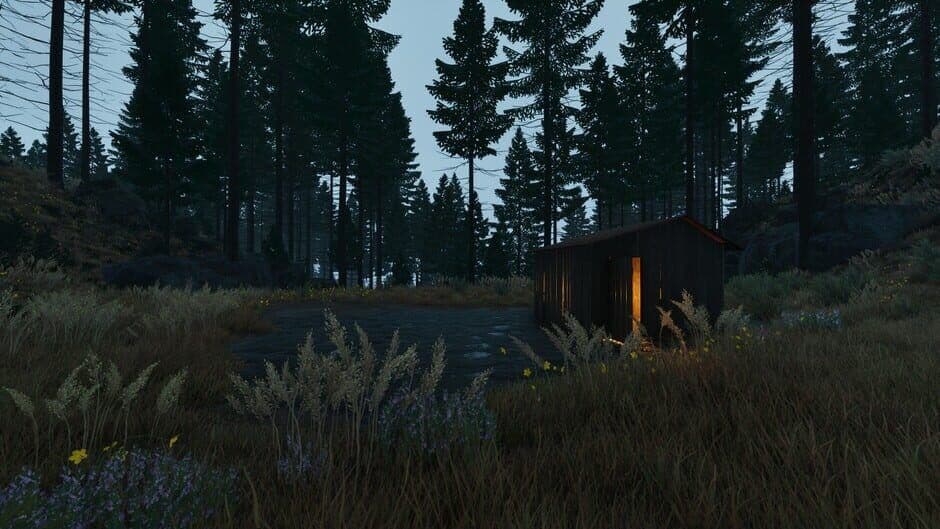
A look at the current state of the game's environment.
This places the game in a razor-sharp niche. Its target audience is vanishingly specific: hardcore survival simulation devotees who relish brutal realism for its own sake, and fans of contemplative “walking simulators” who find meaning in atmosphere alone. If your ideal gaming session involves meticulously plotting a course on a paper map and deriving satisfaction solely from not dying for another hour, this is your cathedral. For anyone requiring directed goals, tangible progression, or even basic interactivity, Prologue will feel like a beautiful, high-resolution screensaver with punishing UI. The game earns its atmosphere of profound isolation, but it offers little beyond that atmosphere to engage with.
The atmospheric immersion is, without question, the game’s crowning achievement. The complete absence of a musical score, replaced by the relentless whisper of wind, the creak of trees, and the oppressive silence of snowfall, builds a sense of existential dread that few games match. You feel every shiver, every moment of disorientation, in your bones. This is where the design philosophy succeeds spectacularly. The problem is that once the awe of the environment wears off—and it does, after you’ve seen your fifth procedurally generated, empty cabin—you are left with the core gameplay loop. And that loop, in its current Early Access state, often feels pointless. There is no narrative payoff for reaching the Weather Tower, no secret to uncover, no new mechanic unlocked. You survive simply to continue surviving, a circular journey with no climax. The lack of any dynamic threats beyond the weather turns tension into monotony, making the act of walking feel like an end in itself rather than a means to discovery.
This critique is tempered, but not erased, by the developer’s ambitious one-year Early Access roadmap. Plans for climbing mechanics, fuel and electrical power systems, deeper cooking and foraging, and even multiplayer are all promising. These features could transform the empty world into a dynamic sandbox. However, the foundation they must build upon is currently shaky. Adding a climbing system to a world where most rock faces are visual backdrops, or a power grid to cabins that are currently hollow set pieces, will require a fundamental re-population of the entire game world. The roadmap is a necessary promise, but it highlights how much of the essential “game” is still missing.
Final Verdict
Prologue: Go Wayback! is a fascinating, flawed prototype that is impossible to judge as a traditional game. It is a stunning technical showcase trapped in a frustratingly bare-bones shell. Your purchase decision rests entirely on your appetite for experimental, community-driven development and your tolerance for using a product that feels years away from its potential.
Pros:
- Innovative Terrain Technology: The machine-learning-powered, locally-generated 64km² worlds are an engineering marvel, creating a unique canvas for every journey.
- Unmatched Atmosphere: The sound design and visual fidelity create a profound, nerve-wracking sense of isolation that is genuinely affecting.
- Realistic Fire Mechanics: The tactile, physics-based fire-starting is a masterclass in immersive survival design.
- Unique Navigation Challenge: The map-and-compass system forces a level of engagement and spatial awareness that is both punishing and uniquely rewarding.
Cons:
- Empty World: A crippling lack of meaningful content, interactivity, or dynamic systems makes the vast wilderness feel hollow.
- Poor Optimization & Bugs: Frequent framerate drops and visual glitches (like strobe-light leaves) break immersion on all but the highest-end hardware.
- Clunky, Obtuse UI: A maddeningly small inventory and unintuitive interaction systems turn basic survival into a fight against the interface.
- Lacks Clear Objectives: With no narrative, rewards, or escalating threats, the core loop can feel aimless and repetitive.
Is it worth your time? Not today, for most people. Download the free demo—it is a perfectly accurate slice of the experience. If you find yourself captivated by its specific, lonely vibe and are willing to endure its rough edges as part of a year-long co-development journey, then consider the Early Access purchase an investment. If you need a complete, polished, and engaging survival game right now, Prologue: Go Wayback! is a path best left unexplored until its future updates deliver on its immense, but still theoretical, promise.