Persona 5 Narrative: A Stylish Rebellion Against Corrupt Authority
Persona 5 doesn’t just want to tell a story about teenage rebellion; it wants to make you feel like the rebel. The narrative kicks off with a masterclass in tension, dropping you into a police interrogation room where your character, bruised and cornered, recounts the events that led to the formation of the Phantom Thieves. This frame story isn’t just stylish flair—it’s a narrative engine that infuses every early heist with a delicious sense of dread. You’re not just infiltrating a villain’s mind; you’re piecing together the confession that will either exonerate or condemn you. It’s a structural gamble that pays off spectacularly, transforming what could be a straightforward superhero origin into a gripping, non-linear mystery where the question isn't if you succeed, but how you ended up here.
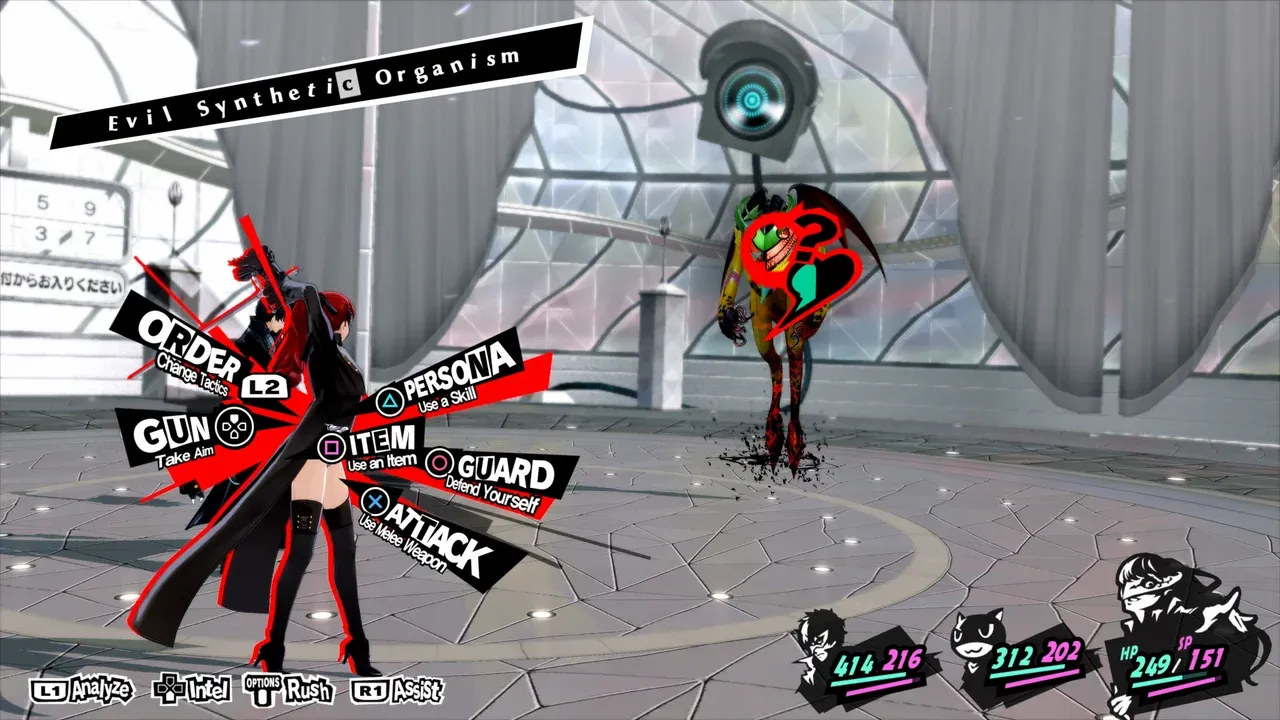
Palaces represent the distorted psyches of the game's corrupt antagonists.
Where Persona 5 truly distinguishes itself from its predecessors is in its unflinching commitment to mature, often uncomfortable themes. This is a game that uses its supernatural premise to tackle real-world corruption head-on. Your first major target isn’t a demon lord, but a high school gym teacher, Kamoshida, whose Palace—a twisted castle where students are enslaved—is a direct, horrifying metaphor for the physical and sexual abuse he wields as power. The game refuses to shy away from the consequences, depicting suicidal ideation, exploitative labor, and systemic apathy with a gravity that grounds the fantastical plot. Persona 5 understands that for its rebellion to have weight, the authority it challenges must feel authentically, despicably human.
This is the game’s core narrative strength: its villains aren’t cartoonish monsters, but warped reflections of societal failings, making each victory feel less like saving the world and more like fixing a broken piece of it.
However, this ambitious storytelling is often hamstrung by a chronic case of narrative bloat. The game has a profound distrust of your ability to remember plot points, leading to scenes where characters will explain a plan, then text each other about the plan, and finally have Morgana reiterate the plan aloud. Research suggests upwards of 20-30% of the dialogue could be cut without losing any character or plot development. This over-explanation creates frustrating pacing valleys, especially in the latter third, where the urgency of the global conspiracy is repeatedly paused for redundant recaps. It’s the game’s most glaring flaw—a lack of editorial discipline that tests your patience in a 100-hour journey.
This leads to the story’s most compelling, yet under-explored, tension: the moral ambiguity of the Phantom Thieves’ mission. The act of “stealing hearts” to force a public confession is presented as righteous vigilante justice, but the ethical implications are profound. Are you rehabilitating criminals or performing psychic surgery without consent, effectively obliterating their free will? The game occasionally dips a toe into this debate through public opinion polls and in-party disagreements, but it ultimately sidesteps a deep examination in favor of a more black-and-white climax. It’s a missed opportunity to add genuine philosophical depth to its stylish crusade, leaving a fascinating moral quandary largely as set-dressing.
Despite this, Persona 5’s narrative achieves a remarkable thematic cohesion. It perfectly marries its “picaresque” coming-of-age tone—the story of outcasts and misfits finding their place—with the visceral fantasy of supernatural vigilantism. The daily life of a student, with all its mundane stresses and social anxieties, isn’t separate from the heists; it’s the foundation that makes them meaningful. Your struggle to increase your Guts stat to stand up to a bully is narrative training for standing up to a god. This seamless blend ensures that the stakes always feel personal. The rebellion isn’t just against corrupt adults; it’s against a world that has already written you off, making every cleared Palace and strengthened bond a triumphant middle finger to a broken status quo.
The Phantom Thieves: Character Depth and Social Simulation Mechanics
Persona 5's greatest trick isn't stealing hearts—it's making you care about the people holding them. The game’s dual identity as a supernatural heist thriller and a high school life simulator isn't just a clever juxtaposition; it's a masterfully engineered feedback loop where your social investments pay off in tangible, thrilling ways. Where other RPGs treat character relationships as narrative garnish, Persona 5 makes them the core of its mechanical and emotional progression. This is a game that understands the power of a well-timed cup of coffee, a study session in the library, or a quiet evening tending to a plant, weaving these mundane moments into the very fabric of your power as a Phantom Thief.

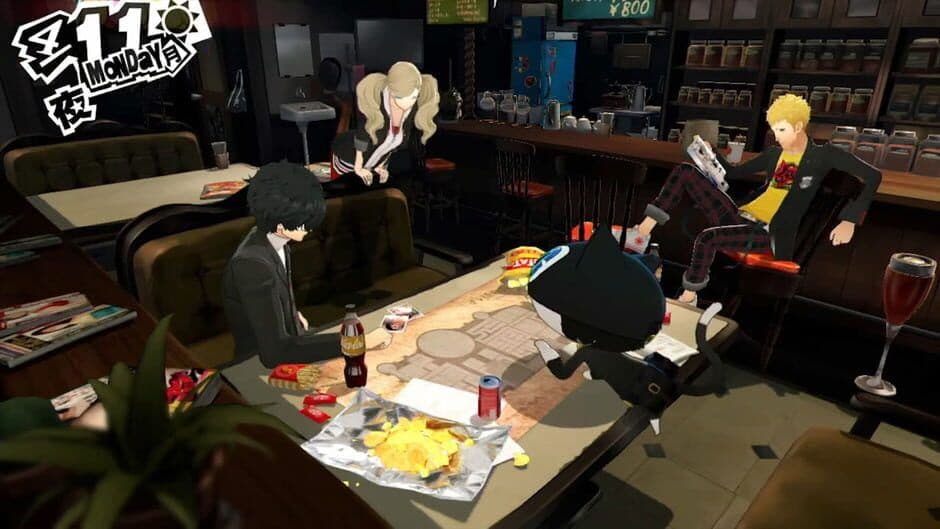
Ann Takamaki is one of the many deep characters you can bond with.
The Confidant system is the brilliant engine of this design. Each relationship, from your gruff guardian Sojiro to the enigmatic fortune teller Chihaya, unlocks a distinct gameplay perk that directly alters your strategic options. This isn't just a token "+5% damage" bonus. Befriending the doctor, Takemi, opens up an expanded, powerful inventory of healing items. Helping the teacher, Kawakami, eventually lets you craft lockpicks at night or skip classes to explore, effectively creating time. These aren't arbitrary rewards; they're logical extensions of the characters' roles in your life, making every afternoon spent with them feel like a meaningful investment rather than a chore. The system creates a constant, delicious tension in your daily schedule, transforming Tokyo from a backdrop into a living spreadsheet of opportunity cost.
This is where Persona 5 earns your long-term commitment: by making friendship a strategic resource as vital as your strongest Persona.
However, this nuanced system sometimes clashes with the broad strokes of the main party's writing. While characters like the artist Yusuke and the hacker Futaba are granted compelling, tragic backstories that unfold over their Confidant arcs, others feel trapped by their initial archetypes. Ryuji Sakamoto, the loud-mouthed best friend, bears the brunt of this. His character growth is frustratingly minimal; he remains the impulsive "bro" from start to finish, with his constant shouting and lack of tact often serving as the punchline rather than a flaw he meaningfully overcomes. Compared to the deeply personal journeys of Persona 4's party, some of the Phantom Thieves can feel like they're playing predetermined roles, with their development plateauing once they join the team. Ann Takamaki’s treatment is particularly problematic. Despite a powerful introductory arc dealing with predation and objectification, the narrative and her own teammates frequently reduce her to her appearance, undermining her agency and complexity in favor of tired fan-service.
This "restricted freedom" of the calendar system is the game's most ingenious and stressful mechanic. Every in-game day presents a brutal calculus: do you boost your Kindness stat by caring for a plant, work a part-time job for cash, or deepen your bond with a Confidant to unlock a crucial combat ability? You cannot do it all. This enforced scarcity of time transforms simple choices into weighty sacrifices, making your personal version of Joker uniquely yours. The pressure to optimize is immense, but it also makes every accomplishment—from acing an exam to finally unlocking the Baton Pass ability from a party member—feel genuinely earned. The game masterfully uses this structure to mirror the anxiety of teenage life, where every hour feels like a currency spent on shaping your future.
Sadly, Persona 5’s progressive themes of fighting corruption are marred by regressive character portrayals. The most egregious examples are two gay NPCs who are presented solely as predatory caricatures, leering at and aggressively hitting on the teenage boys. This isn't characterization; it's a harmful, outdated stereotype that feels grossly out of step with the game's otherwise empathetic critique of societal prejudice. It's a baffling, offensive misstep that sours the inclusive message the game otherwise strives for.
Yet, for every misstep with its core cast or side characters, the game redeems itself with its phenomenal supporting Confidants. Sojiro’s arc from distant landlord to proud father-figure is one of the most heartfelt narratives in the game. The quiet determination of the shogi prodigy Hifumi, or the tragic resilience of the politician Toranosuke, provide some of the most mature and grounded storytelling Persona 5 has to offer. These relationships, often divorced from the main Phantom Thieves drama, showcase the writing at its best: small, human stories about struggle and connection that make the sprawling city of Tokyo feel authentically lived-in. They are the hidden treasures of the social simulation, proving that the most rewarding heists in Persona 5 aren't for treasure, but for trust.
Persona 5 Combat: Refining the Turn-Based JRPG Formula
In Persona 5, the turn-based JRPG formula isn't just refined; it's injected with a shot of adrenaline and style that makes its hundred-hour campaign feel brisk. This is where the game earns its reputation as a masterclass in the genre—by transforming the traditional menu-driven slog into a dynamic, strategic conversation. The core loop is deceptively simple: exploit an enemy's elemental weakness to knock it down, earn an extra turn, and repeat. But the execution is so slick, with fluid animations and a relentless, jazzy soundtrack, that it feels closer to a rhythm game than a static tactical affair. This sense of momentum is Persona 5's greatest combat achievement, making random encounters something to anticipate, not dread.
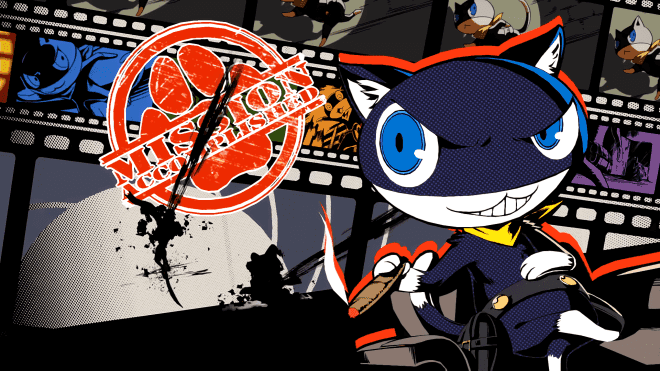
Exploiting elemental weaknesses is key to mastering Persona 5's combat.
The Baton Pass is the system's brilliant, beating heart. After exploiting a weakness, you can pass your extra turn to a teammate, boosting their damage and potentially setting off a chain reaction. This transforms combat from a series of isolated attacks into a fluid, team-based puzzle. It forces you to think two moves ahead, considering not just which enemy is weak to fire, but which party member can follow up with a nuclear blast to keep the chain going. In practice, it's exhilarating—a well-executed Baton Pass chain that wipes a tough encounter before the enemy can even act is one of the most satisfying loops in modern RPGs. It elevates the "rock-paper-scissors" weakness system from a basic requirement to a platform for high-level, synergistic play.
Where Persona 5 truly distinguishes itself from its peers is in its willingness to give enemies a voice. The return of the Negotiation system, absent since the mainline Shin Megami Tensei games, adds a layer of personality and risk to every "Hold Up" state.
When you knock down all enemies, you enter a "Hold Up," presenting a choice: unleash a devastating All-Out Attack or try to talk. Negotiating with a Shadow—a demon pleading for its life, a proud knight demanding a challenge, a timid spirit asking for money—is a mini-game of personality and persuasion. Successfully recruiting them nets you a new Persona, while failure can lead to them fleeing, attacking, or giving up items. This system ensures that no two enemy encounters are purely mechanical; they have character, and your approach must adapt. It’s a brilliant way to make the core grind of collecting monsters feel organic and engaging.
However, this otherwise elegant system is shackled by a punishing, archaic relic: the instant Game Over if your protagonist falls in battle. It doesn’t matter if your other three party members are at full health with a full arsenal of revival items; if Joker’s HP hits zero, it’s back to your last save. This is particularly brutal given the prevalence of enemies with instant-kill Curse or Bless skills. The frustration isn't just in the loss of progress—it’s in the feeling that your strategic management of the entire party is rendered meaningless by a single unlucky critical hit or a poorly resisted Hama/Mudo spell. While later difficulties and the Royal edition soften this blow with more generous retry options, in the base Persona 5 experience, it’s a harsh, often unfair penalty that feels at odds with the game’s otherwise accessible and empowering design.
Thankfully, death is often a prompt to revisit the game’s deepest and most rewarding mechanic: Persona Fusion in the Velvet Room. This is where Persona 5’s strategic depth expands exponentially beyond the battlefield. By fusing captured Personas, you can create new, more powerful avatars, meticulously inheriting specific skills from the "parents" to cover weaknesses or stack powerful buffs. The system is a playground for min-maxers—you can spend hours theory-crafting the perfect Persona to nullify physical damage, absorb fire, and carry the devastating Megidolaon spell. This deep customization directly feeds back into combat, allowing you to tailor Joker to counter specific palace rulers or to create a Swiss Army knife build that handles any random encounter. It’s a brilliantly addictive meta-game that ensures your power progression is always in your hands, not left to random drops.
Ultimately, Persona 5’s combat is a triumph of style meeting substance. The flashy UI, the killer soundtrack, and the slick presentation serve a system of remarkable strategic depth, anchored by the brilliant Baton Pass and the endlessly engaging Persona fusion. While the punishing Game Over condition is a glaring blemish, it’s not enough to sink a system that remains relentlessly engaging for the entirety of its epic runtime. This isn't just a good turn-based system; it's a compelling argument for the genre's continued vitality, proving that thoughtful iteration and sheer confidence can make menus feel like the most exciting action on screen.
Palaces vs. Mementos: A Tale of Two Dungeon Designs
Persona 5 presents its dungeon crawling with a stark, almost schizophrenic duality. On one hand, you have the meticulously crafted, story-driven Palaces—each a masterpiece of thematic game design. On the other, you have the endless, grindy sprawl of Mementos. This isn't just a difference in aesthetics; it's a fundamental clash in design philosophy that defines the rhythm of your 100-hour journey, for better and for worse.

Story progression is tied directly to the successful infiltration of handcrafted Palaces.
The Palaces are where Persona 5’s ambition soars. These are not the randomly generated hallways of Tartarus or the Midnight Channel; they are handcrafted psychological landscapes that double as character studies. Kamoshida’s castle, with its leering statues and enslaved student-cognitions, is a visceral, disgusting manifestation of his predatory ego. Madarame’s art museum, a hollow gallery of forgeries, perfectly mirrors his parasitic philosophy. This is where the game’s narrative and level design fuse into something brilliant. The bank vault’s security laser puzzles and the casino’s shifting, rigged floors aren't just obstacles—they are extensions of the villain’s distorted worldview, making exploration a process of psychological profiling. The scope is immense, with each Palace dwarfing anything in the series' past, offering multi-hour expeditions filled with unique mechanics, visual spectacle, and smart environmental storytelling.
This is Persona 5 at its confident peak: using its dungeon design not just to house combat, but to dissect its villains’ souls.
To navigate these spaces, the game introduces light stealth and traversal mechanics. The Third Eye highlights interactive objects and enemy sightlines, while the cover system allows for ambushes. In theory, this adds a welcome new dimension to exploration, breaking up the combat-puzzle rhythm. In practice, it’s a system with unrealized potential. The enemy AI is simplistic, and the level geometry often funnels you into predictable, boxy corridors where the stealth feels more like a mandatory mini-game than an emergent tool. While palaces like the futuristic spaceship or the pyramid offer clever verticality and visual variety, others can devolve into repetitive key-card hunts behind identical-looking doors. The intent to evolve beyond Persona 4’s hallways is clear, but the execution sometimes feels like a stylish coat of paint on a familiar, linear foundation.
Then there’s Mementos. If the Palaces are the curated, five-star heists, Mementos is the monotonous daily commute. This procedurally generated network of subway tunnels exists as a grinding pit and a repository for side-quests, and it feels every bit as utilitarian as that sounds. The palette shifts from garish green to ominous red as you descend, but the fundamental experience remains the same: identical, winding corridors populated by Shadows you’ve already fought. It serves a necessary function, allowing you to farm experience, money, and recruit Personas you might have missed, but it is the definition of a chore. The side stories housed here—small-scale “changes of heart” for minor antagonists—are often poignant vignettes, but they’re buried under layers of repetitive combat in a visually sterile environment. Mementos is the game conceding that its brilliant Palace design is too resource-intensive to sustain for all content, and the drop in quality is painfully apparent.
This creates Persona 5’s most pronounced gameplay rhythm: a thrilling, focused story dungeon that represents a narrative and gameplay climax, followed by a slog through Mementos to clean up side objectives and prepare for the next big score. The contrast is so severe that it can feel like playing two different games. Where a Palace demands your full attention with its bespoke puzzles and aesthetic, Mementos asks for your patience, best tackled with a podcast in the background. It’s the one area where the game’s otherwise impeccable sense of style completely falters, revealing the grind that its brilliant theming usually works so hard to disguise. For a game about rebellion, it’s ironic that its most repetitive element is a mandatory subway ride.
Audio-Visual Swagger: The Unmatched Style of Persona 5
Audio-Visual Swagger: The Unmatched Style of Persona 5
Persona 5 doesn't just look and sound good—it weaponizes its aesthetic. From the moment the acid-jazz horns of "Life Will Change" kick in over a slick, animated title sequence, the game establishes an unshakeable confidence. This isn't a passive presentation; it's an aggressive, cohesive statement of identity that bleeds into every menu, battle transition, and idle animation. Persona 5’s style is its substance, a rebellious manifesto communicated through a flawless fusion of sight and sound that elevates the entire experience from great to iconic.
The cel-shaded art style gives the game a living anime aesthetic.
The game’s user interface is the most immediately arresting element, a masterclass in functional flair that makes navigating menus feel like a core part of the power fantasy. Every screen crackles with kinetic energy: text slides in with a satisfying thwip, menus cascade with sharp geometric transitions, and character portraits burst onto the screen with dynamic poses. The dominant red, black, and white palette isn't just cool; it’s thematically essential, mirroring the Phantom Thieves' own bold color scheme and the game's core tension between shadow and justice. Even mundane actions, like fusing a new Persona or checking your calendar, are imbued with a sense of urgent, cinematic cool. In a genre where UIs are often utilitarian spreadsheets, Persona 5’s interface is a character in itself, reinforcing your identity as a stylish outlaw with every button press.
This is the game’s visual thesis: style isn't an accessory, but the primary language through which its rebellion is expressed.
Shoji Meguro’s soundtrack is the lifeblood of this rebellion, an acid-jazz and funk-infused score that never misses a beat. It’s impossible to separate the sensation of exploring Shibuya’s bustling streets from the laid-back, rainy-day groove of "Beneath the Mask," or the thrill of a successful ambush from the relentless, funky bassline of "Last Surprise." The music doesn't just accompany the action; it defines the emotional texture of every moment. The shift from the melancholic piano of the Velvet Room to the thunderous, operatic strains of a palace boss theme isn't just a change of track—it's a physiological cue that recalibrates your entire focus. Meguro’s work is so integral that the few moments of silence in the game feel deliberately stark, a testament to the score’s otherwise constant, perfect presence.
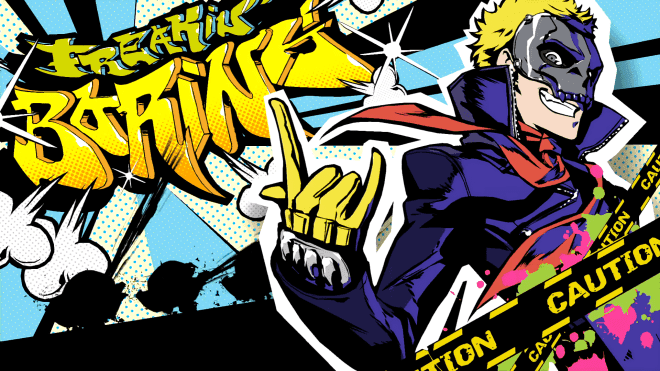
This audio-visual confidence extends to the art direction, a vibrant marriage of 3D anime character models and American pop-art sensibilities. The world of Persona 5 is a hyper-stylized Tokyo, where everyday locations like the school rooftop or the backstreets of Yongen-Jaya are rendered with exaggerated angles, dramatic lighting, and that ever-present splash of crimson. Character designs by Shigenori Soejima are instantly iconic, each outfit—from Joker’s tailored blazer to Futaba’s hacker hoodie—communicating personality and purpose before a line of dialogue is spoken. The game understands the power of a single, striking image, whether it’s the silhouetted poses during an All-Out Attack finish or the comic-book panel transitions during story scenes. It’s a look that prioritizes cohesive mood over raw graphical fidelity, and it has aged far better than contemporaries that chased realism.
Technically, the original Persona 5 release on PS4 was a study in consistency over horsepower. It targeted and largely maintained a stable 30 frames per second at a 1080p resolution, a trade-off that ensured its lavish, screen-filling UI effects and elaborate battle animations never hitched. This rock-solid performance was crucial for a game demanding such precise menu navigation during combat. Later releases like Persona 5 Royal on modern consoles unlocked a smooth 60 FPS, which makes the already fluid battle sequences and exploration feel even more responsive, though the core artistic vision remains unchanged and effective on either specification.
Where the presentation stumbles, however, is in the seams between its high-concept style and its technical execution. The fully animated cutscenes are gorgeous, but the in-engine story segments often suffer from awkward, low-detail textures on environmental objects and notoriously poor lip-syncing, especially for the English dub. You’ll be immersed in a beautifully directed conversation, only to be jolted out by a character’s mouth flapping silently out of rhythm with the voice acting. These moments are a stark reminder of the game’s cross-generation development roots on the PS3, and while they don’t undermine the overall aesthetic, they create distracting pockets of jank in an otherwise impeccably polished package. It’s the one area where Persona 5’s ambition momentarily outstripped its technical polish, a rare crack in its otherwise flawless veneer of cool.
Final Verdict: Is Persona 5 the New Gold Standard for JRPGs?
So, does Persona 5 live up to the hype and deserve its place as a modern JRPG standard-bearer? The answer is a resounding, stylishly confident yes, but with a few crucial caveats that define who this epic is truly for. This is a game that demands a significant investment—a massive 80-100+ hour journey for the main story, ballooning well beyond that for completionists. Yet, that length is its greatest strength and its most glaring weakness, a duality that perfectly encapsulates the entire experience. For every hour of thrilling, stylish rebellion, there’s a moment of frustrating repetition or narrative hand-holding. The value proposition is undeniable, but it’s a commitment that tests your patience as much as it rewards it.

Royal serves as the definitive value proposition for new players.
This commitment is softened, but not eliminated, in the definitive Persona 5 Royal edition. The improvements here aren't mere cosmetic DLC; they are foundational quality-of-life upgrades and meaningful narrative expansions. The addition of a grappling hook streamlines palace traversal, new team-up attacks (Showtime!) add cinematic flair to combat, and the rebalancing of confidant abilities makes time management slightly more forgiving. Most importantly, Royal integrates a superb third semester of story content, introducing the brilliant counselor Takuto Maruki and the enigmatic gymnast Kasumi Yoshizawa. This new arc doesn’t just add hours; it provides the thematic and philosophical depth the original finale sometimes lacked, asking profound questions about reality, trauma, and the cost of a perfect world. It’s the version to play, transforming an already excellent game into a more complete, polished masterpiece.
Persona 5 is the culmination of two decades of refinement, a game so confident in its formula that it becomes the new benchmark against which its successors will be judged.
In the broader series evolution, Persona 5 represents a staggering leap in presentation and scope from Persona 4, while playing it remarkably safe with the core social-sim/dungeon-crawler loop. It swaps the small-town mystery of Inaba for the sprawling, oppressive metropolis of Tokyo, trading a cozy whodunit for a punk-rock manifesto against systemic corruption. The dungeons are no longer randomly generated hallways but bespoke psychological landscapes. The UI isn’t just functional—it’s a character in itself. Yet, for all its revolutionary style, its skeleton is familiar: calendar management, social links (now Confidants), and turn-based combat built on elemental weakness. This isn’t a criticism of stagnation, but an acknowledgment of perfected execution. Persona 5 doesn’t reinvent the wheel; it chrome-plates it, adds neon underglow, and makes it spin to a flawless acid-jazz beat.
For the right player, these minor frustrations fade into the background of an otherwise landmark achievement. Persona 5 is essential for any JRPG fan and arguably the perfect entry point for newcomers to the genre or the series. Its tutorials are generous, its style is immediately arresting, and its fusion of life simulation with thrilling combat is more accessible than ever. The sheer volume of content means your money buys an experience that can dominate months of your gaming life, especially with the added incentive of New Game+ to max out every confidant and conquer secret bosses. It’s a game that earns its legendary status not by being flawless, but by being so audaciously, confidently itself that its few stumbles feel like part of its rebellious charm.
Pros:
- An unparalleled, cohesive aesthetic where every menu, track, and animation oozes style and reinforces the game's rebellious heart.
- Deep, rewarding social systems that make building friendships and managing your time feel as strategic and impactful as any battle.
- A combat system that revitalizes turn-based RPGs with the brilliant Baton Pass and endlessly customizable Persona fusion.
- A mature, gripping narrative that tackles heavy themes with a sincerity rarely seen in the genre, anchored by a phenomenal core cast of outcasts.
Cons:
- Significant narrative bloat, with repetitive dialogue and excessive exposition that can grind the pacing to a halt.
- Occasional problematic tropes, including the offensive portrayal of its gay characters and some regressive fan-service that undermines its progressive themes.
- The repetitive, monotonous grind of Mementos, which stands in stark, disappointing contrast to the brilliantly designed main palaces.