The Elder Scrolls IV: Oblivion Remastered: A Modernized Classic for 2025
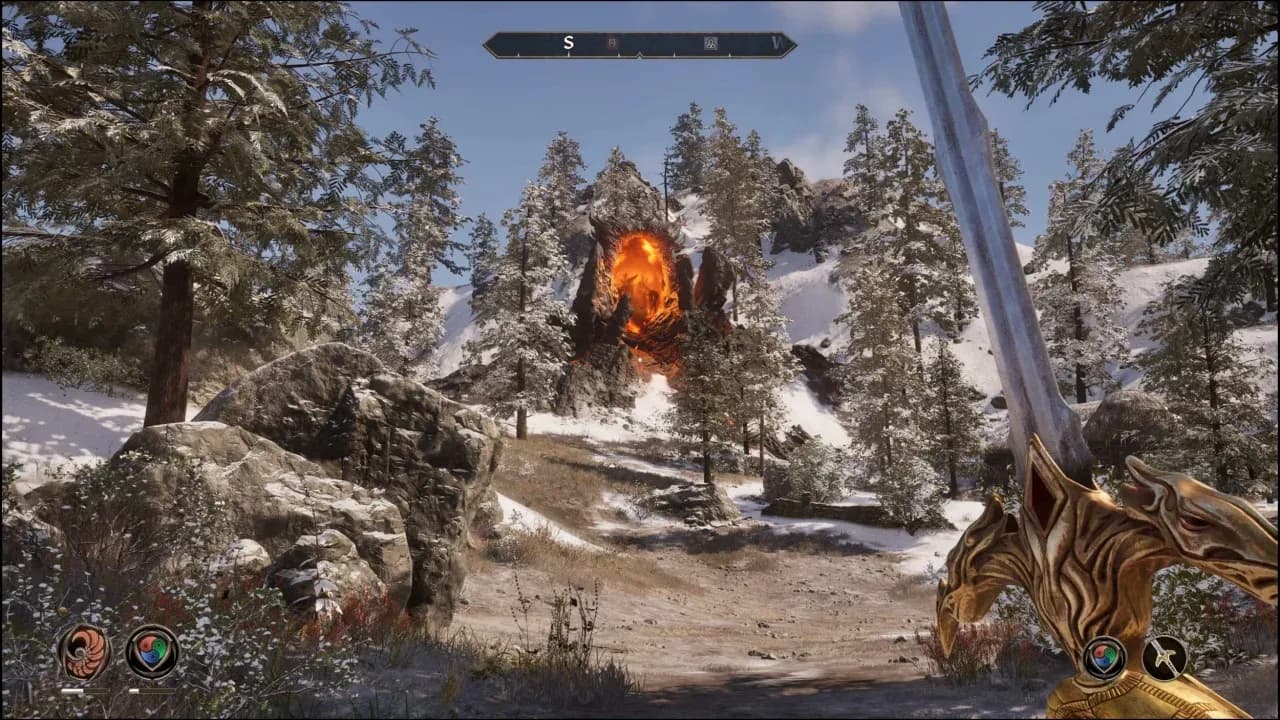
Stepping into a prison cell in 2025 and hearing the unmistakable gravitas of Sir Patrick Stewart is a surreal, time-collapsing moment. This is the promise of The Elder Scrolls IV: Oblivion Remastered: a beloved, nearly 20-year-old RPG, suddenly appearing on modern hardware with a fresh coat of paint and a handful of crucial tweaks. Released on April 22nd, 2025, in a surprise announcement-and-launch maneuver from Bethesda, this isn't a ground-up remake but a surgical modernization. Its unique, dual-layered engine approach—Unreal Engine 5 for visuals layered atop the original Gamebryo engine's code—sets the tone for the entire experience. This is a game that wants to look like a 2025 release while still feeling, for better and worse, like a 2006 revelation.
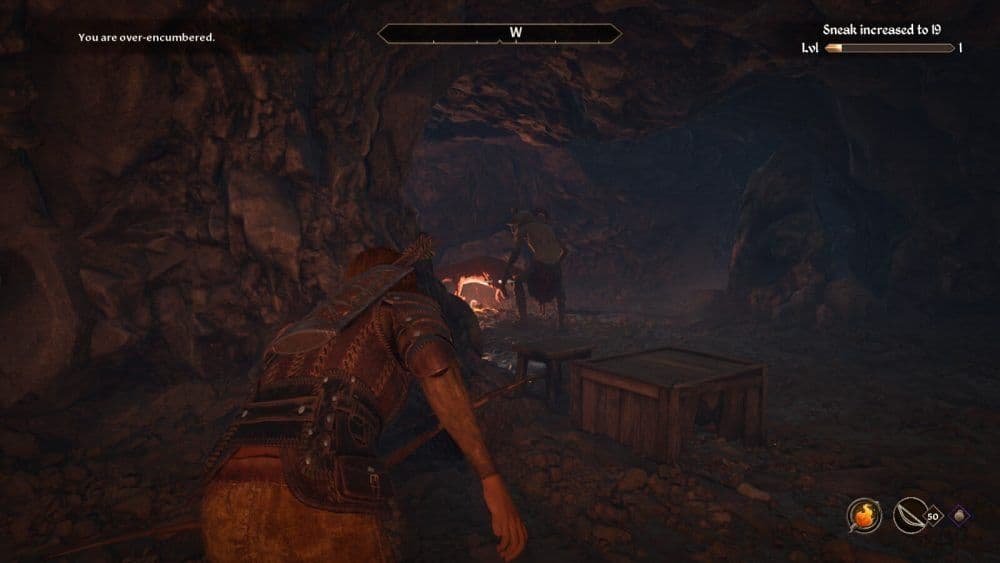
The remaster utilizes a dual-engine approach to preserve original gameplay while modernizing visuals.
That hybrid engine is the remaster's most fascinating and defining gamble. By keeping the original Gamebryo code intact for gameplay, physics, and AI, the developers have preserved Oblivion's core identity—its deep attribute systems, its emergent "jank," and the glorious chaos of its Havok physics. You'll still see corpses launched into the stratosphere by a misplaced fireball or watch an NPC get hilariously stuck on geometry. This preservation is a deliberate choice that will thrill purists and confound newcomers expecting the polish of a contemporary release. It means the soul of the game—its wonderful, wonky, unpredictable soul—is untouched. The trade-off is that you can't simply paint over foundational code; some of the original's most infamous quirks and bugs are baked into the experience, sitting uneasily beneath the stunning new visual facade.
This preservation of the original's chaotic spirit means the remaster feels less like a museum piece and more like a living, breathing—if occasionally arthritic—version of the classic.
The narrative hook remains one of the strongest in the series. As a nameless prisoner, your audience with Emperor Uriel Septim VII (Stewart) and his subsequent assassination by the Mythic Dawn cult is a masterclass in efficient, high-stakes setup. In minutes, you go from cell to fugitive to a bearer of world-altering destiny, entrusted with the Amulet of Kings. This opening is a tightly scripted corridor that feels almost claustrophobic, making the moment you finally exit the sewers into the sun-drenched hills of Cyrodiil all the more dizzying. That sense of overwhelming freedom is the game's true opening act, and the remaster's visual overhaul makes that first vista a genuine "wizardry in motion" moment, selling the fantasy more powerfully than ever.
With a standard edition priced at $49.99 (including the base game and major DLCs like Knights of the Nine and Shivering Isles) and a $59.99 Deluxe Edition that cheekily includes the infamous horse armor, the value proposition is clear: this is a massive, content-rich world offered at a mid-tier price. The inclusion of that once-maligned horse armor as a premium bonus is a witty nod to the game's history, acknowledging its role in gaming's microtransaction discourse while repackaging it as a nostalgic collectible. It’s a reminder that you’re not just buying a game; you’re buying a specific, influential moment in RPG history, now dressed for a contemporary audience. Whether that history is worth revisiting at full price depends entirely on your tolerance for a classic that proudly shows its age under the new gloss.
Oblivion Gameplay Evolution: Quality-of-Life Meets Old-School Depth
The true magic of The Elder Scrolls IV: Oblivion has always been the tangible sense that your actions directly sculpt your hero, and this remaster smartly sands down the rough edges of that loop without sandblasting away its soul. The most immediately impactful modernization is the simple, glorious addition of a sprint button. What was once a plodding trek across Cyrodiil’s vast fields is now a dynamic journey, your stamina bar depleting with each burst of speed. This isn’t just a convenience; it fundamentally reshapes the pacing of exploration, making cities feel more navigable and dungeons less tedious. It also, for the first time, makes skills and potions that buff Stamina feel genuinely valuable, weaving a new thread of strategy into the core exploration loop.
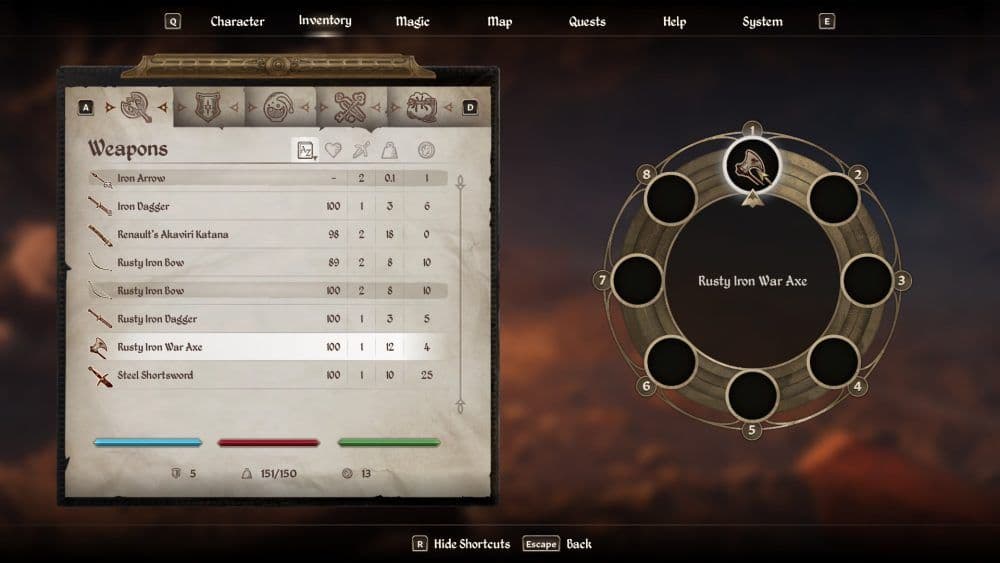
New quick-slot mechanics streamline item management in the Oblivion Remaster.
This philosophy of thoughtful streamlining extends to the user interface. The new quick-slot radial menu is a revelation, finally freeing you from the immersion-breaking chore of pausing mid-combat to dig through nested menus for a healing potion or a specific spell. Combined with character-specific save folders—a blessedly organized system borrowed from later Bethesda titles—the administrative friction that could bog down the original experience is dramatically reduced. Where this modern touch stumbles, however, is in the stubborn preservation of the persuasion minigame. This awkward, circular puzzle of reading NPC facial expressions to guess which dialogue "wedge" to select remains as boring and unintuitive as it was in 2006. It’s a stark, jarring reminder of a dated design convention that the remaster otherwise works hard to transcend.
The spellcrafting system is where Oblivion’s commitment to player freedom reaches its zenith, allowing you to break the game’s rules in brilliantly creative ways.
This is because the core RPG systems beneath these quality-of-life tweaks are as deep and rewarding as ever. The foundational “use it to level it” skill progression remains a masterclass in organic character growth. Whether you’re sneaking through a bandit camp to boost Sneak or repeatedly casting a weak Destruction spell on a rat to grind magic, your playstyle directly dictates your power curve. This system finds its ultimate expression in the magic and spellcrafting systems. The six schools of magic offer tremendous variety, but the real joy is in the custom spell altar, where you can Frankenstein effects together to create a Demoralize spell that also massively Fortifies Speed, or an insta-kill touch spell for the truly powerful. It’s a system that encourages glorious, game-breaking experimentation.
Character creation reinforces this role-playing depth with its new Origins system. Replacing the old gender-locked stat bonuses, these origins provide flavorful backstory snippets and mechanical bonuses, adding a welcome layer of narrative context to your build choices from the very start. Paired with vastly expanded sliders for facial features, hair, and skin tones, you can craft a hero that feels uniquely yours, both in appearance and in fictional grounding. It’s a subtle but meaningful enhancement that respects the player’s desire for identity without compromising the game’s classic, stat-driven heart. In The Elder Scrolls IV: Oblivion Remastered, the journey from prisoner to legend feels more responsive and personalized than ever, even if you occasionally have to stop and play a frustrating mini-game to make a shopkeeper like you.
The Cyrodiil Glow-Up: Visual Wizardry and Character Transformations
The moment you first exit the Imperial City sewers in The Elder Scrolls IV: Oblivion Remastered is a genuine shock. The rolling, sun-drenched hills of Cyrodiil are no longer a blur of fuzzy textures and aggressive bloom; they are a painterly, vibrant landscape where distant mountains have crisp definition and forests cast deep, dynamic shadows. This is the "wizardry in motion" promised by the Unreal Engine 5 overlay, and it works tirelessly to convince you this is a modern game. The environmental overhaul is the remaster’s most unambiguous triumph. Lighting is no longer a flat wash but a nuanced system that makes torch-lit dungeons feel claustrophobic and sunsets over Lake Rumare breathtaking. New weather effects—from gentle rain to oppressive fog—add a layer of atmosphere the 2006 original could only dream of. It’s a careful, respectful glow-up that enhances the original’s art direction rather than replacing it, opting for a slightly desaturated, more natural palette that trades the original’s occasionally neon-green fields for a look that feels timeless rather than dated.
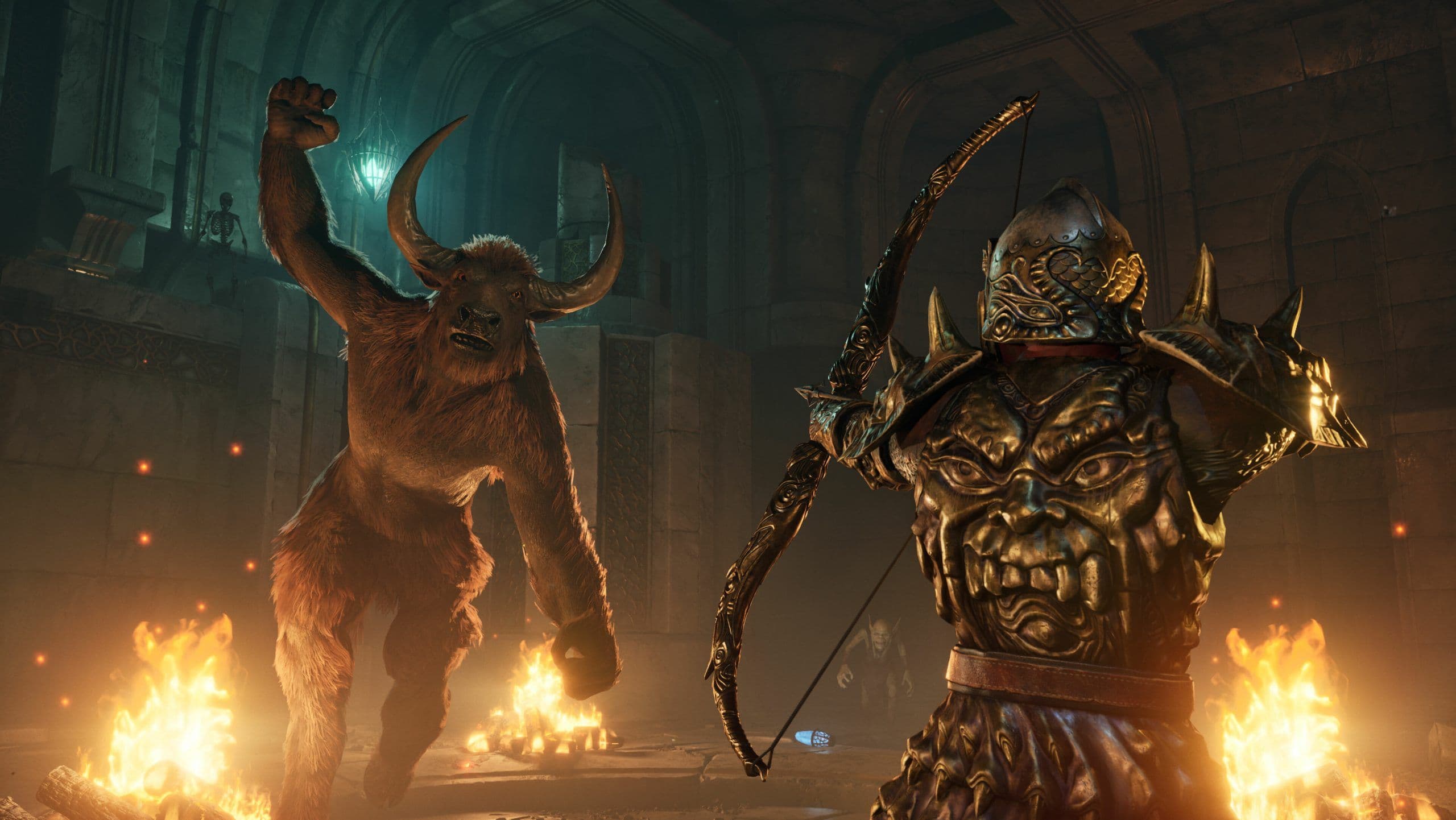
The remaster rebuilds Cyrodiil's environments in Unreal Engine 5 for significantly higher resolution.
Where the visual magic falters is in the seams of its hybrid engine. You’re constantly reminded that this beauty is a facade draped over an 18-year-old skeleton.
This becomes painfully clear the moment you engage with the world’s inhabitants. While the character model upgrade is a massive improvement—Khajiit and Argonians have been transformed from terrifying, potato-faced abominations into genuinely expressive, detailed creatures—they remain stiff and awkward by modern standards. Lip-syncing, though improved, often feels disconnected from the legendary voice performances. The infamous "cross-eyed" NPC gaze is less frequent but not eradicated. This creates a bizarre dissonance: you’ll stand in a gorgeously rendered Bruma tavern, admiring the wood grain and particle effects of the fireplace, only to turn and have a conversation with a citizen whose facial animations border on the farcical. It’s a constant, jarring reminder of the game’s age, a visual uncanny valley that the environmental art works overtime to make you forget.
The technical performance of The Elder Scrolls IV: Oblivion Remastered is where the "remaster vs. remake" philosophy has its most tangible cost, and the experience varies wildly by platform. On a capable PC or current-gen console, targeting a steady 60fps is achievable, letting the new visual splendor shine. However, the legacy Gamebryo code and the Unreal Engine 5 veneer do not play nicely everywhere. On Steam Deck, even when verified, the game struggles to hit a consistent 30fps on medium settings, particularly in dense forest areas. More universally, players report occasional framerate stutters—not during combat, but often when loading new world cells or during scripted events. These aren’t game-breaking, but they are immersion-breaking, hiccups in the otherwise smooth presentation that pull back the curtain on the technical patchwork underneath.
Persistent "Bethesda jank" extends beyond frame pacing. The remaster introduces its own suite of new, oddball issues alongside the classics. Ray-traced lighting can produce bizarre artifacts, like your sword casting a long, dramatic shadow across a lake’s surface as if it were a solid object. Some players report equipment durability breaking at an absurd rate, with high-end armor shattering after one or two hits. And yes, the classic bugs are here too: NPCs getting stuck in geometry, quest markers pointing to empty voids, and the glorious, physics-driven chaos of corpses rocketing into the sky. One crash during a loading screen in my thirty-hour playthrough was a mild annoyance, but encountering a main quest bug that halted progress—a notorious holdover from the original—required a community fix and felt like a profound failure of the remaster’s mandate. This isn’t a polished, modern package; it’s the beloved, messy classic wearing a very expensive, slightly ill-fitting suit.
Ultimately, the visual transformation of Cyrodiil is a resounding success on its own terms. It makes exploration compelling in a new way and allows the game’s still-brilliant art direction to resonate with a new generation. But the character model improvements, while welcome, only go halfway, and the technical performance is a stark reminder of the foundational compromises made. The Elder Scrolls IV: Oblivion Remastered looks like a dream from a distance, but get up close and you’ll still see the cracks in the plaster—cracks that are now, ironically, rendered in stunning 4K detail.
Questing in the Imperial Province: Dark Brotherhood, Thieves, and Daedra
The true legacy of The Elder Scrolls IV: Oblivion isn’t its epic main quest, but the staggering volume of stories that spiral out from it. This is a game where the side content isn’t just filler; it’s the main attraction, a masterclass in RPG world-building that remains unmatched in its density and charm. While the central narrative about closing demonic gates eventually buckles under repetition, the faction questlines and the legendary Shivering Isles expansion are where the game’s writing and design genius shine brightest, even in 2025.
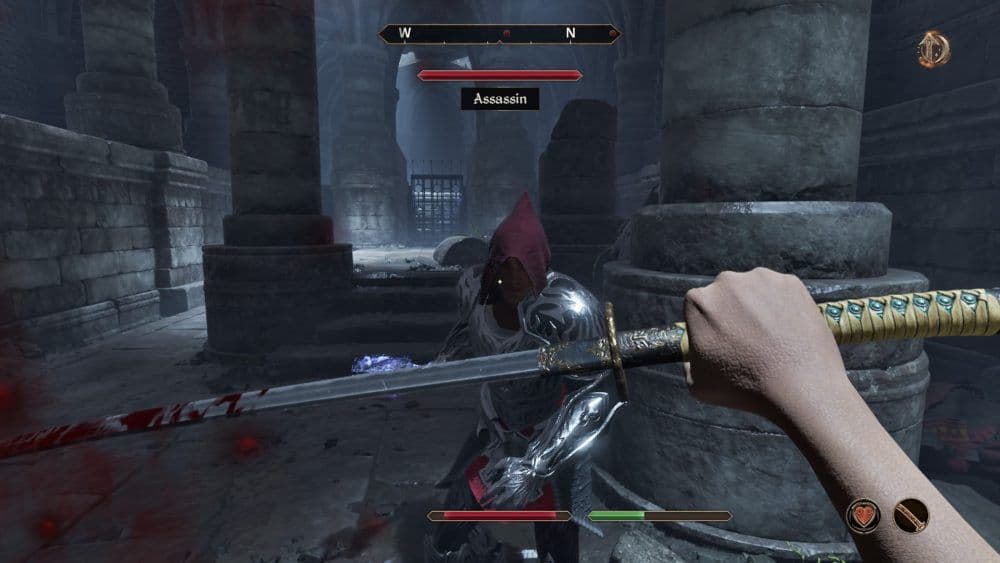
The Mythic Dawn serves as the primary antagonist throughout the main storyline.
The Elder Scrolls IV: Oblivion’s reputation for stellar faction quests is not nostalgia talking. The Dark Brotherhood arc, which begins with a mysterious invitation after a morally ambiguous murder, is a masterclass in tone and consequence. It’s not just about assassination; it’s about joining a twisted family, complete with interpersonal drama, dark humor, and a devastating betrayal that still lands with emotional weight. Similarly, the Thieves Guild requires you to truly master the game’s stealth mechanics to pull off a series of escalating heists, culminating in the legendary heist of an Elder Scroll itself. These questlines respect your intelligence, avoid simple “kill ten rats” objectives, and deliver self-contained narratives with more compelling characters and twists than the main plot. They are the reason you remember specific NPCs decades later.
This density of quality side content is what transforms Cyrodiil from a pretty landscape into a living, breathing world you believe in.
This living world is powered by NPCs with dynamic schedules—they shop, sleep, pray, and gossip, creating the illusion of a province that exists without you. You can follow a guard on his patrol or witness a lover’s secret midnight rendezvous. However, this ambition is hamstrung by the legacy AI and pathfinding of the original Gamebryo engine. The “living” world is also one where citizens routinely get stuck on doorframes, fail to navigate simple stairs, or clip through geometry, leading to the comedic yet immersion-breaking “Bethesda jank” that persists in the remaster. The system’s heart is in the right place, but its execution is frequently broken.
Where the game’s ambition truly falters is in the core loop of its main quest. The urgent mission to stop Mehrunes Dagon’s invasion forces you into a series of Oblivion Gates—procedurally generated hellscapes of lava, jagged rock, and a monotonous red sky. The objective is always the same: fight through hordes of Daedra, scale a central tower, and grab a Sigil Stone to collapse the gate. The first one is a thrilling descent into hell. By the fifth or sixth, it’s a tedious chore. The environments lack meaningful variety, the enemy types repeat, and the “mini-maze dash” to the tower becomes a slog. This repetitive structure saps the urgency from the central narrative, making it the least compelling reason to keep playing.
Thankfully, The Elder Scrolls IV: Oblivion offers an escape valve from this fatigue in the form of its expansions, particularly Shivering Isles. Still hailed as one of the best DLCs ever made, it is a masterstroke of creative world-building. Stepping through the portal to the realm of the mad god Sheogorath is like falling into a twisted, beautiful Alice in Wonderland. The land is literally split between the manic, colorful Mania and the depressive, eerie Dementia, populated by gloriously unhinged characters. The quests here embrace the absurd and the profound, asking you to settle a feud between two halves of a split personality or participate in a play where the actors are killed for realism. It’s a self-contained adventure that fully leverages the game’s mechanics to tell a story the base game never could, and its quality in the remaster only underscores how timeless great writing and art direction can be.
For context, this is not a small game. A standard playthrough easily exceeds 80 hours, and completionists can lose themselves in over 400 sub-quests. This staggering volume is the game’s greatest strength and its most daunting challenge. You can spend dozens of hours becoming the Arena Grand Champion, curing your vampirism, or hunting down Daedric artifacts without ever touching the main plot. This freedom is intoxicating, but it also means the experience is entirely self-directed. If you let the game guide you into a cycle of Oblivion Gates, you’ll burn out. If you forge your own path through its dark corners and brilliant side stories, you’ll discover an RPG that, for all its aged systems and persistent jank, remains a pinnacle of the genre.
The Leveling Dilemma: Has the Infamous Scaling Been Fixed?
The most controversial ghost of 2006 has been summoned for 2025, and it still haunts the halls of Cyrodiil. The Elder Scrolls IV: Oblivion’s infamous level-scaling system was a foundational flaw, a design decision that could punish organic play and shatter immersion by arming common bandits in legendary gear. The remaster’s developers clearly understood this was a priority fix, but their solution is a careful compromise rather than a complete overhaul—a bandage on a deep wound that stops the bleeding but leaves a noticeable scar.
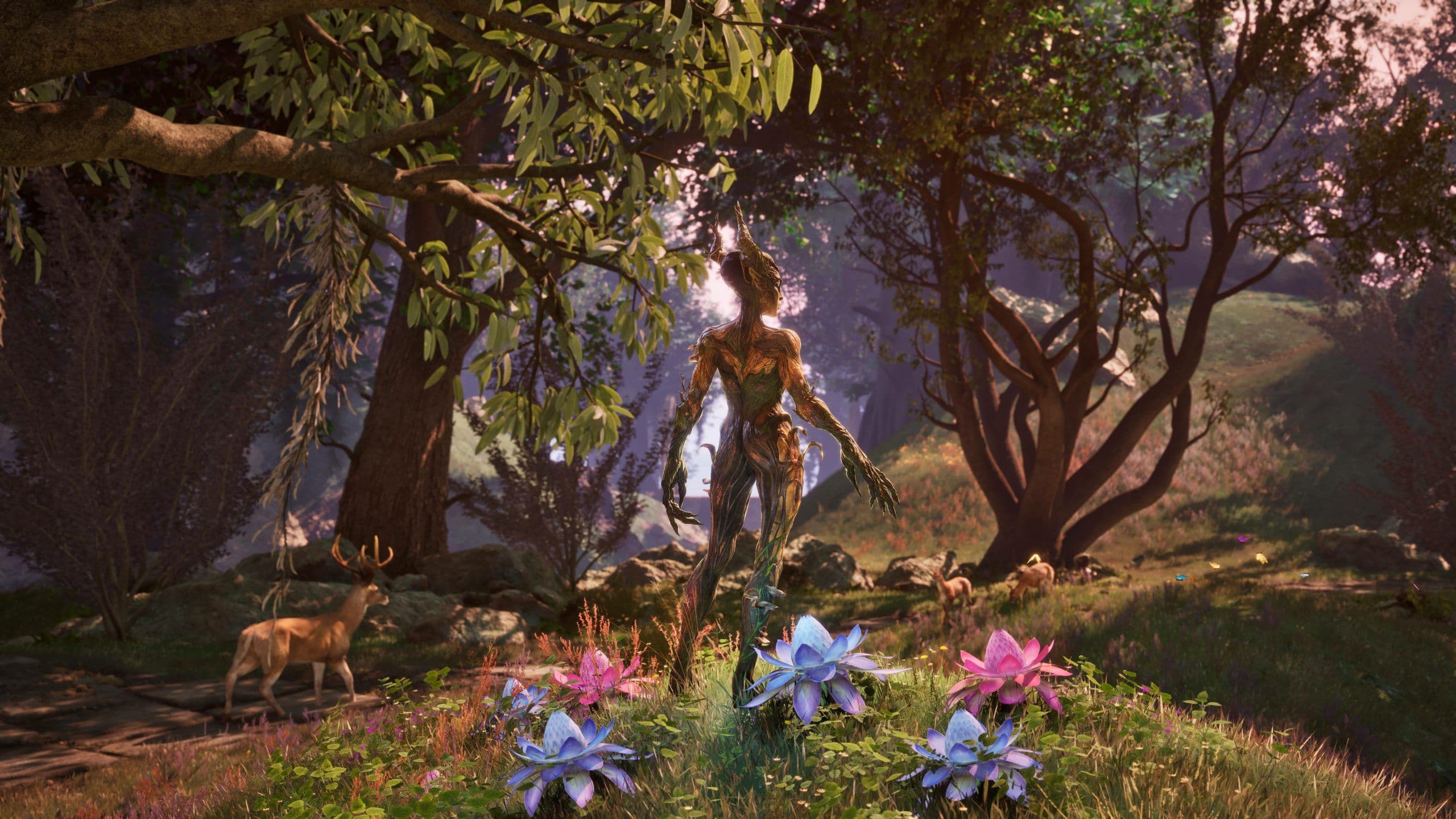
The remaster introduces significant rebalancing to the original game's controversial enemy scaling system.
The core of the fix is a smart hybridization of two Bethesda philosophies. The Elder Scrolls IV: Oblivion Remastered merges the original’s primary skill focus with the universal progression of Skyrim. In the 2006 version, only increases to your seven chosen Major Skills contributed to your character level. This created a perverse incentive: to avoid over-leveling into harder enemies, you had to avoid using the skills you built your character around. The new system allows all skills, major and minor, to feed into your overall level progression. This single change is transformative. It liberates you to actually play the game. Want to pick every lock, craft every potion, and charm every NPC without worrying you’ll be too weak to fight? Now you can. The climb feels less punitive and more organic, rewarding broad engagement with the world’s systems.
This rebalancing is the remaster’s quiet triumph, turning a system that once actively discouraged experimentation into one that cautiously permits it.
Where this new freedom hits a wall is in the game’s stubborn enemy scaling. The adjustments to enemy health and damage are appreciable—you’re less likely to be instantly vaporized by a random Daedra if you’ve focused on Speechcraft—but the fundamental architecture remains. The world still levels with you, not around you. This leads to the jarring, immersion-breaking spectacle the original was known for: encountering a bandit in the wilderness sporting a full set of shiny, end-game Glass Armor simply because you’ve reached a high level. Your hard-earned progression in finding legendary gear is undermined when every roadside thug has access to the same armory. It turns loot from a rewarding discovery into a predictable commodity, draining the sense of becoming truly powerful in your world.
This creates a precarious balancing act. The Elder Scrolls IV: Oblivion Remastered is far fairer, but it hasn’t eliminated the potential for self-inflicted difficulty spikes. If you dedicate an entire leveling cycle to non-combat skills like Mercantile and Alchemy while completely neglecting Blade or Destruction, you can still find yourself outmatched by the scaled enemies you encounter. The game is more forgiving of a balanced approach, but it still assumes you’re engaging with its combat systems to some degree. This isn’t the brick wall of the original, but more of a steep, frustrating hill you have to grind back up.
Ultimately, the leveling dilemma illustrates the remaster’s core philosophy: to preserve the original experience while sanding down its most notorious edges. The hybrid system is a meaningful quality-of-life improvement that makes the journey from prisoner to hero smoother and more intuitive. Yet, by leaving the aggressive world scaling largely intact, The Elder Scrolls IV: Oblivion reminds you that some foundational 2006 design choices are too deeply coded to excise. The result is a vastly more playable version of a classic system, one that welcomes experimentation but still can’t quite hide the mathematical skeleton beneath its beautiful new skin.
Final Verdict: Is Oblivion Remastered the Definitive Way to Play?
Stepping back into Cyrodiil after nearly two decades is an act of faith—faith that the magic still works, that the jank can be forgiven, and that the sheer weight of its content justifies the return. The Elder Scrolls IV: Oblivion Remastered asks for that faith and, for the right player, rewards it handsomely. It’s a package that proudly wears its 2006 heart on its Unreal Engine 5 sleeve, offering a massive, content-rich world for a mid-tier price of $49.99, but one that comes with a non-negotiable list of 20-year-old quirks as part of the deal.
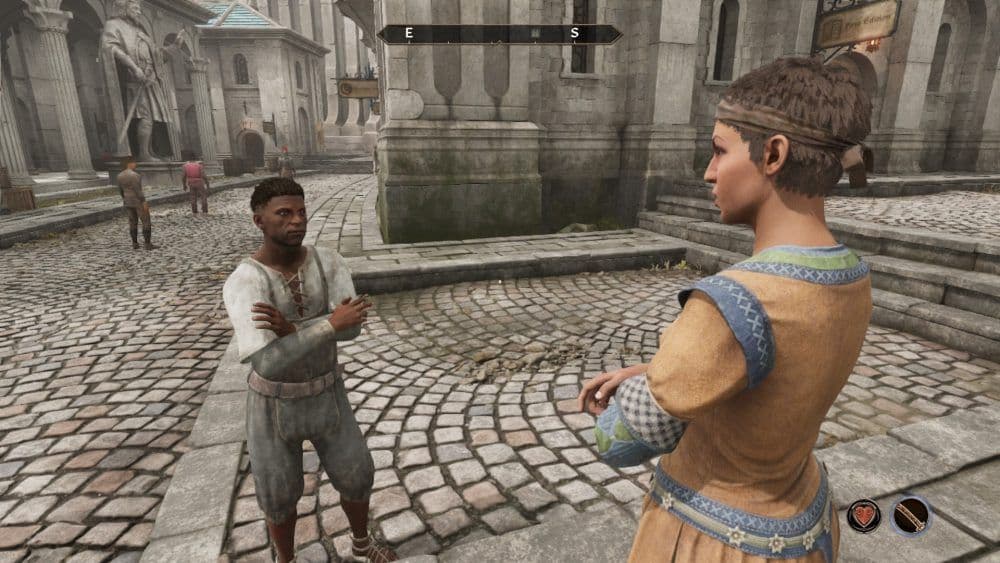
The Remastered version brings new life to the citizens of the Imperial City.
The value proposition is immense on paper. For that price, you get the base game, the stellar Knights of the Nine and Shivering Isles expansions, and over 80 hours of core content, with completionist runs easily stretching past 100. This is an RPG that defined "bang for your buck" in 2006 and still does today. Yet, that value is inextricably linked to its retro design DNA. The dated persuasion minigame, the repetitive Oblivion Gates, and the occasionally stilted quest design ("go here, kill that") are not bugs; they are preserved features. For newcomers weaned on the narrative density of The Witcher 3 or the polished systems of modern RPGs, these elements will feel archaic, potentially alienating. For the intended audience, however, they are part of the charm—the unvarnished texture of a classic.
The decision to preserve the original Jeremy Soule soundtrack and the iconic voice cast isn't just nostalgia; it's a critical anchor that keeps the soul of the experience intact.
This audio preservation is the remaster's secret weapon. Hearing Sir Patrick Stewart's weary gravitas or Sean Bean's earnest delivery as Martin Septim isn't a throwback; it's a direct line to the game's emotional core. The score, from the triumphant brass of the main theme to the melancholic exploration tunes, remains one of the finest in gaming history. Where other remasters re-record or replace, this one understands that these performances are the game's character. The addition of new voice actors to diversify the limited original pool is a smart, subtle touch, but the foundational work of Stewart, Bean, Terrance Stamp, and Lynda Carter is what makes Cyrodiil feel mythic.
However, that preservationist ethos has a darker side: the persistence of legacy bugs. The remaster fixes some issues, but it also inherits and introduces new ones. During my playthrough, I encountered the infamous bug where an NPC essential to a main quest stage simply wouldn't trigger their next line of dialogue—a glitch documented in 2006 forums that required a community workaround in 2025. Alongside these classics are new, remaster-specific oddities: ray-traced shadows behaving bizarrely on water surfaces, and reports from other players of equipment durability breaking absurdly fast. This isn't a polished, modern product; it's the original experience, warts and all, now with those warts rendered in 4K. The "Bethesda jank" is part of the package, for better or worse.
This defines the target audience with stark clarity. The Elder Scrolls IV: Oblivion Remastered is a must-play for nostalgic fans who want to revisit Cyrodiil with a visual glow-up and crucial quality-of-life fixes like the sprint button and improved leveling. It's also a solid, if challenging, entry point for players whose first love was Skyrim and who are curious—and tolerant—enough to explore the more complex, stat-driven roots of the series. For everyone else, especially those with no patience for dated design or technical hiccups, this remaster will feel like a beautiful but frustrating museum piece. It doesn't apologize for what it is, and your enjoyment hinges entirely on whether you can meet it on its own, wonderfully uneven terms.
Final Verdict
The Elder Scrolls IV: Oblivion Remastered is a definitive, if imperfect, way to experience a landmark RPG. It succeeds spectacularly in its primary goals: making Cyrodiil breathtaking to explore and smoothing the most punitive edges of its progression. Yet, it remains bound by the technical and design constraints of its era. Your final judgment will depend entirely on which side of that line you fall.
Pros:
- Stunning Visual Overhaul: Unreal Engine 5 brings Cyrodiil to life with gorgeous lighting, weather effects, and vastly improved environmental detail.
- Meaningful Gameplay Improvements: The hybrid leveling system and addition of sprinting significantly modernize the core loop without breaking it.
- Timeless Quest Design: The Dark Brotherhood and Thieves Guild storylines, along with the Shivering Isles expansion, remain pinnacles of RPG writing and creativity.
- Preserved Sandbox Freedom: The sheer density of the world and the "use it to level it" skill system offer near-limitless role-playing potential.
Cons:
- Repetitive Core Loop: The main quest's Oblivion Gates are a monotonous slog of repetitive environments and objectives.
- Persistent Technical Jank: Legacy bugs coexist with new glitches, and performance is inconsistent, particularly on handhelds like the Steam Deck.
- Dated Design Choices: Elements like the persuasion minigame and aggressive enemy scaling (bandits in Glass armor) feel archaic and unaddressed.
- Visual Inconsistency: While environments shine, character models and animations remain stiff, creating a jarring disconnect.
If you can embrace its quirks as part of its history, The Elder Scrolls IV: Oblivion Remastered is a glorious return to one of gaming's most influential worlds. If you expect the seamless polish of a contemporary release, you'll find its age showing at every turn. This isn't just a game; it's a specific, foundational moment in RPG history, lovingly restored but never rewritten.