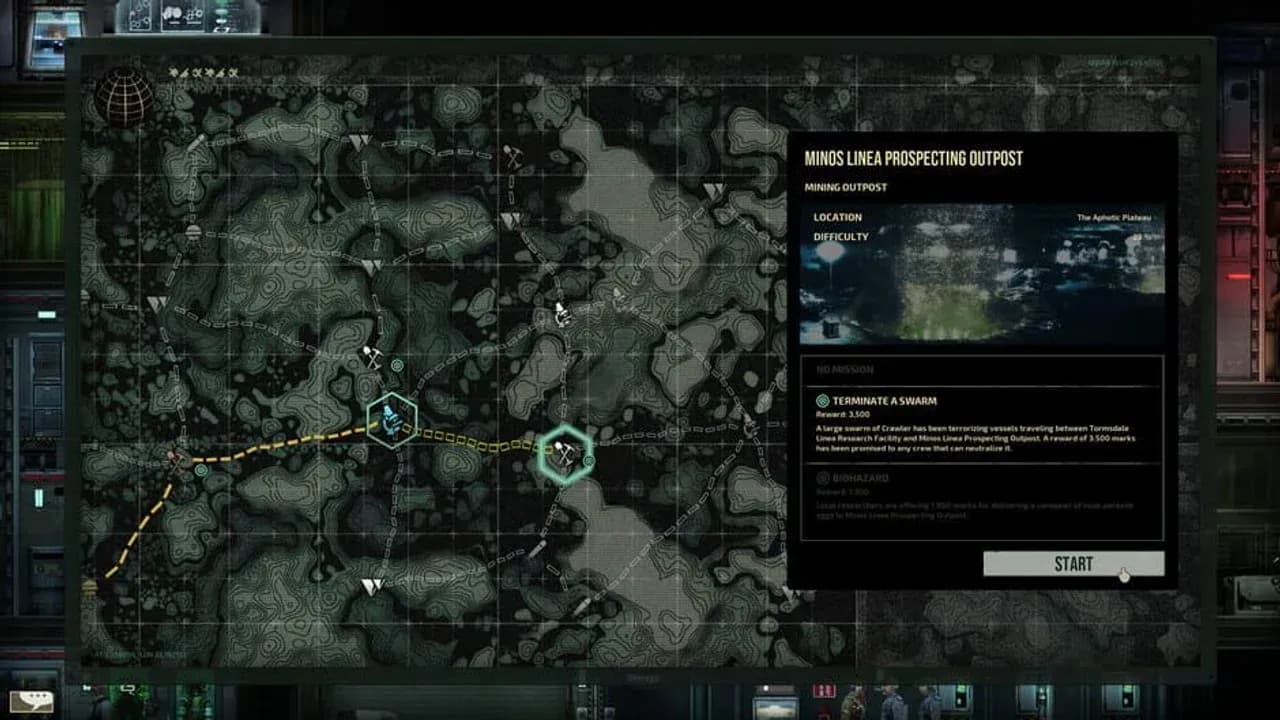
Barotrauma’s Core Identity: A Submarine Simulator Built on Shared Survival
Barotrauma is not really a submarine game with survival elements bolted on; it is a survival horror RPG that makes the submarine itself your shared character. Every voyage fuses exploration, navigation, resource management, strategy, and progression into one pressure cooker: the crew takes a contract, prepares the vessel, descends into Europa’s hostile ocean, and tries to return with enough people and equipment intact to improve the next run. A breach can turn routine travel into a repair operation, a monster attack, or a desperate evacuation, while upgrades and character development give those disasters long-term consequences. The design is unusually cohesive because every system points toward the same question: can this fragile community keep functioning long enough to survive?
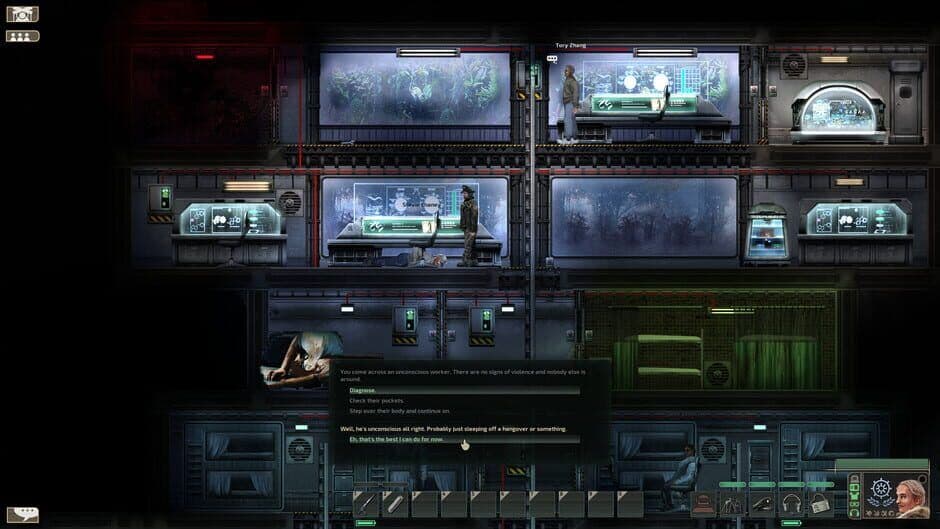
Emergent multiplayer storytelling often arises from chaotic repair situations.
The emotional payoff is not defeating a boss or completing a quest marker. It is the exhausted silence after the pumps finally clear a flooded compartment, the reactor stabilizes, and someone says, with genuine disbelief, “we did not sink.” Barotrauma understands that collective relief is more powerful than individual triumph when the catastrophe was caused and solved by the group itself. The game’s best memories come from that chain of shared responsibility: one player notices the danger, another improvises a fix, and everyone else buys enough time for the submarine to remain seaworthy. That makes failure valuable, too; a ruined voyage is not merely lost progress, but a story about the decision that pushed the crew past the point of recovery.
Barotrauma’s real protagonist is not the captain, the submarine, or even Europa. It is the fragile agreement that every crew member will do their part before the next alarm sounds.
That dependence is also Barotrauma’s sharpest limitation. Its strongest qualities require a regular group willing to communicate, learn the systems, and treat a failed mission as part of the entertainment; disengaged teammates turn carefully designed interdependence into busywork, while toxic or sabotaging players in public sessions can destroy the experience before the crew has a chance to form. Solo play and AI assistance provide a way to learn the machinery, but they cannot reproduce the improvisation, panic, and dark humor created by real people making imperfect decisions together. This is not a minor multiplayer bonus layered onto a complete solo game. The social pressure is the game’s central instrument, which makes Barotrauma exhilarating with trusted friends and distinctly compromised with strangers.
The comparison with Oxygen Not Included clarifies what makes Barotrauma special. Both games build drama from interlocking systems—power, resources, damage, logistics, and cascading failures—but Oxygen Not Included places that complexity in a solitary top-down management sandbox, where the player oversees a colony from above. Barotrauma compresses similar systemic depth into one vessel and forces it through immediate human presence: a failed repair is not an abstract production setback when another player is trapped in the flooding room, and a power problem demands conversation before it demands optimization. That social immediacy gives Barotrauma less control and more friction than a traditional management sim, but it also creates consequences that feel personal rather than merely numerical.
Barotrauma emerged from years of development and Early Access before its March 13, 2023 launch, and its reception confirms how deliberately narrow its identity is: an 81/100 Metacritic score and roughly 94–96% positive Steam sentiment across tens of thousands of reviews reflect strong loyalty rather than universal accessibility. The game is not chasing a cinematic campaign, a frictionless tutorial, or a solitary power fantasy. It is built for players who enjoy learning complicated systems with friends and finding satisfaction in survival that feels earned rather than guaranteed. For that audience, Barotrauma’s genre fusion is not a gimmick—it is the foundation of one of the most distinctive cooperative survival experiences available.
Barotrauma Gameplay: Role Specialization Turns Every Crisis Into Teamwork
In Barotrauma, every crew member is a component in a machine that fails the moment one part stops working. The Captain navigates and assigns orders, the Engineer manages electrical systems and reactor operation, the Mechanic handles repairs and machinery, Security mans weapons, the Medic treats injuries and infections, and the Assistant fills whatever gap the crisis creates. These roles are not cosmetic loadouts: a damaged submarine needs several specialists acting at once, and a missing or distracted crew member can turn a manageable problem into a death spiral. Even the Assistant becomes valuable when someone must carry supplies, seal doors, fetch ammunition, or reinforce a repair team.
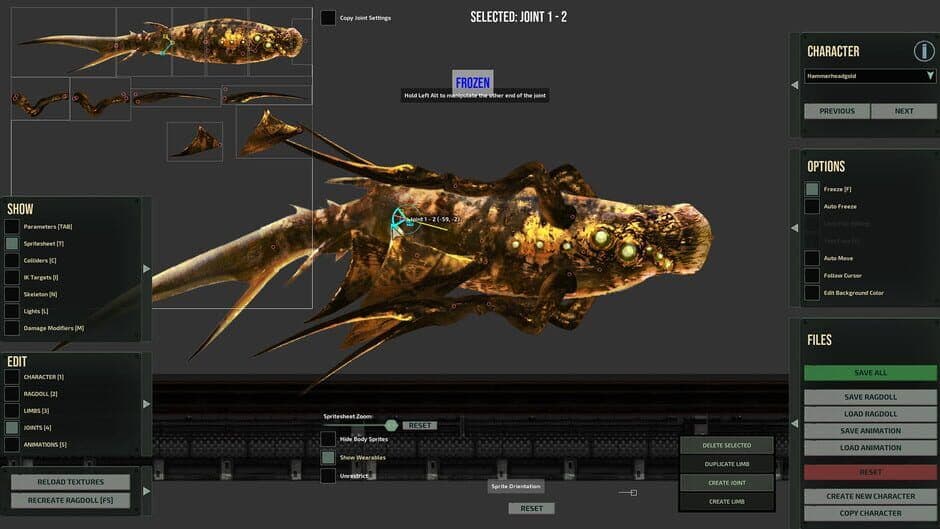
Role specialization in action.
The genius of this structure is that Barotrauma rarely presents one clean problem at a time. A creature can breach the hull while a fire spreads through the engine room, the reactor begins overheating, and an injured crew member needs treatment in a flooded compartment. The crew must triage rather than simply complete a checklist: the Captain may slow or reposition the submarine, the Mechanic patches leaks, the Engineer stabilizes power, Security clears the intruder, and the Medic decides whether an injured player can wait. That division creates genuine communication pressure because no single player can solve the emergency alone. This is the moment the game earns your trust: the chaos feels overwhelming, but every role has a concrete way to push back.
Barotrauma turns teamwork into a survival system: the submarine does not need six heroes, but it does need six people who understand what matters next.
Its systems also interact with enough consistency to make failure instructive instead of arbitrary. Leave a junction box wet and the electrical system can malfunction; overshoot the submarine’s depth and hull pressure becomes a threat; neglect a breach and flooding compromises movement, visibility, and access to other rooms. Push the reactor too hard or waste fuel rods by traveling at high speed, and the crew inherits a power crisis that could have been prevented minutes earlier. These consequences are legible, which is crucial in a game this punishing: after a failed voyage, players can identify whether they ignored a leak, mishandled the reactor, ran out of welding supplies, or failed to treat an injury rather than blaming invisible dice rolls. Barotrauma transforms disaster into a learnable craft, and competence feels earned because the crew gradually learns to recognize the warning signs.
The strongest evidence of this integration is how little of the submarine’s operation exists in isolation. Wiring determines whether machinery and electrical systems function; reactor temperature and fuel rods determine whether the vessel can move or power its defenses; oxygen and hull integrity determine whether crew members can remain in a compartment; tools such as welders, screwdrivers, and wrenches consume resources that must be maintained; weapons matter only if ammunition, power, and Security personnel are available. Medical treatment extends the same chain, since a damaged crew member may need medication, stabilization, or rescue before they can return to repairs. Crafting and preparation therefore carry real weight: stocking welding tanks or medical supplies is not busywork when the next breach can make those items the difference between recovery and evacuation.
The cost of this depth is a brutal onboarding curve and a UI that often communicates complexity without establishing priority. New players must learn movement, equipment handling, reactor behavior, wiring, repair tools, medical treatment, navigation, and their own job’s responsibilities while alarms are already demanding attention. A novice Engineer may understand that a reactor is overheating without knowing which adjustment is safe, while a new Medic can face an injury or infection with too many items and too little context. The dense interfaces and divided responsibilities make early mistakes feel like incompetence before the player understands what the game is asking them to notice. For veterans, that friction becomes the foundation of mastery; for newcomers, it can obscure the remarkable logic underneath.
Barotrauma’s gameplay succeeds because it makes cooperation necessary without making it abstract. Every repaired system, stabilized patient, and surviving compartment proves that the crew’s decisions formed a functioning whole, while every neglected responsibility exposes how quickly that whole can collapse. The learning curve is steep, but once the roles and systems click together, the submarine stops feeling like a collection of minigames and starts behaving like a shared organism under pressure.
Barotrauma Exploration and Combat: Threats From the Hull and Within
The ocean in Barotrauma is not a space to be conquered; it is a system that withholds information until you risk asking for it. Active sonar is the clearest expression of that design: each pulse maps the darkness and reveals potential threats, but it can also announce the submarine’s presence to whatever is listening beyond the hull. Navigation therefore becomes a judgment call rather than a routine task. A captain who keeps the sonar active gains vital information in rocky caverns and uncharted waters, yet may turn a quiet passage into an invitation for attack. Few survival games make basic awareness feel this dangerous.
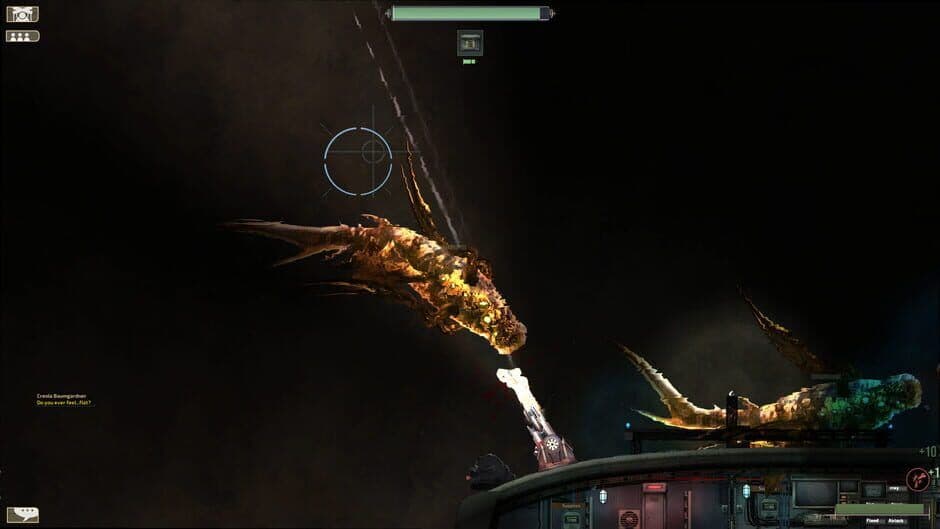
Piloting using the sonar interface.
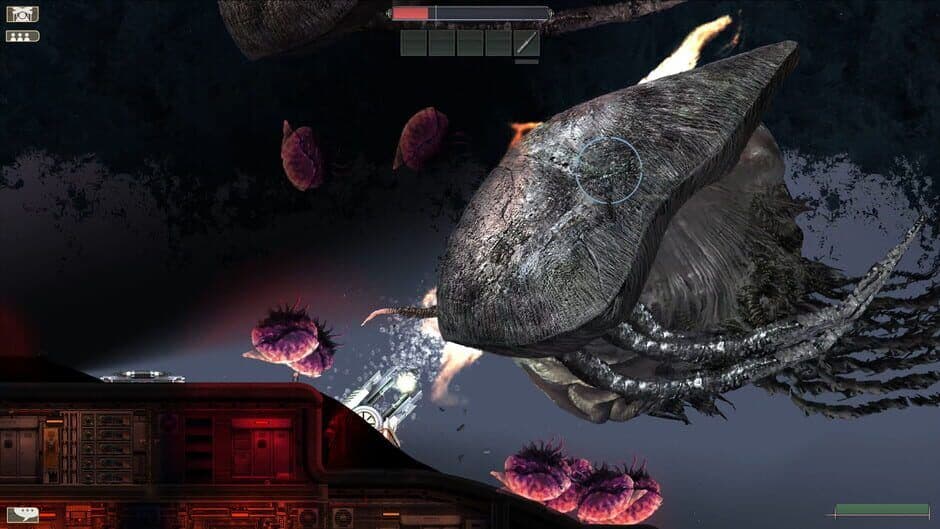
Europa’s bestiary and environmental hazards ensure that no voyage settles into a predictable rhythm. Small crawlers can breach the submarine and force a close-quarters defense, while hammerheads, leviathans, and endworms turn the surrounding water into a serious tactical threat. The danger is not limited to creatures: toxic gases, electrically charged crystals, parasitic or alien flora, infected submarines, caves, wrecks, and derelict stations each create different reasons to slow down or reconsider a route. That variety works because these threats attack different parts of the crew’s preparation. A monster tests weapons and hull integrity; a hazardous environment tests equipment, visibility, and medical readiness. Barotrauma’s ocean feels hostile not because it constantly throws enemies at the player, but because almost every unfamiliar space carries a different form of consequence.
Exploration makes those consequences worth accepting. A wreck, alien ruin, or cave can contain resources and loot valuable enough to justify sending divers outside, but leaving the submarine transforms a manageable vessel problem into a personal survival ordeal. Pressure suits limit visibility, darkness obscures nearby threats, and a diver who suffers an injury may require a rescue before the crew can even think about returning to the main mission. The submarine itself remains vulnerable while this happens: a breach, creature attack, or mechanical failure can force the team to abandon the expedition and scramble back inside. This risk-and-reward structure gives exploration real tension, because gathering resources is not a harmless detour—it is a decision to expose both the crew and the vessel to another layer of danger.
In Barotrauma, the question is never simply “What is outside?” It is “How much information, loot, or progress is worth making the outside aware of us?”
Combat is strongest when it emerges from that uncertainty rather than arriving as a clean encounter. A hostile creature can collide with the hull while a reactor problem develops inside, turning a weapons assignment into a struggle over power, ammunition, repairs, and flooded compartments. Ordinary mistakes can produce the same escalation: an overheated system, a missed leak, or a badly timed repair leaves the crew vulnerable before the enemy even appears. Internal danger is just as important. Accidental mishaps, player incompetence, deliberate sabotage, and traitor mechanics create the paranoia of The Thing, with the social suspicion of Among Us or Space Station 13 layered over a submarine survival simulator. Is the Mechanic fixing the breach, or making it worse? Is the Assistant helping, hiding, or preparing the next disaster? Barotrauma understands that trust becomes a gameplay resource when a single crew member can compromise everyone’s escape.
However, the physical act of responding to those emergencies is less elegant than the underlying design. Movement, aiming, ladder navigation, and object interaction can feel clumsy when the submarine is flooding and several tasks demand attention at once. Characters can move awkwardly around ladders and doors, while weapon operation and emergency interactions require precision that the pressure of a breach often makes difficult. That friction occasionally produces memorable slapstick—a crewmate fumbling toward a weapons locker while monsters tear through the hull—but it can also obscure whether failure came from a bad decision or an awkward control. The problem is especially visible during close-range attacks, when players must fight intruders, reach damaged systems, and handle equipment in cramped spaces. Barotrauma’s combat is compelling as crisis management, but its controls sometimes make the crisis feel mechanically messy rather than deliberately difficult.
That distinction matters because Barotrauma is at its best when it turns confusion into a readable chain of cause and effect. Sonar creates uncertainty, exploration converts curiosity into exposure, and combat forces the crew to decide which emergency deserves attention first. The clunky controls occasionally interrupt that logic, yet the larger structure remains exceptional: threats from outside and failures within feed the same cascading survival loop. Europa is not merely a backdrop for submarine combat; it is a pressure system designed to make every expedition, rescue, and retreat feel like a gamble the crew chose to take.
Crew Progression and Campaign Management in Barotrauma: Meaningful Growth With Repetition Risks
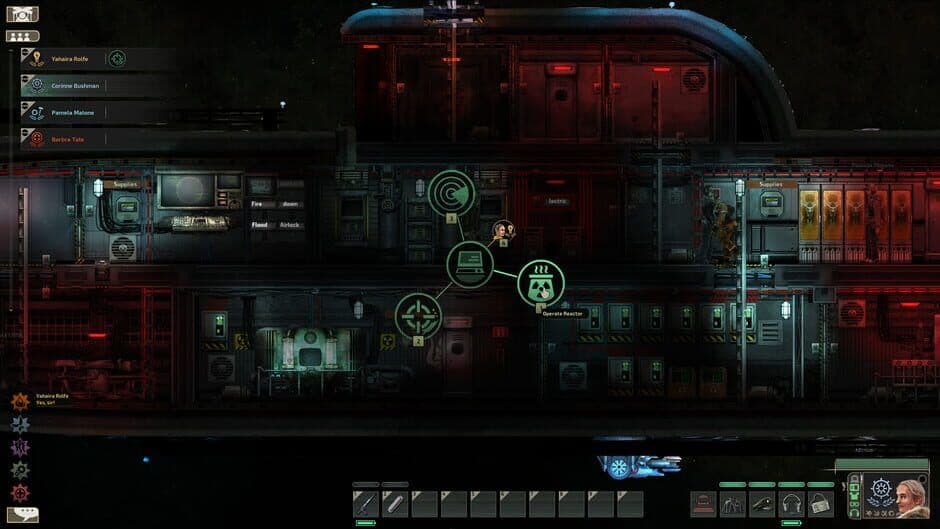
Progression in Barotrauma works because improvement never feels purely personal: a stronger crew and a better submarine expand the entire group’s margin for error. Skills determine which tools and equipment a character can use effectively, while role-specific Talents add stat bonuses, unique abilities, and crafting recipes that gradually turn a generic crew member into a specialist. An Engineer who has developed the right Talents can contribute more than reactor maintenance; they become the person who unlocks or produces equipment the whole submarine depends on. That specialization gives experience a practical purpose without burying the campaign under an exhausting grind. You are not simply watching numbers rise—you are building a crew whose capabilities change what the vessel can safely attempt.
Specialized roles and talents in action.
The same logic makes submarine customization one of Barotrauma’s strongest long-term systems. Armor and weapon upgrades are obvious investments, but power routing, internal layouts, repair priorities, and loadouts have more interesting delayed consequences. A cramped arrangement may shorten the distance to a damaged system while creating dangerous choke points during flooding; heavier defenses may help against creatures while increasing the pressure on fuel and power management; carrying more welding supplies or medical equipment can save a later expedition, but leaves less room for loot. These decisions become meaningful precisely because the consequences arrive several missions after the original choice. A submarine is not just upgraded into a stronger version of itself—it is configured around a crew’s habits and expected risks.
The best upgrade in Barotrauma is not the one that makes disaster impossible. It is the one that gives the crew one more option when disaster begins.
Campaign progression gives those choices a useful rhythm. Cargo transport, mining, beacon activation, and monster-combat missions provide money and reputation, which can be converted into better equipment, submarine improvements, and a more capable crew. Routes and biomes also form a natural difficulty curve: safer waters allow players to learn the economy and maintenance loop, while deeper or more dangerous regions demand stronger weapons, better preparation, and greater confidence in each specialist’s role. This structure creates a satisfying feedback loop—survive a difficult journey, invest the proceeds, then accept a more dangerous contract with a vessel that is better prepared but never invulnerable. The campaign is at its best when a route choice, an upgrade decision, and a previous mistake all collide in one later emergency.
However, the faction layer does not match the strength of the underlying campaign systems. The Coalition and Separatists provide context for the political conflict and justify player-versus-player possibilities, but their questlines can feel more like previews of a larger storyline than fully developed campaign arcs. The problem is not that Barotrauma lacks setting; Europa’s settlements, factions, cults, and rumors give the journey a convincing social backdrop. It is that the faction progression rarely turns that backdrop into a sustained reason to care about the next contract. Some side-faction quests reportedly feel more engaging than those of the primary powers, which exposes the imbalance: the game can generate intense personal stakes from a damaged engine room, yet its formal political conflicts often struggle to create comparable momentum.
The campaign’s other weakness appears after the novelty of building a functioning submarine begins to fade. The core voyage loop remains excellent because missions, routes, enemies, and crew decisions interact unpredictably, but the underlying objectives can start to blur together over extended campaigns or solo runs. Transporting cargo, mining, activating beacons, and hunting monsters provide different immediate tasks, yet repeated preparation, travel, repair, and resource management can begin to feel like variations on the same maintenance cycle. In later stages, accumulated upgrades may also reduce the urgency that made early resource decisions so compelling; once a crew has reliable equipment and a well-configured submarine, some supplies matter less than they did when every welding tank felt precious. This does not erase the campaign’s value, but it explains why Barotrauma can feel inexhaustible with friends and monotonous when played alone for too long.
That tension defines the progression system’s overall success. Barotrauma gives players unusually persuasive reasons to care about a crew, a submarine layout, and the consequences of a mission, while its Skills, Talents, upgrades, and escalating routes make improvement tangible rather than cosmetic. Yet the underdeveloped faction questlines and late-campaign repetition reveal that the game’s systemic storytelling is stronger than its authored progression. The result is a campaign that sustains motivation through preparation and shared survival more reliably than through plot or objective variety—a strong foundation, but one that depends on the crew continuing to find meaning in the next voyage.
Barotrauma’s Emergent Story: Powerful Crew Memories, Thin Authored Narrative
Barotrauma’s best stories begin where its scripted writing stops: with a breach, a bad decision, and three crew members insisting they can still save the submarine. A mechanic sprinting toward a flooded compartment, a medic improvising treatment after an injury, or a diver abandoning valuable loot to answer an internal alarm creates drama no conventional cutscene could manufacture. These incidents feel personal because the crew caused them through choices, hesitation, or outright mistakes. The game’s narrative achievement is not making you witness a story, but making you remember exactly how your crew survived—or failed to.
Inter-crew dynamics compensate for the thin authored narrative.
Barotrauma does not give you a story to follow. It gives you a dangerous place, a fragile submarine, and enough systems to make every disaster feel like something you authored.
That approach works because Europa supplies a potent backdrop without constantly interrupting play to explain itself. Humanity survives beneath the icy surface of Jupiter’s moon, confined to fragile settlements and submarines while hostile alien waters, environmental hazards, wrecks, cults, and unknown creatures surround them. Factions, rumors, mission dialogue, flavor text, and the details of life at underwater stations suggest a larger society without forcing players through lengthy exposition. The setting’s isolation does much of the narrative labor: there is no easy escape from the ocean, and every expedition reinforces the sense that human civilization is surviving in a place that does not want it there. Barotrauma understands that a few scattered details about Europa can be more effective than a lecture when the player has just returned from a voyage where the lights failed and something struck the hull in the dark.
The emergent storytelling is especially powerful because consequences remain attached to the crew’s decisions. A failed expedition is not simply a mission marked unsuccessful; it might be the voyage where someone went down, another player risked a rescue, and the team lost valuable equipment because it pushed one room too far. A last-second recovery can become a shared legend precisely because the game does not frame it as a heroic set piece. The submarine nearly sinks, the crew improvises, and survival depends on several imperfect actions arriving in the right order. This is why a near-death or panicked mistake can stay with players longer than a carefully written exchange: the emotional ownership belongs to the people who made the crisis and solved it.
However, the authored narrative is notably thin. Barotrauma has almost no conventional main plot, and its contracts, mission dialogue, and preparation scenes mainly establish context for the next voyage rather than building a compelling dramatic arc. There is little equivalent of a strong “what happens next?” breadcrumb trail pulling the player through Europa; the central question is usually which mission to accept and whether the crew is prepared to survive it, not what the next chapter of a character’s story will reveal. That design gives the setting room to breathe, but it can also make the campaign feel directionless for players accustomed to plot-driven RPGs. After a failed mission, the game gives you consequences and a new problem—not necessarily a narrative revelation.
This creates a sharp divide in narrative accessibility. Players who enjoy systems-driven stories will value the freedom: the most important events belong to their specific crew, shaped by their decisions, personalities, and bad luck rather than delivered by a writer on schedule. Players looking for memorable authored characters, a clear campaign arc, or sustained dialogue may interpret the same freedom as emptiness, because the game rarely tells them why one contract matters beyond its practical rewards and immediate risks. The design intent is clear—trust the simulation to create drama—but the execution narrows the audience. Barotrauma’s story is richest when players already enjoy treating a failed repair, a reckless dive, or a miraculous rescue as narrative material.
The faction writing exposes that limitation most clearly. The Coalition-versus-Separatist conflict gives Europa political shape and helps frame the broader human struggle, but its questlines can feel more like a promise of future depth than a fully realized dramatic conflict. By contrast, side factions are often considered more engaging, suggesting that Barotrauma is better at creating intriguing narrative pockets than sustaining its central political storyline. That imbalance matters because the main factions should provide the campaign’s strongest sense of direction; when smaller groups generate more compelling quests, the game’s systemic incidents end up carrying stakes that its formal narrative cannot consistently match. The world feels larger than the plot written to move through it.
Barotrauma’s story is therefore a triumph of consequence and a shortfall of conventional structure. Its Europa setting, lore fragments, and environmental hostility create an excellent stage, while breaches, rescues, failed expeditions, and last-second recoveries give players memories with genuine ownership. But the absence of a strong authored campaign and the uneven faction questlines mean the game cannot satisfy anyone waiting for the world to tell them what matters. For players willing to find narrative in catastrophe, Barotrauma produces stories no scripted campaign could replicate; for everyone else, its thick atmosphere may surround a main line that feels frustratingly thin.
Barotrauma’s Atmosphere: Functional 2D Visuals and Exceptional Threat-Focused Audio
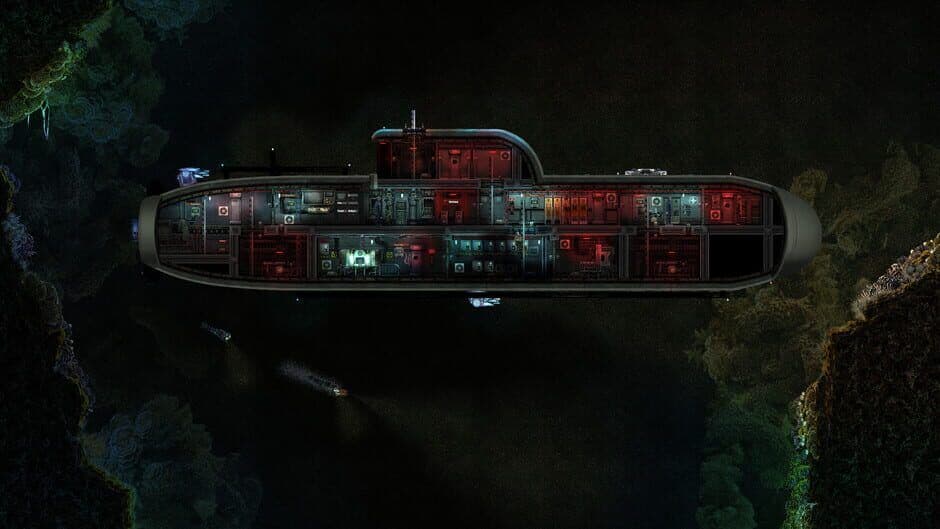
Barotrauma’s visuals are not built to impress from a distance; they are built to tell the crew what is failing right now. The 2D cross-section view makes the submarine’s internal logic immediately readable: players can see who is trapped in a flooded room, which compartment has lost power, where a breach is spreading, and which route remains open for escape. That clarity matters when several emergencies overlap, because the entire crew can form the same mental map instead of arguing over invisible information. In a game where a few seconds of confusion can turn a repair into a sinking, this austere presentation is not a compromise—it is essential interface design.
Threats are often heard or seen as silhouettes before they strike.
Barotrauma makes the submarine legible enough to manage and dark enough to fear.
The visual atmosphere gains its force from withholding information. Outside the vessel, pitch-black water reduces the world to the cone of a flashlight, a sonar return, or the brief silhouette of something enormous moving beyond the hull; inside, cramped corridors and flooded compartments turn ordinary rooms into obstructed, dangerous spaces. A derelict station or alien ruin feels threatening for the same reason: limited visibility prevents the player from comfortably surveying the area, while the sudden loss of instrument glow or the appearance of a creature in the murk makes perception itself part of survival. Darkness in Barotrauma is therefore a gameplay mechanic, not a filter applied for mood. It determines what the crew can know, where they can move, and how much risk they accept before pressing deeper.
The trade-off is a visual style that can look flat or dated beside more cinematic survival games. The simple 2D art, functional environments, and ragdoll animation do not deliver the spectacle of a high-budget underwater adventure, and characters can move awkwardly around ladders, doors, and flooded spaces. Those rough edges are particularly obvious during moments that should feel dramatic: a crew member fumbling through a cramped passage or collapsing into an odd animation can puncture the horror with unintended comedy. The presentation is not half-finished in its purpose—the cross-section remains highly effective—but players expecting lavish production values may read its austerity as a lack of polish. Barotrauma asks the visuals to communicate systems first and spectacle second, and that choice serves the simulation while narrowing its immediate appeal.
Sound does more atmospheric work than the graphics. The submarine’s steady hum establishes that the vessel is functioning; metal creaks suggest stress; alarms announce system failures; fire, machinery, and water intrusion turn damage into an audible escalation. Bubbles outside the hull, sudden impacts, and the changing noise of an approaching creature can warn the crew before anyone sees the threat, making hearing a primary sensor rather than background decoration. This is why a quiet passage can feel more tense than an active firefight: when the familiar mechanical rhythm changes, everyone has a reason to stop talking and identify what went wrong. In Barotrauma, the soundscape teaches players to listen for evidence, and that makes every emergency more readable without making it less frightening.
Music is used with similar discipline. Crisis scoring appears sparingly, while long stretches leave the submarine hum, environmental effects, and uncomfortable silence to carry the tension; the restraint gives musical cues greater weight when they finally arrive. It also preserves the feeling that the crew is working inside a machine rather than performing in a conventional action-game set piece. The limitation is that Barotrauma’s soundtrack is generally more effective in context than on its own, with the atmosphere lingering more strongly than any melody after the voyage ends. That is an intentional compromise, and mostly the right one: the game’s audio is designed to sharpen anticipation and split-second judgment, not to produce a playlist of memorable themes.
The result is a presentation whose strengths emerge through play rather than screenshots. Barotrauma’s cross-section view lets a crew understand a catastrophe at a glance, its darkness turns missing information into pressure, and its sound design makes unseen danger actionable before it becomes visible. The rough animation and limited spectacle remain real barriers for players seeking visual polish, while the restrained music sacrifices standalone memorability for sustained tension. But when the lights fail, water fills the lower deck, and a distant impact cuts through the submarine’s familiar hum, the game’s functional style becomes something better than cinematic: it becomes a shared instrument for fear.
Performance and Onboarding in Barotrauma: A Demanding Game With Uneven Friction
Barotrauma has spent years becoming more than its early experimental submarine simulator, but it still teaches like a game that expects you to have already survived three disasters. The 1.0-era version is substantially fuller than its pre-alpha roots: animations and graphics were improved, monsters were redesigned, weapons such as the coilgun were added, the faction system expanded, and a new endgame gave long campaigns a clearer destination. Those changes matter because they turn the premise from a brilliant prototype into a broader RPG and survival simulation with enough structure to support repeated voyages. The problem is that Barotrauma’s presentation has matured faster than its onboarding.
Reactor management is a high-stakes task that requires careful instruction.
The tutorials and role-specific learning modules do provide useful foundations, particularly for jobs such as Engineering, wiring, piloting, and medical treatment. They explain the vocabulary of the submarine and give newcomers a way to practice before joining a full crew. Yet the game can still feel like being thrown into the deep end: movement, equipment handling, reactor management, repairs, navigation, medical procedures, and mission objectives compete for attention before the player understands which information matters first. Even the opening area can lack direct objective guidance, leaving a newcomer exploring a station or staring at interfaces without a clear sense of what the next practical step should be. Barotrauma’s design assumes that confusion will become mastery through repetition, but that is a poor first impression when a novice cannot tell whether a failure came from a bad decision, an unexplained system, or an unintuitive control.
The controls compound that friction. WASD movement and mouse interaction are simple on paper, but aiming direction, ladders, doors, equipment handling, and object interactions can become awkward during a flooding emergency, especially when ragdoll movement sends a character stumbling around a cramped passage. A veteran eventually treats these quirks as part of the vessel’s physical language; a new player experiences them as resistance between intention and action. This distinction is critical in Barotrauma because early mistakes already carry severe consequences: if the interface and movement make it unclear how to reach a breach or operate a tool, the lesson becomes frustration rather than understanding. The game’s systems are learnable, but the route to learning them is less generous than it needs to be.
Barotrauma’s tutorials explain the submarine’s parts; they do not always explain the order in which a frightened human should use them.
Solo play exposes the onboarding problem even more sharply. AI crew can fill roles and issue basic assistance, but reports of failed objectives, poor pathfinding, friendly fire, reckless deaths, and constant micromanagement describe a system that cannot reproduce the judgment of a human crew. A bot may be technically assigned to a task yet still require supervision while the player is also steering, repairing, treating injuries, or defending the hull. That turns a crisis-management game into an exercise in managing the managers. Barotrauma’s single-player mode is useful for learning where equipment is stored and how its systems connect, but it rarely feels like the intended experience; it is a training ground with campaign responsibilities attached.
Technical stability is similarly uneven. Players report low frame rates, lag, stuttering, crashes, and networking problems, with performance complaints appearing during combat, in cities, and in late-game situations containing many entities; some reports even come from powerful PCs. The consequences are more serious here than in a conventional action game because Barotrauma’s emergencies depend on timing and coordination: a delayed input during a hull breach can prevent a repair, while multiplayer stutter can make a teammate appear unreliable when the real culprit is the connection. Modded sessions can introduce further crashes or instability, and poor netcode undermines the communication that the entire cooperative design relies on. These issues are not universal—many players find the game lightweight and playable on older hardware—but that inconsistency makes recommendations difficult.
The hardware picture is therefore less a clean system-requirement question than a warning about variability. Barotrauma can run comfortably for some players on modest machines, while others report single-core CPU limits, significant RAM usage reaching roughly 8 GB, and drops when the game is crowded with creatures, effects, or network activity. Mods widen that uncertainty: the Workshop and submarine editor are major strengths, but heavily modified campaigns can be less stable than the base game, especially in multiplayer. After its long Early Access evolution, Barotrauma is clearly a more complete and better-explained game than the pre-alpha experiment it once was; redesigned monsters, expanded factions, new weapons, and a proper endgame prove that development moved the project forward. But its technical and instructional friction remains part of the purchase decision. Barotrauma rewards patient crews willing to learn the machinery—and asks them to tolerate the occasional moment when the machinery, the lesson, or the network fails them first.
Barotrauma Multiplayer, Mods, and Value: Who Gets Hundreds of Hours From It?
Barotrauma’s value is not measured by how many missions it contains, but by how many different disasters those missions can produce. The same cargo run can become a clean delivery, a reactor emergency, a creature attack, or a total evacuation depending on the route, submarine layout, crew behavior, and one badly timed decision. Because missions, enemies, environmental events, and cascading failures interact rather than simply appearing as isolated checklist items, players can spend hundreds of hours generating new voyage stories instead of clearing repetitive map icons. This is replayability built from systems, not padding.
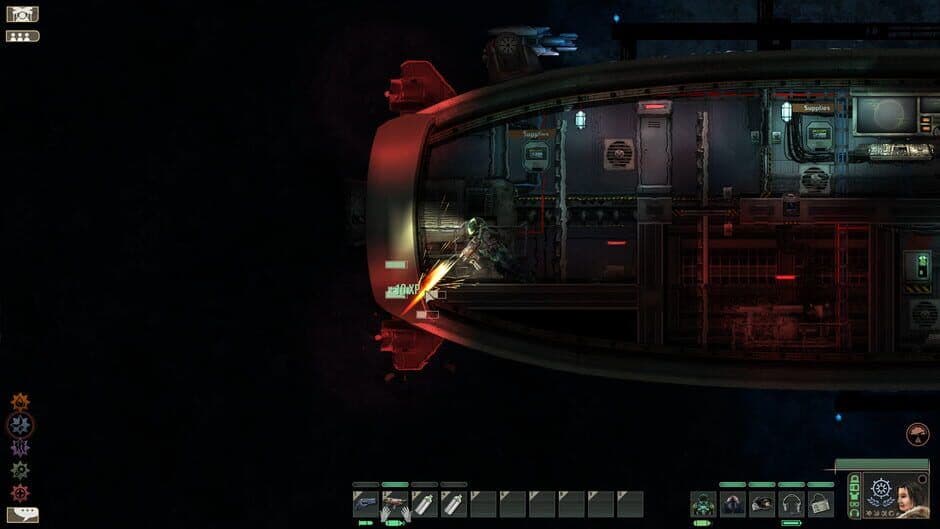
Away missions and exploration
Crew size changes the character of that replayability more than most progression systems do. A two-player crew turns every voyage into frantic multitasking: one person may steer while also monitoring the reactor, then abandon the helm to patch a breach while the other handles weapons and medical treatment. A well-drilled six-person crew creates a smoother relay, with the Captain navigating, the Engineer managing power, the Mechanic repairing damage, Security handling threats, and the Medic treating casualties without everyone colliding over the same task. Neither scale is simply superior. Smaller groups feel more desperate because every absence is immediately felt, while larger crews make Barotrauma’s interdependence resemble a practiced emergency team—provided everyone communicates rather than talking over one another.
That scalability gives the campaign a rare kind of freshness. A submarine’s internal layout changes sightlines, travel time, choke points, and the speed at which flooding becomes catastrophic, so the same monster encounter can demand entirely different responses on different boats. Crew habits matter just as much: one group may overprepare and retreat early, while another pushes into a wreck for one more crate of resources and creates a rescue mission from a routine expedition. The game remembers these choices through lost equipment, damaged vessels, upgraded roles, and stories the players carry into the next run. It is hard to overstate how satisfying this loop becomes once a crew starts recognizing its own failure patterns and deliberately building around them.
The best content in Barotrauma is not a new mission type. It is watching a familiar mission become unrecognizable because this crew, on this submarine, made one different decision.
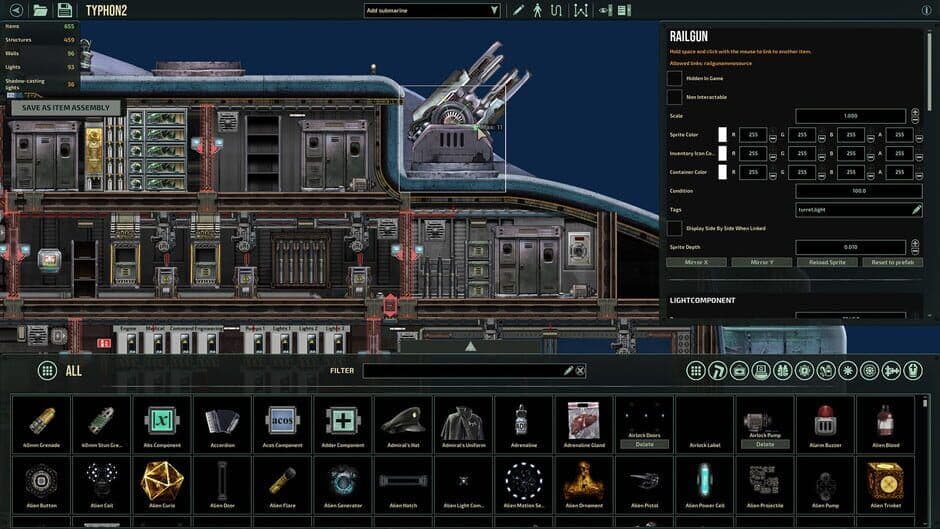
The Steam Workshop and built-in submarine editor push that systemic value far beyond the base campaign. Community boats can radically alter a voyage’s rhythm through different room arrangements, sightlines, bottlenecks, weapon placements, and repair access; a design that keeps critical systems close together may make damage easier to contain, while a cramped or poorly connected vessel can turn one breach into a chain reaction. Players can also create scenarios and gameplay overhauls that change the rules rather than merely adding decoration, extending the campaign with new threats, equipment, and priorities. This is meaningful user-generated content because it changes how crews think: a new submarine is not just a cosmetic shell, but a different logistical problem with its own failure points.
Mod support also gives Barotrauma an answer to its repetition risks. The underlying campaign can begin to feel familiar when the same preparation, travel, repair, and resource-management cycle repeats, particularly for solo players. Community boats, scenarios, and larger gameplay modifications can disrupt that routine by changing the vessel, the available tools, the threat balance, or the assumptions behind a successful expedition. The editor effectively turns players into co-designers of the game’s central question—how much pressure can this crew absorb before the submarine stops functioning? The caveat is that modded multiplayer can introduce crashes, instability, and compatibility problems, so the feature that makes Barotrauma dramatically deeper can also make a campaign less reliable.
Public multiplayer is where that promise becomes most fragile. Griefing, sabotage, toxic behavior, and unpredictable random-server etiquette can destroy a campaign before the crew has established any rhythm: a player may misuse medical supplies, neglect a critical station, deliberately damage the submarine, or simply refuse to cooperate while everyone else tries to recover. Barotrauma’s systems amplify that behavior because one malicious or careless crew member can access the same machinery that makes teamwork so powerful. A public server can therefore turn the game’s paranoia into mundane frustration rather than entertaining betrayal. Private groups, dedicated servers, and moderated communities are preferable because they preserve accountability and give players room to learn without one stranger treating the submarine as a disposable toy.
The value proposition is consequently conditional but substantial. Reviews and player discussions frequently describe Barotrauma as capable of delivering hundreds of hours, and that claim is credible when the campaign’s variable missions, changing crew sizes, submarine customization, Workshop content, and emergent failures are taken together. One contemporary review listed the PC game at approximately £30, a reasonable price for a game that can support a long-running group campaign, but a harder sell for someone intending to play alone or with random crews. Many players recommend buying during a sale when a regular group is unavailable, and that is sound advice: the discount compensates for the time required to overcome the onboarding friction and find a community that suits the game.
Solo players can still use Barotrauma to learn the submarine’s systems, experiment with roles, and explore its content, but the value drops when AI replaces human improvisation. Bots can perform basic duties, yet they do not create the unpredictable rescues, arguments, betrayals, or ridiculous last-second solutions that make a campaign memorable. Likewise, random multiplayer offers access to the game’s central format but not necessarily its best version; without trust, communication, or moderation, the same mechanics become liabilities. Barotrauma delivers its strongest return to players with a patient regular crew, a willingness to experiment with mods, and an appetite for failure that produces stories instead of rage-quits.
Barotrauma is therefore an exceptional long-term investment for cooperative survival fans and a much less convincing purchase as a solitary sandbox. Its replayability comes from interacting systems, not an inflated content count; its modding tools can reshape the submarine itself; and its multiplayer scales from frantic two-person triage to a coordinated six-person operation. But public-server volatility and limited solo improvisation place real conditions on that value. If you have reliable friends—or are willing to find a moderated community—Barotrauma can justify hundreds of hours. If you want a polished, predictable single-player campaign, even a sale price will not fix the mismatch.
Final Verdict: Is Barotrauma Worth Playing for Co-op Survival Fans?
Barotrauma is one of the rare co-op games where failure can be more memorable than victory. A flooded engine room, a panicked medic, a traitor near the reactor, and one desperate repair attempt can produce the kind of shared story that polished campaigns spend millions trying to manufacture. Its audience is narrow, but for players with a patient regular crew, Barotrauma is among the finest systemic survival games available.
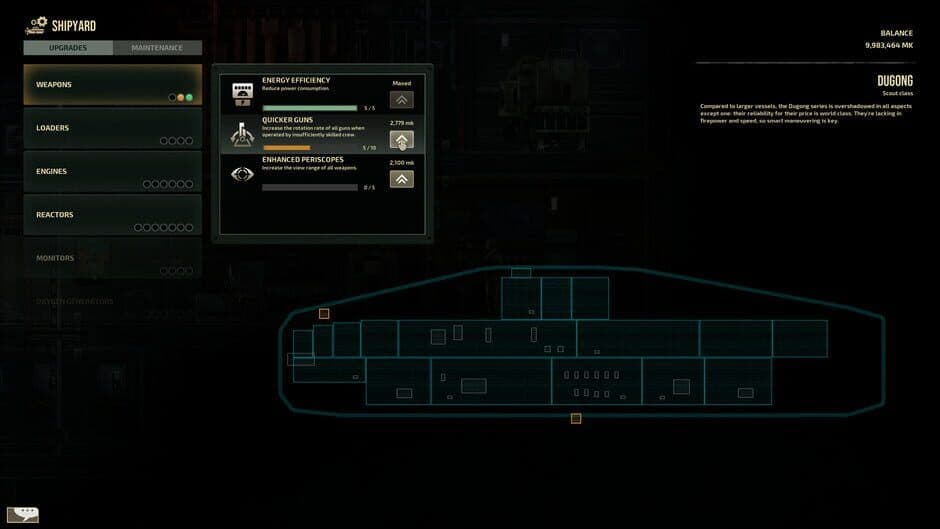
Choosing the right class is the first step in your survival journey.
The cooperative identity is the decisive reason to play. Few games combine role dependence, real-time crisis management, emergent humor, paranoia, and improvisation so completely: the Captain must keep the submarine moving, the Engineer must stabilize power, the Mechanic must contain damage, Security must repel intruders, and the Medic must keep injured players alive while everyone argues over the next priority. A creature attack can coincide with a reactor failure and a flooded compartment, forcing the crew to divide attention rather than wait for a single player to become the hero. That structure creates comedy when someone makes a disastrous mistake and genuine relief when the group somehow recovers. Barotrauma’s best stories are not watched; they are survived together.
Its difficulty is both the feature and the barrier. Brutal penalties, lost resources, frequent deaths, and complex systems make competence feel earned because the crew must understand why a wet junction box, neglected breach, overtaxed reactor, or poorly prepared dive caused the collapse. But that same design can repel newcomers who lack patient friends or a community willing to teach them how the submarine works. A guided story, immediate feedback, polished cinematic visuals, low-friction controls, and a reliable solo adventure are all reasonable expectations in a modern RPG; Barotrauma satisfies none of them consistently. The game throws players toward mastery through repetition, and that is exhilarating after the systems click—but before then, the experience can feel less like learning a craft than being punished for not already knowing it.
Barotrauma does not ask whether you can win. It asks whether you are willing to become the kind of crew that can survive the next failure.
That demanding design explains the game’s unusually durable affection. Steam sentiment remains overwhelmingly positive—roughly 94–96% across tens of thousands of reviews—and the pattern makes sense: players who endure the early confusion often become fiercely loyal because every improvement is tied to a real memory. They remember the voyage where the crew rescued a diver under attack, the mission lost because someone pushed too far into a wreck, or the night a supposedly doomed submarine reached the station with one engine and half its crew intact. This is not the shallow enthusiasm of a short campaign that delivers its best moments in the opening hours. Barotrauma’s strongest appeal compounds over time as players learn roles, develop crew rituals, modify submarines, and build a shared history of mistakes.
The review consensus reflects that conditional excellence. Existing coverage places Barotrauma around 8.0/10, 4.3/5, 4.4/5, and 4.6/5—an unusually consistent range for a game whose quality depends so heavily on the people playing it. Those scores recognize a high-quality, distinctive experience while acknowledging the thin authored narrative, uneven onboarding, awkward controls, limited AI, technical friction, and austere presentation. The variation is not a contradiction; it measures the game’s central condition. With a coordinated crew, its role systems and emergent disasters feel close to best-in-class. Alone, the same mechanics can become micromanagement, repetition, and frustration.
The recommendation is therefore decisive. Buy Barotrauma if you have a regular co-op crew that enjoys submarine simulation, systemic survival, horror, and stories created by bad decisions. Private groups and moderated communities reveal the game at its best, where every player has a responsibility and every crisis produces conversation. Solo players should approach cautiously: AI can help teach the machinery, but it cannot replicate human improvisation, and the campaign’s repetition and technical quirks become more visible when one person must manage everything. Players seeking a cinematic story or frictionless survival adventure should skip it entirely, because no amount of submarine customization can turn Barotrauma into that kind of game.
For the right audience, however, its flaws are the price of its identity rather than evidence of a failed design. Barotrauma is rough around the edges, hard to learn, thin on conventional plot, and occasionally unreliable—but its shared emergencies have a force that few co-op games can match. When the alarms stop, the lights return, and everyone realizes the submarine is still moving, the game delivers a satisfaction no scripted victory can imitate. Barotrauma is worth playing, and worth keeping, for co-op survival fans willing to earn its trust.
Pros
- Best-in-class cooperative role dependence and crisis management
- Emergent stories built from breaches, rescues, sabotage, and crew mistakes
- Deep submarine systems involving power, repairs, medicine, weapons, resources, and upgrades
- Strong horror atmosphere driven by darkness, sonar, and threat-focused audio
- Extensive replayability through changing voyages, submarine layouts, crew behavior, mods, and the Workshop
- Durable long-term appeal for patient groups willing to learn together
Cons
- Steep onboarding with dense interfaces and limited objective guidance
- Solo AI cannot reproduce the judgment or improvisation of human players
- Controls and movement can feel clumsy during emergencies
- Authored story and major faction questlines lack a strong narrative pull
- Technical stability and modded multiplayer performance can vary
- Public servers may suffer from griefing, sabotage, and toxic behavior