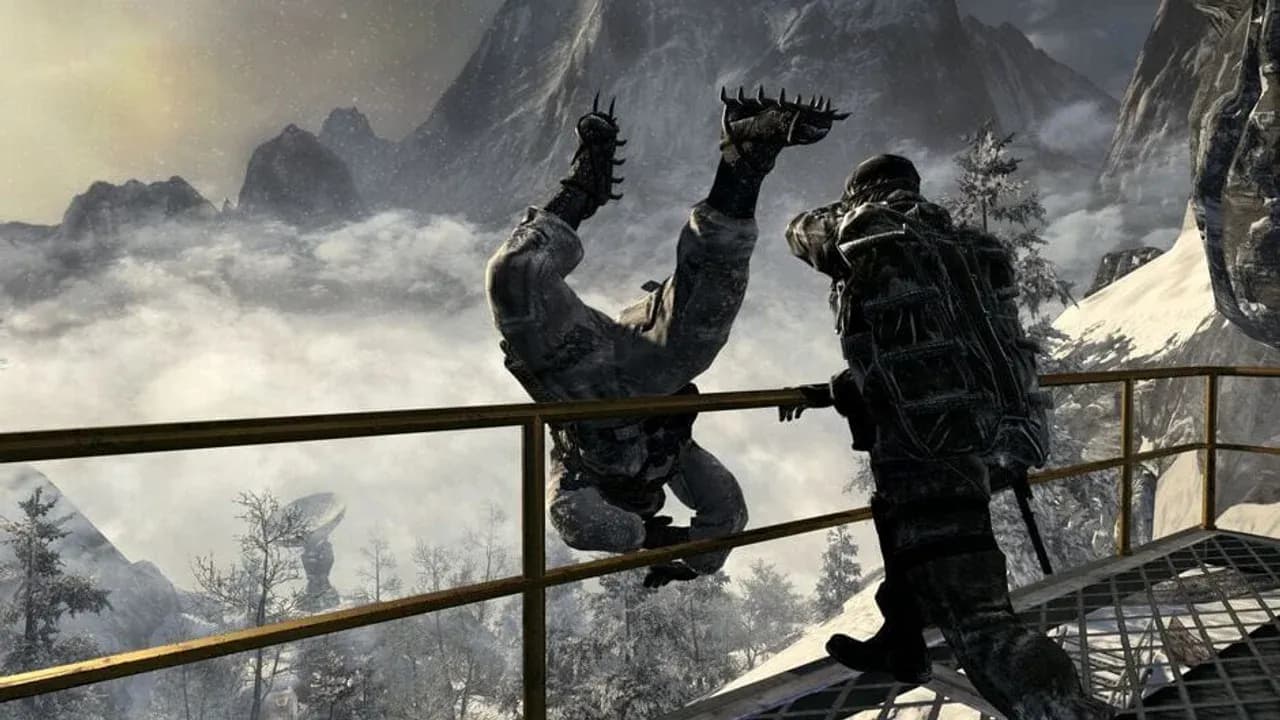
Call of Duty: Black Ops Narrative: A Psychological Cold War Thriller
For Call of Duty: Black Ops, the single-player campaign isn't just a series of missions to blast through before the multiplayer grind—it’s a deliberate, ambitious gamble. Treyarch swaps the globe-trotting spectacle of its predecessors for a psychological thriller, framing its Cold War escapades through the fractured memories of a brain-scrambled operative. This is where the game earns its reputation for narrative ambition, even if it occasionally trips over its own ambition.
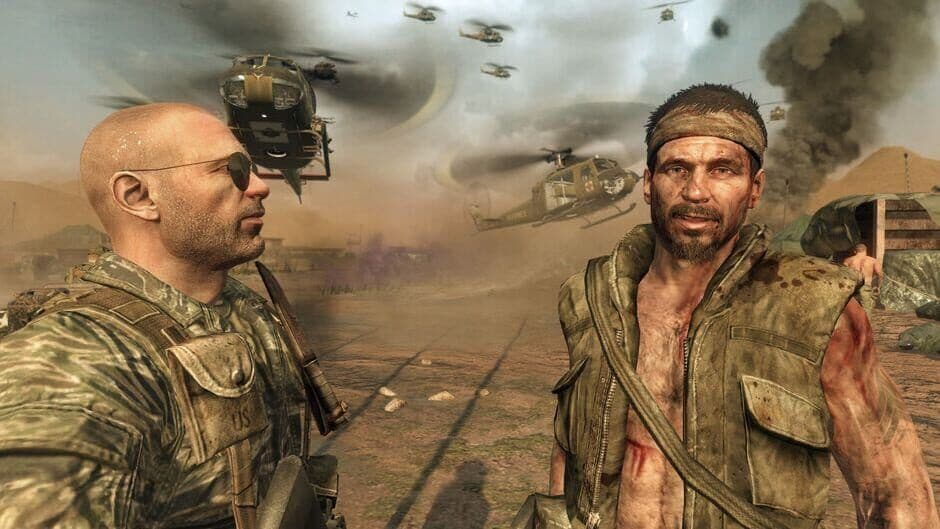
The story explores themes of brainwashing and hidden sleeper agents.
The interrogation room is the game’s masterstroke. Rather than serving as a simple menu, this sterile, shifting space becomes the narrative anchor. Your missions are presented as memories dredged up under duress, with erratic visual effects and eerie audio echoes bleeding into the flashbacks. This creates a pervasive tone of uncertainty—are you reliving history or reconstructing a lie? It’s a coherent and intriguing framework that elevates the typical “go here, shoot that” structure into something more cerebral. The story, while borrowing well-worn thriller twists, effectively harnesses the paranoia of its 1960s Cold War setting. From the attempted assassination in Cuba to the jungles of Vietnam, the globe-trotting isn't just for variety; it paints a world where trust is a currency no one has. This historical backdrop gives the conspiracy weight, making the hunt for numbers stations and secret programs feel urgent and grounded in a real-world tension.
The voice acting is what sells this paranoid atmosphere. Sam Worthington, Ed Harris, and Gary Oldman deliver expert performances, lending gravitas to a plot that could easily slip into pulpy nonsense. Their delivery turns cryptic dialogue into compelling character drama.
Where this ambition falters is in the middle chapters. The plot can become disjointed, with some narrative twists feeling more confusing than clever. You’re jerked between locations and timelines with little connective tissue, and the reliance on Mason’s scrambled memories sometimes feels like a convenient excuse for narrative leaps rather than a tightly woven mystery. This isn’t a fatal flaw—the finale successfully ties the threads together—but it creates pacing lulls where you’re pushing forward more out of obligation to the action than investment in the story.
The campaign also makes a stark departure into mature themes that push the series' boundaries. A sequence involving the torture of a restrained prisoner is depicted with close-up, visceral gore—shattering limbs and dismemberment are rendered with uncomfortable detail. It’s a moment that deliberately tests the player’s comfort, far removed from the sanitized heroics of earlier titles. Whether this is a bold artistic choice or a gratuitous shock depends on your tolerance, but it undeniably marks Black Ops as a darker, more adult chapter in the franchise.
All this unfolds in a brisk five to seven hours. The campaign is short, a fact that becomes glaring when you hit a poorly designed checkpoint or an AI companion decides to shoot a wall for five minutes. Yet, its condensed runtime is also a strength; the relentless pace of prison breaks, urban firefights, and mountainous incursions ensures there’s little downtime. You’re constantly propelled forward, even when the narrative logic gets a bit wobbly. In Call of Duty: Black Ops, the campaign proves that a military shooter can aim for more than just spectacle—it can successfully, if imperfectly, grapple with memory, morality, and the cost of secrets.
Black Ops Gameplay Mechanics: Refined Gunplay and Scripted Spectacle
In Call of Duty: Black Ops, the moment-to-moment action is a masterclass in controlled chaos. Treyarch understands that spectacle is the franchise's lifeblood, and the single-player campaign delivers a relentless parade of "wow" moments that feel earned. You're not just a soldier; you're a Cold War action hero, and the game’s arsenal of set pieces and unique weaponry is designed to make you feel exactly that. The core gunplay is the series’ signature refined snap, but it’s the variety that elevates it—a prison break in the Soviet Union, a stealthy yacht incursion that erupts into rooftop combat, and the infamous Battle of Khe Sanh. Each mission feels like a curated blockbuster scene, with pacing so brisk you’re never more than a few minutes from the next explosion or dramatic reveal.
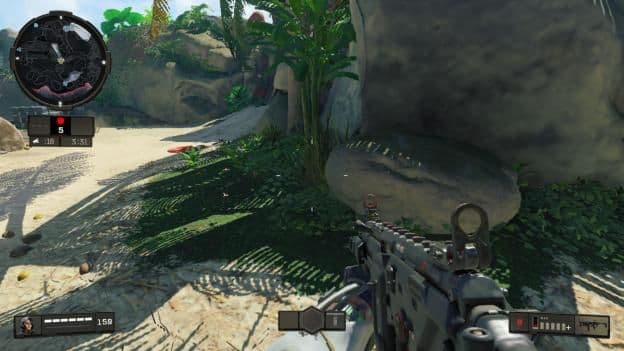
Technical execution and graphical fidelity in the single-player campaign.
Where this design falters is in its occasional over-reliance on scripted sequences that strip away player agency. The thrill of piloting a Hind gunship or driving a speedboat is undercut when you realize your inputs are largely cosmetic.
This becomes painfully clear in moments like the SR-71 Blackbird takeoff, an exercise in holding forward with no meaningful control, or a brief, on-rails carjacking sequence that feels like a tutorial you didn't need. These are "throw-away mechanics"—flashy ideas that last just long enough to frustrate before dumping you back into the core shooting. They’re the seams showing in an otherwise polished suit of cinematic armor. The intent to break up the stop-and-pop gameplay is admirable, but the execution often feels like a director yelling "cut" mid-scene to hand you a prop you’re not allowed to use properly.
The weaponry is where the game’s personality truly shines. Moving beyond the standard M16s and AK-47s, Black Ops arms you with the bizarre and brutal tools of covert warfare. The SPAS-12 shotgun becomes a fire-spewing nightmare for enemies in tight corridors. The crossbow, armed with explosive bolts, turns stealthy long-range picks into theatrical detonations. Even the multiplayer’s RC-XD killstreak, a remote-controlled car packed with C4, makes its chaotic debut here, embodying the game’s slightly goofy, over-the-top spirit. These aren't just reskinned guns; they fundamentally change your tactical approach and inject a sense of dark fun into the historical setting.
Unfortunately, the brilliant set design and inventive tools are frequently undermined by the game's most persistent flaw: its artificial intelligence. Both friendly and enemy soldiers operate with a baffling lack of tactical sense. Teammates will pace in circles, shoot at walls indefinitely, or fail to provide meaningful covering fire, forcing you to carry every encounter alone. Enemies, meanwhile, can exhibit erratic behavior, sometimes standing in the open and other times becoming psychic terminators. This inconsistency is exacerbated on higher difficulties, where difficulty balance collapses entirely. There are infamous sections, like facing a .50 caliber machine gunner on the Hardened setting, where cover becomes a polite suggestion as bullets phase through solid objects to kill you instantly. It’s a frustrating reminder that the challenge is often artificial, born from broken systems rather than smart enemy design.
These technical shortcomings are compounded by sporadic bugs and unclear design. Some players reported game-ending glitches in early levels, requiring full mission restarts. More common is the confusion in missions like the Battle of Khe Sanh, where objectives are poorly communicated and the environment offers little guidance, leading to minutes of disoriented running through smoke and chaos. For a series known for its polished, on-rails intensity, these moments of friction feel especially jarring. They pull you out of the carefully constructed paranoid fantasy and into the less forgiving reality of software development.
Ultimately, the gameplay in Call of Duty: Black Ops is a push-and-pull between sublime, curated action and frustrating, systemic hiccups. When the script fires on all cylinders—storming a Cuban beachhead, escaping a crumbling Soviet gulag—it delivers some of the most memorable moments in the franchise. But when the AI breaks, the bugs bite, or the game takes control a little too forcefully, the illusion shatters. It’s a testament to the strength of the core shooting and the sheer audacity of the mission design that you’ll gladly forgive most of these sins by the time the credits roll, but they remain the blemishes on an otherwise thrilling ride.
Multiplayer Innovations: The Impact of COD Points and Wager Matches
The multiplayer suite of Call of Duty: Black Ops is a fascinating case study in confident iteration. While the core loop of Modern Warfare 2’s online success remains gloriously intact, Treyarch’s innovations are surgical, targeting the player’s psychology as much as their trigger finger. The result is an online ecosystem that feels simultaneously familiar and fresh, a place where the thrill of a kill is now matched by the anxiety of a wager.
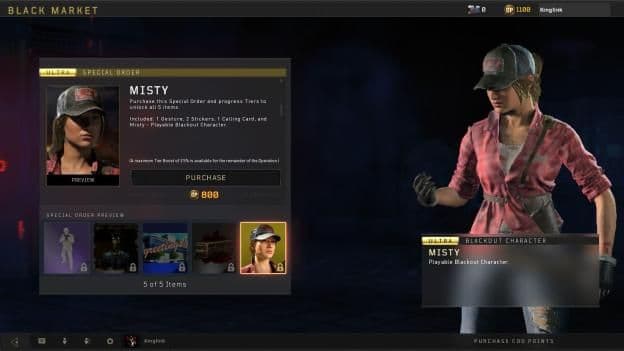
Players used earned COD Points to unlock weapons, perks, and cosmetic items.
The most significant shake-up is the introduction of COD Points as a dual-currency system alongside traditional XP. This isn’t just a cosmetic tweak; it fundamentally alters the player’s relationship with progression. Where previous games doled out weapons and attachments in a rigid, linear sequence, Black Ops hands you agency early. Leveling up grants a lump sum of 1,000 COD Points, allowing you to immediately purchase the perks or equipment that suit your playstyle. Want a silencer for your starter SMG? You can buy it, bypassing the grind for the weapon itself. This system empowers players to craft their ideal loadout faster, but it also replaces the simple joy of “dinging” a level for a specific unlock with the more calculated satisfaction of shopping. For veterans, it’s a masterclass in customization. For newcomers, the sheer volume of purchasable items—from face paint to reticle colors—can be paralyzing, a digital toy store where everything has a price tag.
This currency system finds its purest, most exhilarating expression in Wager Matches. These are not your standard team deathmatches; they are high-stakes laboratories where the game’s mechanics are stress-tested under pressure.
Modes like One in the Chamber (a single bullet, three lives, where a kill rewards another) and Gun Game (a forced progression through 20 different armaments) strip away the crutches of loadouts and killstreaks. Here, raw skill and patience are the only currencies that matter, and the tension is palpable because you’re gambling your hard-earned COD Points on the outcome. The pot is split among the top three finishers, turning every match into a lethal, six-player free-for-all that feels closer to the frantic purity of an arena shooter than a modern military sim. It’s a brilliant, self-contained ecosystem that offers a thrilling alternative for players fatigued by the meta of standard playlists.
The Contract system cleverly extends this gamble into the core multiplayer. By spending COD Points to activate a time-limited challenge—like achieving five headshots without dying, or knifing an opponent in the back—the game incentivizes specific, often risky playstyles. Success yields a massive payout, sometimes tripling or quadrupling your investment, while failure leaves you poorer. It’s a system that spices up routine matches, encouraging a sniper to swap to a pistol or a rusher to practice patience. However, the potential for conflict with team objectives is real. When a player is two headshots away from a 3,500-point payout in a game of Domination, capturing a flag becomes a secondary concern. It’s a calculated risk Treyarch embraced, one that makes every match feel uniquely personal, even if it occasionally bends the team’s collective goal.
These new systems are supported by a multiplayer foundation that is arguably the most balanced and thoughtfully designed in the franchise to date. Map design is exceptional, with classics like Nuke Town and Firing Range offering a masterclass in flow, sightlines, and verticality. Dynamic elements, like shifting target dummy placements, keep these spaces feeling alive. The perk balance has been meticulously tuned, preventing the abused combinations that plagued Modern Warfare 2. By tiering powerful perks like Marathon and Ninja together, players must make meaningful choices, leading to greater class diversity and a healthier metagame. Even the new RC-XD killstreak, while delightfully chaotic, requires only three kills—a design choice that keeps the action frantic and accessible, though veterans might grumble about its low-skill potency.
For all its design triumphs, the launch of Call of Duty: Black Ops multiplayer was not a seamless victory. Technical stability, particularly on the PC version, was a significant weak point. Reviews from the era describe a landscape plagued by intense lag, server connection errors, and matchmaking that rendered the experience “damn near unplayable.” Even on consoles, dropped connections and being kicked from lobbies were not uncommon at launch. In a game where split-second reactions are everything, this instability wasn’t a minor annoyance; it was a fundamental breach of the social contract. While patches would eventually soothe these wounds, the initial experience served as a stark reminder that the most elegantly designed systems are worthless if the infrastructure crumbles beneath them. It’s the one area where Treyarch’s ambition momentarily outpaced its execution, casting a shadow over an otherwise stellar competitive offering.
Zombies and Extras: More Than Just a Side Mode
In Call of Duty: Black Ops, the value proposition famously extends far beyond the credits of its campaign. While the multiplayer innovations are the headline act, it’s the suite of cooperative and community features that transforms the package from a great shooter into a content behemoth. The Zombies mode, in particular, evolves from a quirky bonus into a legitimate pillar of the experience, offering a frantic, hilarious, and surprisingly deep alternative to the competitive grind.
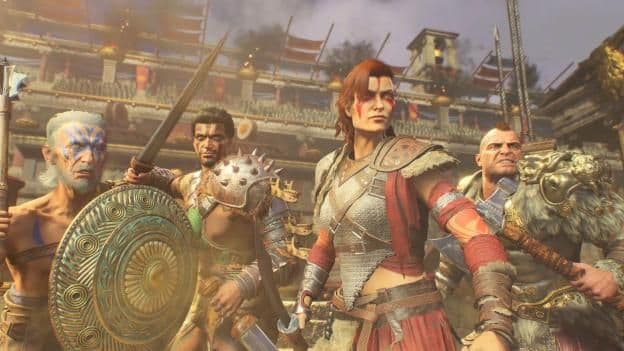
The cooperative Zombies mode returns with more depth and secrets.
Zombies mode is no longer a hidden reward; it’s a front-and-center attraction, accessible directly from the main menu. Treyarch understood the cult appeal of the mode from World at War and doubled down, not just in content but in personality. The core loop of barricading windows, managing points, and surviving ever-tougher waves remains brilliantly tense, but the new playable characters inject a dose of absurdist humor that perfectly counterbalances the horror. Playing as John F. Kennedy, Fidel Castro, Richard Nixon, and Robert McNamara—complete with period-accurate voice lines and bickering dialogue as you mow down the undead—is a masterstroke of dark comedy. It’s a knowingly ridiculous premise that works because the gameplay supporting it is so solid; the tension of a crumbling perimeter is now punctuated by a presidential one-liner, creating a uniquely memorable cooperative vibe.
The hidden Dead Ops Arcade, accessible via a terminal in the campaign’s interrogation room, is the purest expression of this playful spirit. This top-down, twin-stick shooter is essentially Smash TV with zombies, a fully-featured arcade game tucked away as an Easter egg. It’s a generous, no-strings-attached bonus that rewards curiosity and offers a fantastic four-player co-op diversion.
This depth, however, has a gatekeeper. For players seeking more than just a high score, Zombies houses complex narrative “Easter Egg” quests that unlock proper endings and boss fights. The problem is that these steps—involving aligning planets, collecting symbols, and killing specific zombie types in precise sequences—are almost entirely unguided within the game. The design intent to foster a community puzzle-solving effort is clear, but the execution creates a stark divide. Casual players experience an endless horde mode, while dedicated fans must exit the game entirely to consult external guides and flowcharts. This lack of in-game hinting means a significant portion of the mode’s crafted narrative and climax remains inaccessible to most, feeling less like a rewarding secret and more like content locked behind a cryptic wall.
For players intimidated by the online fray, Call of Duty: Black Ops offers a crucial safety net: Combat Training. This mode is a quiet revolution in accessibility, simulating the full multiplayer experience against AI bots whose difficulty can be scaled. What makes it brilliant isn’t just the practice—it’s that the bots convincingly replicate common online behaviors. They’ll camp sniper lanes, rush objectives, and force you to learn map flow and sightlines without the pressure of a negative K/D ratio. You even earn XP and unlock gear within this sandbox, providing a tangible sense of progression. It’s the perfect onboarding tool, demystifying the chaos of online play and ensuring that when you finally step into a live match, you’re prepared, not punished.
The package is cemented by Theater Mode, a feature that feels years ahead of its time. This isn’t a simple replay viewer; it’s a robust content-creation suite. The ability to detach the camera, fly freely through a match, and bookmark kills and deaths on a timeline is invaluable for both learning and vanity. More impressively, the tools for editing together clips, adding basic effects, and rendering videos for upload transformed every player into a potential director. While sharing was initially limited to CallofDuty.com, the inclusion of analytical tools like accuracy heat maps overlaid on paper dolls provided a level of post-match feedback previously reserved for professional esports analysis. It’s a feature that respected the community’s desire to celebrate, scrutinize, and share their moments, adding immense longevity and a social layer to the entire experience.
Ultimately, these extras are what solidify Call of Duty: Black Ops as a definitive package. The Zombies mode offers a deep, replayable co-op sink with personality to spare, even if its deepest secrets are poorly signposted. Combat Training gracefully lowers the barrier to entry, and Theater Mode empowers the community. Together, they ensure that whether you’re laughing with friends in the Pentagon, practicing alone against bots, or painstakingly editing your best play, the game always has another compelling reason for you to stay.
Final Verdict: Is Call of Duty: Black Ops the Series' Peak?
So, does Call of Duty: Black Ops represent the series' peak? The answer is a qualified yes. While later entries would chase trends or collapse under their own ambition, this 2010 release stands as a masterclass in confident iteration—a game that understood its strengths and packaged them into one of the most feature-rich, content-dense shooters of its generation. It’s a title that solidified Treyarch’s identity, proving they weren’t just following Infinity Ward’s blueprint but could refine it into something distinct and arguably superior.
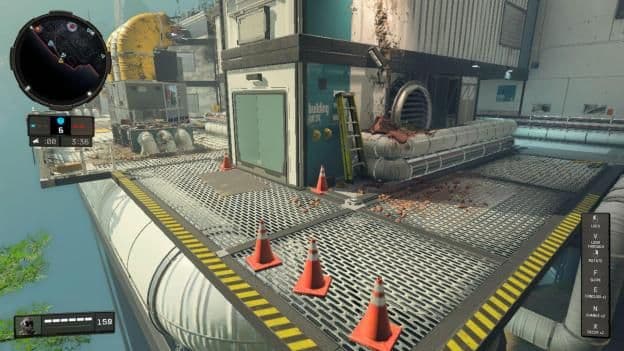
The multiplayer component remains a core pillar of the game's lasting legacy.
The value proposition here is almost overwhelming. You get a five-to-seven-hour campaign that, despite its brevity, delivers a coherent, character-driven psychological thriller—a stark upgrade from the spectacle-first narratives of its predecessors. You inherit a multiplayer suite that builds upon the rock-solid foundation of Modern Warfare 2 with ingenious new systems like COD Points and Wager Matches, creating a more balanced and psychologically engaging metagame. Then, as the cherry on top, you have a fully-featured, laugh-out-loud Zombies mode and a suite of extras like Combat Training and Theater Mode that add dozens, if not hundreds, of hours of replayability. For a single retail price, this package felt less like a game and more like a platform, justifying its cost through sheer volume and polish.
This is Treyarch’s definitive stamp on the franchise. Where Infinity Ward’s Modern Warfare games were sleek, modern operas, Black Ops was a gritty, paranoid conspiracy thriller with a dark sense of humor. It proved the studio could not only match but surpass its sibling in crafting a compelling package.
That reputation as a peak is earned through its masterful handling of its target audience. For the cinematic shooter fan, the campaign’s interrogation-room framing and strong voice acting delivered a narrative weight rarely seen in the genre. For the competitive multiplayer enthusiast, the rebalanced perks, exceptional map design (hello, Nuke Town), and the high-risk, high-reward thrill of Wager Matches created an endlessly engaging loop. For the social player, Zombies mode offered a perfect cooperative escape. It was a game with multiple entry points, each leading to a deep and satisfying experience, making it the rare title that could genuinely appeal to almost any segment of the FPS audience.
Of course, to call it flawless would be to ignore its very real shortcomings. The campaign’s poor AI and occasional technical hiccups—from buggy checkpoints to the infamous, cover-piercing .50 cal gunner—could shatter immersion. Its length, while brisk, left some wanting more substantial set pieces. And for PC players at launch, the experience was marred by severe technical issues—lag, connection errors, and broken matchmaking—that rendered the premier multiplayer mode nearly unplayable for weeks. These were significant blemishes on an otherwise polished product, reminders that ambition can sometimes outpace execution.
Yet, when the critical dust settled, the consensus was clear. Major outlets like GameSpot and IGN awarded it scores of 9/10 and “Superb,” praising its thrilling variety, invigorating multiplayer innovations, and best-in-class storytelling for the series. It wasn’t just a great Call of Duty; for many, it was the great Call of Duty—a perfectly balanced package of cinematic bravado, competitive depth, and cooperative fun. While the franchise would inevitably evolve, splinter, and sometimes stumble in the years that followed, Call of Duty: Black Ops remains a high-water mark, a moment where every piece of the blockbuster shooter formula clicked into place with near-perfect harmony.
Pros:
- A campaign with the series' most ambitious and coherent narrative, bolstered by superb voice acting.
- Multiplayer innovations like COD Points and Wager Matches that added strategic depth and thrilling risk/reward dynamics.
- An incredibly generous package, featuring a deep Zombies mode, robust Theater tools, and accessible Combat Training.
Cons:
- A short campaign, clocking in at around six hours.
- Notoriously poor AI for both allies and enemies, often breaking immersion and challenge.
- Significant technical launch problems, especially on PC, that hampered the multiplayer experience.