Grand Theft Auto V: A Masterclass in Open-World Satire
Los Santos isn't just a backdrop; it’s the star of the show and the sharpest weapon in Rockstar's arsenal. Grand Theft Auto V is less a game about crime than it is a masterfully crafted, interactive satire of a nation in decline, using its sun-bleached, 49-square-mile playground to hold a warped mirror up to contemporary America. This is a world where you can fly a plane into another plane for fun, but also overhear a pedestrian complaining about their underwater mortgage—a perfect encapsulation of the game's chaotic, bitingly relevant soul.
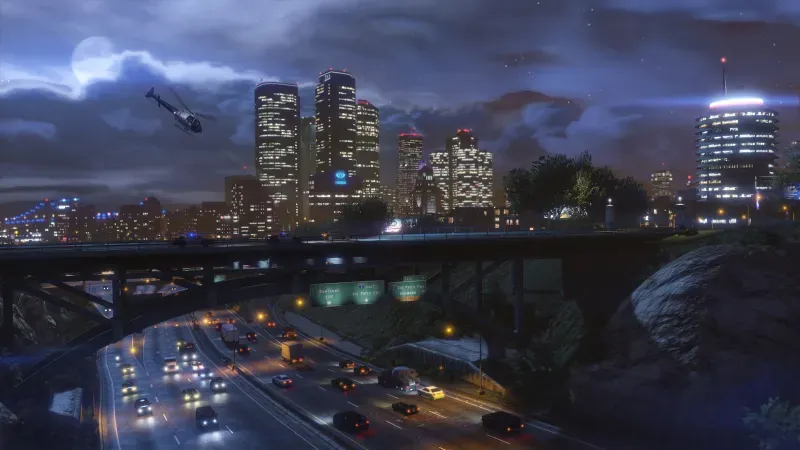
Beyond the city, Grand Theft Auto V features vast deserts and rural landscapes.
The satire is the game's lifeblood, and it’s anything but subtle. In the decade since its release, its targets—the vapidity of celebrity culture, the predatory nature of social media, the extremes of political discourse—have only become more entrenched in our reality. The game’s genius lies in making you an active participant in the critique. You don’t just listen to talk radio skewering vapid reality TV; you later assassinate a celebrity judge from that same show to manipulate the stock market. The fictional Facebook, Lifeinvader, with its slogan “Keep Calm and Keep Sharing,” is a pitch-perfect parody whose dark humor has aged like a fine, bitter wine. This isn't observational comedy; it's immersive, complicit cynicism.
The world of Los Santos and Blaine County is so densely packed with this satirical detail that it surpasses even genre titans like Skyrim in its feeling of a living, breathing, and deeply hypocritical place.
This commitment to environmental storytelling is staggering. You’re not just traversing a map; you’re navigating a society. You’ll find hikers at the peak of Mount Chiliad, deer grazing in the forests of Blaine County, and sharks circling offshore wrecks. More importantly, the world lives and reacts organically. Random encounters—a man tied to a telephone pole, a purse snatcher fleeing down an alley, a heated gunfight between police and criminals—aren’t marked on your map. They’re moments you stumble upon, reinforcing the illusion of a world that exists independently of your presence. The sheer volume of these details, from the fully realized parody radio ads to the in-game internet brimming with fake websites, creates a texture so rich that simply existing in Los Santos is a core pleasure.
It’s this unparalleled fusion of scope, satire, and systemic detail that explains the game’s staggering, almost incomprehensible commercial success. Selling over 160 million copies isn’t just a sales figure; it’s a testament to becoming a true cultural phenomenon. People weren’t just buying a video game; they were buying a ticket to the most elaborately constructed virtual playground ever made, one that reflected their own world back at them with a wicked, knowing grin. Grand Theft Auto V earns its reputation in these opening hours not through a mission prompt, but by convincing you that its fictional California is a place worth getting lost in, even as it ruthlessly mocks every inch of it.
The Three-Protagonist System: Does GTA V's Narrative Gamble Pay Off?
The single most audacious move in Grand Theft Auto V isn't a heist—it’s the game’s narrative architecture. By splitting its story across three protagonists, Rockstar attempted a high-wire act: deliver a Hollywood crime epic while preserving the anarchic sandbox freedom that defines the series. For the most part, the gamble pays off spectacularly. The character-switching mechanic is more than a gimmick; it’s the game’s narrative and tactical backbone. With a tap of the D-pad, the camera soars out to a satellite view before diving back down to find your chosen character mid-stride, often in a moment of unscripted life: Michael leaving a therapy session, Franklin idling in a car, or Trevor waking up drunk on a mountainside. This isn't just seamless—it’s transformative, creating the powerful illusion that these men live independent, parallel lives you’re merely dropping in on.
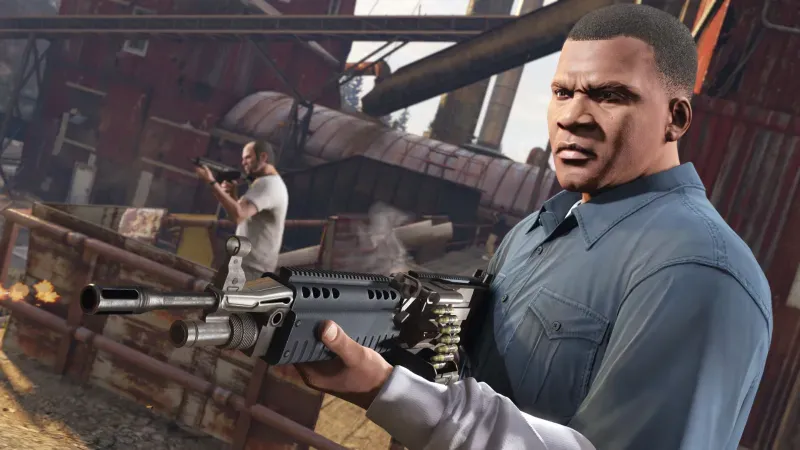
The chemistry and authentic dialogue between the three leads are central to the game's narrative gamble.
This structure allows Rockstar to compartmentalize the series’ often-clashing tones, a problem that plagued Grand Theft Auto IV. Michael’s missions focus on family melodrama and high-stakes professional hits, Franklin handles street-level hustles and precision driving, and Trevor serves as the id of the entire operation, a vent for the most violent, unhinged impulses the player might harbor. The in-mission switches are where this system truly sings, letting you orchestrate chaos like a cinematic director. You might snipe from a rooftop as Franklin, then instantly switch to Michael storming the front door, creating a dynamic, multi-perspective action sequence that feels uniquely tailored to this game. It’s a masterclass in pacing and variety, ensuring you’re never stuck in one character’s headspace—or one gameplay style—for too long.
Trevor Philips isn't just a character; he's Rockstar's "get-out-of-jail-free" card, a narrative justification for the tonal whiplash and extreme violence that the more grounded Michael and Franklin can't provide. He is the game’s uncompromising, terrifying, and hilarious heart.
And therein lies the system’s greatest strength and its most notable flaw: Trevor’s brilliance overshadows everything. Steven Ogg’s performance is a landmark, crafting a character whose psychosis is both horrifying and magnetically consistent. Where previous GTA protagonists often suffered a disconnect between their cutscene morality and gameplay slaughter, Trevor’s actions—whether casually committing cannibalism or erupting in meth-fueled rage—always align with his character. This makes him the most compelling figure in the story by a wide margin. Conversely, Michael’s mid-life crisis and familial strife often feel like “sitcom complexity,” as one critic noted, a paint-by-numbers exploration of suburban decay that lacks the same sharp edge. Franklin, while serving as a relatable entry point, largely functions as a narrative passenger; his arc is less about personal transformation and more about being a competent wheelman caught between two larger forces.
This character imbalance points to the broader shift in Grand Theft Auto V’s narrative focus. The game abandons the traditional “rags to riches” or immigrant-dream arcs of its predecessors for a story purely about the pursuit of money among already-established criminals. The heists are the glittering prizes, but the emotional core becomes the volatile, brotherly relationship between Michael and Trevor. Franklin’s motivation for staying in this dangerous orbit often feels thin, a narrative sacrifice to the trio format. While the intertwining lives provide immense gameplay benefits, the story’s impact is occasionally diluted, becoming a collection of superb character moments rather than a tightly focused ascent. For a game about three men, it’s telling that the most memorable relationship—and the one that fuels the final act’s tension—is between just two of them.
Grand Theft Auto V Gameplay: Refined Mechanics and Blockbuster Heists
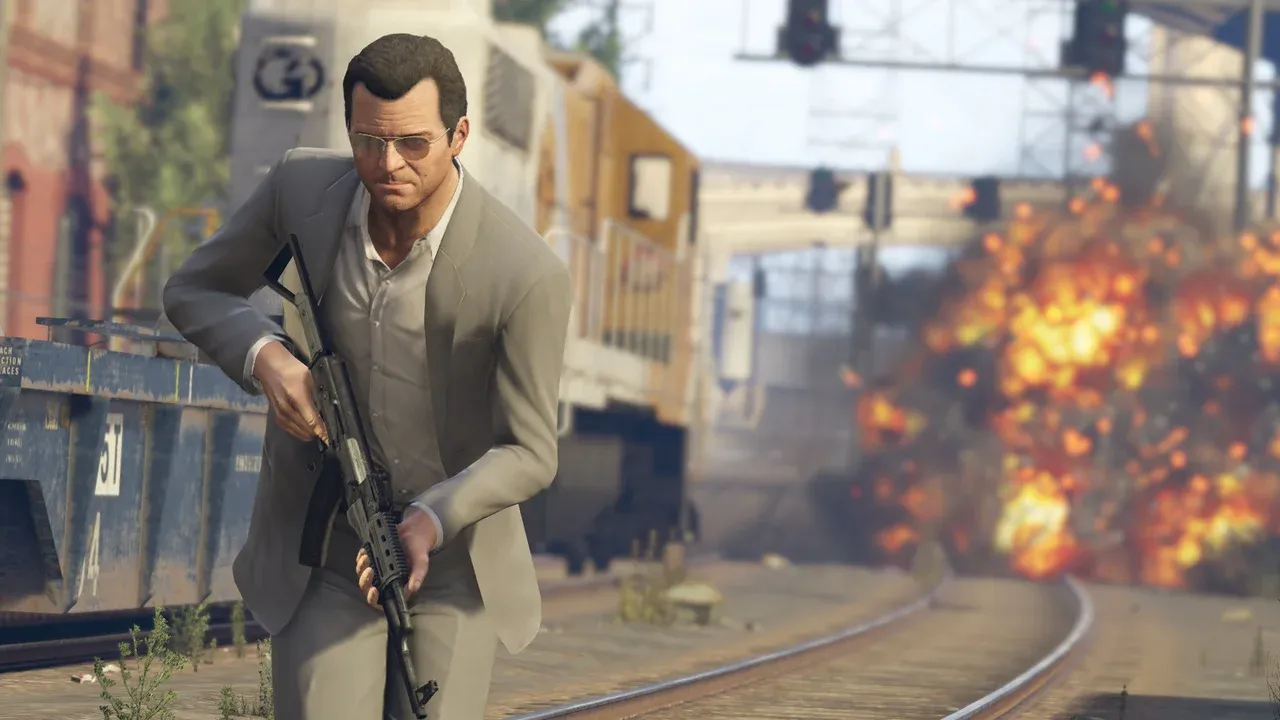
The moment-to-moment action in Grand Theft Auto V is where Rockstar’s decade of refinement pays its highest dividends. This isn’t the clunky, weighty simulation of GTA IV; it’s a polished, kinetic blockbuster engine where every shot, swerve, and explosion feels designed for maximum player gratification. The game understands that its core loop of chase-or-be-chased is its greatest asset, and it streamlines every system to serve that chaos.
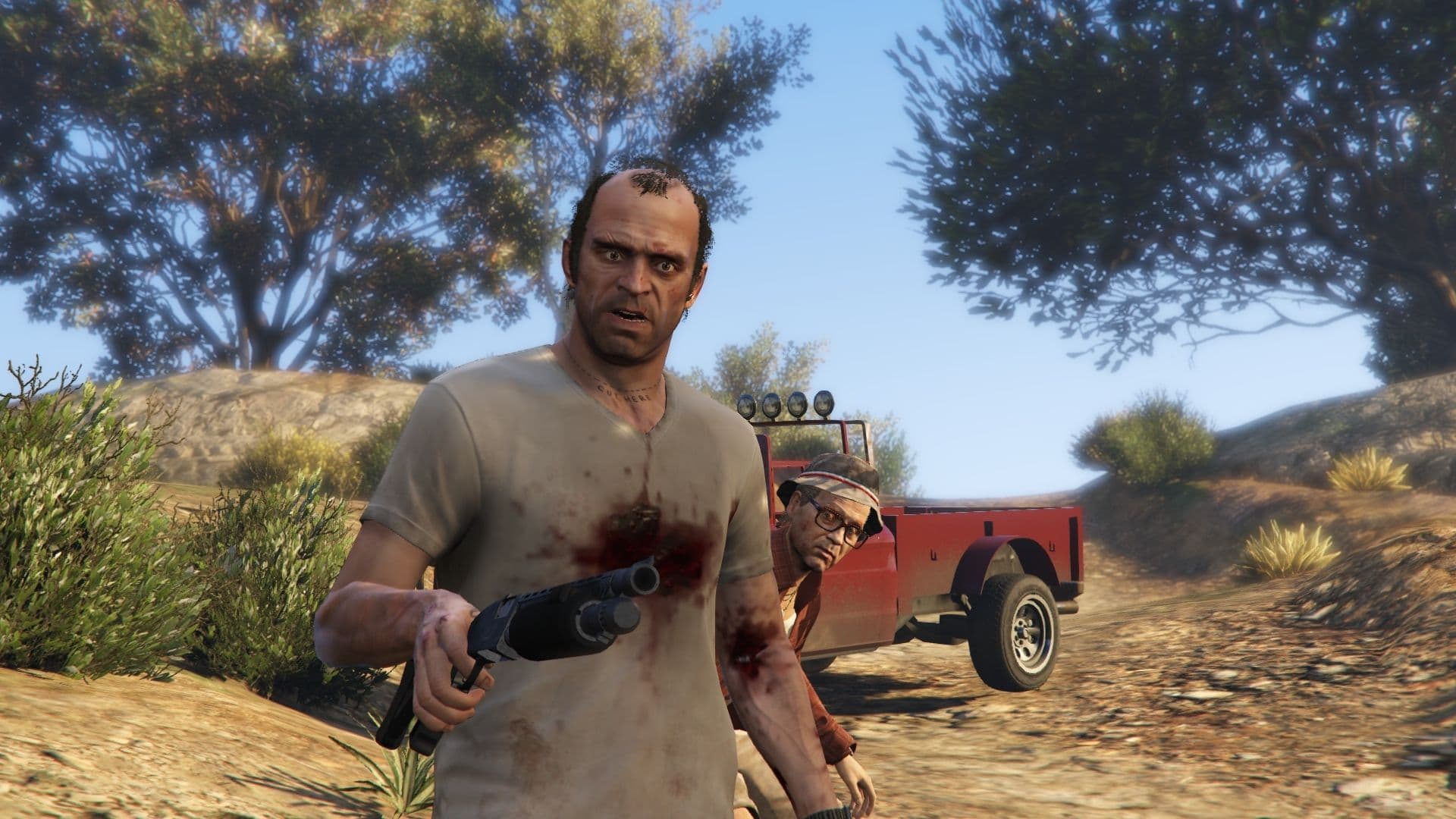
Combat encounters take place across the diverse landscapes of San Andreas.
The combat is the most immediate and dramatic improvement. Borrowing the slick, third-person gunplay honed in Max Payne 3, the shooting here is fluid and satisfying. The cover system is finally reliable, allowing you to snap between barriers with confidence, while the auto-aim—while still a touchy subject for purists—is calibrated for cinematic flair rather than punishing difficulty. Enemies utilize cover, flank, and throw grenades, creating firefights that feel dynamic. Each protagonist’s special ability further personalizes the action: Franklin’s driving slow-mo is a godsend for threading through traffic during a frantic escape, Michael’s bullet-time turns shootouts into stylish set pieces, and Trevor’s damage-boosting rampage mode perfectly channels his psychotic energy. These aren’t just gimmicks; they’re integrated power fantasies that make you feel uniquely capable in your chosen role.
The heists are the undeniable pinnacle of this design philosophy. They transform the standard mission structure into a multi-stage criminal opera, beginning with tense planning sessions where you choose your approach—the smart, stealthy way or the loud, explosive alternative—and recruit a crew whose skills directly impact your payout and survival.
This layer of strategy, however light, makes you feel like a mastermind. Scouting a location, sourcing a getaway vehicle like a firetruck or maintenance van, and then executing the plan with real-time character switching creates a sense of orchestrated chaos that few games match. The payoff is a sequence of perfectly tuned action, whether you’re silently cracking a vault or escaping in a hail of police gunfire. It’s the ultimate expression of the game’s power fantasy, and it’s executed with a Hollywood-level confidence that makes every other open-world side activity feel trivial by comparison.
Driving receives a similar arcade-inspired overhaul. Cars have a satisfying sense of weight but are far more responsive and forgiving than in Liberty City, striking a perfect balance between realism and fun. The loose, exciting handling makes chases thrilling, and spectacular crashes are part of the appeal, not a punishment. This is complemented by deep vehicle customization at Los Santos Customs; you can tweak everything from engine performance and bulletproof tires to cosmetic flourishes like neon underglow and colored tire smoke. It’s a system that encourages you to invest in your favorite ride, making the act of traversal itself a reward.
However, for all its polished systems, Grand Theft Auto V occasionally reveals the rigid, scripted skeleton beneath its living-world skin. The much-improved checkpoint system can’t save you from sudden Mission Failed screens triggered by killing a target a millisecond before a scripted dialogue finishes, or from failing a mission for “abandoning” it when you creatively use a respray shop to lose the police. These moments are particularly jarring in a game that otherwise sells the illusion of total freedom. The linear path through a mission’s explosive climax is often a one-way street, and any attempt to take an off-ramp is met with a game-over screen.
This friction between player creativity and designer intent is the core tension of the experience. Yet, it’s a testament to the strength of the core gameplay—the refined shooting, the exhilarating driving, the strategic heists—that these scripted limitations rarely undermine the fun. Grand Theft Auto V’s mechanics are engineered for spectacle and satisfaction above all else, creating a playground of crime where the sheer joy of the action, from a perfectly executed drive-by to a multi-million dollar bank job, consistently outweighs its occasional growing pains.
Technical Evolution: From Xbox 360 Roots to PS5 and PC Excellence
Playing Grand Theft Auto V today is to experience a game in a constant state of technical rebirth, a title perpetually chasing the hardware horizon to remain the definitive open-world experience. The journey from its original Xbox 360 and PS3 roots to its current-gen and PC incarnations is a masterclass in iterative polish, transforming a world that was already a marvel into one that feels perpetually new—even as some of its foundational bricks show their age.
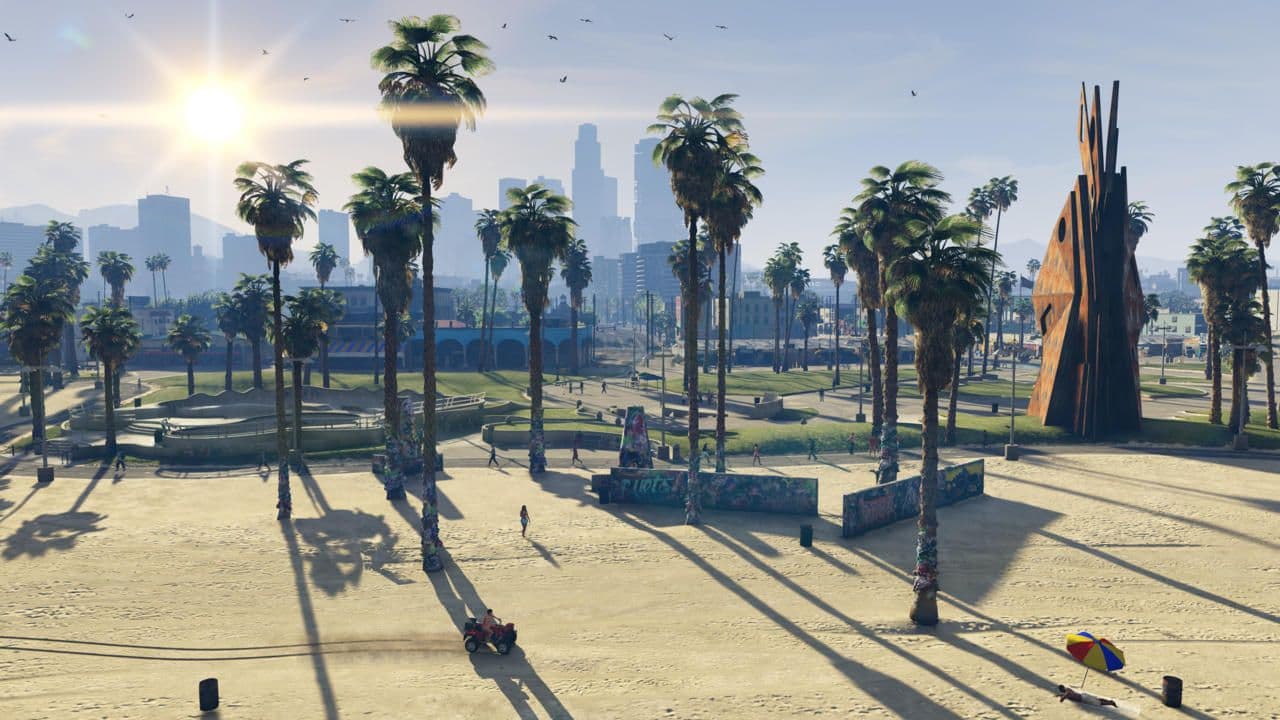
The PC version remains the benchmark for visual fidelity with customizable settings.
The most significant leap came not with the move to the PS4 and Xbox One, but with the introduction of the first-person mode. This wasn't a mere camera toggle; it was a fundamental recalibration of the game's tone and intensity. The satire becomes more claustrophobic, the violence more visceral. Holding up a convenience store while staring down the barrel of a shotgun at a terrified cashier creates a palpable, uncomfortable tension that the detached third-person view never could. This mode makes the world's staggering detail—the texture of a storefront wall, the litter in an alley—a delight to explore at eye level. However, this immersion comes with a trade-off the game is smart enough to acknowledge. Driving, a core pillar of the gameplay praised in earlier sections, becomes a twitchy, overly sensitive nightmare in first-person, with a narrow field of view that makes high-speed chases nearly unmanageable. Rockstar wisely allows seamless, on-the-fly switching between perspectives, letting players adopt the intimate view for exploration and gunplay, then snap back to the cinematic third-person for vehicular mayhem.
The first-person perspective is the single greatest addition to the game since its launch, fundamentally altering the emotional weight of your actions and proving that even a decade-old world can feel startlingly new with the right lens.
On current-gen consoles, the technical proposition is refined into a choice. The Performance RT mode on PS5 and Xbox Series X/S is the clear winner, targeting a smooth 60fps while adding subtle but effective Ray Traced Global Illumination shadows that ground vehicles and characters in the environment more naturally. After enduring the 30fps cap of the original console releases, the fluidity of 60fps is transformative, making the refined shooting and driving mechanics feel even more responsive. For those who prioritize pixel count, the Fidelity mode offers a native 4K presentation, but the return to a 30fps frame rate feels like a step backward once you've experienced the buttery-smooth alternative. Perhaps the most universally appreciated upgrade is the near-eradication of the infamous load times. What used to be minute-plus waits on last-gen hardware to boot the game or switch characters are now slashed to a mere 20-30 seconds on PS5 and Series X/S, a quality-of-life improvement that removes a major friction point from the experience.
It is on PC where Grand Theft Auto V truly achieves its technical zenith, provided you have the hardware to match its ambitions. Unlocked frame rates allow the game to soar beyond 60fps, and 4K textures combined with a suite of advanced post-processing effects make Los Santos shimmer with a level of detail console versions can't match. The crown jewel of the PC release, however, is the Rockstar Editor. This robust suite of tools elevates gameplay from a personal experience to a shareable art form, allowing players to record, direct, and edit cinematic footage with professional-grade camera controls, filters, and depth-of-field effects. It’s a feature that acknowledges the game’s role as a digital playground and empowers the community, adding near-infinite replayability long after the story credits roll.
Yet, for all these impressive upgrades, you cannot escape the fact that this is, at its core, a game designed for the Xbox 360. The technical evolution is a stunning skin graft over an older skeleton. This becomes evident in the world's geometry, where simple building shapes and low-poly environmental objects betray their last-gen origins when examined up close. The oft-praised density of Los Santos also has a flip side: a surprising number of buildings are mere facades, with few interiors to explore beyond mission-critical spaces. The visual enhancements are a testament to Rockstar's art direction and technical skill, but they are ultimately working within the confines of a decade-old map and asset base. This isn't a criticism of the work done—it remains one of the best-looking open worlds ever created—but a recognition that the "Enhanced" label is about polish and performance, not a fundamental architectural overhaul.
Grand Theft Auto V’s technical journey is a large part of its enduring legacy. It proves that a brilliantly conceived world, when supported by relentless optimization and smart new features, can remain the benchmark across multiple hardware generations. The game you play today is smoother, sharper, and more immersive than the one released in 2013, yet the soul of that original vision—the sprawling map, the dynamic systems, the satirical heart—remains perfectly intact, now presented in its most definitive and accessible form.
The GTA Online Factor: A Double-Edged Sword for Single-Player Fans
Grand Theft Auto V’s legacy is irrevocably tied to its online component, a factor that has simultaneously elevated its cultural footprint and cast a long, complex shadow over its single-player soul. For many, GTA Online is Grand Theft Auto V, a perpetually updated, chaotic social playground. For others, it represents a profound shift in Rockstar's priorities, one that has fundamentally shaped the game's evolution and left its magnificent single-player world feeling, in some ways, abandoned.
The evidence of this pivot is stark: the once-promising pipeline of story expansions, a tradition solidified by Grand Theft Auto IV’s superb The Lost and Damned and The Ballad of Gay Tony, was completely sealed off. The rumored single-player DLC, hinted at for years, never materialized. Instead, the immense, ongoing profitability of GTA Online—fueled by Shark Card microtransactions—redirected all creative and technical resources. The result is a single-player campaign that feels like a stunning, self-contained artifact, frozen in 2013. While the "Enhanced" versions added visual polish and the brilliant first-person mode, they offered no new story missions, no expansions of Los Santos, and left mysteries like the Mount Chiliad mural officially unresolved. The trade-off is clear: a decade of explosive growth for Online came at the direct expense of the narrative experience that initially defined the game.
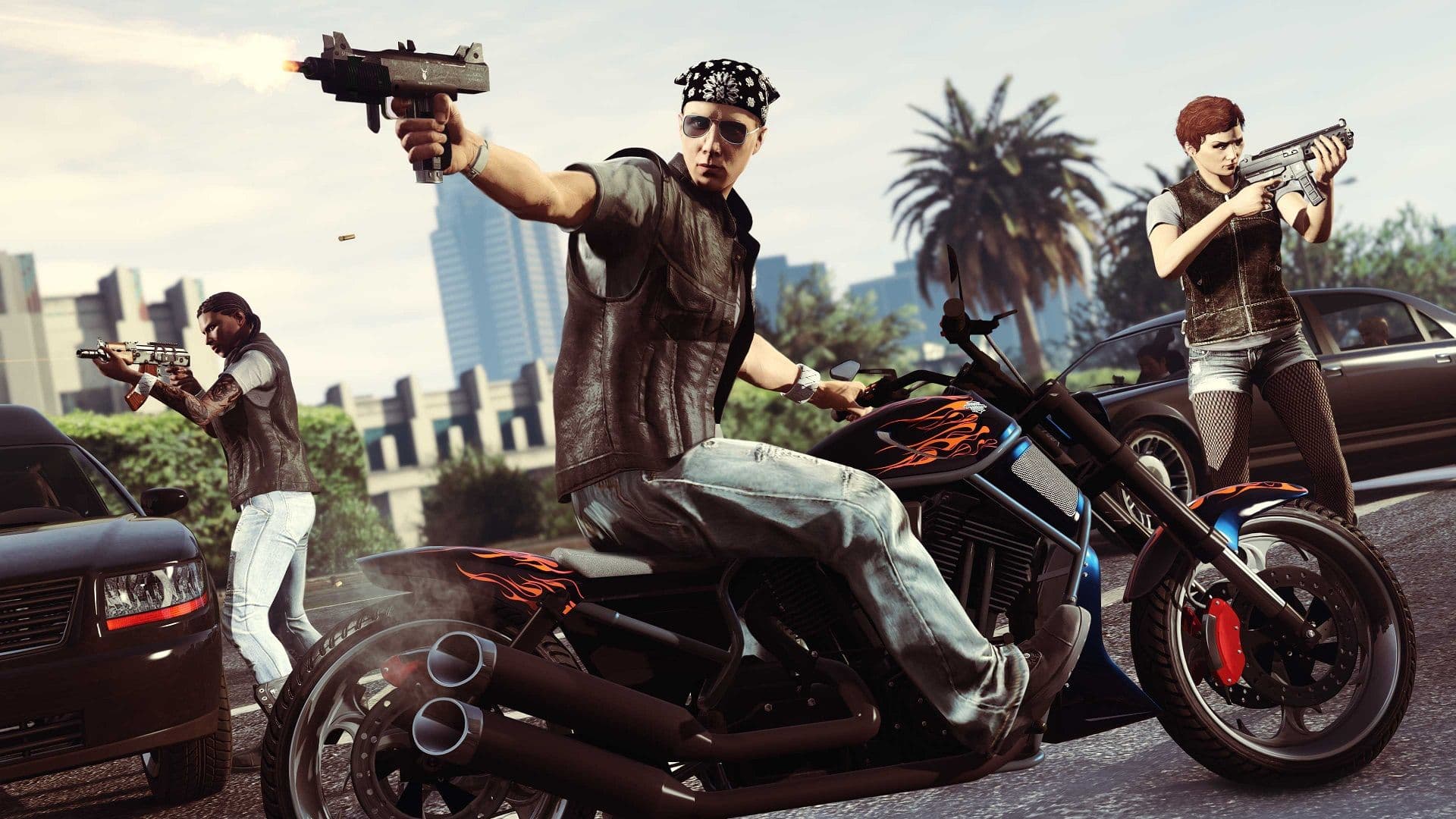
GTA Online has become a massive component of the Grand Theft Auto V experience.
Rockstar’s commitment to GTA Online has created one of gaming’s most overwhelming onboarding experiences, a chaotic decade of content dumped onto new players with minimal guidance—a problem the recent "Career Builder" only partially solves.
This is the double-edged sword. GTA Online today is a behemoth, incorporating over a decade of major content updates, supporting up to 30 players (plus spectators), and offering an absurd array of activities from heists and nightclub management to casino heists and alien wars. For the uninitiated, it’s a paralyzing wall of icons and mechanics. The recent introduction of the Career Builder—giving new players a $4 million starting bonus and a choice between four criminal career paths—is a smart, necessary bandage. It provides immediate capital to bypass the infamous early-game grind and a structured entry point into the economy. However, it can't fully mask the underlying chaos. You're still dumped into a public session where the core loop for established players often revolves around using million-dollar weaponized vehicles to grief newcomers, creating a steep, often frustrating learning curve that the single-player campaign’s careful pacing never prepares you for.
This fragmentation extends to the technical infrastructure. Despite numerous "Enhanced" releases, Grand Theft Auto V still lacks cross-platform and cross-generation play. You can perform a one-time, one-way migration of your Online progress to a new console generation, but you cannot play with friends who remain on older hardware. In an era where even smaller studios routinely implement cross-play, this feels like a deliberate, revenue-driven segmentation of the player base. It forces friend groups to collectively repurchase and upgrade, turning what should be a unifying social space into a series of walled gardens. This isn't a minor oversight; it's a significant barrier that undermines the "live service" community the mode strives to build.
For the single-player purist, then, Grand Theft Auto V presents a bittersweet package. You are playing the definitive version of one of the greatest open-world campaigns ever crafted, now smoother and more beautiful than ever. Yet, you are also acutely aware that the world outside your story mode is a parallel universe that has consumed the developer's attention for a decade. The lack of new single-player content isn't just a missed opportunity; it's a constant reminder that the most profitable game in entertainment history found its future not in deepening its narrative, but in monetizing its sandbox. This doesn't diminish the 40-hour masterpiece at the game's core, but it does frame it as a glorious, self-contained epoch—a peak from which Rockstar decisively turned to cultivate a different, endless valley.
Final Verdict: Is Grand Theft Auto V Still the Gold Standard?
So, after a decade, a billion dollars in revenue, and countless hours spent in its sun-bleached streets, does Grand Theft Auto V still deserve its throne? The answer is a qualified, resounding yes. This isn't a game that has merely aged; it has evolved, its core strengths calcifying into timeless design while its weaknesses have become the focal points of a decade-long conversation about what we want from our blockbusters. The final verdict hinges on what you're looking for: a self-contained, masterfully executed single-player epic, or a key to the most profitable and chaotic social playground in gaming history.
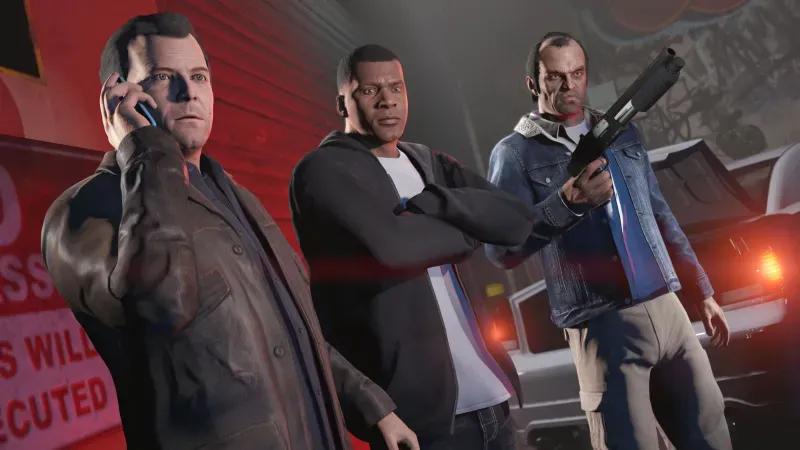
GTA V continues to live up to the hype a decade after its original release.
The value proposition is, frankly, absurd. The single-player campaign alone offers a dense 30-40 hours of gripping narrative, satirical exploration, and blockbuster heists, a package that would justify its price tag even if the game stopped there. But Grand Theft Auto V never stops. Its sandbox is a masterpiece of emergent storytelling, where a random encounter with a purse snatcher or a spontaneous decision to follow a hiker up Mount Chiliad can create memories as vivid as any scripted mission. Then there's the behemoth of GTA Online—a separate, living game that bundles a decade of content updates, from CEO offices and nightclubs to casino heists and alien wars. For better or worse, no other game offers this sheer volume of curated and player-driven content in a single package. It’s the ultimate bang-for-your-buck, provided you have the time to invest.
The game’s most infamous moment—a mandatory, hands-on torture scene—remains a stark example of its willingness to provoke, forcing players into complicity with Trevor’s psychosis in a way that is deliberately, uncomfortably effective.
This leads to the game’s more divisive elements. Grand Theft Auto V doesn’t just flirt with controversy; it marries it. The torture sequence is a direct, uncomfortable provocation, a "No Russian" moment without the opt-out button. It’s a narrative gambit that lands with the force intended, making you an active participant in horror to underscore the game's themes of American moral decay. The portrayal of women, however, is a more persistent and less defensible flaw. While the satire often aims its fire at the objectification within its fictional California, the line between critiquing a culture and reveling in it is frequently blurred. The world is populated with caricatures—the nagging wife, the brainless starlet, the sex worker—that feel like lazy, often mean-spirited tropes rather than sharp satire. This is the game at its most adolescent, a reminder of a cruder era in Rockstar's writing that hasn't aged as well as its environmental design.
When placed within its own lineage, Grand Theft Auto V represents a decisive pivot from the grounded, melancholic weight of Grand Theft Auto IV. Niko Bellic’s story was a tragedy about the immigrant experience; Michael, Franklin, and Trevor’s is a jet-black comedy about the pursuit of wealth among the already corrupt. The trade-off is clear: Grand Theft Auto V is infinitely more refined to play—its driving is exhilarating, its shooting is slick, its world is more varied and inviting—but it sacrifices the singular, heavy narrative focus of its predecessor. You gain a playground of unparalleled freedom and polish, but you lose the poignant, character-driven anchor that made Niko’s journey so memorable. It’s not a matter of which is objectively better, but which philosophy you value more: a cohesive, weighty drama, or a spectacular, systemic toy box.
Ultimately, Grand Theft Auto V’s status is secure because it executes its core vision with near-flawless precision. The three-character system is a narrative and gameplay triumph. The heists are cinematic peaks few games have matched. The satirical writing, while occasionally clumsy in its characterization, paints a picture of modern America that is both hilarious and horrifyingly accurate. Its weaknesses are the cracks in a monumental edifice: gunplay that feels its 2013 age, mission scripting that can punish creativity, and the lingering disappointment of a single-player experience left to gather dust while its online counterpart conquered the world.
Grand Theft Auto V is not a perfect game, but it is a definitive one. It is the culmination of everything Rockstar learned over a decade, polished to a mirror shine and set loose in a world so dense with possibility that it has sustained a global community for over ten years. Whether you’re here for the story, the satire, or the sandbox, it delivers an experience that is, quite simply, unmatched in scale and execution.
Final Verdict: Is Grand Theft Auto V Still the Gold Standard?
Pros:
- An unparalleled, living open world packed with staggering detail and biting satire.
- The innovative three-character system provides brilliant pacing, variety, and tactical depth.
- Heist missions remain pinnacle design, blending planning, choice, and explosive execution.
- Refined, arcade-inspired driving and combat that improved upon GTA IV’s clunkier feel.
- Massive value with a 30-40 hour story, infinite sandbox play, and a decade of online content.
Cons:
- Core gunplay mechanics feel dated compared to modern third-person action games.
- Complete lack of single-player story expansions, a direct consequence of GTA Online's success.
- Mission design can be frustratingly restrictive, punishing creative solutions with instant failure.
- Portrayal of female characters often relies on lazy, offensive tropes rather than effective satire.
- The overwhelming, chaotic nature of GTA Online presents a steep barrier for new players.