Dragon Age: Origins: A Return to the Golden Age of Tactical RPGs
In 2009, the fantasy RPG genre was in a curious state. The sprawling, tactical epics of the PC era had largely given way to more cinematic, console-focused adventures. Dragon Age: Origins was BioWare’s deliberate and defiant answer to that shift—a game that wasn't just a new story, but a spiritual homecoming. This is a title that wears its lineage not as a nostalgic badge, but as a foundational design principle, positioning itself as the direct evolution of Baldur’s Gate II and the Infinity Engine legacy. It’s a game that asks for your patience, your strategic mind, and dozens of hours of your life, promising a depth of world and choice that had become increasingly rare.
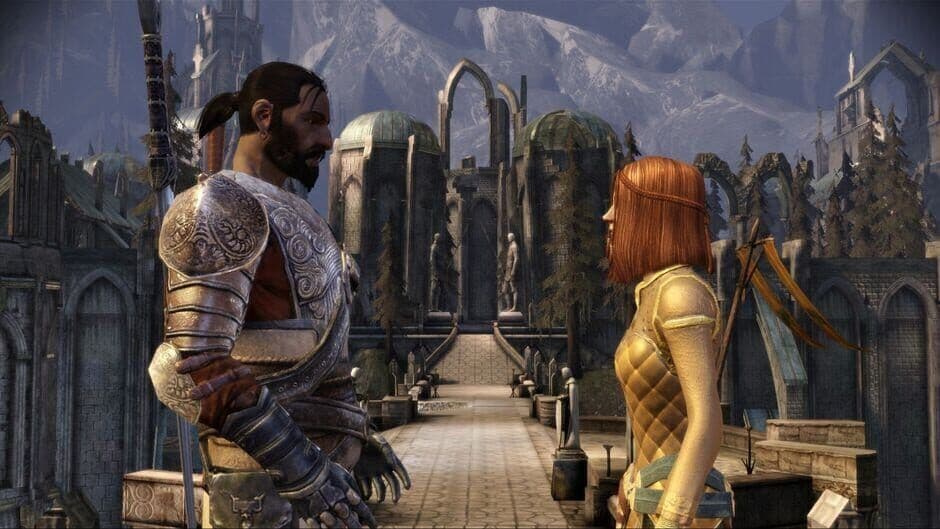
Dragon Age: Origins features deep tactical systems.
Where this commitment is most evident is in the game's very structure. Dragon Age: Origins is a massive, 50 to 100-plus hour experience that openly courts replayability. This isn't padding; it's a direct result of its core design. The journey begins not with a generic hero, but with one of six origin stories—distinct, hour-long prologues that cast you as anything from a Dalish elf hunter to a dwarven noble embroiled in a cutthroat succession crisis. These aren't cosmetic choices. They fundamentally alter your starting perspective on the world of Thedas, determine how NPCs react to you for the rest of the game, and seed characters and conflicts that resurface dozens of hours later. This initial investment in your character’s past is the first and most powerful argument for a second, third, or fourth playthrough.
This is the game’s core promise: you are not just playing a role, you are living a specific, consequential life within a world that remembers your roots.
That world, Thedas, is where Dragon Age: Origins carves its unique identity. It’s a rich, original universe that feels familiar yet subverts expectations at every turn. Elves aren’t ethereal forest-dwellers but a persecuted, recently-liberated slave race confined to urban alienages. Dwarven society is a rigid caste system obsessed with lineage and paragons, not just mining and ale. Mages are feared and kept under lock and key by the Templar order, creating a constant tension between power and control. BioWare builds a setting with a deep, implied history—a "universe" one review compares to Star Wars or The Lord of the Rings in its completeness—where every codex entry and offhand comment from a companion feels like it’s pulling back the curtain on a larger, living world.
Your place in this fraught world is as a recruit to the Grey Wardens, an ancient and nearly extinct order. The Wardens are the fantasy equivalent of the Night’s Watch from A Song of Ice and Fire: a grim, pragmatic brotherhood granted immense power and burdened with a singular, horrific duty. That duty is to stop the Blight—a catastrophic invasion by the monstrous darkspawn, corrupted creatures emerging from the depths to ravage the surface world. The central narrative thrust of Dragon Age: Origins is the Kingdom of Ferelden facing its first Blight in 400 years, and your character’s desperate scramble to unite its fractured, self-interested factions against the existential threat. It’s a classic save-the-world premise, but the genius lies in the execution; the game is less about the darkspawn horde and more about the near-impossible task of convincing a broken kingdom to save itself.
This opening section establishes Dragon Age: Origins not as a mere game, but as a specific kind of experience. It is unapologetically dense, deliberately paced, and built upon systems of choice and consequence that demand engagement. It announces itself as the heir to a legacy of tactical, story-driven RPGs, and in doing so, sets a towering expectation for the journey ahead—a journey defined not by where you end up, but by who you were when you started and the difficult choices you make along the way.
The Power of Choice: Why Dragon Age: Origins Stories Still Matter
Most games ask you to build a character. Dragon Age: Origins demands you live a life before you even pick up a sword. This is the game’s foundational genius, and the six origin stories are not mere prologues; they are narrative anchors that transform a sprawling, 60-hour epic into a deeply personal journey. The difference between starting as a City Elf dragged from your wedding in chains and a Human Noble enjoying the comforts of a castle isn’t just aesthetic—it’s a fundamental recalibration of your relationship to the world of Ferelden. For that City Elf, every human noble you meet later carries the stench of your oppressors. For the Dwarf Noble, a return to Orzammar is a homecoming fraught with political landmines you helped lay. These aren’t just backstories you read; they are formative traumas and privileges the game forces you to embody, and they pay dividends in reactivity for dozens of hours.

The narrative power of these origins is unlocked through Dragon Age: Origins’ exceptional dialogue system. Your race, class, and specific history aren’t just flavor text; they are active verbs in every conversation. An elf will be met with open contempt in human cities, while a mage must navigate the constant suspicion of the Templars. More impressively, characters you meet in your origin—a childhood friend, a betrayed sibling, a former slave—reappear later, and their recognition of you (or lack thereof) can unlock unique quest resolutions, alter allegiances, or provide crucial leverage. This creates a world that feels genuinely responsive, where your identity isn’t a costume you wear but the lens through which every social interaction is filtered. It’s a masterclass in role-playing depth that makes the standard good/evil slider of other RPGs feel like a child’s toy.
This is where Dragon Age: Origins earns its grimdark reputation: there are no clean victories, only compromises stained with blood and regret.
The moral architecture of the game is built upon this uncomfortable truth. You are not choosing between paragon and renegade, but between catastrophes. Do you slaughter a clan of werewolves to secure the elves' aid, or broker a peace that leaves both sides permanently scarred? Do you purge a tower of mages corrupted by demons, or risk freeing an abomination to save them? The “best” outcome is often the one that leaves you feeling the least sick. Dragon Age: Origins understands that true role-playing isn’t about maximizing a morality meter, but about internalizing the weight of leadership where every choice extinguishes some hope to preserve another. This ambiguity is the game’s greatest narrative strength, forcing you to define your Warden not by alignment, but by a consistent, hard-won philosophy of survival.
This system empowers a remarkable range of role-playing. You can be the chivalrous hero, healing the sick and defending the weak. But you can also be a ruthless pragmatist, using intimidation and coercion to cut through political red tape, or even a cynical opportunist who sees the Blight as a chance for personal power and profit. The game’s lack of a governing karma score liberates you to make choices that feel authentically situational rather than point-driven. Want to sweet-talk a merchant, then murder him in an alley for his key? The game allows it, and your companions will judge you accordingly. This freedom makes each playthrough feel distinct, as your origin story provides the initial motive, and your evolving persona dictates the brutal means.
However, the very systems that enable this depth can, paradoxically, undermine it. While the world reacts to your origin, your high persuasion skill or a well-chosen gift can often steamroll that nuance. The approval system, while rich in theory, can devolve into a transactional loop where hurt feelings over a genocide are erased by handing a companion their favorite shiny trinket. It’s a concession to gameplay that occasionally punctures the carefully built verisimilitude, making complex characters feel manipulable with a simple inventory check. For players who engage deeply with the tactics of conversation, it can feel “gamey,” a mechanical shortcut to narrative control that lessens the impact of your earlier, more difficult choices.
Yet, even this criticism highlights the game’s ambition. The fact that you can manipulate your way to an easier path is, itself, a kind of role-playing option for the silver-tongued schemer. In Dragon Age: Origins, the power of choice isn’t just about changing the world—it’s about the relentless, often uncomfortable process of discovering who you are willing to become to save it. The origin story sets the stage, but the play is entirely your own, a testament to a design philosophy that trusts the player with profound, lasting consequences.
Combat and Tactics: Mastering the Pause-and-Command System
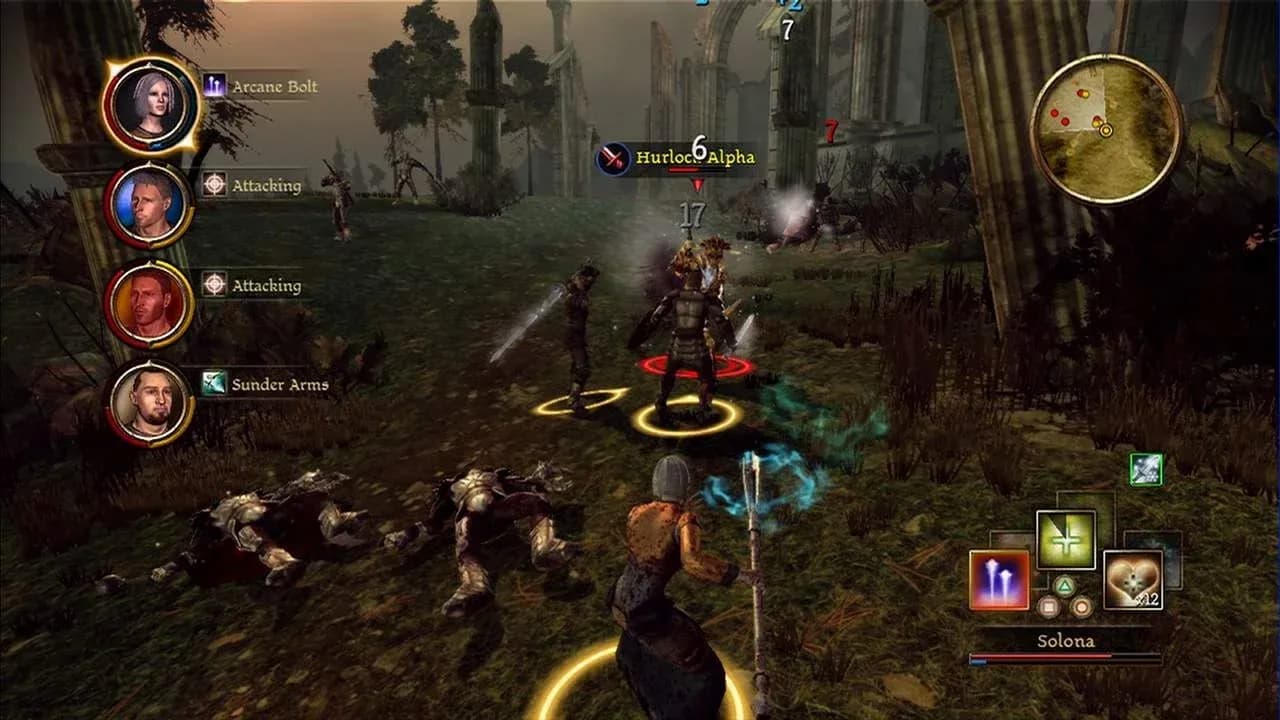
Combat in Dragon Age: Origins is a test of patience and foresight, a deliberate system that rewards the thoughtful and punishes the impulsive. This is not an action game; it is a tactical simulation where victory is earned in the meticulous setup before the first sword is ever drawn. The signature pause-and-command system is the game's tactical heart, transforming every skirmish from a chaotic brawl into a chess match where you control all four pieces. You will spend more time in the tactical overhead view—issuing orders, queuing spells, and repositioning archers—than you will watching the action unfold in real-time. For players weaned on the Infinity Engine classics, this is a homecoming. For others, it’s a steep, unforgiving wall to climb. Dragon Age: Origins makes no apologies for this, positioning its combat as the core intellectual challenge of the journey.
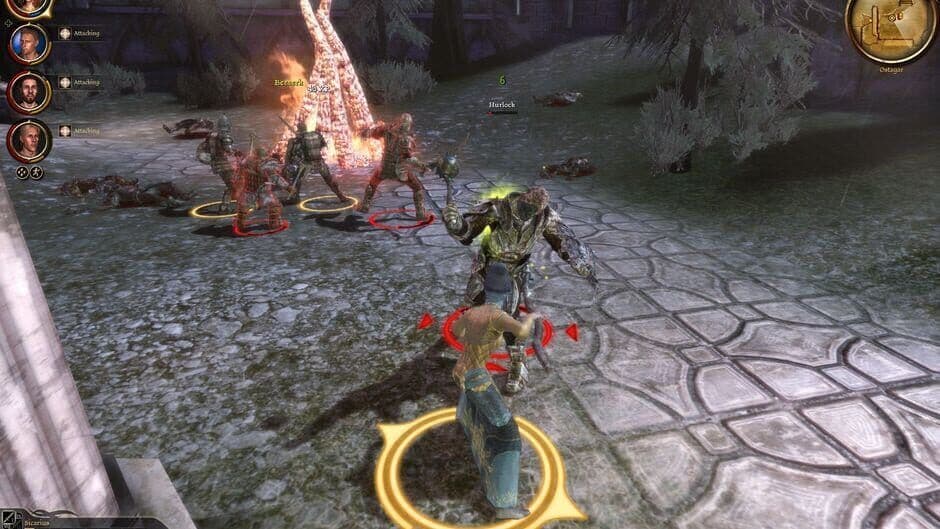
Official gameplay screenshot.
The genius that makes this micromanagement bearable, and even deeply satisfying, is the Tactics Menu. This is a deep, programmable AI system for your companions, functionally identical to Final Fantasy XII’s Gambits. Here, you craft a web of If/Then conditional statements that govern your party’s autonomous behavior. You can instruct Morrigan to cast Winter’s Grasp on the nearest enemy attacking the player character, tell Alistair to drink a poultice when his health drops below 50%, and set Leliana to automatically switch to her dagger set if an enemy closes within melee range. The system is incredibly granular, and mastering it is half the battle. The profound satisfaction comes not from frantically healing in the moment, but from watching a meticulously programmed plan execute itself flawlessly—your tank holds the line, your mage debuffs the crowd, and your rogue surgically eliminates the enemy healer, all without you touching a button. It turns combat from a test of reflexes into a test of strategic foresight.
This is where the platform divide becomes a chasm. The elegant, hotbar-driven interface of the PC version feels like the game’s natural home, allowing for swift, precise command. On consoles, the radial-menu interface is a cumbersome translation that makes the already demanding micromanagement feel chaotic and messy.
The criticism of console combat is not about difficulty, but clarity. On Xbox 360 and PlayStation 3, the over-the-shoulder perspective and awkward menu navigation obscure the battlefield. Issuing specific commands to individual party members in the heat of a large battle is a slog, making the pre-programmed Tactics Menu not a luxury but a necessity for sanity. Reviews note that the most effective strategy often devolves to “target the mage first” because executing more complex, multi-character maneuvers is too unwieldy. The PC version, with its free-floating camera and quick-key binds, empowers the player to be a true battlefield commander. The console versions often make you feel like a frustrated spectator trying to shout orders through a closed window.
This tactical depth is built upon a robust framework of class customization. The three core archetypes—Warrior, Mage, Rogue—branch into meaningful specializations like Berserker, Arcane Warrior, or Duelist, each unlocking new talent trees and changing your role in the party. A warrior can be an immovable shield-wall tank or a whirlwind of two-handed destruction. A mage can specialize in devastating primal forces, debilitating entropy magic, or the crucial healing arts of the Spirit Healer. This variety ensures that your party composition is a constant puzzle, and that multiple playthroughs can focus on entirely different combat philosophies. The loot system feeds directly into this, with a constant drip of new weapons, runes, and armor that encourages constant tinkering with your quartet of heroes.
When your plans come together, the combat feedback is immensely gratifying. Dragon Age: Origins understands the visceral thrill of a well-executed maneuver. Rogues perform brutal backstab animations, warriors shatter frozen enemies with satisfying crunches, and critical hits often end with limbs being severed or heads rolling. This isn’t just visual flair; it’s crucial feedback that your tactics are working. Landing a crushing Shield Bash to interrupt a deadly spell, or watching a Fireball ignite a cluster of darkspawn, provides a physical payoff to your strategic planning. The game may be played largely from a detached, tactical view, but it never lets you forget the brutal, personal reality of the fray.
Mastering this system requires enduring its punishing difficulty curve. The early game is famously brutal, as you lack the talents, potions, and tactical slots to handle more than a few enemies at once. The game teaches you, through repeated failure, the importance of positioning, crowd control, and “pulling” enemies—using a ranged attack to draw a manageable group away from a larger pack, much like in an MMO dungeon. Boss fights, particularly in the later chapters, are endurance tests that demand perfect mana and cooldown management. You will save scum. You will curse the screen. And when you finally topple that High Dragon or survive the endless waves of the Deep Roads through clever use of choke points and area-of-effect spells, the victory feels earned in a way few modern RPGs can match. Dragon Age: Origins respects your intelligence, and its combat system is the crucible where that respect is forged.
Companions and Romance: The Heart of the Ferelden Journey
In Dragon Age: Origins, the journey is defined not just by the lands you save, but by the people you save them with. The companions who fill your party slots are the game’s true narrative engine, transforming a strategic march against the Blight into a deeply personal saga of loyalty, love, and ideological conflict. This is where the grimdark world of Thedas earns its humanity, not through grand speeches, but through the quiet, often hilarious, and sometimes heartbreaking conversations around the campfire.

The character writing is BioWare operating at its absolute peak. Each companion is a three-dimensional argument about the world they inhabit. Morrigan, voiced with sardonic perfection by Claudia Black, isn’t just a cynical witch; she’s a product of brutal survivalism, challenging the very concept of altruism with every dismissive sneer. Alistair, brought to life by Steve Valentine’s masterful blend of wit and vulnerability, is the reluctant Grey Warden whose jokes mask a deep-seated insecurity about his royal lineage and his place in the order. Leliana’s devout sweetness slowly peels back to reveal a past as a bard and assassin, a contradiction she struggles to reconcile. They are not followers; they are fellow travelers with their own agendas, and the game is brave enough to let them leave—or even turn on you—if your choices violate their core beliefs too egregiously.
The voice acting is a generational benchmark. It’s not just that the performances are excellent; it’s that they sell the reality of Ferelden. You believe in Sten’s stoic honor, Oghren’s drunken bravado, and Zevran’s playful menace because the actors commit completely, turning codex entries into living, breathing people.
Managing these relationships is a core gameplay loop via the approval system. Your dialogue choices and major quest decisions constantly shift each companion’s disposition toward you, unlocking new personal quests, unique dialogue trees, and, for several characters, the path to romance. The system is rich in theory, making you consider your party composition not just for combat efficacy, but for political fallout. Choosing to side with the mages might earn Morrigan’s approval but cause Alistair to sulk for hours. This forces you to role-play consistency or embrace the tension of a divided council, a brilliant extension of the moral ambiguity praised in earlier sections.
However, this carefully built tension has a glaring pressure valve: gifts. The game is stuffed with trinkets—a silver necklace, a carved figurine, a bottle of wine—that, when given to the right companion, provide a massive, immediate boost to their approval. This creates a bizarre dissonance where you can commit an act a companion finds morally reprehensible, then instantly erase their anger by handing them a shiny toy they like.
This is the system’s critical flaw: it can reduce profound ideological disagreements to a simple inventory transaction, undermining the very weight of choice the game elsewhere celebrates so masterfully.
Where the writing truly shines and sidesteps this mechanical gaminess is in the party banter. As you traverse the world, your companions talk amongst themselves. These unscripted, context-triggered conversations are where the cast truly comes alive. You’ll hear Alistair and Morrigan debate the tyranny of the Circle of Magi, Leliana try to sweet-talk your Mabari war hound, and Sten ponder the philosophical purpose of ducks. This banter does more than entertain; it fleshes out backstories, reveals hidden sympathies, and makes the group feel like a dynamic, often dysfunctional family. You learn about the world through their clashing perspectives, making the long treks across Ferelden’s hinterlands some of the most narrative-rich moments in the game.
The romances, a BioWare staple, are the culmination of this system. They are slow-burn, often awkward, and surprisingly varied, ranging from Alistair’s sweet, fumbling earnestness to Morrigan’s pragmatic and surprisingly poignant proposal. They feel earned because they are built on dozens of conversations and shared hardships, not a single flirtatious dialogue option. The payoff isn’t just a campy sex scene (though those are certainly present); it’s the profound shift in a character’s demeanor, the way they trust you with their deepest fears, and the tangible impact they can have on the story’s devastating final choice. In Dragon Age: Origins, your companions are not tools for victory. They are the reason the victory—or the sacrifice—matters at all.
Technical Performance: A Gritty World with Rough Edges
The world of Dragon Age: Origins is a masterpiece of writing and atmosphere, but the vessel carrying that world shows its age and strain at every seam. This is a game where the technical presentation can feel like a barrier between you and the rich fantasy it so painstakingly builds. While the art direction and environmental design craft a believable Ferelden, the raw graphical horsepower and technical polish consistently fall short, creating a dissonant experience where a breathtaking vista is viewed through a smudged lens.
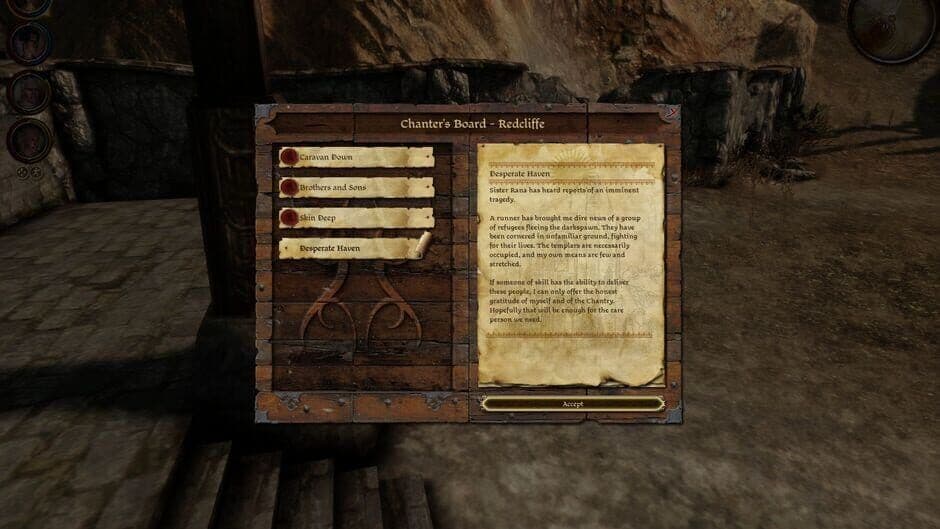
The game's presentation is characterized by its dark and gritty art direction.
The visual presentation is the most immediate and persistent compromise. Dragon Age: Origins was not a graphical powerhouse even in 2009, and time has not been kind. Textures are often drab and low-resolution, particularly on the Xbox 360 version, where colors can appear washed out. Character models are stiff, with facial animations that lack the expressiveness seen in BioWare’s own Mass Effect from two years prior. This becomes painfully apparent during intimate dialogue scenes, where wooden expressions clash with the superb voice acting, robbing critical emotional beats of their intended impact. The art design itself—the gothic arches of the Circle Tower, the oppressive depths of the Deep Roads—is strong, but it’s rendered with a technical blandness that fails to do it justice.
The much-discussed blood splatter effect is a perfect microcosm of this issue. Thematically, it’s brilliant—your party becomes visibly coated in gore as a battle wears on, a visceral reminder of the cost of violence. In execution, it looks like your characters have been attacked with a paint roller, slathering them in garish, flat red swathes that can utterly deflate the gravitas of a solemn post-battle conversation.
Performance is where the platform divide becomes a critical gameplay concern, not just an aesthetic one. On consoles, particularly the PlayStation 3, frame rate drops are a frequent and disruptive problem. While exploration is generally stable, large-scale battles—the very encounters that demand precise tactical input—can see performance dip into the mid-to-high teens. When you’re trying to pause and issue commands amidst a dozen darkspawn and spell effects, a chugging frame rate turns strategic management into a frustrating fight against the interface itself. The PC version, provided you have the hardware for it, remains the definitive way to play precisely because it sidesteps these performance hurdles and offers the superior, tactical hotbar interface that the combat system was designed for.
Dragon Age: Origins is also plagued by a litany of technical bugs that range from amusing to progress-halting. Glitches are widespread across all platforms: sound skipping or repeating, characters clipping through geometry, corpses taking absurdly long to become lootable, and cutscenes failing to trigger correctly. More severe instances include companions getting permanently stuck, quest flags failing to register, and—in at least one documented case—a final boss monster falling through the world, forcing a full reload. While most of these are inconveniences rather than game-breakers, their frequency is notable. It creates a constant, low-level anxiety where you feel compelled to save constantly, not just before a tough fight, but before talking to an important NPC, lest a bug corrupt the interaction.
This rough technical state is the price of admission for Dragon Age: Origins' ambition. The game’s sheer scale—with its branching narratives, persistent world states, and complex party AI—clearly pushed the hardware of its era to the limit. The bugs and performance issues are the visible seams of a garment cut from incredibly dense fabric. For players who become absorbed in the story and characters, these flaws recede into background noise, forgiven for the unparalleled depth they enable. For others, they are a persistent barrier, a reminder that you are interacting with a fragile, sometimes clumsy simulation. In Dragon Age: Origins, you must look past the cracks in the stone to appreciate the grandeur of the cathedral built upon it.
Final Verdict: Is Dragon Age: Origins the Ultimate Fantasy RPG?
So, is Dragon Age: Origins the ultimate fantasy RPG? The answer depends entirely on what you value in the genre. If you crave a reactive world, tactical combat that demands your intellect, and a cast of characters who feel more real than most living people, then yes—this is a foundational text, a game whose DNA is still being decoded by developers today. If you prioritize graphical polish, seamless performance, or a frictionless power fantasy, this 2009 epic will feel like a relic. Dragon Age: Origins is not the ultimate RPG for everyone, but it is arguably the ultimate expression of a specific, vanishing breed: the hardcore, story-first, tactical PC RPG, brought kicking and screaming into the modern age with all its glorious ambition and visible scars intact.

The game’s value proposition is staggering and remains its strongest argument. For the price of admission, you are buying not one campaign, but the framework for multiple. The six distinct origin stories alone guarantee that your first 60-hour playthrough will be fundamentally different from your second, with unique characters, quest resolutions, and emotional stakes. This is compounded by the branching narrative, where major decisions in places like the Circle Tower or Orzammar can rewrite entire chapters of Ferelden’s future. You don’t just complete Dragon Age: Origins; you curate a specific version of it, and the game’s systems are robust enough to make that curation feel profoundly personal. Add in the deep class customization and the near-infinite tactical permutations of party builds, and you have a package that can easily justify 100+ hours for a single, thorough run, with the genuine promise of more to discover on the next.
This is where the game solidifies its legacy: it respects your time not by being short, but by ensuring that the time you invest is dense with meaningful choice and consequence.
As a genre piece, Dragon Age: Origins stands as a triumphant bridge between eras. It successfully updates the isometric, pause-and-play ethos of Baldur’s Gate II with a more accessible ruleset, ditching Dungeons & Dragons licensing for its own brilliant Tactics Menu and cooldown-based combat. It proved that the depth of classic PC RPGs could be translated to consoles, even if that translation was imperfect. More importantly, it re-centered the genre on mature, character-driven storytelling and moral ambiguity at a time when fantasy was often leaning toward simpler heroics. In this sense, it’s less a nostalgic throwback and more a vital evolutionary step, directly influencing everything from The Witcher 2 to Pillars of Eternity.
However, to recommend Dragon Age: Origins is to issue a fair warning. You are signing up for a experience with significant friction. The dated visuals and technical bugs documented throughout this review are not minor quibbles; they are constant companions. You will endure wooden facial animations during heartfelt confessions, fight a chugging frame rate in critical battles, and likely encounter at least one progress-halting glitch that requires a reload. The steep difficulty curve, especially in the early hours, demands patience and a willingness to learn its intricate systems rather than overpower them. This is not a game that meets you halfway—it expects you to climb the mountain to its level, and that ascent is paved with frustration for the unprepared.
Yet, for the right player, these flaws become mere background noise to an unparalleled symphony of role-playing. The moment your carefully programmed tactics execute a perfect combo, freezing and shattering a towering ogre, the jank fades. When a companion you’ve nurtured over dozens of hours makes a heartbreaking sacrifice based on your choices, the low-resolution textures cease to matter. Dragon Age: Origins earns its masterpiece status through the sheer force of its writing, world-building, and strategic depth, creating a gravitational pull so strong that it pulls you past its many technical shortcomings.
Final Verdict: Dragon Age: Origins is a must-play, foundational RPG for anyone who values narrative depth and tactical combat over graphical polish. It is a demanding, sometimes messy, and utterly engrossing epic that represents BioWare’s narrative craft at its peak. Approach with patience, save often, and prepare to have your definition of fantasy gaming permanently altered.
Pros:
- Unparalleled narrative depth driven by six reactive origin stories and morally ambiguous choices.
- A rich, original fantasy world (Thedas) with exceptional lore and world-building.
- Deep, strategic combat centered on a brilliant pause-and-command system and customizable party AI.
- A cast of companions with superb writing and voice acting that form the emotional core of the journey.
- Exceptional value and replayability, offering 60-100+ hours of dense content per playthrough.
Cons:
- Dated visuals, with drab textures and stiff character models that undermine emotional scenes.
- Frequent technical bugs and performance issues, including frame rate drops and progression glitches.
- A steep learning curve and punishing early-game difficulty that can alienate newcomers.
- Cumbersome console interfaces that make tactical micromanagement a chore compared to the PC version.
- The companion approval system can feel gamey, as major ideological disagreements are often solved with simple gifts.