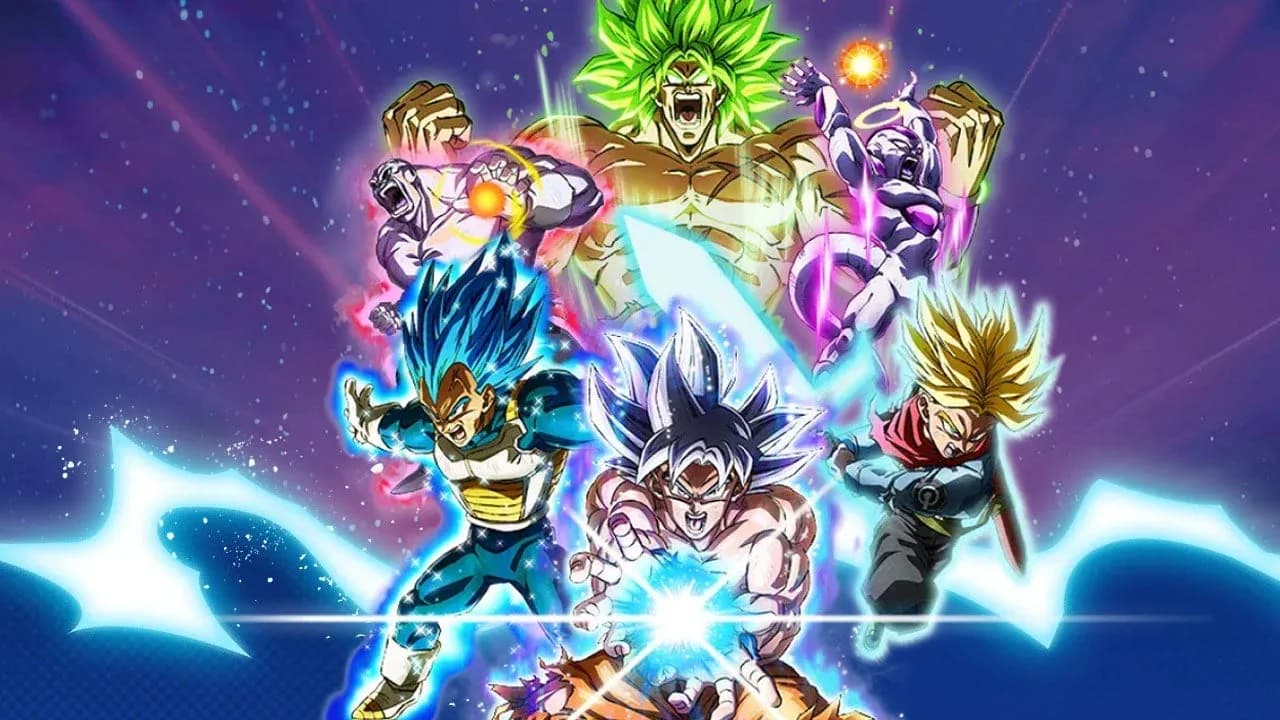
Dragon Ball: Sparking! Zero: A Triumphant Return to the Budokai Tenkaichi Legacy
Seventeen years is a long time to wait for anything, let alone the triumphant return of a beloved game series many thought was lost to time. Dragon Ball: Sparking! Zero doesn’t just pick up where the PlayStation 2-era Budokai Tenkaichi games left off; it arrives with the explosive force of a Spirit Bomb, aiming to be the definitive, fan-serving spectacle its title promises. This isn't a competitive fighter in the vein of Dragon Ball FighterZ—it’s a love letter written in ki blasts and Super Saiyan auras, prioritizing the chaotic, over-the-top fantasy of the anime above all else.
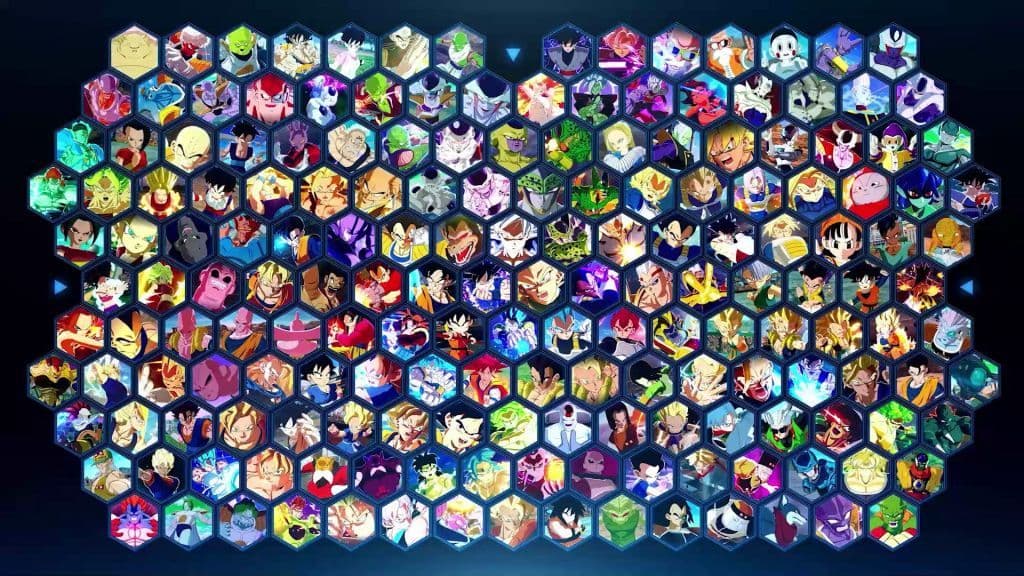
A sprawling roster continues the Budokai Tenkaichi tradition of including every possible fighter.
The game’s identity is immediately clear: this is the pinnacle of fanservice. Developer Spike Chunsoft has crafted an experience that feels like rifling through a meticulously organized toy box of every Dragon Ball character you’ve ever loved, or even vaguely remembered. The reverence for Akira Toriyama’s legacy is palpable in every detail, from the 182-character roster that spans Z, Super, GT, and movies, to the way Majin Buu’s candy beam or Vegito’s Final Kamehameha are recreated with cinematic flair. This is a game that understands its audience wants to feel like Goku powering up, not necessarily master frame-perfect combos in a balanced meta.
Where Dragon Ball: Sparking! Zero succeeds most is in its unabashed commitment to being an "all-out" arena fighter. It’s designed for the joy of the spectacle, not the grind of the ranked ladder.
This design philosophy comes with inherent trade-offs. Released on October 11, 2024, by Bandai Namco, Sparking! Zero consciously steps away from the competitive purity of its Arc System Works-developed cousin. Balance is secondary to authenticity; facing Ultra Instinct Goku with Yamcha feels as hopeless as it should, a design choice that will frustrate tournament seekers but delight role-players. The game’s mission isn’t to create a new esport, but to let you live out the "what if" scenarios you debated as a kid, powered by Unreal Engine 5 visuals that finally match the intensity of the anime in your mind’s eye.
As a spiritual successor arriving after nearly two decades, the weight of expectation is immense. Dragon Ball: Sparking! Zero meets that burden not by reinventing the wheel, but by polishing it to a mirror shine and attaching a rocket booster. It is, first and foremost, a celebration—a bombastic, unbalanced, and deeply affectionate recreation of Dragon Ball’s greatest hits, packaged for the fans who have been waiting to come home. Whether that celebration resonates beyond pure nostalgia depends on how willing you are to embrace its particular, chaotic brand of fighting-game fun.
Combat Mechanics in Sparking! Zero: Spectacular Depth Hidden Behind Chaos
The initial spectacle of Dragon Ball: Sparking! Zero is pure, unadulterated anime chaos. Ki blasts light up the screen, characters vanish in a flash to reappear with a punishing blow, and the camera whips around to capture every impact like a shonen director on a sugar rush. It’s a glorious, overwhelming sensory assault that perfectly captures the feeling of a Dragon Ball fight. However, to dismiss this as a mindless spectacle fighter is to miss the point entirely. Beneath the particle effects and screen-shaking explosions lies a surprisingly deep and technical combat system, one that demands mastery to truly shine but can feel frustratingly opaque to learn.
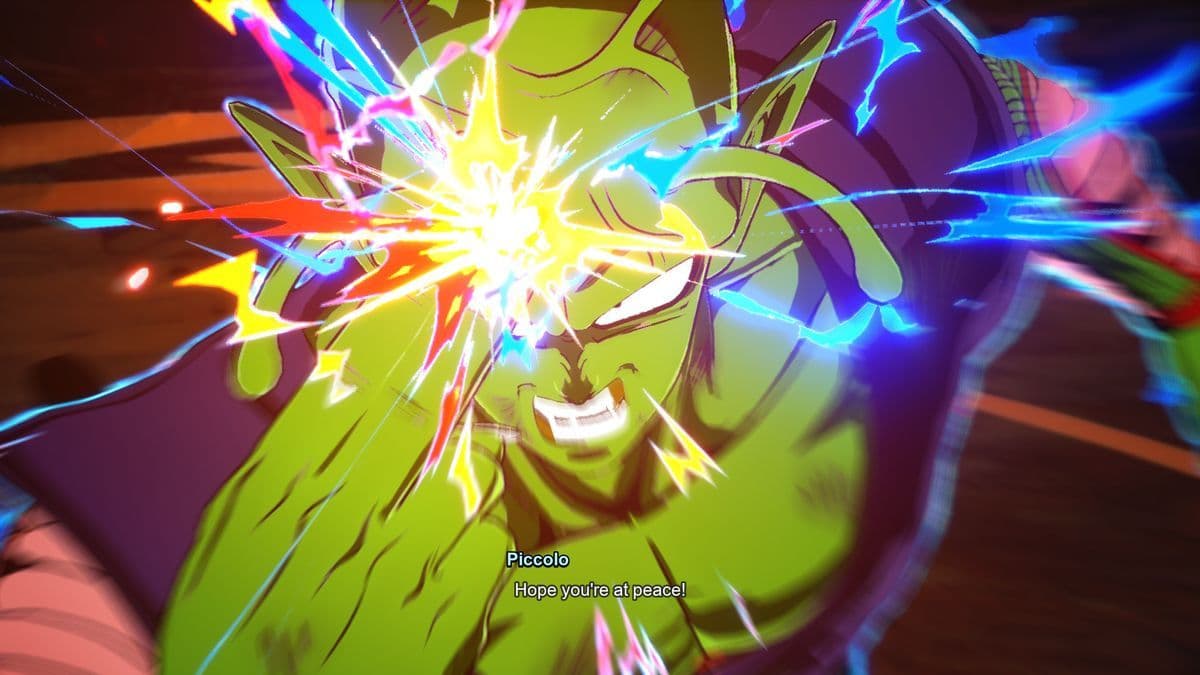
Visual effects highlight the spectacular depth of the game's combat system.
This is a game that wants you to feel like a Super Saiyan, but first you must learn to fight like one.
Dragon Ball: Sparking! Zero operates on a simple-to-learn, difficult-to-master philosophy. The basic flow is intuitive: a single button for melee combos, another for ki blasts, and triggers for charging energy and unleashing flashy special moves. It’s easy to pick up and start throwing Kamehamehas. The real depth emerges from the interplay of its layered systems. Managing your Ki gauge is a constant dance—do you hold R2 to charge, leaving yourself defenseless, or conserve it for a decisive Ultimate Blast? The separate Skill Count gauge, which builds as you fight, fuels everything from character-specific abilities like Vegito’s rapid ki charge to the game’s crucial defensive tools. This resource management adds a strategic undercurrent to the frenzy, forcing you to think two moves ahead even as beams fly.
The defensive mechanics are where Sparking! Zero reveals its true complexity, and where its tutorial most disappoints. Beyond simple blocking, you have access to a suite of high-risk, high-reward counters. The Revenge Counter lets you interrupt an opponent’s combo with perfect timing, while Super Perception allows you to block nearly any attack at the cost of a skill point. Then there’s the Sonic Sway, a rapid sidestep that can reposition you for a punishing blow. Each has its own timing and situational use, and learning when to deploy a vanish versus a parry is the difference between a novice and a master. The problem is the game does a poor job of explaining why you’d use one over the other. The tutorial presents them as text boxes and basic demonstrations, but fails to contextualize them within the frantic pace of a real match, where particle effects can obscure tells and online opponents mix up their patterns.
This steep learning curve is the combat’s greatest barrier. For the first several hours, fights can devolve into a messy, confusing scramble where you’re not entirely sure why you’re being hit or how to effectively retaliate. The camera lock-on, a holdover from the PS2 era, can struggle in tight spaces or against giant characters, occasionally clipping into geometry. Movement, while fluid in open skies, can feel initially clunky as you adapt to the full 3D arena. It’s a system that doesn’t meet you halfway; you must commit to its eccentricities. Yet, the payoff for that commitment is immense. When it clicks—when you perfectly read a Super Saiyan God Vegeta’s Big Bang Attack and counter with a Revenge Counter into your own combo, culminating in a beam clash that shakes the screen—Sparking! Zero delivers a power fantasy unmatched in the genre. It’s a masterclass in translating anime spectacle into tangible, rewarding gameplay mechanics.
The sheer joy of these iconic interactions cannot be overstated. Beam clashes are not just quick-time events; they are tense, resource-draining struggles where you mash to overpower your opponent. Transforming mid-battle isn’t just a visual flair—it changes your move set, stats, and often unlocks new skills, making the decision of when to go Super Saiyan a tactical one. Seeing Goku and Vegeta fuse into Vegito in real-time, or triggering Gohan’s Beast transformation with its overwhelming new aura, are moments of pure fan service that are also deeply integrated into the combat loop. This is the core triumph of Dragon Ball: Sparking! Zero: it makes you an active participant in the anime’s most legendary moments, not just a spectator. The chaos has rules, and learning them is a grind, but mastering them makes you feel like you’ve truly earned every earth-shattering victory.
The Massive Roster: 182 Fighters and the Question of Balance
Dragon Ball: Sparking! Zero makes its priorities clear the moment you scroll through its character select screen: this is a game of volume, not of curated balance. With a staggering 182 fighters pulled from every corner of the Z, Super, GT, and movie timelines, the sheer scale is its own kind of spectacle. This is a digital museum dedicated to Akira Toriyama’s creations, where the joy of playing as obscure movie villains like Lord Slug or Garlic Jr. is given equal weight to the thrill of commanding Goku. Yet, this celebratory approach forces a fundamental question: can a fighting game built as a comprehensive fan service archive also deliver a satisfyingly balanced competitive experience? The answer is a definitive no, and that’s by design.
The roster’s most fascinating—and divisive—aspect is its commitment to granular lore accuracy over homogenized gameplay. This isn’t a case of simple palette-swapped clones. Take the 19 distinct versions of Goku; a Saiyan Saga Goku who can only go Great Ape feels mechanically and visually worlds apart from a Super-era Goku with access to Ultra Instinct. Their transformation trees, special moves, and even base stats are tailored to their place in the narrative. This extends to the entire cast, with developers implementing unique traits that mirror the source material: Androids cannot manually charge ki, giant characters like Great Ape Baby are immune to standard grabs, and Ultra Instinct Goku possesses his signature auto-dodging ability. These aren’t balance tweaks; they are sacred text.
This unwavering fidelity creates a power curve that mirrors the anime with brutal honesty. Facing Ultra Instinct Goku with Yamcha or Hercule is as hopeless an endeavor in-game as it is on screen, a design philosophy that will infuriate tournament purists but delight role-players.
This lore-based imbalance is the game’s core tension. Dragon Ball: Sparking! Zero consciously rejects the notion that every character should have a viable path to victory against any other. Instead, it channels that classic Budokai Tenkaichi spirit where the fantasy of the matchup is paramount. The game provides tools to manage this disparity elsewhere, most notably in the brilliant DP Battle system for online team play, where a 15-point budget forces you to pair a 10-point powerhouse like Vegito Blue with lower-cost support fighters. But in a standard one-on-one setting, the canonical pecking order reigns supreme. This isn’t an oversight; it’s a statement of intent. The game trusts that the joy of finally beating Broly with your meticulously mastered Piccolo carries more weight than a sanitized, perfectly symmetrical tier list ever could.
However, this expansive, lore-first approach has a cost: bloat. While the variety is impressive, the sheer density of Saiyan characters, particularly the numerous Goku and Vegeta forms, can make the roster feel padded compared to underrepresented eras. Scrolling past a dozen variations of the series’ protagonist to reach a niche favorite can momentarily shatter the illusion of a comprehensive universe. It’s a testament to the source material’s own repetitive tendencies, but it highlights the challenge of turning a sprawling mythos into a coherent gameplay roster. For every unique gem like the giant Janemba, there’s another Super Saiyan form that, while mechanically distinct, contributes to a certain visual and gameplay homogeneity.
Ultimately, the massive roster is Sparking! Zero’s greatest strength and its most deliberate limitation. It guarantees that every player’s favorite character is here, rendered with astonishing care and unique mechanics. It facilitates the dream matches and “what-if” scenarios that are the game’s lifeblood. But it also firmly establishes that this is a playground, not a competitive arena. The game chooses to be an authentic, if unbalanced, celebration of Dragon Ball’s history rather than a balanced sport built upon it. For the fans it’s made for, that’s not a compromise—it’s the entire point.
Episode Battles and Custom Scenarios: Narrative Hits and Misses
If you’ve come to Dragon Ball: Sparking! Zero hoping for a compelling, cinematic retelling of the saga, prepare for a lesson in compromise. The game’s single-player offerings are a fascinating study in contrasts: one mode, Episode Battle, offers a truncated, often bafflingly paced trip down memory lane, while the other, Custom Battle, hands you the keys to the entire Dragon Ball universe and says, “You do better.” It’s a tale of two halves—one constrained by its own reverence, the other liberated by pure fan creativity—and the gap between them is where the game’s narrative ambitions both stumble and soar.
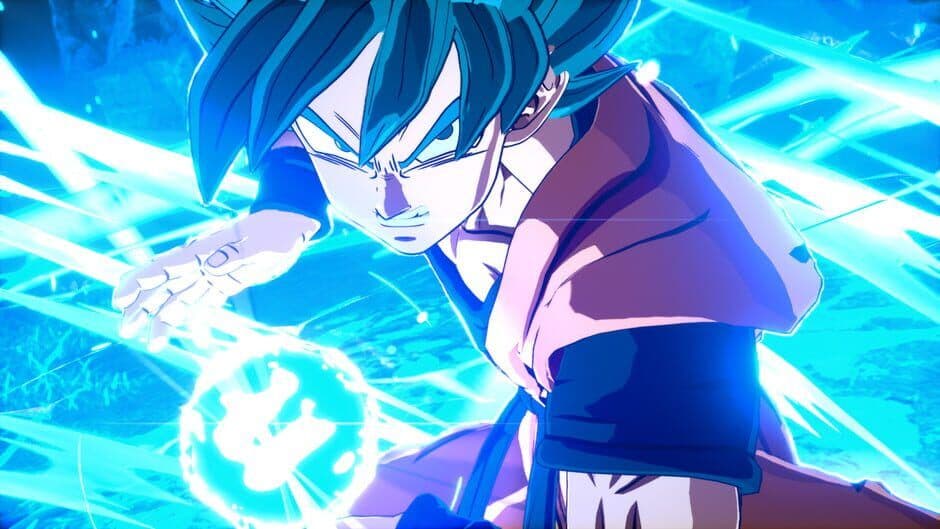
The sandbox tools allow for highly cinematic and intense custom encounters.
The flagship Episode Battle mode is where the game’s story-first intentions are most directly tested, and the results are mixed at best. Structured around eight key characters—Goku, Vegeta, Gohan, Piccolo, Trunks, Frieza, Goku Black, and Jiren—the mode attempts to retell the sprawling narrative from multiple perspectives. The idea is sound, offering a chance to, say, experience the Saiyan Saga through Vegeta’s ruthless ambition or the Cell Games through Gohan’s reluctant heroism. In practice, however, this structure creates a disjointed and confusing experience. Because the narrative jumps to whichever character was involved in a given clash, huge swathes of the story are simply skipped. You might finish a fight as Goku against Fat Buu and, with only a few lines of bridging dialogue, suddenly be facing Super Buu (Gohan Absorbed). For anyone without an encyclopedic knowledge of the franchise, Episode Battle will be utterly baffling. Its pacing feels cobbled together, relying heavily on static, captioned slideshows instead of the dynamic, in-engine cutscenes that the stunning combat engine is clearly capable of producing. Iconic moments like Goku’s first Super Saiyan transformation or Gohan’s ascension to SSJ2 lose all their emotional weight when presented with such a bare-bones, low-budget aesthetic.
Where Episode Battle finds redemption is in its delightful “What If” scenarios. These branching paths, unlocked by making specific choices or fulfilling hidden battle conditions, are the mode’s saving grace and a genuine treat for longtime fans.
These alternate histories inject much-needed creativity into the familiar timeline. What if Goku decided to help Piccolo fight Raditz instead of waiting for Gohan’s rage? What if Vegeta resisted Babidi’s mind control, preventing Majin Buu’s revival entirely? These scenarios, while often brief and culminating in just an extra fight or a unique cutscene, offer a fresh perspective and a compelling reason to replay chapters. They tap directly into the core fantasy of Dragon Ball: Sparking! Zero: the joy of rewriting the story yourself. The execution can be opaque—the game rarely explains how to unlock these paths, sending players to online guides—but the payoff of seeing Goku live happily with the Androids or Trunks and Vegeta defeating Perfect Cell is worth the hunt. It’s a clever way to make the well-trodden Z and Super sagas feel new again, even if the presentation surrounding them remains lackluster.
If Episode Battle represents the game’s flawed attempt at a guided tour, then Custom Battle is the open-world safari where all rules are off. This mode is Sparking! Zero’s secret weapon and perhaps its greatest legacy. Functioning as a “Mario Maker” for Dragon Ball fights, it provides a robust toolkit to stage any dream matchup or fan-fiction scenario imaginable. Want to pit a team of five Yamchas against Full Power Jiren? You can. Want to script a scenario where Yajirobe must defeat the entire Universe 7 team to earn his spot? Go for it. The depth here is impressive: you can set triggers for mid-battle transformations, script team tags based on specific attacks, and even craft custom intros and outros using preset dialogue and anime-style title cards. The potential for community-driven content is infinite, promising an endless stream of creative, player-made episodes long after the official story is done.
However, the creation tools themselves reveal some frustrating limitations. The interface for building these scenarios is often described as tedious and time-consuming. The dialogue system, while extensive, relies on unlocking preset lines rather than allowing for custom voice-overs, a missed opportunity that even a simple narrator reading text would have elevated. The included “cutscene maker” is rudimentary, offering few camera angles and scenarios, which keeps truly cinematic fan creations just out of reach. It’s a sandbox with a few key toys missing, limiting how grand your castles can be. Yet, even with these constraints, Custom Battle succeeds where Episode Battle fails: it understands that for many fans, the true narrative of Dragon Ball isn’t the canon plot, but the endless debate of “who would win?” and “what if?” This mode empowers that debate, making it playable and shareable. It’s where Dragon Ball: Sparking! Zero truly becomes the ultimate toy box it aspires to be, even if the instructions for some of the toys are frustratingly vague.
In the end, the narrative experience of Dragon Ball: Sparking! Zero is a split verdict. Episode Battle is a disappointing, abridged cliff-notes version of the anime, likely to satisfy neither newcomers nor veterans seeking a rich retelling. But its “What If” branches and, more importantly, the phenomenal Custom Battle sandbox, brilliantly reframe the entire concept. This isn’t a game that tells you a great Dragon Ball story; it’s a game that gives you every tool you need to tell your own. For some, that trade-off will be a deal-breaker. For the creative fan ready to direct their own episode, it’s the entire point.
Visual Grandeur and Technical Performance: The Best Looking Dragon Ball Yet?
If you’ve ever wanted to see a Kamehameha rendered with such absurd, particle-drenched fidelity that it makes the anime’s best cuts look like rough storyboards, Dragon Ball: Sparking! Zero has you covered. This is, by a significant margin, the best-looking Dragon Ball game ever made, and a strong contender for the best-looking anime-to-game adaptation in the medium. Powered by Unreal Engine 5, the game’s visual presentation is a masterclass in fan service made tangible, where every transformation aura, energy beam, and environmental shattering feels ripped from a high-budget theatrical release. The commitment to spectacle is absolute, creating moments of pure, jaw-dropping awe. Yet, this relentless pursuit of visual splendor comes with a cost: in its most frantic moments, the very beauty designed to immerse you can also conspire to disorient you.
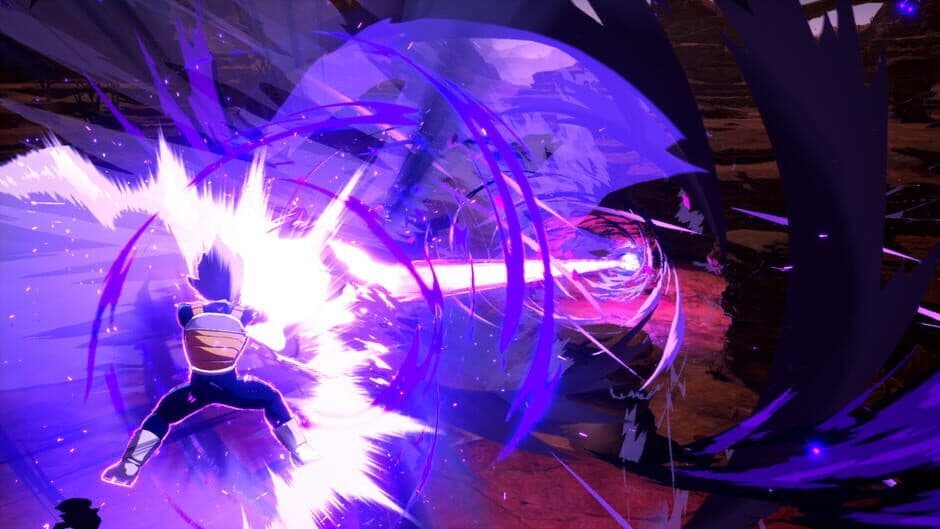
The engine handles multiple high-quality models and effects simultaneously without drops.
The leap in visual fidelity is staggering, especially when compared to its PS2-era predecessors or even the stylized approach of Dragon Ball FighterZ. Character models are exquisitely detailed, from the stitching on Goku’s gi to the metallic sheen of Frieza’s final form, all animated with a fluidity that perfectly captures the anime’s exaggerated physicality. But the true stars are the effects. A Super Saiyan transformation isn’t just a golden aura; it’s a roaring, lightning-wreathed vortex of energy that warps the light around the character and kicks up dust from the ground. Ultimate attacks like Vegito’s Final Kamehameha or Gohan Beast’s Special Beast Cannon are delivered with cinematic camera angles, screen-shaking impacts, and a density of particle effects that border on sensory overload in the best possible way. This isn’t just graphical horsepower—it’s a profound understanding of Dragon Ball’s visual language, translating “powering up” from a narrative trope into a visceral, audiovisual event.
The environmental destruction is where this technical prowess becomes interactive spectacle. Arenas aren’t just backdrops; they are participants in the fight.
You can punch an opponent through a mountain ridge and watch it crumble in real-time, drag a skirmish to the ocean floor creating a trail of bubbles and silt, or level entire city blocks in West City with a stray Galick Gun. This isn’t scripted set-pieces, but systemic destruction that reacts to the force and angle of your attacks, making every battle feel uniquely impactful. The damage even extends to character models, with clothing tearing and scuffs appearing as a fight progresses, visually narrating the struggle. This level of reactive detail sells the fantasy of being a planet-threatening warrior better than any damage number ever could.
However, this visual grandeur has a clear, performance-dependent trade-off. On current-gen consoles (PS5, Xbox Series X) and capable PCs, Dragon Ball: Sparking! Zero generally maintains a smooth 60 frames-per-second target, which is essential for the split-second reactions its deep combat demands. The experience is largely stable, though some reviews note occasional dips during the most explosive, screen-filling ultimate attacks. The story is different on the Nintendo Switch 2 port. To achieve stability on the handheld, the game is capped at 30fps, and while performance is reportedly solid during actual combat, the visual compromise is significant. Character models suffer from noticeable aliasing in handheld mode, and the comic-book style cutscenes exhibit lag during transitions. It’s a competent port that gets the job done, but it’s a definitive step down from the buttery-smooth, high-fidelity experience on other platforms.
The most consistent criticism of the presentation isn’t about power, but clarity. In a one-on-one duel, the game is a visual feast. But in team battles or during intense exchanges where both fighters are unleashing rapid ki blasts, vanishes, and counters, the screen can become an impenetrable soup of light and color. Auras blend with explosion effects, making it notoriously difficult to track your character’s position, let alone read your opponent’s attack startup. This is exacerbated by the over-the-shoulder camera, which can struggle to keep both combatants in frame when they zip around a large arena. While authentic to the chaotic energy of the anime, this visual noise creates a tangible gameplay barrier, especially for newcomers trying to parse the game’s already complex defensive mechanics. It’s the one area where the devotion to spectacle actively undermines the precision the combat system sometimes requires.
The audio presentation is a tale of two halves, mirroring the split in visual execution. The voice work is exceptional, featuring the return of nearly the entire original Japanese and English casts, who deliver new lines with the same passion as the show. Hearing Christopher Sabat’s Vegeta bark a newly recorded taunt or Masako Nozawa’s Goku unleash a battle cry adds an invaluable layer of authenticity that deepens the immersion. The sound design follows suit: ki blasts have a satisfying weighty whoosh, impacts land with a meaty crunch, and the electrical crackle of a Super Saiyan aura is pitch-perfect. In contrast, the original soundtrack is repeatedly described across reviews as generic and forgettable—perfectly serviceable anime-orchestral fare that fades into the background, never rising to the iconic heights of the series’ best themes. It gets the job done without ever threatening to earn a spot on your playlist.
Dragon Ball: Sparking! Zero’s technical and artistic presentation is, therefore, a perfect microcosm of the entire game. It is an unwavering, often breathtaking commitment to a specific fantasy: making you feel like you’re inside the anime. It achieves this with stunning success, setting a new visual benchmark for the franchise. Yet, in its pursuit of that goal, it occasionally trips over its own ambition, allowing spectacle to obscure playability and making platform choice a genuine factor in the experience. For the fan who values that authentic feeling above all else, these are minor quibbles in the face of such a lovingly crafted spectacle. For the player seeking crystal-clear competitive readability, it’s a persistent, flashy frustration.
Online Multiplayer and Progression: Zeni, DP Battles, and Netcode
The promise of endless dream matches and a living, breathing community is the ultimate test of any modern fighting game’s longevity. Dragon Ball: Sparking! Zero approaches this challenge with a brilliant competitive idea hamstrung by some bafflingly archaic design choices. The game’s online suite is a tale of two halves: a surprisingly robust and strategic team-based mode that showcases the roster’s chaotic potential, and a collection of player-unfriendly menus and restrictions that feel imported from a bygone era.
At the heart of its competitive longevity is the ingenious DP Battle system. This is where Dragon Ball: Sparking! Zero’s intentionally unbalanced roster finds its purpose. By assigning each fighter a Destruction Point (DP) value from 1 to 10 and imposing a strict 15-point cap on a team of up to five characters, the game forces a fascinating meta of resource management. You cannot simply field a team of five 10-DP gods like Vegito Blue and Ultra Instinct Goku. Instead, you must make hard choices: do you take one powerhouse and fill the remaining slots with low-cost support like Krillin or Yamcha, or build a more balanced squad of mid-tier brawlers? The system cleverly incorporates the in-battle transformation mechanic, allowing you to pick a character in their base form for a lower cost (e.g., Z-End Goku for 5 DP) and power them up mid-fight, a strategic gamble that rewards smart team composition and match pacing. This single mode does more to legitimize the game’s chaotic, lore-first balance than any attempt at symmetrical tuning ever could.
The DP system is a masterstroke, transforming the roster’s inherent imbalance from a bug into a feature. It’s a brilliant concession to the source material that also creates a compelling, think-on-your-feet competitive layer.
Online stability, a crucial factor for any fighter, is a qualified success. Sparking! Zero foregoes modern rollback netcode, which would be ideal for its fast-paced action, but compensates with generally solid performance on a stable, wired connection. Reviews note that matches with 4-5 bars of connection run smoothly, with the game’s inherent combo structure—less reliant on single-frame links than a traditional 2D fighter—helping to mitigate minor lag. However, this also means the experience degrades noticeably on weaker connections, where the lack of rollback’s predictive corrections can lead to jarring teleports and missed inputs. It’s a serviceable, if not ideal, solution that prioritizes visual fidelity and the grandeur of its large, destructible arenas over cutting-edge netcode, a trade-off that will satisfy casual bouts but frustrate aspiring tournament warriors.
This forward-thinking approach to online balance makes the regressive handling of local multiplayer all the more perplexing. In a staggering misstep for a game built for social, couch-play spectacle, split-screen versus is restricted to a single arena: the Hyperbolic Time Chamber. This bland, white void lacks the destructible buildings and varied terrain that make the other stages so dynamic, stripping away a core part of the game’s visual identity for local play. It’s a baffling, frankly lazy limitation that feels like a relic from a time when split-screen was a technical afterthought, not a celebrated feature. For a title that so perfectly captures the feeling of childhood action figure battles, locking friends out of demolishing West City together is a self-inflicted wound.
The progression system, at least, offers a satisfying grind. Earning Zeni through virtually any activity—Episode Battles, online matches, completing challenges—feels natural and rewarding. The steady drip-feed of currency means you’re never far from your next unlock, whether it’s a new character, an alternate costume, or a slice of the extensive soundtrack. The Capsule system, which lets you equip stat-boosting items to characters, is a double-edged sword. On one hand, it provides a light RPG layer for min-maxers who want to tweak their favorite fighter. On the other, the shop and inventory interface for managing these capsules is universally criticized as a cluttered, tedious mess. With no effective filtering or sorting options, equipping the optimal buffs becomes a chore of scrolling through endless lists, a stark contrast to the fluidity of the combat itself.
This brings us to the game’s most persistent, low-grade frustration: its menu design. Navigating Dragon Ball: Sparking! Zero’s myriad modes and customization options is hampered by an unintuitive, often obstructive interface. The most common complaint is the inability to back out of sub-menus sequentially; instead, many actions dump you unceremoniously back to the top-level hub, forcing you to re-navigate multiple layers to get back to where you were. It’s a small thing that becomes a major irritant when tweaking custom battles, browsing the shop, or managing your roster. In a game that so brilliantly modernizes the spectacle of its PS2-era predecessors, these archaic UX choices are a constant, nagging reminder of the QoL advancements the genre has made in the intervening years.
Final Verdict: Is Dragon Ball: Sparking! Zero the Ultimate Fan Experience?
After seventeen years, the wait for a true successor to the Budokai Tenkaichi series is over, and Dragon Ball: Sparking! Zero delivers a package that is both overwhelmingly generous and frustratingly flawed. The final verdict hinges entirely on what you’re looking for: a meticulously balanced competitive fighter or the ultimate, fan-crafted playground. This game is unequivocally the latter—a spectacular, chaotic, and deeply affectionate toy box that prioritizes the joy of spectacle over the grind of the meta, for better and for worse.
The sheer value proposition is undeniable. For the solo player, there are dozens of hours of content spread across Episode Battles, the endless sandbox of Custom Battle, and a steady, rewarding grind to unlock the game’s 182 fighters with earned Zeni. For the social player, the strategic DP Battle system offers a brilliant framework for online team competition, even if local multiplayer is hamstrung by its single-stage restriction. The volume is staggering, ensuring you’ll never run out of characters to master or dream matches to stage. However, this breadth comes with a notable lack of narrative depth; the guided Episode Battle mode is a disjointed, slideshow-driven experience that fails to capture the emotional weight of the anime it so lovingly recreates visually.
This is the essential tension of Dragon Ball: Sparking! Zero: it is a game designed to be played with, not necessarily to be won. Its greatest successes and most baffling shortcomings all stem from this single-minded focus on being the ultimate fan service engine.
For the long-time Tenkaichi devotee, this game is a must-buy. It is the triumphant homecoming you’ve been waiting for. The Unreal Engine 5 visuals set a new benchmark for anime adaptations, transforming every Super Saiyan aura and planet-razing ultimate attack into a cinematic event. The combat, once mastered, delivers an unparalleled power fantasy, making you an active participant in the anime’s most iconic moments through deep mechanics like the Revenge Counter and resource-driven Sparking Mode. The roster is a love letter in itself, with granular attention ensuring that Saiyan Saga Goku feels distinct from his Super-era counterpart. And the creative tools—particularly the “What If” branches and the phenomenal Custom Battle mode—empower you to rewrite history or craft your own, promising near-infinite replayability through community creativity.
However, for the casual player or someone simply looking for a polished, accessible brawler, Dragon Ball: Sparking! Zero presents significant barriers. The steep learning curve is its biggest hurdle; the game does a poor job of teaching you why its complex defensive mechanics matter amidst the on-screen chaos, leading to an initial period of frustrating confusion. This is compounded by visual noise that can obscure tells during intense exchanges and an archaic, often obstructive menu design that makes simple navigation a chore. The intentional, lore-based character imbalance means some matchups are canonically hopeless, which delights role-players but will infuriate anyone seeking a fair fight.
Dragon Ball: Sparking! Zero is not the most balanced, accessible, or narratively compelling fighting game you can buy. It is, however, almost certainly the most authentic Dragon Ball experience ever crafted into interactive form. It understands that for its core audience, the fantasy isn’t about frame data, but about the feeling of unleashing a Final Kamehameha that looks better than the anime. It trades competitive purity for unadulterated spectacle, and for the fans it’s made for, that’s not a compromise—it’s the entire, earth-shaking point.
Pros:
- An unmatched, lovingly crafted roster of 182 characters that serves as a comprehensive museum of the franchise.
- Stunning Unreal Engine 5 visuals that set a new standard for anime spectacle and environmental destruction.
- A deep and rewarding combat system that perfectly translates the anime’s high-octane action into tangible mechanics.
- The brilliant Custom Battle mode and “What If” scenarios offer incredible creative tools and endless replayability.
- The strategic DP Battle system cleverly manages the roster’s inherent imbalance for engaging online team play.
Cons:
- A steep and poorly explained learning curve that creates a significant barrier to entry.
- The Episode Battle story mode is disjointed, poorly paced, and relies on lackluster presentation.
- Bafflingly limited local multiplayer, restricted to a single, bland arena.
- Archaic menu design and a tedious capsule management interface hinder the overall user experience.
- Visual spectacle can sometimes devolve into chaotic noise, obscuring gameplay clarity.