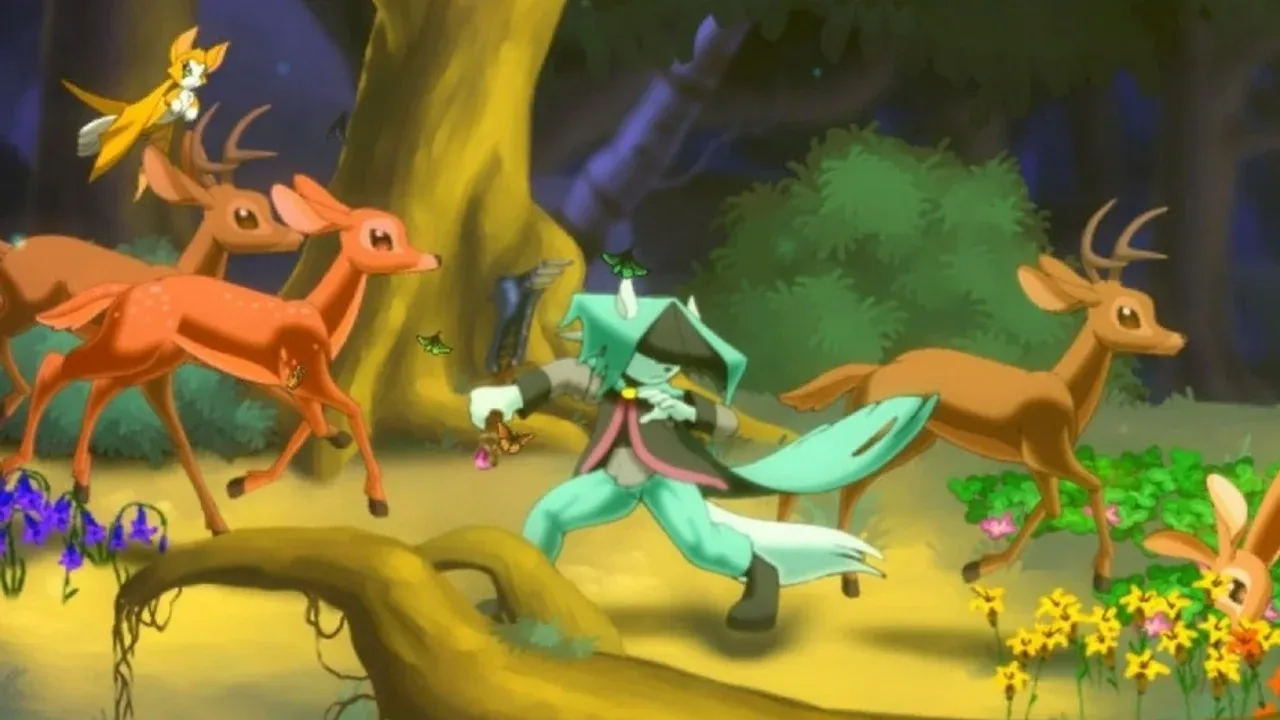
Dust: An Elysian Tail Identity: A Masterclass in Solo Indie Development
Dust: An Elysian Tail is the kind of game that shouldn’t exist. Not because of its quality, but because of its improbable origin. In an industry dominated by sprawling teams and multi-year, multi-million-dollar productions, this is a lavish, hand-painted action RPG that was, for all intents and purposes, crafted by a single animator in his living room. That fact isn’t just a charming footnote; it’s the foundational lens through which every aspect of the game must be viewed. This is a masterclass in solo indie development, a proof-of-concept so polished and ambitious that it redefines what one person can achieve. It’s a hybrid beast—a Metroidvania with the combo-driven heart of a character action game and the stat-tracking of an RPG—that wears its creator’s passion and skill on its sleeve.
The story of its creation is as compelling as the game itself. Dean Dodrill, an animator whose credits include Jazz Jackrabbit, spent over three and a half years building nearly every visual and mechanical component of this world. This isn't a minimalist pixel-art experiment; it's a sprawling adventure with hand-drawn characters, lush, animated backgrounds, and a combat system that can fill the screen with hundreds of particle effects. The sheer audacity of that scope is staggering. When you see a waterfall cascade in the background of a forest glade or witness the intricate animation of Dust’s swordplay, you’re witnessing the focused vision of a single artist, not the compromised output of a committee. This artistic pedigree is evident in every frame, lending the game a cohesive, personal feel that larger productions often lack.
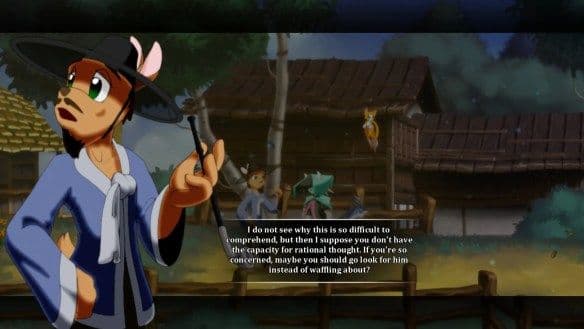
The game's identity was forged over years of solo development by creator Dean Dodrill.
This isn't just a game; it's a portfolio piece that won a $40,000 grand prize in Microsoft's 2009 Dream.Build.Play competition, essentially betting the company's platform on one developer's dream.
That competition win was more than just seed money; it was validation that this solo vision had mainstream potential. The result is a genre fusion executed with surprising confidence. Dust: An Elysian Tail deftly stitches together the exploration and ability-gated progression of a Metroidvania with the fluid, combo-centric combat of a hack-and-slash and the tangible growth of an action RPG. You’ll backtrack with a new double-jump to find a hidden chest, allocate skill points to boost your attack power, and juggle a dozen enemies in the air with a single extended combo—all within the same hour. This hybrid identity isn't a haphazard mash-up; it’s a considered design where each pillar supports the others. The combat feeds you experience to grow stronger, your new abilities unlock previously inaccessible corners of the map, and those corners hide loot that makes you deadlier in combat.
Now available on virtually every modern platform—from its 2012 Xbox Live Arcade debut to PC, PlayStation 4, iOS, and the Nintendo Switch—Dust has transcended its indie roots to become a permanent fixture in the digital library. Its portability, especially on Switch, feels like a natural home for its pick-up-and-play exploration loops. The game’s enduring appeal is a testament to Dodrill’s foundational vision: a proof that a singular, unwavering creative drive can produce something with more heart and polish than many studio-backed projects. It sets a high bar for the experience to follow, promising a world where artistic ambition and responsive gameplay are woven from the same, solitary thread.
Combat and Movement: The 'Epic, Violent Dance' of Falana
The combat in Dust: An Elysian Tail is the moment the game earns your trust. It transforms what could be a competent Metroidvania into a kinetic spectacle, a system so fluid and responsive it feels like the video game equivalent of a well-choreographed fight scene. This isn't just about hitting enemies; it's about conducting an epic, violent dance across the screen, where your sword, Ahrah, and your magical companion, Fidget, become extensions of a single, devastating will. The initial simplicity—a basic slash, an upward launch, an aerial combo—belies a surprising depth of expression, allowing you to juggle foes, perform suplexes, and chain attacks with a grace that rivals the character action greats it draws inspiration from.
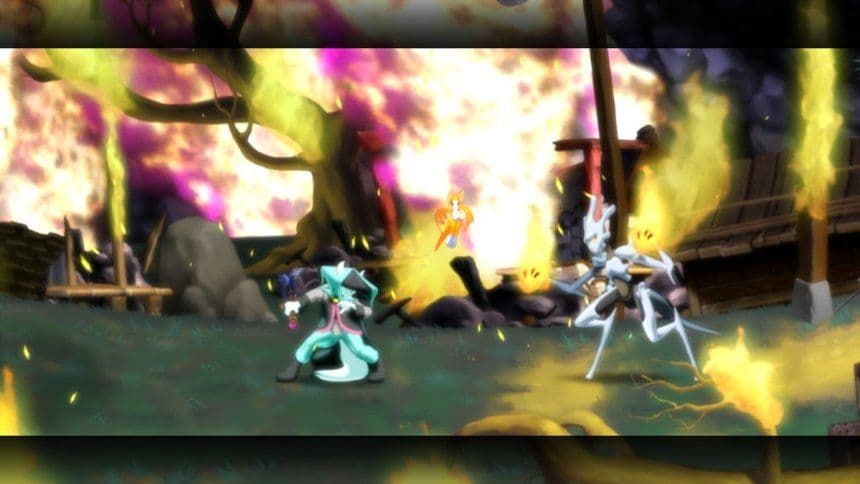
The combat system emphasizes fluid combos and magical projectiles.
The true genius of the system lies in the synergy between Dust and Fidget, crystallized in the Dust Storm ability. By holding the attack button, Dust enters a whirling, screen-clearing vortex that doesn't just damage enemies—it transforms Fidget's otherwise weak projectile attacks. A simple spark becomes a horizontal tornado of chain lightning; a volley of fireballs morphs into towering death rays that vaporize entire waves. This is more than a combo extender; it's a strategic core loop. You learn to position yourself, launch a projectile, and then catch and amplify it with the Dust Storm, creating cascades of damage that send the combo counter rocketing into the hundreds. The feedback loop here is masterful: higher combos grant bonus experience, directly tying your stylish execution to tangible character growth. Seeing that counter hit 500, then 1,000, isn't just for show; it’s a direct reward for engaging with the system's most creative mechanics.
This is where Dust: An Elysian Tail feels most like a solo developer's passion project: in the unbridled joy of its core combat fantasy. The screen shakes, particles fly, and you become an unstoppable dervish, slicing through a dozen enemies while the soundtrack swells. It’s a power fantasy delivered with pinpoint control.
However, the very mechanic that provides the highest highs also exposes the combat's primary weakness: a lack of evolutionary depth. Your moveset remains largely static from the mid-game onward. While you gain new elemental projectiles for Fidget and essential tools like a parry and an air-dash for crowd control, the dominant strategy for 90% of encounters becomes reliably effective: jump, fire Fidget's projectile, and amplify it with an aerial Dust Storm. This approach is so efficient that it can trivialize even the game's more interesting enemy types, from lumbering trolls to kamikaze bombers. The combat doesn't demand you adapt or master a deeper suite of techniques; it rewards you for perfecting a single, overwhelmingly powerful tactic. For a dozen hours, this is exhilarating. By hour fifteen, the repetition begins to whisper, highlighting a moveset that is brilliantly designed but ultimately shallow.
This repetition is occasionally exacerbated by technical hiccups. In the chaotic, enemy-dense brawls that Dust: An Elysian Tail loves to stage, the lock-on system can struggle. There are moments where Dust will stubbornly target a distant archer instead of the giant axe-wielder bearing down on you, leading to frustrating hits that feel unfair. It’s not a constant issue, but in a combat system predicated on fluidity and control, these stutters stand out. Similarly, while the parry is a satisfying "get-out-of-jail-free" card that briefly stuns attackers, and the ground slam is perfect for crowd control, they often feel like supporting tools to the main event of the Dust Storm symphony, rather than integral parts of a constantly evolving playbook.
For context, this places Dust's combat in a fascinating middle ground. It lacks the intricate weapon variety and demanding precision of a Soulslike, and it doesn't offer the endless combo trees of a Devil May Cry. Instead, it carves its own niche: an accessible, visually spectacular brawler that makes you feel incredibly skilled with a relatively simple toolkit. The criticism of its staying power is valid, but it’s a critique born from the strength of its initial impression. The combat in Dust: An Elysian Tail is the game's beating heart—occasionally arrhythmic, sometimes too predictable, but pumping with an infectious, joyous energy for most of the journey.
World Design and Exploration: Navigating the Labyrinth of Falana
Dust: An Elysian Tail presents its world not as a single, seamless labyrinth, but as a curated gallery of distinct biomes. This is a deliberate departure from the interconnected sprawl of a classic Metroidvania. Instead of one massive map, Falana is a collection of smaller, self-contained areas—lush forests, haunted mansions, icy peaks—accessed via a world map. This structure initially feels more like Castlevania: Order of Ecclesia than Symphony of the Night, offering a more digestible, compartmentalized approach to exploration. It’s a design choice that streamlines the early-game experience, allowing you to grasp the scope of your journey without feeling overwhelmed by a sprawling, opaque layout. However, this clarity comes with a trade-off: the world can feel less like a living, breathing ecosystem and more like a series of beautifully painted dioramas you fast-travel between.
Where the game firmly plants its flag in the Metroidvania genre is in its progression-gated exploration. Dust: An Elysian Tail masterfully doles out movement abilities at a satisfying pace, each one fundamentally reshaping your relationship with the spaces you’ve already visited. The slide lets you duck under low passages in early caves, the double-jump opens up vertical shafts you stared at helplessly hours before, and the ability to cling to vines transforms sheer walls into new pathways. This is the genre’s core loop executed with precision: the thrill of returning to a familiar screen with a new power and discovering a hidden alcove holding a treasure chest is consistently rewarding. The game smartly indicates your progress, too; both the world map and individual area maps show which screens still contain undiscovered items, transforming aimless wandering into a satisfying scavenger hunt.
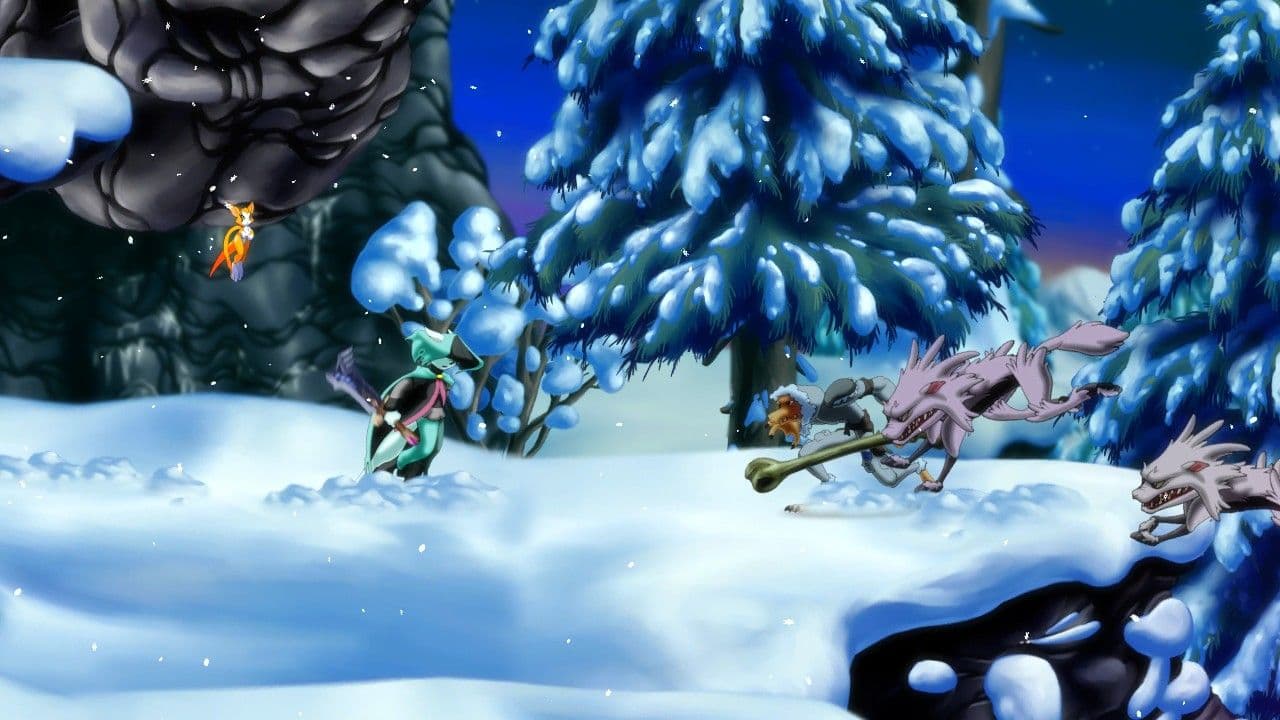
The world of Falana features classic Metroidvania exploration with ability-gated paths.
The true magic of Dust’s exploration isn't just in finding better swords or armor, but in uncovering its dozen secret "friends"—hidden characters plucked from other beloved Xbox Live Arcade indies like Super Meat Boy and Braid. These aren't lazy asset swaps; each character resides in a meticulously crafted mini-environment that pays homage to their source material, complete with altered visual filters and mechanics. Finding them requires deciphering cryptic clues and executing precise platforming, offering a layer of fan-service discovery that feels genuinely special rather than tacked-on.
This sense of discovery is further deepened by the game’s environmental puzzles. Beyond simple locked doors, Dust: An Elysian Tail challenges you to manipulate the world itself. You’ll guide timed proximity bombs through winding wind tunnels, use your Dust Storm to activate distant switches by deflecting projectiles, and decipher riddles scrawled on notes to locate hidden switches. These moments provide a welcome cognitive shift from the constant combat, asking for patience and observation instead of reflexive button presses. They ensure that exploration is an active, engaging process, not just a matter of running to every corner of the map.
However, the pursuit of 100% completion exposes the strain in this design. The backtracking required to find every last chest and secret character is substantial. While the Teleport Stone item offers some relief, its consumable nature and the need to remember to stock it adds an annoying layer of inventory management to what should be a fluid exploration loop. The final hours of cleaning up the map can devolve into a tedious checklist, fast-traveling to an area, clearing a few marked screens, and moving on—a stark contrast to the organic, ability-driven discovery that defines the game’s best moments. The world of Falana is a joy to uncover piece by piece, but asking you to sweep it spotless reveals the repetitive seams underneath its beautiful hand-drawn facade.
RPG Systems and Progression: Crafting a Hero from Amnesia
This is where the ambition of Dust: An Elysian Tail meets its most pragmatic systems. The RPG mechanics aren't here to reinvent the genre; they're a functional scaffold built to support the game's true stars: the combat and exploration. The progression loop is straightforward, almost elegant in its simplicity: defeat enemies, earn experience, level up, and allocate the awarded gems to one of four stats—Health, Defense, Strength, or Fidget's Power. There are no branching skill trees or complex builds, just a direct line of incremental power that makes your victories feel tangibly earned. It’s a hands-off approach that respects the player’s time, ensuring you’re always growing stronger without getting bogged down in minutiae. For an action-focused experience, this streamlined stat distribution works perfectly, keeping the focus squarely on the next combo or hidden path.
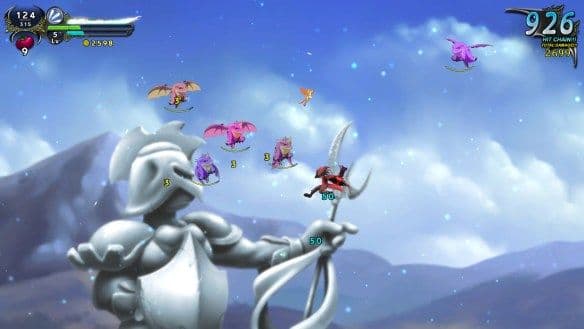
Building high combos is a key strategy for overcoming difficult encounters.
Where the systems begin to show their seams is in the equipment and crafting. You’ll constantly find blueprints for new swords, armor, and pendants in hidden chests, promising a rewarding loop of gathering materials and forging superior gear. The disappointment sets in when you realize that, more often than not, the very item you just unlocked a blueprint for becomes available for purchase at the nearest town’s shop mere minutes later. This robs the crafting system of its purpose, transforming what should be a thrilling discovery into a redundant chore. Why hunt for rare monster drops when you can simply buy the item with the gold you’ve passively accumulated? The intent to offer player agency is clear, but the execution renders a significant chunk of the loot hunt functionally pointless.
The one brilliant concession to this flawed loop is the merchant integration. When you sell a new type of crafting material to a shopkeeper, their entire inventory updates to include items that require it. This small, smart design choice eliminates the need for tedious, targeted farming. You’re never forced to grind a specific enemy for a drop; instead, organic exploration naturally fills your pockets with the components you need.
This speaks to a broader, well-considered tension in Dust: An Elysian Tail’s economy. Gold is deliberately scarce, with a hard cap of 9,999, and essential healing items are expensive. You’re constantly making micro-decisions: do you spend your limited funds on a stack of healing herbs for the upcoming dungeon, or do you save for that new chest piece? This scarcity forces engagement with the world—you’ll smash every pot and open every chest not just for treasure, but for the vital resources needed to survive. It’s a subtle layer of strategy that prevents the game from becoming a mindless power fantasy, at least until your combo skills render healing almost unnecessary.
For context, this places Dust’s RPG elements firmly in the “light” category, especially when measured against its clear inspiration, Castlevania: Symphony of the Night. Where Symphony offered a dizzying array of weapons with unique properties and spells to discover, Dust: An Elysian Tail offers a linear stat climb and equipment that primarily provides numerical boosts. You don’t craft a weapon that changes your playstyle; you craft one that simply deals more damage. This isn’t necessarily a failure—it’s a conscious design choice to serve the game’s action-heart. The RPG mechanics provide a steady sense of progression and a light resource-management puzzle, ensuring your amnesiac hero feels like he’s growing from a skilled warrior into a legendary force without ever complicating the beautiful, violent dance at the game’s core.
Narrative and Presentation: A Dark Tale in a Disney-Style World
The moment Dust: An Elysian Tail tries to tell you its story is where its carefully constructed fantasy almost shatters. The game opens with a classic amnesiac hero trope, but quickly reveals a narrative ambition far weightier than its Disney-esque, anthropomorphic-animal aesthetic would suggest. This is a world of lush forests and charming villages built atop a foundation of genocide, identity crises, and brutal war. The jarring dissonance between the child-friendly presentation and the adult themes it tackles is the game’s most compelling narrative gambit—and its most frequent source of tonal whiplash.
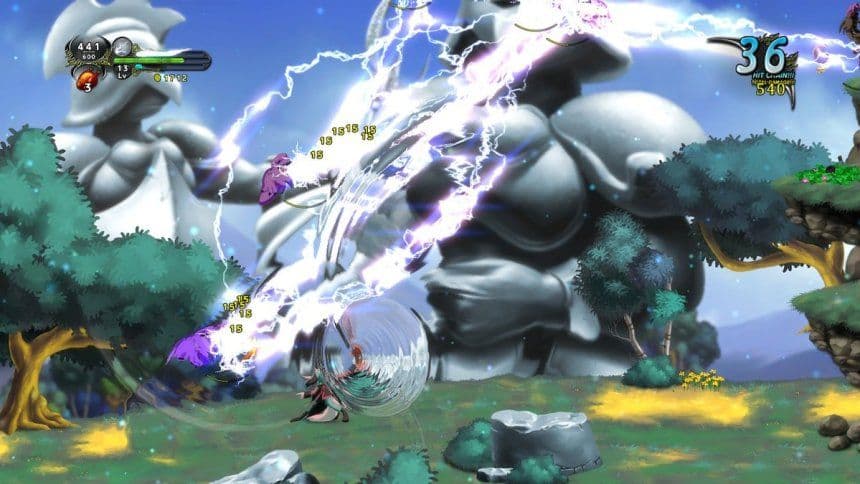
The game's narrative balances lighthearted moments with dark, emotional story beats.
The central trio—Dust, the sentient sword Ahrah, and the nimbat Fidget—carries this burden. Their dynamic evolves from a simple quest for answers into a profound exploration of guilt and purpose. Ahrah serves as the stoic, moral compass, while Fidget provides relentless comic relief, frequently breaking the fourth wall with meta-commentary on video game tropes. It’s a relationship that works because the voice acting at its core is strong; Dust’s performance conveys a weary nobility, and Fidget, while high-pitched, is imbued with genuine personality. However, the supporting cast is where the seams show. Dialogue often slips into overly dramatic or gratingly juvenile territory, with line readings that can make emotional moments feel like an ordeal. This inconsistency pulls you out of the story precisely when it’s trying to pull you in deeper.
The game’s visual presentation is its most consistent triumph. The hand-drawn art is breathtaking, a vibrant blend of 90s Disney animation and Studio Ghibli’s painterly sensibility. Every backdrop, from snow-caked peaks to caves lit by glowing fungus, feels alive with subtle animation and rich detail. It’s a world you want to live in, which makes the dark truths hidden within it all the more effective.
This beauty is occasionally undermined by the character design itself. The anthropomorphic “furry” aesthetic is a deliberate and divisive choice, but the bigger issue lies in the inconsistency between the fluid, in-game sprites and the sometimes awkward, amateurish-looking portrait art used during dialogue scenes. Characters that move with grace in combat can appear oddly proportioned or poorly rendered in close-up, creating a visual disconnect that cheapens otherwise well-acted exchanges. It’s the one area where the solo development effort becomes visibly strained against its own artistic ambition.
Thankfully, the audio landscape offers no such faltering. The soundtrack by HyperDuck Soundworks is a masterclass in tone-setting, weaving melancholy exploration themes with thunderous battle arrangements that elevate every encounter. It provides the emotional weight the script sometimes struggles to convey, tying the journey’s lighter and darker moments together with a cohesive, resonant score. This, combined with the satisfying ching of a perfect parry or the rising chime of a climbing combo counter, creates an audio experience that is as polished and engaging as the combat itself.
In the end, Dust: An Elysian Tail’s narrative succeeds not through flawless execution, but through raw, heartfelt ambition. The story’s dark turns—dealing with loss, the cost of war, and the burden of a forgotten past—land with genuine impact precisely because they erupt from such a brightly colored, seemingly innocent world. It’s a messy, emotionally honest tale that respects its audience enough to offer more than a simple good-versus-evil fable, even as its delivery occasionally stumbles. For every moment of grating dialogue, there’s a quiet, heartbreaking revelation about Dust’s origins that justifies the journey. The presentation is a tapestry of stunning highs and puzzling lows, but the thread of passion running through it all is unmistakable.
Technical Performance and Difficulty: Is the Challenge Fair?
Here’s the uncomfortable truth about Dust: An Elysian Tail: for all the fluid mastery its combat grants you, it struggles to build a worthy challenge around it. The game offers four difficulty settings—Easy, Normal, Hard, and Hardcore—but the core experience rarely evolves to meet them, leaving its most climactic moments feeling like missed opportunities rather than triumphant tests.
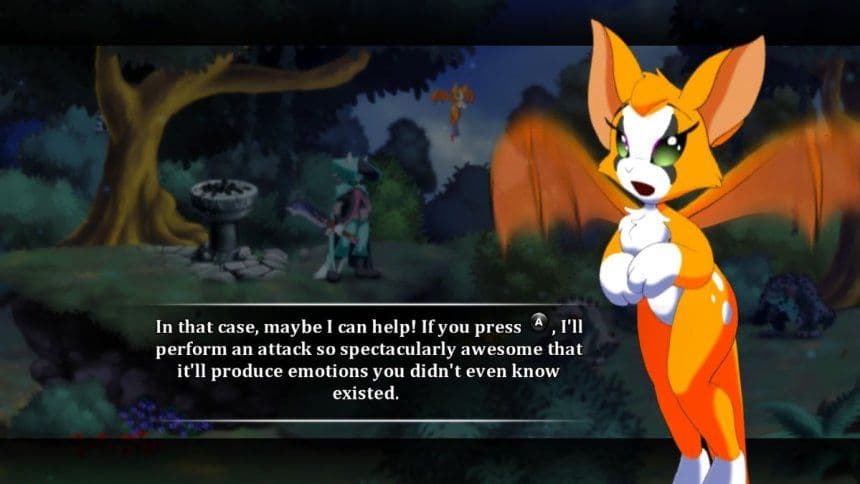
Intense particle effects can occasionally cause minor framerate dips.
The most glaring symptom of this is in the boss design. Where the regular combat is a kinetic ballet of juggles, parries, and screen-filling Dust Storms, the boss encounters are often uninspiring damage sponges. They lack the multi-phase complexity or pattern-learning depth that defines great action game bosses. Instead, many devolve into protracted battles where you simply wail away, occasionally dodging a telegraphed swipe, until a health bar depletes. The final boss is a notable exception, demanding more tactical precision, but the journey there is peppered with underwhelming set-pieces that fail to leverage the brilliant combo system you’ve spent hours mastering. They feel like glorified regular enemies with bloated HP, a stark contrast to the dynamic, enemy-swarming chaos that makes the minute-to-minute gameplay so thrilling.
The game’s difficulty curve is less a slope and more a flat line with occasional, frustrating spikes. It’s competent for the majority of the journey, but it stumbles precisely when it needs to shine.
This flatness is exacerbated by a specific late-game balancing issue. One enemy type, encountered in the final hours, is repeatedly cited by critics for breaking the established combat rules. This foe can parry attacks while facing the opposite direction and dodge with a frequency that feels unnatural, even evading while knocked down. In a system built on predictable, learnable enemy behaviors, this outlier feels cheap and disruptive. It’s a jarring note of artificial difficulty in a game that otherwise feels fair, forcing players to abandon their stylish toolkit and resort to a tedious war of attrition. This isn’t a challenge that tests your mastery; it’s an obstacle that ignores the rules you’ve spent the entire game internalizing.
For players seeking a true test, the Cirelian Trial challenge arenas offer a purer, if flawed, distillation of the game’s mechanics. These rooms task you with defeating waves of enemies or navigating perilous obstacle courses against the clock, with scores posted to leaderboards. They are a fantastic idea, pushing the combat and platforming to their limits. However, the execution is hampered by a lack of a quick restart option. A single early mistake means exiting the arena entirely and re-entering to try again, adding unnecessary friction to what should be a tight, repeatable challenge loop. It’s a small oversight that significantly dampens the competitive fun these arenas could provide.
Technically, Dust: An Elysian Tail holds up remarkably well across its many ports. On modern consoles and PC, it maintains a generally stable 60fps, a testament to the clean efficiency of its 2D art. The Switch and iOS versions are mostly solid, though the particle-heavy chaos of max-level Dust Storms can cause minor, brief framerate dips. These are never game-breaking, but they are noticeable in the moments of greatest visual spectacle. The iOS adaptation, in particular, is praised for its thoughtful virtual controls and retention of the full experience, though audio can occasionally cut out during the most intense action sequences. For a game this visually dense, its performance is largely a success story.
In the end, Dust: An Elysian Tail’s approach to challenge is a reflection of its broader design philosophy: accessibility and spectacle first, punishing depth second. The Hardcore mode does transform every skirmish into a desperate struggle, rewarding meticulous play, but the foundational enemy and boss design doesn’t fundamentally change. The game wants you to feel powerful, to see those 1000-hit combos flash across the screen, and it carefully calibrates its world to enable that fantasy. For some, that will be a feature, not a bug. For others seeking a combat system that deepens as sharply as it impresses, the fairness of the challenge will feel, by the final act, just a little too forgiving.
Final Verdict: Is Dust: An Elysian Tail Still a Must-Play?
After a dozen hours spent mastering its violent ballet and uncovering its hidden corners, the question remains: does Dust: An Elysian Tail stand as a must-play classic, or is it a charming artifact overshadowed by its own ambitions? The answer, much like the game itself, is beautifully complex. This is a title defined by its staggering, hand-crafted heart, one that demands to be experienced despite—and sometimes because of—its visible seams.
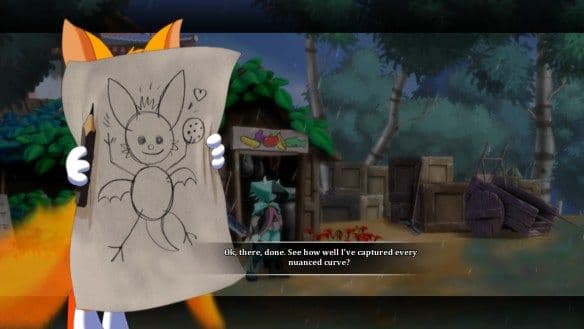
Visual personality and care are evident in every screen of the game.
Dust: An Elysian Tail is a cult classic not because it’s flawless, but because its virtues are so potent and personal that its flaws become part of its character.
The game’s enduring appeal rests on a foundation of undeniable strengths. The hand-drawn art is still breathtaking a decade later, a vibrant fusion of Studio Ghibli and 90s Disney animation that makes every biome, from a sun-dappled glade to a lava-choked pit, feel like a living painting. The combat system, especially the symphonic synergy between Dust’s Dust Storm and Fidget’s projectiles, delivers a power fantasy so fluid and satisfying that racking up a 1000-hit combo never gets old. Most importantly, the entire experience is infused with the palpable passion of a solo developer’s three-and-a-half-year labor of love. This isn’t a committee-designed product; it’s a singular vision, and that authenticity resonates in every frame, making you forgive its stumbles because you’re rooting for the artist behind them.
However, a recommendation requires clear-eyed honesty about those stumbles. The late-game combat, while flashy, succumbs to repetition as the dominant strategy of jump-projectile-Dust Storm trivializes most encounters. The narrative’s darker ambitions are occasionally undermined by inconsistent voice acting and dialogue that veers into the gratingly juvenile. Most disappointingly, the boss fights—a genre highlight in the Metroidvanias Dust emulates—are largely uninspiring damage sponges that fail to test the brilliant combo system you’ve mastered. These aren’t minor quibbles; they are structural weaknesses that prevent the game from ascending from “great” to “genre-defining.”
When evaluating its value, Dust: An Elysian Tail presents an incredible proposition. The main story offers a solid 10-12 hours of content, while chasing every secret, including the wonderful homages to other indie games, and achieving 100% completion can easily double that playtime. For a budget price point—often found on sale for a few dollars across PC, consoles, and even mobile—this represents a staggering amount of polished, heartfelt content. The game respects your time with smart quality-of-life features, like merchants who update stock based on the materials you sell, eliminating tedious grinding. You are paying for a dense, complete adventure, not a skeletal framework.
This package makes Dust: An Elysian Tail an easy recommendation for a specific audience. If you cherish the painterly worlds of Vanillaware titles like Odin Sphere or the ability-gated exploration of classic Metroidvanias, this game was crafted for you. It also serves as a perfect gateway for players intimidated by the punishing difficulty of Soulslikes but who crave a deep, combo-driven action system. Conversely, players who prioritize intricate character builds, deep narrative choices, or brutally challenging boss rushes may find its simpler RPG systems and predictable combat loop less engaging over the long haul.
Final Verdict:
Dust: An Elysian Tail is a must-play not as a perfect game, but as a monumental achievement and a timelessly beautiful experience. It is the video game equivalent of a beloved, slightly flawed indie film—you don’t love it in spite of its rough edges, you love it because they are part of its handmade charm. The sheer audacity of its creation, combined with moments of genuine gameplay brilliance and emotional storytelling, secures its status as a permanent cult classic. A decade later, its heart still beats as strongly as ever.
Pros:
- A breathtaking, hand-drawn visual style that has aged magnificently.
- A fluid, synergistic combat system that makes you feel like a whirlwind of destruction.
- A substantial 10-20 hour adventure packed with secrets, offered at a budget price.
- A palpable, infectious passion evident in every aspect of its solo development.
Cons:
- Combat can become repetitive in the late game, relying on a single dominant strategy.
- Inconsistent voice acting and dialogue occasionally undermine the weighty narrative.
- Boss fights are frequently underwhelming, lacking the complexity of the core combat.