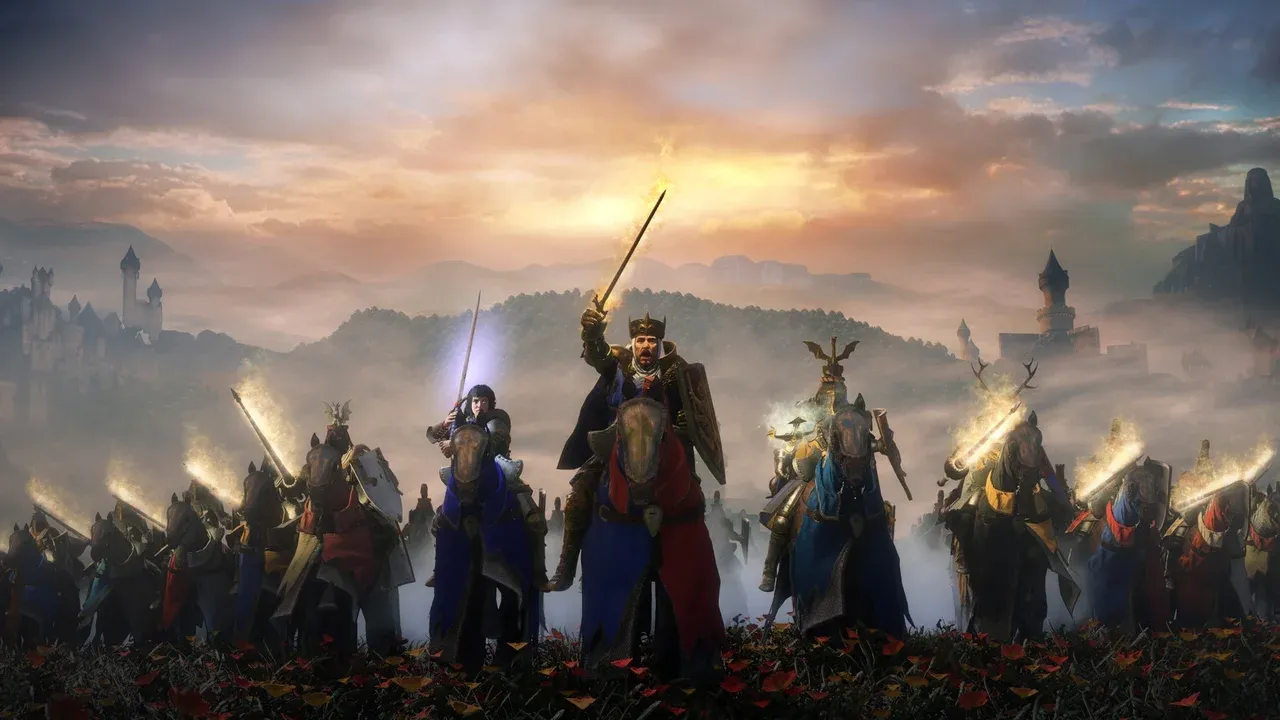
Total War: Medieval III First Impressions: A Grand Return to Form
After twenty years of waiting, the grand strategy genre’s most anticipated return has arrived with a bold new promise: Total War: Medieval III isn’t just another historical simulation; it’s a sandbox built for you to “Rewrite History.” This guiding motto isn’t just marketing fluff—it’s the core identity of a game designed to be the ultimate medieval playground, one that begins with impeccable authenticity but hands you the tools to forge your own, wildly divergent timeline. Where its predecessors charted a course through established events, Medieval III positions itself as a dynamic world that reacts and bends to your will, making every campaign less a retelling of history and more a personal epic authored by your decisions.
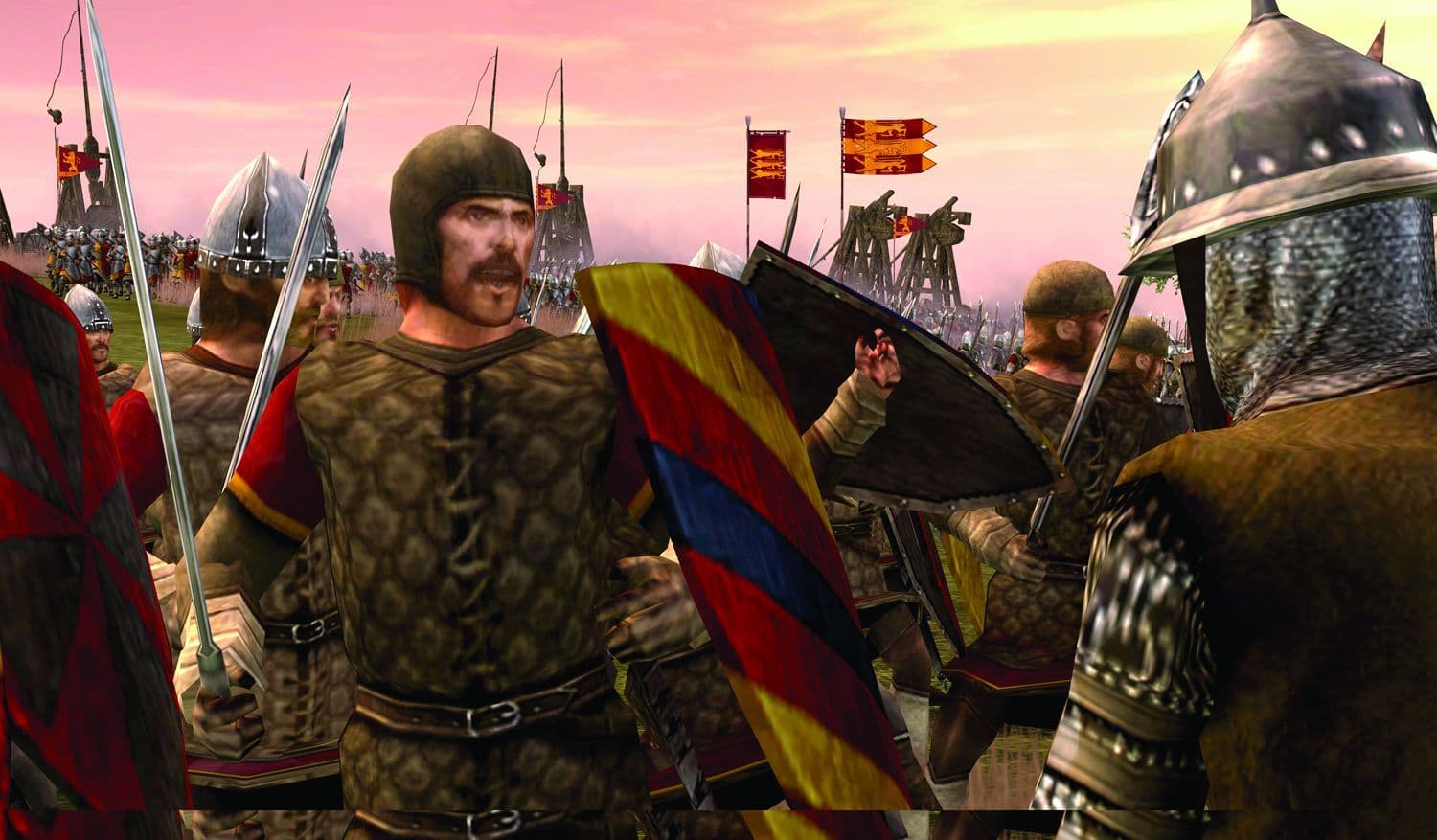
Prepare for massive tactical engagements on an unprecedented scale.
This ambition is immediately felt in the staggering scope of its canvas. The campaign map has been expanded far beyond the borders of Medieval II, now encompassing vast swathes of Europe, the Middle East, North Africa, and parts of Asia. This isn’t merely a cosmetic increase in real estate; it’s the foundation for a more complex geopolitical web. Controlling a territory on the edge of the steppes carries a different strategic weight and threat profile than governing a heartland duchy in France. The expanded geography supports the game’s most critical asset: dozens of unique, historically grounded factions. From the heavy cavalry of France to the disciplined spears of the Byzantine Empire, each faction boasts a distinct roster, economic leanings, and strategic personality. This variety ensures that starting a new campaign as the Moors feels fundamentally different from leading the Holy Roman Empire, not just in unit color but in the very problems you must solve and the tools at your disposal.
The true magic of Total War: Medieval III lies in how these systems interlock to create emergent, player-driven narratives. This is a game where successfully defending Jerusalem in 1187 can butterfly into a world where Constantinople never falls, allowing the Byzantine Empire to become a powerful ally against the Mongol hordes decades later.
The commitment to this “Rewrite History” sandbox means campaigns are engineered for the long haul. A single playthrough can easily spiral past 100 turns, often extending toward 200, without ever feeling repetitive. This isn’t due to grind, but to the constant drip-feed of meaningful events—Crusades called, plagues sweeping continents, political crises fracturing alliances—that demand your attention and adaptation. The game constantly throws new variables into your meticulously laid plans, ensuring the late game isn’t a simple mop-up operation but a continued test of your empire’s resilience and your strategic flexibility. Medieval III understands that its scale is meaningless without dynamism, and it delivers a world that feels truly alive, challenging, and ripe for your unique brand of medieval statecraft.
Kingdom Management in Medieval III: Deep Systems and Dynamic Worlds
The true test of any grand strategy game isn't in its opening moves, but in the hundredth turn, when the weight of your empire rests on a thousand interlocking decisions. Total War: Medieval III understands this intimately. Its kingdom management layer is a masterfully complex engine of statecraft, one that brilliantly enables its "Rewrite History" sandbox but can also buckle under the weight of its own ambition.
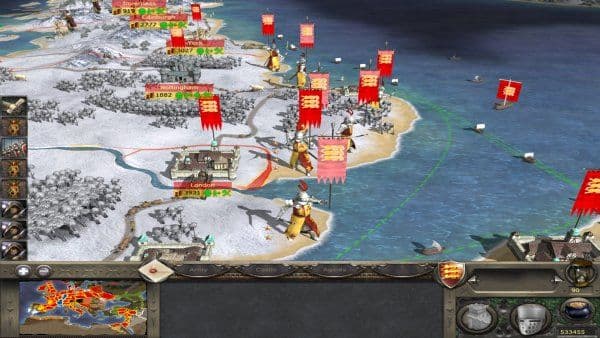
Diplomacy and trade are managed through the expansive campaign map.
At its core, the economic and diplomatic systems are the strongest they've ever been in the series. The overhauled diplomacy moves far beyond simple peace treaties and trade agreements. You can now broker intricate non-aggression pacts that secretly include military access, form defensive leagues that shift the balance of power in a region, and orchestrate strategic betrayals by paying a rival to attack your mutual enemy. This nuance transforms the map from a static chessboard into a living web of alliances and grudges. Securing a crucial alliance with the Byzantine Empire to hold back the Mongols feels like a genuine diplomatic coup, not just a menu selection. However, this system’s brilliance is occasionally undermined by AI that can be overly pragmatic, sometimes breaking decades-old alliances for a slight territorial advantage in a way that feels gamey rather than character-driven.
The new dynamic world systems are where Total War: Medieval III truly sings. Defeating Saladin at the gates of Jerusalem doesn’t just net you a city; it sets off a chain reaction. I witnessed a timeline where a surviving, powerful Byzantine Empire became my stalwart ally, fundamentally altering the late-game threat of the Timurids. The world doesn’t just remember your actions—it evolves because of them.
This dynamism is fueled by a deep, and at times daunting, resource management triad of food, gold, and manpower. Your empire’s health is a constant balancing act. A booming economy built on high taxes can starve your cities and spark revolts. Recruiting a massive army to crush a rebellion might bankrupt you next turn, leaving your elite troops unable to be retrained. The foundational loop of building farms, markets, and barracks is satisfyingly tactile, and the feedback is immediate. A poor harvest in your breadbasket region can trigger famine events that cripple your entire realm, forcing you to dip into gold reserves for emergency food imports. This creates wonderful emergent crises that feel authentically medieval.
Where the micromanagement fatigue sets in is in the late game. While early and mid-campaign decisions are impactful and engaging, controlling two dozen developed settlements can become a slog. The necessity of individually checking public order, managing construction queues, retraining depleted units across a vast front, and deploying agents to counter heresy or enemy spies turns each turn into a 15-minute administrative session. The game offers automation options, but they are blunt instruments, often making suboptimal choices that a player invested in their alternate history cannot abide. This is the classic Total War paradox: the systems that make empire-building so compelling are the same ones that can make maintaining that empire a chore.
The strategic depth of settlement specialization—choosing to develop a province as a wealthy, tax-generating city or a fortified, troop-producing castle—remains a cornerstone of good play. Total War: Medieval III enhances this by tying specialization more directly to the province's resources and geography. A territory with rich farmlands is objectively better as a city, while a mountainous choke point demands a castle. This choice is no longer just about unit access versus income; it's about optimizing the very land you control, adding a satisfying layer of geographical strategy to your economic planning.
Finally, the historical flavor is not just window dressing. Events like the call for a Crusade, the outbreak of the Black Plague, or a political crisis that fractures the Holy Roman Empire are not mere notifications. They are seismic events that demand strategic adaptation. A plague will ravage your armies and population, forcing a shift from expansion to consolidation. A successful Crusade can grant immense papal favor and unique units, but at the cost of a decimated army stranded far from home. These events are the punctuation marks in your historical rewrite, ensuring that no two campaigns, even with the same faction, ever play out the same way.
Total War: Medieval III Combat: Mastering the Tides of War
The battlefield is where Total War: Medieval III transforms from a cerebral strategy game into a visceral, heart-pounding spectacle. It’s a masterclass in tactical evolution, where a well-placed unit of spearmen or a timely cavalry charge doesn’t just win a skirmish—it can rewrite the outcome of your entire campaign. This is the moment the game earns your trust as a commander, demanding not just brute force but genuine military acumen.
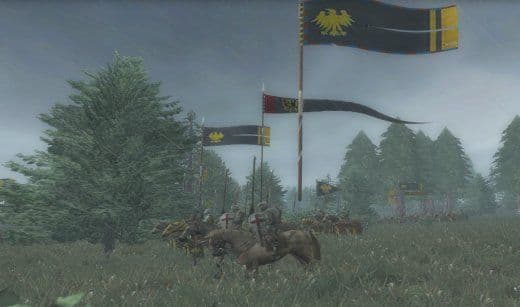
Environmental factors and weather dramatically affect gameplay.
The foundational rock-paper-scissors balance of unit counters is executed with a precision that veterans will recognize and newcomers must respect. Spearmen will devastate a careless cavalry charge, archers can shred unshielded infantry from a distance, and heavy cavalry exist to shatter those same archers in a single, thundering sweep. There are no “I win” buttons here; I watched my elite French knights, the pride of my army, get pinned and slaughtered by a seemingly inferior Swiss pike formation I’d foolishly charged head-on. This enforced tactical diversity means army composition is a puzzle you solve before the battle even begins, and it makes victory over a superior force immensely satisfying. However, this classic system is occasionally undermined by a persistent, minor unit distraction glitch inherited from the series’ past. A unit of longbowmen ordered to focus-fire an enemy general might instead waste their precious arrows on a nearby, less valuable peasant mob, then stand idle. It’s a frustrating hiccup in an otherwise polished system, forcing you to micromanage key engagements more than you should.
Where Total War: Medieval III truly innovates is in its living battlefields. A clear morning engagement can turn into a muddy, grueling slog with a sudden downpour. Wet bowstrings render your archers nearly useless, and heavy cavalry struggle to gain traction in the mire, completely reshaping your strategy mid-fight.
This environmental impact is just one facet of the game’s brilliant focus on morale and discipline. The new leadership system is transformative. Positioning your general with a wavering flank doesn’t just provide a passive bonus; you can see their standard raised, hear their rallying cry, and watch as a crumbling line of militia suddenly holds against a superior force. Conversely, losing your commander is catastrophic, often triggering a chain rout that can turn a stalemate into a massacre. This adds a thrilling layer of risk and reward, encouraging you to lead from the front while constantly weighing the danger. The AI improvements leverage this system masterfully. Enemy armies no longer blunder mindlessly into your spear walls. They will probe your flanks with skirmishers, hold their elite units in reserve for a decisive strike, and ruthlessly exploit a gap in your line. I was outmaneuvered in a siege defense when an AI opponent, instead of battering my main gate, used its artillery to create a breach in a weakened wall I’d neglected, flooding the courtyard with its best troops. These are the moments that make battles feel like a duel of wits, not a foregone conclusion.
The battle scale is the technical bedrock that makes all this drama possible. The engine effortlessly renders thousands of individual troops clashing simultaneously, each soldier a distinct model with unique armor and animations. Zooming into a melee reveals a chaotic, beautiful tapestry of individual duels, flying pennants, and strewn bodies. It’s this granular detail that sells the epic scope, making a clash between two full-stack armies feel less like moving icons and more like commanding history itself. The sound design completes the picture, with the bone-crunching impact of a cavalry charge, the desperate cries of routing troops, and the thunderous roar of your own men as they push forward creating an atmosphere of unparalleled immersion.
For all its strategic depth, Total War: Medieval III understands the primal joy of a decisive hammer blow. The late-game arrival of gunpowder units and massive siege engines doesn’t just add new units to the counter system; it fundamentally changes the rhythm of warfare. Watching a well-placed cannonball tear through a dense block of enemy pikemen is as tactically rewarding as it is viscerally satisfying. It’s the culmination of a campaign’s technological and economic progress, delivered with explosive finality on the field you worked so hard to dominate.
Visuals and Audio in Medieval III: A Modern Engine for Ancient Warfare
The true power of Total War: Medieval III is felt not in a spreadsheet of diplomatic options, but in the moment you crest a virtual hilltop and see your army arrayed for battle—thousands of individual soldiers rendered in stunning detail, their banners snapping in a digital wind. This is where Creative Assembly’s new engine flexes its muscles, delivering a spectacle that finally matches the epic scope of its strategic ambition. The leap in visual fidelity from its predecessors is not incremental; it’s transformative. Zooming into a melee reveals soldiers with uniquely modeled armor pieces, realistic cloth physics on surcoats, and animations that sell the brutal weight of every swing and parry. Environments are no longer flat backdrops but dynamic stages: forests are dense with individual trees that can hide ambushes, and castle walls show realistic pockmarks from prolonged artillery bombardment. This detail serves a purpose beyond beauty; it provides crucial tactical information, allowing you to read the state of the battle at a glance by the cohesion of a formation or the wear on a unit’s shields.
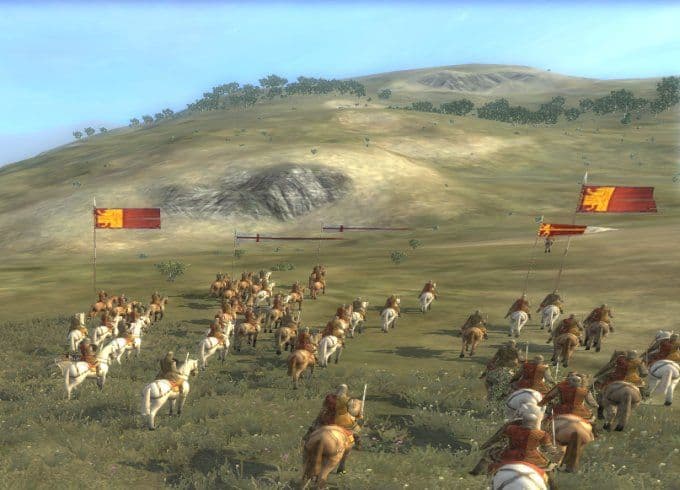
The new engine delivers stunning lighting and individual unit detail.
The audio immersion is the unsung hero of this presentation. The soundscape dynamically layers the clatter of a thousand swords, the distinct thwump of arrows finding their mark, the earth-shaking roar of a trebuchet’s payload striking stone, and the desperate, region-accented cries of your troops. It’s a masterclass in atmosphere that ties the visual grandeur directly to your emotional investment in the fight.
This technical showcase, however, comes with a tangible entry fee. The recommended system requirements—an Intel Core i5-9600K or AMD Ryzen 5 3600 paired with an NVIDIA GTX 1660 or AMD RX 590 and 16GB of RAM—are a honest admission of the game’s demands. On hardware at or above this spec, Total War: Medieval III is a marvel, maintaining a stable frame rate even during clashes of several thousand troops. The problem, as noted in early feedback, emerges as a technical performance caveat on the lower end of that spectrum or during absolute peak stress. In my longest siege, involving four full armies and multiple siege engines, the frame rate did stutter noticeably, dropping from a buttery smooth experience into a choppier slideshow during the most intense camera pans across the entire battlefield. These moments are rare, but they’re disruptive, pulling you out of the commander’s chair and reminding you of the silicon and code underpinning the illusion. It’s a trade-off: the sheer scale and detail that make battles so breathtaking are the same factors that can occasionally cause the engine to gasp for breath.
Thankfully, commanding these gorgeous legions is more intuitive than ever. The UI/UX overhaul is a quiet triumph, especially for veterans of older titles where unit cards were cryptic and menus felt labyrinthine. Here, critical information is presented with clarity. Forming a defensive line is a simple click-and-drag affair, and grouping units assigns them clear, numbered banners that are easy to track amid the chaos. Managing your general’s traits, retinue, and equipment is no longer a chore buried in nested menus but a streamlined process from a central character panel. This clarity reduces the cognitive load during battle, letting you focus on tactics rather than fighting the interface. It’s a design philosophy that extends to the campaign map, where at-a-glance icons for public order, growth, and income make managing a sprawling late-game empire less of an intimidating audit.
Ultimately, the presentation of Total War: Medieval III is a double-edged sword forged from ambition. Its visual and auditory achievements set a new benchmark for the historical strategy genre, creating a level of immersion that makes every campaign decision feel weightier and every battle victory more earned. But that benchmark is built on a foundation that requires solid modern hardware, and it shows its seams in the most extreme, ambitious scenarios the game itself encourages you to create. The good news is that when it sings, it delivers a symphony of medieval warfare that is unparalleled—a spectacle worthy of the grand historical rewrites you are there to author.
Total War: Medieval III Verdict: Is This the Ultimate Strategy Sandbox?
After twenty years of anticipation, Total War: Medieval III has delivered a game that is both a triumphant return to form and a demanding, complex beast. It succeeds in its grand ambition to be the ultimate medieval sandbox, a world where your actions genuinely “Rewrite History,” but it also carries the weight of that ambition in the form of a steep learning curve and the persistent specter of micromanagement. This is a game that will be hailed as a masterpiece by its core audience while potentially alienating those who prefer their strategy in more digestible bites.
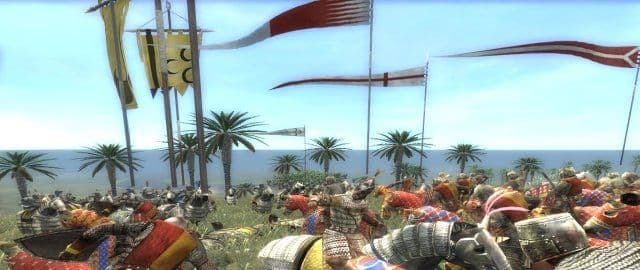
Historical authenticity grounds the sandbox experience.
The verdict on Total War: Medieval III is clear: it is the most ambitious, dynamic, and visually spectacular historical strategy game ever made, but it asks for your patience and strategic commitment in return. For the right player, it’s an endless well of replayable brilliance.
The game’s greatest strength is the seamless fusion of its systems into a living, breathing world. The strategic depth is unmatched in the genre, not because it has the most menus, but because its systems—diplomacy, economy, warfare, and dynamic events—interlock to create emergent stories. This is where the “Rewrite History” motto transcends marketing. Successfully defending Jerusalem doesn’t just check a box; it can create a timeline where the Byzantine Empire survives as a powerhouse, fundamentally reshaping the late-game threat landscape. This meaningful cause-and-effect is the game’s core value proposition, fueling immense replayability. With dozens of uniquely flavored factions, from the cavalry-focused French to the resilient Byzantines, and robust multiplayer campaigns, you could play for hundreds of hours and never author the same historical deviation twice.
However, this sandbox comes with a significant barrier to entry: a high learning curve. While the game includes a functional tutorial, it primarily teaches mechanics, not the deep strategic foresight needed to thrive. Newcomers who don’t grasp the critical interplay between food, gold, and manpower, or who fail to specialize settlements correctly, will find their empires collapsing under rebellions and bankruptcy within a few dozen turns. This is a game that demands you learn its language, and for players accustomed to more forgiving strategy titles, the first campaign is likely to be a brutal, educational defeat.
This complexity naturally bleeds into the game’s most notable flaw: overwhelming micromanagement. As praised in the kingdom management section, the early and mid-game feel engaging and impactful. But by the late game, controlling a vast empire can turn each turn into a 15-minute administrative slog of checking public order, retraining units across multiple fronts, and deploying agents. The automation options are a blunt tool, often making poor economic or military choices a dedicated player cannot abide. This is the classic Total War paradox, and Medieval III, for all its modern sheen, hasn’t fully solved it. The launch-day performance bugs noted in early feedback, while largely addressed in patches, also serve as a reminder that this technical marvel can stutter under its own ambition during the largest, most epic battles the game encourages you to fight.
In comparison to its beloved predecessor, Total War: Medieval III doesn’t just recapture the glory of Medieval II—it modernizes and expands upon it. It retains the timeless rock-paper-scissors tactical combat, the satisfying castle/town specialization, and the epic scale. But it layers on the dynamic “Rewrite History” systems, a vastly more nuanced diplomacy model, and the stunning visual and audio presentation powered by a new engine. It feels like the natural, generational leap fans have waited for, addressing the static nature of older campaigns by making the world an active, reactive participant in your story.
So, who is this game for? It is an essential purchase for grand strategy veterans and Total War devotees. For them, the depth is the reward, the micromanagement is part of the ritual, and the ability to craft a unique historical narrative is the ultimate payoff. For newcomers or those with less patience for complex systems, it’s a potentially daunting prospect. The tutorial provides a ladder, but climbing it requires time and a tolerance for failure. Total War: Medieval III is not trying to be everything to everyone; it is a deep, uncompromising simulation of medieval statecraft and warfare, polished to a brilliant sheen and brimming with possibilities for those willing to learn its rules and bear its administrative burdens. It is, flaws and all, the definitive medieval strategy experience.
Pros:
- Unmatched strategic depth from brilliantly interlocking diplomacy, economic, and military systems.
- The “Rewrite History” sandbox creates genuinely unique, emergent, and player-driven campaigns.
- Stunning visual and auditory presentation that sets a new benchmark for the genre.
- Exceptional replayability fueled by diverse factions, dynamic events, and robust multiplayer.
- A worthy successor that modernizes the best of Medieval II with meaningful new dynamics.
Cons:
- A steep learning curve that can be punishing for newcomers to grand strategy.
- Late-game micromanagement fatigue can turn empire maintenance into a chore.
- Demanding system requirements, with performance that can stutter in the most extreme battles.
- Occasional AI pragmatism in diplomacy can break immersion, feeling gamey rather than character-driven.