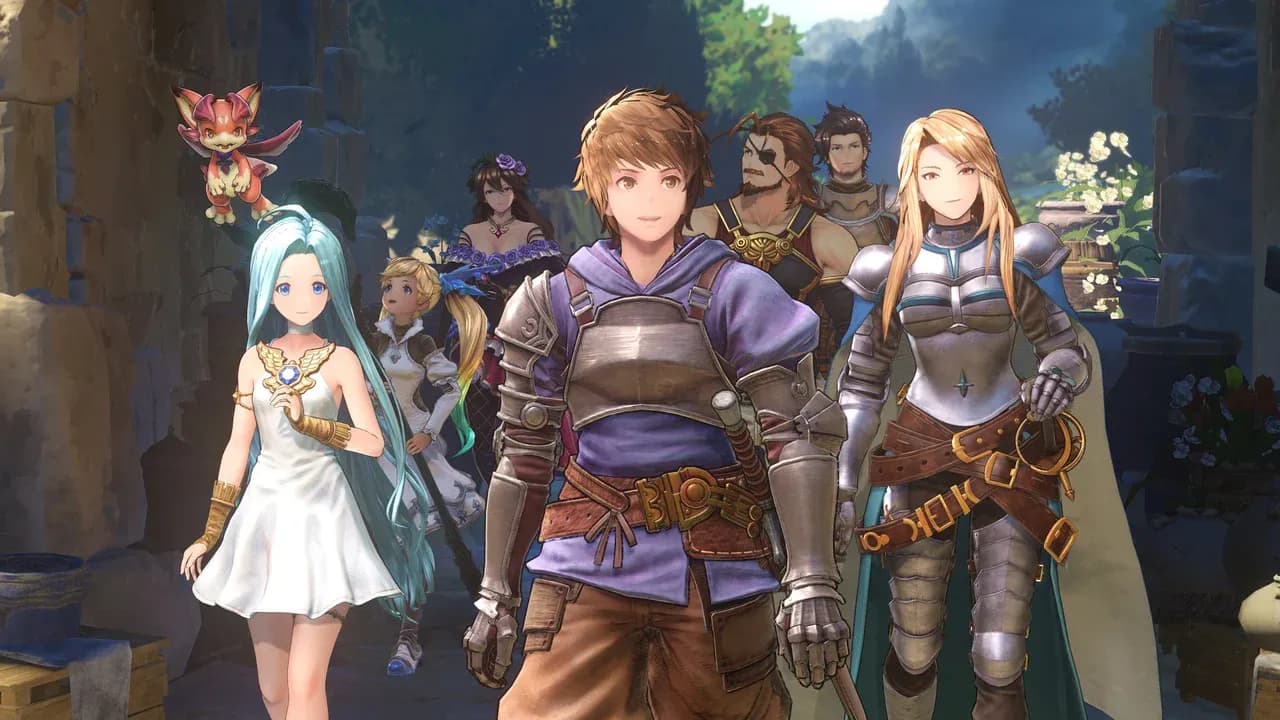
Granblue Fantasy: Relink Intro: A Seven-Year Journey to the Skies
After a seven-year development cycle that saw a high-profile collaboration with PlatinumGames dissolve and multiple delays push its release far into the future, Granblue Fantasy: Relink arrives carrying the weight of its own turbulent history. The question isn't just whether it was worth the wait, but whether a franchise born from a mobile gacha game can successfully translate its essence into a premium console action RPG. The answer is a resounding yes, but with a fascinating asterisk: this is a game built with two distinct audiences in mind, and it serves them both with remarkable efficiency.
The game transitions the popular mobile franchise into a full-scale console experience.
The journey here was anything but smooth. Announced in 2016 as a collaboration with PlatinumGames, the project eventually transitioned fully to Cygames in 2019, leading many to fear the trademark fluidity of Platinum’s action pedigree would be lost. What emerged, however, is a testament to Cygames' dedication. While you can feel the ghost of that earlier partnership in the game's silky-smooth controls and over-the-top spectacle, Granblue Fantasy: Relink has confidently forged its own identity. It’s a hybrid that borrows the character-driven depth of the Tales series, the breakneck pace of Ys, and the endgame loop of Monster Hunter, then wraps it all in the franchise's signature, impossibly vibrant art style.
For newcomers, the prospect of diving into a decade-old universe is often a barrier. Granblue Fantasy: Relink demolishes it. This is a standalone adventure set later in the timeline, requiring zero prior knowledge. The game understands its onboarding challenge and tackles it head-on with two brilliant systems. The first is Fate Episodes, short, voiced vignettes for each character that detail their backstory and how they joined your crew. More than just lore dumps, completing these grants permanent stat boosts, smartly incentivizing engagement with the cast. The second is a real-time Glossary system. When a proper noun like "Astral" or "Primal Beast" appears in dialogue, you can instantly pull up a concise, well-written explanation without breaking the narrative flow. It’s a masterclass in accessible world-building that respects both the existing lore and the player’s time.
This is the moment the game earns your trust. It doesn't assume you've done your homework; it provides the textbook and highlights the important parts, letting you engage with its charming world on your own terms.
This design philosophy extends to the overall structure. The main story campaign is a crisp 15-20 hours, a deliberate and refreshing departure from the 80-hour marathons that define the modern JRPG. It’s a linear, well-directed romp through the Zegagrande Skydom, focused on rescuing Lyria and uncovering the mysteries of the Church of Avia. The pacing is tight, cutting out the filler to deliver a constant stream of spectacular boss battles and character moments. This concise runtime isn't a shortcoming; it's the foundation. Granblue Fantasy: Relink is built on a dual-pillar design where the story mode is essentially a glorified—and immensely enjoyable—tutorial for the true game: a massive, Monster Hunter-inspired post-game of quests, grinding, and character optimization that can easily stretch into the hundreds of hours. You're not buying one game; you're buying two expertly linked experiences.
Combat Mechanics: Why Granblue Fantasy: Relink Sets a New Action Standard
The combat in Granblue Fantasy: Relink is where its seven-year development cycle pays off in spectacular fashion. This isn’t a simple action RPG; it’s a masterclass in kinetic, team-based synergy that feels like a playable anime fight scene, marrying the immediate gratification of Kingdom Hearts with the strategic depth of an MMO raid. The core loop is deceptively simple: light and heavy attacks flow into fluid combos, while four equipable skills with short cooldowns encourage constant, aggressive play. Where the system transcends its peers is in its layered mechanics. Every combo you land builds an Arts Level, enhancing the power of your next skill—a simple risk-reward system that forces you to decide between a quick heal now or a more potent one in three seconds. This creates a thrilling push-and-pull, especially when a boss is winding up a devastating attack.
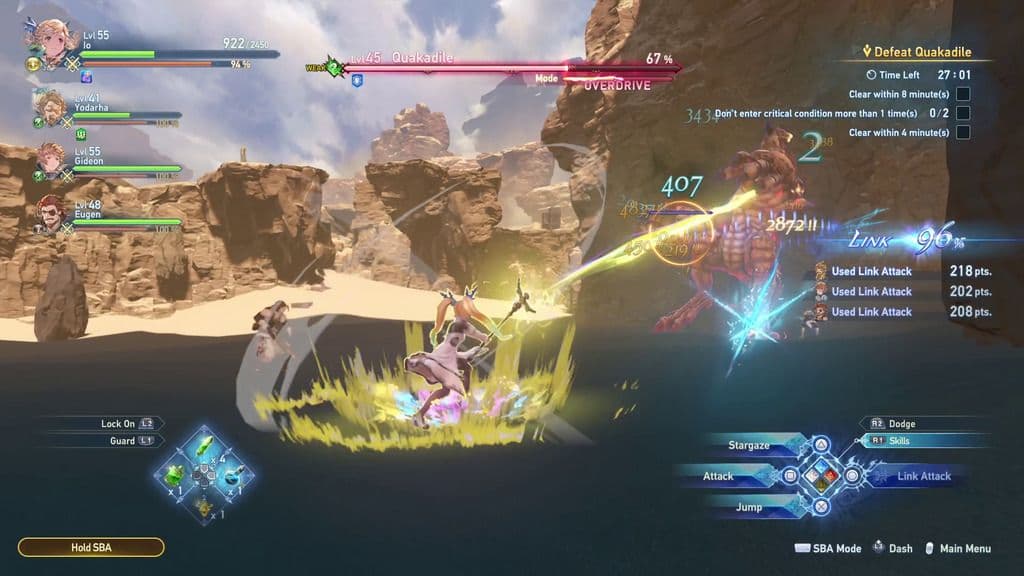
Link Attacks allow party members to coordinate devastating strikes against staggered foes.
This is the moment Granblue Fantasy: Relink earns its reputation. It doesn’t just give you flashy moves; it builds an entire combat language around teamwork and timing, where the most satisfying moments are orchestrated by the entire party, not just your lone hero.
Character diversity is the game's crown jewel. With over 18 playable heroes at launch, each doesn't just have a different weapon or element—they possess an entire unique playstyle governed by a bespoke mechanic. Zeta is an aerial specialist, chaining spear thrusts mid-air to stay aloft and target weak points. Rosetta plants roses that bloom into damaging fields and party buff zones, demanding thoughtful battlefield control. Siegfried requires precise input timing for his heavy swings, while Narmaya fluidly swaps between fast and heavy stances, collecting butterflies to empower her skills. Learning a new character in Granblue Fantasy: Relink feels akin to mastering a new weapon class in Monster Hunter; the fundamentals are the same, but the execution and rhythm are wholly distinct, offering immense replayability.
The true genius of the combat, however, is how it forces your party of four to operate as a single unit. Enemies have a stagger meter; filling it not only opens them up to massive damage but also triggers a party-wide Link Attack. If the entire team executes a Link Attack simultaneously when a separate Link Gauge hits 100%, you activate Link Time, slowing enemies to a crawl and allowing for a devastating, unbroken assault. This is complemented by Skybound Arts, screen-filling ultimate attacks unique to each character. The strategic depth comes from chaining them: if you wait for multiple party members' Skybound gauges to fill, you can unleash them in sequence for a Full Burst, a cinematic combo finisher that adopts the element of the character who started the chain. This system creates palpable tension and communication, even with AI teammates—do you burn your ultimate now for damage, or hold it to enable a fight-ending Full Burst?
Speaking of AI, the companion characters in Granblue Fantasy: Relink are arguably the best in the genre. They are frighteningly competent, executing perfect dodges against area-of-effect attacks, strategically using healing and buff skills without prompting, and reliably setting up for Link Attacks and Full Bursts. In many encounters, they perform mechanics so effectively that you, the player, can feel like the weakest link. This excellence is a double-edged sword. For solo players, it eliminates any need to babysit the party, making the experience smooth and empowering. However, it also contributes to the main story's lack of challenge, as the AI's prowess often trivializes encounters meant to test your mastery of these very systems.
Where the combat shows its seams is in a few persistent, if minor, limitations. The inability to swap control between party members mid-fight feels like a missed opportunity, especially given the rock-paper-scissors nature of elemental weaknesses. You’re locked into your chosen character for the duration of a quest, which can be frustrating if you bring the wrong element to a boss fight. Additionally, the lock-on targeting can be finicky in chaotic battles with multiple enemies, sometimes snapping to a distant foe when you need to focus on the giant monster in front of you. These aren't dealbreakers, but in a system this otherwise polished, they stand out as friction points that remind you of the game's ambitious scope.
For context, this is a combat system that sits comfortably among the best in the action RPG genre. It lacks the punishing precision of a Souls game but offers far more mechanical depth and team-play than something like Final Fantasy XVI. It’s a system built for the long haul, designed to feel just as rewarding and complex at hour 100 in the post-game grind as it does in the opening tutorial. The sheer joy of executing a perfectly timed Full Burst, watching your entire crew unleash their ultimate moves in a symphony of elemental devastation, is a payoff few games in the genre can match.
Progression and Customization: From Story Mode to the Monster Hunter Loop
The main story of Granblue Fantasy: Relink is a beautifully orchestrated overture, but the true symphony begins after the credits roll. This is where the game reveals its dual nature, transforming from a tightly paced action-adventure into a sprawling, gear-chasing grind that will feel intimately familiar to fans of Monster Hunter or God Eater. The pivot is so dramatic it can feel like switching discs to a different game, and whether you find that thrilling or tedious will define your long-term relationship with Cygames’ creation.
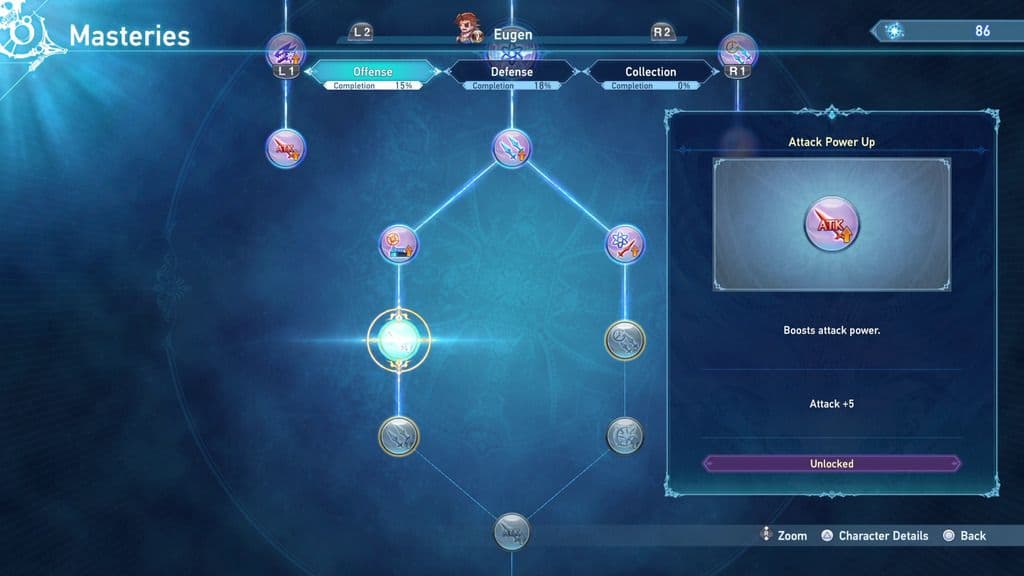
The Mastery Tree allows for deep character customization through branching skill paths.
The foundation of this endless endgame is the Mastery system, a sprawling, character-specific skill tree that feels like a hybrid of a classic Final Fantasy job grid and an MMO talent specialization. You don’t just unlock new combos and passive stat boosts here; you fundamentally reshape a character’s role. Investing points can morph a straightforward damage dealer like Gran into a party-supporting tank who draws enemy aggression and buffs allies, or turn the mage Io into a critical-hit-focused glass cannon. This isn’t just vertical progression; it’s horizontal role customization, allowing you to fine-tune each of the 18+ characters to fit specific quests or your personal playstyle. The system’s genius is in its shared currency—Mastery Points earned on one character can be spent on any other. This encourages you to experiment with the entire roster rather than punishing you for diversifying, a masterstroke of player-friendly design that keeps the grind from feeling punitive.
Where the progression truly deepens, and where the grind truly begins, is with the Sigil system. These equippable modifiers are the heart of build-crafting, offering everything from straightforward stat boosts to transformative effects like “HP drain on hit” or “increased damage after a perfect dodge.” Sigils have trait levels and rarity, and can themselves be leveled up, creating a near-infinite loop of optimization. The potential for powerful, synergistic builds is immense—stacking critical chance and damage sigils on a fast attacker like Narmaya, for instance, turns her into a blender of red numbers. However, acquiring the right Sigils is a lesson in patience governed entirely by RNG. You might spend hours farming the same boss for a specific, high-rarity Sigil with the perfect combination of traits, only to be rewarded with yet another duplicate of a common drop. This is the core tension of Granblue Fantasy: Relink’s endgame: the thrill of theory-crafting a perfect build is constantly at war with the frustration of a loot system that doesn’t respect your time.
The structure built to support this grind is the Quest Counter, your gateway to the game’s post-story lifeblood. After the linear chapters of the campaign, you return to a hub town and select from a menu of repeatable missions. These Counter Quests range from simple survival waves and point-defense scenarios to climactic rematches against story bosses, now with vastly inflated health pools and new, deadly mechanics. It’s a loop ripped straight from the Monster Hunter playbook: pick a quest, defeat the target, gather the materials it drops, and use them to forge and upgrade weapons, which in turn lets you tackle harder quests. The cadence is satisfyingly addictive, especially in four-player co-op, where coordinating elemental weaknesses and Skybound Art chains against a towering Primal Beast delivers some of the game’s most exhilarating moments. However, the enemy variety in this post-game stretches thin alarmingly fast. You’ll fight the same dragon, the same golem, and the same wolf god dozens of times across escalating difficulty ranks, with only slight mechanical tweaks to distinguish them. The spectacle remains, but the sense of discovery evaporates.
It’s worth pausing here to highlight what Granblue Fantasy: Relink notably doesn’t do. Despite its origins in one of the world’s most lucrative mobile gacha games, there is not a single microtransaction in sight. You earn new characters through gameplay via Crewmate Cards, and every piece of gear, every Sigil, is the result of time invested, not money spent. In an era where live-service mechanics creep into every genre, this commitment to a pure, self-contained economy is both refreshing and commendable. It ensures a level playing field and makes every hard-earned upgrade feel genuinely earned. This integrity allows you to engage with the grind on its own terms, even when it tests your patience.
And make no mistake, that patience will be tested. The post-game of Granblue Fantasy: Relink is a marathon, not a sprint. Once you’ve maxed out your Mastery trees and weapon levels, the only path forward is the Sisyphean pursuit of perfect Sigils—a grind that can stall progress for dozens of hours. For some, this will be a meditative, goal-oriented loop, a satisfying reason to keep mastering their favorite characters with friends. For others, the repetitive quests and reliance on random drops will feel like a stark, less-inspired contrast to the curated excitement of the main story. This is the asterisk on an otherwise brilliant action RPG: the game you play for the first 20 hours and the game you play for the next 100 are fundamentally different experiences, and your appetite for the latter will determine just how deep your voyage into the Sky Realm goes.
Visuals and Spectacle: Bringing the Sky Realm to Life
From its very first sky-bound vista, Granblue Fantasy: Relink makes a powerful statement: this is not just a translation of its mobile origins, but a full-throated, cinematic celebration of them. The game’s visual and audio presentation is a masterclass in bringing a beloved 2D art style into a breathtaking 3D space, a feat that serves as both its most immediate draw and, at times, its most chaotic flaw.
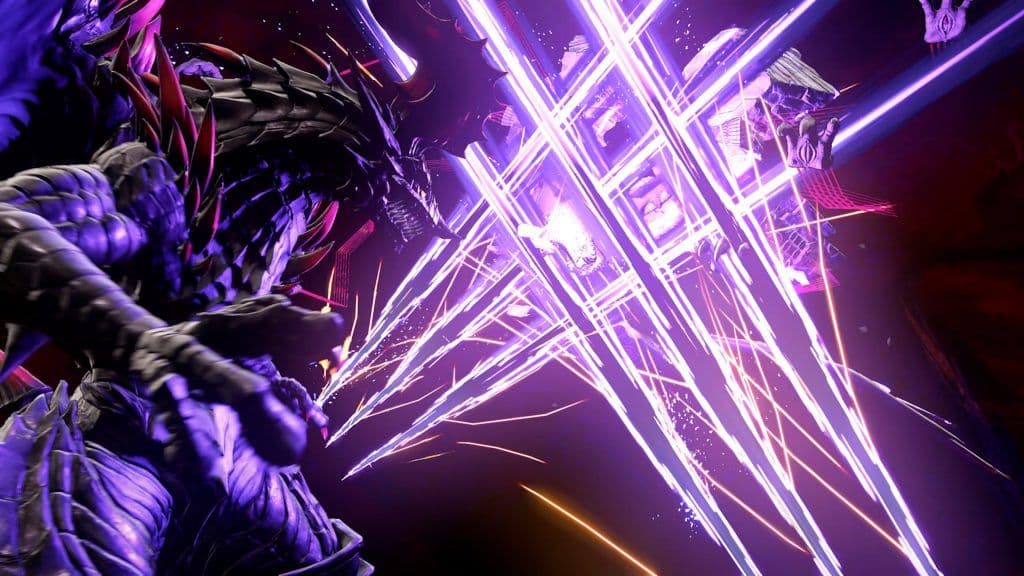
Boss battles serve as the game's primary visual spectacle.
The art direction is an unmitigated triumph. Cygames has flawlessly translated the franchise’s signature pencil-textured, watercolor-infused anime aesthetic into a fully realized 3D world. This isn't a generic cel-shaded look; it’s a world that feels painted, with lush, vibrant colors that pop against the endless blue skies of the Zegagrande Skydom. Character models are exquisitely detailed, capturing the intricate designs of artists like Hideo Minaba with an almost reverent fidelity, from the delicate lace on Katalina’s uniform to the otherworldly glow of Ferry’s ghostly pets. Towns like Seedhollow bustle with life, filled with small, charming animations—children sword-fighting in an alley, merchants hawking their wares—that sell the fantasy of a living, breathing world. This commitment to aesthetic cohesion creates a sense of place that is consistently welcoming and wondrous, making even the simple act of traversal a visual delight.
The true test of this visual engine, however, comes in the boss encounters, and here Granblue Fantasy: Relink doesn’t just pass—it sets a new standard for spectacle in the action RPG genre. Fighting the Primal Beasts is less a battle and more a participant in a blockbuster anime sequence.
These setpiece fights are the game’s crowning visual achievement, drawing direct and favorable comparisons to the Eikon battles of Final Fantasy XVI. You’ll scale the stone-carved limb of a slumbering colossus, its body a crumbling mountain range. You’ll engage in an airship dogfight against a sky-leviathan, weaving between laser beams before boarding its back. One particularly memorable sequence has you manning the deck guns of the Grandcypher in a first-person barrage, only to later pilot a nimble mech in a clash of steel giants reminiscent of Armored Core. The scale is consistently jaw-dropping, and the game seamlessly stitches dramatic, pre-rendered-quality cutscenes into the real-time action, making you an active participant in the cinematic chaos. It’s in these moments that the ghost of PlatinumGames’ early involvement feels most tangible, delivering the kind of over-the-top, mechanically inventive spectacle that defines their best work.
Technically, the game delivers a solid, if not flawless, foundation for this visual splendor. On PlayStation 5, players are given a clear choice: a 4K 30 FPS Fidelity Mode that sharpens every detail, or a 1080p 60 FPS Performance Mode. For an action game this fast-paced, the Performance Mode is the definitive way to play, maintaining a smooth, responsive framerate that is crucial for nailing dodges and parries. On PC, performance is generally excellent; the review sample running on an RTX 3080 maintained a locked 60 FPS, suggesting a well-optimized port that scales gracefully. It’s a technically competent package that prioritizes the fluidity of its excellent combat, ensuring the spectacle never comes at the cost of playability.
The audio presentation is equally committed to the epic scale. The orchestral soundtrack, featuring contributions from the legendary Nobuo Uematsu and Tsutomu Narita, is a soaring blend of adventure and tension. Peaceful town themes are warm and inviting, while boss tracks swell with thunderous horns and driving percussion, perfectly underscoring the life-or-death stakes of each encounter. The voice acting, available in both English and Japanese, is top-tier across the board, with the core cast delivering performances brimming with personality—from Rackam’s gruff confidence to Io’s endearing anxiety. This high-quality production value in both sound and sight creates a cohesive, immersive package that consistently sells the grand adventure.
However, this commitment to spectacle and density of information creates Granblue Fantasy: Relink’s most persistent visual shortcoming: a frequent loss of clarity. During intense four-player co-op battles, especially in the post-game against beefed-up bosses, the screen can devolve into a “jumbled mess.” Particle effects from a dozen skills, Skybound Arts, and elemental explosions overlap into an impenetrable light show, often obscuring critical enemy telegraphs. This is compounded by the audio layer, where constant, overlapping voice callouts from your party—“Healing circle!”, “Look out!”, “Now’s our chance!”—blend into an indecipherable cacophony. While the AI’s callouts are theoretically helpful, in practice they become noise, forcing you to rely more on subtle visual cues that are themselves frequently buried. It’s a case of the game’s greatest strength—its team-based, effects-driven chaos—occasionally undermining its own mechanical depth, turning some of the most challenging fights into exercises in intuition rather than precise reaction.
For context, this is a visual presentation that stands shoulder-to-shoulder with the best the genre has to offer. It may lack the photorealistic grit of a Final Fantasy XVI, but it more than compensates with a cohesive, vibrant identity that is entirely its own. The occasional visual noise is a price paid for ambition, a testament to a game so eager to dazzle you with every moment that it sometimes forgets to leave room for you to see. Yet, when the chaos parts and you witness your crew’s synchronized Full Burst tear across the screen in a kaleidoscope of elemental fury, the payoff is undeniable. Granblue Fantasy: Relink doesn’t just look and sound good; it makes you feel like the star of an epic anime, for better and, in the densest moments, for slightly worse.
Final Verdict: Is Granblue Fantasy: Relink Worth Your Time?
After a 15-hour campaign of spectacular boss fights and a 100-hour post-game of gear-chasing repetition, the final question about Granblue Fantasy: Relink isn’t about its quality, but about its audience. This is a game with a brilliant split personality, and which side you fall on determines whether it’s a masterpiece or merely a great weekend.
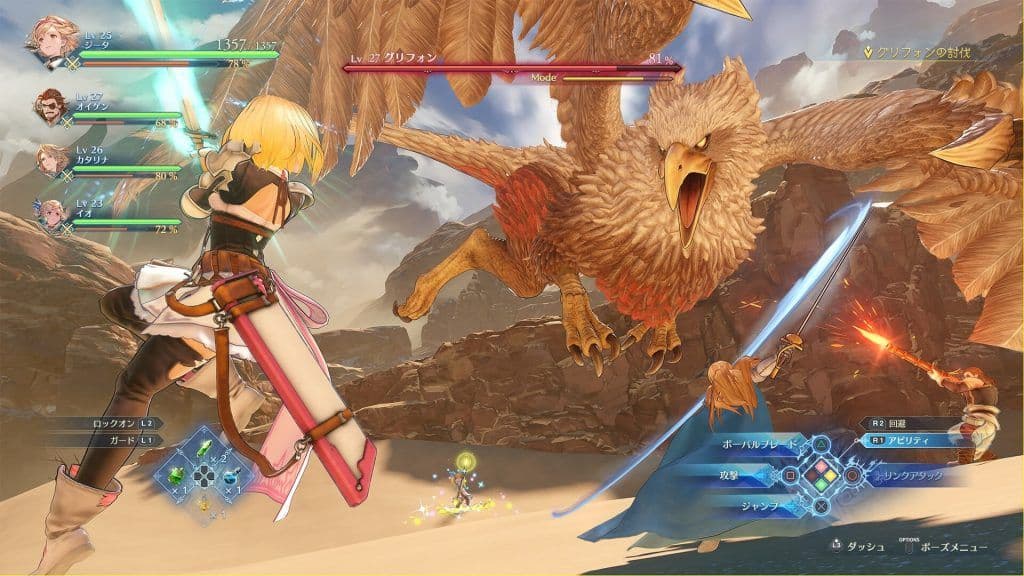
The game provides a comprehensive package for JRPG fans.
The game’s strengths are undeniable and interwoven. Its combat system is the finest team-based action RPG gameplay in years, a fluid, kinetic dance that makes every character feel like a distinct class to master. This is paired with a stunning visual presentation that faithfully translates a beloved 2D aesthetic into breathtaking 3D spectacle, particularly during its jaw-dropping, Final Fantasy XVI-rivaling boss encounters. Most importantly, the entire progression loop respects the player’s time and wallet. There are no microtransactions; every new character, every powerful Sigil, is earned through play. The 20-hour main story is a tightly paced, no-filler adventure, and the pivot to a Monster Hunter-style endgame is a deliberate design choice for longevity, not an accident. For the right player, this is a dream package.
The uncomfortable truth, however, is that these strengths are counterbalanced by significant, audience-defining caveats. Granblue Fantasy: Relink is a game of two halves, and the second half is far more demanding of your specific tastes.
The most common criticism—that the main story is short—is technically true but misses the point. The 15-20 hour runtime is a feature, not a bug; it’s a concise, well-directed romp designed to funnel you into the true endgame. The more valid critique lies in what awaits you there. The post-game’s Counter Quests, while addictive in co-op, suffer from a severe lack of enemy variety. You will fight the same Primal Beasts dozens of times across escalating difficulty ranks, with only minor mechanical tweaks. This repetition is compounded by the Sigil grind, where optimizing builds becomes a test of patience against random drops. For players who thrive on perfecting gear in a cooperative loop, this is the main course. For those who wanted more curated adventure, it can feel like a stark, less-inspired contrast to the campaign’s spectacle.
This divide is mirrored in the game’s approach to difficulty. The main story, even on its Hard setting, is arguably too easy for genre veterans. The AI companions are so preternaturally competent—executing perfect dodges, timing heals flawlessly, and setting up combo finishers—that they often trivialize encounters meant to teach you the mechanics. The real challenge is firmly gated behind the post-game’s highest difficulty quests, which demand not just raw power but coordinated teamplay and specific elemental builds. This design creates a strange dissonance: the game trains you with a forgiving tutorial for 20 hours, then suddenly expects you to operate at a high-level raid team’s efficiency.
Your final verdict on Granblue Fantasy: Relink hinges entirely on this value proposition. If you are a player who craves deep action combat, loves theory-crafting character builds, and has a dedicated group (or don’t mind matchmaking) for co-op grinding, this game is an easy, emphatic recommendation. It offers hundreds of hours of satisfying progression and some of the most exhilarating team-based battles in the genre. However, if you are solely a single-player narrative JRPG fan, the experience is thinner. The story, while charming, is a straightforward fantasy tale, and the bulk of the content is designed for repetition with friends. For this audience, a sale price might better match the value of the 20-hour core experience.
A critical, non-negotiable warning must be issued, particularly for PC players. Multiple reviews cite incidents of catastrophic save file corruption leading to dozens of hours of lost progress, with reports of limited developer recourse for recovery. While not a universal experience, the potential for such a game-breaking bug is a serious consideration that should give any player pause until it is unequivocally resolved by Cygames.
In the end, Granblue Fantasy: Relink is a triumphant, if specialized, success. It proves that a mobile-born franchise can not only transition to consoles but can set a new standard for its genre in specific, spectacular ways. It asks you, clearly and upfront, what kind of player you are. If you answer its call, you’re in for one of the most rewarding action RPG loops in recent memory.
Pros
- A combat system of unparalleled depth and fluidity, with a huge roster of uniquely designed characters.
- Breathtaking visual spectacle, especially in its cinematic, large-scale boss battles.
- A respectful, player-first economy completely free of microtransactions.
- Incredibly competent AI companions make the solo experience smooth and empowering.
- A massive, addictive endgame loop perfect for co-op enthusiasts.
Cons
- The main story campaign is short and may feel too easy for seasoned action RPG fans.
- Post-game content relies heavily on repetitive enemy encounters and RNG-based gear progression.
- No crossplay between PC and PlayStation limits the multiplayer community.
- Reports of save file corruption on PC pose a significant risk to progress.
- Visual and audio clutter in four-player battles can sometimes obscure critical gameplay information.