Insurgency: Sandstorm’s Identity: A Multiplayer Shooter Without a Campaign
Insurgency: Sandstorm begins with an uncomfortable proposition: a modern military shooter can discard its campaign and still feel more human than the blockbusters built around scripted heroics. New World Interactive’s PC tactical shooter launched on December 12, 2018, published by Focus Home Interactive, after evolving from the original Insurgency, itself born as a Half-Life 2 mod. That history matters because Sandstorm is not trying to compete with Call of Duty or Battlefield on cinematic spectacle; it is refining a multiplayer combat sandbox around the moments those games usually choreograph for you. Its identity is narrower, rougher, and far more dependent on what players create under pressure.
The game emphasizes multiplayer teamwork over a traditional campaign.
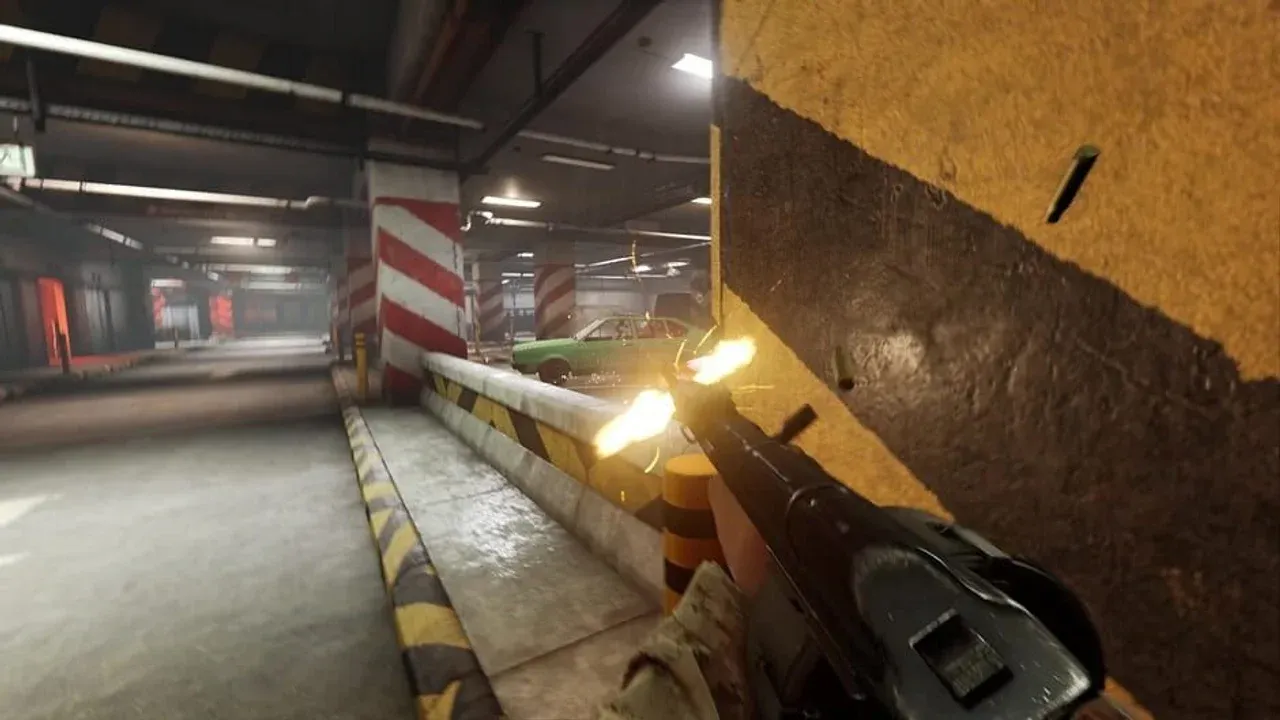
There is no traditional single-player story here, no connected campaign, and no protagonist whose journey gives the fighting a narrative arc. Instead, Security Forces and Insurgents collide in disconnected battles built around capturing territory, defending positions, or destroying objectives, whether against other players or AI forces. That structure can feel stark when compared with Battlefield’s scripted set pieces or Call of Duty’s heavily authored campaigns, but it also prevents Sandstorm from pretending that its warfare has a clean dramatic progression. A match does not tell you what the conflict means; it gives you a building, a street, or a fortified objective and asks what your squad can accomplish before its limited lives run out. The result is less a war story than a machine for producing small, unscripted stories of panic, miscommunication, sacrifice, and sudden competence.
Insurgency: Sandstorm does not stage the horror of war for the player; it lets a failed push, a stranded teammate, or a desperate last stand create it.
This is where the game earns its reputation. Sandstorm conveys the ugliness of modern Middle Eastern warfare through multiplayer situations rather than overwrought cinematic sequences: a team hesitates outside a contested building, smoke cuts visibility, someone calls for support, and the entire assault collapses because one angle went unchecked. Its soldiers reinforce that atmosphere through contextual voice work. Characters shout when they spot enemies, announce reloads, react to changing objectives, scream in pain, and call out in genuine panic when a position starts to fall apart. Those lines are not merely functional information; their frightened delivery makes player-controlled soldiers and AI combatants sound like people trying to survive rather than confident action heroes collecting kills. When the last survivor cries out for anyone to answer, the absence of a campaign becomes less important because the battlefield itself has supplied the emotional context.
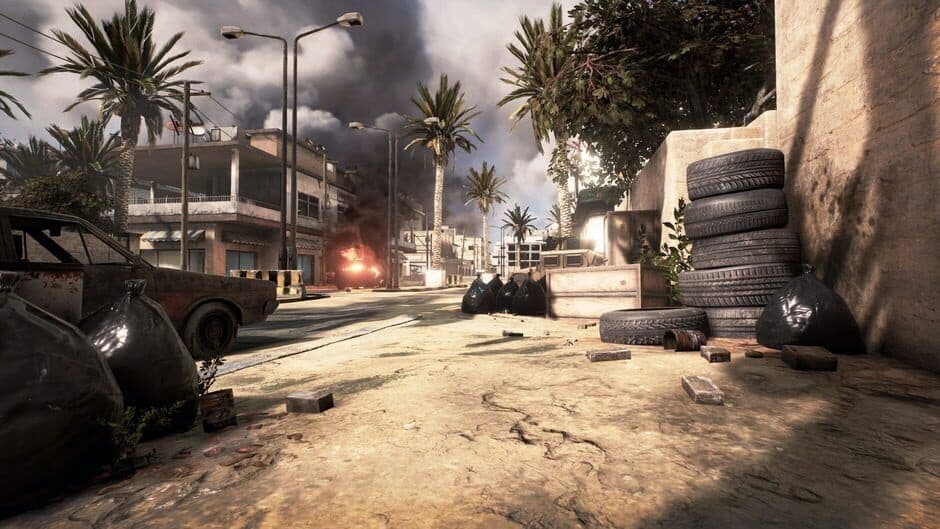
The setting, however, is the least adventurous part of Sandstorm’s presentation. Its Afghanistan- and Iraq-influenced deserts, damaged urban spaces, and fortified compounds clearly evoke Black Hawk Down, Zero Dark Thirty, and The Hurt Locker, but those references also reveal how familiar the visual language has become across modern military games. The desert maps provide useful tactical contrasts between open approaches and close-quarters interiors, yet they rarely make the world feel culturally or geographically surprising; Sandstorm is presenting a convincing warzone, not a novel one. That familiarity limits the game’s narrative range, especially when there is no campaign to broaden the setting through characters or changing locations. The atmosphere is effective because its details are grounded, but the underlying backdrop feels borrowed from a well-worn genre shelf.
Sandstorm ultimately occupies a valuable middle ground between accessible competitive shooters and slower military simulations such as ArmA and Squad. It retains the immediate objective structure and relatively quick match rhythm associated with Call of Duty and Battlefield, while its disconnected battles, limited reinforcements, friendly fire, minimal HUD, and dependence on communication demand far more discipline than either blockbuster series typically requires. Unlike ArmA or Squad, it does not bury every encounter beneath simulationist procedure; players can understand the objective quickly and enter a fight without managing an entire military operation. Yet the game still insists that survival, positioning, and squad behavior matter more than spectacle. That balance gives Insurgency: Sandstorm a distinctive place in the multiplayer shooter landscape: not a campaign replacement, and not a full milsim, but a focused tactical FPS where the best stories are the ones no designer could have scripted.
Insurgency: Sandstorm Gunplay: Lethal, Precise, and Unusually Immersive
Insurgency: Sandstorm turns every doorway into a marksmanship test, and its answer to the usual twitch-shooter fantasy is brutally simple: miss, and you may not get another chance. The game’s extremely fast time to kill means a single well-placed bullet—or only a few rounds when armor and caliber enter the equation—can end a firefight before either player has time to react. That lethality makes patience, positioning, and surprise more valuable than frantic movement; crossing an open street or exposing yourself to a familiar angle is often enough to lose the fight instantly. Compared with Call of Duty or Battlefield, where sustained fire and repeated engagements allow room for recovery, Sandstorm makes the first accurate shot feel decisive.
The lethal nature of Sandstorm's moment-to-moment combat.
Sandstorm’s finest gunfights are over almost before they begin—but the seconds spent choosing when to expose yourself are where the real game happens.
This is why the weapon handling feels so unusually convincing. An M4 or G36 chambered in 5.56mm offers a different relationship with recoil and survivability than a 7.62mm FAL, while a 9mm SMG rewards controlled aggression at close range rather than confident lane-locking. These weapons are not balanced into interchangeable damage profiles; their caliber, recoil, rate of fire, and handling create distinct demands under pressure. A battle rifle can dominate a sightline, but only if its user manages the recoil, and an SMG can shred an interior room while becoming a less comfortable choice across an open approach. Magazine swaps, charging handles, weapon animations, and the physical response of each firearm reinforce those differences, making the arsenal feel like a collection of tools rather than a cosmetic list of statistically similar rifles.
The design’s realism also removes several conveniences that competitive shooters usually treat as essential. Sandstorm provides no explicit hit marker, and long-range shots can produce so little immediate confirmation that even a successful hit may leave the shooter wondering whether the target was actually wounded or merely ducked behind cover. That uncertainty is frustrating when learning the game, particularly for players accustomed to a bright visual cue and a satisfying sound after every connection. Once those habits fade, however, the absence of confirmation becomes a test of observation: watching an enemy’s movement, listening for a reaction, and trusting the placement of the shot turns a kill into something earned rather than announced. The game asks you to read the battlefield instead of reading the interface, and that trade is central to its immersive tension.
Reloading adds another layer of risk, although it is less welcoming than the shooting itself. Players can choose a faster reload that discards the current magazine or a slower option that preserves ammunition, a distinction that becomes consequential when a push stalls and every remaining round matters. New players can repeatedly select speed out of instinct, only to discover that they have thrown away a partially loaded magazine and compromised their next engagement; the mechanic is logical, but its consequences are easy to underestimate during a panic reload. Sandstorm also refuses to replenish bullets automatically, so ammunition management is not a background chore. The minimal HUD encourages players to check their magazines manually, decide whether a damaged or empty mag is worth retaining, and scavenge ammunition from dropped weapons when a frontline fight runs long.
That logistics system lands in the right place between convenience and simulation. It makes a player think about ammunition after a chaotic room clear, but scavenging from fallen weapons prevents the game from becoming a rigid exercise in inventory administration. The result is a tactile rhythm: fire a controlled burst, check what remains, reload before committing to the next angle, and accept that a discarded magazine may matter later. Sandstorm’s gunplay is therefore not merely lethal; it is deliberate. The fast TTK gives every mistake weight, authentic weapon behavior gives every loadout a distinct handling problem, and imperfect feedback forces players to develop judgment instead of relying on interface prompts. That combination is what makes the game’s firefights feel less like target practice and more like survival.
Insurgency: Sandstorm Classes and Loadouts: Tactical Depth at a Cost
Insurgency: Sandstorm turns character selection into a squad decision, not a pre-match fashion show. Its 20-point loadout budget forces every player to decide what the team actually needs: a heavily modified rifle with multiple attachments, or a simpler weapon paired with heavier armor, more ammunition, and extra grenades. That trade-off gives equipment real tactical meaning because spending points on one advantage removes them from another; the player who arrives over-equipped for long-range shooting may lack the explosives or protection needed to clear a fortified room. Unlike the largely cosmetic build systems in Call of Duty and Battlefield, Sandstorm makes preparation part of the fight.
Managing weight and supply points.
The eight classes give that budget a clear purpose. Rifleman is the dependable baseline, while Breacher supports aggressive close-quarters pushes with shotguns and SMGs, Advisor brings access to more exotic weapons, and Marksman turns patience and sightline control into a team asset. Demolitions is the obvious answer to fortified positions, with explosives and rocket launchers that can alter an assault rather than simply increase a kill count. The Commander and Observer complete the tactical structure by managing fire support, making them less like alternate weapon packages and more like battlefield responsibilities. This differentiation works because the classes change what a player contributes to an objective: a Breacher opens the first room, a Demolitions specialist removes a hard target, and a Marksman controls the approach that makes either role possible.
Sandstorm is smart enough not to let every squad choose the same answer. Class limits prevent a team from filling its roster with snipers, rocket launchers, Breachers, or other specialists, with availability tied to team size. That restriction preserves variety within each match: the assault still needs riflemen, the fire-support chain still needs its designated roles, and specialist weapons remain valuable because they are scarce. It also stops the familiar multiplayer spectacle of an entire team hiding behind one overpowered strategy. The cost is occasional frustration when the class you want is unavailable, but that inconvenience is preferable to a match where squad composition has collapsed into eight competing versions of the same build.
The best loadout in Insurgency: Sandstorm is rarely the one that makes you strongest alone; it is the one that leaves your squad capable of answering the next problem.
The Commander-Observer relationship is the system’s sharpest expression of that principle. A Commander uses binoculars to designate artillery, smoke, chemical gas, helicopters, strafing runs, or faction-specific support, but the call cannot happen without an Observer standing nearby. That requirement transforms powerful abilities into cooperative tools: the Commander identifies the opportunity, the Observer makes the request possible, and both players must remain exposed long enough to complete it. A smoke screen can create the opening for a push, while artillery or a gunship can break a defended street, but none of these options functions as a solitary reward for one player’s personal score.
The restraint around fire support keeps it dramatic rather than disposable. Availability limits and cooldowns prevent teams from chaining strikes continuously, while the activation delay gives defenders time to react and gives the two supporting players a dangerous period in which to be interrupted. Helicopters and other assets can be countered by gunfire or rockets, so calling one in is a calculated commitment rather than an effortless kill streak. When the system works, the payoff is enormous: a squad coordinates smoke, crosses a lethal approach, and uses a timed strike to force defenders out of position. This is teamwork expressed through mechanics, not merely encouraged by a victory screen.
However, the design depends heavily on the people occupying those roles. A silent Observer, an inexperienced Commander who calls support without a clear target, or teammates who refuse to protect the pair can make the most interesting classes feel like wasted slots. The same problem affects the wider loadout system: a squad full of individually sensible builds can still lack demolition tools, reconnaissance, or reliable objective pressure if nobody communicates. Sandstorm’s class structure therefore offers genuine tactical depth, but it does not manufacture cooperation; with coordinated players, every equipment choice contributes to a plan, while with silent or hostile teammates, the system’s finest ideas become friction. That dependency is both the game’s greatest strength and its clearest cost.
Insurgency: Sandstorm Modes and Maps: High Tension, Limited Variety
Insurgency: Sandstorm’s best maps are not places to visit; they are problems to solve under fire. The game’s mode structure turns every street crossing, stairwell, and fortified room into an argument about timing and coordination, but its narrow objective palette eventually reveals how much the experience depends on loving that argument.
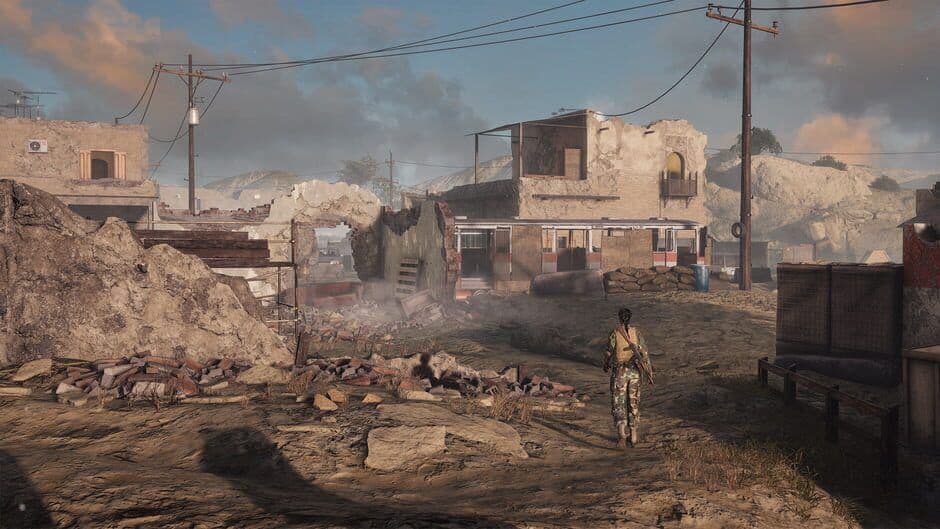
Interior map design and tactical movement.
Checkpoint Turns Co-Op Into a Siege
Checkpoint is the strongest expression of Sandstorm’s design. Up to eight players advance through a sequence of capture and destruction objectives while AI forces attack in waves, forcing the squad to clear buildings, cross exposed streets, and hold newly secured ground before moving on. That structure creates memorable emergent moments because progress is never simply awarded: a team can breach a compound successfully, lose several players during the approach, and then spend the next objective trying to survive with its numbers depleted. Compared with the casual bot modes attached to many mainstream shooters, Checkpoint feels like a genuine operation in which every cleared room and defended doorway changes the team’s chances.
The AI supplies much of that pressure. Bots rush positions, flank through alternate routes, use stealth, operate mounted guns on technicals, and bring rocket launchers or artillery into the fight, so standing still behind the first piece of cover is not a reliable strategy. A squad defending an objective may have to watch a distant technical while also checking windows and side alleys for an approaching infantry push. These behaviors make co-op substantially more dangerous than a shooting gallery against predictable targets, even if the AI’s occasional roughness can make some encounters feel less deliberate than the best human firefights. Sandstorm’s co-op works because the bots force players to respect the map from multiple directions at once.
Checkpoint is at its best when the squad stops behaving like eight individuals and starts behaving like a damaged, improvised unit.
That pressure is reinforced by the respawn rules. In Push, attackers gain reinforcements by capturing objectives, while Firefight and related objective modes tie team respawns to progress rather than allowing players to return on demand. A successful capture therefore does more than move a marker forward: it replenishes the team’s ability to absorb mistakes, while a failed assault can leave the next attempt badly undermanned. This makes late-round survival strategically important; the player holding a flank or defending the final entrance is preserving the team’s future as much as chasing a kill.
The same system can also punish players in ways that feel harsher than they feel meaningful. Dying near the end of a wave may force someone to wait through an entire additional wave before returning, while early casualties can leave a squad too weak to capture the next objective and trigger reinforcement. That creates superb tension for the survivors, but dead players experience it as prolonged downtime rather than active strategy. Sandstorm’s limited-respawn model is therefore a powerful risk-and-reward engine with a blunt edge: it makes every life matter, but it can also make one poorly timed death remove a player from the most important part of the match.
Competitive Maps Reward Knowledge, Then Demand More of It
Competitive play builds on the same objective discipline. Push asks one team to capture points in sequence while the other defends; Firefight revolves around contested objectives and carefully timed team survival; Frontline adds the destruction of an enemy supply cache; and Domination, Hardpoint-like struggles, and two- or three-point control variants turn territory into a constant tug-of-war. The important distinction from ordinary deathmatch is that kills are useful only when they create room to capture, defend, or destroy something. A player who clears a building but fails to secure the objective has achieved little beyond a temporary advantage, which keeps matches focused on decisions rather than personal statistics.
The maps support that focus with substantial tactical space. Sandstorm’s large desert and urban arenas combine open approaches with compounds, rooftops, interior corridors, chokepoints, and alternate ingress and egress routes, giving squads several ways to attack a position. A defended street can be pressured from a side alley, a rooftop, or a smoke-covered frontal push, while vertical positions allow a marksman to control movement without making the entire map a single sightline. This is where map knowledge becomes decisive: experienced players know which building connects to the next objective and which angle catches attackers crossing open ground, while newcomers often discover those routes only after being killed from them.
The design intent is clear, but the variety does not fully match the tactical potential. Sources place the game at roughly 14 maps, and although their environments include damaged citadels, ministries, refineries, and desert compounds, the objective framework repeatedly asks players to capture territory or eliminate a cache. That consistency helps Sandstorm maintain its identity, yet it also means players who dislike territory capture or deathmatch-style control modes will exhaust the available variety sooner than anyone devoted to the core loop. Weather and time-of-day variations can change visibility and mood, but they do not fundamentally create new forms of play.
Insurgency: Sandstorm’s mode design ultimately succeeds through pressure rather than breadth. Checkpoint produces the most reliable co-op stories, competitive objectives give the maps purpose, and limited reinforcements make even familiar routes feel dangerous when a team is one life from collapse. But after the novelty of learning each arena fades, the repeated emphasis on capture, defense, and destruction becomes the game’s clearest replayability ceiling. For players who want a focused tactical FPS, that repetition is a dependable foundation; for everyone else, the excellent tension may arrive in too few distinct shapes.
Insurgency: Sandstorm Difficulty and Progression: Welcoming Enough?
Insurgency: Sandstorm teaches its rules once, then expects the battlefield to teach the rest—with live ammunition. That makes its eventual mastery deeply satisfying, but the opening hours are harsher than they need to be.
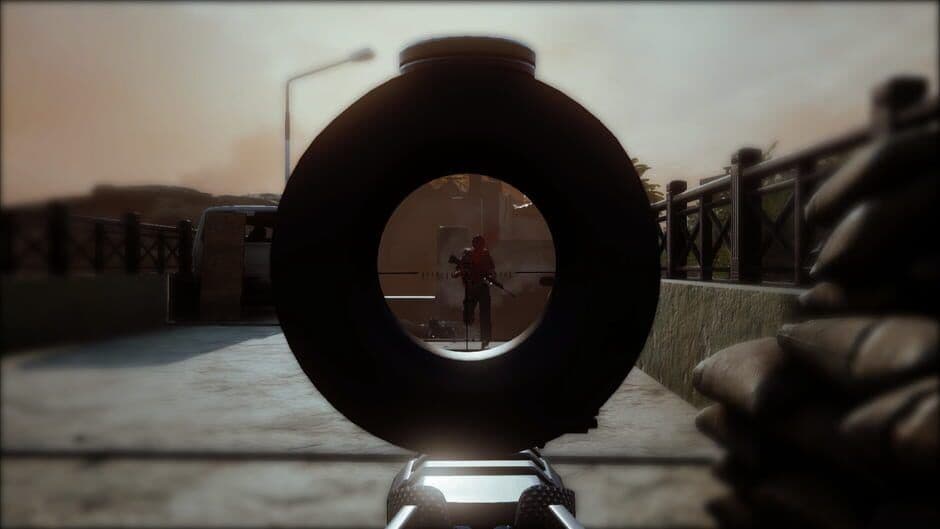
Strategic planning is part of the game's deep progression.
The Checkpoint co-op mode is the clearest problem. It reportedly offers only one difficulty setting, so a new player can be eliminated by a single accurate AI shot—or erased by a mounted gun, rocket launcher, or artillery strike—without a gentler version of the mode in which to learn. Respawns are tied to objective progress, meaning an early death can leave a beginner watching the squad fight until the next capture, rather than immediately applying the lesson they just learned. Sandstorm’s lethality creates excellent tension for experienced teams, but it gives newcomers too few opportunities to build confidence through gradual escalation.
The tutorial explains how to operate Insurgency: Sandstorm; it does not explain how to survive it.
That gap matters because the game removes nearly every comfort mainstream shooters use to communicate danger. There is no crosshair or minimap, kill confirmations are absent, friendly fire is active, and the fast time to kill leaves little room to recover from a mistaken peek. Players must also learn weapon recoil, magazine management, sightlines, class responsibilities, and the difference between a safe route and a fatal one. Compared with Call of Duty or Battlefield, where the interface constantly confirms what happened, Sandstorm asks beginners to interpret muzzle reports, impacts, teammate callouts, and enemy movement before they understand what those signals mean. The design intent is immersive realism, but the execution makes the first several matches feel less like training and more like an examination.
The community can make that examination worse. Critics describe Sandstorm’s player base as potentially hostile to beginners, a serious problem in a game where communication is not decorative: a Commander needs an Observer nearby, a team needs someone watching its flanks, and a failed callout can expose an entire push. A new player who selects an important role without understanding its obligations may be criticized instead of coached, making the class system’s most interesting teamwork mechanics the least inviting place to learn. This is not a flaw in the gunplay itself, but it directly affects accessibility; a demanding game needs experienced players willing to explain its demands, not treat every mistake as sabotage.
Still, Sandstorm is more accessible than its reputation suggests once a player accepts its basic rules. The objective structure is straightforward—capture, defend, destroy, advance—and the core act of shooting does not require the procedural overhead associated with ArmA or Squad. Classes are readable even when their tactical implications take time to master: Rifleman is a dependable entry point, Breacher favors close-range aggression, and Marksman rewards patience and sightline control. Matches also provide a manageable bridge between arcade shooters and full milsims, offering quick, objective-driven rounds in which a casual player can contribute simply by holding a doorway, following a push, or surviving long enough to secure a capture. Sandstorm does not make realism effortless; it makes the path into realism legible for players willing to slow down.
Its progression system supports that bridge without undermining it. Experience and in-game currency unlock additional classes, weapons, attachments, gadgets, and cosmetic options, giving regular play a tangible reward without microtransactions or pay-to-progress pressure. Unlocking a new role can change how a player approaches a match, while experimenting with attachments or a different weapon provides a reason to revisit familiar objectives after the initial novelty fades. The progression is fair because it expands options rather than selling power, and because success still depends on positioning and accuracy rather than the age of an account. The reward is not a shortcut around Sandstorm’s learning curve; it is a larger toolbox with which to climb it.
The cosmetic side is less successful. Players can customize camouflage patterns, helmets, boots, tattoos, body armor, and eyewear, but most of that work is visible only in menus because the game is played almost entirely from a first-person perspective. Camouflage can have limited practical value in player-versus-player matches, particularly when friendly fire makes silhouette and faction recognition important, yet the broader customization system rarely delivers the expressive payoff its unlock structure implies. Earning a new helmet or tattoo feels less meaningful when the player seldom sees it in action. Sandstorm’s progression is mechanically fair, but its cosmetic rewards are undermined by the camera that makes the combat so immersive.
Long-term motivation therefore comes from competence rather than collection. Learning which map routes expose an attacking squad, mastering the recoil of a preferred rifle, understanding how class limits shape a team, and finding a role that complements the Commander-Observer pair all create durable goals. Co-op Checkpoint generates new stories through AI pressure and limited respawns, while competitive objectives test whether a player can turn that knowledge into coordinated pressure against humans. However, the same limitation identified in the map and mode structure eventually narrows the routine: once players have learned the available arenas and exhausted their preferred capture, defense, or destruction variants, progression has fewer surprises left to offer. Insurgency: Sandstorm is welcoming enough for patient players, but not forgiving enough for impatient ones—and its long-term appeal rests on the pleasure of getting better, not on an endless stream of rewards.
Audio and Visuals in Insurgency: Sandstorm: Sound Wins the Fight
Insurgency: Sandstorm wins its firefights through the ears before the eyes can catch up. A rifle cracking somewhere beyond a courtyard, a bullet snapping against the wall beside you, or a gunship’s blades growing louder overhead can reveal more than the minimal interface ever will. This is the game’s most convincing audiovisual achievement: it turns the battlefield into an information network, where listening carefully is often the difference between finding cover and becoming part of it.
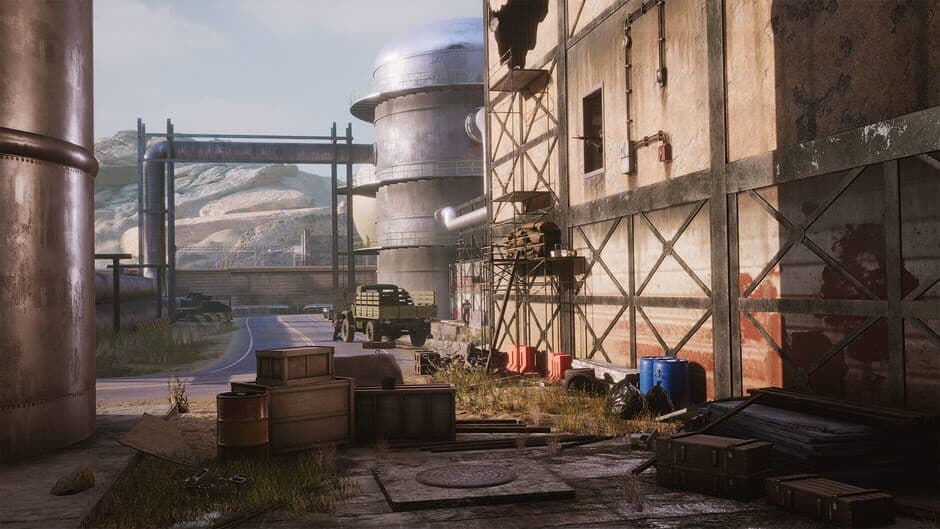
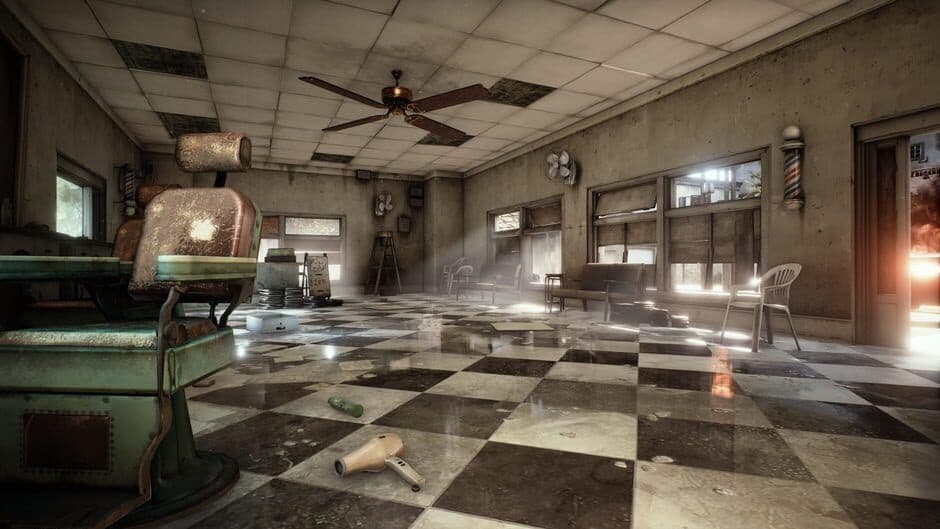
Indoor environments challenge players with complex lighting.
The environmental sound design is exceptional because it changes with the space around you. Fire an M16A4 inside a cramped building and its sharp report becomes an oppressive wall of reverberation; hear that same weapon across an open plain and the sound arrives thinner, more exposed, with distance becoming part of the tactical read. Ricochets skitter across concrete, impacts thud against cover, explosions swallow nearby callouts, and the engines of technicals announce danger before the vehicle enters view. Even the heavy, ominous rhythm of gunship blades can transform a routine approach into a scramble for shelter. Compared with Call of Duty or Battlefield, where audio often punctuates spectacle, Sandstorm makes sound a spatial system: it tells you where the threat is, how enclosed the fight has become, and whether the next doorway is safe to cross.
In Insurgency: Sandstorm, a bullet striking the wall beside you is not background noise; it is a warning, a compass, and occasionally your last chance to move.
Individual weapons receive the same meticulous treatment. The M870’s blast has a brutal, close-range weight, the M16A4 cuts through the mix with a crisp crack, and the MP7 produces a faster, rattling burst that immediately suggests a different engagement distance. Magazine swaps carry a metallic clatter, charging handles snap into place, and weapon animations give reloads a physical rhythm rather than treating them as a simple cooldown. These details matter because Sandstorm’s firearms are not interchangeable tools: the sound and animation of a weapon reinforce its handling identity, helping players recognize what has just fired even before they locate the muzzle flash. The presentation occasionally falls short of that standard—fuzzy engravings and less detailed character models expose the game’s smaller budget—but the guns themselves look and sound like the objects the rest of the combat system insists they are.
The voice work gives the soundscape its human dimension. Soldiers shout when they spot enemies, curse darkly through reloads, scream when wounded, and respond to changing objectives with fear rather than the polished bravado common to blockbuster military shooters. In co-op, a last surviving player calling out for anyone to answer, or a wounded character crying out while trying to crawl away, makes the battlefield feel populated by frightened people instead of disposable targets. Those lines are contextual rather than cinematic, yet they achieve something many scripted campaigns miss: the terror emerges because the voice reacts to a player-created crisis. The effect can be grimly funny during a panicked reload, but that tonal instability works; soldiers under pressure do not deliver perfectly composed dialogue.
The audio system is not flawless, and its failures are unusually damaging because sound is so central to survival. Occasional bugs can make a weapon go silent while its impacts remain audible, leaving the player to hear bullets striking without receiving the report that should identify the shooter. In another shooter, a missing gunshot might be a minor audiovisual blemish; in Sandstorm, it can erase the directional clue needed to locate a threat or understand why a teammate has suddenly fallen. These faults are intermittent rather than defining, but they cut directly into the game’s strongest layer of tactical information.
Visually, Sandstorm can approach a larger-budget AAA shooter when viewed on capable hardware. Its desert warzones and damaged urban structures are detailed enough to support the fiction of lived-in battlefields, while weapon models, reload animations, and environmental clutter give close-quarters spaces convincing texture. The absence of a constantly active HUD also leaves more of that world visible, allowing players to read doorways, rooftops, walls, and silhouettes without a permanent layer of interface competing for attention. Yet the presentation is inconsistent: dated textures, fuzzy weapon engravings, uneven character models, and lighting that can leave avatars looking disconnected from their surroundings keep it below the visual standard set by the best Call of Duty or Battlefield entries. Teammate readability can suffer as well, particularly when clothing, camouflage, or facial details blur together at a distance—a serious concern in a game with fully active friendly fire.
That tension between visual fidelity and tactical clarity is deliberate. Sandstorm removes the crosshair, minimap, conventional kill confirmation, and precise numerical ammunition display, replacing certainty with observation: players read the visible representation of their magazines, watch movement through gaps, identify silhouettes, and listen for fire from a particular direction. The strong directional audio makes this viable, while the visual detail gives players enough environmental information to navigate without an intrusive overlay. It is a demanding design choice, and the occasional lighting or readability problem can make it feel unfair rather than immersive, but when the systems align, the result is unusually coherent. Insurgency: Sandstorm does not merely look like a battlefield; it asks players to perceive one—and its extraordinary sound design makes that demand worth accepting.
Performance in Insurgency: Sandstorm: Ambitious but Rough Around the Edges
Insurgency: Sandstorm’s technical ambition is easy to see—and just as easy to trip over. The infantry combat demands precision, but launch-era performance problems, asset-loading glitches, and networking errors could turn a carefully judged engagement into a fight against the game itself.
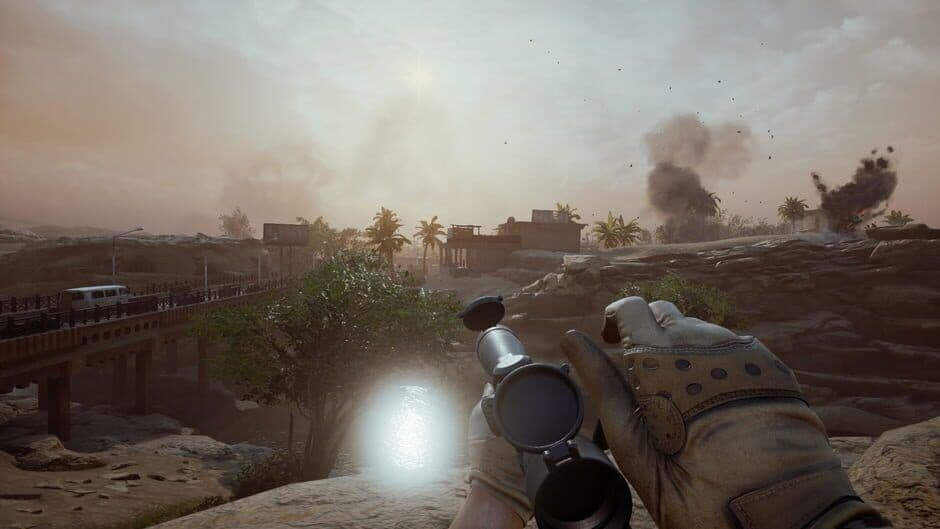
Character model fidelity is high, though it can lead to performance inconsistencies on consoles.
A Tactical Shooter That Needed More Polish
On PC, Sandstorm could look remarkably close to a AAA military shooter, but its performance ceiling was less impressive than its visual ambition. PC Gamer reviewed the game on an i5-6500, GTX 1070, and 16GB of RAM, yet contemporary testing still found that even powerful systems might require reduced settings to achieve high frame rates. That matters more here than it would in a slower action game: when a single bullet can end a firefight, a drop in performance during an assault can erase the tiny reaction window that separates a correct decision from an instant death. Co-op was particularly vulnerable, with some areas suffering frame-rate drops severe enough to make encounters difficult to play rather than merely less attractive.
The launch build also carried technical faults that repeatedly punctured its otherwise convincing battlefield illusion. Weapons, hands, and attachments could appear invisible while assets loaded, leaving players aiming through an absent rifle or trying to interpret a firefight without the equipment model that communicates their current state. Floating bodies, broken animations, and allies apparently “surfing” across the map were less damaging to balance, but they made the world look assembled rather than simulated. Scope-rendering problems could be worse still: when a scope became unusable, switching weapons might fix it, but not always, potentially compromising an entire Marksman loadout. In a game whose credibility depends on reading weapons, silhouettes, and sightlines, these are not harmless visual hiccups; they attack the information players need to survive.
Sandstorm’s rough edges are most damaging when they interfere with information: an invisible rifle, a silent weapon, a broken scope, or an enemy who appears to exist on the wrong side of cover.
Networking and collision issues create the same problem from another direction. Reports of players taking damage behind cover or around corners undermine the fundamental contract of Sandstorm’s gunplay: if positioning is supposed to keep you alive, the protection offered by that position must be consistent. Door visibility discrepancies could make an entrance appear open to one player and blocked to another, while restricted areas and objective boundaries sometimes behaved differently from what the environment suggested. That is especially frustrating in a tactical shooter built around clearing rooms and holding chokepoints, because the player is punished not for misreading an opponent but for misreading the game’s collision state.
The map restriction system exposes this weakness most clearly. Sandstorm’s arenas often present themselves as open tactical spaces with multiple routes, yet poorly defined invisible boundaries near objectives could block movement or prevent players from using weapons while they were still visibly under fire. Those limits may be intended to keep matches focused on their objectives, but when the boundary is invisible, the design reads as an arbitrary wall rather than battlefield direction. Worse, poorly defined restricted areas could be exploited, allowing players to abuse spaces the rules nominally prohibit. This is where the seams start to show: a game that otherwise rewards flanking and improvisation occasionally replaces tactical judgment with invisible geometry.
Infantry First, Vehicles Second
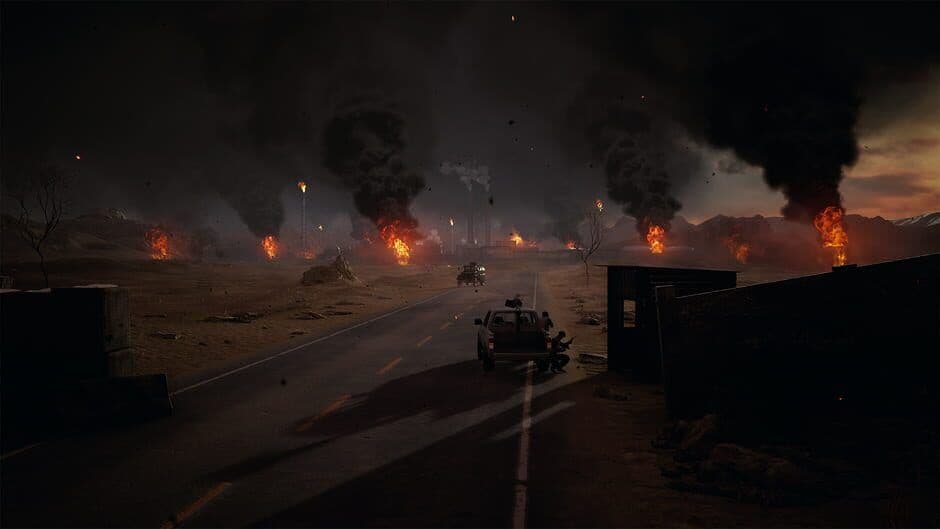
Vehicles are the clearest example of Sandstorm’s uneven priorities. Technicals and converted pickups can create spectacular moments from the gunner seat, especially when a mounted weapon rakes a street while infantry scramble between cover. But the handling is rougher than the shooting, and the maps do not always feel designed around vehicular movement; vehicles can seem bolted onto infantry arenas rather than integrated into a coherent combined-arms system. That imbalance explains why the game’s most memorable vehicle moments are often brief bursts of chaos instead of sustained tactical play. Sandstorm understands how to make a truck feel dangerous, but not always how to make driving one feel precise or purposeful.
The post-launch state improved the foundation without fully repairing the structure. Updates addressed important crashing problems and added polish, but contemporary reviews continued to report performance inconsistencies, animation failures, occasional weapon-audio faults, scope-rendering bugs, and networking problems. That distinction matters: fixing crashes makes the game more reliable, but reliability is not the same as refinement when a surviving player can still encounter a floating body, a silent rifle, or a bullet that appears to travel through cover. Sandstorm became more stable, yet its technical shortcomings remained capable of affecting moment-to-moment play rather than merely embarrassing the presentation.
Platform differences soften some of those problems but do not erase them. Insurgency: Sandstorm appeared on PC, PlayStation 4, and Xbox One, with later-generation consoles running the older versions through backward compatibility; on PS5, backward compatibility improved frame rate and resolution compared with PS4. That makes the console experience smoother on newer hardware, but character detail remained below the PC presentation, so the upgrade is not a complete visual parity solution. The result is a game whose best platform depends on what matters most to the player: PC offers the strongest visual detail but can demand reduced settings, while PS5 improves performance and resolution without matching the PC’s character fidelity.
At its original $30/£26 price point, Sandstorm had room to be rougher than a full-price blockbuster—but not immunity from criticism. The core infantry combat remains excellent, and its soundscape, weapon modeling, and objective tension are strong enough to survive technical friction that would sink a less distinctive shooter. Still, the performance drops, invisible boundaries, unreliable collision, and launch-era glitches directly interfere with the precision that makes the game special. Insurgency: Sandstorm is ambitious enough to create battles no polished blockbuster can quite replicate, but its technical condition too often reminds you that the battlefield is being held together by seams.
Insurgency: Sandstorm Verdict: The Best Parts Are Worth the Friction
Insurgency: Sandstorm is not a complete military shooter; it is a remarkably focused one. Its lethal gunplay, fearful voice work, exceptional soundscape, and objective-driven tension create multiplayer battles that feel fresher than many more expensive productions—not because Sandstorm reinvents the genre, but because every system reinforces the same fragile fantasy of trying to survive a firefight.
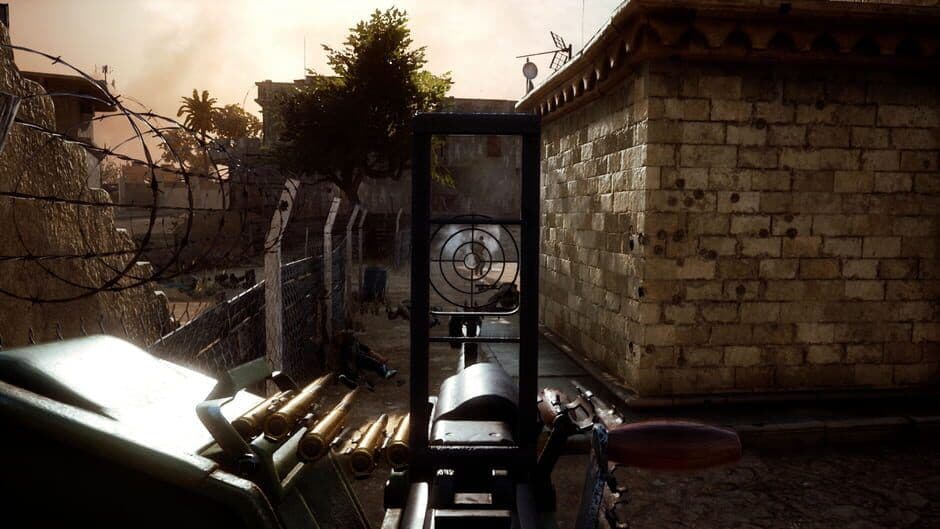
Objective-based play rewards disciplined squads.
That cohesion is the game’s greatest achievement. A squad of up to eight players in co-op Checkpoint can turn a routine capture into a crisis when limited reinforcements disappear, a flank opens, and the last survivors scramble to hold a building. In competitive matches of up to 32 players, the same logic scales into larger pushes and defensive stands, while the Commander and Observer must coordinate fire support rather than treating artillery or helicopters as personal rewards. Flanking a position, holding a chokepoint, timing smoke with an assault, or preserving the final lives for an objective produces a kind of squad-level satisfaction that Battlefield’s broader spectacle and Call of Duty’s individualistic streak rarely match.
Insurgency: Sandstorm does not need a campaign to make a firefight memorable; it needs one good squad, one bad plan, and just enough time for the situation to collapse.
The comparison is important. Sandstorm does not reinvent Battlefield-style objectives, and it does not approach the simulation depth or operational scale of ArmA and Squad. Instead, it occupies the unusually effective space between them: matches move quickly, classes are understandable, weapons remain tactile and authentic, and the low time to kill gives every angle consequence without demanding the procedural commitment of a full milsim. That middle ground is why the game remains distinctive. It gives casual players a readable objective while asking them to communicate, manage limited reinforcements, and learn the map like veterans.
The roughness is equally real. Performance drops, invisible weapons and attachments, broken animations, silent gunfire, netcode problems, unreliable cover, poorly defined restricted areas, and awkward vehicles are substantial flaws because they interfere with the information and positioning that Sandstorm’s combat depends on. A floating body is an ugly distraction; taking damage around a corner or being blocked by an invisible objective boundary is a mechanical betrayal. The gunplay can be nearly perfect in one moment, then a scope fails to render or a technical handles like an afterthought in the next. These are not merely cosmetic imperfections, and they prevent Insurgency: Sandstorm from reaching the consistency of the AAA shooters it often outshines in weapon feel.
The game’s narrower value proposition also demands an honest warning. There is no campaign, no connected story, and no broad collection of unrelated activities to soften repetition; the desert-and-urban setting remains familiar, and the finite map pool repeatedly funnels players toward capturing, defending, or destroying objectives. That focus is a strength if the buyer wants exactly this kind of tactical loop, but a weakness for anyone expecting the variety of a content-heavy AAA package. After the thrill of learning each route and sightline fades, progression cannot disguise the fact that Sandstorm has fewer kinds of play to offer.
At the reviewed price of $30/£26, however, the calculation is favorable for its intended audience. With no microtransactions, progression unlocks classes, weapons, attachments, gadgets, and cosmetics without turning the strongest equipment into a purchase prompt. That is strong value for players seeking a dedicated tactical multiplayer shooter with both eight-player co-op and competitive matches supporting up to 32 players. It is a weaker proposition for buyers who want solo content, cinematic spectacle, forgiving matchmaking, or a campaign that justifies a long-term purchase on its own.
The target audience is therefore unusually clear. Buy Insurgency: Sandstorm if you enjoy realistic and punishing FPS combat, precision shooting, map knowledge, teamwork, and the satisfaction of improving through repeated failure. Expect a demanding learning curve, frequent deaths, limited respawns, and the possibility that a silent or hostile team will make the most important mechanics—especially Commander and Observer coordination—feel inaccessible. Avoid it if you want instant feedback, relaxed matchmaking, generous respawns, solo progression, or a polished blockbuster presentation. Sandstorm rewards patience and communication; it does not apologize for requiring either.
Pros
- Lethal, precise gunplay that makes positioning and marksmanship matter.
- Outstanding environmental and weapon sound design, with audio that actively supports tactical awareness.
- Emergent co-op and competitive battles shaped by limited reinforcements and meaningful objectives.
- Deep class and loadout decisions, especially the Commander-Observer fire-support system.
- Strong value at the reviewed $30/£26 price, with no microtransactions.
- A distinctive bridge between accessible competitive shooters and demanding military simulations.
Cons
- Performance drops and launch-era glitches can directly disrupt firefights.
- Netcode, collision, restricted-area, and audio problems undermine trust in positioning.
- Vehicles feel rough and less integrated than the infantry combat surrounding them.
- No campaign, familiar desert setting, finite map pool, and limited objective variety narrow the long-term appeal.
- The steep learning curve and potentially hostile community make the opening hours unwelcoming.
- Players seeking solo content or broad AAA variety will find the package thin.
Insurgency: Sandstorm is not a universal FPS recommendation, but it is an emphatic one for tactical shooter fans. Its technical friction and limited scope are impossible to ignore, yet the best parts—the sound of rounds snapping past cover, the panic of a collapsing objective, and the satisfaction of a coordinated push—are strong enough to outweigh them. The verdict is simple: Sandstorm is rough, narrow, and fiercely rewarding, and its finest battles are worth every bit of friction.