
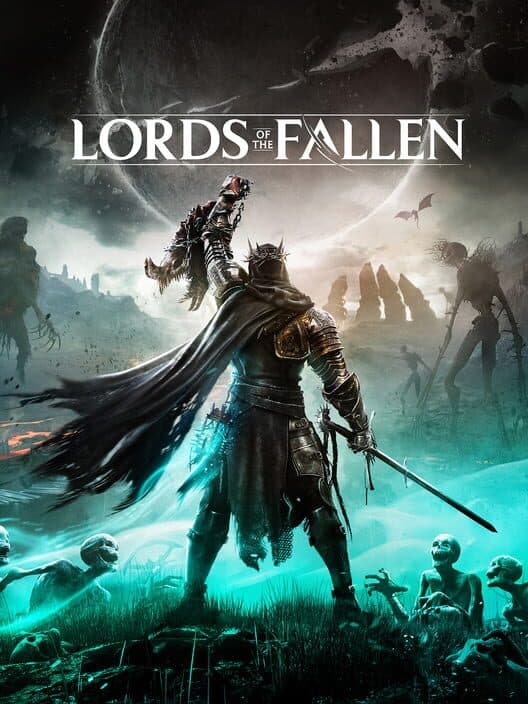
Lords of the Fallen Identity: A Bold Reboot of a Soulslike Pioneer
Lords of the Fallen arrives not as a simple sequel, but as a full-throated redemption arc. This is a studio staking its claim in a genre it helped pioneer, armed with a clear directive: to be what the 2014 original was not. The result is a ‘sequelboot’ that feels less like a continuation and more like a confident, modern reinterpretation, one that understands the language of Souls-likes but occasionally struggles to speak it with perfect fluency.
The game’s identity is built on a foundation of clear ambition and historical context. Set a thousand years after the events of its largely forgotten predecessor, Lords of the Fallen immediately establishes its intent to be taken seriously. It’s a hard reset, leveraging the lore as a distant backdrop rather than a direct burden. This is a game that knows the original’s reputation for clunkiness and derivative design, and it methodically works to distance itself from that legacy at every turn. The world of Mournstead is no longer a series of corridors and arenas; it’s a sprawling, interconnected realm dripping with a palpable sense of decay and history. The jump in scope and presentation is so dramatic it feels less like a sequel and more like a developer proving a point.
The 2023 reboot introduces a new protagonist, the Dark Crusader, to the world of Mournstead.
That point is made most vividly through the game’s oppressive, stunning atmosphere. Lords of the Fallen commits to a specific aesthetic—a blend of H.R. Giger’s biomechanical horror and high Gothic fantasy—and executes it with relentless conviction. From the moment you awaken in a desecrated monastery, the world feels heavy with the weight of its own corruption. The architecture is excessively ornate, a monument to a faith turned fanatical, and the creature designs are grotesque in a way that feels both alien and deeply rooted in medieval religious iconography. This isn't just a dark fantasy world; it's a world actively rotting, and the visual storytelling is powerful enough to carry the initial hours even when the mechanics begin to show strain.
The art direction is the game’s first and most resounding victory. It creates a world you want to explore, even when the act of exploring it becomes a test of patience.
Your role within this dying world is that of a Dark Crusader, a branded outcast granted the power of the Umbral Lamp. The narrative setup is pure, uncut Soulslike: a cryptic higher power tasks you with cleansing five corrupted Beacons to prevent the resurgence of the demonic god Adyr. It’s a premise that exists primarily to facilitate a tour through Mournstead’s greatest hits—the frozen peaks, the burning city of Calrath, the obligatory poison swamp—and to justify the constant, brutal combat. The story is delivered through the genre-standard mix of terse NPC dialogue and lore-dense item descriptions, and while it’s more coherent than its predecessor’s “word salad,” it rarely rises above functional world-building. You are here to suffer and conquer, not to untangle a complex plot.
This brings us to the game’s most defining, and sometimes limiting, characteristic: its genre positioning. Lords of the Fallen is, unabashedly, a love letter to FromSoftware’s greatest hits. It borrows the speed and fluidity of Dark Souls 3, the rally mechanic from Bloodborne (here called Wither damage), and the interconnected level design of the original Dark Souls. At its best, it feels like a high-quality “Dark Souls 4” fan game, a comforting echo of a familiar rhythm. At its worst, this derivative nature highlights where its own execution falters—when the combat feels floaty compared to its inspirations, or when enemy placements feel like a hollow imitation of challenge. It’s a game constantly measured against the giants it so openly emulates, and that is a comparison it invites with every swing of your sword and every glimpse into its brilliant, flawed dual worlds.
The Umbral Lamp: How Two Parallel Worlds Redefine Exploration
The Umbral Lamp is the single best idea in Lords of the Fallen, a mechanic so conceptually rich it briefly convinces you this might be the future of the genre. Its brilliance lies in how it transforms the entire act of exploration from a passive search for secrets into an active, high-stakes puzzle. The ability to seamlessly shift between the grimy, decaying reality of Axiom and the haunting, bone-choked hellscape of Umbral isn't just a visual trick; it's the game's fundamental language. You don't just walk through Mournstead—you interrogate it, constantly questioning what barriers exist only in one realm and what hidden pathways might materialize in the other. This is where the game feels genuinely next-gen, turning every corridor into a potential fork in reality.
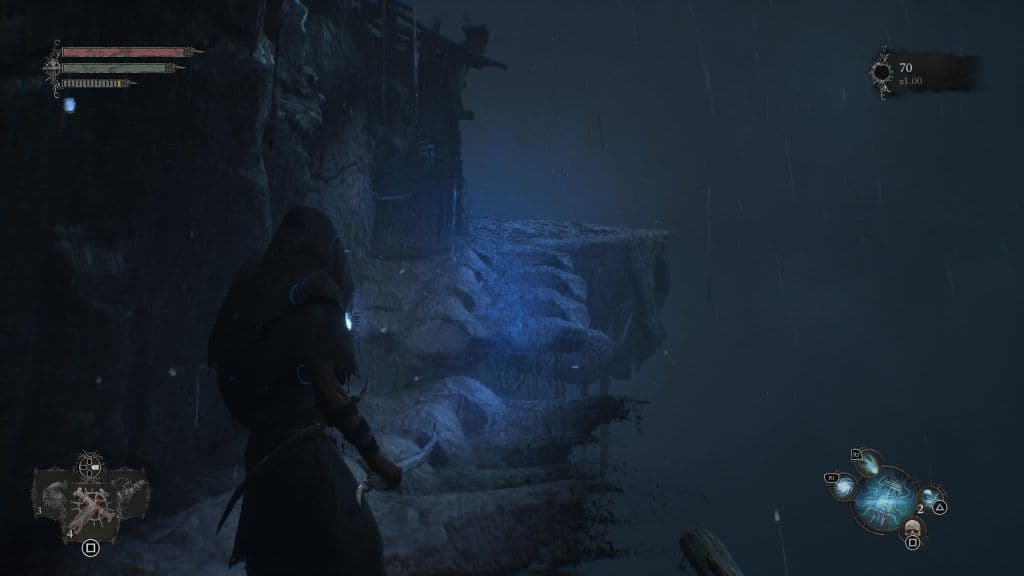
The Umbral Lamp allows players to peer into the parallel realm of the dead at any time.
The level design leverages this duality masterfully, especially in its verticality. A sheer cliff face in Axiom might host a spectral, climbable ladder in Umbral; a chasm impassable in the living world could be bridged by a grotesque arch of vertebrae visible only through your lamp. The world feels exponentially larger because it literally is. This creates moments of pure discovery that are deeply satisfying, rewarding the player's curiosity with shortcuts, hidden items, and entire optional areas. The intricate, interconnected environments—a Soulslike staple—are given a fresh coat of paint by this mechanic, making backtracking feel less like a chore and more like a new investigation with a different set of tools.
This is the game's crowning achievement: making you see the world twice. The thrill of revealing a hidden bridge or unlocking a door that was "solid" moments ago is a constant, tangible reward for engaging with its core systems.
However, this ingenious exploration is shackled to a risk-reward system that often tips from tense into tedious. Venturing into Umbral is high-risk, high-reward by design: your Vigor (souls) multiplier increases the longer you stay, but so does the attention of the realm's denizens. A timer, visualized by a creeping, spectral eye, ticks upward until it summons the Red Reaper—a relentless, powerful stalker—and eventually locks your healing items. The intent is clear: create white-knuckle pressure where you must weigh the lure of greater rewards against the danger of being trapped in a nightmare. When it works, it creates unforgettable, panicked sprints to find an exit.
Where this system breaks down is in its moment-to-moment execution. The Umbral realm is plagued by endlessly respawning, weak enemies—referred to as "zombies" by reviewers—that exist solely to apply constant, grating pressure. They don't pose a significant threat individually, but their relentless spawning forces you to stop and clear them constantly, shattering the pace and turning thoughtful exploration into a slog of stop-and-start combat. The design intent of a "tense race against time" often devolves into a frustrating chore of swatting flies while the real clock ticks down. This is particularly damning in a game whose exploration is otherwise so compelling; it actively discourages the thorough, careful investigation it so brilliantly enables.
The Umbral realm also functions as a brutal but clever "second chance" mechanic. Death in Axiom doesn't send you back to a checkpoint; it throws you into Umbral with half your health, your lost Vigor waiting somewhere in the gloom. This creates a thrilling, high-stakes mini-game of survival where you must fight your way back to a safe exit or a resurrection point. It's a fantastic twist on the Soulslike death loop, offering a tangible reward for skill and composure under pressure. Yet, this too is undermined by the same ambient tedium. Your desperate fight for redemption is often against the same endlessly respawning fodder, making the triumphant return to Axiom feel less like a hard-earned victory and more like an escape from a tiresome grind.
Ultimately, the Umbral Lamp is a landmark idea wrapped in flawed execution. In Lords of the Fallen, it creates a world of unparalleled depth and possibility, rewarding player agency in a way few games do. But the studio's decision to equate "challenge" with "constant, low-stakes harassment" sours the experience. It’s a mechanic that makes you want to explore every shadowy corner, while simultaneously punishing you for doing so—a fascinating, frustrating contradiction that defines the entire game.
Lords of the Fallen Combat: Weighty Impacts and Frustrating Floatiness
The promise of the Umbral Lamp’s brilliant world design is tested the moment you enter combat. Lords of the Fallen offers a combat system that feels like a skilled but flawed cover band of the Soulsborne genre—it hits all the right notes, but the rhythm is just slightly off. You have the familiar toolkit: a stamina bar to manage, parries to time, a dodge roll to master, and a vast arsenal of weapons from colossal hammers to dual daggers. On paper, it’s a deep and satisfying system. In practice, a collection of persistent, low-level mechanical flaws creates a pervasive sense of friction that never fully dissipates.
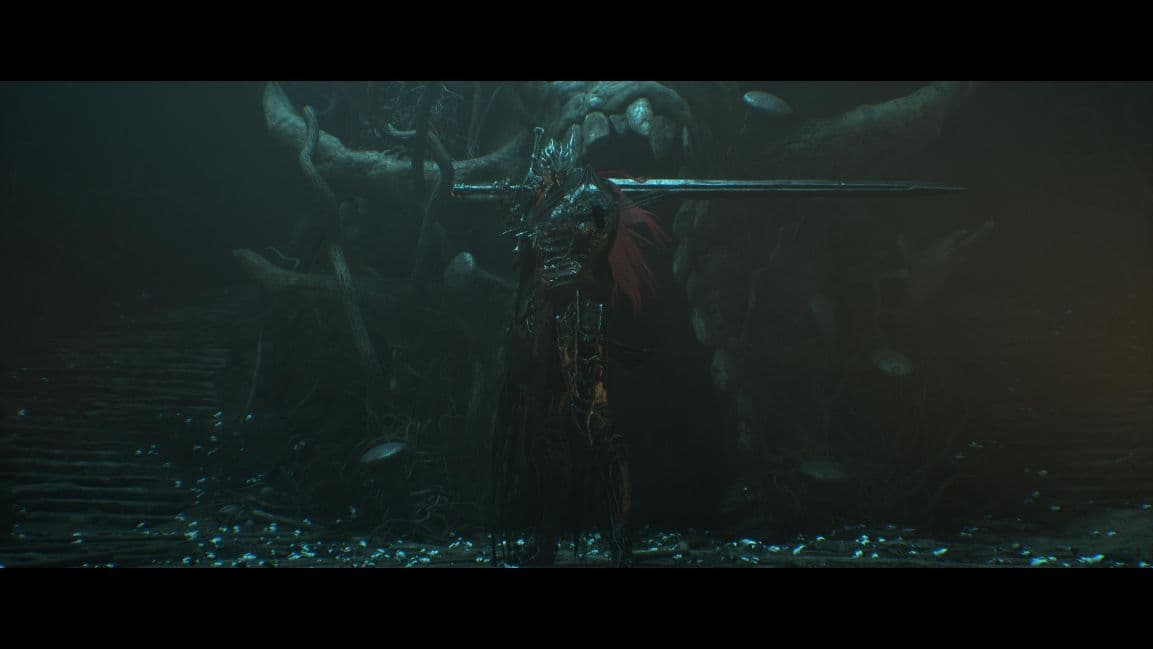
Lords of the Fallen features a vast array of weapons and armor sets.
Where the combat shines is in its sheer build variety and its clever integration of ranged options. The nine starting classes—from the spell-slinging Pyric Cultist to the tanky Hallowed Knight—provide a strong foundation, and the stat system supporting Strength, Agility, Radiance (holy), and Inferno (fire) magic encourages genuine experimentation. This is one of the few Soulslikes where a pure ranged build feels not just viable, but powerful. Throwables like javelins and axes, as well as spells, use a replenishable ammo system that refills at checkpoints, eliminating the tedious grind for consumables found in other games. The Wither damage system, a direct lift from Bloodborne’s rally mechanic, is also a smart addition. Blocking an attack converts a portion of the damage into temporary grey health, which you can recover by landing your own blows. It incentivizes an aggressive, rhythmic defense that feels great when it clicks, turning a defensive maneuver into the start of a counter-offensive.
This is the game's most confident mechanical borrowing. The Wither system transforms a simple block into a high-stakes gamble, rewarding precision with a burst of momentum that can turn the tide of a duel.
However, the fundamental feel of swinging your weapon is where Lords of the Fallen stumbles. The combat physics lack the satisfying, grounded heft of its inspirations. Attacks, particularly with heavier weapons, carry an excessive forward momentum that often lunges your character several feet farther than intended. In a game filled with precarious ledges and bottomless pits—a Soulslike staple—this isn’t a minor quirk. It’s a frequent cause of infuriating, self-inflicted deaths. You’ll line up a swing against an enemy near a cliff, only to watch your crusader pirouette gracefully into the abyss. This is compounded by a noticeable input delay on attacks and dodges, a fractional lag that makes the combat feel unresponsive and floaty compared to the razor-sharp feedback of Lies of P or Elden Ring. When every millisecond counts, that delay erodes player confidence, making you question whether a missed dodge was your mistake or the game’s.
The unique Soulflay ability exemplifies this tension between clever ideas and clumsy execution. By holding up your lamp, you can rip an enemy’s soul from its body, dealing Wither damage and leaving it momentarily stunned for a critical strike. Conceptually, it’s a fantastic tool that integrates the Umbral Lamp directly into combat. In practice, the animation lock is punishingly long. In the heat of a group encounter—which the game loves to throw at you—committing to the Soulflay wind-up is often a death sentence. The risk rarely feels worth the reward, especially when basic enemies have health pools large enough to survive the process. It’s a signature move that, outside of specific puzzle scenarios, often gets relegated to the back of your tactical menu.
This creates a frustrating dissonance. Lords of the Fallen gives you an impressive toy box of combat options, from dual-wielding disparate weapons to hybrid magic-melee builds, and then subtly discourages you from using the flashier tools in the most demanding situations. You can master the rhythm and make a Strength/Radiance paladin build sing, but you’re fighting against the game’s own physics as much as the enemies. For every moment of triumph where your build comes together perfectly, there’s a lingering sense that the combat’s foundation is built on sand—functional, even enjoyable at times, but never achieving the sublime, weighty precision that defines the genre’s best.
Difficulty vs. Frustration: Balancing Hordes and Boss Encounters
Here is the uncomfortable truth about Lords of the Fallen: its most significant difficulty doesn't come from its boss designs, but from a frustrating, fundamental misunderstanding of what makes a Soulslike challenge compelling. The game’s approach to adversity shifts from deliberate, learnable encounters to a brute-force philosophy of overwhelming numbers, creating a late-game slog that betrays its earlier promise.

The Umbral realm often overwhelms players with high enemy density.
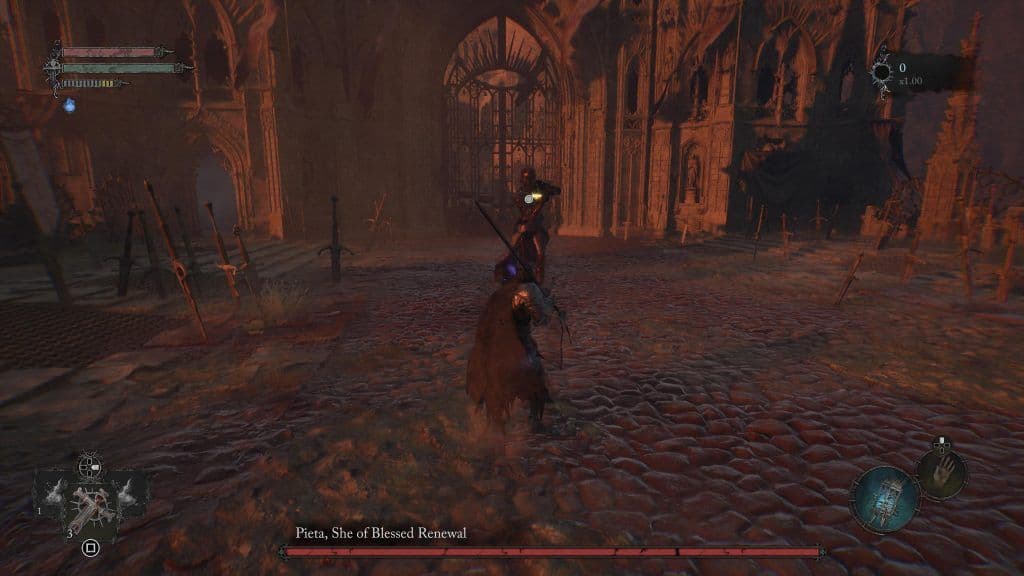
The boss encounters themselves are, for the most part, a highlight. Lords of the Fallen delivers a parade of visually spectacular titans, from the angelic duelist Pieta to the swamp-dwelling horror of The Hushed Saint. These fights are generally fair, emphasizing pattern recognition and arena management over punishing speed or health pools. The learning curve is reasonable, and the sense of accomplishment upon victory is genuine. However, they rarely reach the punishing, mastery-demanding peaks of the genre's best. Their health bars are manageable, their telegraphs are clear, and they often serve more as dramatic set-pieces and skill checks than the grueling, multi-attempt walls found elsewhere. This isn't inherently a flaw—it makes the game more accessible—but it sets a baseline expectation that the world's challenge will be similarly measured.
This measured approach shatters completely in the game's second half. Where Lords of the Fallen runs out of clever ideas, it substitutes sheer volume.
The design philosophy shifts from curated challenge to chaotic harassment. Reviewers consistently report being swarmed by "up to 20 enemies at once" in later areas like Lower Calrath and the Forsaken Fen. These aren't tactical group encounters; they're mobs of tanky, hard-hitting foes that spawn in claustrophobic spaces. The combat system, praised earlier for its weighty duels, completely buckles under this pressure. The lock-on camera, already finicky, becomes useless. The dodge roll's excessive travel distance sends you careening into other enemies. Your carefully honed skills for one-on-one engagements are irrelevant against a tide of aggression. The result isn't a test of skill, but of patience and sprinting stamina, as many players report resorting to simply running past entire sections—a damning indictment for a game built on deliberate combat.
This artificial inflation of difficulty is compounded by a reliance on what can only be described as "cheap shots." The game is littered with ambushes where enemies are tucked behind corners or perched on unreachable ledges, sniping you with projectiles while you deal with melee threats. Most egregious are the Mimics, which aren't chests but invisible enemies that bait you with glowing loot pickups. Your Umbral Lamp, the tool meant to reveal secrets, doesn't detect them, turning item collection into a tense game of Russian roulette. These moments don't feel like fair tests of awareness; they feel like the game trolling you, substituting "gotcha" moments for intelligent design.
Further undermining the challenge is the inconsistent enemy AI. While foes hit hard and track aggressively, their behavior can break immersion. They frequently get stuck on geometry, stand idle while you pelt them with ranged attacks from a distance, or fail to navigate simple environmental obstacles. This creates a bizarre dissonance: you're simultaneously being overwhelmed by unfair numbers and exploiting braindead pathfinding. The repetition compounds this; several early-game bosses, like the Congregator of Flesh, reappear later as standard elite enemies. What was once a memorable spectacle becomes a routine obstacle, draining the world of its sense of progression and threat hierarchy.
Lords of the Fallen wants to be hard, but it often confuses "hard" with "unfair" and "dense" with "engaging." The boss fights show a developer capable of crafting satisfying, self-contained challenges. The trash mob encounters, especially in the back half, reveal a developer falling back on the laziest trick in the book: if one enemy is challenging, surely ten will be epic. The result is a difficulty curve that doesn't ascend but rather collapses into a frustrating pile of bodies, testing your tolerance for irritation far more than your mastery of the game's otherwise solid mechanics.
Technical State of Mournstead: Unreal Engine 5 Performance
The visual ambition of Lords of the Fallen is undeniable, a stunning showcase for Unreal Engine 5 that often feels like playing through a grimdark oil painting. This is where the game earns its "next-gen" credentials most convincingly, crafting a world that is as technically impressive as it is artistically oppressive. Yet, for a title that leans so heavily on its presentation to sell its atmosphere, the journey to a stable, polished experience was a rocky one, marred by technical issues severe enough to overshadow its beauty at launch.
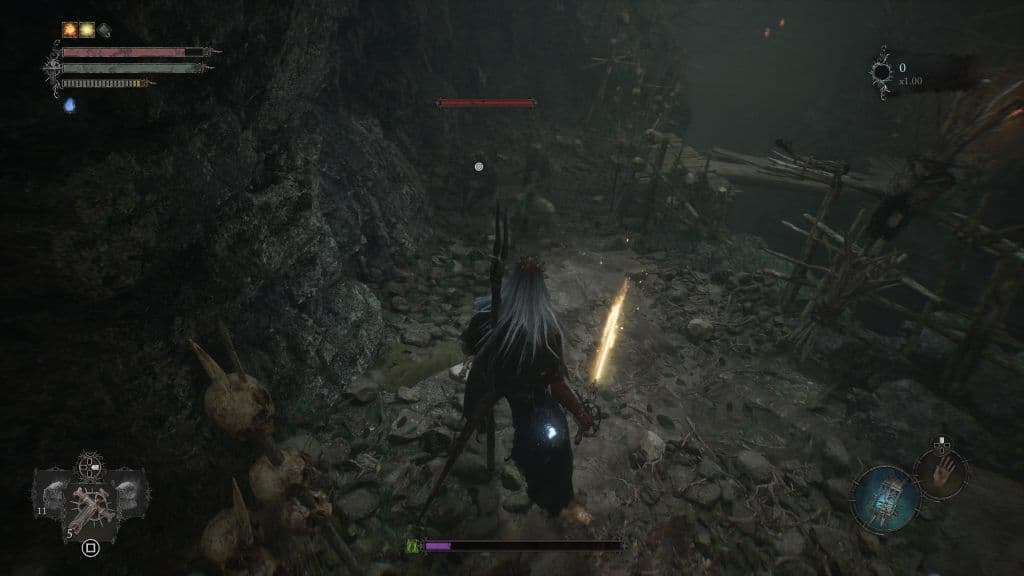
Performance mode on consoles provides a more stable framerate for the game's intense particle effects.
From the moment you step into the decaying grandeur of Mournstead, the visual fidelity is staggering. The game leverages UE5’s lighting and texture streaming to create environments dense with history and grime. The city of Calrath, perpetually ablaze, casts dynamic, flickering shadows that dance across its cobblestone streets and charred corpses, while the Umbral realm transforms familiar spaces into a haunting, blue-hued nightmare of pulsating organic matter and colossal bone architecture. This isn't just a graphical upgrade; it's a complete atmospheric overhaul that sells the game's core fantasy. The transition between Axiom and Umbral is seamless and visually breathtaking, a genuine "wow" moment that never loses its impact. On a high-end PC or PS5, Lords of the Fallen stands as one of the most visually striking games in the genre, a direct competitor to the Demon's Souls remake in sheer environmental detail and mood.
The art direction is the game's most consistent triumph, but for months, it was locked behind a pane of buggy, stuttering glass.
This ambition came at a significant cost to stability, particularly in the early weeks. Reports from players with top-tier hardware, including RTX 4090 rigs, described severe and frequent frame rate stutters, crashes in specific regions like Lower Calrath, and performance that could dip into unplayable territory during intense encounters or prolonged play sessions. The issues weren't confined to PC; the PS5's Quality mode, targeting higher visual fidelity, struggled to maintain a steady 30 frames per second, making the Performance mode the de facto—and only reliably smooth—way to play. These weren't minor hiccups. In a genre where timing is everything, a sudden frame drop could mean an avoidable death, transforming awe into frustration. The technical state at launch was the game's single greatest liability, undermining confidence in its otherwise solid mechanics and world design.
The story of Lords of the Fallen's technical state, however, is ultimately one of redemption through persistent post-launch support. Developer Hexworks embarked on a rapid-fire patching campaign, with Patch 1.7 frequently cited by later reviewers as the turning point that "fixed almost everything." This update, among many others, addressed critical bugs, optimized performance across all platforms, and smoothed out the most egregious frame pacing issues. The version of the game available today is markedly more stable than the one released in October 2023. While some minor hitches may persist—occasional audio glitches or texture pop-in—the experience is now largely polished, allowing the stunning visuals and intricate world design to take center stage as intended.
The audio presentation mirrors this journey from flawed to functional. The orchestral soundtrack is a bombastic, choir-heavy triumph that perfectly complements the game's operatic despair, earning a permanent spot on many a dark fantasy playlist. Where it falters is in the smaller details. Voice acting, particularly for early characters like Pieta, is often delivered with a hammy, theatrical gusto that can clash with the grim tone, and several reviews note it sometimes sounds muffled or distant, as if recorded through a helmet. These audio quirks, combined with the occasional glitch, can momentarily break immersion, but they are forgivable sins in a package where the environmental sound design—the creak of armor, the squelch of Umbral flesh, the distant howl of some unseen horror—is otherwise so effective.
In the end, the technical narrative of Lords of the Fallen is a testament to both the perils of ambitious, current-gen development and the value of committed post-launch care. What launched as a beautiful but broken spectacle has been forged, through patches, into the polished experience it was meant to be. The shadows of its rocky start may still linger in early reviews, but the game you can play today finally lets its breathtaking vision of Mournstead—and its terrifying Umbral reflection—shine without a frustrating filter of performance anxiety.
Multiplayer and Value: Is Lords of the Fallen Worth the Grind?
The final test of any Soulslike isn’t just whether it can be finished, but whether you’d ever want to play it again—or, more importantly, invite a friend to join you. Lords of the Fallen presents a fascinating dichotomy here: its cooperative play is arguably the most accessible and rewarding in the genre, while its post-campaign structure and value proposition are mired in some of its most baffling design decisions.

Lords of the Fallen features seamless co-op and PvP interactions.
This is the game’s greatest strength and its most glaring missed opportunity, often within the same feature.
Where Lords of the Fallen unequivocally shines is in its seamless co-op. This isn’t the traditional, restrictive summoning of a phantom for a single boss fight. From any Vestige, you can simply beckon a friend (via password or your friends list) and embark on the entire campaign together. No consumable items, no convoluted rituals—just drop in and play. Crucially, the summoned player retains all Vigor and items they collect, and they aren’t booted after a boss dies. This is a revelation for the genre, transforming the often lonely, punishing journey of Mournstead into a shared adventure. It effectively acts as a built-in “easy mode,” as enemies scale in health and damage, and you can even summon story NPCs on top of your human ally. For players intimidated by the genre’s notorious difficulty, this feature alone makes Lords of the Fallen a compelling purchase. It’s the game’s most forward-thinking and player-friendly innovation.
Unfortunately, the competitive counterpart, PvP invasions, is a technical mess that undermines this goodwill. While the thrill of an unexpected duel can be exciting, the infrastructure is plagued by poor netcode. Reviewers reported frequent disconnections (3 out of 5 attempts in one account) and latency so severe that outcomes often felt predetermined. In a game where precise parry timing and dodge spacing are life-or-death, teleporting opponents and laggy hits render the experience more frustrating than fun. The option to disable cross-play or use a specific item to prevent invasions exists, but it’s a band-aid on a broken system. In a genre where seamless, tense PvP is a hallmark, Lords of the Fallen’s implementation feels like an afterthought.
The sheer volume of content is undeniable. A single playthrough to cleanse the five Beacons will take most players 35 to 45 hours, a substantial campaign filled with the game’s intricate dual-world exploration and a dozen-plus major bosses. Multiple endings—including a challenging secret one—and a vast arsenal of weapons and spells encourage replayability with different builds. This is where the value proposition should be rock-solid.
However, Lords of the Fallen sabotages its own longevity with one of the most punitive New Game Plus modes in recent memory. In a move that can only be described as masochistic, Hexworks removes almost all permanent Vestiges (checkpoints) for subsequent playthroughs. You are forced to rely entirely on Vestige Seeds, a consumable item used to plant temporary checkpoints. These seeds are scarce, and they can only be planted in specific, enemy-free flowerbeds. The intent is to create a tense, high-stakes survival run, but the result is an exercise in tedium. It transforms the beautifully interconnected world into a stressful marathon where death can mean losing 30 minutes of progress because you couldn’t find a safe spot to plant a seed. This isn’t difficulty; it’s artificial friction that disrespects the player’s time and actively discourages engaging with NG+.
This problem is exacerbated by the game’s abysmal navigation tools. Lords of the Fallen provides no functional in-game map. Instead, you collect vague, lore-heavy “doodles” that offer almost no practical guidance. In a world as vertically dense and labyrinthine as Mournstead—especially with the Umbral layer adding hidden paths—this lack of basic orientation leads to hours of aimless backtracking and frustration. You will get lost, constantly. While this may appeal to the most hardcore purists, it feels less like a deliberate design choice and more like an oversight, forcing players to rely on external guides or brute-force memory in a game already demanding enough. It’s a barrier to enjoyment that makes the already-grindy late-game and the Vestige-starved NG+ feel even more oppressive.
So, is Lords of the Fallen worth the grind? For a co-op playthrough with a friend, absolutely—it’s a genre-leading experience that mitigates many of the game’s solo frustrations. For the solo player seeking a deep, replayable journey, the answer is more complicated. The 40-hour campaign offers a rich, if flawed, adventure, but the game seems determined to punish you for wanting to experience it again. The value is there, buried under layers of self-inflicted obstacles that make the commitment feel like a chore rather than a reward.
Final Verdict: A Flawed but Fascinating Soulslike Evolution
Lords of the Fallen is a game of profound contradictions, a title whose most brilliant innovations are perpetually at war with its most stubborn flaws. It’s a game that can feel like a revelation one moment and a chore the next, a duality that makes issuing a simple verdict a complex task. This isn't a clean, polished masterpiece, nor is it a failure. It's a fascinating, deeply ambitious experiment in Soulslike evolution that stumbles over its own grand vision, yet remains impossible to dismiss.
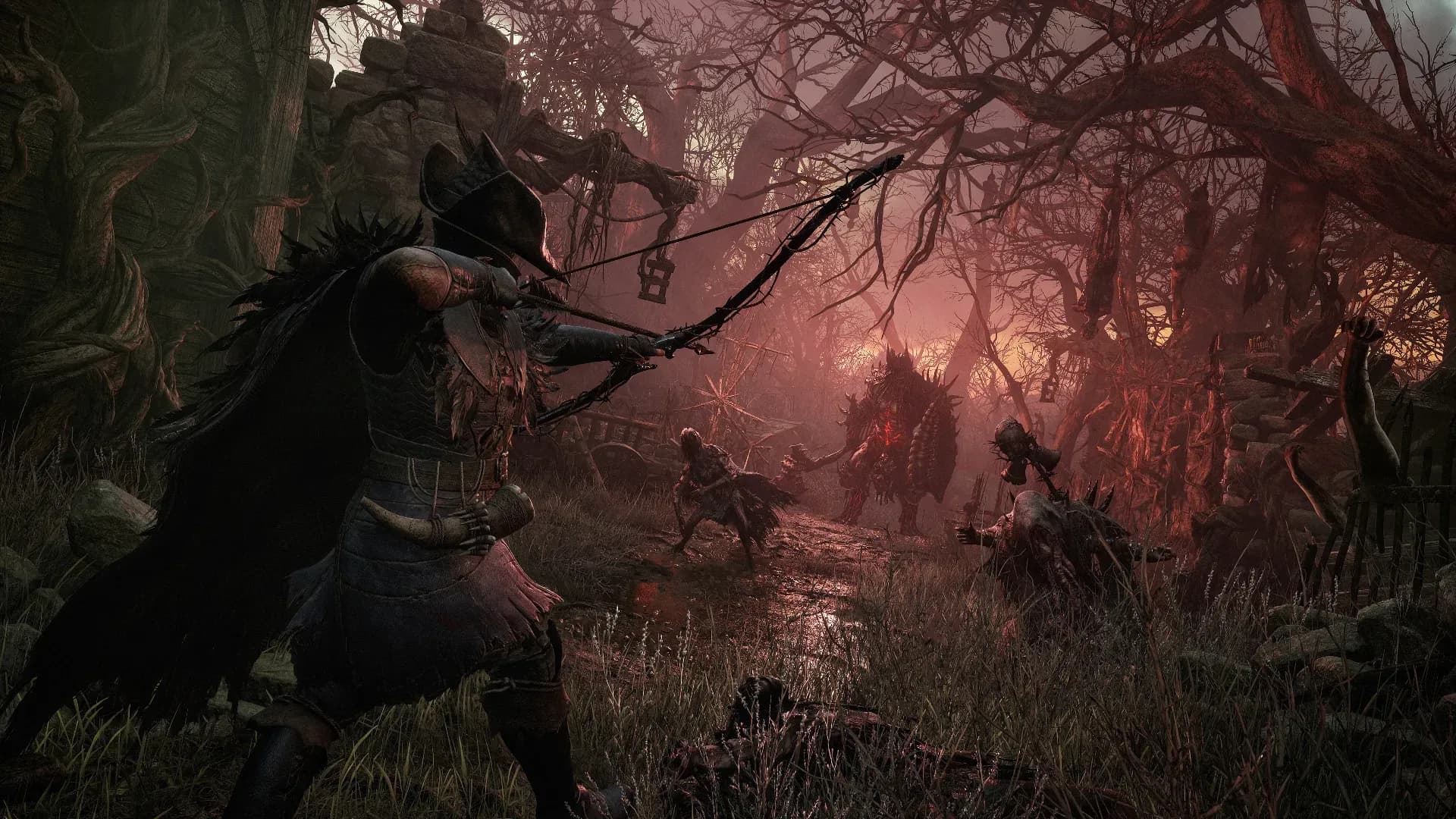
The final verdict on Lords of the Fallen highlights a beautiful but frustrating world.
The game's target audience is clear, yet bifurcated. Lords of the Fallen is a must-play for co-op enthusiasts and genre fans hungry for a fresh mechanical twist, but a much harder sell for the solo purist seeking pure, unadulterated polish. For players who found the seamless, barrier-free co-op a revelation, the entire 40-hour campaign transforms into a shared, manageable adventure where the game's harshest edges are sanded down by camaraderie. Similarly, Dark Souls 3 devotees will find a comforting, if occasionally clumsy, familiarity in its rhythm and a world that begs to be picked apart. However, for the solo player who measures every Soulslike against the precision of Lies of P or the boundless freedom of Elden Ring, the experience is likely to be one of constant friction against its floaty combat and late-game enemy spam.
This is the game's legacy: a flawed but fascinating pillar of "what if?" that will be remembered more for its bold ideas than its perfect execution.
Its value proposition is similarly a tale of two halves. On content alone, Lords of the Fallen is an undeniable behemoth, offering a massive, labyrinthine world that effectively doubles in size thanks to the Umbral realm. The sheer density of secrets, build options, and visual spectacle justifies the price of entry. Yet, that value is undermined by self-inflicted wounds. The punitive New Game+ mode, which strips away permanent checkpoints, feels like a deliberate middle finger to replayability, transforming a second journey into a stressful slog. The complete absence of a functional in-game map in a world this complex isn't a charming throwback; it's a glaring oversight that turns exploration into frustrating guesswork, forcing players to external guides far too often.
So, who is this for? Lords of the Fallen is for the patient explorer captivated by a stunning, dual-layered world. It's for the theory-crafter who delights in a deep magic system and vast arsenal. It is emphatically for anyone who wants to experience this genre with a friend by their side from start to finish. It is not for those who demand flawless combat physics, perfectly tuned difficulty curves, or a frictionless solo experience. This is a B-tier Soulslike with A-tier ambitions and C-tier moments of frustration—a game that earns a hesitant recommendation not because it’s great, but because its successes are so compelling they almost, almost, outweigh its failures.
Pros:
- A stunning, oppressive visual showcase powered by Unreal Engine 5.
- The Umbral Lamp mechanic is a genuine, genre-evolving innovation that redefines exploration.
- Seamless, full-campaign co-op is the best implementation in any Soulslike to date.
- Incredible build variety with meaningful choices across nine starting classes and deep magic systems.
- A massive, content-rich world that offers 35-45 hours of adventure for the main path.
Cons:
- Frustrating late-game enemy density that substitutes challenge for overwhelming, tedious mobs.
- Floaty, momentum-heavy combat physics and input delay that undermine precision.
- A rocky launch state with persistent, though improved, technical jank and performance hiccups.
- Punitive New Game+ design and a complete lack of player guidance or mapping.
- Bosses, while visually spectacular, rarely reach the memorable heights of the genre's best.