Sonic the Hedgehog Identity: Sega's High-Speed Answer to Mario
In 1991, the console war was fought in primary colors. Nintendo’s plumber, Mario, defined the platformer with methodical, block-busting precision. Sega needed a weapon, a mascot built not for plumbing but for pure, unadulterated velocity. Sonic the Hedgehog was that weapon—a corporate mandate given life by a seven-person team and a singular, brilliant design ethos. This wasn't just a new game; it was Sega's high-speed answer to Mario, a kinetic manifesto engineered to sell Genesis consoles by showcasing what the hardware could do that its rival's could not.
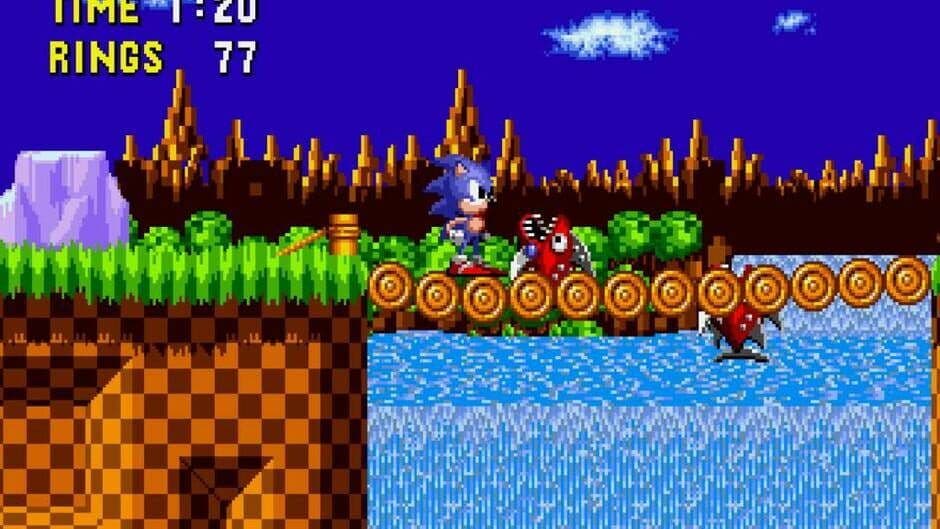
High-speed loops were a revolutionary feature for 16-bit platformers.
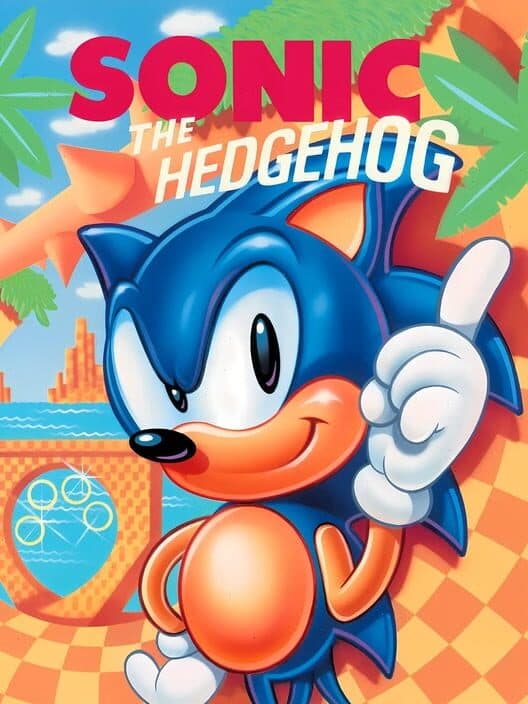
The character design was the first and most crucial shot across the bow. Where Mario was a mustachioed everyman in overalls, Sonic was a blue hedgehog with red sneakers, a spiky attitude, and a permanent smirk. This wasn't just aesthetic; it was identity. The vibrant, almost neon color palette of Green Hill Zone was a technical flex, a bold statement that the Genesis could render sprawling, colorful landscapes that moved. Sonic's iconic look wasn't merely cool; it was a calculated challenge to the industry status quo, proving a mascot could be defined by speed and attitude as much as by jumping on turtles.
The game's entire existence was a hardware showcase. Released on June 23, 1991, its "blast processing" marketing wasn't just hype—it was the tangible feeling of Sonic tearing through loop-de-loops at a pace that felt impossible on an 8-bit console.
This context is essential to understanding the game's DNA. Every design decision in Sonic the Hedgehog served a dual purpose: to be fun and to sell Sega's brand. The speed was the headline feature, yes, but it was also a demonstration of the Genesis's graphical horsepower. The expansive, multi-path levels weren't just good design; they were a visual argument against the more constrained, linear worlds of its competitors. The game succeeded wildly on both fronts, birthing a cultural icon and establishing a gameplay pillar—momentum as reward—that would define a franchise. It was a product of corporate warfare, but one crafted with such focused artistry that it transcended its origins to become a foundational piece of the platformer genre.
Gameplay Mechanics in Sonic the Hedgehog: Momentum vs. Precision
In Sonic the Hedgehog, speed isn't just a thrill; it's the entire economy. While other platformers of its era rewarded careful, reactive play, this game built its world around momentum as a tangible reward. The genius is that moving faster isn't merely a choice—it's the optimal path. Rolling into a ball at the crest of a hill in Green Hill Zone and rocketing through a loop-de-loop generates both visual spectacle and mechanical advantage, carrying you past obstacles and onto higher, more rewarding routes. This transforms the core skill from precise jumps to understanding physics: learning when to unleash Sonic’s full pace and when to hold back to set up the next burst of velocity. It’s a rhythm that feels natural once discovered, creating a uniquely satisfying feedback loop where the player’s mastery is directly measured in how fluidly they traverse the landscape.
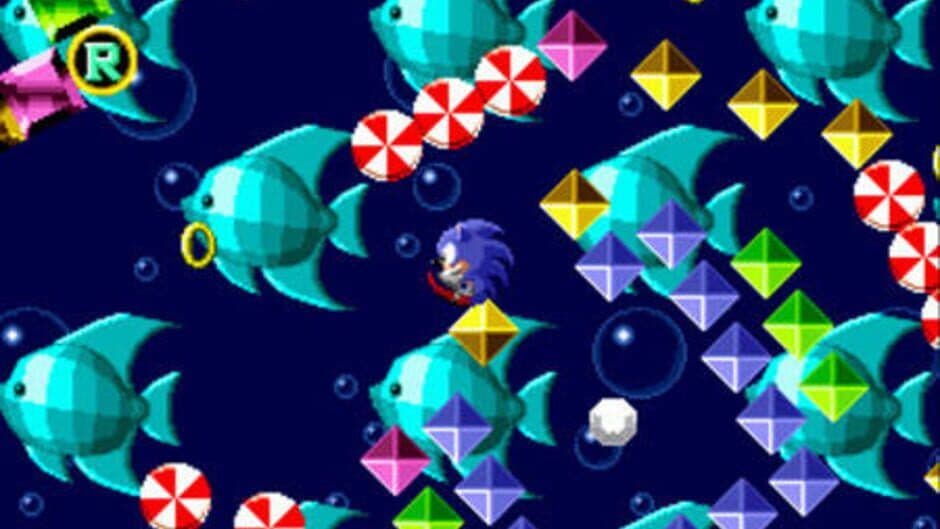
Physics-based platforming mechanics
This physics-driven design is supported by a deceptively simple control scheme. One button jumps, and by default, pressing down while moving causes Sonic to curl into a ball, his primary offensive and speed-boosting state. There’s no dedicated attack button; your movement is your attack. This minimalist approach could have felt limiting, but the controls are remarkably responsive. The connection between input and on-screen action is immediate and authentic, a feel that later 3D Sonic titles famously struggled to replicate. This reliability is crucial because the gameplay demands split-second decisions—dodging a Motobug, bouncing off a spring, or changing direction mid-air to land on a narrow platform. The skill ceiling is high, but the intuitive controls make the initial climb accessible.
The true test of this system is the gold ring mechanic, one of the game's most elegant risk-reward structures. As long as Sonic holds at least one ring, he can survive a hit from an enemy or hazard. However, taking that hit causes him to drop every single ring he's carrying, scattering them across the screen with a heart-sinking chime.
This creates a brilliant tension. Rings are both your health buffer and your pathway to extra lives and continues, incentivizing you to collect them greedily. Yet, the more you amass, the more devastating a single mistake becomes. It forces a constant calculation: do you dash through a dangerous section to grab that cluster of rings, or do you play it safe? This system perfectly complements the speed-focused design, as moving quickly often allows you to bypass threats entirely, preserving your precious cache. It’s a masterclass in using a simple resource to create compelling gameplay stakes.
However, this original outing lacks a tool that would become synonymous with the franchise: the Spin Dash. Introduced in Sonic the Hedgehog 2, this move allows Sonic to rev up and blast off from a standstill, granting immediate agency over his speed. Its absence here is palpable, particularly in the more methodical, puzzle-like Marble Zone. There are moments where Sonic comes to a complete stop, and regaining momentum feels awkward, requiring a running start that can be punished by level design. For veterans of the sequels, returning to this original can feel like driving a car without a first gear—the core engine is magnificent, but getting it up to speed requires more patience than the game’s identity suggests it should.
Ultimately, the gameplay of Sonic the Hedgehog is a landmark achievement in marrying a core fantasy—going fast—with tangible, rewarding mechanics. It proves that speed in a platformer doesn't have to be chaotic; it can be controlled, mastered, and leveraged. While the missing Spin Dash and the sometimes-punishing ring loss highlight the rough edges of a pioneering title, the foundational feel of controlling Sonic—the weight of his acceleration, the bounce of his jump, the risk embedded in every collected ring—remains incredibly potent. This is where the game earned its reputation, not just as a mascot vehicle, but as a revolutionary take on what a platformer could be.
Level Design and Pacing: From Green Hill Joy to Labyrinth Frustration
The opening act of Sonic the Hedgehog is a masterclass in selling a fantasy. Green Hill Zone isn’t just a first level; it’s a promise. The bold, almost neon colors, the gentle slopes that naturally build momentum, and the iconic loop-de-loops are designed for one purpose: to make you feel the game’s core identity of speed within minutes. This is where the game earns your trust, teaching you that the optimal path is often the fastest one, rewarding velocity with safer routes, more rings, and sheer kinetic joy. The following zones, Marble Zone and Spring Yard Zone, build intelligently on this foundation, introducing environmental puzzles and pinball-like bumpers that test your understanding of Sonic’s physics without betraying the exhilarating pace.
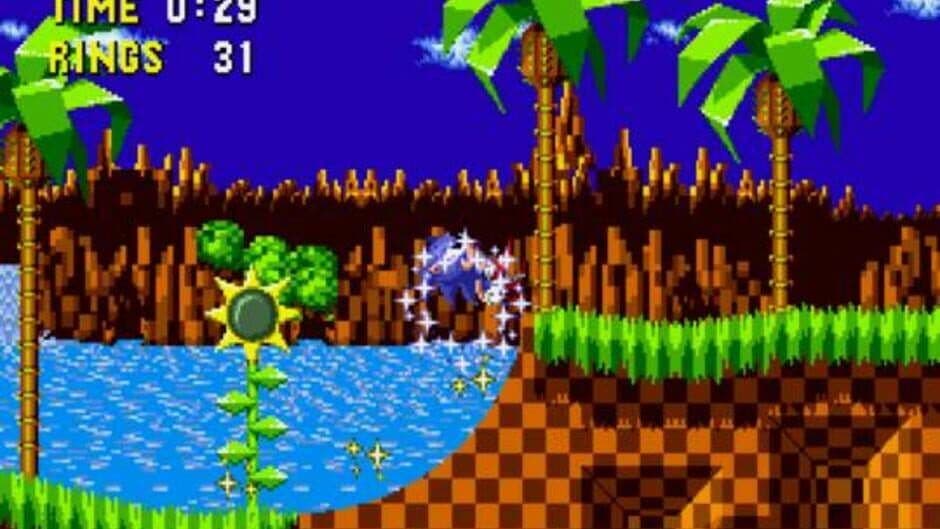
Later levels challenge players with more deliberate and dangerous pacing.
This is where the game’s level design truly shines: its wide-open, puzzle-like layouts. In 1991, platformers like Super Mario Bros. thrived on compact, left-to-right challenges. Sonic the Hedgehog dared to be vertical and exploratory, with multiple branching paths hidden in its topography. The skill isn’t just in reaching the goal, but in finding the route that lets you maintain your flow, turning the act of navigation into a rewarding puzzle in itself.
However, the pacing of Sonic the Hedgehog hits a wall—sometimes literally—in its second half. The transition from the vibrant, speed-friendly early zones to the oppressive Labyrinth Zone is the game’s most glaring misstep. An underwater level where Sonic moves with agonizing sluggishness and drowns if you don’t find air bubbles, it functions as a brutal patience tester that directly contradicts the exhilarating identity the first three zones so carefully built. It’s a stark reminder that this is a pioneering title, one still grappling with how to maintain challenge without sacrificing its core fantasy. The difficulty here isn’t about mastering momentum; it’s about meticulous memorization of bubble locations and enemy patterns, a shift that feels punitive rather than skillful.
This difficulty spike becomes a defining characteristic of the later stages. Star Light Zone offers a partial recovery with its sleek, nighttime aesthetic and return to high-speed platforms, but the final gauntlet of Scrap Brain Zone and its boss rush demands perfection. These industrial, hazard-filled stages require near-flawless route memory, punishing experimentation with instant-death pits and cheap enemy placements. For a game that initially rewarded fluidity and adaptation, the endgame devolves into a test of trial, error, and memorization. The zone variety, while aesthetically distinct, thus creates a jarring curve: the journey from the organic joy of Green Hill to the mechanical brutality of Scrap Brain feels less like a natural escalation and more like two different design philosophies awkwardly stitched together.
The impact is a game that peaks early. The first half of Sonic the Hedgehog is a revolutionary, cohesive experience that delivers on its high-speed promise. The back half, however, often feels like it’s fighting against its own best ideas, substituting deliberate, punishing obstacles for the free-flowing momentum that made it special. It’s a testament to the strength of that initial vision that the game remains iconic despite these pacing issues, but it’s also the clearest reason why its immediate sequel is so often hailed as the superior package. This original adventure laid the groundbreaking track, but it didn’t always know how to stay in the fast lane.
The Audio-Visual Package: Why Sonic Still Holds Up Decades Later
The lasting power of a game is often measured in its aesthetic, and Sonic the Hedgehog’s audio-visual package is the reason its pixels and melodies remain etched in the collective memory decades later. This was a game engineered as a hardware showcase, and every visual and sonic choice serves that aggressive marketing purpose—yet it’s executed with such cohesive artistry that the sales pitch transforms into timeless style.
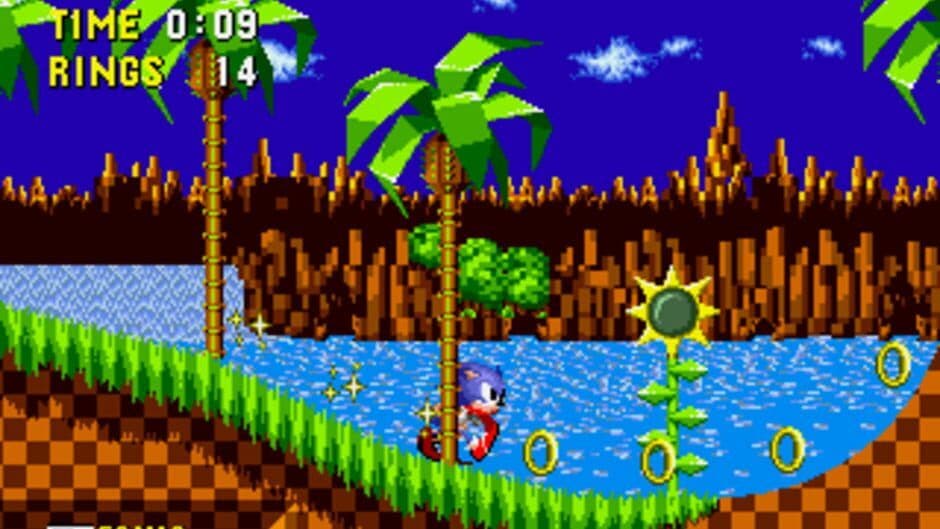
Distinctive Sega Genesis art style.
Visually, the game was a brash statement against the impending Super Nintendo. The Genesis, with its color palette limitations compared to its rival, demanded a different kind of spectacle. Sonic the Hedgehog delivered with bold, saturated colors and incredibly smooth animation that made its sense of speed feel tangible. The iconic loop-de-loops of Green Hill Zone weren’t just fun to traverse; they were a technical flex, proving the hardware could render complex, parallax-scrolling backgrounds while Sonic himself remained a fluid, detailed sprite. This visual fidelity was the game’s “blast processing” made real, creating a world that felt alive and kinetic in a way few 1991 titles could match. The occasional slowdown during heavy on-screen action is the only concession to the era’s limits, a minor stutter in an otherwise flawless sprint.
The soundtrack is the game’s other monumental achievement. Composed by Masato Nakamura of the J-pop band Dreams Come True, it’s a collection of melodies so iconic they’ve become part of the gaming lexicon. The Green Hill Zone theme alone is a masterclass in audio branding—an upbeat, carefree anthem that perfectly encapsulates the zone’s sunny, exploratory joy.
This is where Sonic the Hedgehog achieves its legendary status: through perfect audio-visual synergy. Each zone’s musical identity is meticulously crafted to complement its visual and gameplay tone. The ominous, percussive beats of Marble Zone mirror its ancient, trap-filled ruins, while the synth-bounce and pinball sounds of Spring Yard Zone create a carnival-like atmosphere that matches its neon bumpers and casino aesthetics. The music isn’t just background; it’s a core part of the environmental storytelling, telling you how to feel about a space before you’ve even fully processed its layout. This cohesion creates a complete sensory package where sight and sound are inseparable, elevating the experience beyond its technical components.
For a game built on velocity, the technical performance in selling that speed was paramount. On original hardware, the sensation of tearing through a zone at top velocity was, for 1991, nothing short of breathtaking. The developers leveraged every trick to sell this fantasy, from the blur effect on Sonic’s sprite to the way background layers scrolled at different rates to create depth. The fact that this was achieved with only rare hiccups is a testament to the team’s optimization skill. While the later, more mechanically dense zones like Scrap Brain could strain the system, the foundational promise—that this console could deliver a unique, high-speed experience—was sold in the very first minute of play and never truly retracted. The audio-visual design of Sonic the Hedgehog wasn’t just decoration; it was the game’s soul and its strongest argument for existence, a combination so potent it defined a brand for generations.
Final Verdict: Is the Original Sonic the Hedgehog Still Worth Playing?
More than three decades after its release, the uncomfortable truth about Sonic the Hedgehog is that we play it now more for its historical significance than its unassailable fun. This isn't to dismiss its brilliance, but to contextualize it. As the foundational stone upon which an empire of speed was built, its rough edges are as telling as its polished peaks. The final verdict, then, hinges on what you seek: a perfect, timeless platformer, or a vital museum piece that captures a moment of seismic industry change.
The game’s most direct competition comes from its own sequels. The analysis throughout this review—the joyous physics, the iconic aesthetics, the punishing late-game—culminates in a clear consensus: Sonic the Hedgehog 2 is the superior game in nearly every measurable aspect. The original’s most glaring omission, the Spin Dash, is more than a missing move; it’s a fundamental quality-of-life feature that reconciles the game’s stop-start moments in zones like Marble Zone with its need for fluid momentum. Sonic 2 also smooths out the brutal difficulty curve, offering a more consistent escalation that maintains the thrill without the punitive memorization of Labyrinth Zone. To play the original after the sequel is to appreciate the blueprint, but to feel acutely aware of the refinements built upon it.
This creates a unique value proposition for modern players. On digital storefronts, where it’s often priced around the $8 mark, you’re paying for a short campaign—a skilled player can see the credits in under an hour—that is as historically important as it is occasionally frustrating. The question isn't whether it's "good," but what its goodness is worth to you now.
For retro enthusiasts and students of game design, Sonic the Hedgehog is essential. It is a masterclass in audio-visual synergy and a bold experiment in marrying physics with platforming. Feeling the genesis of the gold ring risk-reward system, or witnessing the moment the screen first scrolls with Sonic’s unprecedented speed, is to understand a pivotal turn in the genre. However, for the casual player simply seeking a great classic platformer, the recommendation becomes more nuanced. The sheer joy of the first three zones is undeniable, but the commitment required to slog through the later stages may feel like a dated artifact of 1991’s often brutal design philosophy.
Ultimately, Sonic the Hedgehog earns its legacy not by being flawless, but by being fearless. It proved speed could be a platformer’s core mechanic, introduced an iconic mascot with attitude, and delivered a sensory package that still resonates. Its failures are just as instructive as its successes, marking the growing pains of a new idea. You don't play it to experience the best Sonic game; you play it to witness the big bang.
The Final Tally:
- Pros: A revolutionary integration of momentum-based gameplay that feels fantastic; incredibly responsive and simple controls; one of the most iconic soundtracks in gaming history, perfectly fused with vibrant, era-defining visuals.
- Cons: Pacing that collapses in later zones like the sluggish Labyrinth Zone; a punishing difficulty spike reliant on memorization over skill; the lack of quality-of-life moves like the Spin Dash, which its sequel would immediately rectify.