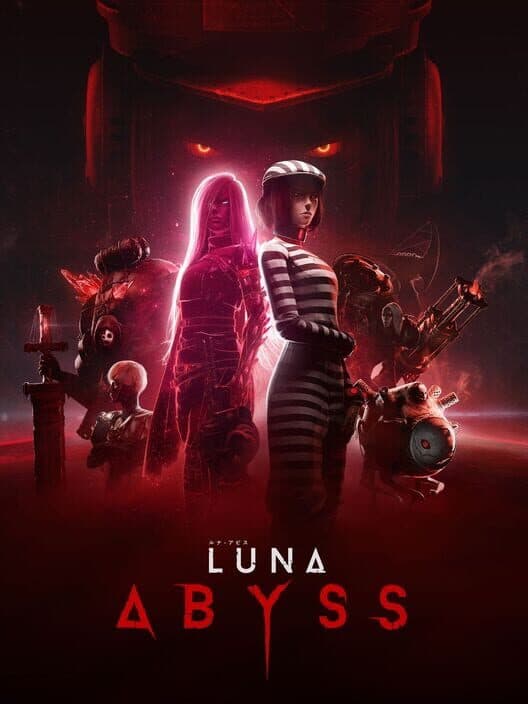
Luna Abyss First Impressions: A Surreal Descent into the Red Moon
From the moment you fall down seemingly infinite pipes into the impossible geometry of Luna Abyss, it’s clear this isn’t just another retro-styled shooter. This debut from Bonsai Collective confidently discards genre purity, weaving together a first-person bullet hell, a 3D platformer, and a narrative mystery into a singularly bizarre tapestry. You don’t play Luna Abyss; you submit to its oppressive, surreal logic, and that’ s the game’s first and most important promise.
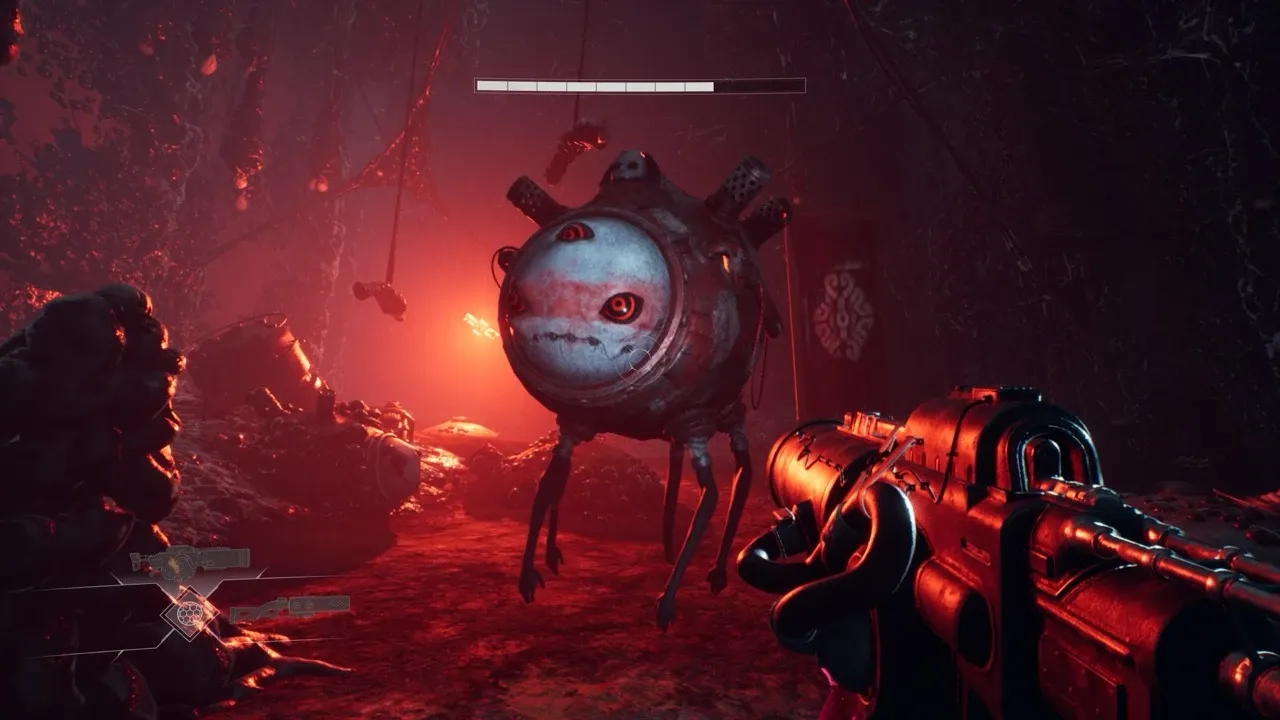
The game's world features massive, oppressive architecture reminiscent of surreal sci-fi.
The atmosphere is the true protagonist here. Luna Abyss crafts a mood of cosmic bureaucratic horror, a "Tim Burton in space" aesthetic where you’re a cog in a vast, indifferent machine. You play as Fawkes, a convict serving a daunting 9,000 to 10,000-day sentence on the blood-red moon Luna. Your only hope for leniency is to descend into the Abyss—a decaying biomechanical megastructure—in a robotic Warden body to scavenge lost tech. This premise isn't just a setup; it's a pervasive mood. The game bombards you with liminal spaces, viscous black goo, and a dissonant, chanting choir that warps the screen, establishing an unsettling tone that feels like a cross between Blame! and a particularly grim episode of The Prisoner.
The narrative is intentionally, almost aggressively obtuse, rewarding players who find comfort in the abstract weirdness of David Lynch or Yoko Taro rather than those seeking clear answers.
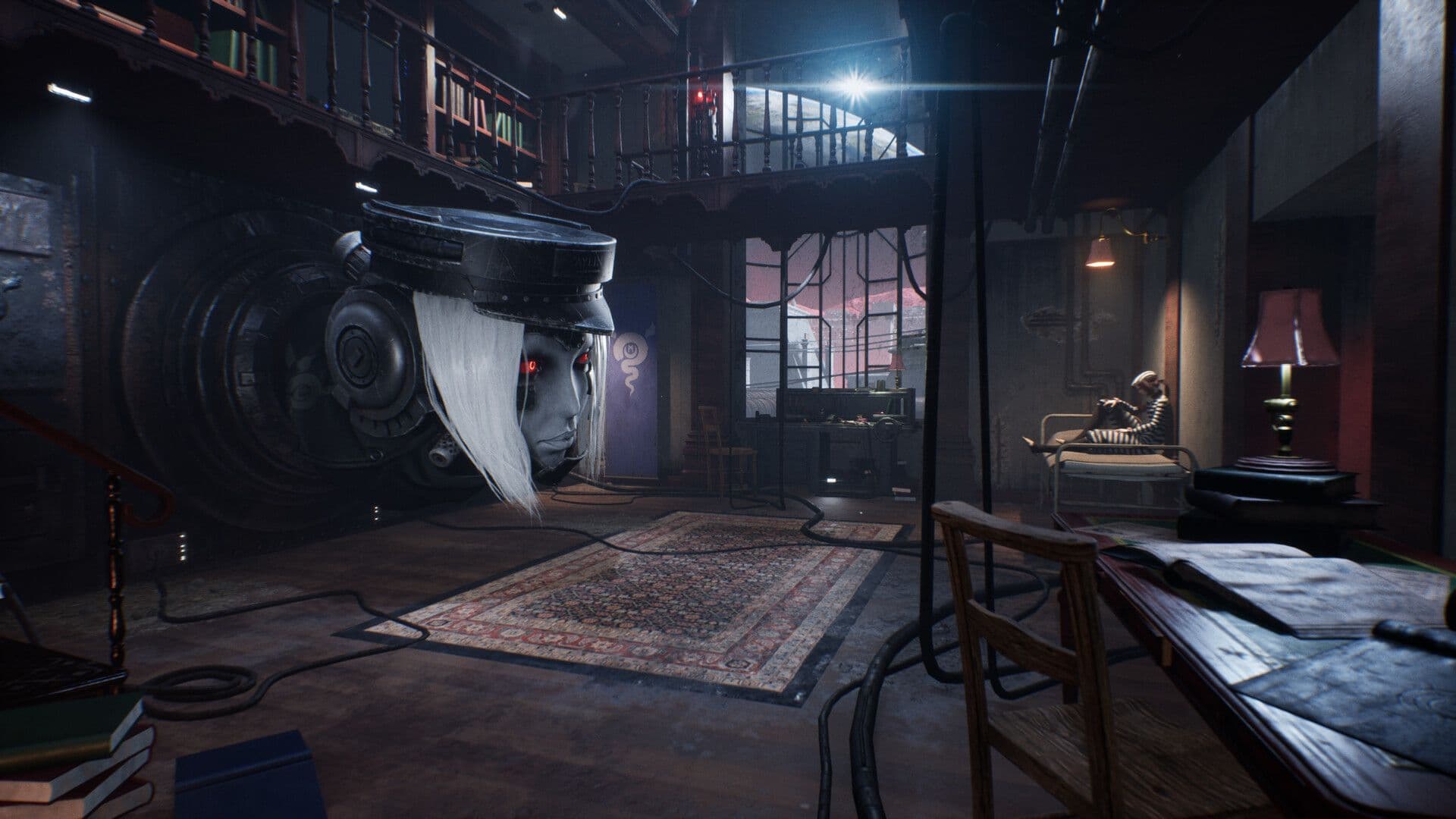
Your guide through this nightmare is Aylin, an artificial prison warden who manifests as a giant, floating head with a snake-like robotic body. This character design—simultaneously unsettling, slightly "horny," and perfectly fitting the game's off-kilter tone—exemplifies the game's commitment to its own weirdness. Your interactions with Aylin are laced with a layer of institutional control and cryptic guidance, establishing a dynamic that’s less about camaraderie and more about surviving a system that views you as expendable. This relationship frames the entire experience, making you question every directive as you piece together the truth.
The world-building feeds this paranoia. Lore fragments hint at the fallen colony of Greymont, a mysterious plague called the Scourge, and the enigmatic tenets of the All-Father. This isn't lore delivered for simple context; it's a puzzle box of tragic history and potential deception. You collect journal entries and hear "maddening echoes" of the past, but the game rarely connects the dots for you. For some, this will be a frustrating exercise in abstraction. For others, it’s the core appeal—the thrill of navigating a universe that feels genuinely alien and unconcerned with your comprehension, where a gargantuan humanoid figure hanging from the ceiling is presented without explanation, meant only to awe and unsettle.
This opening descent establishes Luna Abyss as a game of confident, specific vibes over conventional pacing. It’s a world that feels lived-in by nightmares, and your role as Fawkes is less that of a heroic liberator and more of a rat in a maze, slowly realizing the maze itself is alive and hostile. Whether that premise hooks you or leaves you cold will be decided in these first hours, but the game’s unique identity is stamped on every corroded pipe and cryptic transmission.
Luna Abyss Combat: Why Lock-On Targeting Redefines the FPS Rhythm
In Luna Abyss, the gunplay initially feels like a concession. An auto-lock system? In a first-person shooter? This is where the game’s genius—and its divisiveness—is laid bare. The moment-to-moment action isn't about pixel-perfect headshots; it's a high-speed dance of evasion and tactical priority. By shifting the skill ceiling from your trigger finger to your feet, Luna Abyss carves out a unique, rhythm-driven combat identity that feels as much like a top-down bullet hell as it does a traditional FPS.
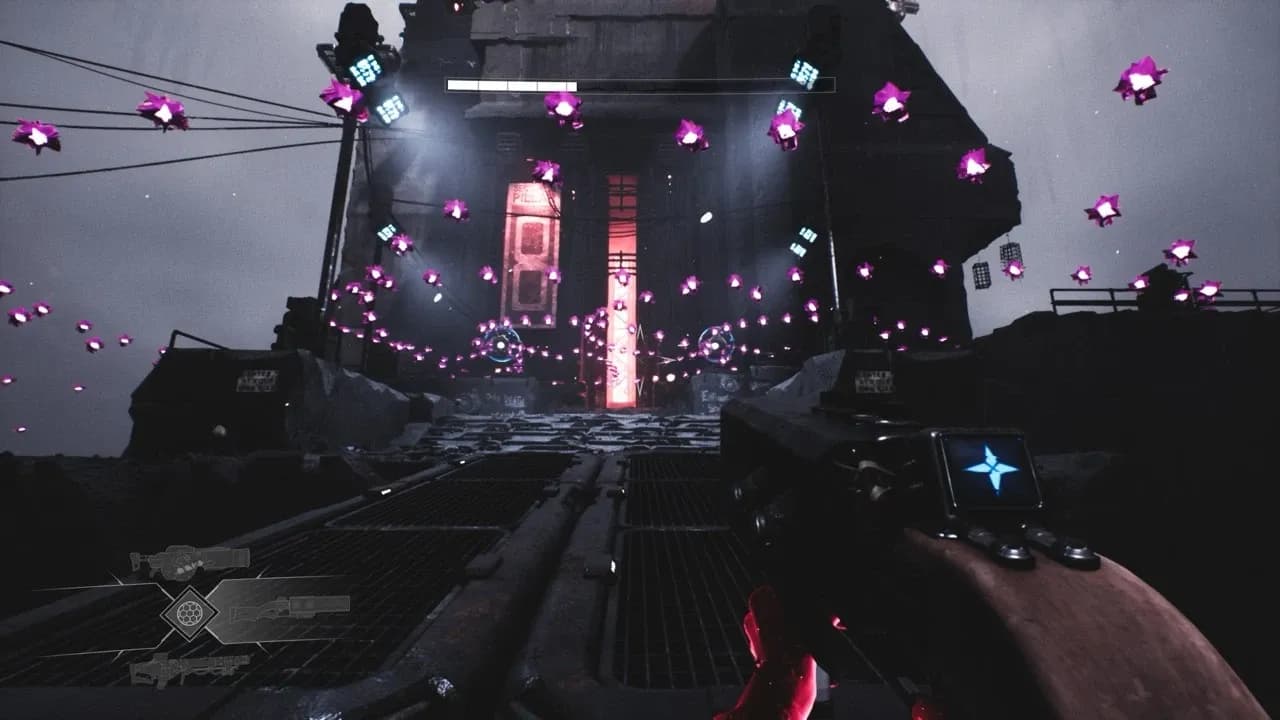
The lock-on system allows players to focus on dodging complex bullet patterns.
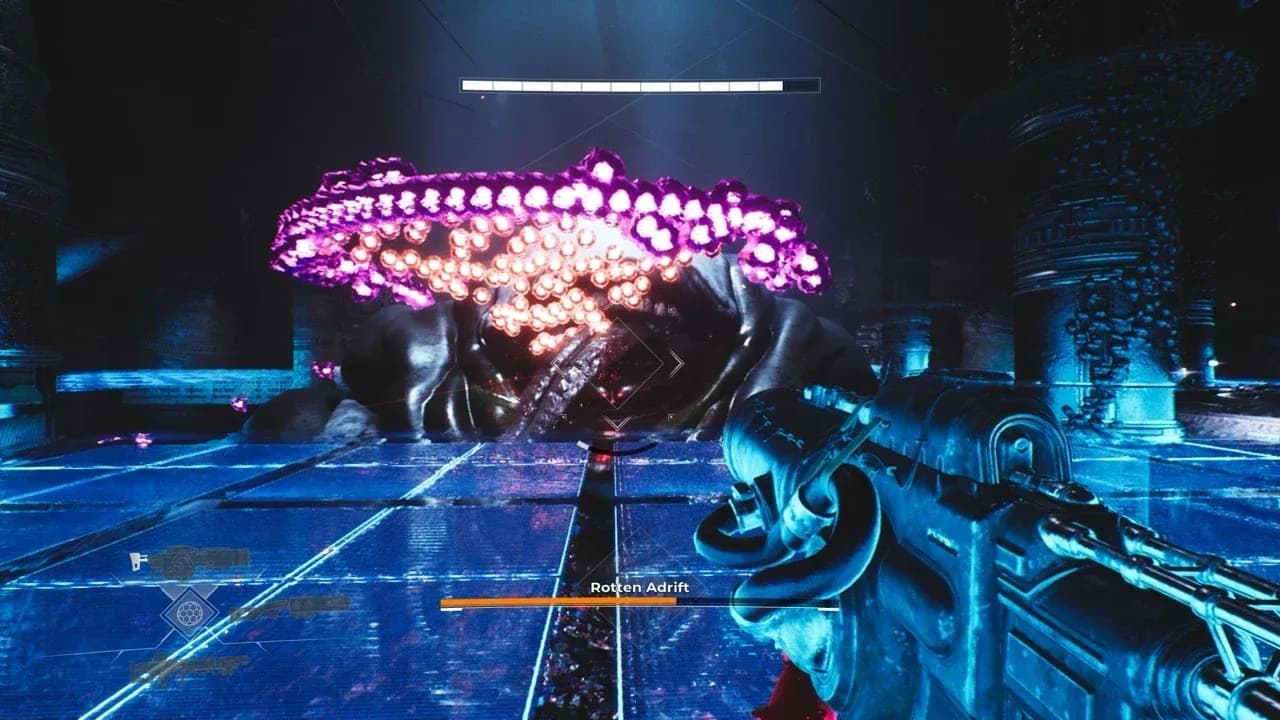
The core of this system is a deliberate economy of violence. You have just four weapons: the dependable Scout Rifle, the close-range Shieldbreaker, the long-cooldown Monarch’s Lance sniper, and a multi-target rocket launcher. Crucially, they don't use ammo—they overheat. This Mass Effect-inspired cooldown system eliminates scavenging and forces a constant, strategic rotation. You can't just spam your favorite gun; you must manage a toolkit. This design is brilliantly accentuated by the enemy shield mechanics. Blue barriers shatter only under the Shieldbreaker's blast, while brief purple windows demand a precise shot from the Monarch’s Lance. In the heat of a locked arena, this isn't a suggestion—it's a mandate. You’re constantly scanning the chaos, identifying the high-priority shield-bearer, swapping weapons mid-dash, and unleashing the correct tool before your other weapons cool down. It creates a satisfying, almost puzzle-like layer to the frenzy.
This is where the combat earns its "bullet hell" tag. Your focus isn't on a reticle, but on the space between the glowing orbs and laser grids filling the screen. Survival is a ballet of double jumps, air dashes, and grapple-point swings.
Where this system stumbles is in its execution during peak chaos. The lock-on targeting, while generally reliable, has a frustrating tendency to prioritize the wrong enemy in swarms. When you desperately need to break a purple shield to stop a barrage, but the game stubbornly locks onto a basic grunt in the foreground, the feeling of control shatters. This is exacerbated by a weapon-swapping system that feels built for contemplation, not combat. Using the D-pad is instant but awkward during fluid movement, while holding a bumper to open a time-slowing weapon wheel kills your momentum. For a game so obsessed with flow, this is a glaring friction point.
The Drift Kill system, however, is pure reward. When an enemy staggers, you can tap a button to siphon health from them or hold it to detonate their corpse into a spike-filled area-of-effect attack. This isn't just a flashy finisher; it's a core survival tool. In a tough fight, you’re constantly weighing the immediate healing against the potential crowd control, adding a thrilling risk-reward decision to every encounter. It encourages aggressive, in-your-face play and seamlessly integrates into the combat rhythm.
Yet, for all its clever systems, Luna Abyss is oddly hesitant to let you enjoy them. A common critique across reviews is that combat feels parceled out, with long stretches of exploration and platforming between arena clashes. For a game with such a strong core loop, this scarcity can create pacing lulls. You spend time mastering this elegant dance of dodge-and-swap, only to then spend ten minutes navigating silent, oppressive corridors before the next performance. It’s a structural choice that prioritizes atmosphere over action, and while it prevents the combat from becoming stale, it also leaves you wanting more of the game’s best feature.
Platforming and Traversal: Navigating the Biomechanical Megastructure
In Luna Abyss, the oppressive megastructure isn't just a backdrop—it's a demanding, exhilarating playground. The game's platforming and traversal systems are a masterclass in controlled momentum, transforming the act of moving through the Abyss from a simple means of travel into a core pillar of the experience. This is where the game's Metroid Prime and Ghostrunner inspirations fuse into something uniquely kinetic, though the seams in its precision occasionally show.
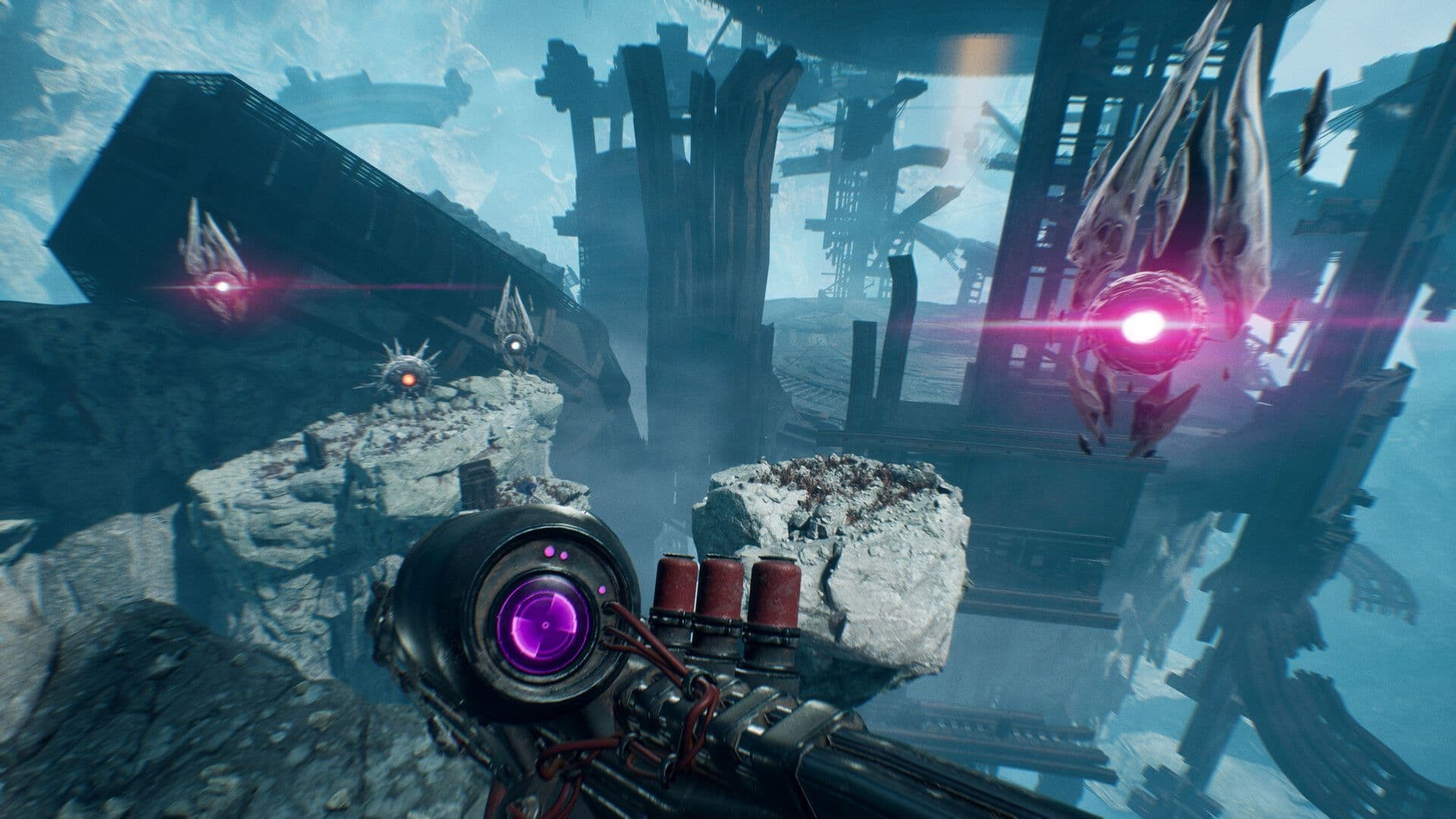
The environment in Luna Abyss serves as a playground for its parkour mechanics.
The movement suite is introduced with a steady, confident hand. You start with basic jumps across chasms of impossible scale, but within the first few hours, Luna Abyss layers on new abilities: a double jump for verticality, a dash for horizontal bursts, and eventually a grappling hook for swinging across vast voids. The genius lies in how these tools are integrated. You aren't just unlocking a checklist; you're learning a new language of movement. A distant ledge becomes a puzzle: double jump for height, dash for distance, and a last-second grapple to a swinging anchor point to close the gap. The resulting flow, when it clicks, is as fast and fluid as Ghostrunner, but grounded in the more deliberate, exploratory pace of a classic adventure. This steady evolution ensures the 8-12 hour journey constantly feels fresh, with the environment itself teaching you to think in three dimensions.
The level design is the perfect co-conspirator to this movement system. It’s a breathtaking blend of oppressive, Blame!-inspired concrete brutalism and the impossible, ritualistic geometry of Destiny’s Vault of Glass.
You’re not navigating corridors; you’re traversing cathedral-like reactor cores, sprinting along pipes the size of skyscrapers, and leaping across gaps that plunge into bottomless red-lit darkness. The game constantly presents you with daunting, seemingly unreachable vistas, then trusts you to chain your abilities to conquer them. This creates a powerful loop of visual intimidation followed by player-led triumph. The arenas, which lock you in for combat, are equally designed around this mobility, filled with grapple points and vertical layers that demand you use the full space to survive the bullet hell. Luna Abyss understands that a great movement system needs a great world to move through, and it delivers one of the most consistently awe-inspiring and physically engaging environments in recent memory.
However, this high-wire act isn't without its stumbles. The platforming precision, while generally excellent, can suffer from inconsistency, particularly with the grappling hook. The momentum you gain from a swing is a key part of the fun, but it can also lead to frustrating overshoots, sending you sailing past a narrow platform into the void. In later, more demanding sequences that require pixel-perfect landings, this lack of fine-tuned control becomes a genuine pain point. It’s the difference between feeling like a parkour master and feeling like you’re fighting the physics—a distinction that pulls you out of the immersion during the game's most tense navigational challenges.
The traversal is further spiced up by inventive environmental gimmicks that break up the core loop. Luna Abyss periodically introduces sequences where you possess different entities, like stationary Watcher orbs to scale immense heights or pilot ancient, weaponized robots for on-rails shooting galleries. These moments are more than simple diversions; they're spectacle set-pieces that recontextualize the space and offer a welcome change of pace. Controlling a hulking machine to bulldoze through barriers delivers a visceral power fantasy, while using a Watcher’s spawning ability to create your own platforms adds a puzzle-like layer to exploration. These segments are wisely used in moderation, preventing them from overstaying their welcome and ensuring the return to Fawkes’s agile base movement always feels like a homecoming.
Ultimately, the traversal in Luna Abyss is a triumph of atmosphere-mechanics synergy. The decaying, biomechanical megastructure isn't just seen—it's felt through the sprint, the leap, and the swing. The game makes you earn every new vista by testing your mastery of its movement language, and that investment makes the world feel genuinely conquered, not just visited. While the occasional imprecision in landing can frustrate, it’s a minor flaw in a system that otherwise empowers you to navigate one of gaming’s most compelling and hostile alien architectures with style and grace.
Visuals and Sound: The Aesthetic Splendor of the Abyss
Luna Abyss is a game that begs to be seen and heard. Its artistic vision is so potent that it often feels like you're navigating a living painting—one that pulses with melancholic choirs and groans under the weight of its own brutalist grandeur. This is a world where aesthetic isn't just a backdrop; it's the primary storyteller, a character in its own right that communicates more through a shaft of crimson light or a distant, dissonant hum than any line of dialogue ever could. The presentation is the game's most confident and consistent triumph, even when technical seams occasionally fray at the edges.
The visual identity is an exercise in oppressive, awe-inspiring scale. Drawing clear inspiration from the likes of Blame!, the game constructs its megastructure from impossibly vast concrete geometries, gargantuan pipes that could house cities, and chasms that plummet into utter darkness. This isn't generic sci-fi industrialism; it's a specific, haunting brand of brutalist alien architecture that feels both ancient and synthetic. The genius lies in the lighting and color. Deep, inky shadows cloak these spaces, making every ventured corridor feel claustrophobic and uncertain. Then, the game slashes through the gloom with bold, theatrical color washes: the pervasive, hellish red of the mimic moon; the cold, sterile blue of reactor cores; the sickly purple of corrupted growths. These aren't subtle accents—they’re emotional signposts, painting different chapters of the descent with distinct, unsettling palettes.
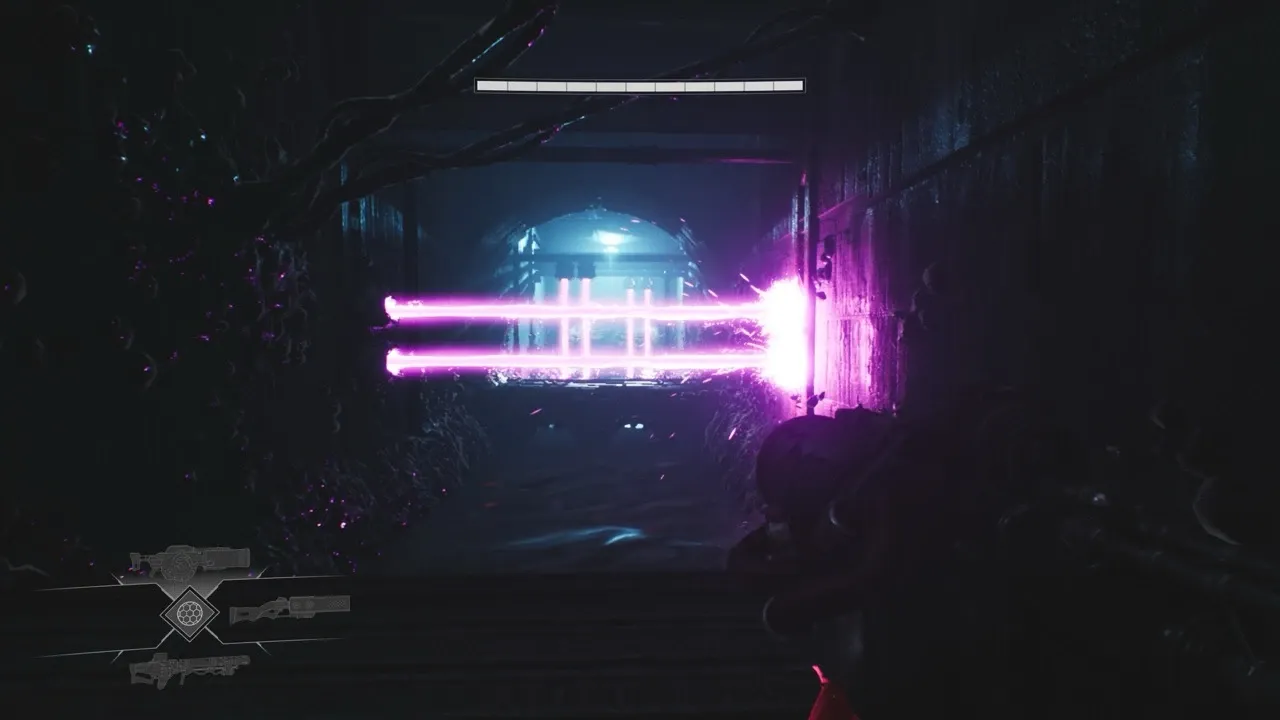
Weapon sound design adds weight and impact to the combat experience.
The audio design is the perfect, unsettling counterpart to this visual feast. Combat erupts with a soundscape of gritty, distorted bass wobbles and apocalyptic, layered church choirs, creating a sense of sacred violence that elevates every arena from a shootout to a ritual. In stark contrast, the exploration music shifts to sparse, melancholic piano or hauntingly beautiful choral arrangements, making the quiet moments feel less like respite and more like a mournful procession through a tomb.
This powerful atmosphere is given a human heartbeat by the exceptional voice acting, particularly Safiyya Ingar’s performance as Fawkes. Ingar delivers a masterclass in restrained vulnerability, conveying exhaustion, doubt, simmering defiance, and flickers of empathy with a nuance that grounds the game’s cosmic weirdness. You believe her weariness after a thousand failed leaps, her annoyance at Aylin’s cryptic orders, and her quiet sympathy for the twisted creatures she’s forced to put down. It’s a performance that transforms Fawkes from a silent cipher into a compelling protagonist you root for, making the arcane lore and institutional oppression feel personally consequential. The supporting cast, from the eerily serene Aylin to the tragic figures met deeper in the Abyss, matches this high bar, ensuring the narrative’s abstract delivery never feels emotionally hollow.
However, lean in too close, and the illusion sometimes cracks. The graphical limitations of this AA project become apparent in up-close textures that can appear muddy or last-gen, and in character animations that occasionally lack the fluidity of the world they inhabit. These aren't constant distractions—the art direction is so strong it mostly compensates—but in quieter moments, inspecting a wall or watching a character model move can briefly shatter the immersion. It’s the classic trade-off of a confident studio working within a budget: they’ve poured their resources into unforgettable vistas and mood, not into hyper-realistic pores on every surface.
Technically, Luna Abyss is remarkably lean and efficient. With an install size of only 7-15GB and loading times reportedly as fast as 11 seconds on PS5, it demonstrates a polish that bigger-budget titles often lack. This optimization means you spend more time immersed in the Abyss and less time staring at loading screens—a small but crucial detail that respects the player’s time and maintains the carefully cultivated atmosphere. It’s a reminder that technical artistry isn't just about pushing polygons; it's about crafting a seamless, cohesive experience, and here, the presentation package works in harmonious, if occasionally imperfect, concert.
Performance and Difficulty: Is Luna Abyss Balanced for Everyone?
In Luna Abyss, the promise of its fluid combat and traversal is only as good as the technical foundation it’s built on, and the experience you have depends heavily on which platform you choose and what you demand from its challenge. This is a game that wears its AA ambitions proudly, and that means the polish is impressive but not flawless, while its approach to difficulty is more curated than finely tuned.
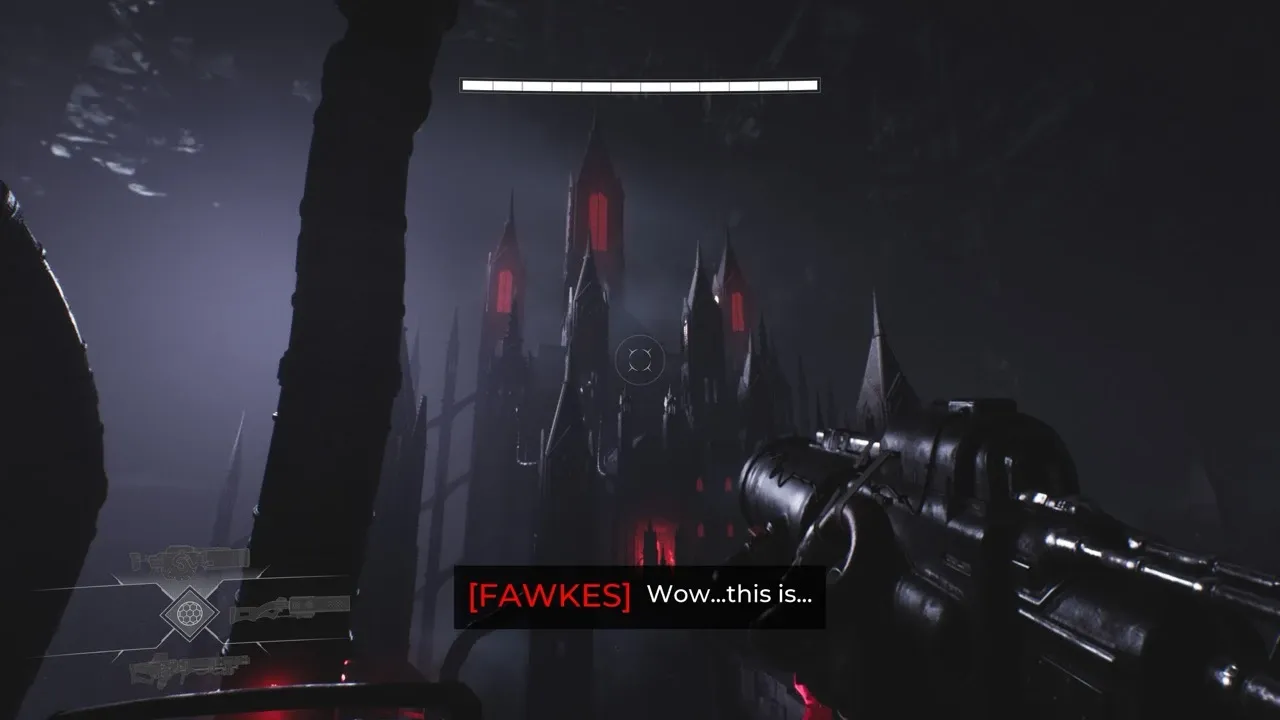
Performance remains mostly stable even during intense bullet hell encounters.
Performance is largely solid but comes with asterisks that vary by hardware. On the PS5, the game generally maintains a smooth frame rate, but multiple sources note occasional stumbles during the most intense arena fights, where dozens of glowing projectiles, enemies, and particle effects fill the screen. These dips are noticeable precisely because Luna Abyss demands such precise movement to survive its bullet hell patterns; a momentary hitch can be the difference between a graceful dodge and a frustrating death. More concerning are reports from the PS5 version of periodic freezing issues, where the screen locks up for roughly five seconds with a loading icon, occurring as often as every 20-30 minutes during combat or traversal. While not universal, these engine hitches are a significant blemish on an otherwise immersive atmosphere, pulling you out of the moment at the worst possible times. The PC version, by contrast, shows excellent optimization, with one review noting a stable 60 FPS at 1440p on High settings with modest hardware (RTX 2060, Ryzen 5 3600), and the Steam Deck earns a Verified status. Deck performance requires some tinkering—out-of-the-box play can dip below 40 FPS in open areas, but a 30 FPS cap with specific settings (disabling FSR upscaling to avoid blur, setting Anti-Aliasing to High) delivers a stable, visually impressive portable experience. The game’s lean 7-15GB install size and fast load times (as quick as 11 seconds on PS5) are further testaments to its efficient engineering.
The game’s accessibility options are its most forward-thinking feature. The Story difficulty doesn’t just tweak numbers—it provides invulnerability and can auto-complete challenging platforming sections, effectively turning Luna Abyss into a walking simulator for those solely invested in its surreal narrative and world. This is a masterclass in inclusive design, acknowledging that the game’s true strength for some lies in its atmosphere, not its skill tests.
Where the design falters is in its standard difficulty curve and balancing. The consensus is clear: Luna Abyss starts too easy. For the first several hours, enemy projectiles are slow, the lock-on targeting feels overly generous, and arenas rarely push you to master the weapon-swapping dance. This gentle ramp-up undersells the game’s own potential, making the initial combat feel like a tutorial that overstays its welcome. Veterans of Doom Eternal or bullet hell games will want to jump straight to the Warden or Scourge difficulties to find the intended tension. However, even on these higher settings, the balancing can feel off. Bosses, while spectacular in their multi-phase theatrics, are frequently criticized for having excessively large health pools, turning epic showdowns into protracted wars of attrition. When combined with the sometimes-clunky weapon swapping, these fights can cross the line from challenging to tedious, testing your patience as much as your reflexes.
Ultimately, Luna Abyss presents a performance and difficulty profile that is commendably broad but inconsistently polished. It runs beautifully on well-equipped PCs and makes a strong case on Steam Deck with some configuration, while console players may encounter technical hiccups that momentarily break the spell. Its difficulty settings offer a welcome spectrum, from a pure narrative journey to a hardcore test, but the default experience fails to showcase the combat’s best qualities, and the boss tuning often mistakes endurance for depth. This is the one area where the game’s confident, unique vision is let down by execution that feels more tentative.
Luna Abyss Verdict: A Confident but Flawed Sci-Fi Masterpiece
Luna Abyss isn't a game that fits neatly into a box; it’s a confident, sometimes messy, collage of its inspirations. To call it a "Doom Eternal meets Returnal in a Metroid Prime world" is accurate, but it undersells the alchemy at work. This isn't a simple remix—it's a cohesive, if flawed, new alloy. The game takes Doom's aggressive weapon-swapping philosophy and marries it to Returnal's screen-filling bullet patterns, all while framing it within the lonely, exploratory grandeur of a Prime-style megastructure. The genius is in the fusion: the lock-on targeting liberates you from twitch-aiming, allowing you to fully engage with the spatial puzzle of dodging in three dimensions. You're not just shooting; you're weaving through a lethal ballet, your focus split between shield colors, cooldown timers, and the glowing tapestry of incoming fire. It creates a rhythm entirely its own, one that feels more like conducting chaos than participating in a traditional firefight.
Where this ambitious synthesis stumbles, however, is in its final act. After hours of piecing together cryptic lore about the Scourge, the All-Father, and the lost colony of Greymont, the narrative conclusion is described by multiple players as abrupt and unsatisfying. The game builds a compelling mystery with its haunting environmental storytelling and excellent vocal performances, but it seems to prioritize maintaining an air of enigmatic ambiguity over delivering narrative closure. For a journey so rich in atmospheric detail, ending on a note that feels more like a refusal to explain than a purposeful, open-ended revelation can leave a sour aftertaste. It’s the one major element where the game’s confidence feels like evasion.
The game offers a smooth FPS experience with unique platforming elements.
This is the paradox of Luna Abyss: a game so assured in its moment-to-moment gameplay and world-building that its hesitant ending feels like a betrayal of the investment it so carefully cultivated.
This makes the game’s value proposition a crucial part of the verdict. At $29.99 for a tightly focused 8-12 hour campaign, Luna Abyss represents exceptional value for a specific audience. This isn't a bloated open-world checklist; it's a concentrated shot of surreal sci-fi action and exploration. For players who cherish atmosphere, unique movement, and inventive combat systems over sheer content volume or competitive multiplayer, every dollar is well-spent. The experience is dense with memorable set-pieces, from piloting ancient war machines to grappling across bottomless reactor shafts, ensuring the runtime feels substantial, not slight.
Ultimately, Luna Abyss is a triumph of style and systems over storytelling polish. Its target audience isn't the pure FPS purist who lives for headshot accuracy, but the player who values mood, momentum, and mechanical uniqueness. It’s for those who find joy in mastering a specific, idiosyncratic combat dance and who want to get lost in a world that feels genuinely otherworldly. The game earns its stripes through sheer artistic conviction and a brilliantly executed core loop, even as it fumbles the landing and shows some technical growing pains.
The Final Verdict
Luna Abyss is a flawed masterpiece from a bold new voice. It doesn’t just borrow from the greats—it converses with them, creating a distinct and thrilling action-platformer that will linger in your mind long after the credits roll. Its stumbles are real, but they're overshadowed by the sheer power of its vision.
Pros:
- Stellar, oppressive art direction that crafts one of the most memorable sci-fi settings in years.
- Fluid, empowering movement that makes traversal a constant joy.
- A unique, rhythm-based combat loop built on smart lock-on mechanics and strategic weapon juggling.
- Excellent voice acting and haunting sound design that fully sells its bizarre world.
- Superb value for its price, offering a dense, no-filler experience.
Cons:
- An abrupt, ambiguous narrative conclusion that fails to payoff its compelling mystery.
- Limited enemy and weapon variety that can make later combat encounters feel repetitive.
- Technical hitches on PS5, including occasional frame rate dips and reported freezing issues.
- A slow-starting difficulty curve that undersells the depth of its combat for the first few hours.