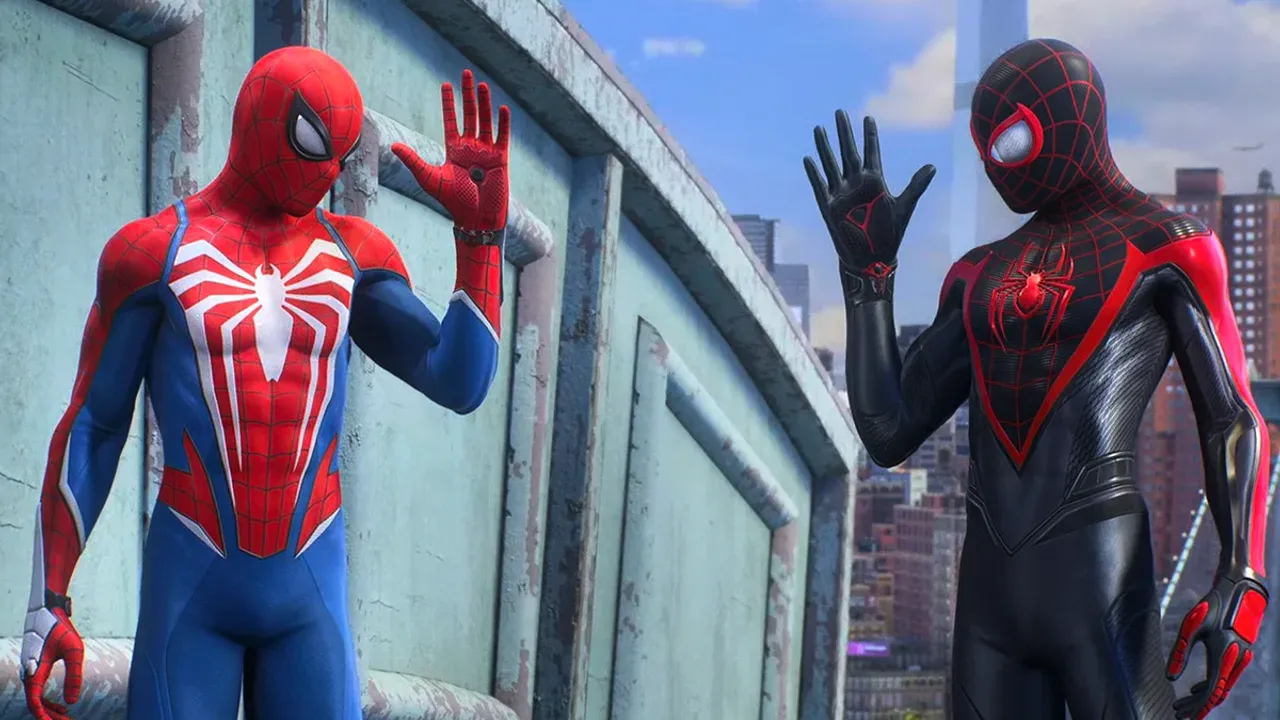
Marvel's Spider-Man 2: A Dual-Protagonist Masterpiece or More of the Same?
In a genre where sequels often play it safe, Marvel's Spider-Man 2 arrives with the weight of a Metascore of 90 and a thunderous, city-spanning opening battle against Sandman. It’s an immediate flex of power and scale, but it also introduces the game’s central, brilliant conceit: the dual-protagonist dynamic. From that first mission, you’re not just playing as Spider-Man; you’re coordinating as two of them, switching between Peter and Miles with a tap of the D-pad. This isn’t a gimmick—it’s the core of the experience, transforming New York into a shared, living workspace for its twin heroes and setting a new benchmark for superhero storytelling in games.
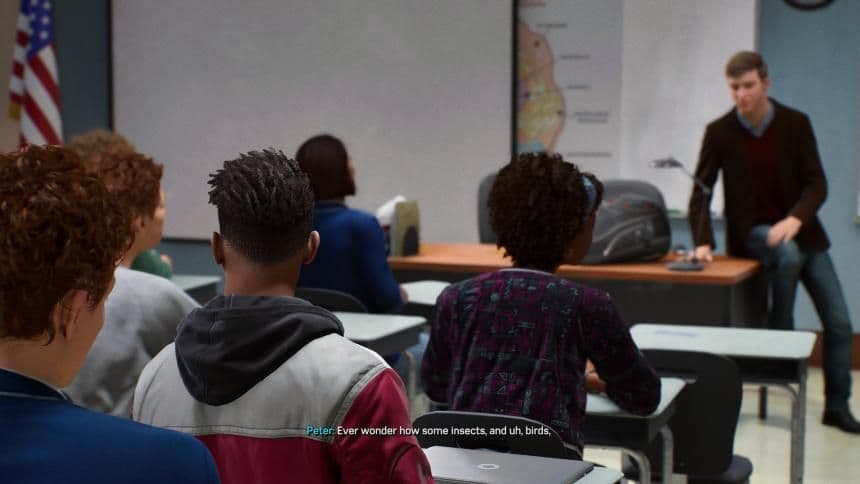
The game's intro establishes the high-stakes narrative for both protagonists.
The critical consensus of "Universal Acclaim" is well-earned, but it’s important to parse what that means. A score of 90 speaks to a polished, confident execution of a proven formula, not a radical reinvention. As noted by critics like those at LEVEL (Czech Republic), Marvel's Spider-Man 2 offers "excellence" in the form of "just another helping of what worked in the previous two games." The genius here isn’t in throwing out the playbook; it’s in refining it to a mirror shine and expanding its scope. The story picks up ten months after the events of Marvel's Spider-Man: Miles Morales, a choice that immediately grounds us in a world where both Spider-Men are established, weary, and shouldering their own distinct burdens. Peter is struggling with his return to teaching and finances, while Miles is grappling with college applications and the unfinished business of Martin Li. This established history lends weight to every swing and every quip.
The seamless character swapping isn't just a menu option; it's a narrative engine. It allows the game to weave two personal journeys into one cohesive tapestry without awkward hand-offs.
This is where the dual-protagonist system earns its praise. The ability to switch at will in the open world—finding a crime as Peter, then swinging away and instantly continuing as Miles—creates an unparalleled sense of fluidity and shared responsibility. Their stories are distinct, with Peter’s arc deeply entangled with the return of Harry Osborn and the corrupting symbiote, while Miles seeks his own path and closure. Yet, the game constantly cross-pollinates these threads, ensuring neither hero feels like DLC for the other’s adventure. This is Insomniac’s masterstroke: making you care deeply about two separate character arcs while making them feel intrinsically part of a single, greater whole.
So, is it a masterpiece or more of the same? The answer is both, and that’s precisely its strength. Marvel's Spider-Man 2 is a sequel that understands its foundation is rock-solid. It doesn’t need to reinvent web-swinging or combat; it needs to enhance them, deepen the narrative, and fully utilize the hardware—all of which it does with spectacular flair. For some, this lack of mechanical revolution may feel like a missed opportunity. For most, it will feel like coming home to a familiar neighborhood that’s been stunningly renovated, expanded with new boroughs, and filled with twice the life. The 8.6 user score suggests that while the polish is undeniable, players are keenly aware of the trade-offs between evolutionary refinement and revolutionary change. This tension between flawless execution and familiar design is the web this entire game swings from, and it’s a journey worth taking.
Combat and Traversal in Marvel's Spider-Man 2: Speed, Symbiotes, and Skill Trees
If the core fantasy of being Spider-Man is defined by momentum, then Marvel's Spider-Man 2 is the ultimate wish fulfillment. The moment you dive off a skyscraper, deploy the new Web Wings, and catch a thermal updraft to soar across the East River, the game’s philosophy clicks into place: everything is about speed, fluidity, and effortless style. This isn't just an iterative upgrade; it's a fundamental rethinking of traversal as a constant, joyful kinetic act. The slingshot launch and loop-de-loop maneuvers aren't mere flourishes—they're essential tools that, when chained with web-swinging, turn New York City into a frictionless playground. It’s hard to overstate how satisfying this loop becomes; traversal isn't a means to an end, it is the reward.
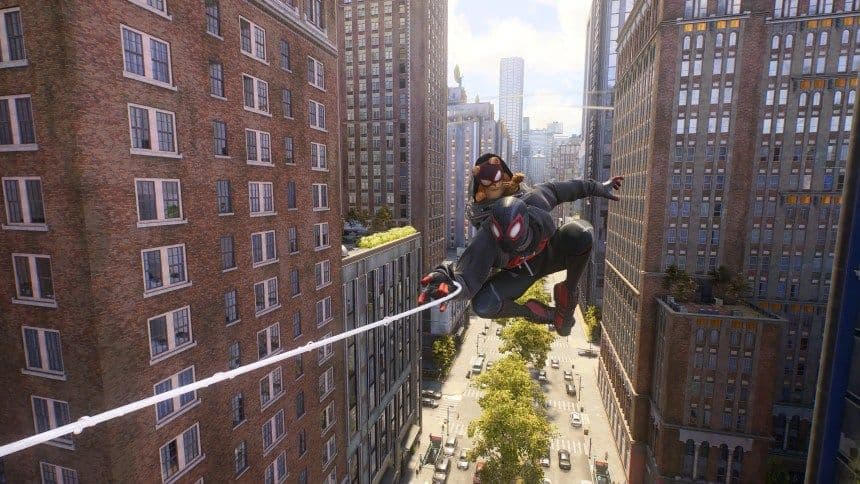
New traversal mechanics allow for faster movement across the expanded map.
This relentless focus on speed bleeds directly into combat, which has been retuned for greater aggression and spectacle. While the foundational Arkham-style rhythm remains, the new ability systems for Peter and Miles create a palpable power fantasy. Peter’s Symbiote powers are a brutal, screen-clearing delight—grabbing enemies with tendrils and slamming them into the pavement never gets old. In contrast, Miles’s bio-electric Venom powers feel more precise and tactical, with chain lightning effects that elegantly control crowds. The shared skill tree provides essential baseline upgrades, but the individual trees are where the heroes truly diverge, encouraging you to lean into their distinct identities. This is where the game earns its "10/10 Gameplay" score from some critics; the combat is a fluid, acrobatic ballet of webbing, dodging, and explosive special moves that makes you feel every bit the superhero.
However, this shift towards ability-centric, high-octane brawling comes at a significant cost: the gutting of the gadget system. Reduced from eight tools to a mere four, the loss of fan-favorites like Impact Webs and Trip Mines is keenly felt.
The remaining gadgets—the Upshot, Web Grabber, and Concussion Burst—are effective, but they often feel like supporting actors to the main event of your superpowers. The design intent is clear: Insomniac wanted faster, less-interrupted combat flows, and missions are no longer built with stealth or elaborate gadget puzzles in mind. For veterans who loved setting up elaborate takedowns, this streamlining might feel like a step back, a sacrifice of tactical depth for visceral immediacy. The Ricochet Web is so underutilized some players never even unlock it, which speaks volumes about the system's diminished role.
This rebalanced combat philosophy finds its ultimate expression in the boss fights, which are a staggering improvement over the previous games. Encounters with villains like The Lizard or Kraven the Hunter are challenging, multi-phase spectacles that fully leverage the new mechanics, particularly the L1 parry. This isn't a passive block; it's an active, timing-based riposte that opens enemies up for devastating counters. Learning this mechanic is mandatory, transforming these fights from damage-sponge slogs into dynamic duels that test your reflexes and understanding of attack patterns. They are the game's most memorable set-pieces, delivering the blockbuster superhero moments the franchise is built upon.
Ultimately, the gameplay loop of Marvel's Spider-Man 2 is a masterclass in refined escalation. The traversal is the best in any open-world game, full stop. The combat is faster, flashier, and more empowering than ever, even if it trades some gadget-based creativity for pure power fantasy. The progression systems successfully make two heroes feel unique yet balanced. While the pared-back gadget suite represents a tangible, if deliberate, loss, the overall effect is a gameplay experience so polished and exhilarating that you’ll forgive its few concessions to the god of speed.
Marvel's New York: Expanded Horizons and Uneven Side Content
The promise of a bigger New York in Marvel's Spider-Man 2 is immediately delivered, but the experience of living in it is a story of thrilling highs and forgettable lows. Swinging from the dense, familiar skyscrapers of Manhattan into the more residential, sun-dappled streets of Brooklyn and Queens is a genuine thrill, made effortless by the enhanced traversal. The addition of Coney Island as a vibrant, neon-lit playground offers a unique visual set-piece. This expanded map isn't just cosmetic; it fundamentally changes the rhythm of traversal, with longer, uninterrupted glides across the rivers creating a genuine sense of continental scale. Yet, this impressive expansion highlights a central tension: Insomniac built a more beautiful and physically larger world, but struggled to fill it with activities that match the quality of your movement through it.
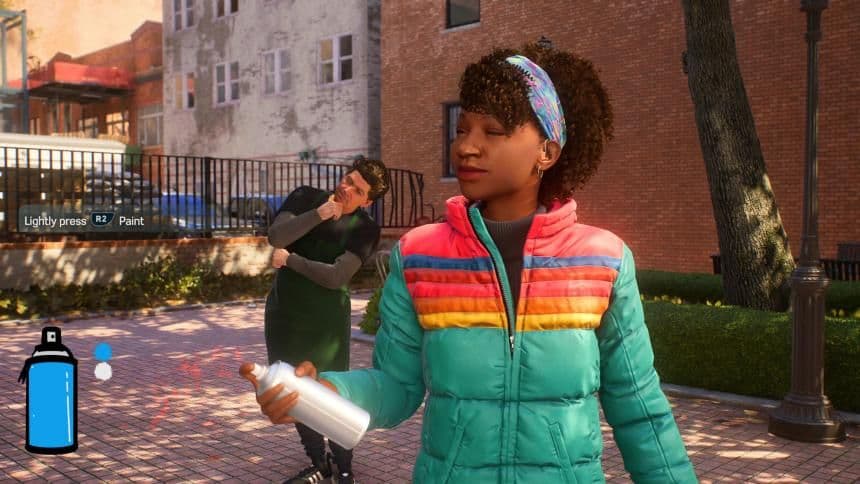
Side content includes unique activities like street art mini-games across the boroughs.
The side content is where this tension becomes most apparent, embodying a stark quality divide. On one end, you have missions like 'The Flame', a multi-part side story featuring full motion-capture cutscenes, compelling character moments, and a narrative hook that feels integral to the game's world, clearly setting up future stories. This is side content done right—it rewards you with meaningful story, not just currency. On the other end, you have the plethora of forgettable tasks that litter the map: helping Miles’s classmates with drone photography or tracking down elderly citizens for a local community board. These activities aren't broken, but they are mundane, lacking the narrative heft or creative gameplay twists to justify their existence beyond checklist completion. They represent the bland, obligatory open-world filler the main story so confidently avoids.
This unevenness extends to the use of iconic villains. While Kraven and Venom dominate the brilliant main narrative, other rogues are relegated to glorified side attractions. Mysterio, a villain ripe for psychological mind-bending, is reduced to a series of repetitive combat challenge arenas.
The open world itself feels more alive and yet less dynamic. The technical achievement is undeniable; civilian and car density have increased dramatically, making the city streets feel bustling and authentic. However, as noted in several critiques, there’s a perceived decrease in random crime events compared to the first game. This creates a strange dissonance: the city looks more lived-in than ever, but your opportunities to spontaneously be its hero feel less frequent. The design likely aims to reduce friction and clutter, prioritizing the curated side activities, but it occasionally makes the world feel like a stunning diorama between story missions rather than an ecosystem constantly demanding a Spider-Man’s attention.
Ultimately, the expanded New York of Marvel's Spider-Man 2 serves as the perfect showcase for its best-in-class traversal, but it struggles to be a consistently engaging destination in its own right. The highs of well-crafted narrative side stories prove Insomniac understands quality, making the lows of the filler content all the more perplexing. It’s a world you’ll love moving through, but you may find yourself fast-traveling past its less-inspired distractions to get back to what truly matters: the next story beat, the next thrilling swing, or the next boss fight that leverages this magnificent playground to its full potential.
Narrative Risks and Pacing: The Struggle of Two Spider-Men
The emotional core of Marvel's Spider-Man 2 is a high-wire act, balancing the intimate friendship between Peter and Harry Osborn against the sprawling obligations of its dual-hero narrative. This is where the game earns its most poignant character moments, and also where its pacing and writing seams begin to show. For every scene that lands with genuine emotional weight, there’s a narrative shortcut or a lopsided focus that reminds you this is still a blockbuster video game, with all the compromises that entails.
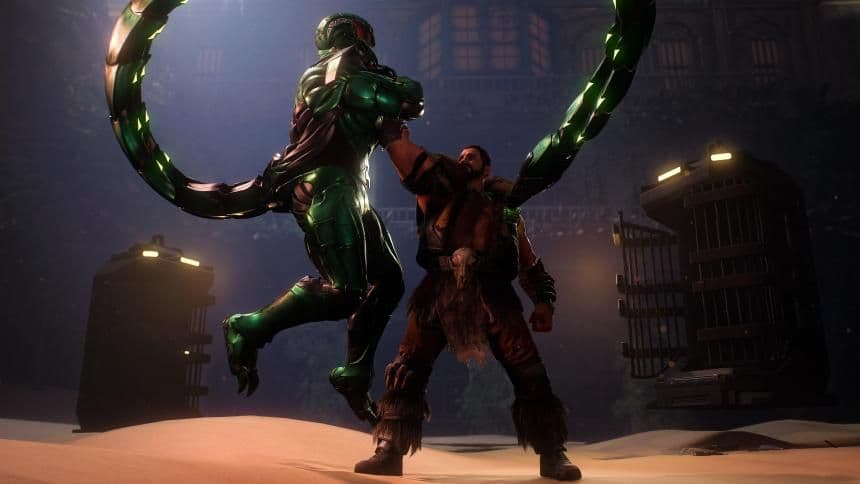
Kraven's Great Hunt serves as the primary catalyst for the game's pacing and conflict.
The game’s greatest narrative strength is its patient, heartfelt investment in Peter and Harry’s bond. Insomniac dedicates significant time to quiet, non-superhero moments—biking through the city, reminiscing in Harry’s science lab—that make their friendship feel lived-in and authentic. This groundwork pays off spectacularly when the symbiote enters the picture. Yuri Lowenthal’s vocal performance as Peter is a masterclass, shifting from warm camaraderie to a guttural, strained rage as the black suit takes hold. You can hear the character fracturing in real-time, a subtlety that makes Peter’s descent feel tragic rather than merely plot-driven. The emotional stakes aren’t about saving the city; they’re about saving a friend from a monster you helped create, and that intimacy powers the entire second act.
This focus, however, comes at a direct cost to Miles Morales. While Peter is reconnecting with Harry and wrestling with the symbiote, Miles is largely relegated to a B-plot about a college essay and a personal vendetta against Martin Li.
It’s a classic narrative imbalance: Peter’s story is an epic, mythic corruption arc, while Miles’s feels like personal homework for the first ten hours. The integration is clumsy; Miles often feels like a spectator to Peter’s drama, his own compelling history and powers sidelined until the plot needs a second Spider-Man for a set-piece. This isn’t a flaw in Miles’s characterization—when he’s given the spotlight, he shines—but in the story’s architecture. The dual-protagonist system praised earlier for its gameplay fluidity struggles to maintain equitable narrative momentum, making Miles’s journey feel like it’s playing catch-up until the final act forcibly stitches them together.
The most controversial narrative choices revolve around Mary Jane Watson. Her gameplay segments are mechanically improved—she now carries a stun gun, can fight back if spotted, and avoids the instant-fail stealth of the first game. This is a smart design correction. The narrative justification, however, strains credibility to its breaking point. Missions where MJ out-runs a superhumanly fast Peter, or takes a direct hit from Venom and walks it off, feel like contrivances designed to force her into action sequences, undermining the very “ordinary person in an extraordinary world” premise they aim to elevate. It creates a dissonance where the game wants MJ to be both relatable and superhumanly capable, and the writing can’t quite reconcile the two.
This occasional narrative hastiness extends to broader plot points, echoing user criticisms of “overly simple solutions.” Major obstacles are sometimes resolved with surprising abruptness, and certain character motivations—particularly Kraven’s final actions—can feel underwritten, serving the plot’s need for a climax more than internal logic. These aren’t gaping plot holes, but they are moments where the machinery of the blockbuster is visible, pulling you out of a story that otherwise works hard to earn your emotional investment.
Ultimately, Marvel's Spider-Man 2 tells a compelling, emotionally charged story that soars on the strength of its core performances and the Peter-Harry-Venom triangle. Yet, its ambition to serve two Spider-Men and their extended cast leads to palpable growing pains in pacing and focus. The result is a narrative with a brilliant, thumping heart, but whose rhythm occasionally stumbles as it tries to keep all its characters moving in sync.
Technical Performance: PS5 Power vs. Launch Day Bugs
From the moment you dive off the Avengers Tower, Marvel's Spider-Man 2 makes a stunning visual argument for the PlayStation 5's power. The expanded New York is a breathtaking technical marvel, with a density of civilians and traffic that finally makes the city feel truly alive, not just a backdrop for your acrobatics. Character models, particularly during the game's many cinematic close-ups, are rendered with an astonishing level of detail—you can see the individual stitching on a suit and the subtle, strained expressions as Peter fights the symbiote's influence. This fidelity is powered by always-on ray tracing, which bathes the city in gorgeously realistic reflections and shadows, from the glass canyons of Manhattan to the neon glow of Coney Island. It’s a consistent, jaw-dropping spectacle that sets a new bar for superhero visuals.
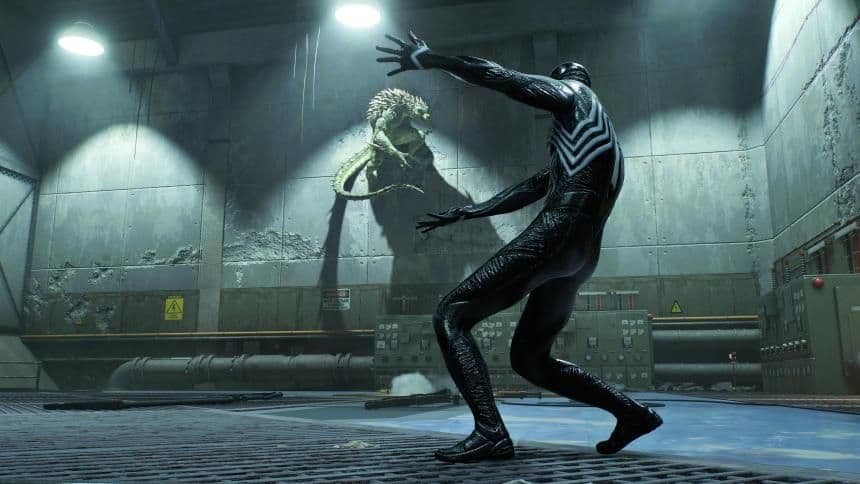
Photo mode allows players to inspect the high-fidelity character models.
However, this pristine presentation was, at launch, frequently fractured by a parade of technical gremlins. The polish praised in earlier sections of this review had visible seams.
The critical consensus on Marvel's Spider-Man 2's stability is a tale of two experiences. For many, it was a smooth ride. For others, it was plagued by bugs ranging from minor visual oddities to progress-halting failures. Reports from players and critics like those at WayTooManyGames detail a troubling list: animation soft locks that left Spider-Man unable to stand up from a bench, causing a reload; random crimes and activities disappearing from the map; and, most severely, full game crashes to the PS5 dashboard. In a 27-hour playthrough to achieve the Platinum trophy, such frequent interruptions are more than an annoyance—they actively undermine the fluid, immersive fantasy the game works so hard to build. While day-one patches addressed infamous issues like the "white cube bug," the persistence of other glitches at launch felt unacceptable for a first-party AAA title of this pedigree.
The game’s technical story expands significantly on PC, where Nixxes Software has implemented a robust suite of features that cater to high-end setups. Marvel's Spider-Man 2 on PC supports NVIDIA DLSS 3, AMD FSR 3.1, and Intel XeSS upscaling, giving players extensive tools to balance performance and visual fidelity. The commitment to ray tracing is even more customizable here, with enhanced options for reflections, shadows, and ambient occlusion. Most impressively, the game embraces ultra-wide resolutions up to a staggering 48:9 for triple-monitor setups, allowing the cinematic web-swinging to fill your entire peripheral vision. This is a PC port designed with enthusiasts in mind, though it demands modern hardware to realize its vision.
Those hardware demands are not trivial, underscoring the game's scale. Both minimum and recommended specifications require 140 GB of space on an SSD—a non-negotiable for the game's fast-travel and asset streaming—and a baseline of 16GB of RAM. The minimum GPU (GTX 1650 or RX 5500 XT) targets a playable experience, while the recommended (RTX 3060 or RX 5700) is likely for enjoying those enhanced ray-traced visuals at higher settings. This aligns with the game's identity as a technical showpiece; to experience Marvel's Spider-Man 2 at its most fluid and detailed, you need hardware that can keep up with its superheroic ambitions.
Ultimately, the technical profile of Marvel's Spider-Man 2 is a microcosm of the entire experience: spectacularly ambitious and often brilliantly executed, yet occasionally let down by unforced errors. The visual presentation is consistently award-worthy, and the PC version is a feature-rich powerhouse. But the shadow of its buggy launch state lingers, a reminder that even the most polished worlds can have cracks in their foundations. For most players, post-launch patches have likely smoothed the roughest edges, allowing the game’s stunning artistry to shine through unimpeded. Yet, that initial instability remains a notable asterisk on an otherwise stellar technical achievement.
Final Verdict: Is Marvel's Spider-Man 2 the Ultimate Superhero Fantasy?
So, is Marvel's Spider-Man 2 the ultimate superhero fantasy? The answer is a resounding yes, with a handful of crucial caveats that define its value proposition. This is a game built on a foundation of near-perfect execution, delivering the purest, most exhilarating power trip of being Spider-Man ever committed to a controller. Yet, that same confidence in its formula means it’s more of an evolution than a revolution, a polished sequel that refines rather than redefines.
The game’s value is inextricably linked to its polish and scope. A playthrough focused on the main story and key side content clocks in at a satisfying 25-30 hours, with the Platinum trophy achievable in roughly 27 hours—a lean, focused runtime by modern open-world standards. This is Insomniac playing to its strengths, trimming the bloat of endless collectibles in favor of a more concentrated dose of high-quality spectacle. You’re paying for a blockbuster, not a timesink, and the game delivers that blockbuster with relentless, breathtaking confidence. The trade-off, as noted by critics like those at LEVEL, is a lack of mechanical innovation; this is "just another helping of what worked," but served at a Michelin-star level. For players craving a radical new direction, that will be a disappointment. For those who simply want more of the best superhero gameplay around, executed flawlessly, it’s the entire meal.
This is a game that understands its primary job is wish fulfillment, and it performs that duty with an almost peerless grace.
Its pros are the pillars of that fantasy. The traversal is not just the best in the genre—it’s a new gold standard, turning every commute into a joyous physics playground. The boss fights, from the parry-heavy duel with The Lizard to the apocalyptic final confrontations, are monumental improvements that leverage the new combat systems perfectly. And the emotional core, particularly the tragic corruption of Peter Parker and his friendship with Harry Osborn, delivers character moments with a sincerity and weight that surpasses most superhero films. These elements coalesce into an experience that feels incredibly complete.
However, the cons are not mere footnotes; they are the tangible costs of this specific vision. The buggy launch state, with reports of soft locks and crashes, was an unforced error that marred the polish for many, a stark reminder that technical ambition can outpace stability. The reduced gadget variety is a deliberate but impactful design choice that streamlines combat at the expense of tactical creativity, a loss keenly felt by veterans of the series. Most narratively significant is the uneven pacing for Miles Morales, whose compelling personal story feels sidelined for the first half of the game, creating a palpable imbalance in a story about two Spider-Men. These aren’t dealbreakers, but they are the seams in an otherwise impeccably tailored suit.
Ultimately, Marvel's Spider-Man 2 is a must-play for any fan of the character or action-adventure games, a title that prioritizes spectacular execution and emotional payoff over risky innovation. It is the definitive power fantasy of swinging through New York, but it’s content to perfect the arc of that swing rather than invent a new way to fly.
Pros:
- The traversal system, enhanced by Web Wings, is arguably the best in any open-world game, turning movement into a constant reward.
- Boss fights are dramatic, challenging multi-phase spectacles that brilliantly utilize the new combat mechanics.
- The emotional narrative core, particularly Peter's relationship with Harry and the symbiote's corruption, is powerfully executed.
- A polished, focused experience that delivers high-quality spectacle without excessive bloat.
Cons:
- Launch was hampered by a range of technical bugs, from animation glitches to full crashes, undermining the otherwise stellar polish.
- The gutted gadget system sacrifices tactical depth for faster-paced, ability-focused combat.
- Narrative pacing struggles to balance its dual protagonists, leaving Miles Morales' arc feeling underdeveloped for much of the game.
- Side content quality is wildly inconsistent, swinging from compelling narrative threads to forgettable filler.