Meccha Chameleon: A Viral Sensation Redefining Hide-and-Seek
In an industry obsessed with photorealism and hundred-hour sagas, Meccha Chameleon achieved the unthinkable: a $6 game, developed in two months by a two-person team, selling ten million copies in its first two weeks. This isn't just a success story; it's a cultural reset, a viral explosion that proves the most valuable currency in gaming isn't polygons, but pure, unadulterated player-driven fun. While AAA titans like Forza Horizon 6 and Final Fantasy VII Remake Intergrade were fighting for chart positions, this unassuming Japanese indie, built on the simple premise of painting yourself to hide, rocketed to second place on Steam's global sales chart and peaked at a staggering 340,535 concurrent players. The numbers are so astronomical they border on parody, but they tell a profound truth about what players are currently craving.
Meccha Chameleon title screen art
This meteoric rise is the definitive case study for the "friendslop" genre—games that are intentionally rough, affordable, and derive their magic almost exclusively from social interaction. Meccha Chameleon didn't outperform billion-dollar franchises with marketing muscle; it did so by being the perfect engine for shareable moments. Its core loop—grab a color, mimic a wall, and pray the hunter walks by—is tailor-made for the 15-second TikTok clip and the chaotic Twitch stream. With zero paid promotion, its growth was purely organic, fueled by the universal comedy of a friend disguised as a potted plant getting unceremoniously blasted. The game’s technical jank, from wonky collision to server hiccups, is almost part of the charm, a testament to its handmade, accessible spirit that stands in stark contrast to the sterile polish of its AAA competition.
The story of Meccha Chameleon is a developer fantasy made real: creators Lemorion_1224 and Haganeiro, after years of smaller projects, built this phenomenon in roughly 60 days using Unreal Engine 5 and Epic's free online services. This context is crucial—it frames every rough edge not as a failure, but as a miracle of scope.
The game’s success is a direct challenge to conventional industry wisdom. It asks a question major publishers seem to have forgotten: is it fun? Not "is it cinematic?" or "does it have a battle pass?", but does the act of playing it, right now, with friends, spark joy and laughter? Meccha Chameleon answers with a deafening yes, built on a foundation of creative expression rather than consumptive progression. Its ten million players didn't buy an endless grind; they bought a six-dollar ticket to a shared playground where the goal is to outwit each other with a paintbrush. In that sense, its commercial triumph isn't just impressive—it's a necessary corrective.
The Art of Deception: How Meccha Chameleon Evolves Prop Hunt
Where Meccha Chameleon truly separates itself from every Prop Hunt imitator is in its core mechanic: it replaces automated transformation with manual artistry. This isn’t about clicking on a lamp to become one; it’s about picking up a virtual brush and trying to become the lamp, with all the hilarious, desperate, and occasionally brilliant failure that entails. The game elevates hide-and-seek from a game of memory to a game of real-time, creative deception.
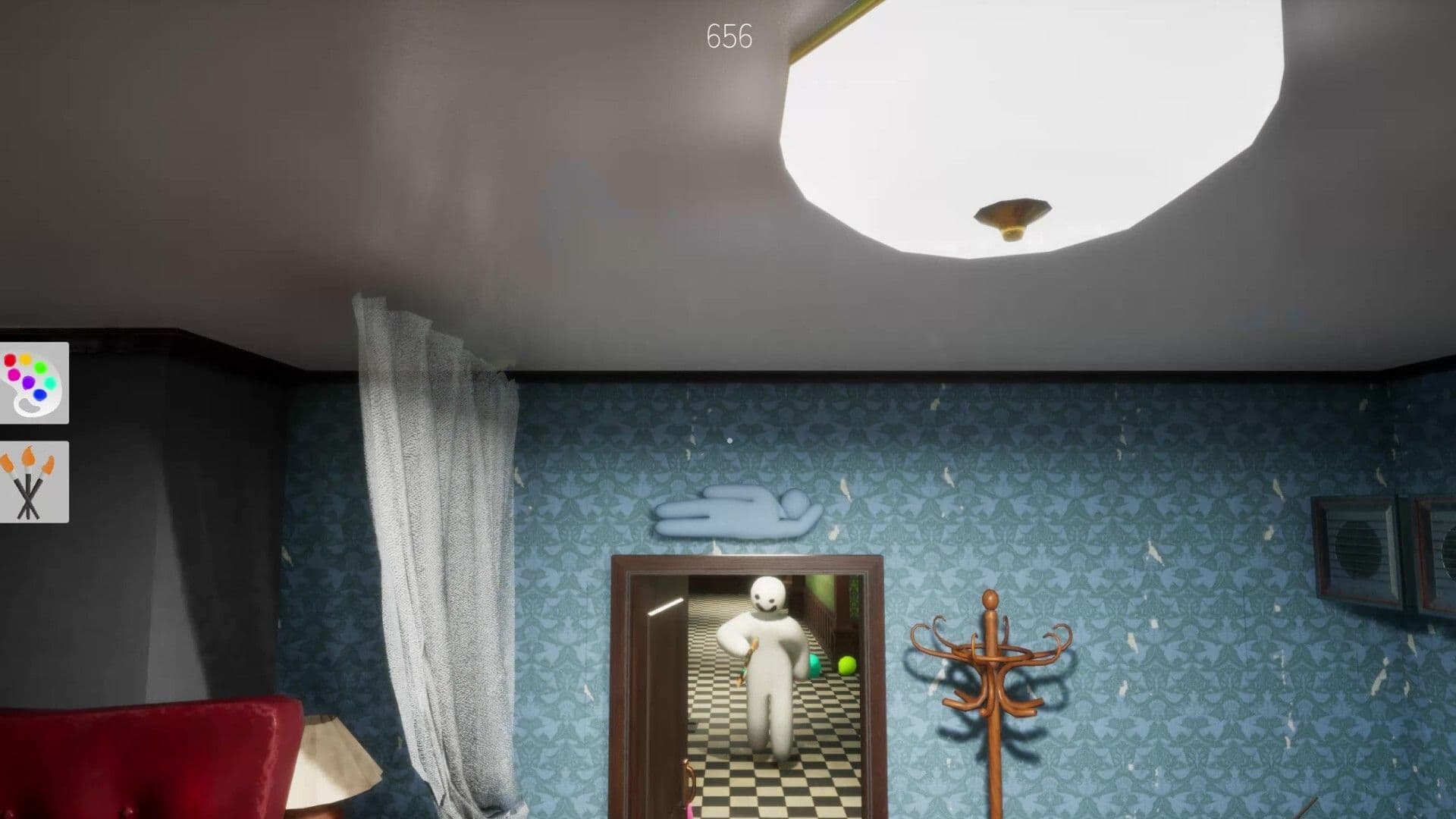
The manual painting system allows players to blend into their surroundings.
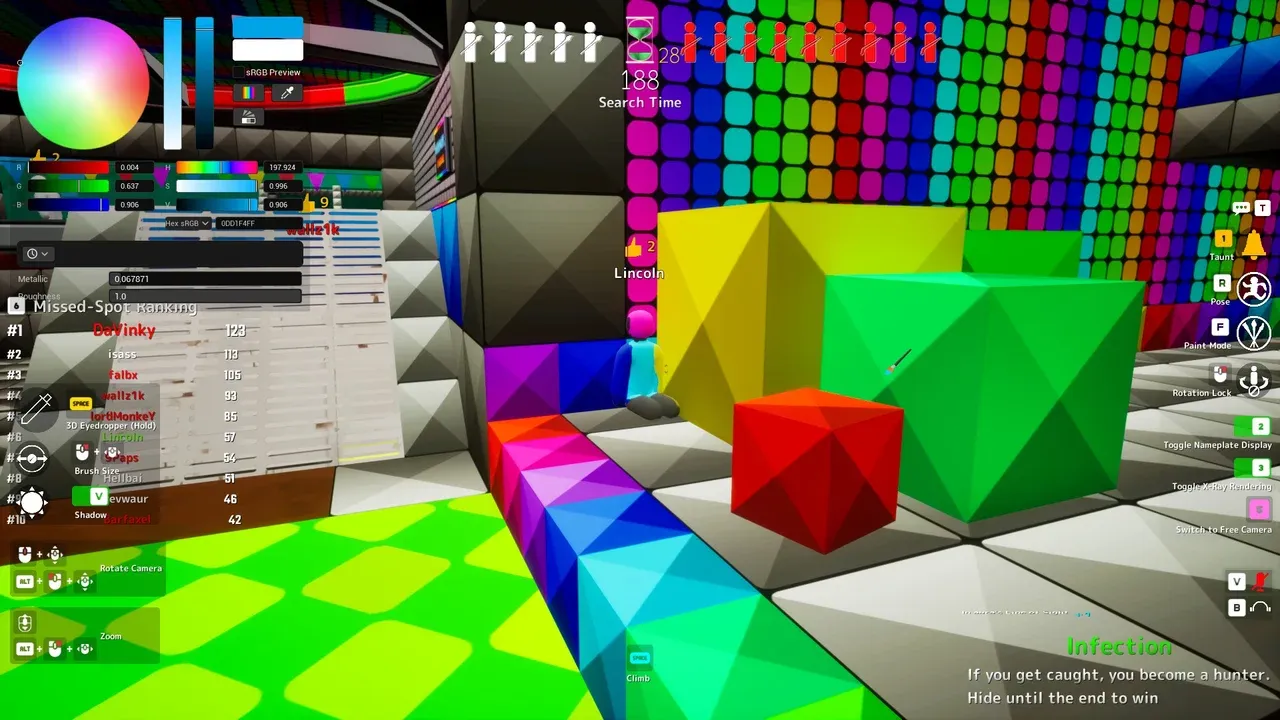
The manual painting system is the game’s masterstroke. Using an eyedropper to sample a color from a wallpaper pattern or a brick texture, then freehanding it onto your blank, white mannequin with an MS Paint-style brush is a tactile, engaging puzzle. Success isn’t guaranteed by finding the “perfect” prop; it’s earned through your own skill in matching hue, applying texture, and even manipulating material sliders for metallic or rough finishes. This transforms every match into a unique performance. One player might spend their 60-second prep phase meticulously recreating the grain of a wooden floorboard, while another slaps a hasty brown blob on themselves and curls up in a shadowy corner, hoping for the best. Both approaches are valid, and both generate the game’s best moments—the gasp when a Seeker walks past a perfect camouflage, or the howl of laughter when a “brown blob” is instantly spotted. Your disguise is a direct reflection of your creativity and speed under pressure.
This is where Meccha Chameleon earns its viral clips: not in victory, but in the audacity of the attempt. The thrill isn’t just in hiding; it’s in the brazen gamble of painting yourself to look like a painting on the wall and praying the hunter doesn’t look too closely.
This creative freedom feeds directly into a nuanced psychological layer. The scoring system incentivizes risk, awarding points for being in a Seeker’s direct line of sight. This encourages a thrilling game of chicken, where the best hiding spot isn’t the darkest corner, but the convincingly painted figure standing next to the doorframe everyone passes. It’s a brilliant twist that pushes players beyond safe obscurity and into the heart of the deception. This tension is amplified by the taunt mechanic—a voluntary whistle that reveals your general location for bonus points—and the optional “forced taunting” setting that automatically triggers it. These systems create a delicious cat-and-mouse dynamic, baiting hunters with sound while forcing hiders to remain perfectly still under increased scrutiny. The mind games are palpable; as a hider, you’re constantly weighing the safety of silence against the point-scoring allure of the whistle.
However, this asymmetric design has a clear cost: the Seeker experience can often feel like the less engaging half of the equation. While hunting requires a sharp eye for anomalies—that one patch of wall that’s slightly too clean, or a “statue” with an awkward pose—the act of searching large, detail-dense maps for cleverly hidden players can devolve into a tedious pixel hunt. The frustration is compounded by the game’s very success; a well-camouflaged player is a triumph of the system, but finding them can feel more like chore than challenge. This imbalance is the genre’s classic curse, and while Meccha Chameleon’s painting mechanic makes being found more entertaining for spectators, it doesn’t fully solve the occasional monotony for the person holding the shotgun.
Ultimately, the manual painting isn’t just a gimmick—it’s the entire soul of the experience. It shifts the locus of fun from the game’s design to the player’s ingenuity. Where a traditional Prop Hunt might offer a dozen pre-made objects, Meccha Chameleon offers infinite possibilities limited only by your imagination and steady hand. This transforms every round from a simple hunt into a shared, often uproarious, art project. It’s a design so fundamentally clever that you wonder why it took this long for someone to build a game around it.
Game Modes and Community: Why Meccha Chameleon Stays Fresh
Where Meccha Chameleon truly secures its longevity is not in its core hide-and-seek loop alone, but in the smart scaffolding of game modes and community tools built around it. This is a game that understands its own viral nature is fleeting, and it provides the structure to keep the party going long after the novelty of painting yourself as a potted plant has worn off. The official modes offer curated variations on the theme, but it’s the open door to the Steam Workshop that transforms this from a fun weekend distraction into a persistent social canvas.
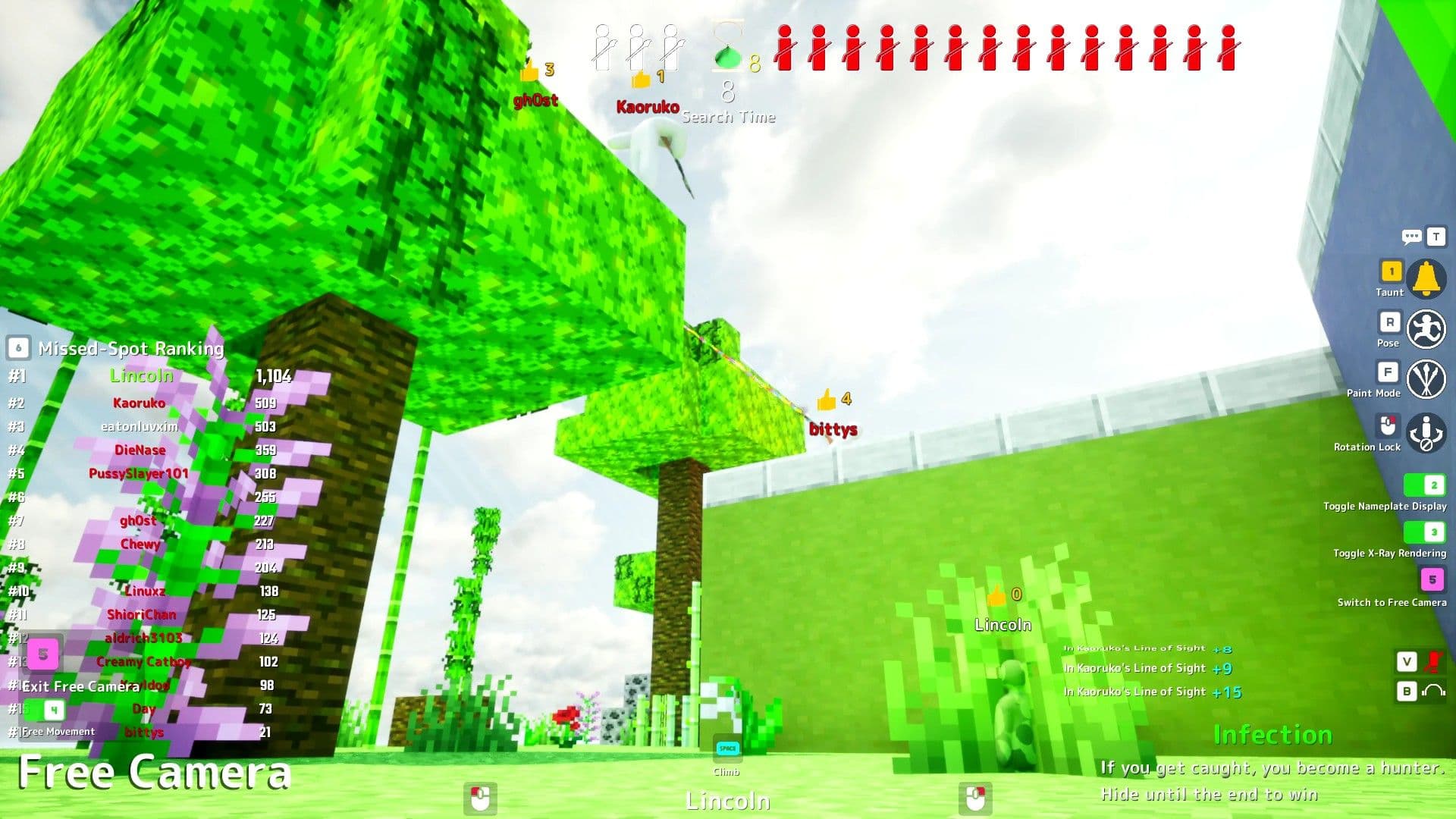
The Steam Workshop allows for diverse environments, including recreations of other popular games.
The three core modes—Standard, Infection, and Double—are simple in concept but transformative in practice. Standard mode, with its even split of hunters and hiders, is the purest expression of the game’s creative deception. Infection mode, however, is where the tension becomes infectious in a literal sense. Starting with a single hunter, every caught hider immediately joins the hunt, creating a snowball effect of panic that’s unparalleled. The moment you hear the shotgun blast of a friend being caught and see their name switch from blue to red on the player list, the atmosphere shifts from mischievous hiding to desperate survival. It’s a brilliant, dynamic twist that ensures no two matches play out the same and constantly refreshes the hunter roster, mitigating the potential monotony of the seeker role. Double mode inverts the formula entirely, beginning with everyone hiding before a chaotic free-for-all hunt begins. It’s pure, unpredictable chaos, perfect for when your group’s coordination has devolved into laughter.
The genius of these modes is how they weaponize social dynamics. In a private Discord lobby, Infection mode isn't just a game rule; it's a narrative of betrayal and escalating panic, where the last surviving hider is a hero under siege by their former allies.
While the official maps like Hide-and-Seek Mansion and Osaka provide excellent, detail-dense playgrounds, Meccha Chameleon’s enduring replayability is almost entirely bankrolled by its Steam Workshop support. This isn't just a nice bonus; it's the game's lifeblood. The community has already flooded the workshop with custom maps that range from clever to astonishing, including eerily accurate recreations of liminal spaces like The Backrooms and blocky, charming homages to Minecraft. These maps don't just offer new scenery; they present entirely new camouflage puzzles. Hiding in a non-Euclidean office corridor or against a voxel-based dirt wall demands a fresh artistic approach, constantly resetting the player's skill ceiling. This pipeline of user-generated content is what separates a two-month wonder from a "forever game," ensuring that the core mechanic of painting and hiding has an infinite number of canvases on which to play out.
This leads to the game's most critical dependency: its social context. Meccha Chameleon is engineered for shared laughter, and its quality is directly proportional to the company you keep. In a private server with friends on Discord, where you can hear the gasps, the failed bluffing, and the triumphant shrieks, it’s one of the funniest cooperative experiences available. However, drop into a public match with strangers, and the magic evaporates. The seeker role, which can feel like a tense game of "Where's Waldo?" with pals, becomes a lonely, tedious pixel hunt against silent opponents. The emergent comedy that defines the game relies on the social fallout of a clever disguise or a boneheaded hiding attempt; without that shared context, you're just a person clicking on slightly off-colored wall textures. The game’s design acknowledges this, prioritizing easy server creation for streamers and friend groups, but it’s a stark reminder that you’re not just buying a game—you’re buying a social activity.
Ultimately, Meccha Chameleon’s suite of modes and mod support is a masterclass in extending a simple premise. The modes provide structured ways to refresh the core tension, while the Workshop hands the creative reins directly to the players, guaranteeing a near-infinite stream of new challenges. It’s a one-two punch that acknowledges the game’s strengths and proactively shores up its weaknesses, ensuring that the simple joy of becoming one with the furniture has a place to live for a long, long time.
Technical State and Steam Deck: A Charming but Janky Experience
The viral charm of Meccha Chameleon is undeniable, but its technical reality is a sobering splash of cold water on the party. This is a game built by two people in two months, and it plays exactly like that—a brilliant concept wrapped in a duct-tape-and-prayers package where jank isn't just a side effect; it's a core component of the experience. For every moment of perfect camouflage, there's a collision bug waiting to betray you, and for every hilarious public lobby, there's a server browser that feels like navigating a maze blindfolded.
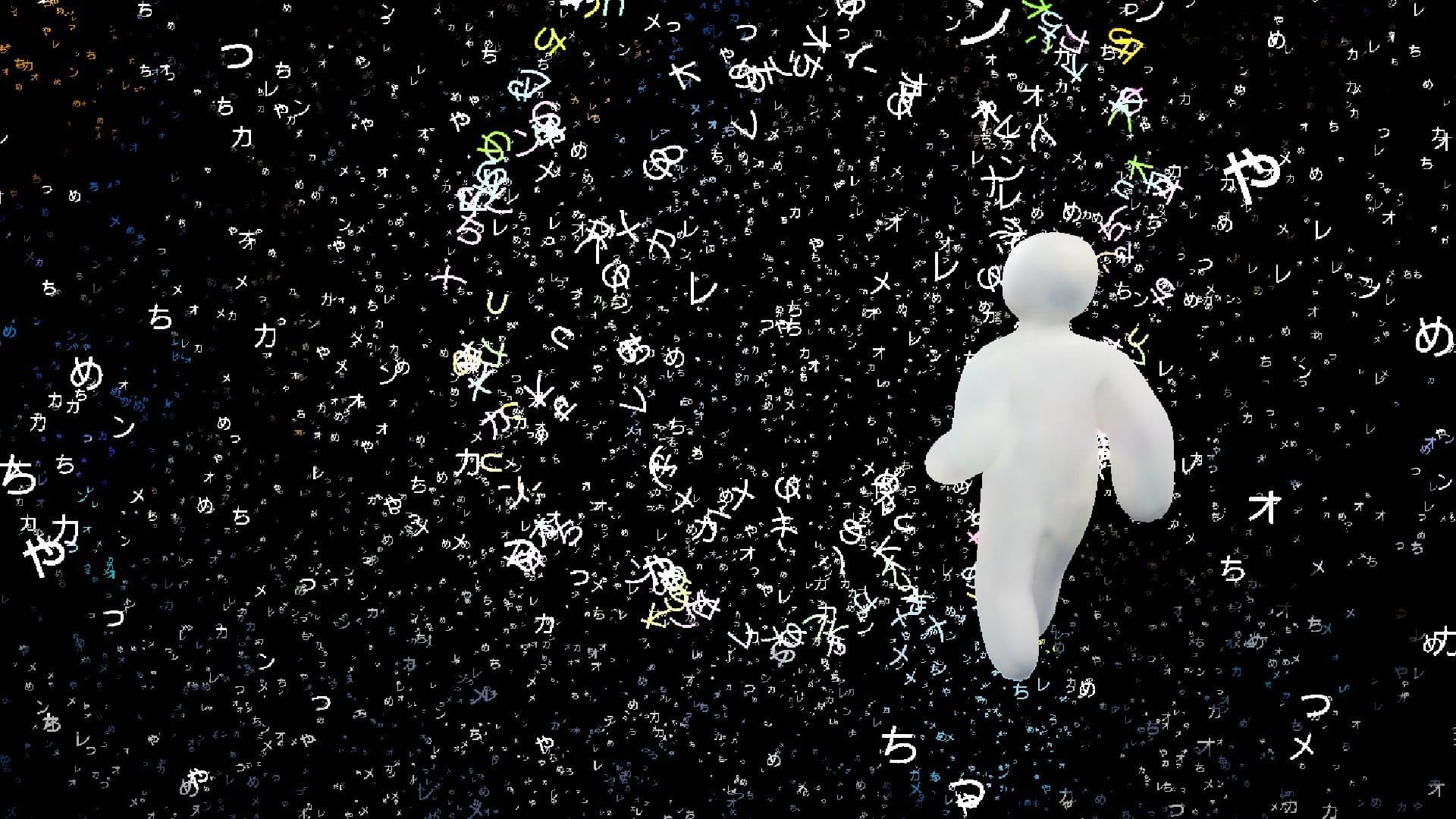
The game's surreal environments can lead to a charming but janky experience.
The technical shortcomings are pervasive and directly impact the core gameplay loop. You'll master the art of blending into a brick wall, only to have your victory stolen by desync, where a hunter on their screen shoots a spot you vacated seconds ago. Players routinely report falling through the map into void spaces, especially on community-made levels, and the game’s attempts to prevent hiding inside geometry are inconsistent at best. These aren't rare glitches; they're frequent reminders of the project's breakneck development cycle. The UI compounds these frustrations, presenting a predominantly Japanese interface that turns the crucial painting menus into a puzzle before the match even begins. The server browser lacks fundamental quality-of-life features like ping estimates, forcing you to join games based on region tags alone and hope for a stable connection. It’s a level of roughness that would sink a less compelling game, but here, it’s the price of admission for its handmade chaos.
This is the paradox of Meccha Chameleon: its technical failings are both its biggest flaw and a perverse part of its anti-AAA identity. The jank creates its own emergent stories, but it also regularly breaks the carefully crafted tension of the hunt.
Playing on handheld hardware, specifically the Steam Deck, magnifies these issues into a dedicated challenge mode. The game is rated 'Playable' on the platform, but that rating is a testament to community ingenuity, not developer optimization. There is no native controller support for the precise painting mechanic, forcing you to rely on the trackpads and community layouts like the "Kinda makes it easier" config to awkwardly mimic mouse input. Performance is another hurdle; while the main menu hits 60 FPS, actual gameplay frequently struggles to maintain 40 FPS even on near-lowest settings, necessitating a lock to 30 FPS for a consistent experience. The text is often too small to read comfortably on the smaller screen. It’s a compromised way to play, only recommended if the Steam Deck is your sole platform, and it highlights how the game’s most innovative mechanic is fundamentally married to a mouse and keyboard.
Perhaps the most concerning technical failing is the near-total lack of moderation tools. In an online multiplayer game thriving on player-created content, the systems for policing behavior are shockingly underbaked. The report function exists but features unlabeled buttons and fields, rendering it practically useless. This leaves enforcement entirely to server hosts via a kick option, a woefully inadequate solution for dealing with offensive painted imagery or disruptive players in public matches. The burden is placed on the community to self-police, a risky proposition for a game with millions of players. While you can theoretically outsmart a troll with a better disguise, the fact that the game provides almost no structural defense against bad actors is a significant black mark on its otherwise welcoming social design.
For a game with such modest system requirements—a Windows 10 Intel i5 and a DX11 card—Meccha Chameleon can be surprisingly inconsistent even on high-end rigs. Reviewers on powerful systems with RTX 4070 Supers still noted erratic performance and strange bottlenecks, suggesting optimization is an ongoing battle. The developers are patching rapidly, but the history of fixes introducing new problems, as noted by critics, shows a codebase that’s still finding its footing. This technical fragility is the direct trade-off for the game's miraculous speed-to-market and viral success. You accept the voids, the desync, and the framerate dips as part of the package, a tangible reminder that you're playing a phenomenon that was, until very recently, just a two-person dream. Whether that trade-off is charming or frustrating will ultimately define your tolerance for the experience.
Final Verdict: Is Meccha Chameleon Worth Your Six Dollars?
The final verdict on Meccha Chameleon is perhaps the easiest in recent memory, precisely because it asks so little of you. For the price of a fast-food combo, you aren't buying a polished product, a narrative epic, or a competitive ladder. You're purchasing a license to generate laughter with friends, and on that singular, vital metric, it is an unequivocal, overwhelming success. The game’s staggering commercial performance—ten million copies sold in weeks—isn't a mystery; it's a direct reflection of a perfect price-to-fun ratio that the AAA industry has seemingly abandoned. The question isn't whether Meccha Chameleon is a good game in a traditional sense, but whether its unique social alchemy is worth six dollars. The answer is a resounding yes, with a stack of caveats as tall as the player-count charts it topped.
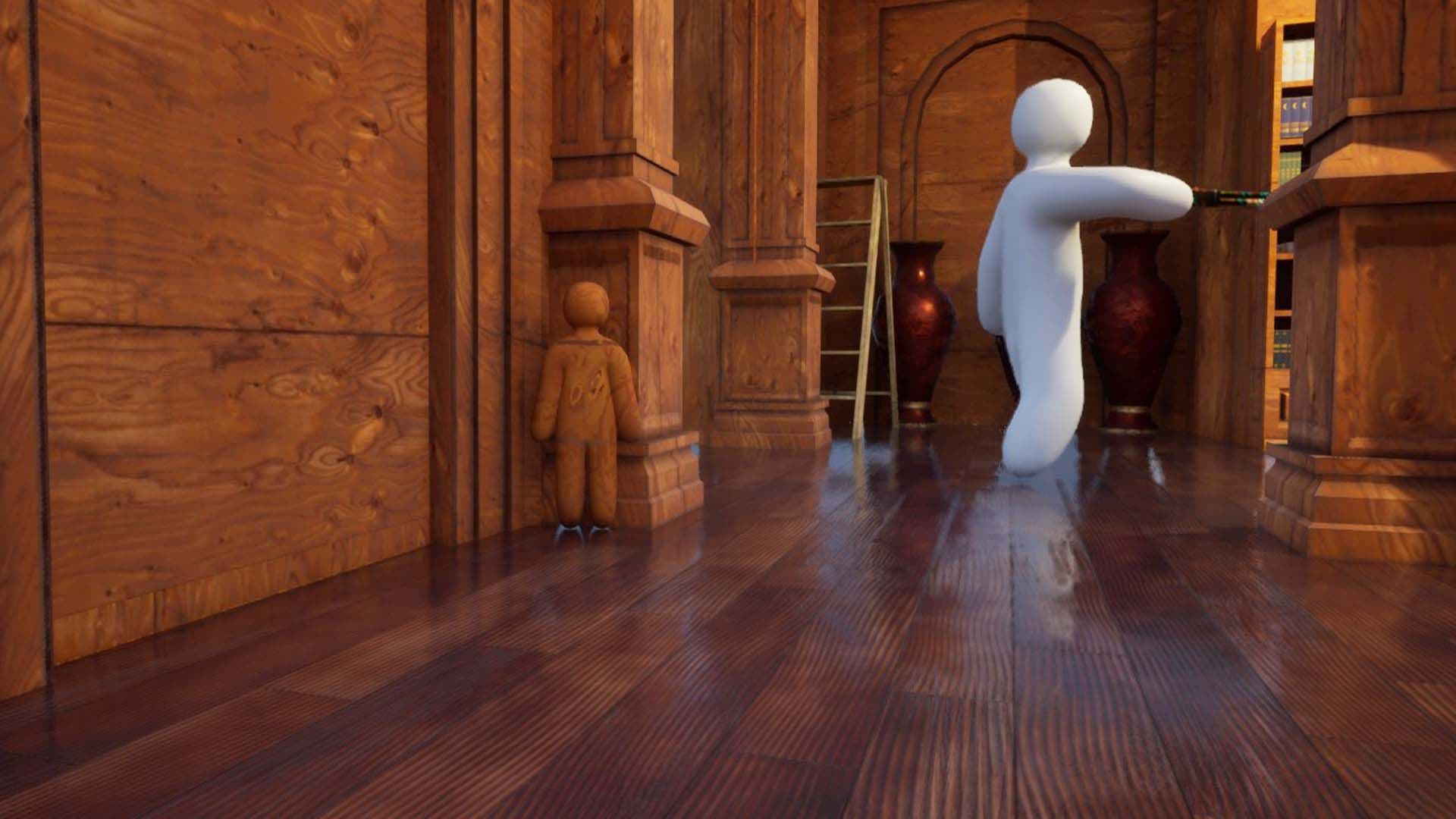
The game is a fun time for those willing to overlook some technical jank.
The value proposition here is almost comical. At $5.99, Meccha Chameleon delivers more genuine, scream-laughing-with-friends moments per hour than most $70 titles manage in their entire runtime. This isn't about content length in a traditional sense—HowLongToBeat’s estimates of 2-6 hours are meaningless for an infinitely replayable social engine. The value is measured in Discord call memories: the time your friend perfectly mimicked a grandfather clock and survived the entire round, or the panic of an Infection match where the hunter count snowballs in seconds. The game’s robust modding community through the Steam Workshop acts as a perpetual content machine, offering everything from eerily accurate Backrooms recreations to Minecraft-inspired voxel worlds for free. This transforms a simple purchase into a long-term social utility, a go-to party game you can return to for months.
This is the genius of its pricing: it eliminates all risk. At six dollars, the technical jank, the occasional frustration, and the reliance on friends aren't dealbreakers; they're part of the charming, chaotic package you willingly signed up for.
However, to recommend Meccha Chamelon without acknowledging its significant flaws would be irresponsible. The Seeker role remains a persistent weak point, often feeling more like a tedious chore of pixel-hunting than the thrilling counterpoint to creative hiding. This asymmetry can drain fun from public matches, where the social payoff is absent. The technical bugs—from players falling through maps to punishing desync—are not quaint quirks but active interruptions that can break the carefully built tension of a match. Furthermore, the near-total lack of functional moderation tools is a glaring omission for a multiplayer game of this scale, placing the burden of policing offensive content squarely on server hosts. These aren't minor issues; they are fundamental cracks in the foundation that the brilliant core concept is forced to paper over.
Ultimately, Meccha Chameleon’s audience is crystal clear. This is a game for friends and streamers, a social catalyst first and a video game second. If you have a consistent group to play with, preferably over voice chat, it is one of the most uproarious and rewarding purchases you can make. The emergent comedy born from its manual painting system is unparalleled. Conversely, if you plan to play primarily alone in public servers, your experience will be a fraction as enjoyable, often highlighting the game's frustrations without the social rewards that justify them. It is the definitive "friendslop" experience: rough, reliant on its community, and utterly magnetic when the conditions are right.
Final Verdict:
Meccha Chameleon is a flawed masterpiece of social design and a triumph of pure, accessible fun over polished convention. Its six-dollar price tag isn't just a bargain; it's a statement. You are buying a canvas for shared creativity and chaos, one that will provide more genuine laughter with friends than games ten times its price. Just be prepared to occasionally paint around the cracks.
Pros:
- An ingeniously simple and creative painting mechanic that empowers player expression.
- Unmatched potential for hilarious, emergent moments when played with friends.
- Exceptional value, bolstered infinitely by a vibrant Steam Workshop modding community.
- Smart game modes like Infection that dynamically refresh the tension.
Cons:
- The Seeker role can be monotonous and frustrating, especially in solo play.
- Plagued by significant technical jank, including bugs, desync, and performance hiccups.
- A severe lack of moderation tools for a massive online multiplayer game.
- Experience is critically dependent on playing with a social group.