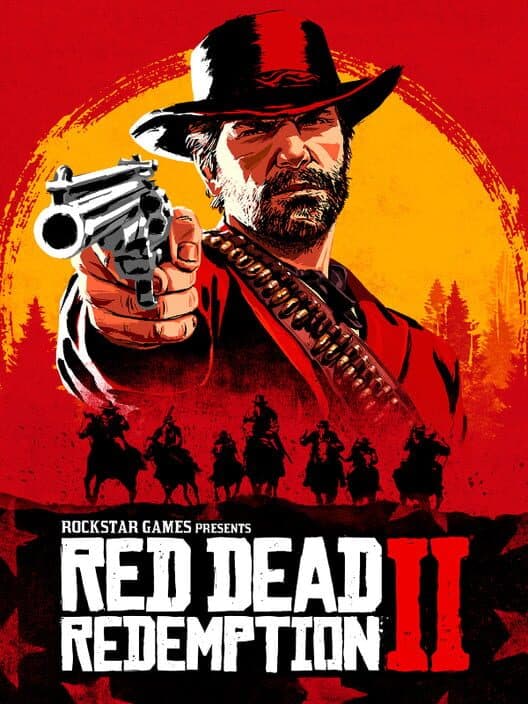
Red Dead Redemption 2 Introduction: A Meticulous Ode to the Outlaw Era
The opening hours of Red Dead Redemption 2 are a masterclass in deliberate misdirection. The game begins not with a sweeping vista of the American frontier, but with a blizzard. You are Arthur Morgan, a man buried under snow and circumstance, trudging through a whiteout alongside the remnants of the Van der Linde gang. This is not a triumphant introduction; it is a survival scenario. The gang is fleeing the aftermath of a botched ferry robbery in Blackwater, and the game uses this claustrophobic, linear prologue to teach you its rhythms without the distraction of its vast world. It is a brilliant, oppressive funnel that makes the eventual release into the open plains feel like a gasp for air.
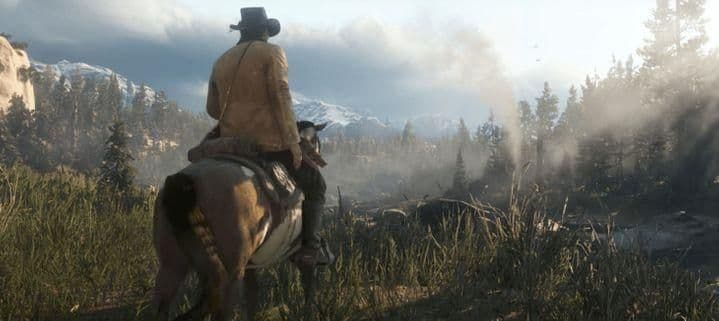
Arthur Morgan overlooking the vast, meticulously detailed world of the Van der Linde gang.
This choice—to start in the mountains, in a storm, with everything going wrong—immediately establishes the game's central tension. Red Dead Redemption 2 is set in 1899, the twilight of the American Wild West, and the gang's flight is a metaphor for the era itself. Civilization is closing in, represented by the smokestacks of Saint Denis and the relentless Pinkerton detectives. The narrative premise is not about conquering the frontier, but about failing to escape its end. The gang's leader, Dutch van der Linde, promises a paradise just over the next hill, but every botched job and forced relocation proves his vision is a fantasy. The game's structure—a cycle of settling, scheming, and fleeing—is the engine that drives this tragedy.
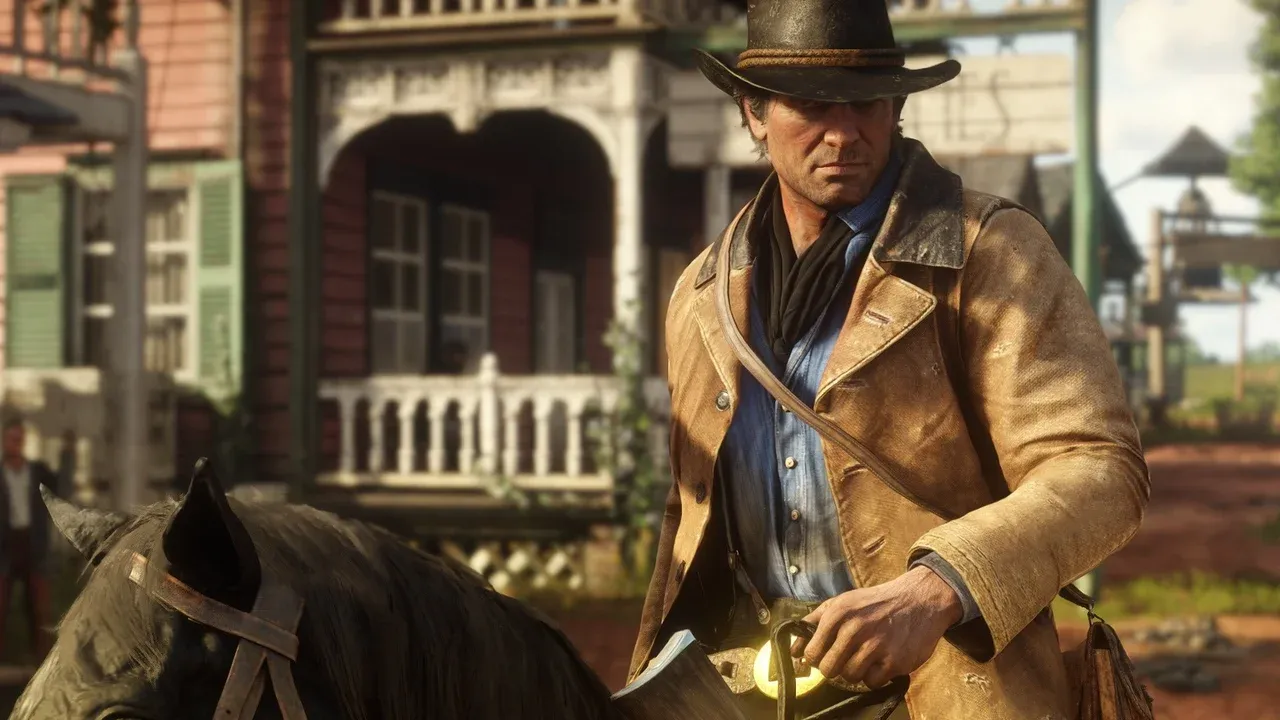
At the center of this crumbling world is Arthur Morgan, and he is the reason the story works. On the surface, he is a gruff enforcer, Dutch's most loyal lieutenant. But from the first moments, the game layers in evidence of a more complex man. His journal, which he fills with sketches and introspective notes, reveals a soul wrestling with the violence of his life. His casual sass when antagonizing NPCs betrays a dry wit. The performance by Roger Clark is extraordinary, capturing a man who is physically imposing but emotionally vulnerable. Arthur is not a blank slate; he is a character with a defined arc, and watching him question the very ideology he was raised on is the emotional core of the entire 60-hour journey.
The game's technical prowess is not just about fidelity; it is about creating a world that feels indifferent to your presence. This is the frontier as a living, breathing ecosystem, not a theme park.
The sheer detail of the world is the first thing that will stop you in your tracks. The lighting is spectacular—sunrises that paint the dew-covered grass in salmon-pink, thunderstorms that cast splintered light across the plains. The flora and fauna are rendered with obsessive care: a hawk catches a snake, a bear attacks an elk, your horse's coat shifts from glossy with sweat to dull with dust. This is not just a beautiful backdrop; it is a functional ecosystem. The dynamic weather system affects gameplay, forcing you to dress appropriately or risk your cores depleting faster. The snow deforms underfoot, mud cakes on wagon wheels, and your breath fogs in the cold. It is a technical marvel that serves a thematic purpose: this world is alive, and it will continue to turn with or without you.
Gameplay Mechanics in Red Dead Redemption 2: Realism vs. Friction
Red Dead Redemption 2 demands that you live within its systems, not just command them. This is the game's defining philosophy and its greatest point of friction. Every action, from skinning a deer to retrieving a rifle from your saddle, is presented not as an instant transaction but as a deliberate, animated process. The design intent is profound: to ground you in the physical reality of 1899, to make the world feel tangible and your presence within it consequential. Where this succeeds, it creates an unparalleled sense of immersion. Where it fails, it feels like the game is fighting your instincts as a player.
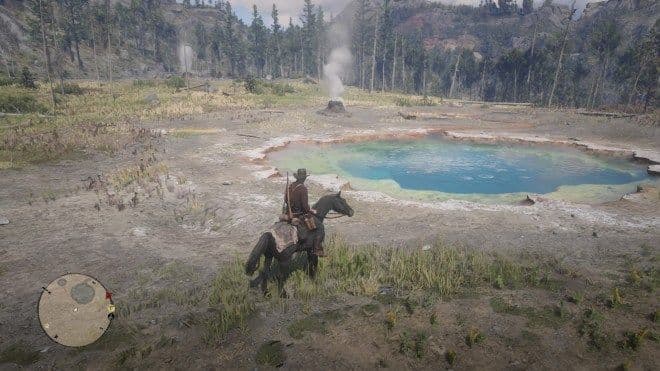
The horse-based inventory system is a key example of the game's commitment to realism.
The commitment to this tactile realism is most evident in its survival-lite mechanics. Arthur’s Health, Stamina, and Dead Eye are governed by Cores that deplete through activity and must be maintained by eating, resting, and dressing appropriately for the weather. Your horse isn’t just a vehicle; it’s a companion with its own hunger, stamina, and a bonding system that deepens through grooming, feeding, and calm handling. A bonded horse is braver in gunfights, more responsive to commands, and can perform advanced moves. This transforms the horse from a tool into a character—losing one to a predator or a stray bullet carries a genuine emotional and practical sting. These systems weave a compelling meta-game of maintenance that makes the camp feel like a home and the wilderness a place to be respected, not just conquered.
This is the core tension of Red Dead Redemption 2: it’s a game about freedom built on a foundation of exquisite restriction.
However, this deliberate pace often clashes with the game’s own moment-to-moment controls. Arthur moves with a heavy, realistic gait that can feel unresponsive when precision is needed. The contextual action button—a Rockstar staple—becomes a minefield of potential accidents. Attempting to mount your horse in a crowded Saint Denis street can easily result in tackling a bystander, instantly triggering a wanted level. The line between immersive simulation and frustrating clumsiness is razor-thin. For every moment where the slow, methodical looting of a cabin feels authentically tense, there’s another where you’re fighting the interface to simply pick up the specific can of beans you’re looking at.
This friction reaches its peak within the story missions. For all the freedom promised by its open world, Red Dead Redemption 2’s critical path is surprisingly rigid. Missions frequently follow a "ride-and-talk" template that culminates in a scripted shootout, and deviating from the designer’s intended path—even intelligently—often results in an instant "Mission Failed." One notorious example sees the game punish you for not returning to a specific house during an attack, even if you are logically engaging the enemies outside of it. This creates a bizarre dissonance: you are an apex predator in the open world, but a puppet on a string during the narrative’s most important moments. The freedom to tackle a camp of outlaws creatively in free roam is replaced by a "rail shooter" mentality when the yellow mission marker is active.
Ultimately, these mechanics exist on a spectrum of patience. The horse bonding and core management are masterclasses in building investment through routine. The deliberate animations are a bold statement against gaming’s trend toward instant gratification. But the control clumsiness and mission linearity are genuine barriers that will test your tolerance. Red Dead Redemption 2 asks not just for your time, but for your surrender to its rhythm. When you comply, it offers a depth of simulation few games dare attempt. When you resist, the seams show, and the dream of the outlaw life briefly feels like busywork.
The Living World: Is Red Dead Redemption 2 the Most Convincing Sandbox?
The most impressive thing about the open world of Red Dead Redemption 2 is not its scale or its beauty—though both are staggering—but its profound indifference. This is not a playground built for you; it is a continent living its own life. You can spend an entire in-game day watching lumberjacks fell a tree at a camp, or follow a lost Englishman shouting for his friend "Gav" across three counties. These moments, completely divorced from quest markers or objectives, are the game’s greatest magic trick. The world breathes with a rhythm of its own, making you a visitor rather than its centerpiece, and this foundational philosophy shapes every facet of its sandbox.
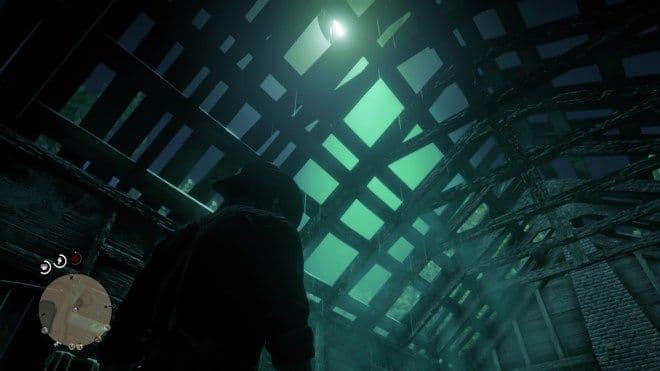
Dynamic NPC interactions like the Rhodes gunsmith basement encounter showcase the living world.
This illusion of a living world is sold through a staggering density of systemic reactivity. NPCs are not just set dressing; they possess a memory. Rob a storekeeper, and he’ll recognize you days later, shouting for the law. Greet a stranger politely, and they might later offer you a discount in their shop. Arthur’s own appearance matters—arrive in town caked in mud and blood, and citizens will recoil in disgust. Clean-shaven and in a fresh suit, they offer respectful nods. The camp, your gang’s nomadic home, is the beating heart of this systemic storytelling. It’s a communal hub where characters live, argue, sing, and work, their moods shifting with the gang’s fortune and Arthur’s contributions. Donating money and supplies visibly improves morale and unlocks practical upgrades, like a fast travel map or a leatherworking station. This isn't just a menu; it’s watching a family you’re responsible for either thrive or fracture, grounding the epic narrative in tangible, daily stakes.
This is where Red Dead Redemption 2 earns its reputation: in the quiet moments between heists, where you’re just a man in a world that doesn't care if you live or die.
Where the open world truly sings is in its emergent, unscripted freedom, which exists in stark contrast to the rigid story missions. You might be tracking a legendary bear when you stumble upon a moonshiner’s camp, decide to help a stranger being robbed, get distracted by a rare bird, and end the day fishing for one of the game's 30 species of fish as the sun sets. Hunting is a patient mini-game where shot placement and weapon choice determine pelt quality. Poker, blackjack, and dominoes in saloons are fully realized diversions. These activities aren’t just checklist items; they are woven into the survivalist fabric of the world, offering resources, money, and, most importantly, a sense of existing within a larger, functioning ecosystem.
However, the moment you put on your outlaw hat, the game’s meticulously crafted illusion often shatters under the weight of its own punitive systems. The bounty system is a notorious offender. While committing crimes with a mask should provide anonymity, lawmen frequently possess an uncanny, telepathic ability to identify Arthur Morgan the instant a crime is reported, rendering the disguise mechanic almost pointless. The response is overwhelming and relentless; stray into a minor crime in Saint Denis, and within minutes you’ll be swarmed by a small army of officers who spawn with pinpoint accuracy. This transforms playful banditry into a frustrating chore, as the financial penalty and aggressive pursuit heavily discourage experimentation. It creates a bizarre dissonance: the game wants you to live as an outlaw in a world that reacts with a zero-tolerance police state the moment you try.
This tension between sublime freedom and frustrating restriction defines the Red Dead Redemption 2 experience. You have the total liberty to be a naturalist, a fisherman, a gambler, or a tourist in a breathtaking landscape. Yet, the systems governing crime and punishment feel archaic and unfair, pulling you out of the fantasy. The world is a masterpiece of environmental storytelling and reactive detail, but its justice system operates with the subtlety of a sledgehammer. It’s a sandbox of unparalleled depth and life, but one that occasionally slams the lid shut on the very play it encourages.
Combat and Confrontation: Gunslinging in a Changing World
The gunfights in Red Dead Redemption 2 feel less like modern shootouts and more like brutal, intimate arguments. This is by design. The game’s arsenal of period-accurate weapons—lever-action rifles that must be manually cycled, revolvers that require a deliberate cock of the hammer between shots—imposes a specific, slower rhythm. You can’t just hold down the trigger; each shot is a commitment, forcing a tactical “pop and shoot” cadence that’s a world away from the spray-and-pray of Grand Theft Auto. The sound design sells this completely, with every metallic click-clack and thunderous report feeling weighty and dangerous. This isn't just combat; it's a tactile, violent conversation with the end of an era.
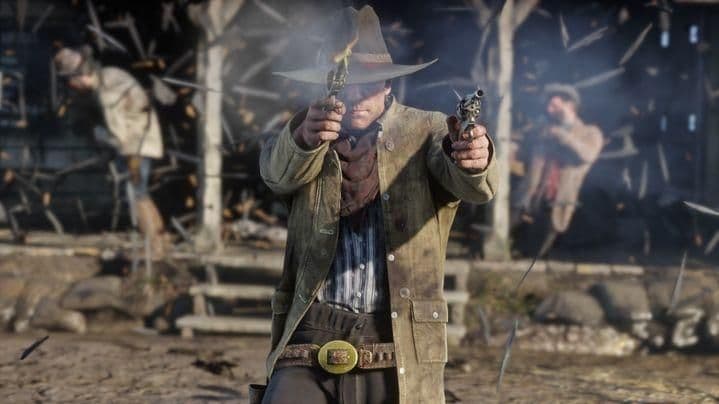
Dual-wielding revolvers offers a high-intensity approach to combat encounters.
Where this system truly sings is in its cinematic presentation. Bodies don't just ragdoll; they jerk and crumple with sickening weight, a foot catching in a stirrup as a man falls from his horse, a hat spinning slowly through the air. It’s a masterclass in turning violence into visceral, spaghetti-western spectacle.
This is where the Dead Eye system returns as both a power fantasy and a potential crutch. Slowing time to paint targets with precise shots remains incredibly satisfying, a perfect tool for replicating that mythic gunslinger prowess. Its evolution throughout the story—unlocking the ability to highlight critical hit areas like hearts or brains during hunting—adds a welcome layer of strategic depth to tracking game. However, this power comes at a cost to the game’s challenge. When combined with the generous default aim-assist, Dead Eye can trivialize even large-scale assaults. You can clear an entire O’Driscoll camp in a single, slowed-motion breath, reducing what should be tense skirmishes to a simple targeting exercise. For veterans seeking a test, it’s an overpowered tool that undermines the deliberate gunplay it’s built upon.
That deliberate gunplay also highlights the areas where Red Dead Redemption 2’s combat feels underdeveloped. Melee encounters are laughably simplistic, boiled down to a punch and block button that quickly devolves into tedious button-mashing. Stealth is barely a consideration outside of a few scripted missions; enemies possess binary awareness, and there’s no dedicated system for silent takedowns or managing noise. This creates a bizarre imbalance: you have this incredibly nuanced firearm simulation sitting alongside brawling mechanics that feel like a last-gen afterthought. It reinforces that the game’s heart is in its loud, chaotic firefights, not in any subtle approach.
The true test of the combat system isn't in the curated story missions, which often provide perfect chest-high walls and predictable enemy waves, but in the open world’s emergent chaos. When bounty hunters ambush you on a narrow trail or you accidentally aggro a Del Lobo patrol while hunting, the lack of scripted cover turns those intimate gun mechanics into a frantic scramble for survival. Here, the weight of Arthur’s movements, the need to manually retrieve weapons from your horse, and the stamina cost of sprinting all coalesce into something genuinely thrilling and unpredictable. It’s in these unscripted moments that Red Dead Redemption 2’s commitment to a heavier, more grounded feel pays its highest dividends, proving the systems have depth when the training wheels of mission design come off.
Narrative and Themes: A Tragic Tale of Failure and Progress
This is where Red Dead Redemption 2 earns its reputation as more than a game—it’s a profound tragedy, meticulously scripted and impeccably performed. The story isn't about saving the world; it's about watching a family tear itself apart, set against the dying gasp of the American frontier. The narrative's power doesn't come from plot twists—you likely know the gang's fate from the first game—but from the devastatingly human journey of watching it happen.
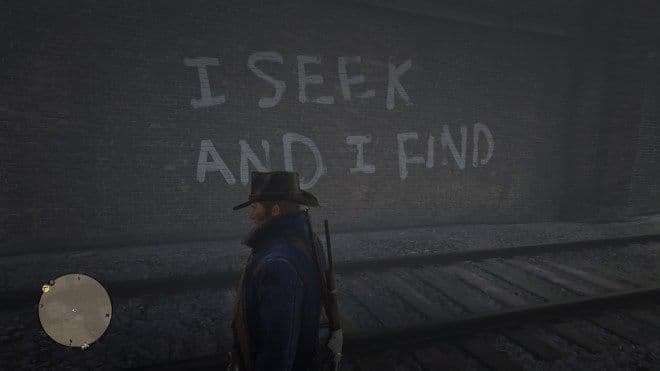
The diverse members of the Van der Linde gang each have unique character arcs.
At the heart of this collapse is Dutch van der Linde, a masterclass in charismatic villainy. Benjamin Byron Davis’s performance is a slow-burn revelation, capturing a man whose grandiloquent speeches about freedom and loyalty are a fragile mask for his cowardice and narcissism. The game’s brilliance is in how it lets you believe in him, at first. He is the magnetic center of the camp, promising a "paradise" just over the next hill. But as the Pinkertons close in and his plans fail, the mask slips. You see it in small moments: a frantic, pleading look in his eyes when challenged, a shift from "we" to "I." His descent isn't a sudden turn; it's a corrosion, and witnessing Arthur’s dawning realization that his father figure is a hollow, manipulative con-man is the story’s most painful thread.
The supporting cast isn't a backdrop; they are the walls of this crumbling house. From the soft-spoken wisdom of Charles to Sadie Adler’s ferocious transformation from widow to avenger, the gang’s 23 members feel less like NPCs and more like a dysfunctional, credible family you’re forced to live with.
This ensemble is Rockstar’s finest character work. Their lives unfold in the camp’s background—Hosea teaching Jack to read, Karen singing drunkenly by the fire, Lenny’s eager attempts to prove himself. You develop personal reactions to them: affection, annoyance, pity. This investment makes the gang’s inevitable fracture carry immense tragic weight. When loyalties splinter and familiar faces are lost, it hurts because you’ve shared a life with them, not just missions. This depth transforms the camp from a gameplay hub into the story’s emotional core.
Thematically, the game tackles its setting with a maturity that often eludes the genre. Red Dead Redemption 2 is unflinching in its portrayal of a racist, industrializing America. Saint Denis isn't just a pretty city; its smokestacks and electric trams are a visual indictment of the "progress" Dutch rails against. The game handles these ideas with more nuance than its satirical Grand Theft Auto lineage, particularly in conversations about race between Arthur and characters like Lenny. However, its reach sometimes exceeds its grasp. Subplots involving the systematic persecution of Native Americans, while well-intentioned, can feel like clichéd narratives borrowed from lesser Westerns, lacking the same granular humanity afforded to the gang. It’s a rare instance where the game’s ambition to comment on history outpaces its ability to fully inhabit it.
This ambition is also tested by the narrative’s own structure. The middle chapters can succumb to a repetitive rhythm: settle in a new camp, Dutch promises "one last score," a job goes wrong, you flee. This cycle effectively mirrors the gang’s desperate, circular thinking, but for the player, it can create a sense of narrative stagnation. The lack of a clear, driving goal beyond survival—especially compared to John Marston’s focused quest for redemption in the first game—means your engagement often hinges entirely on your attachment to the characters. When that attachment is strong, you’re glued. When it wanes, the journey can feel like a beautiful, well-acted slog.
The epilogue is Rockstar’s defiant answer to the modern trend of brief, post-credit stings. It’s a massive, two-part coda that doesn’t just tie up loose ends—it builds a new home, both literally and thematically, from the ashes of the old.
And then comes the payoff. After the emotional crescendo of Arthur’s arc, the game transitions to a lengthy epilogue that many lesser titles would have relegated to a cutscene. Instead, you step into John Marston’s boots and live the mundane reality of the "quiet life" the gang dreamed of. You build a house, herd cattle, and learn to live without a gun in your hand. This deliberate, pastoral pace is a masterstroke. It’s a narrative decompression chamber that allows you to process Arthur’s sacrifice while methodically bridging every gap to the original Red Dead Redemption. By the time the iconic score swells and John rides to his new homestead, the game has earned its poignant, bittersweet conclusion. It’s a final, patient argument for its own philosophy: that the most powerful stories aren’t just witnessed, they are lived.
Technical Performance and Ethical Considerations: The Cost of Detail
The staggering beauty of Red Dead Redemption 2 is its most immediate technical triumph, and its most profound ethical quandary. This is a game that runs at a locked 30 frames-per-second on its original PS4 and Xbox One hardware, a deliberate, cinematic cadence that matches its methodical pace. The trade-off for that stability is a world of unparalleled density: light filters through pine needles in the Grizzlies, mud deforms under wagon wheels, and the humidity of the bayou seems to hang in the air. On PC, the potential for 60fps and enhanced graphical settings unlocks even more of this splendor, but at launch, it was a promise marred by reality. Reports of stutters, crashes, and poor CPU management plagued the experience, a reminder that this monumental simulation often strained against the very hardware it was designed to showcase. The technical achievement is undeniable, but it arrived with a cost—one measured in more than just processing power.
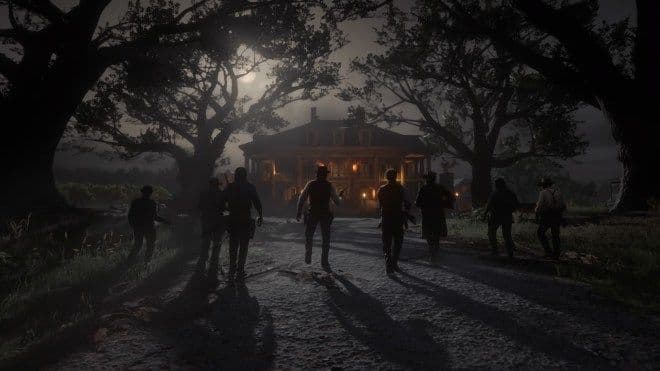
A technical look at Red Dead Redemption 2's performance on the PlayStation 4.
The audio design is arguably the game's most consistent technical marvel. From the specific thwip of an arrow leaving a bow to the way a gunshot echoes differently in a canyon versus a forest, the soundscape is a masterclass in environmental storytelling.
This meticulous craft extends to the score and soundscape. Woody Jackson’s dynamic soundtrack is a character in itself, shifting from mournful acoustic guitar during lonely rides to thunderous orchestral swells during a desperate last stand. But it’s the foley work that truly grounds you. The crunch of snow underfoot, the distinct jingle of your spurs on a wooden boardwalk, the way NPC conversations fade and warp as you ride past—these aren’t just effects; they’re the stitches holding the world’s fabric together. You can close your eyes and know exactly where you are, a testament to an audio team working at the peak of their craft. This sensory precision is what makes the world feel occupied, not just rendered.
Which makes the conversation about Red Dead Redemption 2 impossible to separate from the conditions of its creation. The game’s near-obsessive detail—the fact that a horse’s testicles shrink in the cold, that individual hair strands quiver, that there are unique, rarely-heard lines for shopkeepers you visit frequently—did not materialize from thin air. It was forged in a notorious culture of "crunch," with reports of developers working 100-hour weeks to meet deadlines. This is the asterisk that hangs over every breathtaking vista and every perfectly animated campfire song. You are admiring a masterpiece, but you are also witnessing the product of what one report called "an exorbitant overwork." The game itself becomes a paradox: a narrative about the toxic cost of a charismatic leader’s impossible dream, built by a studio whose own practices mirrored that very toxicity. When you watch Dutch demand one more impossible score from his exhausted gang, the meta-commentary is unsettling.
This ethical consideration doesn’t diminish the artistry on screen, but it fundamentally changes how you engage with it. Appreciating the 34-minute credit roll—a literal scrolling monument to hundreds of names—becomes a somber act. You wonder which beautiful, inconsequential detail came at the greatest human cost. Was it the seamless letterboxing transition between gameplay and cutscene, implemented late and requiring significant overtime? The knowledge of this context transforms the experience from pure escapism to a more complicated meditation on the price of perfection. Red Dead Redemption 2 is a breathtaking eulogy for a ruined world, created through a process that, by many accounts, ruined a few lives in the making. To review the game is to sit with that dissonance—to praise the unparalleled achievement while acknowledging the unsustainable, and often cruel, engine that produced it.
Final Verdict: Is Red Dead Redemption 2 Worth Playing Today?
The final question is never whether Red Dead Redemption 2 is a masterpiece—its 97 Metascore and hundreds of Game of the Year awards settled that—but whether its specific, demanding vision is one you want to live inside. This isn’t a game you simply play; it’s a world you inhabit, and its immense value is inextricably tied to your willingness to surrender to its glacial, methodical rhythm.
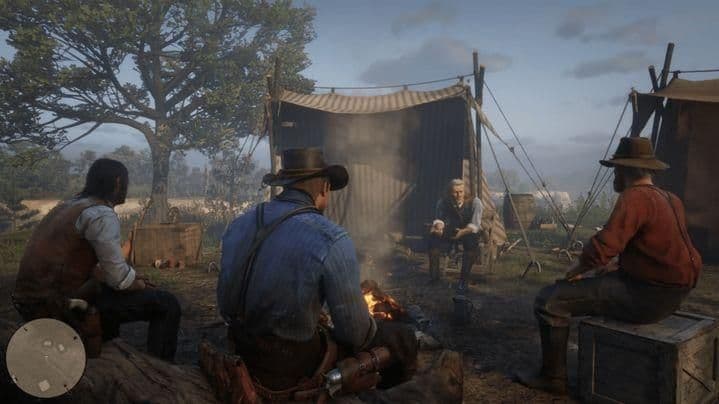
The gang's camp serves as the emotional heart of the game's narrative.
The sheer volume of content is staggering. A 60-hour main story is just the spine; with its lengthy epilogue, countless stranger vignettes, hunting for legendary animals, tracking 30 species of fish, and simply existing in its reactive world, a full playthrough can easily stretch to 150 hours. This isn’t checklist-driven bloat, but high-density worldbuilding. The value proposition is unparalleled: this is a single-player experience with the longevity of a live-service game, but every minute is handcrafted, voiced, and animated with a level of care that makes most open worlds feel sterile by comparison.
This leads to the most critical caveat: Red Dead Redemption 2 is not for everyone. It is a game for the patient, for those who value immersion and a slow-burn character study over kinetic action and constant reward.
If your ideal open world is the breakneck chaos of Grand Theft Auto V, this will feel like a slog. The game trades Rockstar’s signature satire for profound sincerity, and its power is in the quiet moments: the campfire songs, the conversations on long rides, the journal entries Arthur writes under a tree. It’s a game that asks you to care about brushing your horse and choosing the right outfit for the weather, because those rituals build the connection that makes the tragic narrative land with such devastating force. For players who crave that deep simulation and emotional payoff, this is a generational achievement. For those seeking a tight, action-packed cowboy power fantasy, the deliberate pace will feel like an anchor.
This dichotomy is crystallized in the game’s most debated elements, its pros and cons often two sides of the same coin. The unrivaled world detail and incredible character development—the way Arthur’s journal charts his internal decay, the gang’s camp that feels like a living family—are what make the story unforgettable. Yet, these exist alongside restrictive mission design that often punishes creativity, and clunky controls that can turn a simple interaction in Saint Denis into an accidental crime spree. The tedious realism—the slow skinning animations, the need to manually clean guns—is what grounds you, but it’s also what many will cite as the reason they never finished Chapter 3.
Ultimately, Red Dead Redemption 2 stands as a landmark that redefined the ceiling for open-world immersion and narrative ambition. It is a more mature, grounded, and emotionally complex experience than GTA V, a testament to a studio pushing its own formula into uncharted, serious territory. It is also a deeply flawed gem, one whose brilliance is occasionally obscured by its own stubborn design. To play it is to engage with one of the medium’s highest achievements, but also to wrestle with its most frustrating contradictions. The verdict, then, is not a simple score, but a question of alignment: if you have the patience to meet it on its own terms, you will experience one of the most profound and memorable journeys gaming has to offer. If not, its greatest strengths will feel like insurmountable barriers.
Pros:
- An open world of unparalleled density, reactivity, and beauty that feels truly alive.
- A masterful, tragic narrative anchored by one of gaming’s greatest protagonists in Arthur Morgan.
- Deep, immersive systems—from horse bonding to camp management—that build profound investment.
- A staggering amount of high-quality, handcrafted content that offers incredible value.
- Technical and artistic presentation that remains a benchmark years after release.
Cons:
- Mission design is often rigidly linear, punishing player ingenuity in favor of cinematic scripting.
- Controls and contextual actions can feel clunky and unresponsive, leading to frustration.
- The deliberate pace and emphasis on mundane realism will test the patience of many players.
- Punitive crime and bounty systems discourage playful outlaw experimentation.
- The shadow of its development “crunch” ethically complicates the appreciation of its detail.