
Red Dead Redemption 2 Horse Ranking Criteria and Stats
Before we can crown a champion, we need to establish the rules of the contest. In Red Dead Redemption 2, a horse is far more than a mode of transport; it's your mobile inventory, your primary escape vehicle, and your most loyal companion. Choosing the right one is a major gameplay decision, and the "best" horse isn't a simple, one-size-fits-all answer. It depends entirely on your priorities: Are you a speed demon, a fearless gunslinger, or a methodical explorer? To answer that, you must understand the metrics that define a horse's performance.
Our ranking is built on a foundation of four core stats, one behavioral trait, and two critical progression systems. We evaluate every horse against these criteria to determine its place on the list.
The Core Stats: Health, Stamina, Speed, and Acceleration
These are the quantifiable pillars of horse performance, visible in the game's menus and represented by bars.
- Health: This determines how much damage your horse can take from falls, collisions, or gunfire before it goes down. A high Health stat is non-negotiable for players who frequently engage in mounted combat or traverse treacherous terrain. A horse with low health is a liability in a shootout.
- Stamina: This is your horse's endurance meter for galloping, swimming, and performing high-effort maneuvers. While crucial for long-distance travel, its importance is mitigated by two key factors: the "calming" mechanic (pressing the left stick/L3 while riding) and high-quality saddles, which can make stamina almost a non-issue later in the game.
- Speed: This governs your horse's top-end velocity. It's the most critical stat for covering vast distances quickly, winning races, and outrunning lawmen or rival gangs across the open plains.
- Acceleration: This dictates how quickly your horse reaches its top speed. High acceleration is vital for quick getaways from ambushes, dodging obstacles in dense forests, and gaining an edge in short-burst challenges.
While all four stats matter, their importance shifts based on your playstyle. A racer prioritizes Speed and Acceleration, a brawler needs Health, and an explorer values Stamina—though, as noted, Stamina can be managed.
The Intangible Factor: Bravery (or Temperament)
This is the most debated and crucial hidden stat. Bravery determines how your horse reacts to stress: predators (wolves, cougars, gators), gunfire, and environmental dangers. A "skittish" horse will buck you at the worst possible moment, potentially throwing you into a pack of wolves or a swamp full of alligators. A "brave" horse will stand its ground, allowing you to fight from the saddle.
Our analysis, supported by community testing (like the infamous "gator swamp test"), shows that bravery is not consistent across breeds and often contradicts the game's official compendium ratings. For instance, while Arabians are statistically elite, they are notoriously skittish. Conversely, War horses like the Turkoman or Ardennes exhibit remarkable composure under fire. We weigh bravery heavily because a fast horse is useless if it abandons you in a crisis.
The Handling Classes: Elite vs. Standard
Handling defines how a horse feels to ride.
- Elite Handling: Exclusive to the Arabian breeds, this offers the tightest turning radius and the most immediate, responsive control. It feels agile and precise, especially at high speeds or in confined spaces like Saint Denis streets.
- Standard Handling: Used by most other high-tier breeds like the Missouri Fox Trotter and Turkoman. While a noticeable step down from Elite in direct comparison, Standard handling is still highly responsive and more than adequate for all gameplay. You won't feel like you're driving a wagon.
Elite Handling is a pure luxury that enhances the riding experience but doesn't necessarily make you more effective. A skilled rider on a Standard horse can outperform a novice on an Elite one.
The Progression System: Bonding Level 4 Benefits
Your relationship with your horse is a game in itself. Reaching Bonding Level 4 is transformative and applies to any horse, making it a universal priority. The benefits include:
- Permanent Stat Increases: Your horse's Health and Stamina cores are significantly expanded.
- Unlocked Maneuvers: You gain the ability to perform advanced moves like drifting at full speed and the piaffe (a prancing step).
- Enhanced Bravery: A bonded horse is generally calmer and less likely to flee after you dismount or are downed.
- Maximized Performance: It unlocks the horse's full potential, making stat comparisons most meaningful at Bonding Level 4.
A fully bonded common horse can often outperform a newly acquired, high-stat steed. Time invested in bonding is never wasted.
The Force Multiplier: Trapper Saddles & Stirrups
Your saddle is your horse's most important piece of gear. While stable-bought saddles offer minor benefits, the crafted saddles from the Trapper are game-changers. Created from perfect pelts (like Panther, Alligator, or Beaver), these saddles provide massive, unique bonuses:
- Massive Stamina Core Rate Reduction: Some reduce drain by up to 50%, making stamina depletion a rare concern.
- Significant Stat Boosts: The best Trapper saddles can add up to +2 bars to your horse's Speed and Acceleration.
- No Drawbacks: Unlike fancy stirrups, these saddles provide their immense benefits without increasing core drain rates.
When paired with the best stirrups (like the Hooded Stirrups), you can push a horse's Speed and Acceleration to its absolute limit, as shown by the grayed-out "potential" bars in the stats menu. This means a well-equipped Missouri Fox Trotter can achieve near-max speed, and a sturdy Turkoman can become surprisingly quick.
The Verdict: What Makes a Horse "Best"?
Our final rankings synthesize all these elements. We look for:
- High Base Stats: Strong foundations in the core stats relevant to its role.
- Positive Bravery Profile: Reliability in combat and predator-rich environments.
- Availability: When and how you can acquire it, balanced against its power.
- Synergy with Upgrades: How well it scales with Bonding Level 4 and top-tier saddles.
A horse that scores an "S" in Speed but an "F" in Bravery will lose points, as practicality matters more than paper stats. With these criteria established, we can now definitively rank the top steeds in the American frontier.
1. Rose Grey Bay Arabian: The Statistical Champion
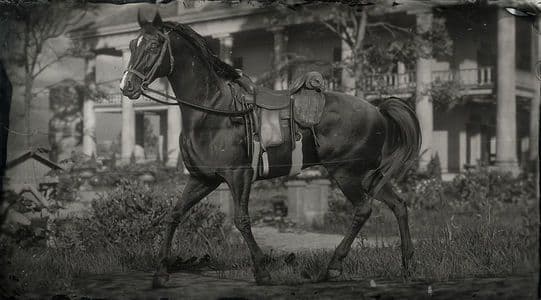
Arabians possess the highest combined health, stamina, and speed stats in the game.
1. Rose Grey Bay Arabian: The Statistical Champion
This is the horse you work the entire game to afford and deserve. It sits atop the list not by a narrow margin, but by a definitive statistical advantage, representing the absolute pinnacle of equine performance available to John Marston in the epilogue. While other horses may claim superiority in a single niche, the Rose Grey Bay Arabian is the undisputed master of all core metrics.
Why It’s Here: The Late-Game Power Fantasy
The Rose Grey Bay Arabian is the ultimate reward for players who have conquered the main story and amassed a fortune. It is exclusively available for purchase at the Blackwater Stable during the Epilogue for a princely sum of $1,250. This price tag and late-game availability are your first clues to its elite status. You cannot rush this; it’s an endgame trophy.
Pros, Cons, and Core Stats
Its claim to the throne is built on a foundation of best-in-class numbers. With base stats of Health 7, Stamina 7, Speed 6, and Acceleration 6, it possesses the highest combined Health and Stamina of any Arabian and ties for the best Speed and Acceleration. When fully bonded, these stats soar even higher. Furthermore, it inherits the "Elite" handling of all Arabians, granting it the tightest turning radius and most responsive controls in the game.
However, this statistical perfection comes with the classic Arabian trade-off: temperament. It is notoriously skittish. A sudden snake, a lurking cougar, or sustained gunfire will test its nerves far more than a Turkoman or Missouri Fox Trotter. It’s a high-strung race car, not a stoic tank. The other significant con is its prohibitive cost and late availability, locking it away from Arthur Morgan for the entirety of his journey.
Recommended Use Cases
- Racing & Speed Challenges: This is its undisputed domain. No other horse can match its blend of top-tier speed, blistering acceleration, and razor-sharp handling. For point-to-point speed or in-game race challenges, it is unmatched.
- General Exploration (Low-Danger Zones): On the open plains of New Hanover or the deserts of New Austin, where predators are scarce, it provides an exhilarating and supremely efficient ride.
- Not Recommended For: Combat-heavy scenarios or predator-dense areas like the Bayou Nwa or Roanoke Ridge. Its low bravery is a critical liability when bullets fly or wolves howl. Hunting dangerous game requires constant calming to prevent it from bolting.
The Verdict
The Rose Grey Bay Arabian is the "best" horse in Red Dead Redemption 2 by the cold, hard logic of spreadsheet stats. It is the fastest, most responsive vehicle in the game. However, "best" does not always mean "most suitable." Its skittish nature makes it a demanding companion, and its late unlock means you’ll spend most of the story with other steeds. It is the ultimate choice for the player who values peak performance above all else and has the skill to manage its fears. For everyone else, the more balanced and brave all-rounders ranked below are often the superior practical choice.
2. Missouri Fox Trotter: The Ultimate All-Rounder
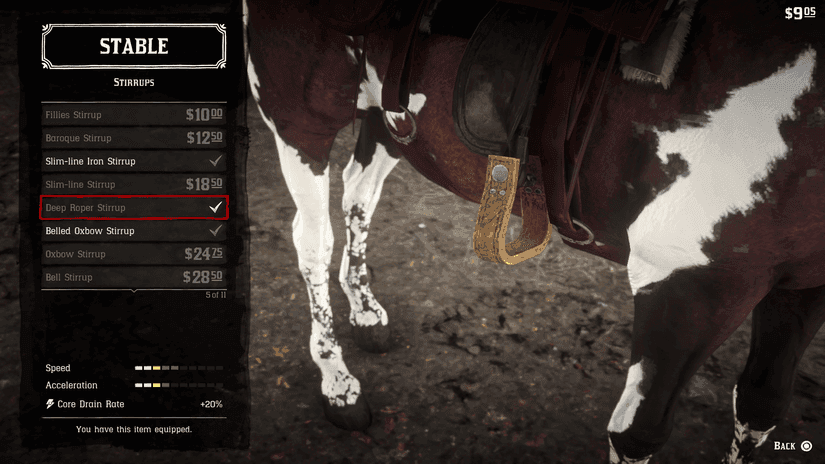
Equipping the right tack can further enhance the Fox Trotter's elite speed.
2. Missouri Fox Trotter: The Ultimate All-Rounder
The Missouri Fox Trotter is the quintessential workhorse for the dedicated explorer and practical outlaw. While it may not claim the absolute top spot in any single stat category, its masterful blend of high speed, robust stamina, and commendable bravery creates the most reliable and versatile mount for the rigors of daily life across five states. It’s the Swiss Army knife of elite horses: not the sharpest blade, but the one you’re most likely to have on you when you need it.
Why it’s here: This horse is ranked #2 because it offers the best balance of performance and nerve for the vast majority of gameplay. It excels at the core activity of Red Dead Redemption 2: traveling immense distances at a brisk, sustainable pace without throwing you at the first sign of trouble. It’s the perfect companion for the player who wants to hunt, explore, and complete missions without constantly battling their mount’s temperament.
Chapter Unlocks & Acquisition:
You can first purchase the Amber Champagne Missouri Fox Trotter from the Scarlett Meadows stable in Rhodes starting in Chapter 4 for $950. A second variant, the Silver Dapple Pinto, becomes available at the Blackwater stable in the Epilogue for the same price. This mid-to-late-game availability positions it as a major upgrade and a worthy investment for the latter half of Arthur’s journey or John’s new life.
The Bravery Benchmark: The Gator Swamp Test
A horse’s hidden “bravery” or temperament stat is arguably more important than its numbers on paper. The Missouri Fox Trotter shines here. While not as unflappable as the Turkoman in a hail of bullets, it demonstrates remarkable composure in the face of natural threats—the true test for an explorer. Ride it into the gator-infested swamps of Lagras or stop near a black bear, and the Fox Trotter will typically stand its ground, allowing you to line up a shot or calmly retreat. In the same scenario, an Arabian is far more likely to buck you within seconds, making the Fox Trotter the superior choice for hunting in predator-heavy regions like the Bayou or Tall Trees.
The All-Rounder’s Edge:
Statistically, the Fox Trotter’s claim to fame is its base Speed of 7, which is tied for the highest in the game. When combined with its Stamina of 6 and Health of 5, it creates a package built for endurance running. Paired with a good saddle, its stamina drain is negligible, allowing you to gallop from Saint Denis to Strawberry with minimal stops. Its Standard handling is a minor step down from the Arabian’s Elite class, but the difference is barely noticeable in open-world travel and is more than compensated for by its steadier nerves.
Final Verdict:
Choose the Missouri Fox Trotter if your priority is a trustworthy, high-performance partner for everything the world throws at you. It’s faster than the Turkoman and braver than the Arabian, making it the definitive choice for players who value consistent, low-maintenance performance across hunting, exploration, and story missions over specializing in pure combat or vanity stats.
3. Turkoman: The Fearless Combat Specialist
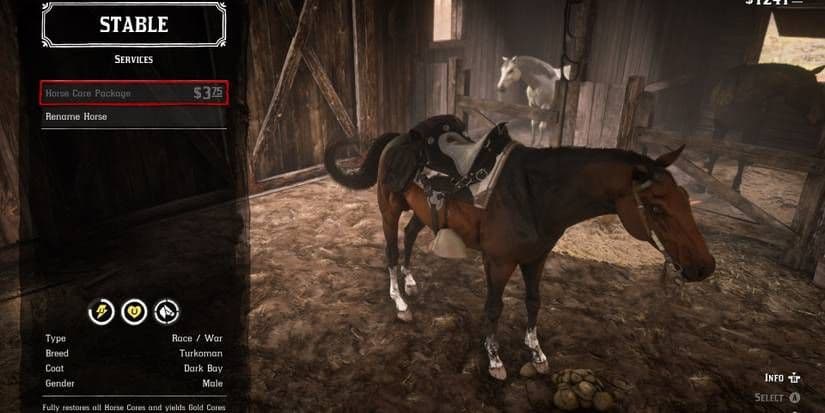
The Turkoman is a top-tier choice for combat due to its high health and bravery.
3. Turkoman: The Fearless Combat Specialist
Why it's here: For the outlaw who prefers a stand-up fight over a hasty retreat, the Turkoman is your ultimate mount. It earns its place on this list by offering the best-in-class combination of health and combat bravery, making it the undisputed champion for players who spend more time in shootouts than in races.
While the Arabians rule the stat sheet and the Fox Trotter masters versatility, the Turkoman carves out its niche with sheer durability and nerve. This is a multi-class breed, blending the sturdy health pool of a War Horse with the respectable speed of a Race Horse. The result is a steed that won’t panic when the bullets start flying and can soak up significant damage before going down. If your playstyle involves charging into enemy camps, holding your ground against lawmen, or hunting dangerous predators, the Turkoman’s fearless temperament is more valuable than a fractional point of top speed. It’s the horse that stands by you in the chaos, making it the definitive combat specialist.
Recommended Use Cases
- Combat: This is the Turkoman's raison d'être. Its high base health (a full 7 out of 10) and legendary bravery mean it will hold its position during intense gunfights, rarely bucking you even when surrounded. Unlike skittish breeds, you can focus on your aim instead of constantly calming a spooked horse.
- Exploration in Hostile Areas: Planning to hunt in the predator-infested Bayou or the cougar-filled forests of Tall Trees? The Turkoman’s courage shines here. It’s far less likely to throw you at the sight of a snake or gator than an Arabian, though forum anecdotes suggest even the brave Turkoman has its limits with the largest predators.
- Racing: While not its primary strength, the Turkoman is no slouch. With a base speed of 6 and acceleration of 5, it's competitive. However, you’d choose it for a race through a potentially ambushed route, not for a pure, open-plains sprint where the Fox Trotter or Arabian would have a slight edge.
Pros and Cons: The Combatant's Balance Sheet
Pros:
- Unmatched Health & Bravery Combo: The Turkoman possesses the highest health stat among the elite-tier horses. Coupled with its proven bravery in combat, this makes it phenomenally durable. Community reports consistently praise its "tank-like" demeanor, noting it regenerates stamina quickly and can withstand multiple direct hits.
- Respectable Speed for its Class: With speed and acceleration stats that rival the Black Arabian in some comparisons, it doesn’t sacrifice all mobility for toughness. You won't win every long-distance race, but you won't be left in the dust either.
- Imposing Presence: A subjective but significant pro for many players. The Turkoman is a large, physically imposing horse that looks and feels like a proper war steed, unlike the smaller, "pony-like" Arabians. As one forum user put it, "Size matters."
Cons:
- Standard Handling: It lacks the "Elite" handling of the Arabian breeds. While the difference is subtle and manageable, its turning radius is slightly wider, making it feel less nimble in dense forests or tight urban spaces like Saint Denis.
- High Cost & Late Availability: The earliest you can purchase one (the Gold Turkoman in Saint Denis) is in Chapter 4 for $950. The Silver and Dark Bay coats are locked until the Epilogue. This is a late-game investment.
- Not Predator-Proof: While braver than most, it is not immune to fear. Testimonies indicate it can still be spooked by direct, sustained attacks from cougars, wolves, or being surrounded by alligators. It's the best combat horse against humans, but dedicated hunting in extreme danger may still be tense.
The Verdict: The Turkoman is the horse you buy when your priority is surviving the fight, not finishing it the fastest. It trades a sliver of peak performance for immense reliability. If your Arthur or John is more gunslinger than gambler, more brawler than sprinter, this fearless specialist is your most loyal companion.
4. White Arabian: The Best Early-Game Free Horse
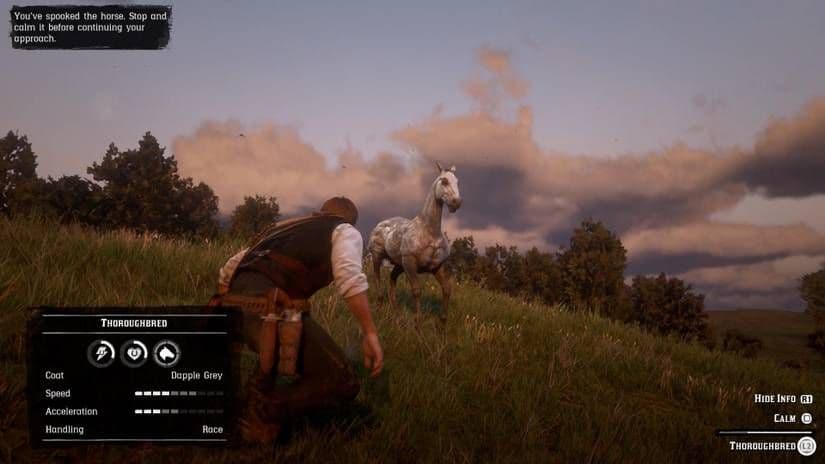
Approach wild horses slowly and use the 'Calm' command to get close.
4. White Arabian: The Best Early-Game Free Horse
Why it's here: The White Arabian earns its place as the definitive best free horse in Red Dead Redemption 2 and a cornerstone of any early-game strategy. While it doesn't top the overall stat charts like the Rose Grey Bay Arabian, its unparalleled availability in Chapter 2 and elite performance make it an unmissable asset. This is your golden ticket to riding a top-tier horse for the price of a little patience and a journey into the snow, saving you over a thousand dollars and giving you a massive advantage for the majority of the story.
How to Find & Tame the Legendary White Arabian
Your hunt begins in Chapter 2, after the mission “Exit Pursued by a Bruised Ego.” The horse has a single, fixed spawn point in the wild: on the western shore of Lake Isabella in the Grizzlies West region of Ambarino. To find it, ride to the town of Valentine and head northwest into the mountains. The terrain is snowy and treacherous, so come prepared with warm clothing and potent health tonics.
Once at Lake Isabella, move slowly along the western edge. The horse is always alone, never in a herd, and its brilliant white coat stands out starkly against the snow and rocks, though blizzards can obscure it. When you spot it, do not rush. Dismount your current horse and approach on foot. The White Arabian is notoriously skittish—the most skittish horse you can tame. Hold the calm button (L2/LT on consoles) and move forward only when the horse is calm. If it startles and runs, track it patiently; it won’t go far and will allow multiple attempts. Do not use your lasso, as this will scare it. When close enough, quickly mount and struggle to break it by moving the left stick in the opposite direction it bucks. Once tamed, ride it to the Valentine stable (the closest one) to saddle, name, and bond with your new legendary companion.
Pros and Cons: The Free Elite Steed
Pros:
- Free & Early Access: Its most significant advantage. Available in Chapter 2 at zero cost, while its stable-bought peers are locked behind Chapters 4-6 and cost $950-$1,250.
- Elite Handling: As an Arabian, it features the coveted "Elite" handling class, offering the most responsive and tight-turning ride in the game.
- Superior Base Stats: With base stats of Speed 6, Acceleration 6, Health 5, and Stamina 5, it outperforms every other horse available at this stage by a wide margin. A fully bonded White Arabian with a good saddle is competitive with late-game purchases.
- High Resale Value: If you later decide to upgrade, a bonded White Arabian can be sold for over $1,000, funding your next purchase.
Cons:
- Notoriously Skittish: This is its defining weakness. It will spook easily around predators, gunfire, and sudden movements, which can be disastrous in combat or hunting scenarios.
- Lower Health Pool: Its Health stat of 5 is its lowest attribute. Compared to a Turkoman (Health 7) or even the Black Arabian (Health 6), it is more fragile in a fight.
- Small Stature: Arthur can look somewhat oversized on this breed, and some players find its size less aesthetically imposing than a larger war horse.
The Verdict: The White Arabian is the ultimate early-game power spike. It provides elite-tier speed and handling for free, allowing you to traverse the map with ease and compete in races long before you can afford a Missouri Fox Trotter. However, its nervous disposition makes it a specialist for travel and evasion, not a fearless battle mount. For players who value a free, top-speed companion from the opening chapters and are willing to manage its fears, no other horse comes close. It’s the best investment of time you can make in Chapter 2.
5. Black Arabian: The Mid-Game Powerhouse

The Black Arabian is widely considered one of the best horses available to Arthur Morgan.
5. Black Arabian: The Mid-Game Powerhouse
While the White Arabian is your early-game ticket to elite performance, the Black Arabian is the definitive upgrade you should target once the story brings you to the bustling streets of Saint Denis. It’s the perfect horse for the pivotal middle chapters, offering a significant stat bump over its free white cousin and serving as a more refined, albeit more expensive, alternative to the all-rounders like the Missouri Fox Trotter.
Why It’s Here: The Saint Denis Sweet Spot
The Black Arabian becomes available for purchase at the Saint Denis stable at the start of Chapter 4 for $1,050. This timing is perfect. By Chapter 4, you’ve had ample time to build your wealth, the map is largely open, and missions are becoming more complex and combat-heavy. Investing in the Black Arabian here is a strategic move that pays dividends for the remainder of Arthur’s journey. It bridges the gap between the free White Arabian and the post-game-only Rose Grey Bay Arabian, offering Arthur his personal statistical peak.
Pros: Refined Performance in a Sleek Package
The Black Arabian’s stats tell a compelling story: Speed 6, Acceleration 6, Health 6, Stamina 6. This perfect, balanced 6 across the board already surpasses the White Arabian (5/5/6/6). When fully bonded, these stats grow impressively, and its Elite handling provides the tightest turning radius and most responsive controls in the game. This agility is invaluable in Saint Denis’s narrow alleys or during hectic firefights. Furthermore, while all Arabians have a reputation for skittishness, many seasoned players report that the Black Arabian exhibits slightly better bravery than the White variant, making it marginally more reliable around predators and gunfire—though it’s still not as stoic as a Turkoman.
Cons: The Price of Elegance
The primary drawback is its cost. At over a thousand dollars, it’s a major investment, though one within reach by Chapter 4. Its bravery, while improved, is still a weakness. It will never be as dependable in a swamp full of alligators as a Turkoman or Fox Trotter. You must manage its fear with constant calming. Finally, its smaller stature can feel less imposing compared to the warhorse breeds, though this is a purely aesthetic concern.
The Free Alternative: A Riskier Path to Power
Our additional research reveals a legendary tactic for the thrifty outlaw: a free Black Arabian can be obtained via a random encounter in Saint Denis as early as Chapter 2. The event, occurring between midnight and 6 a.m., involves a couple being robbed; if you wait for the tragic outcome, you can steal the husband’s Black Arabian without incurring a bounty. While this method grants you a top-tier horse incredibly early, be warned: this “free” horse can sometimes be buggy and may not persist through story milestones like the first stable mission. The purchased version from the Saint Denis stable in Chapter 4 is the guaranteed, trouble-free route.
The Verdict: Worth Every Dollar for the Discerning Rider
The Black Arabian is not the absolute statistical champion (that’s the Rose Grey Bay), nor is it the bravest warrior (that’s the Turkoman). Its place on this list is earned by being the best horse Arthur Morgan can reliably and permanently acquire during the main narrative. It takes the White Arabian’s excellent framework and enhances it where it counts: survivability and composure. For players who value razor-sharp handling and balanced, high-end stats above all else, and who have the cash to spare by Chapter 4, the Black Arabian is the ultimate mid-game powerhouse and a worthy companion for the trials ahead.