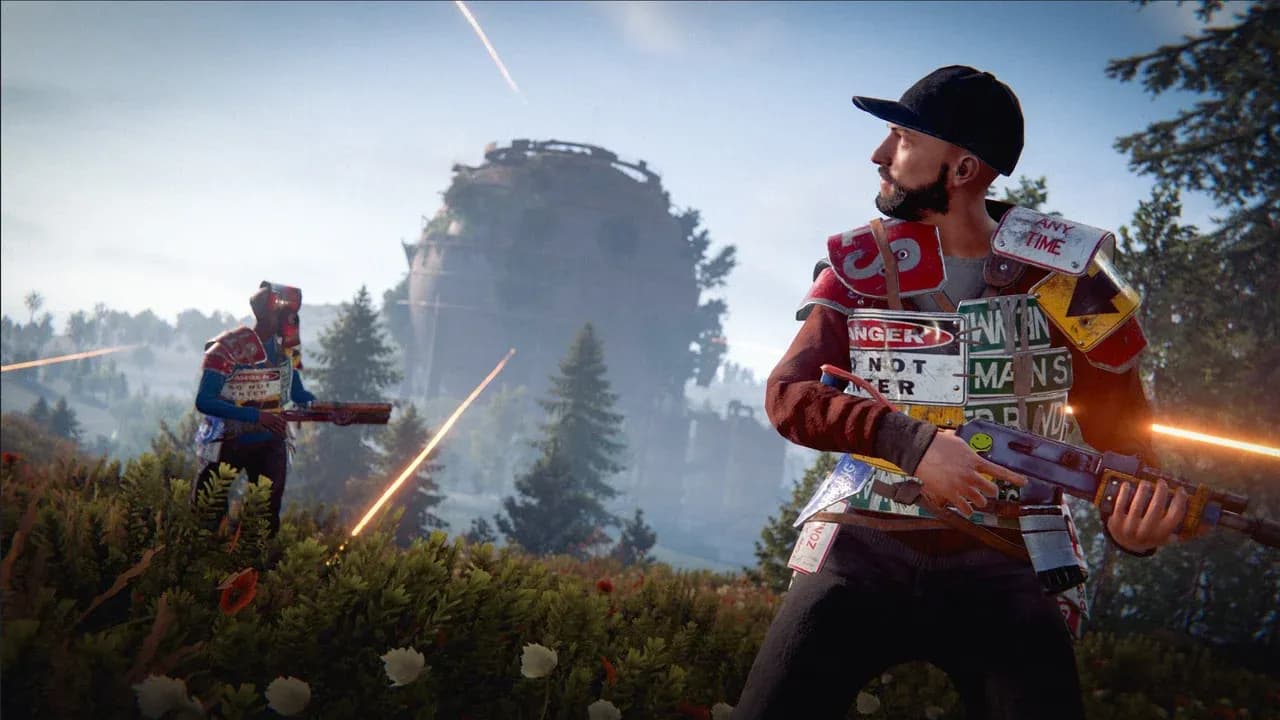
Rust stealth is not about moving crouched everywhere. It is about deciding when the reward is worth the sound. Sprinting to a monument, hitting a metal node, or opening a crafting window can trade your position for time or progress. The useful question is not “How do I stay silent?” but “What will I do the moment this action tells someone where I am?”
Bushes Make Movement a Real Choice
Movement is your first noise decision. Sprinting gets you across open ground quickly, but it gives anyone nearby a clean cue to track. Walking is the useful middle ground when you need to keep moving without announcing a desperate route. Crouching is for the final approach, a listen, or a hold behind cover—not a default speed setting.
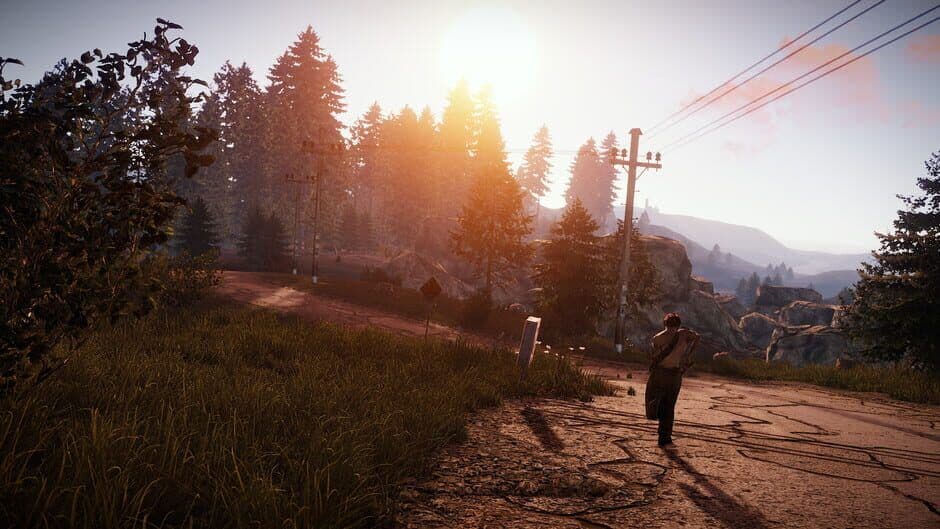
Movement between cover reduces the chance that your footsteps reveal your route.
Bushes make that difference explicit. Bush rustles are audible to nearby players, and moving slowly through foliage is quieter than running through it. Terrain can hide your body while your footsteps still give away the direction you are taking. A rock or tree is a visual break, not a promise that you are acoustically safe.
Use movement in short decisions: sprint between cover, stop before you crest a hill, and listen before choosing the next piece of ground. If you hear another player first, breaking your own movement is often the advantage. Stay behind the cover you already reached and let the other person reveal whether they are passing, farming, or searching for you.
Node Impacts Make Mining an Ambush Site
Rust does not publish a dependable numeric radius for resource-node impacts. The mechanic you can rely on is more useful than a made-up number: repeated hits tell nearby players that someone is stationary, occupied, and carrying a reason to be worth killing. The impacts also compete with your own ability to hear footsteps, so a node makes you easier to find and slower to react at the same time.
Treat every resource node as a small ambush site. Before swinging, check the slope behind you, the nearest rocks, and the route back to cover. Prefer a node you can abandon without crossing open ground. Harvest in a short window, stop, and listen; do not wait until the node is empty to ask whether someone heard you.
Tool choice changes the time you spend exposed, but it does not turn harvesting into a quiet activity. A faster tool is useful when the route is secure and dangerous when you start mining on a road, near a monument, or beside a base that can send defenders. If a fight starts nearby, stop harvesting immediately. Other gunfire gives you a chance to reposition under cover; your own mining only makes your location easier to separate from the chaos.
Crafting Is a Position; Researching Is a Signal
An inventory screen hides the world from you, not the other way around. The ordinary crafting queue is best understood as an occupancy risk: you are stationary, focused on a menu, and likely to miss the approach of a player. That is different from claiming that every queue click is a world-audible broadcast.
Research and crafting keep you occupied, so listen for changes outside.
Researching is a confirmed sound cue. The Research Table’s research sound can be heard by nearby players, so treat it like a short exposure window rather than background housekeeping. Check the approach first, keep an exit route usable, and do not stand with your back to a single door. If the area changes while you research, cancel the plan and move; finishing the queue is not worth defending a predictable position.
The same distinction keeps base work practical. Craft behind cover, but do not let a closed door convince you that you are undetectable. Prepare what you need, make the necessary item, then change rooms, leave, or listen from a different angle. Your goal is not to prove that every crafting action is loud. It is to avoid giving a nearby player a stationary target and a repeated reason to check your base.
Gunshot Range Is a Weapon Stat
Gunfire is the clearest noise-for-reward trade: you gain damage or information, then pay with attention from players who were not watching your fight. Rust’s current long-distance gunshot system gives different weapon groups different maximum audio ranges:
Weapon choice determines how far your gunfire can recruit a fight.
| Weapon group | Maximum gunshot audio range |
|---|---|
| Pistols, SAR, SKS, SMGs, shotguns | 400 meters |
| AK and LR | 500 meters |
| LMGs, Minigun, Bolt Action Rifle, L9 | 600 meters |
These are the game’s maximum audio ranges, not a promise that every player hears every shot. Volume, competing sounds, and the listener’s position still matter. The tactical change is that a fight can recruit players from beyond the old network-grid limit, and stronger weapons announce themselves farther away. Choosing an AK or a Bolt Action Rifle therefore includes a positioning cost, not just a damage profile.
Do not stay in the same angle after the exchange that exposed you. If the target is not down, break line of sight and move to a second angle or leave before the first late arrival reaches the fight. Smaller tells matter too: switching a gun’s fire mode now plays a sound, so weapon handling can reveal preparation before the first shot.
Give Every Loud Action a Follow-Up
The useful sound routine is short and concrete:
| Before the action | The sound | Your follow-up |
|---|---|---|
| Pick cover before crossing | Sprinting or bush movement | Stop at cover and listen before moving again |
| Scan the slope and retreat route | Repeated node impacts | Pause before the node is empty; leave if the area changes |
| Check the approach and keep an exit open | Research-table audio | Cancel and move when a new threat appears |
| Choose an angle you can abandon | Gunfire or a weapon-handling cue | Break line of sight and relocate before looting or re-peeking |
This is what “hear before you are heard” means in a real wipe. You are not trying to remove every cue from the game. You are making the next position safer before the current action gives another player a reason to investigate.