Every weapon you carry in Rust is a loan against your own corpse. You will die holding it, a stranger will pick it up, and whether that trade hurts depends almost entirely on numbers that never appear in a damage comparison: what the weapon cost you to build, and what it costs you to keep loaded.
That second cost is the one new players never price in, and it is decided by a single conversion. Gunpowder is 20 sulfur and 30 charcoal for a batch of 10, and it cannot be crafted below a Workbench Level 1. A Handmade Shell is 5 gunpowder and 5 stones for a pair, which works out at 5 sulfur per shell. A Beancan Grenade is 60 gunpowder — 24 shells' worth of the same sulfur. Every early gun in Rust is a machine for turning explosives into noise, and the ranking below runs from the weapon that costs you nothing to feed to the one you should only build when the game hands you the parts.
1. Hunting Bow: The Weapon You Can Throw Away
The Hunting Bow costs 200 wood and 50 cloth, needs no workbench at all, and its blueprint is known by default. You can have one before you have walls, and dying with it in your hands costs you a tree and a hemp bush.
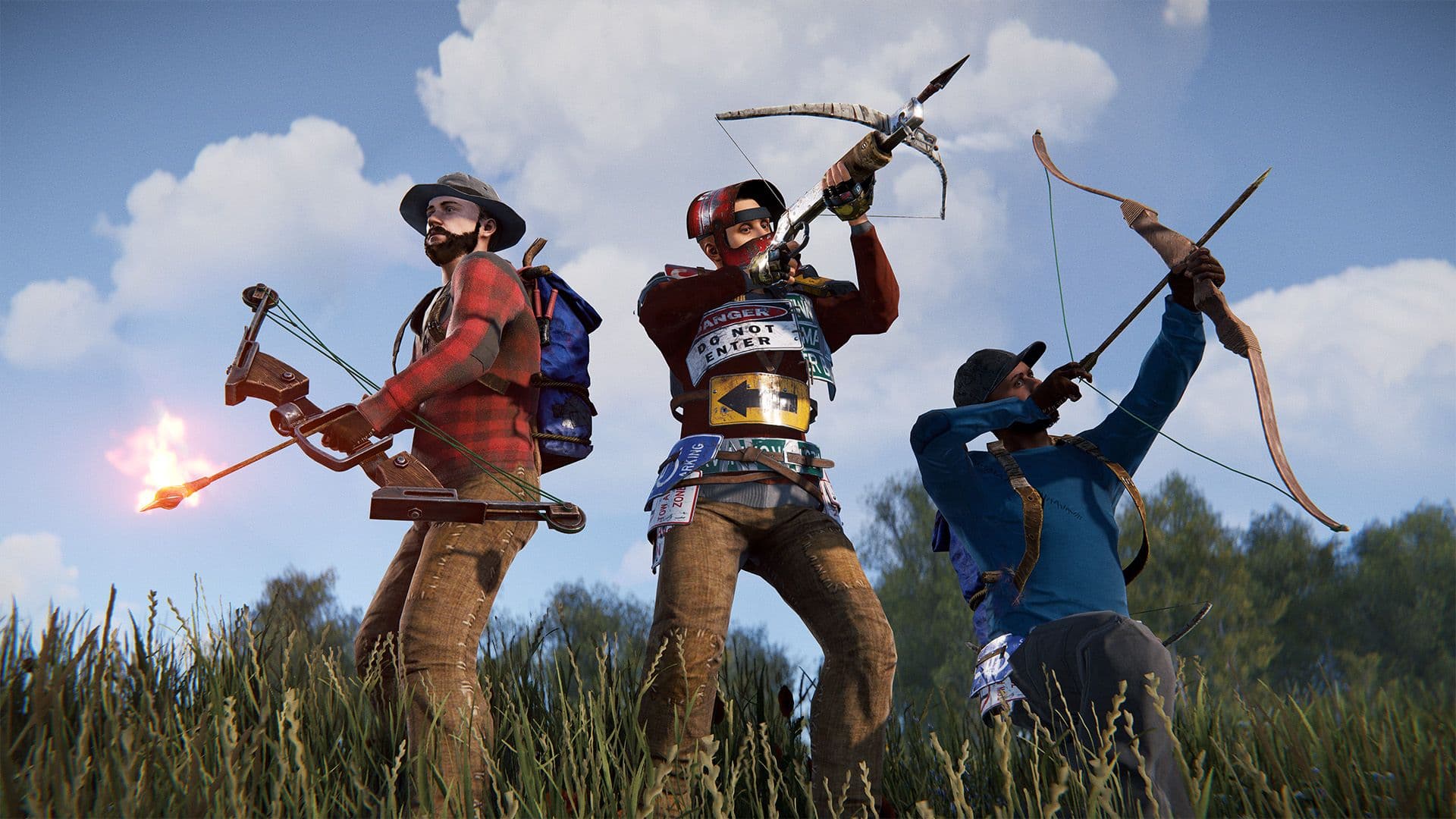
The three arrow weapons of the early game. Only one of them costs nothing to own.
A wooden arrow lands 50 damage with a ×1.5 headshot multiplier, and two arrows cost 25 wood and 10 stones. Bone, fire and high velocity arrows all list 40 damage against the wooden arrow's 50, so the cheapest ammunition in the game is also the hardest hitting — there is no better arrow to save toward, only different effects.
What that economy actually buys is permission to take bad shots. Every other entry on this list makes you weigh the shot before you take it, because the shell in the chamber is sulfur you mined out of a node. The bow does not. You can range-find on a sprinting player, miss twice, and pay for it with a walk to collect your arrows. That is a genuine tactical advantage and not a consolation prize: the player who can afford to open fire at an uncertain range gets to choose where the fight happens.
2. Eoka Pistol: A Broken Gun That Buys Whole Kits
At 75 wood and 30 metal fragments, no workbench, known by default, the Eoka Pistol is a pipe and a spark and behaves like one. It does not fire when you pull the trigger. It fires eventually, after some number of pulls the game never promises you.
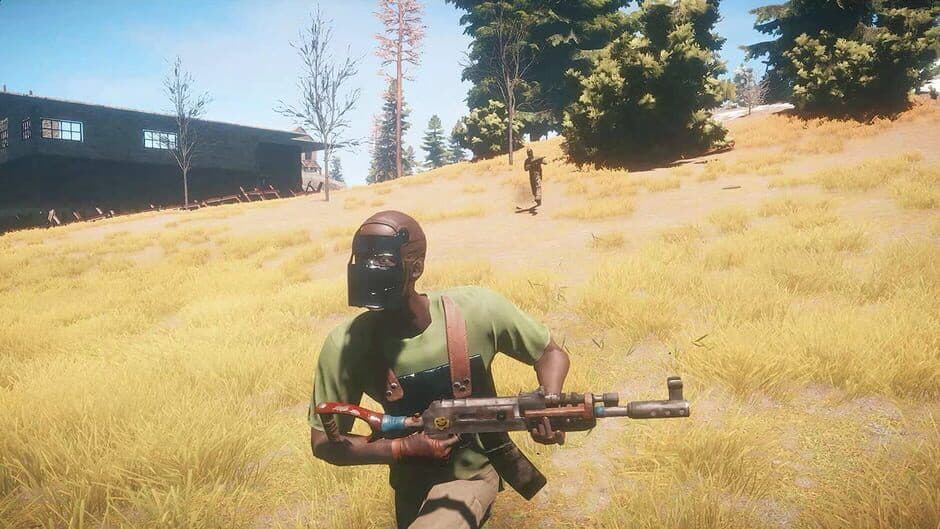
The kind of player an Eoka ambush is aimed at, and the reason the gamble is worth it.
That is why it belongs here rather than in a list of jokes. The Eoka is not a weapon for a fight, it is a weapon for the two seconds before one starts — muzzle against a geared player's back at a barrel, or waiting inside a doorway they are about to walk through. The person you ambush is wearing armour and carrying an afternoon of scrap. You are holding something you made out of firewood, and if the spark catches you take all of it.
Understand what it is loaded with, though, because this is where most early shotgun advice quietly misleads you. 12 Gauge Buckshot and 12 Gauge Slug both require a Workbench Level 2 to craft, which is far past where an Eoka lives. The Handmade Shell needs no bench of its own — 5 gunpowder and 5 stones for two — but the gunpowder inside it does. So a bench-less Eoka is a looted-ammunition weapon in practice, and what it fires is 9 damage per pellet across a wide arc. That number is the whole tactical brief: at contact range enough pellets land to end someone, and at four metres almost none of them do.
An unfired Eoka is not wasted, either. Recycling one returns 45 wood and 18 metal fragments, so the pistol you never got to use goes straight back into the pile it came from.
3. Waterpipe Shotgun: You Are Paying for the Bench, Not the Gun
150 wood and 75 metal fragments looks like a bargain next to the Eoka's ambush-only ceiling, and the figure is incomplete rather than wrong. The Waterpipe Shotgun is not a default blueprint: you spend 30 scrap at a Research Table before you may craft it, and you build a Workbench Level 1 before you may do that.
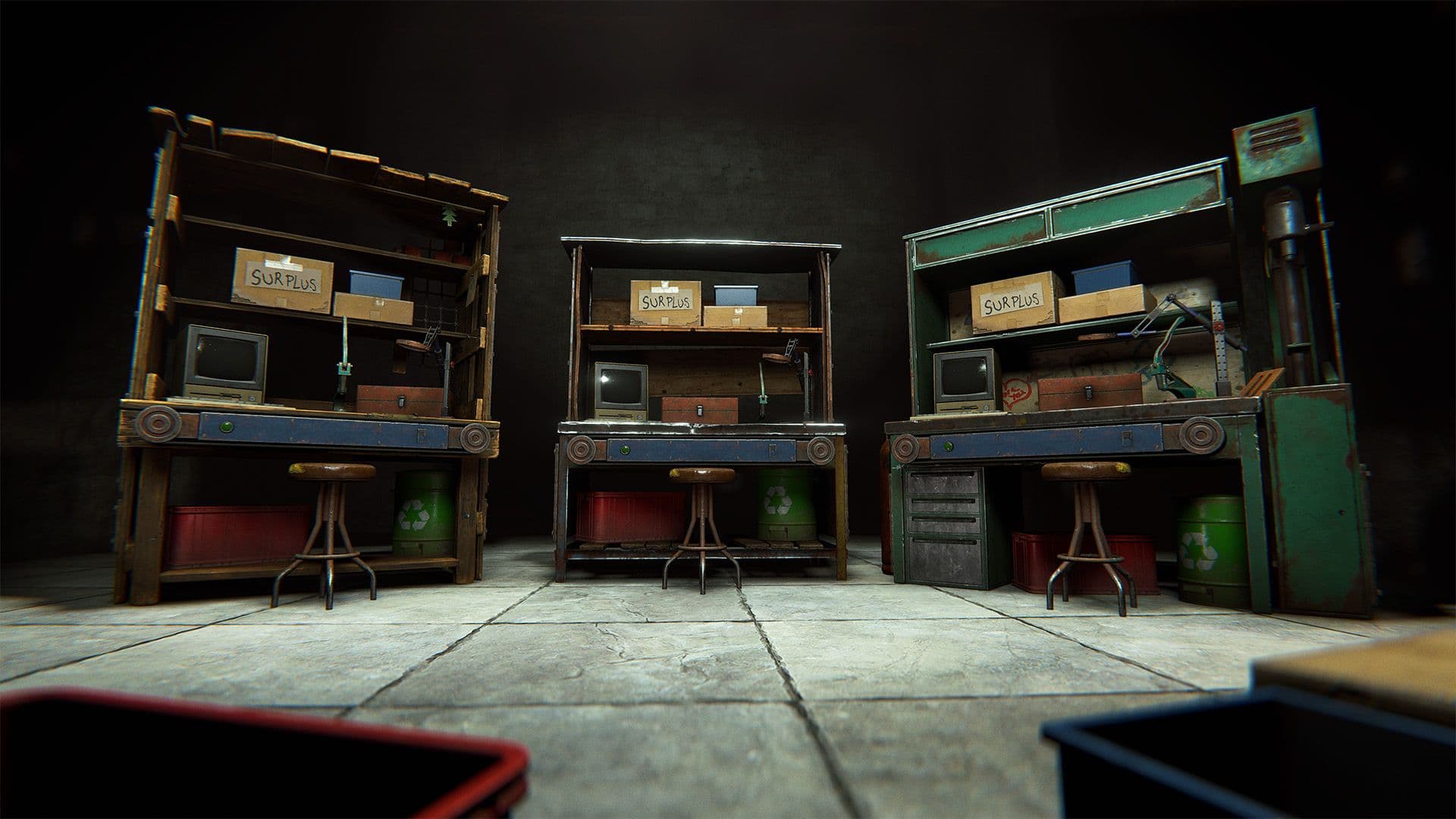
The Workbench Level 1 is the real price of your first shotgun, and of every shell it fires.
So your first real gun is really a monument circuit — roadside barrels, a recycler, enough scrap for the research, and the materials for the bench on top. This is the point where the early game changes shape. Until now you have been fighting with things you gathered near home; from here you are fighting with things you travelled for, and losing the weapon costs you the trip as well as the parts.
The bench changes your ammunition situation more than your damage. It is what unlocks gunpowder, which means the Waterpipe is the first weapon you own whose trigger pulls are denominated in sulfur — 5 per handmade shell, at the same 9 damage per pellet the Eoka fires. What you have bought over the Eoka is not stopping power but reliability: the Waterpipe goes off when you tell it to, and that is worth a research table on its own. Fight in doorways with it. It is not a treeline weapon, and firing it once commits you to a reload while the other player is still shooting.
4. Crossbow: The Only Damage Upgrade That Stays Off Sulfur
The Crossbow needs 200 wood, 75 metal fragments and 2 Rope at a Workbench Level 1, and its blueprint is known by default. It puts 60 damage into a wooden arrow against the Hunting Bow's 50, keeps the ×1.5 headshot multiplier, and feeds on the same 25 wood and 10 stones per pair. Nothing else on this list raises your damage without also moving your ammunition onto the sulfur economy.
The catch is buried in "2 Rope". Rope cannot be crafted at any workbench, at any tier. It is found — a Tacklebox holds one or two of it reliably, and underwater crates, scarecrows and jungle crates each carry a chance at more. That makes the Crossbow a weapon gated by where you have been rather than by what you have farmed, and it is why players who could easily afford one never end up building it. They never went diving.
Go and get the rope deliberately, early, before you need it. A Crossbow and a stack of arrows lets you contest open ground at a range where a Waterpipe Shotgun is decoration, and lets you do it for the rest of the wipe without spending a gram of sulfur on the privilege.
5. Double Barrel Shotgun: Where This Ranking Breaks Its Own Rule
175 metal fragments and 2 Metal Pipes at a Workbench Level 1, after 60 scrap of research. It is last because it is the one entry you genuinely cannot afford to lose, and it earns its place anyway.
The reason is mechanical and simple: two barrels means two shots before a reload. Every other close-range option here gives you one attempt at a moving target and then a long, loud pause. The Double Barrel lets you be wrong once. That is the difference between a weapon you ambush with and a weapon you can walk into a fight holding, and no amount of cheap Eokas adds up to it.
The Metal Pipes are what pins it to the bottom of the list. A Metal Pipe cannot be crafted below a Workbench Level 3, so in the early game it is strictly loot, turning up in monument crates and barrels on the same runs that got you your scrap. Two of them is not a target you can farm toward; it is something that happens to you. Build this the wipe the pipes appear, and do not reorganise your day around hunting them.
That same pipe tax is why the Revolver misses this list — 125 metal fragments, 25 cloth and a Metal Pipe for a weapon whose ammunition is gunpowder again. The Nailgun avoids the pipe and the sulfur entirely at 75 metal fragments and 15 scrap, which is genuinely cheap, but 18 damage per nail is not a number you can win an opening exchange with.
Spend Sulfur Like It Is Explosives, Because It Is
The ranking above is really one decision made five times, and it is a decision about ore rather than about guns. Wood and stone regrow next to your base. Sulfur does not scale with effort in the same way, and it is the only one of the three that converts directly into someone else's front door.
So price your loadout in grenades. Twenty-four handmade shells and a Beancan Grenade cost the same sulfur, and the pile you mined this wipe is not big enough for both. If you are firing shells at nakeds on a beach, you are not raiding anyone this weekend — which is fine, as long as it was a choice. The players who stall permanently in the early game are almost never the ones who picked the wrong weapon. They are the ones who burned the raid on target practice and never noticed the exchange rate.