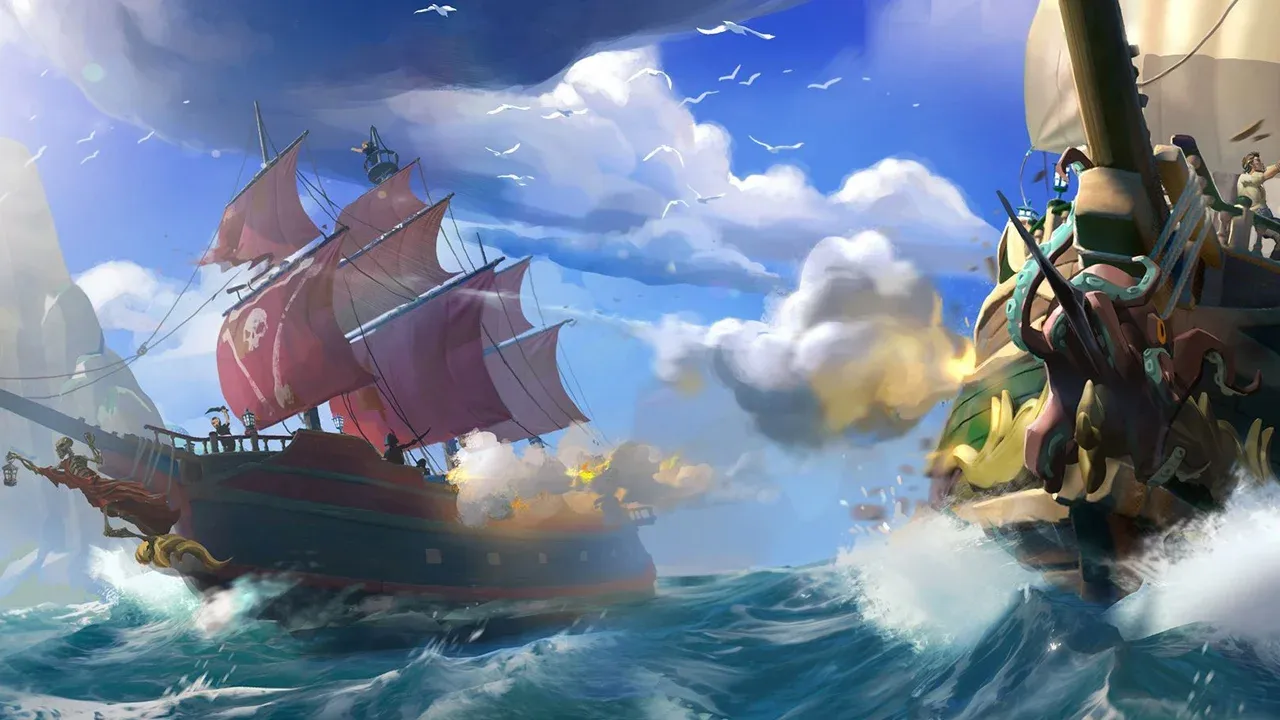
Sea of Thieves Review: A Sandbox Built on Social Magic
Sea of Thieves is not a game about being a pirate; it is a game about becoming one, a distinction that has defined its turbulent journey from a beautiful, barren sandbox to a vibrant, player-driven ecosystem. When it launched in March 2018, the game presented a stark, almost confrontational proposition: here is a ship, a sea, and a world of other crews. The rest is up to you. This was a pure, uncompromised pirate role-playing experience, offering no alternative paths of stealth, diplomacy, or traditional character builds. Your identity was singular, and the tools were communal—a design philosophy that felt as liberating as it was, for many, frustratingly bare.
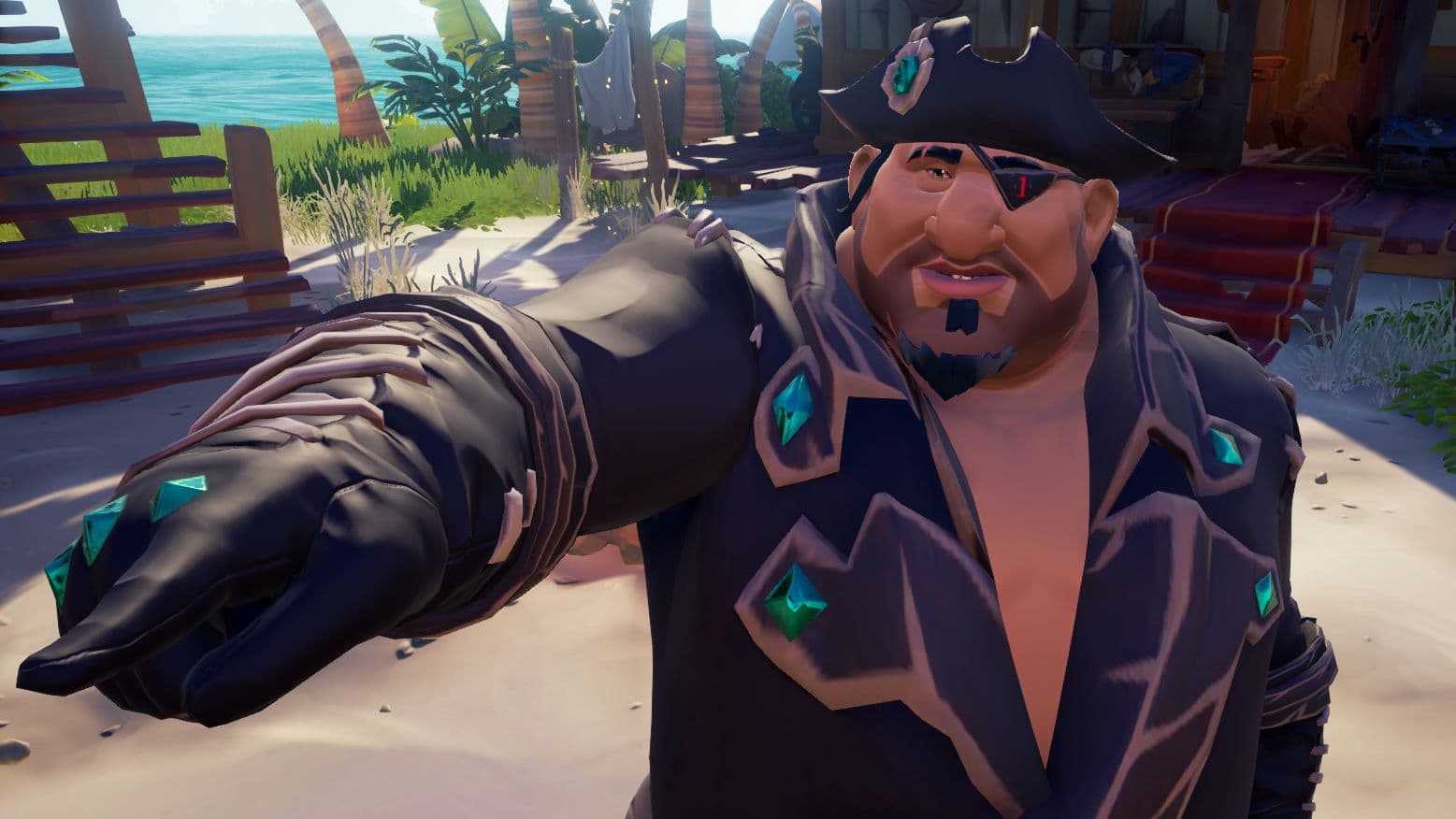
The pirate role-playing experience in Sea of Thieves.
The game’s true genius, and the core of its enduring appeal, lies in the emergent, unpredictable stories that bloom from this minimalist framework. Sea of Thieves is a social experiment disguised as a swashbuckling adventure, its systems intentionally built with "human-shaped holes." The magic isn't in the pre-written quest to dig up a chest; it's in the three-hour, multi-ship battle over a skull fort that evolves into a temporary alliance, a shocking betrayal, and a climactic kraken attack—all orchestrated by players, not scripts. It’s in the unspoken bond formed with a random player, communicating through cannon fire and shared shanties for an entire evening. This is a world where a simple voyage can be upended by a storm, a megalodon, or a crew flying the Jolly Roger, and where the most memorable rewards are the anecdotes, not the gold.
This focus on player-driven narrative over guided content is what made the game’s notoriously thin launch so divisive, but it’s also the foundation that allowed it to evolve so dramatically.
And evolve it has. The Sea of Thieves of today is a fundamentally richer experience than the one that released in 2018, a transformation spearheaded by pivotal updates like the April 2020 Ships of Fortune expansion. Rare didn’t just add more islands or hats; they deepened the core risk/reward calculus that makes the world feel alive. The introduction of the emissary system was a masterstroke, creating a tangible economy of danger by rewarding players who fly high-level faction flags with massive gold multipliers, while painting a target on their backs for opportunistic Reaper's Bones hunters. This single system injected purpose into every horizon scan, transforming other ships from potential nuisances into central characters in your own story, be they allies, marks, or mortal threats.
This journey from a promising skeleton to a fleshed-out fantasy is the essential context for any modern critique of Sea of Thieves. To judge it solely by its launch state is to miss the point of its live-service DNA. The game you play today is one that has been patiently shaped by years of player behavior and developer response, where new mechanics like spreading ship fires, revivable crewmates, and harpoons aren't just features—they are fresh verbs in a shared language of piracy, enabling more complex, chaotic, and glorious tales than were ever possible at the outset. The foundation was always solid, but now it supports a far more captivating world.
Sailing and Cooperation: The 'Finely Tuned Majesty' of the Crew
The soul of Sea of Thieves is not found on any treasure map, but in the chaotic symphony of a crew in perfect harmony. This is a game where the journey is the destination, and the vessel is your instrument. The sailing mechanics are not merely a means of traversal; they are the game's finest-tuned, most tactile system, transforming a simple voyage into a ballet of cooperation that can shift from serene to frantic in a heartbeat.
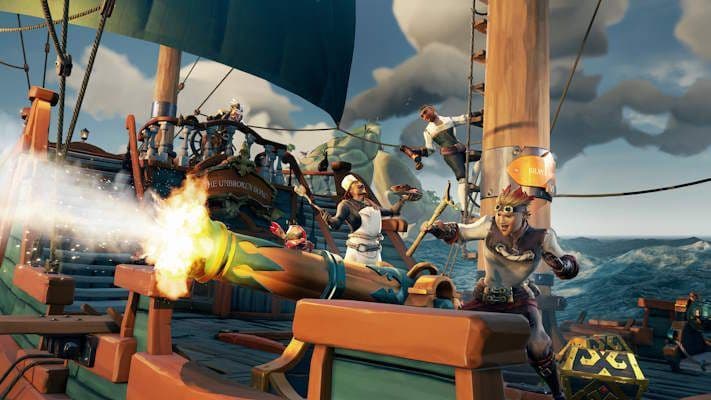
Cooperative ship management in action.
This is where the game's "finely tuned majesty" is born. Piloting a ship in Sea of Thieves is a deeply physical, multi-layered process. On a galleon, the difference between a drifting hulk and a swift predator is a crew that understands its roles. One player must man the helm, wrestling with the wheel's momentum while shouting for sail adjustments. Another must scramble up to the crow's nest, scanning the horizon for threats or landmarks. Two more are needed to manage the three sails individually—angling them to catch the wind, raising or lowering them for speed control, and repairing them when they're shot to tatters. It’s a cooperative process that feels less like a game and more like operating a real, unwieldy machine, creating a rush of shared accomplishment when you expertly navigate through a storm or pull off a tight turn during a chase. This isn't structured co-op like a Destiny raid; it's emergent teamwork born of necessity, and when it clicks, it's pure, unscripted bliss.
Where this design philosophy breaks down completely is in solo play. Attempting to manage the anchor, sails, steering, and lookout duties on a sloop by yourself is an exercise in stressful multitasking that strips the game of its essential social "meat." What feels like a lively conversation with friends becomes a lonely, tedious checklist.
The ship you choose dictates your entire experience. The nimble, one-to-two player sloop is forgiving for solo sailors or duos, with its single sail and compact layout allowing one person to theoretically handle everything in a pinch—though it's a miserable experience. The three-player brigantine strikes a balance, offering more speed and firepower than a sloop without the operational complexity of the galleon. But the four-player galleon is the ultimate expression of Sea of Thieves's vision. It's a beast—powerful and intimidating when fully crewed, but a slow, unresponsive liability if even one sailor isn't pulling their weight. The difference in handling is not just statistical; it's philosophical. Choosing your ship is choosing your desired level of social commitment and potential chaos.
This commitment to physical, cooperative sailing pays its greatest dividend during Sea of Thieves's spectacular environmental challenges. A storm is not just a visual effect; it's a full-crew crisis. Lightning strikes the deck, setting fires that spread if ignored. Waves crash over the bow, flooding the hull and requiring constant bailing. The wheel fights against you, and visibility drops to zero, forcing the lookout to become a navigator shouting directions over the gale. Surviving this ordeal together, emerging into a calm sunset, creates a bond and a story no scripted quest could ever provide. The ship is not just your transport; it's your shared home, your weapon, and your greatest vulnerability, and its care is the core around which every friendship, alliance, and betrayal in this world revolves.
The Pirate Life: Factions, Quests, and the 'Doldrums' of Repetition
For all the emergent magic of its social sandbox, Sea of Thieves eventually asks you to do something: a job. This is where the game's minimalist design meets its most persistent friction, in the structured quests offered by its three trading companies. These factions—the Gold Hoarders, the Order of Souls, and the Merchant Alliance—form the scaffolding of the game's progression, and they are a study in diminishing returns. The initial novelty of deciphering a treasure map or hunting a named skeleton captain is genuine, but the veneer wears thin fast. You quickly realize you're not embarking on unique adventures; you're processing work orders. A Gold Hoarders voyage sends you to dig up a chest on one island, then another chest on a different island. An Order of Souls contract has you clearing the same skeleton camps, just with more or tougher enemies. The Merchant Alliance reduces piracy to a delivery gig, asking you to source specific animals or cargo and transport them intact. The core loop is, inarguably, a series of fetch quests.
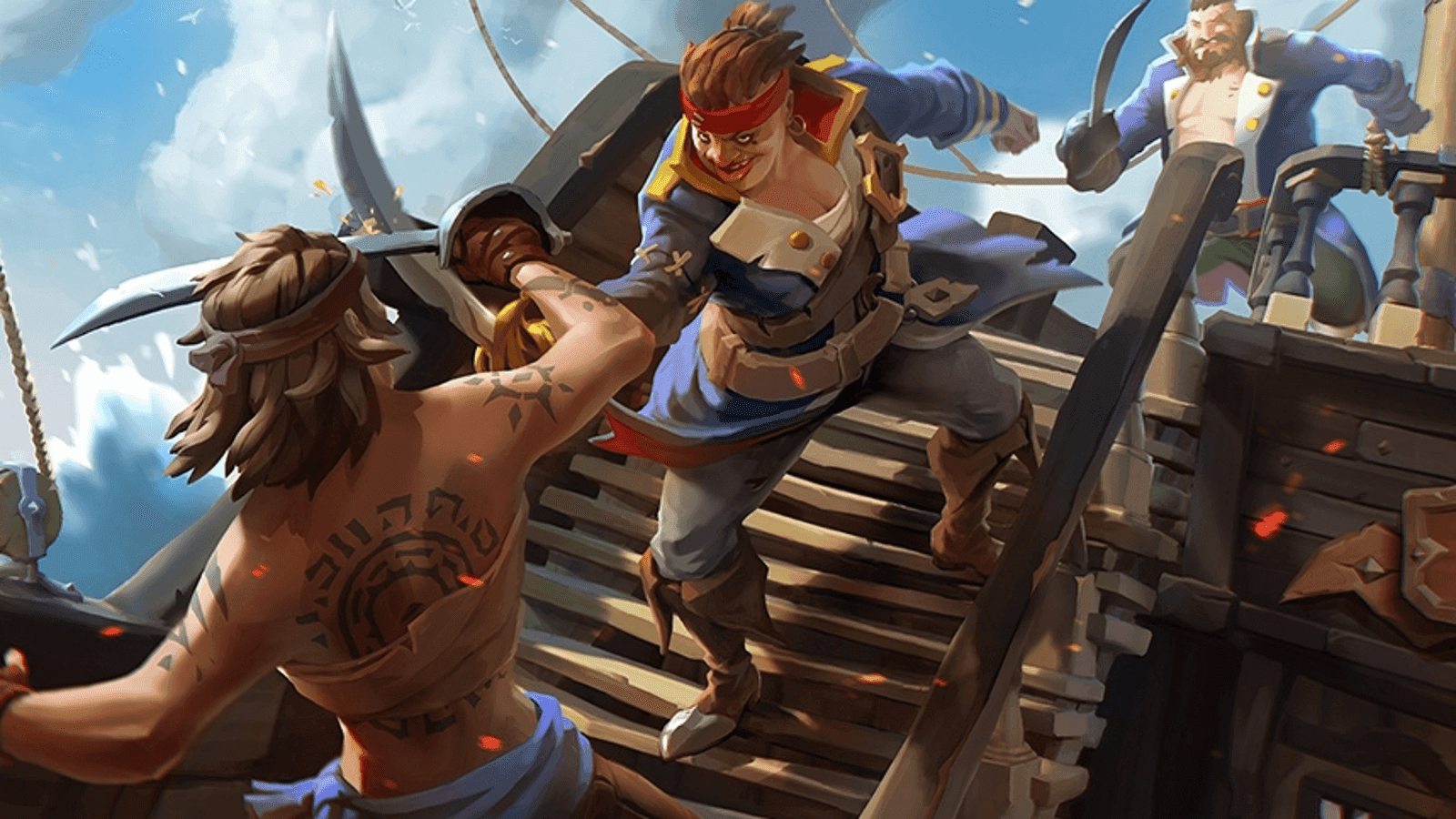
Pirates engaged in a sword duel during a voyage.
The problem isn't the simplicity of the tasks—this is a pirate sim, after all—but their lack of meaningful evolution. As noted in early reviews, these missions feel like "randomly generated copies" of the first one you complete. The variables change (which island, which animal, which skeleton captain's name), but the fundamental verbs do not. You are not unlocking new tools or abilities that change how you approach these tasks; you are just doing more of them, often with longer sailing intervals in between. This transforms the glorious act of sailing—a highlight in full crew—into a chore when you're solo or simply grinding for reputation. You transition from feeling like a legendary buccaneer to feeling like a maritime courier, and the vast, beautiful ocean can start to feel like a very pretty commute.
This is the "doldrums" veterans speak of: the stretch where the game's lack of traditional, power-based progression collides with the repetitive nature of its content. The reward for turning in a dozen chests is the gold to buy a new jacket, and the permission to buy a voyage that asks you to dig up two dozen more.
Recognizing this, Rare introduced Tall Tales—fully voiced, story-driven campaigns that serve as the game's narrative spine. These are a crucial and welcome addition, providing handcrafted puzzles, unique locations, and actual lore for the world. For a new player, they are the perfect starting point, offering guided structure and a tangible goal beyond accruing gold. They demonstrate what Sea of Thieves can be when it focuses its mechanics on a curated experience. However, for the long-term player, they are ultimately a one-and-done diversion. Once completed, you're funneled back to the same trio of trading companies and the grind towards the game's ultimate status symbol: Pirate Legend.
This title, requiring you to reach the maximum reputation level with three separate factions, represents dozens, if not hundreds, of hours of dedicated play. It is the game's primary long-term goal, and its existence highlights the central tension of Sea of Thieves's design. The journey to Pirate Legend is a marathon of repetition, where the joy must be siphoned almost entirely from the unscripted player interactions that happen around the quests—the chance encounter, the storm, the pursuing Reaper—not from the quests themselves. The game asks you to find your own fun within its systems, and for many, that is enough. For others, the grind can feel exploitative, especially when the final reward is largely ceremonial: access to a hidden tavern and a new title, but no new gameplay mechanics. Your power at hour one is identical to your power at hour one hundred; only your hat and your patience have been tested.
Risk vs. Reward: The Brilliance of the Emissary System
This is where Sea of Thieves earns its reputation as a live-service success story, not through mere content additions, but by surgically fixing its core economic and social friction. The brilliant emissary system, introduced in the pivotal Ships of Fortune update, is the single most important post-launch addition. It directly confronts the “doldrums” of the grind by injecting a potent, player-driven risk/reward calculus into every voyage. By pledging to a faction and raising its flag, you’re not just doing a job; you’re making a public wager. Your emissary rank climbs as you turn in loot, offering a multiplier that peaks at a staggering 2.5x value at Grade 5. This transforms the previously tedious reputation climb into a thrilling, high-stakes investment—the gold and rep gains are tangible and immediate, validating long sessions in a way the base game never did.
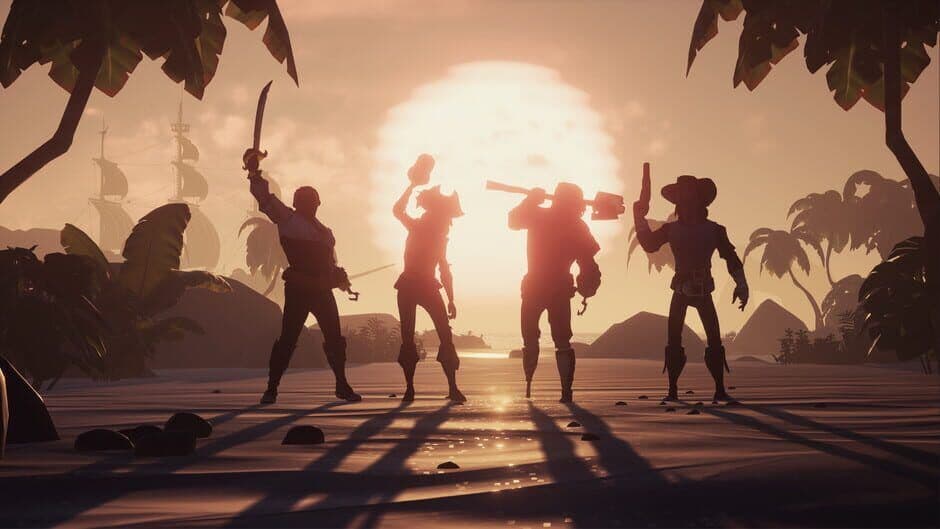
Sea of Thieves has evolved significantly since its initial launch.
However, that flag is also a beacon. This is the system’s masterstroke: it commoditizes conflict. A high-level emissary sloop glowing on the horizon isn’t just another ship; it’s a lucrative target. For the Reaper’s Bones faction, dedicated to hunting other players, high-grade emissaries even appear as tracked icons on their ship’s map. This creates a dynamic ecosystem of predator and prey, where the most rewarding voyages naturally attract the most danger. It elegantly solves the early game’s PvP incentive problem, where attacking others was often less profitable than minding your own business. Now, there’s a clear, high-value reason to hunt, and a clear, high-risk reason to be hunted. The tension is no longer abstract; it’s quantified by the glowing flag on your mast and the multiplier on your next turn-in.
The emissary system doesn’t force PvP; it curates it. Players who wish to fly under the radar can simply forgo the flag, accepting slower progression for safer sailing. This creates a spectrum of engagement that caters to both the pacifist merchant and the bloodthirsty reaper, making the world feel more intentionally populated by purposeful crews.
This enriched player interaction is further deepened by a suite of new tools that turn naval combat from a simple cannon duel into a complex, multi-phase brawl. The introduction of spreading fire means a single well-placed firebomb can cripple a crew’s ability to fight, forcing them to prioritize buckets over cannons. The ability to revive fallen teammates prevents a single lucky blunderbuss shot from deciding a ten-minute engagement, rewarding sustained coordination. Twin harpoons allow for devastating maneuvers like snagging a fleeing ship or yanking a boarder off your ladder, while rowboats enable stealthy insertions or a last-ditch escape with your most valuable loot. Each addition is a new verb in the pirate lexicon, making every encounter more tactically varied and memorable than the launch-era battles.
These player-driven dramas are set against a world that itself feels more actively hostile and wondrous. Random encounters like the kraken, megalodon, and skeleton ships are no longer just scenic diversions; they are potential calamities that can intersect with your existing tensions. The infamous scenario of being caught between a pursuing player galleon, an emergent skeleton fleet, and a sudden storm is no longer a bug—it’s a feature, a perfect storm of Sea of Thieves’s design philosophy. While these simultaneous threats can feel punishing, they elevate successful voyages into legends. Surviving such an ordeal with a Grade 5 flag and a hull full of treasure delivers a sense of accomplishment that no scripted mission could ever provide, perfectly marrying the game’s systemic chaos with its new progression-driven stakes.
Progression and Value: Is the Cosmetic-Only Grind Enough?
Here's the uncomfortable truth about Sea of Thieves: your pirate never gets stronger. Your cutlass swings with the same speed, your pistol fires with the same damage, and your ship's hull withstands the same number of cannonballs at hour one as it does at hour one hundred. This is the game's most fundamental and divisive design pillar: an unwavering commitment to an even footing for all players. The intent is noble—to ensure that a day-one sailor can stand toe-to-toe with a Pirate Legend, and that friends of any skill level can crew up without one being a god and the other a liability. In practice, this philosophy transforms the entire concept of progression into a purely cosmetic pursuit, a choice that defines the value proposition of every hour you invest.
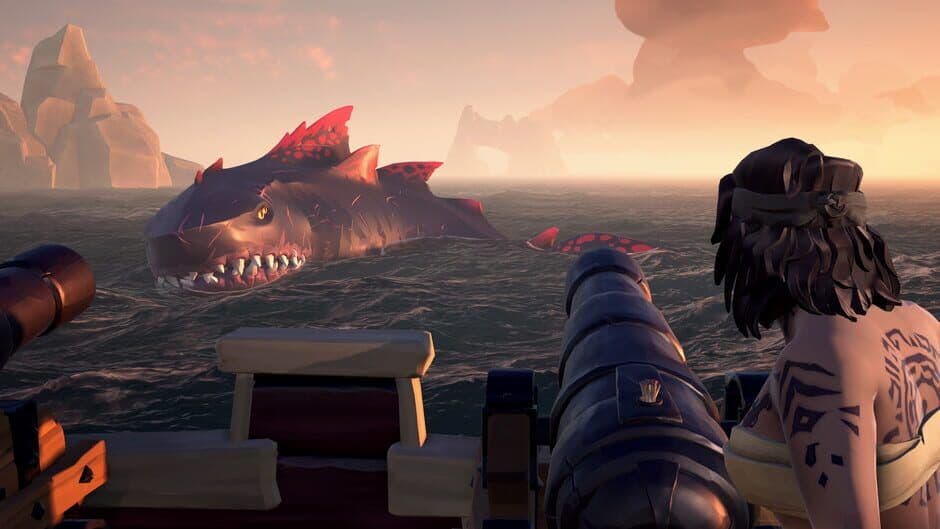
The world of Sea of Thieves is designed for exploration and cosmetic hunting.
This cosmetic-only grind is where the game's "doldrums" can solidify into a genuine wall. The gold you earn from those thrilling, high-risk emissary voyages has exactly one purpose: to purchase new jackets, ship liveries, weapon skins, and pets. There are no upgrade trees, no powerful unlockable weapons, and no statistical advantages to be bought. For players who derive motivation from growing tangible power, Sea of Thieves offers nothing. The reward for turning in a haul that took two hours and three near-sinkings to secure is... a fancier hat. When the core questing loop is inherently repetitive, as established in earlier sections, the lack of gameplay-altering rewards can make the grind feel particularly hollow. You're not working towards a new ability that will change how you play; you're working towards a visual badge that says you did the work.
The system's longevity relies entirely on your personal desire to be a peacock on the high seas. For some, the drive to own the most ostentatious sails or the rarest jacket is a powerful motivator. For others, it’s a baffling reason to spend dozens of hours digging up identical chests.
This issue is exacerbated by the game's pricing structure for these vanity items. As noted at launch and persisting in spirit, gold costs for desirable cosmetics can feel "astronomical." When a single ship cosmetic set can cost hundreds of thousands of gold—requiring multiple high-grade emissary voyages to afford—the game openly acknowledges that its endgame is a marathon. This transforms the Tall Tales and world events from adventures into efficient gold farms. The design openly courts a specific type of player: the collector, the role-player, the pirate who values prestige over power. If you don't see your virtual self in that gleaming, gold-trimmed wheel, the entire economic loop can lose its meaning.
The grind reaches its most extreme expression in the game's commendations—long-term challenges that track feats like sinking 500 skeleton ships or delivering 1000 pieces of cargo. These are designed to be multi-hundred-hour pursuits for the most dedicated players, offering unique titles and cosmetic trinkets. The question isn't whether they provide goals, but whether they respect the player's time. Sinking 500 skeleton ships is a monumental task that can feel exploitative in its pure repetition, a checkbox designed to extend playtime rather than enrich the experience. It highlights the fine line Sea of Thieves walks: when the core activity is fun and social, the grind fades into the background. When you're solo, chasing a number for a specific hull paint, it can feel like a second job with no paycheck.
Ultimately, this brings us to the game's enduring value proposition. At its original $59.99 MSRP at launch, the criticism that Sea of Thieves felt like a "beta" was largely justified—the beautiful systems were there, but the structured incentives were not. Today, that calculus has shifted dramatically. The game is a living product, and the wealth of free content added since—the emissary system, Tall Tales, world events, and quality-of-life features—has filled that initial void. The value now lies not in a static package of content, but in access to a unique social platform. For the right player—someone who thrives on emergent stories, cooperative sailing, and player-driven tension—the price of admission buys endless, unpredictable adventures. For the goal-oriented player seeking traditional RPG progression, it buys a beautiful world where you'll forever be digging up the same chest, just in a gradually nicer hat. Sea of Thieves doesn't ask if you want to be powerful; it asks if you want to be a pirate, and for that identity, the only currency that matters is your time and your crew.
Technical Waters: Visual Splendor vs. Persistent Bugs
Sea of Thieves is a game of breathtaking highs and frustrating lows, often in the same play session, and nowhere is this duality more apparent than in its technical presentation. This is a world that can stun you with its beauty one moment and undermine your entire voyage with a persistent bug the next, a constant push and pull between artistic ambition and live-service growing pains.
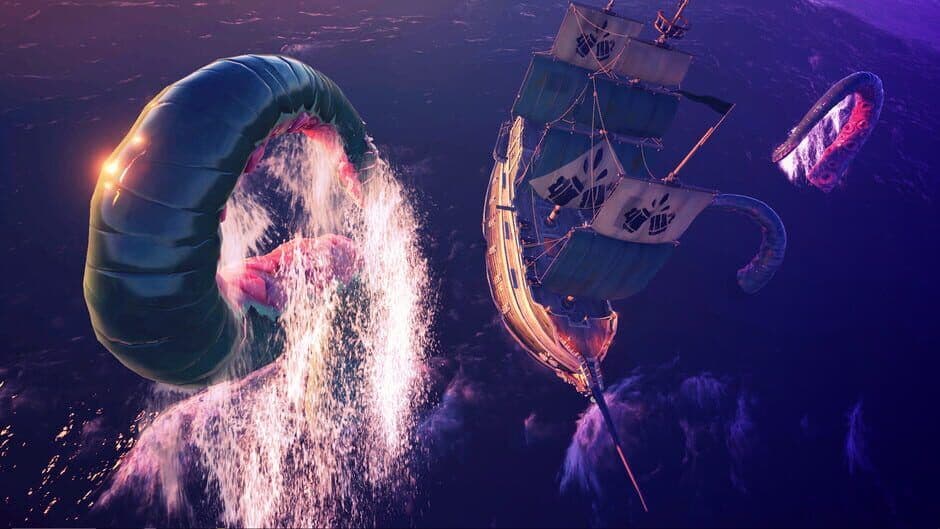
Water rendering is a core technical achievement.
The game's visual splendor is its most consistent triumph. Rare's stylized art direction—a blend of cartoonish character models and hyper-realistic environmental rendering—creates a world that feels both fantastical and tangibly physical. The crown jewel is, unequivocally, the ocean. This is not just water; it's a dynamic, living character. Sailing from a placid, turquoise lagoon into the heart of a storm is a transformative experience. Waves swell to terrifying heights, crashing over your bow and flooding the deck. Lightning forks across a bruised purple sky, illuminating the chaos and occasionally striking your mast, setting the sails ablaze. The transition from this violence into a calm, golden-hour sunset, with light dancing perfectly across the water's surface, provides a profound sense of earned peace. This unparalleled ocean simulation is the single most important piece of environmental storytelling in Sea of Thieves, selling the fantasy of piracy through sheer, awe-inspiring spectacle.
This visual feast is complemented by an audio design that is equally immersive and interactive. The soundscape is a masterclass in atmosphere. You don't just see the ship; you hear it—the groan of timber under strain, the rhythmic creak of the wheel, the satisfying thunk of the anchor dropping. The subtle, adaptive score swells during discovery or danger without ever becoming repetitive. Crucially, the game gives you tools to contribute to this soundscape. Playing a shanty on the hurdy-gurdy or concertina with your crew, harmonies forming naturally as you sail, is a uniquely joyful form of non-violent interaction that strengthens the social fabric. It makes the silence of a bugged-out instrument all the more noticeable.
For all its artistic confidence, Sea of Thieves has long been haunted by a specter of technical instability that can shatter immersion in an instant. These aren't minor glitches; they are progress-blocking failures that feel at odds with the polish of the world they inhabit.
The most damaging issues are those tied to server stability and merges. As documented in the 2020 review, a poorly handled server merge could render a ship completely unsteerable, forcing a crew to resort to absurd measures like detonating gunpowder kegs to free their vessel, only to watch it disintegrate and rain loot into the sea. While such catastrophic bugs are less common today, their legacy persists in a general sense of fragility. Players have historically faced rubberbanding at inopportune moments, lost loot turn-ins due to silent server hiccups, and suffered progress loss from unexpected maintenance due to insufficient in-game warnings. The game's aggressive AFK penalties, designed to prevent exploitation, can feel punitive when they intersect with these instabilities, punishing players for disconnections that aren't their fault.
Beyond server woes, a rotating cast of smaller bugs consistently nibbles at the experience. Post-update issues like severe ship texture pop-in, where your vessel appears as a blurry mess until you're right on top of it, or silent musical instruments break the carefully crafted atmosphere. While Rare is typically swift with fixes, their recurring nature creates a "two steps forward, one step back" feeling. These persistent bugs are the barnacles on the hull of Sea of Thieves's beautiful ship—not enough to sink it, but a constant, scraping reminder that beneath the gorgeous sunset, you're navigating a complex, sometimes fragile network of systems. You learn to sail despite them, but you never quite forget they're there.
Final Verdict: Is Sea of Thieves Worth Playing Today?
After six years of updates, expansions, and player-driven legends, the question is no longer whether Sea of Thieves is a good game, but for whom it is an essential one. This is a title that has matured from a beautiful but barren sandbox into a rich, systemic pirate simulator, yet its core appeal remains as specific and uncompromising as the day it launched. Your final verdict hinges entirely on what you seek from a virtual life on the high seas: a structured RPG with a power fantasy, or a social playground where you write your own story with friends and rivals as the ink.
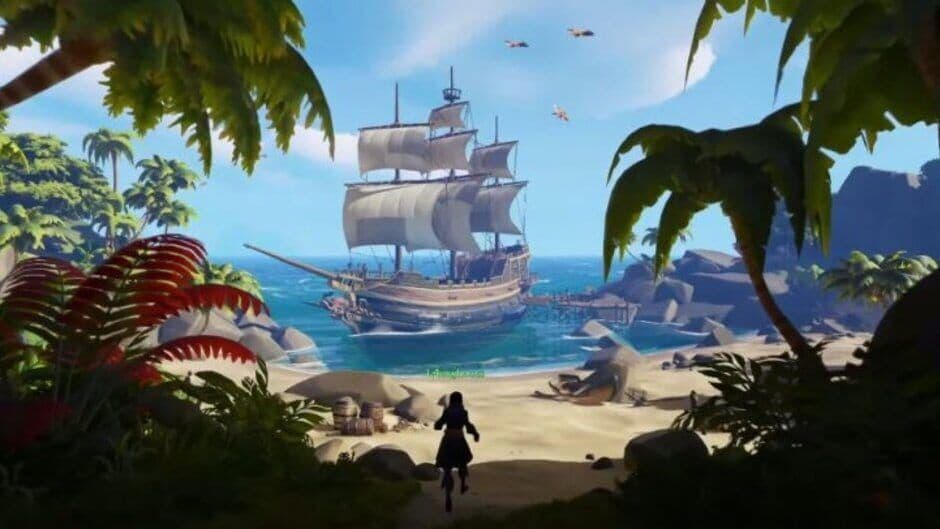
The game's visual fidelity remains impressive years after release.
Sea of Thieves is not a game you play to win; it’s a game you inhabit to create memories, and its value is measured in the quality of those anecdotes, not the quantity of gold in your hold.
For the right player—someone who thrives on organic, emergent gameplay and the deep satisfaction of coordinated teamwork—Sea of Thieves offers an experience utterly unrivaled in the genre. The moments of pure magic it conjures are its strongest argument. These are the unscripted epics: the three-ship, hour-long battle over a skull fort that ends in a shaky alliance and a kraken attack; the silent, perfect teamwork with a random player you guided with cannon-fire signals for an entire evening; the white-knuckle escape through a storm with a Grade 5 emissary flag, your hull breached and your crew bailing furiously as you limp into port. These stories are born from its brilliant systems—the unparalleled sailing that demands true cooperation, the risk/reward tension of the emissary flags, and the stunning, reactive world of living seas and sudden storms. This is a "social playground" in the purest sense, a game that provides the toys and the space, then steps back to let the players build the fun.
However, for the goal-oriented solo player or anyone who derives satisfaction from traditional progression, Sea of Thieves can feel like a beautiful, frustrating mirage. The core questing loop for the trading companies remains a repetitive grind of fetch quests and skeleton camps, a structure that feels starkly at odds with the dynamic world around it. The cosmetic-only progression means your hundredth hour plays mechanically identical to your first, with rewards that are purely visual and often locked behind astronomical gold costs or multi-hundred-hour commendation grinds. This design ensures a level playing field, but it also means the primary long-term motivator is vanity, not power—a proposition that will leave many players cold. Persistent, though less frequent, technical bugs like server instability or texture pop-in can still cruelly undercut a hard-won victory.
Ultimately, Sea of Thieves stands as a triumph of a specific vision. It has evolved from its anemic launch into a robust platform for shared adventure, but it has never betrayed its founding principle: that the most compelling content is not what the developers script, but what players create together. It is a game about the journey, not the destination, and the destination, frankly, is just another outpost selling a different hat. If you have a reliable crew and relish the idea of your plans unraveling into chaotic, glorious nonsense, this voyage is finally—and emphatically—worth taking. If you need a checklist of objectives and a tangible sense of growing personal power, you’ll find its waters frustratingly shallow. Sea of Thieves is a masterpiece of emergent social gaming, but only for those willing to embrace its unique, often demanding, brand of piracy.
Pros:
- Unrivaled cooperative sailing mechanics that create moments of "finely tuned majesty."
- A stunning, dynamic world with the best water simulation in gaming and breathtaking weather.
- The brilliant emissary system and player-driven conflicts generate unforgettable, emergent stories.
- A constant stream of substantial, free content updates has dramatically enriched the experience since launch.
Cons:
- Core faction quests are repetitive fetch tasks that quickly lose their luster.
- Cosmetic-only progression and high gold costs can make the long-term grind feel unrewarding.
- Solo play is a stressful, lonely experience that strips the game of its core social magic.
- Occasional persistent bugs and server issues can disrupt immersion and progress.