
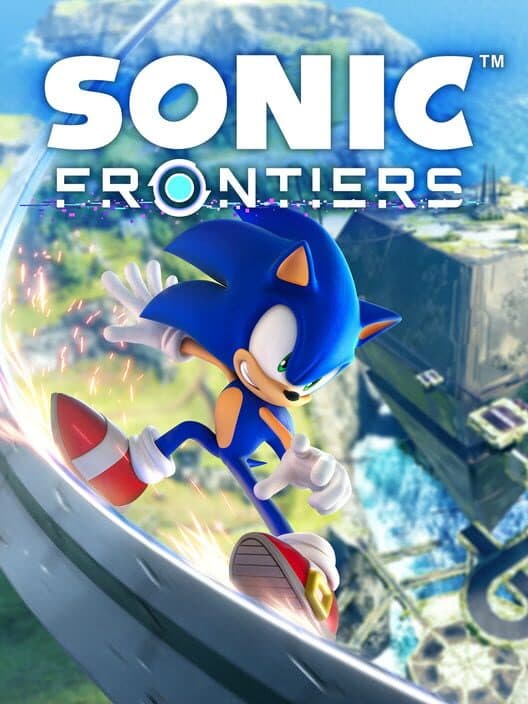
Sonic Frontiers Identity: A Bold Departure for the Blue Blur
In a franchise perpetually chasing its own tail, Sonic Frontiers doesn't just break the cycle—it smashes through it with a reckless, experimental energy that feels both thrilling and terrifying. This is not the Sonic you know. Gone are the rigidly scripted roller coasters of recent memory, replaced by five sprawling, melancholic islands that invite you to get lost. The shift to an “open-zone” structure is the most radical reinvention the blue blur has seen since the Dreamcast era, and it positions Sonic Frontiers as a clear-eyed, if flawed, attempt to write a new blueprint for the series. This is the franchise finally taking a deep breath after years of frantic sprinting, even if it occasionally stumbles over its own feet.

The open-zone structure represents a major shift for the Sonic series.
The “open-zone” concept is the game’s central thesis. Rather than a single, seamless world, Sonic Frontiers presents distinct, massive islands—Kronos, Ares, Chaos, and more—each functioning as a self-contained playground. The design intent is transparent: to marry Sonic’s innate speed with the freedom of exploration, creating a playground where “if you can see it, you can go there.” This structure liberates Sonic from the corridors of his past, allowing for genuine moments of discovery, like stumbling upon a hidden mini-boss or a distant cluster of collectibles that weren't marked on any map. It’s a direct response to the claustrophobic linearity that has plagued 3D Sonic for decades, and its mere existence feels like a statement of intent.
Where Sonic Frontiers truly distinguishes itself is in its tonal pivot. This is a surprisingly somber, mature adventure, a stark departure from the Saturday morning cartoon bombast of Forces or Colors. The Starfall Islands are haunted places, littered with the silent ruins of a lost civilization and bathed in a melancholic, piano-driven soundtrack.
This atmosphere draws an unmistakable lineage from genre-defining peers, most notably The Legend of Zelda: Breath of the Wild. The comparison is inescapable: the muted pastel color palette, the emphasis on quiet exploration punctuated by bursts of action, and even the gentle piano notes that play after solving an environmental puzzle. Yet, Sonic Frontiers is no mere clone. Its version of “open air” is filtered through Sonic’s core identity—speed. Where Link climbs, Sonic boosts, grinds, and launches. The influence of Metal Gear Solid V: The Phantom Pain is felt in the game’s “all-you-can-eat buffet” approach, throwing a dizzying array of mechanics—combat skill trees, fishing, pinball, stat upgrades—at the wall to see what sticks. This experimental spirit is the game’s greatest strength and its most glaring weakness; it’s a delightfully weird evolution that feels brave precisely because it’s so messy.
For better and worse, Sonic Frontiers is a game built on contradiction. It offers a liberating new playground draped in a surprisingly thoughtful mood, yet its execution is often at odds with its ambition. This opening act establishes a critical lens of cautious optimism: here is a Sonic game finally trying to grow up, to break its own patterns, and to find a new rhythm beyond the boost formula. Whether it succeeds in harmonizing its disparate notes is the question the rest of the adventure must answer.
Starfall Islands Exploration: Speed Meets the Sandbox
The promise of Sonic Frontiers—the freedom to run at breakneck speed across a vast, open landscape—lives and dies in its moment-to-moment traversal. This is where the game’s boldest gamble pays its highest dividends and reveals its most glaring technical sins. The simple, primal joy of building momentum, launching off a ramp, and chaining together a series of rails and bounce pads is the game’s uncontested core strength. When the physics align and the pop-in isn’t blinding you, carving your own path across the Starfall Islands delivers a liberating, kinetic high that feels authentically Sonic for the first time in a generation. The new Cyloop mechanic is a clever addition to this sandbox; by holding a button and running in a circle, you can solve environmental puzzles, stun groups of enemies, or, most tellingly, generate infinite rings from the ground—a harmless exploit that speaks to the game’s focus on momentum over resource scarcity.

Rail grinding provides high-speed traversal across the desert environments.
The tragedy of this sublime movement is that it’s set against some of the most artistically bankrupt environments in a modern AAA game. Calling the islands “open worlds” feels generous; they are vast, featureless plains of grass and rock, littered with Sonic iconography that appears to have been dropped in by a level editor.
The floating rails, neon springs, and ancient ruins don’t feel like part of a cohesive world, but like props on a soundstage. The aesthetic is less “haunting, mysterious landscape” and more “premade Unreal Engine asset pack,” creating a profound disconnect between the thrill of movement and the dullness of the destination. This is compounded by the game’s single greatest technical failing: catastrophic pop-in. On every platform, but especially on Switch, geometry, rails, and entire enemy platforms materialize just feet in front of Sonic as he runs. It shatters immersion, makes high-speed navigation a guessing game, and frankly looks ugly, undermining the very spectacle the game is trying to sell.
Where the world design finds a sliver of redemption is in its map progression. Instead of climbing towers, you reveal the terrain by completing simple environmental puzzles marked by floating icons—hit a ball through hoops, race to a point in time, or use the Cyloop to activate a switch. These micro-challenges are rarely taxing, but they provide a satisfying, bite-sized rhythm to exploration, gently pulling you toward points of interest and rewarding you with a chunk of map and a collectible. It’s a system clearly inspired by Breath of the Wild’s Sheikah Towers, but streamlined for pace. It works because it respects the core fantasy: you’re not stopping to solve a deep puzzle, you’re using your speed and agility to briefly interact with the world before blasting off again.
Ultimately, exploring the Starfall Islands is a relationship defined by friction. For every minute of pure, unadulterated flow—zipping across canyons, discovering a hidden Koco village, nailing a tricky platforming sequence you built yourself—there’s a moment where the camera clips, a jump feels floaty and imprecise, or the world simply fails to load in around you. Sonic Frontiers proves that an open-world Sonic can feel magnificent, but it also demonstrates that building a worthy playground for that speed is a far more complex challenge than simply scattering springs and rails across a blank canvas. The foundation for a revolution is here, but it’s built on unstable ground.
Sonic Frontiers Combat: Skill Trees and Titan Spectacles
Where Sonic Frontiers truly stumbles is in its attempt to build a meaningful combat system around its high-speed sandbox. The introduction of an RPG-style skill tree and flashy combos suggests a Devil May Cry-lite depth, but the reality is a shallow pool of spectacle that rarely asks you to swim deeper than your ankles. The core loop against the islands' robotic hordes devolves into mindless button-mashing; a basic three-hit combo and the overpowered Cyloop will trivialize 90% of encounters. This isn't helped by the auto-parry—a move activated by simply holding both shoulder buttons—which grants indefinite invulnerability and a guaranteed counter with zero timing required. It’s a system so broken it feels like a debug cheat left in the final build, and its mandatory use against certain enemies highlights a fundamental lack of confidence in the player’s skill.

A massive Titan boss looms over Super Sonic in a high-stakes encounter.
The skill tree itself is a compact list of cinematic flourishes—a shockwave stomp, a homing barrage, a spinning kick—that look fantastic in a vacuum but add little tactical substance. You can unlock everything before the final island, and since most abilities cost no resources and have no cooldown, you can spam the strongest move, Sonic Boom, to clear entire enemy camps without moving. The RPG stat progression (increasing attack, defense, speed, and ring capacity by trading collectibles with NPCs) is equally vestigial; the numbers go up, but the tangible impact on moment-to-minute gameplay is negligible outside of making the already-easy combat even more trivial.
This combat inadequacy is thrown into sharpest relief during the game's saving grace: the Titan boss fights. When you finally gather the Chaos Emeralds and transform into Super Sonic for these climactic showdowns, Sonic Frontiers briefly becomes the anime spectacle it desperately wants to be. These are gargantuan, multi-phase battles against screen-filling robots, scored by crushing metal anthems, where you’re flying through the air, parrying building-sized fists, and unleashing screen-filling special moves. The sheer scale and auditory bombast are undeniable, a genuine franchise highlight. Yet, even here, the mechanics are shallow—often boiling down to “dodge the obvious tell, then mash the attack button”—and are frequently undermined by the notoriously unreliable lock-on system. The camera and targeting routinely lose the colossal enemy you’re fighting, especially during frantic aerial sequences, causing you to whiff attacks into empty sky. It’s a spectacle constantly fighting its own controls.
Ultimately, Sonic Frontiers presents a combat paradox. It builds a framework with more moving parts than any previous Sonic game—a combo meter, a parry, a dodge, a full suite of unlockable skills—but then designs an enemy roster and difficulty curve that never requires you to engage with it meaningfully. The Titan fights are a glorious, messy exception, proof that the ambition exists. But for the dozen hours between those spectacular highs, you’re left with a repetitive, frictionless combat loop that feels less like a thrilling new pillar of gameplay and more like a mandatory speed bump on your way back to the open zone.
Cyber Space and Minigames: A Bridge to the Past
In Sonic Frontiers, the promise of boundless freedom is perpetually tethered to the ghosts of Sonic’s past. The open zones may be the new frontier, but progression is governed by a rigid, old-school collect-a-thon loop that funnels you into bite-sized Cyber Space levels—a direct, often jarring bridge to the franchise’s linear heritage. These portals scatter the islands, promising a hit of classic Sonic adrenaline, but they frequently deliver a lesson in frustration instead. The dissonance is palpable: you’re pulled from the liberating, self-directed exploration of the Starfall Islands and dropped into a tightly scripted race against the clock, where the floaty, imprecise controls you’ve learned to manage in the open world suddenly feel like a profound betrayal.

The fishing minigame offers a relaxing break from high-speed action.
The Cyber Space stages themselves are a study in conflicted design intent. On paper, they’re a clever nod to legacy—short, one-to-two-minute bursts of traditional boost-era gameplay, visually cribbed from greatest hits like Green Hill Zone and Chemical Plant. Their brevity is a mercy, and when the stars align, hitting a perfect line of rings and nailing a tricky corner can deliver a potent shot of nostalgia. The problem is the execution. To progress and earn the Vault Keys needed for Chaos Emeralds, the game often demands S-rank clear times or perfect Red Ring collection. This requirement for pixel-perfect precision runs headlong into Sonic’s notoriously loose handling in these segments; a slight nudge can send him careening off a narrow path, and the “floaty” jump physics make landing on small platforms an exercise in hope. The camera, particularly in the 2D sections, zooms in uncomfortably close, obscuring what’s ahead. You’re not racing against a cleverly designed course so much as you’re wrestling with the controls, a tension that transforms what should be a celebratory callback into a repetitive chore.
This is where the game’s much-discussed fishing minigame emerges not as a mere quirky diversion, but as a glaring systemic pressure valve. By spending abundant Purple Coins to fish with Big the Cat, you can earn massive hauls of Portal Gears, Vault Keys, and Memory Tokens with minimal effort.
The activity itself is a pleasant, rhythm-based respite—press a button when circles align—and its rewards are so disproportionately generous that it fundamentally breaks the intended progression. You can literally gain over 60 character levels in minutes or bypass entire clusters of Cyber Space stages, turning the core gameplay loop from “explore, fight, platform” into “fish, progress, repeat.” For players frustrated by the jank of the open world or the precision demands of Cyber Space, it’s a welcome cheat code. For the game’s structural integrity, it’s an admission of failure—a developer-sanctioned shortcut that highlights how unrewarding the “intended” path can feel.
Ultimately, this entire subsystem—the gear hunt, the vault key grind, the memory token collection—feels like a vestigial organ from a different game. Sonic Frontiers is at its best when you’re carving your own path across a canyon, not when you’re ticking off items on a laundry list. The Cyber Space levels, while occasionally thrilling, highlight the series’ unresolved control issues, and the fishing minigame, while enjoyable, exists as a damning critique of the grind it allows you to skip. This is the game’s most awkward straddling of eras: a bold, open-ended future constantly interrupted by the rigid, checklist-driven past it hasn’t fully outgrown.
Narrative and Performance: Writing a New Legacy
This is where Sonic Frontiers earns its most surprising distinction: for the first time in over a decade, the characters actually sound like people. The game’s surprisingly melancholic tone is matched by a narrative pivot toward grounded, mature character writing, a direct and welcome rejection of the trope-driven comedy that has defined the series since Colors. Sonic himself is the clearest beneficiary. Roger Craig Smith delivers his best performance in the role, trading the cocksure, borderline-parodic snark for a voice that’s deeper, more measured, and laced with a genuine weariness. His interactions with Amy, Knuckles, and Tails are conversations between veterans who share a long history, not just quip exchanges. This is particularly evident in Tails’ arc, which moves him beyond the sidekick role to grapple with his own legacy and purpose—a narrative thread that feels earned rather than tacked on.

Technical performance varies across platforms, with some graphical pop-in visible even on PS5.
The emotional core of the story, however, belongs to the new relationship between Dr. Eggman and the enigmatic AI, Sage. This isn’t a simple villainous team-up; it’s a slow-burn character study of a lonely genius and his accidental creation, revealed through optional but essential Egg Memos collected while fishing.
Their dynamic—a surrogate father-daughter bond forged in digital captivity—provides a layer of pathos the series has rarely attempted, and it pays off in a finale that’s more emotionally resonant than any giant laser showdown. Sage herself is a triumph of patient storytelling, her motivations and loyalties kept ambiguous until the final act, making her one of the franchise’s most compelling additions in years.
Where the narrative soars, the technical foundation of Sonic Frontiers frequently stutters, and the experience is dramatically platform-dependent. On PS5 and PC, the 60fps performance mode is essential, smoothing out the high-speed traversal and making the pop-in—while still a persistent, immersion-breaking issue—slightly more manageable. The core loop remains playable, even if the world constantly loads in around you. The Switch version, however, is a different, severely compromised product. The sacrifices made to get the game running are brutal: a 720p docked resolution, blurry textures that look a generation old, flat lighting, and a draw distance so poor that essential rails and platforms materialize just a few feet in front of Sonic.
Playing Sonic Frontiers on Switch is an act of constant visual negotiation. The already-notable pop-in becomes a nauseating, jittery onslaught where entire cliffsides warp into existence, creating a disorienting, ugly experience that actively hinders navigation and undermines the game’s core speed fantasy.
While the framerate generally targets 30fps, it comes with constant stutters, and the combined effect is a version that feels technically unfinished. If you have any other platform available, the Switch port is impossible to recommend; it transforms the game’s greatest strength—fluid, exhilarating movement—into a frustrating, headache-inducing chore.
Thankfully, one aspect of the experience remains pristine across all platforms: the soundtrack. It masterfully complements the game’s dual identity. The open-zone exploration is scored by somber, piano-driven ambient pieces that amplify the islands’ lonely, melancholic atmosphere. This quiet contemplation is violently shattered the moment you engage a Titan, as the score erupts into shredding guitar riffs and pounding metal anthems that feel ripped from an anime climax. The Cyber Space stages get their own dose of high-energy electronic and drum ‘n’ bass tracks, creating a perfect audio signature for each pillar of the experience. It’s not just a great Sonic soundtrack; it’s one of the year’s best game scores, a crucial component in selling the game’s ambitious, if uneven, emotional range.
Final Verdict: Is Sonic Frontiers the Future of the Franchise?
Sonic Frontiers is, ultimately, a game defined by its potential. It’s a fascinating, frustrating, and deeply ambitious experiment that finally points the franchise in a compelling new direction, even as it stumbles over the uneven ground of its own creation. The final verdict isn’t a simple binary; it’s an evaluation of a bold prototype that succeeds wildly in some areas and fails spectacularly in others. This is a game that offers the most liberating sense of speed the series has ever achieved, wrapped in a world that often feels technically unfinished.
The game’s value proposition hinges on your appetite for its particular brand of variety. A playthrough focusing on the main path and key upgrades will clock in around 20 hours, but completionists can easily double that. That time is packed with an “all-you-can-eat buffet” of activities—from the serene fishing with Big the Cat to the frantic Cyber Space sprints, from Titan spectacles to simple environmental puzzles. The sheer volume of ideas is commendable, but it’s also the source of the game’s pacing issues. The core loop of collecting Gears, Keys, and Tokens becomes transparently repetitive by the final island, and the over-reliance on these collectibles to gate progression often feels like artificial padding in a game whose greatest strength is organic, player-driven exploration.

A revamped combat system adds depth to the standard Sonic gameplay loop.
For all its flaws, Sonic Frontiers is the most important Sonic game in 15 years. It doesn’t perfect its new formula, but it proves one exists—and that’s a triumph in a series that has spent decades running in circles.
This leaves us with a game of stark contrasts. Its pros are monumental: the exhilarating freedom of traversal, the awe-inspiring scale of the Titan fights, and the surprisingly mature character writing that gives the cast more humanity than they’ve had in a generation. Its cons are equally glaring: the catastrophic pop-in that shatters immersion on every platform (and renders the Switch version nearly unplayable), the shallow, repetitive combat that squanders its own skill tree, and the pervasive sense of technical jank from a floaty camera to unreliable platforming in Cyber Space. Sonic Frontiers is a game that constantly asks for your patience, rewarding it with moments of genuine brilliance and testing it with undeniable roughness.
So, who is this for? For the long-suffering Sonic fan, this is an essential, must-play experience. It’s the first 3D entry since the Adventure era that feels like it has a coherent vision for the future, warts and all. For the open-world enthusiast, it’s a curious, often brilliant case study in adapting a mascot’s core fantasy to a new genre, even if the resulting world is aesthetically barren. It is not, however, a polished, genre-defining masterpiece. It’s a flawed foundation—a thrilling, messy, and profoundly promising first step into a new frontier.
Final Score: 7.5/10
Pros:
- The core high-speed traversal across open zones is liberating and uniquely satisfying.
- Titan boss battles are spectacular, franchise-highlight spectacles.
- Strong, mature character writing and a compelling new antagonist in Sage.
- A fantastic, genre-spanning soundtrack that perfectly sets the mood.
- A bold and welcome experimental spirit that breaks the stale Sonic cycle.
Cons:
- Severe and constant graphical pop-in undermines the experience on all platforms.
- Combat is shallow, repetitive, and broken by an overpowered auto-parry.
- The open zones are visually bland and lack cohesive artistic design.
- Cyber Space levels suffer from imprecise controls that clash with their precision demands.
- The Nintendo Switch version is a severely compromised port with major technical issues.