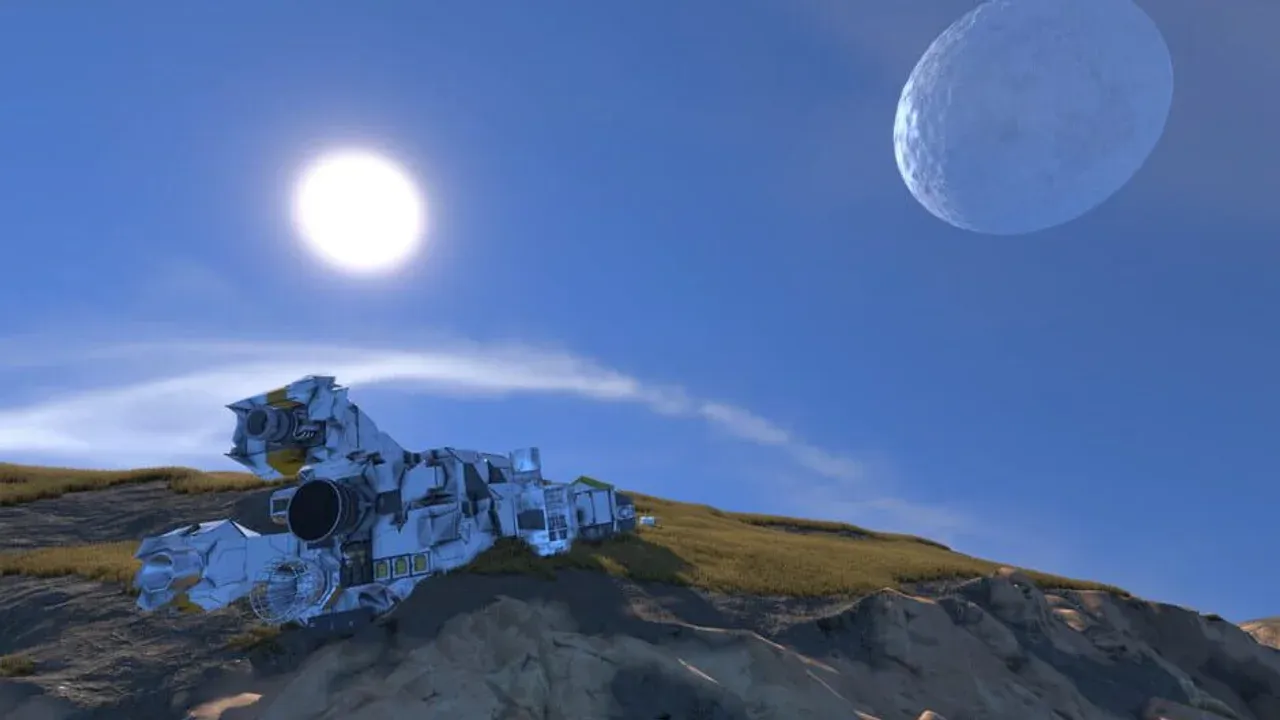
Space Engineers First Impressions: A Sandbox Built Around Engineering
Space Engineers is not a space adventure in the traditional sense; it is a physics, construction, and survival sandbox that asks what happens when every ambitious idea must become a functioning machine. That distinction defines the entire experience: the game rarely hands you a dramatic objective, but it constantly challenges you to build something capable of doing the work yourself.
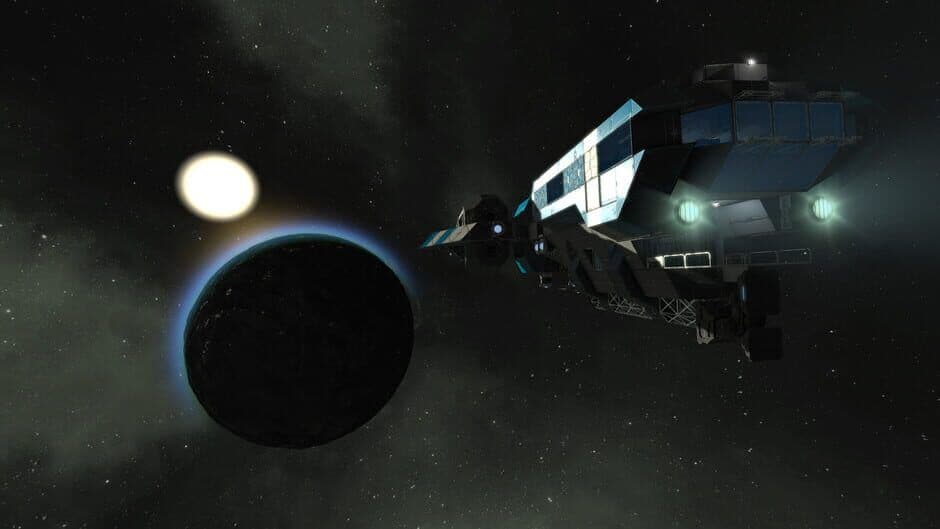
The learning curve involves mastering various engineering components and logic.
The appeal is immediate once the premise clicks. Space Engineers gives you modular blocks that can become ships, orbital stations, rovers, mining rigs, automated factories, or entire planetary bases, and those creations matter because they are not merely visual decorations. A cockpit must connect to a usable vehicle, power systems must support the machinery around them, and a base only feels successful when its separate parts operate as one machine. That freedom creates a rare kind of ownership: when a vessel finally works, the satisfaction comes from understanding why it works, not from receiving a quest reward. It is hard to overstate how different that feels from building in a conventional creative sandbox where structure is mostly cosmetic.
Space Engineers’ first great lesson is also its most intimidating: the game does not ask what you want to build; it asks whether you understand what your creation needs to function.
That lesson arrives quickly and without much ceremony. During the first hour, new players must absorb block placement, power generation, resource processing, cockpit controls, and basic survival priorities before the deeper engineering systems become approachable. Each subject is understandable in isolation, but together they create a steep opening because a mistake in one area can make the others feel broken: a vehicle may exist physically yet remain useless if its systems are not properly supported, while construction loses momentum when survival needs interrupt experimentation. This learning curve is not accidental friction—the game’s identity depends on making machines obey rules—but the onboarding does little to soften the transition from “place a block” to “design a functioning spacecraft.”
The trade-off is a lack of conventional structure. Space Engineers supplies objectives and progression systems, but it does not consistently provide the authored missions, carefully controlled pacing, or dramatic direction found in traditional space games; much of the momentum must come from the player deciding to build a better ship, expand a base, or automate another part of the operation. That can make the opening feel directionless when compared with a campaign-driven space adventure, especially for players waiting for a story to explain why the next project matters. For patient builders, automation enthusiasts, survival-sandbox players, and multiplayer groups, that absence becomes room to experiment rather than a void. For everyone else, it can feel like being handed an impressive workshop before being told what, if anything, deserves to be made.
This is where Space Engineers earns its reputation—and where its limitations become impossible to ignore. Its creative freedom is powerful because construction, survival, and physical systems are the content, but that same design makes the experience dependent on curiosity and tolerance for trial and error. The central question for this review is therefore not whether the sandbox is large, but whether the pleasure of solving its engineering problems outweighs the friction and limited direction surrounding them. For players who want to author their own space program, the answer begins with a confident yes; for players seeking a tightly directed story, the first impression is considerably less welcoming.
Space Engineers Gameplay: Engineering Systems Reward Clever Designs but Punish Mistakes
Space Engineers turns construction into a test of whether your ideas can survive contact with physics. A ship is not finished when its hull looks convincing; it is finished when its mass, thrust, power, controls, and internal systems cooperate under pressure. That distinction makes the building loop far more satisfying than decorative sandbox construction, but it also means every ambitious design carries the possibility of spectacular failure.
The grid-based construction system gives that ambition a remarkably precise framework. Large-grid and small-grid blocks support everything from compact utility craft to sprawling stations, while their differences impose meaningful constraints on scale, weight, orientation, and component placement. A small-grid vehicle can pack detail into a tight frame, whereas a large-grid structure provides the room and durability required for industrial machinery or a permanent base. The best designs emerge from working within those limits: a cockpit needs a practical position, thrusters need usable clearance and direction, and vital components must be accessible rather than buried arbitrarily inside armor. Space Engineers makes shape a consequence of function, which is why a successful ship feels engineered rather than merely assembled.
That function extends to nearly every major block. Reactors, batteries, thrusters, gyroscopes, conveyors, cargo containers, weapons, doors, and programmable systems are not decorative props; they must be connected and supplied before they contribute anything useful. A cargo vessel becomes a genuine logistical machine when conveyors move materials between storage and production, while a warship only earns its silhouette when its weapons, power systems, controls, and defenses operate as a coherent whole. This interdependence creates the game’s finest building moments: the first time a newly completed craft powers up, responds to its cockpit, and performs its intended job, the design stops being a model and becomes a machine. The interface and engineering vocabulary can make that process demanding, but the payoff is more substantial than simply unlocking a prettier structure.
In Space Engineers, the most important blueprint is often the one you never save: the mental model of why your machine works.
Physics is what gives that model consequences. Mass determines how much thrust a craft needs, thrust direction determines whether it can accelerate and brake reliably, power availability limits what the ship can sustain, and gyroscopic control affects how confidently it turns. Center of gravity and structural integrity matter just as much: an awkwardly balanced vehicle can handle poorly even when every individual component is functional, while a weak or badly supported structure can become a liability under movement and impact. These rules produce meaningful design problems rather than arbitrary restrictions, because changing one part of a build often forces revisions elsewhere. A mining ship, a fast utility craft, and a heavy mobile base therefore demand different solutions instead of sharing one universally correct layout.
Where this brilliance becomes punishing is in catastrophic failure. A collision can destroy hours of construction; insufficient thrust can leave a vessel unable to maneuver; power loss can disable the systems that make recovery possible; and an oxygen failure or an exposed critical block can turn a routine operation into a total loss. The game rarely cushions those mistakes with a generous recovery layer, so experimentation can shift abruptly from empowering to exhausting—particularly when the failure comes from a problem discovered only after a long build. That severity is defensible because it makes testing and redundancy meaningful, but it also encourages cautious designs and repeated rebuilds rather than fearless invention. Space Engineers’ most memorable lesson is often learned while watching a carefully assembled machine become debris.
The survival progression gives these engineering problems a functional rhythm. Raw materials become refined ores, refined resources become components, and those components unlock more capable equipment, creating a clear chain from gathering supplies to constructing better ships, bases, and machinery. However, progression is primarily a means to expand the player’s engineering vocabulary rather than a richly layered character-development system; the reward is not a new personal ability so much as access to a stronger or more specialized machine. That focus keeps the loop coherent with the sandbox’s identity, but it also means players who need narrative milestones or character growth may find the advancement emotionally thin. For builders, the promise of the next project is enough. For everyone else, Space Engineers’ gameplay can feel like an exceptionally sophisticated workshop whose greatest challenge is deciding what deserves to be built—and accepting the cost when the design fails.
Space Engineers Resource Management: Survival Has Purpose but Repetition
Space Engineers makes every ambitious construction project begin with an unglamorous question: where will the material come from? Its resource economy gives survival a clear purpose, but after the excitement of the first working refinery fades, the journey from ore deposit to finished machine can become the game’s most repetitive obligation.
The resource chain is the strongest argument for keeping survival enabled. Ores must be located, mined, transported, refined, and converted into components before they become a functioning ship or station, so construction remains tied to the world rather than existing as frictionless menu selection. A new vessel therefore creates a tangible logistical demand: finding the necessary deposits, bringing raw material back to base, processing it, and feeding the resulting components into production. That connection makes the first expansion of a mining operation feel earned because the player can trace a finished machine back to the trip that supplied it. Space Engineers understands that a refinery is more satisfying when it represents an industrial pipeline rather than a decorative block.
The resource economy succeeds when it makes construction feel like an industrial achievement; it falters when every new project sends you back to the same mine.
That industrial logic extends into the conveyor system, which turns base layout into a genuine engineering problem. Conveyors can move ores, components, ammunition, and gases between connected inventories and machines, allowing a refinery, assembler, cargo container, cockpit, or weapon system to function as part of one network instead of as isolated blocks. A well-planned base lets materials flow from storage into processing and onward to production, while a poorly routed network leaves the player manually moving supplies or discovering that an important machine is effectively disconnected. This is where Space Engineers makes logistics feel like gameplay: cargo capacity, connection points, and routing decisions shape the physical design of a facility. The limitation is that the system’s value is clearest after the player has already learned its rules, so early survival can feel less like managing an operation and more like troubleshooting an opaque one.
Mining itself is much less generous. The cycle of scanning for deposits, drilling, carrying or transporting the ore, refining it, and waiting for production to finish is meaningful during the opening phase, when every shipment unlocks a major improvement, but it loses energy once a large construction demands vast quantities of ordinary materials. A player working toward a substantial station or ship can spend extended stretches repeating the same extraction route rather than solving a new engineering problem. That repetition is particularly noticeable in solo play, where one person must pilot the mining craft, operate the drill, manage cargo, and return resources to production. The system gives building a material cost, but it does not always give the act of paying that cost enough variety; after the initial breakthrough, mining can become a tax on creativity.
Survival systems add pressure, although their impact depends heavily on world settings and available infrastructure. Health, suit energy, oxygen, hydrogen, inventory capacity, and the restrictions of the player’s suit all make an unprepared trip dangerous: running short on supplies or carrying too much can turn a simple mining expedition into a recovery problem. Once a base has reliable power, storage, oxygen, and production, however, those risks recede substantially, and the same mechanics become routine maintenance rather than urgent survival. That variability is both a strength and a weakness. Players who want a harsher survival game can preserve the tension through their settings and limited infrastructure, while players focused on construction can reduce the interruptions—but Space Engineers consequently lacks a consistent survival pressure that drives every stage of progression.
Automation reveals the sandbox’s real ambition, and also its accessibility problem. Timers, sensors, event controllers, programmable blocks, and scripts can transform a collection of machines into a functioning factory or vehicle: systems can trigger production, react to conditions, manage doors and machinery, or coordinate complex ship behavior. The reward is not merely convenience; automation lets players scale beyond manual interaction and build systems that perform a job while they pursue another. Yet the complexity of these tools pushes Space Engineers away from an accessible survival adventure and toward a construction toolkit, especially when a desired factory or vehicle depends on understanding several interacting systems at once. For technically minded players, that complexity is the endgame. For newcomers, it can make resource management feel less like surviving in space and more like debugging a machine they have not yet learned to read.
Resource management ultimately gives Space Engineers its construction loop a necessary backbone, but it rarely disguises the labor involved. Mining and survival establish stakes, conveyors turn those stakes into layout decisions, and automation provides a path beyond repetitive manual work; together, they create one of the most coherent production systems in a sandbox game. The catch is that the player must enjoy the process as much as the result, because large projects require repeated extraction and increasingly elaborate infrastructure before the next breakthrough arrives. In solo play, that burden can slow experimentation; in a larger operation, it becomes the foundation of a functioning industrial ecosystem. For builders willing to treat resource work as part of the design rather than a chore between designs, Space Engineers makes every completed machine feel materially—and therefore emotionally—earned.
Space Engineers Exploration and Combat: A Vast Playground with Uneven Encounters
Space Engineers gives you an entire solar system to cross, but it rarely gives you a reason to care about what lies beyond the next horizon. That tension defines exploration in Space Engineers: the environments meaningfully change how you build and travel, yet the discoveries waiting there seldom match the scale of the journey.
The sandbox’s multi-environment design is its strongest exploratory feature. Planets and moons impose gravity and terrain on every vehicle, atmospheres affect which craft can operate effectively, asteroids turn open space into a problem of approach and navigation, and orbital travel demands machines built for a different kind of movement altogether. A vehicle that handles well on a planetary surface is not automatically useful in space, while a spacecraft designed for orbital travel may be poorly suited to landing, climbing, or crossing uneven ground. These distinctions make leaving a base feel like an engineering decision rather than a simple change of scenery. Space Engineers consistently turns geography into a construction requirement, and that is where its exploration has genuine purpose.
Every Destination Demands a Different Machine
Vehicle variety reinforces that strength. Rovers must cope with terrain and gravity, atmospheric craft need the right balance of lift, thrust, and power, hydrogen ships provide a different solution from ion-powered spacecraft, and mining vessels must accommodate drills, cargo, and the demands of returning safely with a full load. Mobile bases push the idea further by combining transport and habitation into one oversized project, creating a machine that can relocate an operation instead of merely visiting a location. There is no universally optimal vehicle because the environment and intended task keep changing the design problem. Space Engineers makes the journey itself part of the build, and few sandbox games extract this much mechanical meaning from the choice between a rover and a ship.
Exploration in Space Engineers is at its best when the destination forces a new vehicle into existence; it is at its weakest when the destination feels like an empty coordinate.
That weakness comes from the limited motivation behind travel. Procedurally generated worlds, resource sites, asteroids, and open space provide room to move through, but they rarely deliver the authored landmarks, quest chains, or layered discoveries that make exploration feel narratively rewarding in a traditional space game. Reaching a new area can still matter if it offers better access to materials or a suitable location for a new base, but the reward is usually logistical rather than dramatic. The player travels because a project requires it, not because the world has carefully placed a mystery worth pursuing. This design fits Space Engineers’ self-directed identity, yet it also means that once the engineering problem is solved, the surrounding environment can feel more like a useful test chamber than a place with its own story.
Combat attempts to give those spaces sharper consequences, and its best moments treat violence as another construction challenge. Turrets, personal weapons, missiles, and ship-mounted weapon systems require players to think about armor placement, firing arcs, targeting, power supply, and ammunition rather than simply selecting an attack command. A warship must protect its critical systems while keeping weapons supplied and aimed, and a poorly designed craft can lose a fight before its firepower becomes relevant. This is a natural extension of the building philosophy established elsewhere in Space Engineers: combat is most satisfying when the player wins because the machine was designed intelligently. Building a ship that can approach a threat, survive incoming fire, and bring its own weapons to bear is far more engaging than treating combat as a conventional action-game encounter.
However, the encounter design does not consistently support that potential. Hostile encounters and NPC threats can interrupt a long construction project or force a player to test a new defensive system, but they are not varied or sophisticated enough to sustain Space Engineers as a dedicated combat game. The threat can provide useful pressure because it gives armor, turrets, and redundancy a practical purpose; it does not reliably create the escalating tactics, enemy behaviors, or set-piece confrontations needed to make combat the main attraction. The result is an uneven rhythm: combat is memorable when it emerges from a meaningful engineering situation, but underwhelming when the game asks it to carry the experience on its own. Players looking for a focused space-combat campaign will find the sandbox’s mechanical possibilities broader than its actual encounters.
Exploration and combat therefore extend Space Engineers without replacing its central appeal. Planets, moons, asteroids, and orbital space create distinct engineering conditions; rovers, atmospheric craft, hydrogen ships, ion craft, mining vessels, and mobile bases turn those conditions into different design problems; weapons give those creations a reason to survive contact with danger. But the world’s sparse authored motivation and uneven enemy depth leave the player responsible for supplying most of the excitement. Space Engineers is not a space adventure built around discovery or warfare—it is a construction sandbox where discovery and warfare become worthwhile when they give your machines something difficult to do.
Space Engineers Multiplayer: Collaboration Is the Best Endgame and a Source of Friction
Space Engineers becomes a fundamentally better game when several people are responsible for the same machine. Solo survival makes every mining run, cargo transfer, repair job, and piloting decision your problem; multiplayer turns those obligations into roles, and that division of labor makes ambitious construction feel achievable rather than merely exhausting.
Cooperative construction is the clearest multiplayer advantage. One player can operate a mining vessel while another processes ore and manages production, a third designs the next expansion, and a fourth tests defenses or pilots the finished craft. That separation gives each task more purpose: a pilot is not waiting for a solo player to finish loading cargo, while the builder can concentrate on design instead of repeatedly abandoning the project to gather materials. Large bases and ships also become social objects rather than private achievements, because everyone can point to a system they supplied, assembled, repaired, or improved. Space Engineers’ engineering loop already rewards specialization, but a coordinated crew turns that design principle into a genuine team game.
Multiplayer does not merely make Space Engineers faster; it makes the machinery feel inhabited.
Blueprints extend that collaboration beyond a single session. Saving a successful ship or structure lets players preserve a working solution, deploy it again, and revise it instead of rebuilding from memory after every failure. A crew can create a dependable mining craft, improve its storage or propulsion, and then use the updated design as the foundation for a larger operation; sharing those creations through the community also lets another group learn from the original builder’s decisions. This is especially valuable in a game where functional construction demands more than a good silhouette: a blueprint can carry the practical arrangement of systems that made the design work. The limitation is that reuse can also flatten experimentation when players rely on proven workshop designs rather than understanding how to make their own, but the ecosystem still gives Space Engineers a powerful communal memory.
Multiplayer’s best stories emerge from rules and consequences the base game never scripts. Server settings can make resources scarcer, factions can divide territory or cooperate uneasily, and a large project can become a strategic target rather than a private construction exercise. Sabotage, stolen supplies, a damaged transport, or the desperate defense of an orbital station can turn ordinary engineering decisions into shared history because the outcome depends on player motives, not a quest designer’s predetermined encounter. Competitive scenarios sharpen that potential by giving ships, bases, and logistics an opposing purpose: the same conveyor network that supports construction can become a vulnerability, while armor and redundant systems matter because another player is actively searching for weaknesses. Space Engineers is at its most memorable when a carefully built machine becomes part of a conflict nobody could have planned in advance.
The cost is coordination. Large projects require clear communication about who owns a grid, who can access its systems, where resources should go, and which player is responsible for a failed component; without that structure, a group can spend more time locating missing inventories, resolving access restrictions, or troubleshooting disconnected machinery than actually expanding its operation. These problems are not cosmetic inconveniences, because every unresolved permission or ownership issue can stop a ship from moving or leave critical production inaccessible to the people who need it. Experienced groups learn to assign roles and establish procedures, but inexperienced crews encounter the same steep engineering vocabulary as solo players while adding the social burden of explaining it to one another. Cooperation is therefore Space Engineers’ strongest accelerator and one of its most demanding skills.
Community content keeps that multiplayer ecosystem from settling into a single routine. Workshop creations, custom worlds, scripts, and player-made scenarios can introduce new starting conditions, specialized machines, automated systems, and rules that reshape how a server operates, giving groups reasons to return after their original base has reached its practical limits. A custom scenario can turn the sandbox into a structured challenge, while a script can make a familiar ship or factory behave in a more elaborate way than the default tools allow. Yet this long-term value depends heavily on content outside the core game, and quality, compatibility, and accessibility vary across those creations; a promising world may require unfamiliar setup, a script may not suit every server, and a large collection of additions can make it harder to identify what a new player actually needs. The breadth is impressive, but it comes with the curation problem common to community-driven platforms.
Space Engineers multiplayer is consequently less a polished cooperative campaign than a toolkit for groups willing to organize themselves. Its servers, factions, blueprints, competitive scenarios, and player-made content create stories and replayability that solo survival cannot reliably produce, while unclear coordination and dependence on community quality expose the limits of its self-directed design. For a group that enjoys assigning jobs, solving technical problems together, and watching a shared project become a functioning industrial empire, this is the game’s real endgame. For players hoping multiplayer will supply structure automatically, the same freedom can feel like another engineering problem with no blueprint provided.
Space Engineers Presentation: Strong Scale and Machinery, Uneven Readability
Space Engineers can make a machine feel enormous before it makes it feel beautiful. A completed orbital station, industrial ship, or planetary base communicates scale through movement and operation: conveyors carry materials, refineries process ore, thrusters ignite, and lights flicker across a structure that is clearly more than a collection of blocks. That physical presence is Space Engineers’ strongest visual achievement, because the spectacle comes from systems working in front of you rather than from a scripted camera angle.
Large ships and stations are especially effective when seen from outside after construction has progressed beyond the cockpit. A vessel that began as a frame can accumulate cargo modules, armor, propulsion, hangars, and industrial machinery until its silhouette reads as a functioning facility, while a planetary base can spread outward from a survival shelter into a visible network of production and habitation. The same is true at smaller scales: a mining rig becomes convincing when its drills, storage, and conveyors visibly support one another, and a factory feels substantial when its machinery occupies physical space instead of disappearing into menus. Space Engineers understands that scale is most persuasive when the player can walk through it, operate it, and watch its separate systems perform work.
Space Engineers’ best visual moments are not vistas; they are moments when a structure reveals that it has a job.
That philosophy gives the game a strong functional visual design. Block silhouettes communicate purpose with unusual clarity: thrusters indicate propulsion, conveyor ports suggest logistical routes, armor shaping reveals protected areas, and exposed machinery shows where a ship’s vulnerability may lie. Lighting also matters beyond decoration, since illuminated interiors, landing areas, and industrial spaces make a large construction readable when its components might otherwise blur into a mass of gray geometry. A well-designed creation can therefore be understood at a glance—not perfectly, but enough to distinguish its cockpit, cargo areas, engines, and working zones without opening a terminal. This is where Space Engineers turns visual style into gameplay information, allowing players to diagnose a build by looking at it.
The environmental presentation is less distinctive. Planetary terrain and space backdrops establish the necessary atmosphere for building and travel, and the contrast between a bright planetary surface and the emptiness of orbit gives each setting a recognizable mood. However, procedural environments can also feel visually sparse, with long stretches of terrain or open space offering limited authored detail compared with exploration-focused games built around memorable landmarks and curated scenery. That repetition does not undermine the engineering sandbox—an empty region is useful when the player wants room to build—but it weakens the sensation of discovering a world with its own visual identity. Space Engineers gives you space to construct an impressive place; it is less reliable at making the surrounding place impressive on its own.
Sound design is more practical than expressive. Engine noise helps confirm that a craft is producing thrust, drilling sounds make mining feel like an active mechanical process, and machinery, weapons, impacts, and environmental audio provide immediate clues about what is happening around the player. Those cues matter because the game often asks players to monitor several systems simultaneously: an unexpected weapon report, a change in engine activity, or the sudden absence of a machine’s familiar sound can signal that something requires attention. Yet the audio rarely carries the same depth as the construction systems themselves; it communicates operation effectively, but it does not consistently give different locations, machines, or discoveries a strong emotional identity. The machinery sounds like machinery, which is useful, but the world seldom sounds like a place with a story.
The interface is where Space Engineers’ technical ambition most directly collides with accessibility. Inventory screens, control panels, terminal filters, toolbar configuration, ownership settings, and block-specific menus expose an impressive amount of control, but each system adds another layer a newcomer must understand before routine actions become routine. Assigning a block to a toolbar is not simply a matter of selecting an ability; players must identify the correct grid, find the relevant block, choose its available action, and configure the resulting control, while ownership settings can determine whether a system responds at all. Filters and categorized menus eventually make large constructions manageable, but early on they can turn a simple task—moving an item, operating a door, or adjusting a machine—into a search through technical panels. This complexity supports expert control, yet it also slows the first hours and makes the game’s accessibility depend heavily on patience, guidance, and familiarity with engineering terminology.
The presentation of Space Engineers is therefore strongest when it shows systems in operation and weakest when it asks the environment or interface to provide immediate clarity. Its scale makes large projects feel physically earned, its silhouettes and machinery help players read how creations function, and its sound design supplies useful feedback during construction and survival. But sparse procedural scenery limits the pleasure of simply looking outward, while dense menus make the act of managing a machine less intuitive than building one. Space Engineers looks and sounds most convincing when it behaves like a workshop; the challenge is making that workshop welcoming enough for newcomers to understand what they are seeing.
Performance in Space Engineers: Ambitious Simulation Meets Technical Limits
Space Engineers does not slow down because its worlds are visually extravagant; it slows down because every ambitious creation is a live simulation. A large station asks the game to track physics, inventories, conveyors, power, moving grids, scripts, thrusters, weapons, and environmental systems at the same time, so the real performance cost of a build is hidden behind its blocky appearance.
When the Simulation Starts to Strain
That distinction matters from the moment a survival shelter becomes an industrial base. A few connected machines are easy to understand and generally responsive, but expansion adds more than geometry: refineries process materials, assemblers pull components through conveyor networks, doors and lights respond to controls, ships dock and undock, and scripts monitor or automate the whole structure. Add several nearby vehicles, loose debris, or a second grid under construction, and the simulation has more relationships to calculate even if the scene still looks visually simple. Space Engineers therefore ties performance directly to player ambition; the better your base becomes as a machine, the more demanding it becomes for the machine running the game.
The degradation is most noticeable in late-world play. A new survival start can feel immediate because there are few grids and almost no machinery competing for simulation time, while an established operation may contain a sprawling base, multiple ships, automated systems, cargo networks, and discarded construction fragments. In that environment, controls can feel less immediate, moving vehicles can become harder to trust, and routine tasks such as docking or operating machinery lose their precision. The impact is not merely cosmetic: a delayed response during flight can turn a manageable approach into a collision, while a combat encounter becomes less about piloting skill when the simulation cannot maintain the same responsiveness as the player’s inputs. This is where the seams start to show.
Space Engineers makes scale feel physical twice: first through the size of what you build, and then through the processing burden that creation places on the world.
Hardware and platform choice consequently matter more here than in most building sandboxes. The relevant question is not whether the graphics look attractive at a glance, but whether the chosen system can keep construction interfaces responsive, vehicles controllable, physics consistent, and multiplayer activity manageable once a world becomes crowded with functioning grids. A platform that handles a starter base comfortably may feel very different after the player adds dense machinery, several moving ships, scripts, and accumulated debris. Space Engineers rewards players who build with simulation cost in mind—consolidating systems, removing unnecessary grids, and avoiding uncontrolled clutter—but that turns optimization into another responsibility layered on top of engineering. For players who want to create without monitoring the health of the world, this is a frustrating limitation; for technical builders, it becomes an extension of the same design discipline that governs thrust and power.
The Cost of a Sandbox Without Guardrails
Technical friction compounds the performance problem because not every failure presents itself as a clear system error. A grid can behave awkwardly after a collision, connected structures can create unexpected physics interactions, and debris from a damaged ship can remain as additional simulated objects rather than disappearing harmlessly. Script-heavy creations introduce another variable: a programmable system may conflict with another automation tool or behave unpredictably when the grid it monitors changes. Grid management can also become cumbersome when a world contains several ships, stations, subgrids, and abandoned fragments, making it harder to identify which structure owns a problem or which component is responsible for a malfunction. In a game built around confidence in carefully engineered machines, these moments are especially damaging because they make failure feel like a technical accident rather than a design lesson.
That does not erase the value of the simulation. When a ship responds correctly after a complex retrofit, when a conveyor network continues feeding production across a large base, or when an automated system performs its task without constant supervision, Space Engineers delivers a level of systemic coherence that simpler sandbox games cannot match. The same interlocking rules that create technical risk also make a working creation feel genuinely alive. But the game asks players to accept that reliability is conditional: a machine can be correctly designed and still become difficult to operate once the surrounding world grows crowded or a physics interaction goes wrong.
The current patched experience deserves a fairer judgment than the game’s long early-access history, and later maintenance has clearly helped Space Engineers mature beyond its roughest reputation. Added systems, improved usability, and ongoing fixes have made the sandbox more capable and more approachable than its unfinished beginnings suggest. They have not removed the underlying rough edges, because those rough edges emerge from the game’s central ambition rather than from presentation alone: simulating many independent, player-built machines in the same world is inherently fragile. The result is a more stable and feature-rich workshop, not a perfectly predictable one.
Performance in Space Engineers is therefore inseparable from its appeal. The game’s simulation gives every block a purpose and every failure a physical explanation, but large bases, dense machinery, scripts, multiple grids, and debris can gradually erode the responsiveness that makes engineering satisfying in the first place. Players willing to manage that complexity will find an unusually convincing construction sandbox; players expecting late-world creations to perform as smoothly as early experiments may find the technical limits harder to forgive. Space Engineers remains most impressive when its machinery works—and most vulnerable when the machinery becomes too ambitious for the world to comfortably sustain.
Space Engineers Value: Endless Building Potential Versus Limited Direction
Space Engineers is not a game you finish so much as a workshop you eventually outgrow—or reinvent. Its value comes from what its systems allow you to pursue after the initial survival objectives fade, which makes the game potentially enormous for self-directed builders and surprisingly thin for anyone expecting a campaign to justify the next hundred hours.
A Sandbox That Became Its Own Content
The game’s long development history explains that unusual shape. Space Engineers began as an early-access project in 2013 and reached its 1.0 release in 2019, giving its current design the character of a system refined over years rather than a campaign assembled around a fixed progression. That iterative foundation is visible in the way construction, physics, conveyors, automation, survival settings, and multiplayer rules interlock without converging on one definitive route through the game. A player can begin with a modest planetary shelter and work toward a mining fleet, a mobile base, an orbital station, or an automated industrial network, but none of those projects is the prescribed “next chapter.” The result is a game with a great deal of content in practice, even when its authored direction remains limited.
Space Engineers’ value is measured less by how many missions it contains than by how many different reasons it gives you to build another machine.
That content model has real durability. New survival starts change the opening problem; planets, moons, asteroids, and open space impose different construction demands; and world settings can alter how punishing resource gathering, damage, or survival becomes. The same player who has mastered a reliable atmospheric mining craft can start again with a different constraint, design a hydrogen ship for orbital travel, or attempt a mobile base that turns an entire operation into a vehicle. Blueprints preserve successful solutions for later revision, while workshop creations, mods, custom worlds, and player-made scenarios can supply new rules when the default sandbox begins to feel familiar. Space Engineers can therefore produce hundreds of hours for players who enjoy setting their own objectives—but that time comes from recombination and ambition, not from hundreds of authored story beats.
Longevity Depends on the Player
Solo play has particularly strong replay value when the player treats each new project as a design brief. Building a functional mining vessel is one challenge; creating a larger craft with better cargo flow, redundancy, defensive systems, and automation is another, even if both ultimately serve the same resource loop. The game’s engineering constraints ensure that a new goal is not merely cosmetic: changing a ship’s size affects propulsion, power, handling, storage, and production, while moving from a planetary base to an orbital station changes the assumptions behind the entire design. That is why returning to Space Engineers can feel fresh after a long absence. The player is not replaying the same mission—they are testing a new answer to a familiar engineering question.
Multiplayer gives that longevity a social dimension rather than simply adding more bodies to the same sandbox. A group can divide mining, piloting, logistics, construction, and defense, then establish faction rules or competitive objectives that turn a base into an asset worth protecting. The most compelling long-term stories come from projects such as a shared industrial hub, a vulnerable transport network, or a warship designed around the weaknesses another faction is likely to exploit. These are substantial sources of replayability because the rules and personalities change from server to server. They also depend on a willing group: without coordination, the same openness can leave players rebuilding plans, resolving ownership problems, or wondering what the server’s larger purpose is.
The learning investment cuts both ways. Understanding how grids, power, propulsion, inventories, automation, and controls interact makes every later project more ambitious, but the game’s interface and vocabulary demand patience before that knowledge becomes useful. A player who spends hours learning why a ship cannot maneuver or why a conveyor network fails is acquiring a transferable design skill, not merely memorizing a quest solution; however, someone who wants to reach the exciting part quickly may see that same process as unpaid setup. Space Engineers rewards commitment by making knowledge compound, yet it asks players to supply much of the motivation during the period when they are still learning how to play. That is an excellent long-term investment for builders and a poor value proposition for players who dislike technical onboarding.
Where Space Engineers Sits Among Sandbox Games
Compared with Minecraft, Space Engineers offers more elaborate machinery, vehicles, physics, and spaceflight. Minecraft lets players create extraordinary structures with a clearer survival loop and a more immediately readable world, but Space Engineers makes a working ship or factory depend on connected systems: thrusters must provide useful movement, power must support operations, conveyors must move materials, and control systems must be configured rather than assumed. That extra specificity produces a different kind of satisfaction. A Minecraft castle can be judged primarily by its appearance; a Space Engineers station earns its value when its refinery, storage, production, docking, and habitation systems operate as one facility. The trade-off is obvious: Minecraft is easier to enter and easier to play as a shared creative pastime, while Space Engineers demands that players understand the machine behind the structure.
Against Empyrion and other space-survival games, Space Engineers makes a similarly deliberate trade. Empyrion’s appeal is closer to a conventional space adventure, with stronger emphasis on authored progression, exploration, and RPG-style advancement, whereas Space Engineers prioritizes engineering and construction over narrative momentum. In Space Engineers, the reward for expanding a base is usually access to a larger logistical or mechanical possibility, not a character upgrade or a carefully staged story sequence; the reward for building a warship is the ability to test its design, not entry into a cinematic campaign. That focus makes Space Engineers the deeper construction simulator, but the less complete adventure game. Players choosing between them should understand the distinction: one asks what kind of machine you can invent, while the other more often asks where the adventure will take you next.
The uncomfortable truth is that Space Engineers’ enormous building potential can exaggerate its perceived value for directed players. The base game does not consistently provide a substantial story, carefully authored missions, or a strong endgame that gathers every system into a satisfying final challenge. Once a player has stable production, dependable transportation, and a capable fleet, the next step is usually self-assigned: expand the station, automate more processes, join a server, install a scenario, or start over under harsher conditions. Those options can sustain a dedicated player indefinitely, but they do not replace the feeling of a campaign reaching a meaningful conclusion. Space Engineers is excellent value if the act of choosing the next project is itself enjoyable; if that choice feels like the developer’s responsibility, the sandbox’s breadth begins to look like a lack of content.
Space Engineers ultimately offers exceptional value as a systems-driven construction game, not as a finite space adventure. Its 2013-to-2019 development history produced a mature framework of physics, machinery, survival settings, blueprints, mods, multiplayer rules, and self-directed goals, and that framework can support hundreds of hours when players bring their own ambitions. But the same design leaves a conspicuous gap where authored direction and endgame structure should be, especially beside more accessible sandboxes or more adventure-focused space-survival games. For builders, the price of admission buys a universe of projects; for directed players, it buys an impressive workshop and the responsibility to invent the curriculum.
Space Engineers Verdict: Is This the Best Sandbox for Space Engineers?
Space Engineers is not the best space game for everyone; it is one of the best engineering sandboxes ever made. Its greatest achievements come from asking players to connect materials, machinery, power, physics, and vehicle design into a single working system, while its greatest failures come from expecting that same player to tolerate a steep interface, repetitive survival labor, uneven encounters, and technical strain. The result is a remarkable workshop rather than an equally compelling all-purpose space adventure.
The case for systems-driven creativity is unusually strong. In Space Engineers, a ship is not complete because its hull looks convincing: its thrusters must move its mass, its power systems must support its equipment, its conveyors must route resources, and its cockpit must give the player meaningful control. That relationship between materials and machinery makes creation feel consequential in a way few sandbox games match. A mining vessel is a design solution to a logistical problem; a mobile base is a response to the demands of transport, habitation, production, and power; an automated factory is the player turning repeated labor into a functioning machine. The best moments in Space Engineers happen when a failed prototype teaches you exactly what the successful one needs.
Space Engineers is at its best when the reward is not a new item, but the realization that you finally understand why your machine works.
That foundation also gives the game exceptional longevity, provided the player enjoys setting the agenda. Solo experimentation supports an almost endless sequence of design challenges, from a basic mining craft to a larger ship with better storage, redundancy, defenses, and automation. Cooperative projects make those ambitions more manageable by dividing mining, piloting, logistics, construction, and combat among a group, while blueprints let successful designs be preserved, revised, and redeployed instead of rebuilt from memory. Mods, workshop creations, and custom scenarios extend that framework with new constraints and objectives, giving Space Engineers a durable ecosystem rather than a short campaign with a fixed endpoint. Its replay value is therefore emergent: the game does not keep handing you meaningful chapters, but it gives you enough interlocking systems to invent new ones.
The accessibility cost is substantial. New players must learn the interface, engineering vocabulary, resource routines, ownership rules, power requirements, and physical consequences of construction before they can reliably diagnose why a ship will not move or why a production network is not functioning. A mistake can be expensive: a collision may destroy a carefully built craft, while a poorly planned mining expedition can leave the player repeating the same extraction and transport cycle before construction resumes. External guidance or a willing multiplayer group can transform that opening from bewildering to educational, but players who expect the game to teach through a smooth progression will face frustration before the systems become legible. This is not a minor onboarding complaint; it determines whether Space Engineers feels like an empowering toolkit or an opaque technical assignment.
The supporting content is also less developed than the construction core. Exploration across planets, moons, asteroids, and open space gives every environment different engineering demands, but procedural terrain and resource sites rarely provide the authored landmarks or layered discoveries found in more adventure-focused space games. Combat gives armor, weapons, ammunition, and ship design a practical purpose, yet enemy variety and encounter depth do not support Space Engineers as a dedicated combat experience. Narrative direction is similarly limited: once a player has stable production and a capable fleet, the next objective is usually self-assigned rather than delivered through a compelling campaign. These systems are useful pressure for builders, but they are not strong enough to carry players who want story, discovery, or escalating action.
That makes the audience easy to identify. Space Engineers is an emphatic recommendation for players who enjoy designing, troubleshooting, optimizing, automating, and rebuilding more than following a prescribed adventure. It is especially rewarding for technically minded solo builders and organized multiplayer groups willing to turn a base, fleet, or industrial network into a shared long-term project. The value proposition is weaker for players uninterested in construction, unwilling to repeat resource routines, or impatient with complex menus and simulation friction; a player who does not enjoy deciding what to build will eventually run out of reasons to continue. Hardware and world scale matter too, since large or heavily scripted creations can reduce responsiveness and make late-world play less reliable than a fresh survival start.
Space Engineers earns its recommendation because its strongest content is not content in the conventional sense—it is the player-made solution. The satisfaction of watching a repaired ship power up, a conveyor network feed production, or an automated system perform its job cannot be replicated by a quest reward because the achievement belongs entirely to the person who designed it. However, rough onboarding, repetitive resource acquisition, limited narrative structure, uneven exploration and combat, and performance problems in large worlds keep the game from becoming the definitive all-purpose space sandbox. Space Engineers is a remarkable engineering playground, and for the right player it is worth the investment; it is not a universal space adventure, and it never pretends to be one.
Pros
- Exceptional construction depth: Large-grid and small-grid building, functional components, and physical constraints make ships and bases operate as genuine machines rather than decorative structures.
- Physics-based design: Mass, thrust, power, balance, and structural choices create meaningful consequences for every vehicle.
- Functional machinery and automation: Conveyors, production systems, programmable blocks, and control tools let players develop everything from useful infrastructure to elaborate industrial networks.
- Strong multiplayer collaboration: Dividing mining, piloting, logistics, construction, and defense gives large projects a social purpose and makes the sandbox’s scale more manageable.
- Blueprint and workshop support: Saved designs, mods, custom worlds, and scenarios preserve successful ideas and expand the game beyond its default routines.
- Durable replayability: New engineering problems, survival settings, multiplayer rules, and self-directed projects can sustain hundreds of hours for committed builders.
Cons
- Steep learning curve: The interface and engineering vocabulary make the opening hours difficult without external guidance or experienced teammates.
- Repetitive resource acquisition: Scanning, drilling, transporting, refining, and waiting can become a recurring tax on creativity during large projects.
- Limited narrative structure: The game rarely supplies a strong authored reason to pursue the next objective or reach a meaningful conclusion.
- Uneven exploration and combat: Different environments and weapon systems create useful design problems, but discoveries, enemy variety, and encounters lack the depth of dedicated space adventures.
- Complex interface: Terminal controls, inventories, ownership settings, toolbars, and automation systems offer precision at the cost of immediate readability.
- Performance limitations: Large bases, numerous grids, scripts, and debris can reduce simulation responsiveness and make ambitious late-world creations harder to operate.