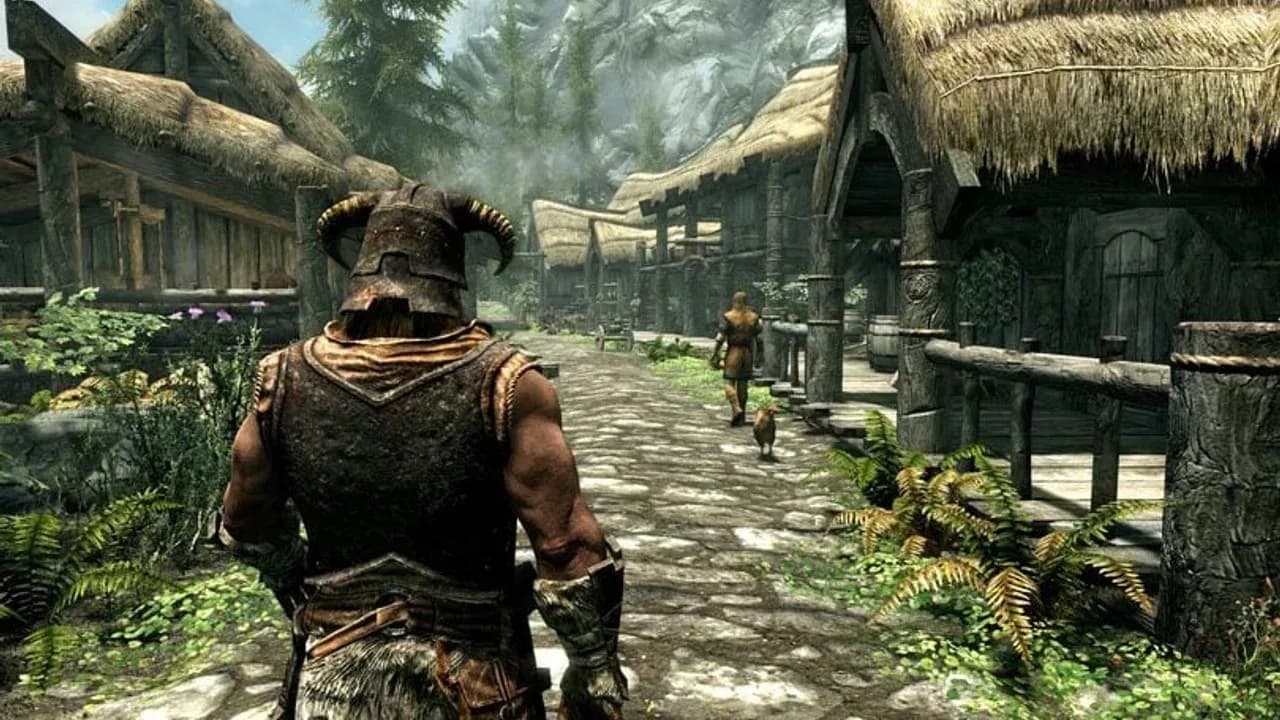
The Elder Scrolls V: Skyrim Identity: A Nordic Sandbox of Infinite Scale
The Elder Scrolls V: Skyrim doesn't ask you to save the world; it asks you to inhabit it. The game’s opening is a masterclass in establishing this philosophy. You are a nameless prisoner on a cart, bound for an executioner’s block in a sleepy town. The choppy narrative pacing and robotic animations of this sequence are a famous, almost charming, Bethesda hallmark. Yet, the moment a dragon descends in a whirlwind of fire and chaos, shattering the mundane political drama of your execution, the true promise of Skyrim is laid bare. This is not a story being told to you; it is a world being torn open for you to explore. The dragon doesn't just save your life—it obliterates the script, setting you loose into a frigid, breathtaking expanse where your destiny is whatever you choose to chase first.
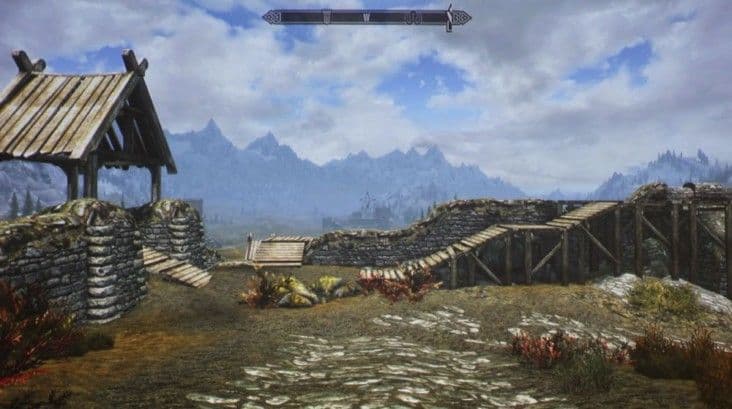
Skyrim's expansive and realistic world design offers a sense of wonder and awe.
What Bethesda crafted here is an atmospheric triumph, a coherent and unique frozen realm that feels like a character in itself. Skyrim’s Nordic identity is no mere aesthetic skin; it’s woven into the very fabric of the world. This isn't the generic fantasy of Cyrodiil or the alien strangeness of Morrowind. It’s a land of Viking-inspired longships, mead halls echoing with bard songs, and a culture that exalts battle and honor. The architecture shifts from the wooden palisades of Whiterun to the stone-hewn majesty of Markarth, each of the nine holds possessing a distinct visual and social identity. This consistency creates a believable, lived-in space where the howl of a blizzard on the Throat of the World feels as integral to the experience as the glow of a forge. The setting’s greatest success is how it makes you feel the cold and the history in equal measure, selling the fantasy before you’ve even drawn a sword.
The genius of Skyrim’s open world isn't just its staggering scale—it’s the illusion of limitlessness it creates through dense, meaningful content. You can see a distant mountain peak, walk to it, and almost invariably find a dungeon, a hidden shrine, or a Word Wall whispering draconic secrets.
This design fosters emergent storytelling on a scale rarely matched. The central plot—you are the Dragonborn, destined to confront the world-eating dragon Alduin—is a compelling, epic-scale frame. But it famously functions as just that: a frame. The true narrative of Skyrim is the one you write through sheer curiosity. You might set out to deliver a letter and end up leading a guild, uncovering a Daedric conspiracy, or buying a house and adopting a child. The game is an OCD adventurer’s playground, where a simple bounty to clear out bandits can cascade into a multi-hour dungeon delve, culminating in a battle against a Draugr Deathlord and the discovery of a legendary weapon. The freedom is absolute and rarely punitive; the world’s internal clock waits patiently while you chase butterflies, literally and metaphorically.
This sense of a living world is bolstered by remarkably deep world-building that reacts to your presence. Set 200 years after the Oblivion Crisis, Tamriel is in a state of fragile tension. The civil war between the Imperial Legion and Ulfric Stormcloak’s rebels isn’t just backdrop—it’s a schism you can join, ignore, or subtly influence through your actions. More impressively, your chosen race and growing stature have tangible effects. Play as a Khajiit or an Argonian and you’ll hear muttered prejudices in certain holds. Become the Arch-Mage of the College of Winterhold and NPCs will acknowledge your title with newfound respect. This reactive quality, while sometimes delivered through stilted dialogue, creates a powerful feedback loop. It makes your journey feel personal, transforming Skyrim from a mere playground into a place where your choices, however small, leave ripples in the snow.
Skyrim Gameplay Mechanics: Streamlining the Classic RPG Formula
The genius of The Elder Scrolls V: Skyrim’s character system isn't in what it gives you, but in what it takes away. It surgically removes the anxiety of pre-game commitment that plagued its predecessors, replacing a spreadsheet of attributes with a promise: you will become who you choose to be. This is a masterclass in accessible, organic progression that fundamentally changed the RPG landscape.
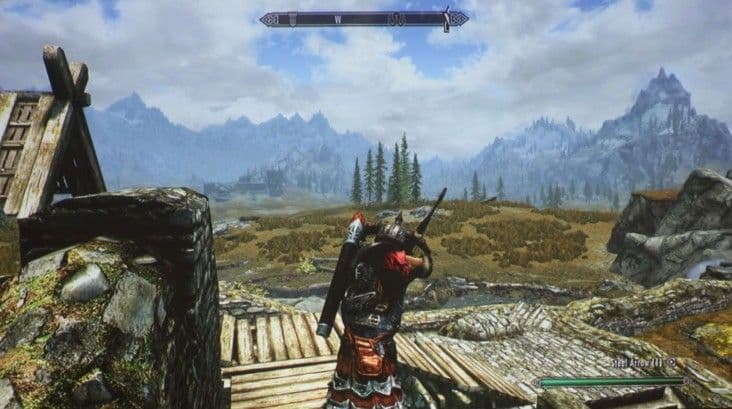
Skyrim's open-ended design allows for a streamlined RPG experience.
Gone are the days of locking yourself into a class during character creation, nervously assigning points to Endurance or Intelligence before you’ve even swung a sword. Skyrim’s revolution is its classless, use-based progression. Every action is practice. Swing a one-handed sword repeatedly, and your One-Handed skill inches upward. Cast enough flames to warm a fortress, and your Destruction magic climbs. This creates an incredibly intuitive and satisfying feedback loop where your playstyle naturally sculpts your character. The design intent is brilliantly clear: prioritize first-hand experience in the world over pre-game study in a menu. Want to pivot from a heavy-armored brute to a stealthy illusionist at level 30? Just start sneaking and casting. The game doesn’t punish experimentation; it rewards curiosity.
This philosophy extends to the game’s ten playable races. While each offers a unique starting bonus—the Orc’s Berserker Rage for devastating melee or the High Elf’s daily magicka regeneration—these are nudges, not shackles. They provide flavorful, tangible benefits without dictating your path. An Orc can become the realm’s most powerful mage; a High Elf can master the greatsword. This design reinforces the game’s core tenet of freedom, ensuring your racial choice feels like heritage, not a career-limiting decision.
The true engine of character power is the perk system, a constellation of 18 skill trees where every level-up grants a point to spend on transformative bonuses. This is where Skyrim’s progression earns its addictive quality.
Where leveling skills provides gradual improvement, perks deliver immediate, tangible leaps in capability. These aren’t mere stat bumps; they redefine how you interact with the game. The Archery tree’s Eagle Eye perk zooms your bow sight for precision shots. The One-Handed tree offers a chance to decapitate foes. The Lockpicking tree literally puts a sweet spot on the tumbler. Each perk point feels like a meaningful reward, a clear goal visible on the horizon that directly fuels the “just one more dungeon” compulsion. It’s a system that respects your time by making every hour of play visibly and mechanically impactful.
However, the interface for navigating this stellar map of power is where the elegance stumbles. The constellation menu, while visually striking, is often described as “graceless.” Perks are represented as stars at odd angles, making selection finicky. It’s easy to misclick and waste a precious point on a perk you didn’t want, a frustration compounded by the lack of a respec option. This is a clear case of aesthetic ambition slightly hampering functional clarity. While it doesn’t ruin the system, it adds an unnecessary layer of friction to what should be a moment of pure player agency.
Ultimately, Skyrim’s streamlined mechanics represent a monumental shift towards player-friendly RPG design. By removing legacy cruft like Acrobatics and Athletics, and dissolving rigid class structures, Bethesda lowered the barrier to entry without sacrificing depth. The depth simply migrated from character creation to lived experience. You don’t build a Dragonborn in a menu; you discover them through a hundred hours of play, one skill increase and one powerful perk at a time. It’s a system that trusts the player to find their own fun, and in doing so, creates a uniquely personal legend.
Combat and the Thu'um: How Skyrim Handles Steel and Shouts
The Elder Scrolls V: Skyrim’s combat is a system of immense potential, often caught between its own ambition and the technical limitations of its time. The promise of becoming a legendary warrior, a shadowy assassin, or a master of the arcane is fully realized—but the moment-to-moment feel of swinging a sword or loosing an arrow can, at its worst, feel like an afterthought. This is the game’s most persistent friction: the sheer joy of building a god-like character versus the occasionally clumsy act of playing as one.
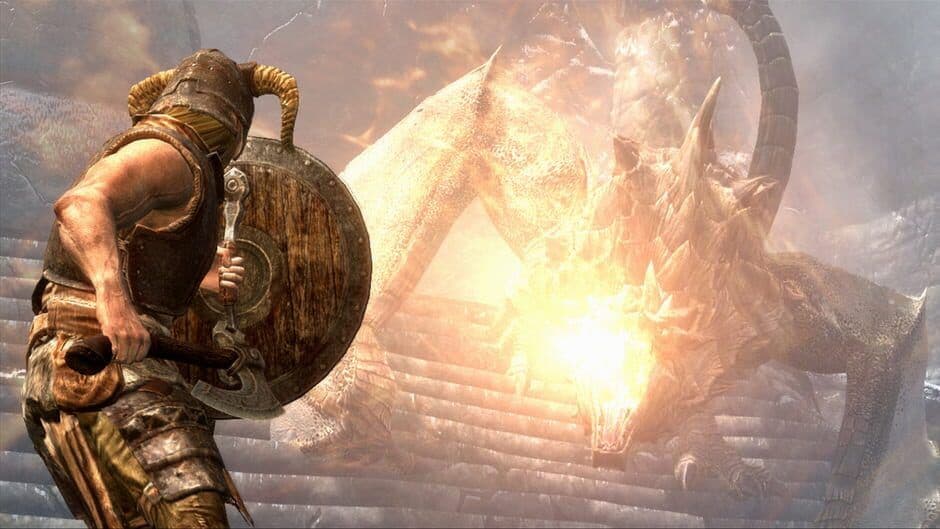
Official screenshot of Skyrim's immersive world.
Where Skyrim’s combat shines brightest is in its versatility and player agency. The dual-wielding system is a revelation, allowing for any combination of weapon, shield, or spell in each hand. This isn’t just an aesthetic choice; it fundamentally changes your tactical options and playstyle. You can block with a shield while casting a healing spell, dual-wield identical spells for a devastating, Street Fighter-style empowered blast, or mix a sword in your right hand with flames in your left for a brutal hybrid approach. This freedom is the cornerstone of the game’s celebrated replayability. Want to be a spellsword who freezes foes with one hand and shatters them with a mace in the other? The Elder Scrolls V: Skyrim not only allows it but encourages it through its organic skill progression. The pure caster build, often a tedious grind in earlier titles, becomes a power fantasy here, with visual and audio feedback that makes you feel every fireball and lightning bolt.
The true game-changer, however, is the Thu’um. The Shout system is Skyrim’s signature mechanic, a layer of draconic magic that beautifully ties progression to exploration. Finding the three Words of Power for a Shout like Unrelenting Force or Slow Time feels like uncovering lost lore, and spending a hard-earned dragon soul to unlock it provides a tangible, powerful reward. These abilities, on their own cooldown timers separate from magicka, offer strategic depth, allowing you to turn the tide of a tough fight or bypass obstacles creatively.
Yet, for all its systemic depth, the foundational melee combat can feel disappointingly weightless. The criticism that it sometimes feels like "slicing air" is not unfounded. Enemy reactions to hits can be inconsistent, especially during their own attack animations, robbing blows of a satisfying sense of impact. While the addition of occasional slow-motion kill cameras adds dramatic flair, they can’t fully compensate for the core feedback loop’s occasional hollowness. This is where the seams of Bethesda’s design philosophy show: they prioritized a vast, interactive world and flexible systems over the polished, tactile combat of a dedicated action game.
This dichotomy extends to the stealth and archery playstyles, which are perfectly viable but reveal the game’s aging AI. Archery is functional and benefits greatly from perks like Eagle Eye, but it lacks the precision of dedicated shooters, with hitboxes that can feel forgiving to a fault. Stealth, while improved with clearer detection cues (using light and environment for cover), is often undermined by enemy behavior that ranges from hyper-vigilant to bafflingly oblivious. You won’t find the sophisticated patrol patterns of a Splinter Cell here; you’ll find bandits who forget you exist after you put an arrow in their friend’s knee. For players seeking a deep, challenging stealth simulation, this can break immersion. For those simply enjoying the fantasy of being a sneak thief, it’s serviceable, if unpolished.
Ultimately, Skyrim’s combat is a testament to breadth over precision. It gives you an unparalleled toolbox to craft your perfect warrior, mage, or rogue, and the thrill of unlocking a new Shout or a game-changing perk is a powerful driver. But you must meet it halfway, filling in the gaps of physical feedback with your own imagination and embracing the jank as part of the charm. It’s a system that empowers fantastic stories—like shouting a dragon off a mountain peak or incinerating a troll with dual-casted fire—even if the individual sword swings connecting you to those stories don’t always feel perfect.
Dungeons and Dragons: Evaluating Skyrim's Primary Threats
The Elder Scrolls V: Skyrim’s world is defined by two primary threats: the ancient, claustrophobic darkness of its dungeons and the sudden, sky-rending violence of its dragons. One represents a curated, crafted challenge; the other, a dynamic, systemic one. The game’s success hinges on how these two pillars hold up under the weight of a hundred-hour playthrough, and the answer is a study in both masterful design and missed opportunities.
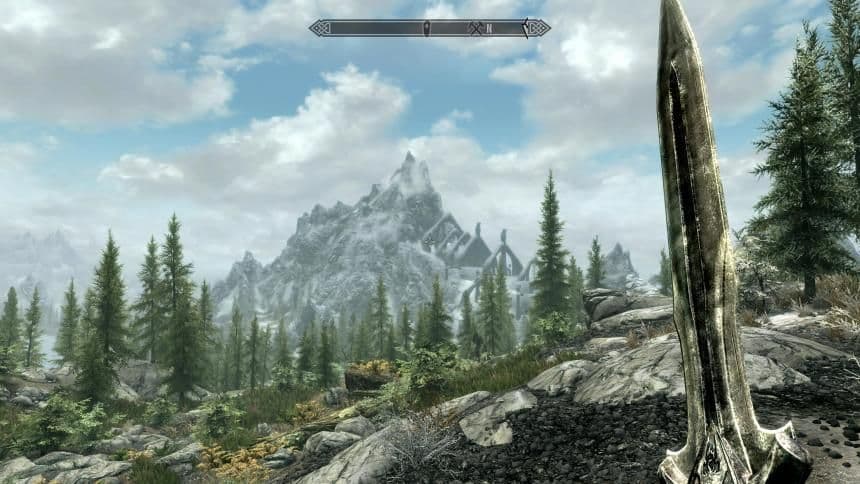
Visual improvements in the Anniversary Edition.
The most immediate and welcome evolution from its predecessor, Oblivion, is in dungeon design. Gone are the copy-pasted, oblivion-gate-esque caves and Ayleid ruins. In Skyrim, each tomb, fort, and Dwemer city feels handcrafted, with unique layouts, environmental puzzles, and self-contained stories told through journals, enemy placement, and architecture. You’ll navigate ice tunnels carved by a long-dead frost mage, navigate the clanking, steam-filled halls of a Dwemer ruin with its own mechanical guardians, and solve lever-based puzzles to unlock ancient Nord burial chambers. This variety isn’t just aesthetic; it fundamentally changes the rhythm of exploration. Where Oblivion’s dungeons felt like a choreographed backtrack, Skyrim’s often feature cleverly placed “easy exits”—a one-way door or a shortcut that dumps you back near the entrance after you’ve slain the boss. This small but brilliant quality-of-life feature respects the player’s time, turning a potential slog into a satisfying, self-contained adventure.
The dungeon design is Bethesda learning from its past mistakes, transforming what was once a repetitive weakness into a consistent strength. You enter a new cave not with a sigh, but with genuine curiosity about what story its stones will tell.
However, the other great threat—the dragons—presents a more complex legacy. Your first dragon encounter at the Western Watchtower is a genuine, jaw-dropping moment. The scale is immense, the music swells, and the beast’s unpredictable landings and breath attacks feel genuinely dangerous. These creatures are the game’s brilliant living set-pieces, capable of interrupting a peaceful stroll or a tense bandit camp skirmish, creating thrilling, unscripted chaos where all combatants temporarily unite against the winged menace. The reward loop is perfectly tied to progression: absorbing a dragon’s soul to unlock a new Shout power feels profoundly meaningful. Yet, this magic wears thin. After a dozen encounters, the dragon’s AI reveals its patterns: a predictable cycle of strafing runs, breath attacks, and occasionally clumsy landings where they get stuck on geometry. The thrill of the spectacle remains, but the tactical depth does not scale with your growing power, making later encounters feel more like a chore than a climax.
This speaks to a broader, clever system working in the background: Skyrim’s Radiant Storytelling. This engine dynamically generates quests—"retrieve this unique item from a random dungeon," "kill this randomly selected bandit leader"—to ensure the world never feels static. It’s the reason you always have a compass marker pointing you toward something. In theory, it’s an ingenious solution to the emptiness of a massive world. In practice, it often highlights the repetition the handcrafted dungeons so carefully avoid. You might find yourself clearing the same fort for the third time because the Radiant system has populated it with a new "unique" target. The system ensures quantity, but at the cost of occasionally undermining the quality of the curated content. It keeps you busy, but it can also make the once-unique feel generic.
Ultimately, these primary threats define Skyrim’s rhythm: the deliberate, exploratory tension of the dungeons versus the chaotic, systemic spectacle of the dragons. One is a polished refinement of past formulas; the other is an ambitious new system that doesn’t quite evolve alongside the player. Together, they create a world that feels alive and dangerous, even when you’ve started to see the seams in the dragon’s wings or recognize a dungeon’s architectural blueprint. The wonder isn’t that every encounter is perfect, but that there are so many encounters to have at all.
Politics and Factions: The Civil War in The Elder Scrolls V
The Elder Scrolls V: Skyrim’s narrative ambition isn’t confined to its dragon-slaying prophecy; it’s embedded in the very soil of its war-torn province. This is a world where the central conflict isn’t just good versus evil, but a messy, morally grey civil war that forces you to choose between flawed ideologies. The game earns its reputation for depth not through a single, flawless story, but by offering a tapestry of factional narratives where your allegiance matters—even if the characters delivering those stories sometimes struggle to feel real.
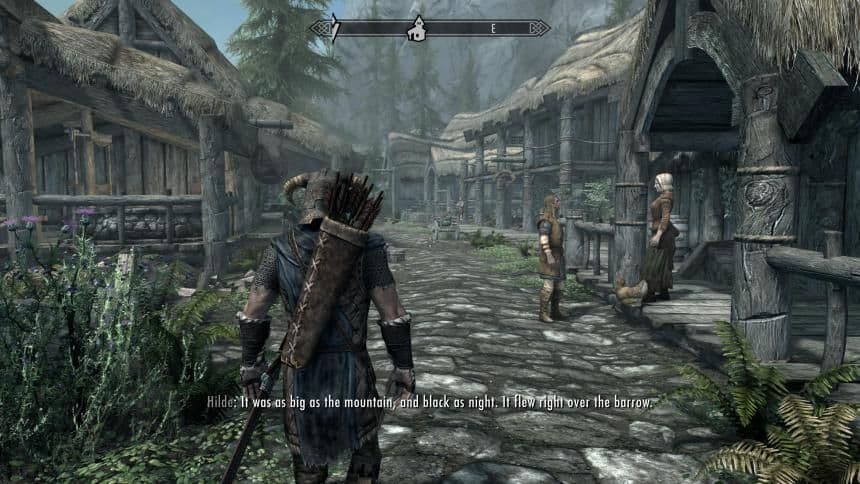
Local citizens provide unique perspectives on the conflict between Stormcloaks and Imperials.
At the heart of this is the Civil War, a conflict between the Imperial Legion and Ulfric Stormcloak’s rebels that serves as the primary political backdrop. The genius here is the deliberate moral ambiguity. The Imperials represent a pragmatic, if oppressive, order—enforcing a ban on the worship of Talos to maintain a fragile peace with the Aldmeri Dominion. The Stormcloaks fight for Nord independence and religious freedom, yet their ranks are rife with xenophobia. Choosing a side isn’t about picking the heroes; it’s about deciding which compromise you can live with. This gritty, politically charged realism adds a crucial layer of social depth that elevates Skyrim beyond simple fantasy, forcing players to engage with the consequences of their allegiance on the world and its people.
Where Skyrim’s writing truly excels, however, is in its dedicated faction questlines. The Thieves Guild and Dark Brotherhood story arcs are frequently cited as surpassing the main quest in narrative quality, offering genuine twists, compelling characters, and a sense of progression that the broader civil war sometimes lacks.
The Thieves Guild’s journey from a disgraced gang to the re-established rulers of Riften’s underworld, culminating in the heist of the Skeleton Key, is a masterclass in making you feel your growing influence. Similarly, the Dark Brotherhood’s tale of betrayal and rebirth, complete with the unforgettable character of Cicero, delivers a macabre, self-contained story with higher stakes and more memorable payoffs than many of the game’s dragon hunts. These narratives work because they are focused, allowing for creative mission design—like the party-crashing “Bound Until Death” or the multi-stage planning of the Guild’s final heist—that the more sprawling civil war missions can’t always match.
This brings us to the main quest’s own scope. Centered on your destiny as the Dragonborn to confront the world-eating dragon Alduin, its length is famously elastic—anywhere from 15 to 65 hours depending on your distraction threshold. The plot itself is a classic, epic-scale fantasy with genuine high points, particularly the journey to Sovngarde. However, it often functions best as a compelling frame rather than the core experience, a fact the game tacitly acknowledges by allowing you to continue playing indefinitely after the credits. The true narrative weight of The Elder Scrolls V: Skyrim is distributed across its factions and side stories, making the world feel alive with multiple, simultaneous histories.
A persistent weakness that undermines this otherwise rich social tapestry is the quality of NPC interaction. While the writing of the faction quests is strong, the delivery can be jarring. Stilted, repetitive animations during conversations, coupled with a voice cast that—despite notable talent like Max von Sydow—often recycles the same handful of actors across dozens of characters, can shatter immersion. Hearing the same voice emanate from a Jarl, a bandit, and a shopkeeper reminds you you’re in a constructed world, not a living one. This is where the game’s staggering scale visibly strains against its production limits, creating a disconnect between the compelling social dynamics written into the lore and the occasionally robotic characters who enact them.
Ultimately, Skyrim’s narrative success is a triumph of systemic world-building over polished storytelling. The social depth—the racial tensions, the religious persecution, the political schism—provides a believable, gritty foundation. Your choices within the civil war and the factions have tangible, world-altering consequences, from changing the Jarls in major cities to determining which banners fly over forts. This reactive quality makes your journey feel uniquely impactful, even if the individuals you speak to along the way sometimes feel like puppets reciting lines. The game asks you to invest in the idea of the conflict, the faction, the cause, and rewards that investment with power, prestige, and a world that reshapes itself around your legend. It’s a messy, imperfect, but deeply engaging approach that has cemented these stories in the minds of players for over a decade.
Technical Performance and the Anniversary Edition Legacy
The Elder Scrolls V: Skyrim’s legacy is inseparable from its technical state—a sprawling, magnificent world built on a foundation of famously unstable code. This is the uncomfortable truth that has followed the game across a decade and countless re-releases: its most breathtaking vistas and emergent stories are often framed by glitches, performance woes, and AI that can veer from stoic companion to catastrophic liability. The Anniversary Edition, released a full ten years later, attempts to sand down these rough edges for a modern audience, but the core experience remains a testament to Bethesda’s "ambition over polish" philosophy.
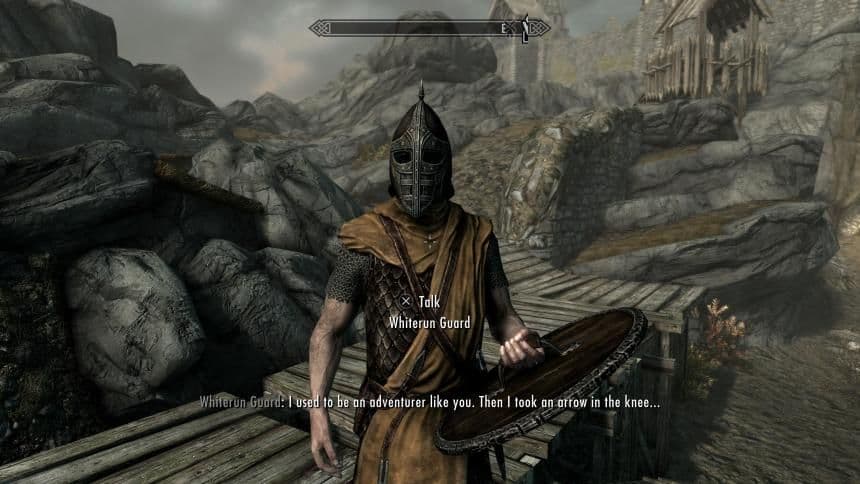
Technical performance on consoles remains a key focus of the Anniversary Edition.
The technical glitches are legendary, a core part of Skyrim’s cultural footprint. They range from the humorous—mammoths spawning in mid-air, horses phasing through mountainsides, or a giant’s club launching you into low orbit—to the genuinely frustrating. Quest-breaking bugs were a documented issue at launch, with NPCs failing to spawn or objectives refusing to update, sometimes requiring a reload of an earlier save. On original hardware, the game was prone to "hard freezes," especially on the PlayStation 3 version, and frequent, lengthy load times when entering buildings or cities (often cited as 5-10 seconds, but feeling longer). These weren’t minor inconveniences; they were persistent distractions that punctured the immersion the game worked so hard to build. The community’s embrace of these flaws as charming quirks speaks more to the strength of the underlying experience than to the acceptability of the bugs themselves.
Platform choice has always been a significant factor in the Skyrim experience. The PC version was, and remains, the definitive way to play. Beyond the obvious benefits of superior draw distance, higher framerates, and dramatically shortened load times, it offers access to the true savior of Skyrim’s longevity: the modding community. The unofficial patches that fix countless bugs, the visual overhauls, and the gameplay expansions available through the Steam Workshop are a core part of the game’s legacy. Console versions, particularly the original Xbox 360 and PS3 releases, lacked this safety net and suffered accordingly with more pronounced performance dips and the aforementioned load times. The Anniversary Edition’s integration of Creation Club content on consoles is a pale imitation of this ecosystem, offering curated, paid mods rather than the open-ended creativity of the PC scene.
The Anniversary Edition’s most meaningful improvements are technical, not content-based. On PS5 and Xbox Series X, the game achieves a vastly improved, stable framerate and near-nonexistent load times, which alone transforms the pacing of exploration and dungeon delving.
Visually, reworked textures and lighting effects make the environments—the mountains, forests, and aurora-lit skies—look genuinely gorgeous by modern standards. However, this visual polish only highlights the elements that haven’t aged: the character models and animations remain stiff and dated, creating a jarring contrast between the breathtaking world and the robotic people inhabiting it. The package doesn’t meaningfully utilize next-gen controller features, feeling more like a proficient port than a true remaster. It smooths over the original’s most glaring performance issues but leaves the fundamental jank of the engine largely intact.
This jank is epitomized by the friendly AI. Your housecarl Lydia and other followers are less companions and more often mobile storage units with a talent for catastrophe. Their pathfinding is notoriously poor, leading them to block narrow dungeon doorways, stumble into pressure-plate traps you were carefully avoiding, or get permanently stuck on geometry. In combat, they can be more of a hindrance than a help, accidentally absorbing your arrows or spell blasts and breaking your stealth. They exist as tools, not characters, and their clumsy implementation is a persistent, low-grade annoyance that underscores the game’s systemic weaknesses.
One area where time has been nothing but kind is the audio design. Jeremy Soule’s soundtrack is nothing short of iconic, a "Nordicly heroic" orchestral score that perfectly captures the game’s tone of frozen grandeur and epic adventure. Tracks like "The Dragonborn Comes" and the exploration themes have earned a permanent place on players’ playlists. Furthermore, the ambient sound design is masterful—the howl of a blizzard, the crackle of a campfire, the distant roar of a dragon, and the satisfying thunk of an arrow finding its mark all work in concert to build an atmosphere so thick you can feel the cold. In a game where visual glitches can break immersion, the consistently excellent audio is the anchor that continually pulls you back into the world of Skyrim.
Ultimately, The Elder Scrolls V: Skyrim’s technical legacy is a paradox. It is a game that is both famously broken and utterly timeless. The bugs and AI shortcomings are real, measurable flaws that impact the experience. Yet, the sheer strength of its world, freedom, and atmosphere—bolstered by a phenomenal soundtrack—has allowed generations of players to look past them, or even embrace them as part of the charm. The Anniversary Edition applies a modern veneer of performance and some visual polish, making it the most stable and accessible version for console players, but it doesn’t rewrite the core code. To play Skyrim is to accept this trade-off: a universe of unparalleled scope and wonder, delivered with a signature Bethesda shrug.
Final Verdict: Is The Elder Scrolls V: Skyrim Still the Gold Standard?
The uncomfortable truth about The Elder Scrolls V: Skyrim is that its most profound magic lies not in what it does perfectly, but in what it makes you forgive. For over a decade, players have collectively overlooked its glaring technical sins and mechanical clunkiness, not out of ignorance, but because the sheer scale of the world and the freedom it offers are simply unmatched. This is a game that asks for a specific kind of patience—a willingness to trade the polished, handcrafted moment of a The Witcher 3 for the unscripted, emergent story of shouting a goat off a mountain. Its value proposition is staggering: a main quest that can be rushed in 15 hours or savored for 65, surrounded by a web of faction storylines, radiant quests, and pure exploration that can easily consume 200 hours for a completionist. You don’t just play Skyrim; you move into it, and the rent is paid in dragon souls and septims.
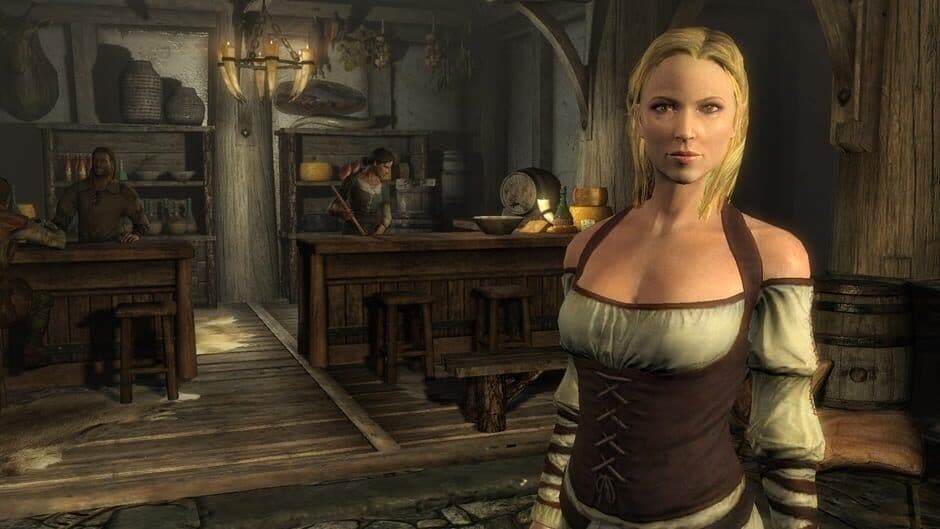
The vastness of the world is a key factor in its final verdict.
This monumental scope defines its target audience. Skyrim is essential for RPG fans who prize discovery, systemic freedom, and world-building over cinematic polish and tight, responsive combat. It’s for the player who derives more satisfaction from finding a unique weapon in a forgotten tomb than from using it in a flawlessly animated duel. The game’s genius is its ability to make you the author of your own legend through its flexible character growth. You aren’t locked into a class; you become a master smith because you spent fifty hours at the forge, or a peerless illusionist because you chose to pacify bandits instead of fighting them. This organic progression, powered by the addictive perk system, creates a feedback loop of tangible empowerment that few games have ever matched. The joy isn't in the swing of the sword, but in seeing the Decapitation perk finally unlock after your hundredth swing.
When stacked against its peers, Skyrim’s flaws are glaring, but its strengths are monumental. It lacks the narrative cohesion of Mass Effect, the combat finesse of Dark Souls, or the visual fidelity of its contemporaries. Yet, it offers something those games do not: a truly boundless sense of place. It excels in sheer enormity and lived-in world-building.
That world-building is anchored by a masterfully crafted atmosphere that remains its most timeless achievement. Jeremy Soule’s score is a character in itself, shifting from haunting exploration themes to thunderous combat arrangements. The sound design—the crunch of snow, the distant roar of a dragon, the ambient music of a bustling city—works in concert with the stark, beautiful visuals to create a sense of immersion so potent it can make you feel the cold. This atmosphere is the glue that holds the janky parts together, transforming a buggy physics glitch into a memorable anecdote and a repetitive dragon fight into a dramatic set piece against a backdrop of aurora-lit peaks.
The pros and cons of Skyrim are two sides of the same, slightly cracked coin. Its unparalleled sense of discovery is facilitated by a world so dense with secrets that you can play for a hundred hours and still stumble upon a new cave, a new quest, a new vista. Its flexible character growth empowers endless replayability with wildly different builds. Yet, this grand vision is perpetually undermined by frequent technical bugs—from mammoths falling from the sky to quests breaking—and foundational systems like melee combat that feel weightless and unrefined. The social tapestry is woven with repetitive NPC dialogue delivered by a recycled voice cast, reminding you that this living world is, in fact, a magnificent simulation running on duct tape and ambition.
So, is The Elder Scrolls V: Skyrim still the gold standard? For pure, unfettered open-world role-playing, the answer is a resounding yes. It is a landmark achievement not because it executed every idea flawlessly, but because it dared to execute so many of them on such a breathtaking scale. The bugs are real, the combat is dated, and the NPCs are robotic. But the feeling of cresting a ridge at dawn, your destination forgotten as you spot a mysterious ruin in the distance, is as potent today as it was in 2011. It earns its place not through perfection, but through unparalleled ambition and soul.
Final Score: 9.5/10
Pros:
- An unparalleled, densely packed world that rewards curiosity for hundreds of hours.
- A flexible, organic character progression system that empowers player agency and replayability.
- A masterfully crafted atmosphere, driven by an iconic soundtrack and immersive sound design.
- Faction questlines (Thieves Guild, Dark Brotherhood) that often surpass the main narrative in quality.
Cons:
- Persistent technical bugs and glitches that range from humorous to game-breaking.
- Foundational melee combat that lacks weight and satisfying feedback.
- Repetitive NPC interactions and a limited voice cast that can break immersion.
- Dragon encounters and Radiant quests that become predictable over time.