World of Warcraft Core Design: The MMO That Made Progress Feel Playable
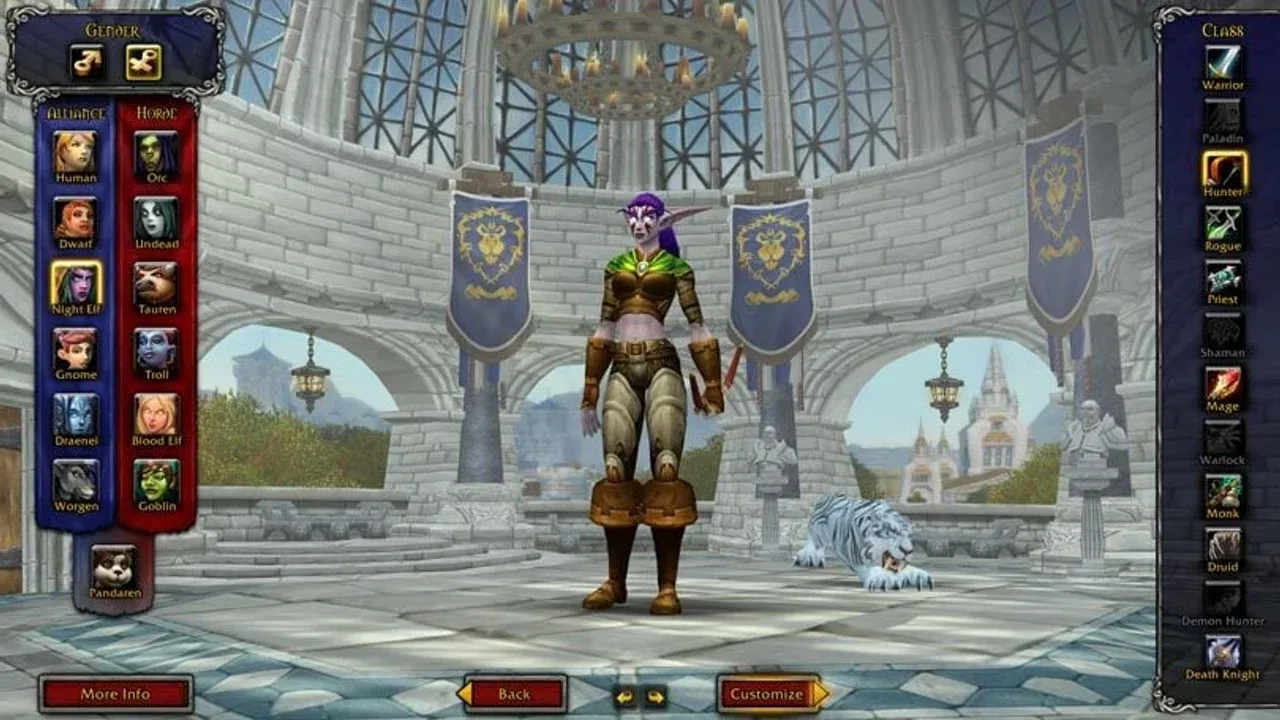
World of Warcraft did not invent the MMORPG, but it made the genre feel playable. When Blizzard launched it on November 23, 2004, the formula was familiar—character levels, loot, quests, professions, and faction conflict—but the friction had been stripped from nearly every minute of the experience. The initial game offered eight races, nine classes, and a level cap of 60, yet its real innovation was not the size of that framework. It was the realization that an MMO could ask for years of commitment without wasting the player’s next five minutes.
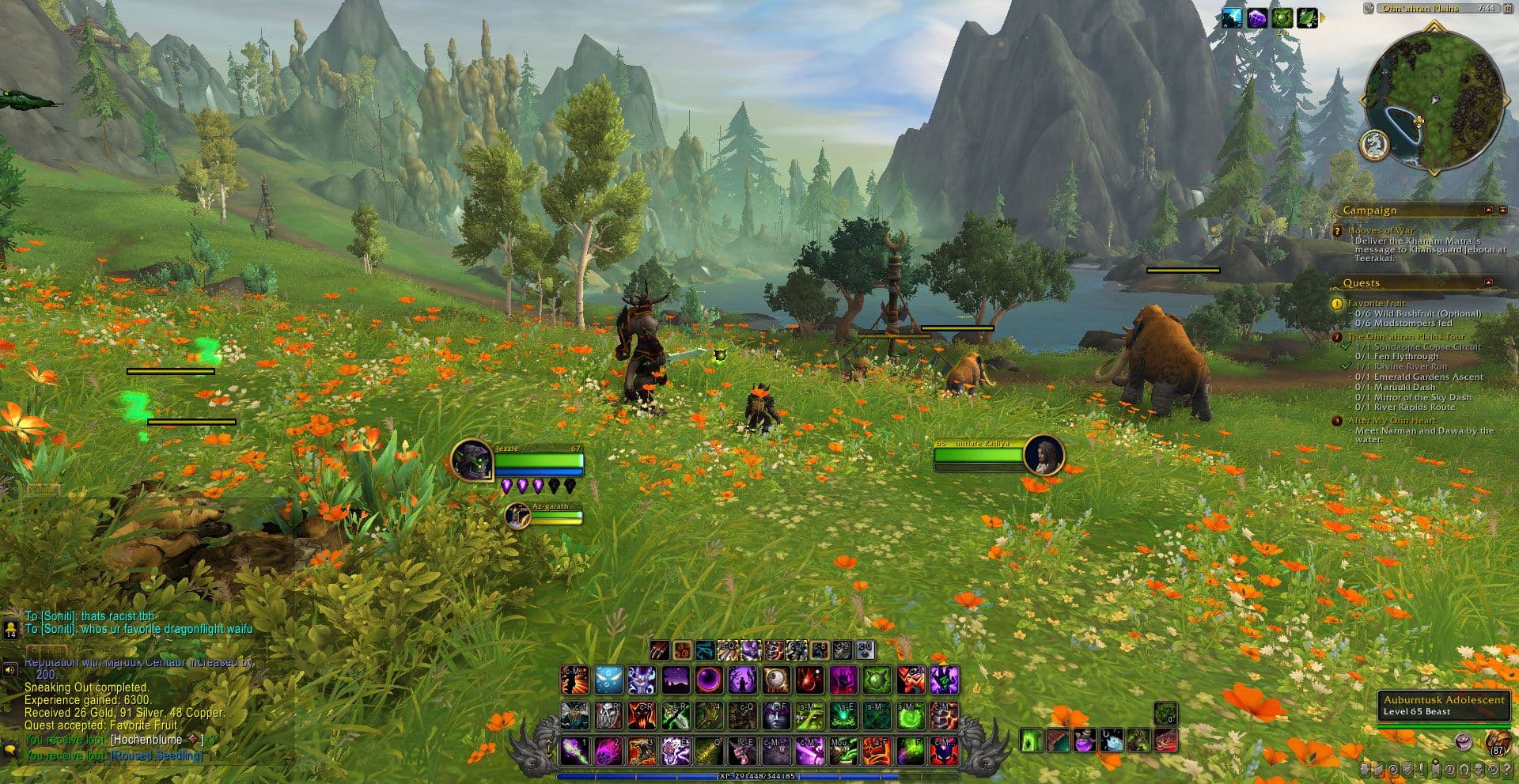
Vibrant environments encouraged exploration in the early days of Azeroth.
Progress Without the Waiting
Older MMORPGs such as EverQuest and Dark Age of Camelot often treated downtime as part of the genre’s identity: resources ran out, enemies took too long to respawn, and death could erase meaningful progress. World of Warcraft rejects that rhythm. Its dynamic mob respawns adjust to player density, while healing spells, food, and bandages get characters back into action quickly; even death sends the player back as a ghost with only a limited durability penalty rather than lost experience, items, or currency. That matters because the game’s core loop remains active instead of collapsing into maintenance. You finish one fight, recover almost immediately, and have a clear reason to take on the next.
Transportation follows the same philosophy. A hearthstone provides a return route to a bound city, while boats, zeppelins, flight paths, and—later in progression—class utilities such as Mage teleports and Warlock summons prevent travel from becoming pure administrative labor. The game still asks players to cross large distances, but it usually gives that journey a purpose: reach a quest hub, join a group, or pursue a new zone rather than simply stand around waiting for the world to reset. This is refinement, not reinvention, yet it is the kind of refinement that changes a genre’s audience.
World of Warcraft’s greatest early achievement was understanding that “massive” should describe the world, not the amount of time players spend recovering from it.
Accessibility With Depth Behind It
World of Warcraft also understood that complexity should emerge from play rather than block entry. Its interface is readable, controls are intuitive, and tooltips explain abilities without forcing newcomers through a separate tutorial gauntlet. Yellow exclamation marks identify available quests, question marks track turn-ins, and color-coded difficulty—gray and green for easy objectives, yellow for manageable ones, orange for tough encounters, and red for quests that are nearly impossible alone—gives players immediate context. Those signals do more than make the game welcoming: they teach players how to judge risk, prioritize objectives, and recognize when cooperation is the sensible answer.
The design never confuses accessibility with shallowness. A new player can understand where to go and what to do, but the game still leaves room for talent choices, professions, racial traits, equipment decisions, and group roles to complicate that basic structure. The original interface’s clarity is especially important because World of Warcraft presents an enormous number of systems without burying the player under opaque menus. That balance is why the game could welcome someone unfamiliar with MMOs while still giving experienced players meaningful ways to plan a character.
Every Session Counts
The progression loop is equally considerate of time. Characters receive frequent equipment and ability upgrades, and the rested experience system grants double experience from monster kills after a player has spent time logged out. A player who can only return for short sessions is not simply falling further behind someone who plays every night; the system actively helps them catch up. Quests provide experience, money, and concrete rewards, while even a brief play period can end with a completed objective, a new ability, or progress toward a larger chain.
That flexibility was unusual for a genre built around marathon sessions. World of Warcraft can support a 15-minute visit or several hours of exploration because its activities are broken into readable pieces rather than one continuous obligation. The design intent is clear: make progress feel worthwhile at almost any pace. It succeeds because the game constantly confirms that the player’s time mattered, whether through a level, an item, a profession increase, or a quest completed before logging off.
The uncomfortable truth is that the same structure can become a trap. World of Warcraft’s rewards—especially loot and gear earned through repeated activities—create a steady stream of small incentives, but the world has no definitive conclusion waiting at the end. There is always another upgrade, another quest chain, another character to level, or another activity promising a better result. That endlessness is exhilarating when the player chooses it, yet exhausting when the reward loop starts to feel like a schedule rather than an adventure. The game’s ability to make progress frictionless is precisely what can make logging out feel like abandoning progress.
World of Warcraft became genre-defining by polishing familiar MMORPG conventions until their strengths were impossible to ignore and their worst habits were easier to overlook. It did not replace the traditional MMO structure; it made that structure accessible, responsive, and rewarding enough to reach millions of players who might never have tolerated the older grind. That remains the foundation of the game’s appeal—and the reason its endless design still demands a player’s self-control.
World of Warcraft Combat and Classes: Flexible Solo Play With Uneven Roles
World of Warcraft’s combat succeeds because it refuses to make an MMO fight feel like a waiting room. Enemies flee, call for help, coordinate attacks, and use special abilities, while players can chain class skills together and return to the next encounter almost immediately. That responsiveness gives even routine battles a pulse: a fleeing enemy can pull another group, a spellcaster demands an interrupt, and a careless pull can turn a simple objective into a tactical retreat. This is where the game earns its reputation—not by reinventing real-time combat, but by making every familiar MMO action feel immediate and consequential.
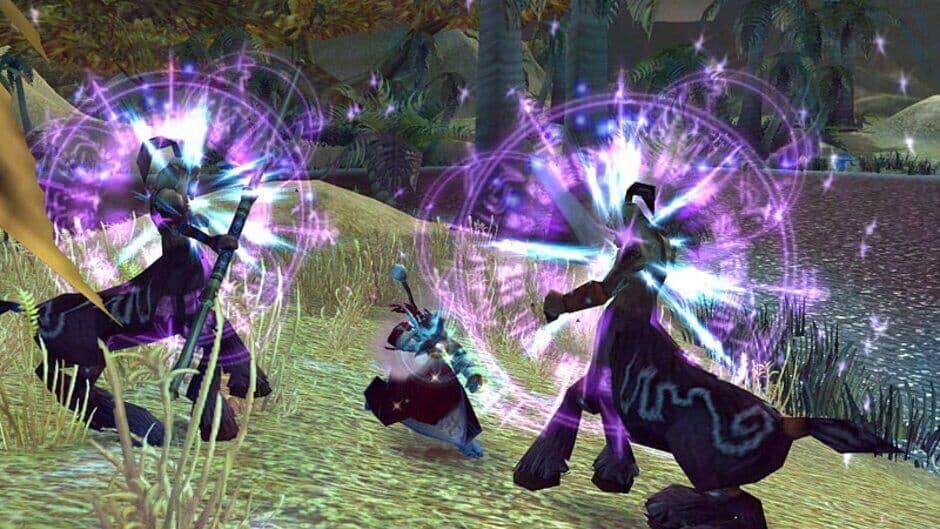
Moment-to-moment combat relies on a mix of ability rotations and positioning.
Classes With Room to Play
The class roster gives that combat loop its necessary variety. Warriors commit to weapon work and defensive positioning; Rogues rely on stealth and opportunistic attacks; Paladins combine protection, healing, buffs, and damage; Mages control space with spells while conjuring food and water; Priests and Shamans bring distinct healing and support identities; Druids shift between caster, cat, and bear forms; Hunters and Warlocks use pets to extend their reach. These are not merely cosmetic differences: a Warlock’s Succubus can distract and damage enemies but cannot reliably tank, while a Paladin’s auras and healing make the class valuable to a group even when its personal damage is not the priority. Most importantly, nearly every class remains capable of solo play, so choosing a support-oriented identity does not mean surrendering the leveling experience to other players.
Character progression reinforces that sense of identity at the right moment. Signature abilities begin arriving around level 10, talents introduce three branching directions for long-term specialization, and regular equipment and ability upgrades make early leveling feel like a steady expansion of possibilities rather than a long tutorial. A Druid choosing Balance, Feral Combat, or Restoration is not just selecting statistical bonuses; those paths point toward storm-casting, shapeshifting melee, or healing. The talent system is comparatively incremental, but that is part of its strength: each point gives a developing character a direction without demanding that a newcomer understand an entire endgame build on the first night. World of Warcraft understands that progression feels best when a player can see the next tool arriving before the current one has gone stale.
The best classes in World of Warcraft do not simply fill a combat role; they change what the player notices—aggro, positioning, mana, crowd control, stealth, or the health bar of everyone nearby.
That flexibility extends to the boundary between solo and group play. Most ordinary quests can be completed alone, and the game’s readable difficulty colors make it clear when an objective is moving beyond a character’s comfortable limits. Elite quests, dungeons, and raids then provide strong reasons to cooperate through tougher enemies, specialized roles, and encounters built around group coordination, but ordinary progression does not require a permanent party. This is a crucial distinction from older MMOs that could make grouping feel like a toll gate: in World of Warcraft, a lone player can maintain momentum, while a group can turn a dangerous quest into a social event rather than a mandatory chore. The result is a rare MMO structure that supports both the player who has thirty minutes for a solo session and the guild that wants a coordinated challenge.
Where the Class System Strains
The design is flexible, but it is not evenly balanced. Historical class reports identify Rogues as struggling to find groups, a problem that exposes the difference between being enjoyable to play and being wanted by a party. Warriors face a different set of pressures: Rage generation depends heavily on landing hits, the alternative consumes health, and effective spellcaster encounters may require a shield and one-handed weapon that reduce damage output. Their gear dependence can also push them toward professions such as Mining simply to afford the equipment needed to perform well. These problems have a direct impact on player experience: a class can feel excellent in a quiet solo fight yet become an awkward recruitment choice once a group starts evaluating who can tank, heal, or deliver damage most efficiently.
The tank-healer-damage framework is therefore both World of Warcraft’s greatest social strength and one of its recurring limitations. Paladins fit several group needs cleanly, while Hunters and Warlocks bring reliable ranged damage and pets that help them manage solo threats; classes with less obvious utility can be left negotiating for a place. That does not make the roster a failure—racial traits, talent choices, and class-specific quests still give characters meaningful individuality—but it does mean the game’s promise of “play what you want” has always carried an asterisk in serious group content. Flexibility is real at the character-creation screen; balance determines how real it remains when the group forms.
The War Within’s Hero Talents reveal that tension in a newer form. Each specialization receives two class-fantasy sub-specializations, with 10 nodes unlocked by level 80, offering labels such as Dark Ranger Hunter or Rider of the Apocalypse Death Knight. The idea is sound: a Hero Talent path should make a familiar class feel like a more specific fantasy, and names such as Herald of the Sun, Soul Harvester, Templar, and Diabolist promise exactly that. In execution, many of the nodes are passive and have limited influence on moment-to-moment play, while balance differences can make one path plainly stronger than another. A system intended to deepen identity consequently risks becoming another layer of optimization.
That is where the fantasy starts losing ground to performance. A player may prefer the theme of Herald of the Sun or Soul Harvester, but endgame pressure can push them toward Templar or Diabolist if those alternatives perform better. The problem is not that competitive players optimize—that is inevitable—but that the game presents these choices as expressions of character while quietly ranking them by effectiveness. Hero Talents add welcome vocabulary to class design, yet until their choices meaningfully alter playstyle and reach more even balance, they remain closer to themed passive packages than genuine sub-specializations.
World of Warcraft still has the strongest combat-and-class foundation in the MMO field because it makes fighting fast, gives nearly every class a viable solo identity, and supplies group content with recognizable roles. Its weakness is the familiar cost of that structure: the more seriously players pursue dungeons, raids, or endgame optimization, the more the roster narrows around the classes and builds that serve the party most efficiently. The core loop remains excellent, but the game’s best class fantasies are not always the ones its hardest content rewards.
World of Warcraft Questing and Progression: Strong Structure, Familiar Repetition
World of Warcraft replaces the old MMO question—“How long must I grind before the game lets me move on?”—with a better one: “Which objective do I want to pursue next?” That distinction defines its leveling experience. With more than 1,000 quests, clearly marked objectives, and zones arranged around escalating difficulty, quest-led progression gives Azeroth a reliable rhythm from the first character onward. The structure is so effective that ordinary monster grinding feels like a detour rather than the intended route. However, the system’s greatest weakness is that its generous flow occasionally collapses into the very repetition World of Warcraft was designed to eliminate.
A Leveling Path With a Purpose
The quest system succeeds because it turns a huge world into a sequence of manageable decisions. Yellow exclamation marks identify available quests, question marks signal turn-ins, and the quest journal records objectives and rewards without forcing players to memorize every instruction. Zones also communicate danger through color: gray and green quests are easy, yellow quests are manageable, orange quests are difficult, and red quests are generally unsuitable for solo play. These signals do more than help newcomers; they create a natural leveling flow, guiding players from one hub to the next while quietly teaching when to push forward and when to seek help.
The variety is more limited than the volume suggests. World of Warcraft’s fundamental quest types remain kill, collection, and delivery objectives, but the surrounding rewards give them enough purpose to sustain the journey: experience, money, equipment, and access to longer quest chains. Multi-part storylines can lead players into enemy territory or instanced dungeons, making a simple request feel like the beginning of an adventure rather than a checklist item. The design is not revolutionary, but it is exceptionally well calibrated. By ensuring that nearly every battle contributes to a quest, a level, or a useful reward, the game makes routine activity feel like forward motion.
World of Warcraft does not abolish the grind; it disguises enough of it with context, rewards, and company that the player often forgets they are grinding.
That disguise is most convincing when other players are involved. Group members receive credit for kills, so a party does not have to compete internally over every creature or repeat the same objective separately. The quest-sharing system further lowers the barrier to cooperation: friends can bring one another into compatible objectives instead of spending half the session comparing quest logs and prerequisites. This is a small but consequential decision, because it turns grouping from a logistical nuisance into an immediate social opportunity. A kill quest that would be dull alone becomes a shared outing when everyone receives progress from the same encounter.
Where the Structure Starts to Repeat
Collection quests expose the seams. A task such as gathering wolf ears can send players through repeated fights for drops that arrive too slowly, transforming a clear objective into a test of patience rather than skill. The problem is not simply that the item takes time to appear; it is that each unsuccessful kill feels indistinguishable from the last, with no tactical adjustment available to improve the outcome. After enough empty-handed attempts, the player stops feeling like an adventurer pursuing a goal and starts feeling deliberately strung along by the reward table. Fair warning: these quests are the moments when World of Warcraft most resembles the grind it spent so much effort smoothing over.
Instancing solves a different MMO problem with impressive clarity. In contested zones, private copies of quest areas can give a group its own enemies and objectives, reducing the waiting and competition that would otherwise arise when dozens of players chase the same target. That is especially valuable for elite or multi-stage adventures, where progress depends on completing a sequence rather than simply tagging one creature first. Yet the solution introduces a time-management problem of its own. Some instanced quests can take hours to complete, which makes them satisfying commitments for an organized group but awkward for a player who has only a short evening available. World of Warcraft understands how to prevent other players from blocking your progress; it is less consistent at ensuring the content fits neatly into your schedule.
Death, by contrast, is handled with rare restraint. A defeated character returns as a ghost—or a wisp for Night Elves—and can make a quick journey back to the corpse, while resurrection at a graveyard provides a faster alternative when recovering the body is inconvenient. The penalty is measurable but limited: equipped items lose 10% durability, while players do not lose experience, money, or carried items. That makes a dangerous pull consequential without recreating the older MMO nightmare of losing hours of advancement, valuable gear, or accumulated currency. The system encourages experimentation because failure costs repair money and time, not the character’s future.
The Reward Chase
Gear progression gives the leveling process its strongest tangible motivation. Quest rewards regularly replace outdated equipment, valuable drops can change the direction of a build, professions can produce useful items, and the auction house lets players buy upgrades or turn unwanted loot into money through the in-game mail system. These sources overlap productively: a player might earn a weapon from a class quest, craft armor through a profession, or use auction proceeds to fill a gap in their equipment. The result is a steady upgrade chase that makes a new item feel meaningful even when it is only one step along a much longer progression path.
Loot distribution becomes less elegant once a group is involved. World of Warcraft includes multiple loot modes, including Need Before Greed, intended to give the item to players who genuinely require it before those who merely want to sell or collect it. In practice, greed rolls can still circumvent the spirit of that system, leaving a player watching someone claim an unsuitable item after contributing to the encounter. The issue is not catastrophic—the game remains playable, and the auction house can soften some mistakes—but it damages the social contract that group loot is supposed to establish. A better filtering system for party leaders would make the rules clearer and reduce the suspicion that every valuable drop might become an argument.
This is the central contradiction in World of Warcraft’s leveling design. Its quests provide structure, its shared credit makes cooperation painless, its instances prevent competition, its death system respects the player’s time, and its gear rewards keep each session pointed toward a visible improvement. But low drop rates, lengthy scripted objectives, and imperfect loot rules periodically reveal the repetitive machinery beneath the adventure. The game does not make progression feel effortless; it makes the effort legible and usually worthwhile. That is why leveling remains one of World of Warcraft’s most enduring strengths—and why, when the reward system misfires, the old grind is impossible to miss.
Azeroth Exploration and Travel: A Seamless World With Lasting Place Identity
Azeroth feels enormous not because its map is merely large, but because every stretch of it belongs somewhere. World of Warcraft gives its two continents—Azeroth and Kalimdor—distinct capitals, wildernesses, dungeons, starting territories, and faction borders, so crossing the world feels like moving through a collection of cultures rather than passing through interchangeable terrain. Westfall’s exposed farmland, Ashenvale’s contested forests, Ironforge’s industrial stronghold, and Undercity’s gothic ruin each establish a different relationship between people and place. Few MMORPGs make geography carry this much identity.
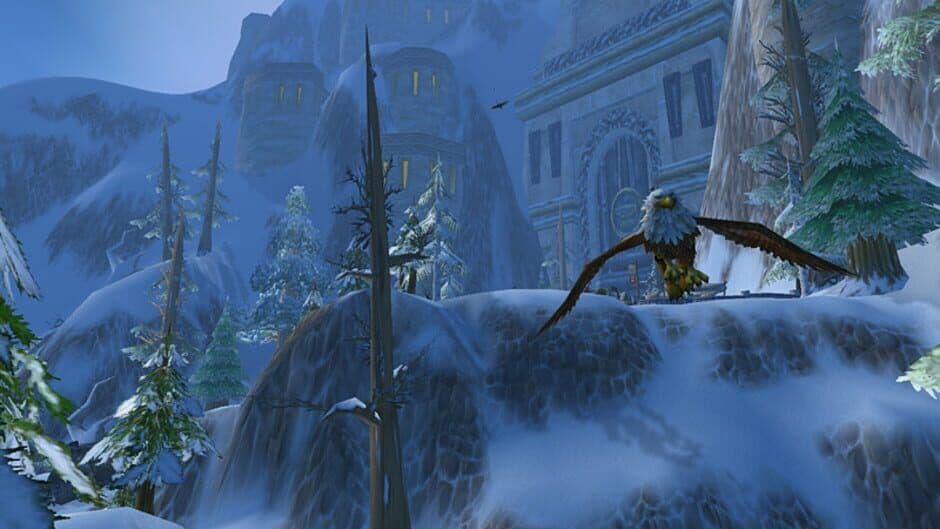
Azeroth's world design allows for continuous travel without frequent loading screens.
A World That Holds Together
The achievement is even clearer in motion. Players can walk from one region into another without a loading screen severing the landscape, watching the environment change from settled roads to dangerous wilderness and eventually to enemy-controlled territory. The world’s largest transitions are handled through transportation—boats between continents, zeppelins for the Horde, and the underground train connecting Stormwind and Ironforge—but these systems preserve the impression that the cities occupy a shared physical world. The exceptions are sensible rather than disruptive: travel between continents and entry into instanced zones involve brief interruptions, while ordinary movement across a continent maintains geographical continuity. Azeroth feels like a place you cross, not a menu of destinations.
World of Warcraft’s map is persuasive because distance has context: a road leads to a town, a town leads to a faction, and that faction determines what the next stretch of wilderness means.
Travel is also unusually efficient for a world of this scale. Flight paths connect established settlements, flying on gryphons or wyverns turns long routes into a manageable paid service, and the hearthstone gives every character an emergency route home: once every 60 minutes, it returns the player to a bound town or city. That cooldown makes the item useful without making local geography irrelevant; players still need to decide when a return trip is worth spending. Mages add city teleports from level 20, Warlocks can summon other players, and the Stormwind–Ironforge train provides a fast link between two major Alliance hubs. These conveniences do not erase the world’s size—they make that size usable.
Geography With Political Consequences
Faction structure gives exploration stakes beyond scenery. Alliance characters begin among Humans, Dwarves, Gnomes, and Night Elves, while Horde characters emerge from Orc, Troll, Tauren, and Undead territories, with each faction’s starting zones teaching a different version of Azeroth’s history and priorities. The capital cities reinforce those identities: Ironforge’s monumental forge communicates Dwarven industry, while Orgrimmar’s painted-mesa aesthetic projects a harsher, more improvisational Horde identity. Even communication is politicized; opposing factions cannot freely understand one another, with their speech rendered as gibberish. That is a small rule with a large effect, turning a nearby player from a potential conversational partner into an unknowable presence.
On PvP realms, this political geography becomes a practical risk. Green areas are defensive, yellow zones are contested, and red territories are openly hostile, creating a clear gradient from safety to danger. A level 20 Undead Warlock traveling into the Wetlands, an Alliance region intended for characters around levels 20–30, must contend with hostile NPCs and difficult monsters before even accounting for enemy players. The danger can produce memorable stories—an ordinary journey becomes an incursion—but level disparities and organized enemy groups can also turn faction conflict into simple ganking. World of Warcraft makes territory meaningful, though it cannot always make that meaning fair.
The directed quest structure complicates exploration in an interesting way. Quest chains guide characters smoothly through level bands, sending them from one hub to another and gradually introducing more dangerous zones, enemy settlements, and instanced adventures. This prevents Azeroth’s scale from becoming intimidating, but it also means the game often tells players where the important places are before they have a chance to discover them independently. Wandering off the recommended route can reveal a striking landmark or a hostile settlement, yet the strongest rewards and narrative context usually wait along the quest funnel. World of Warcraft presents itself as an open world, but its most efficient path through that world is carefully curated.
That trade-off is ultimately worthwhile because the guidance rarely makes the world feel like a corridor. The map remains broad enough for players to encounter optional areas, profession resources, faction borders, and dungeons outside their immediate objectives, while travel methods let them return to a bound city or reach a distant hub without repeating every mile. The design intent is not to simulate every hour of a journey; it is to make distance feel real until distance stops being interesting. Azeroth succeeds when its roads create anticipation, and knows when a boat, flight path, or hearthstone should take over.
World of Warcraft’s exploration is therefore less about unstructured discovery than about sustaining a believable network of places. Its zones have memorable identities, its borders reflect the Horde–Alliance divide, and its transportation systems preserve scale without turning every objective into a commute. The guided quest funnel limits the wildness of wandering, and PvP travel can become frustratingly uneven, but the larger achievement remains intact: Azeroth feels like a world with history, direction, and consequences. That lasting sense of place is why even a familiar route between two quest hubs can feel like part of an adventure rather than empty travel time.
World of Warcraft Narrative and Worldbuilding: Warcraft Lore With Uneven Focus
World of Warcraft’s greatest narrative achievement is not that it tells one perfectly paced story; it is that it makes Warcraft feel inhabitable. The original game translates Warcraft III’s races, factions, capitals, and visual motifs into a persistent role-playing world where lore is expressed through starting zones, quest chains, architecture, and faction allegiance. Two decades later, The War Within shows how much stronger that world becomes when Blizzard gives its characters room to struggle—but it also exposes the old problem of uneven focus and storytelling that stops just as it gathers momentum.
From Warcraft Strategy Game to Living World
The original World of Warcraft succeeds because it understands that Warcraft’s identity was never just its plot. The Horde and Alliance remain distinct ideological communities, not interchangeable character-select screens: Orcs, Trolls, Tauren, and Undead begin from a different worldview than Humans, Dwarves, Gnomes, and Night Elves. Capitals reinforce that translation through visual language—Ironforge’s massive central forge makes Dwarven industry architectural, while Undercity’s gothic, macabre atmosphere turns the Forsaken into more than a faction label. Quests against threats such as the Scarlet Crusade, hostile faction territory, and class-specific storylines then give players a personal stake in conflicts that began in the strategy games. This is the moment the adaptation earns its trust: Warcraft III’s broad mythology becomes something the player inhabits rather than simply observes.
The strength of that approach is also its limitation. World of Warcraft’s early narrative is distributed across hundreds of objectives, many of which still reduce to killing enemies, collecting items, or delivering messages. The world feels rich because those tasks are surrounded by memorable places, faction tensions, and recognizable Warcraft motifs, not because every quest is dramatically written. The result is an MMO that builds setting more reliably than it builds a single coherent campaign. Azeroth is full of history, but the player often encounters that history in fragments, with major lore functioning as atmosphere or context for the next objective rather than as a carefully paced central narrative.
The War Within Finds Its Characters
The War Within makes a persuasive case that World of Warcraft’s writing improves when it steps away from disconnected cosmic spectacle and concentrates on people. Its opening immediately establishes consequence: Khadgar is seemingly vaporized and Dalaran is destroyed, leaving the player to begin amid the wreckage while the Nerubians and Xal’atath’s wider plans come into focus. That opening works because it gives the Worldsoul Saga a tangible wound before it starts explaining its mythology. Xal’atath is not introduced as an abstract threat waiting somewhere beyond the map; her presence is felt through catastrophe, pursuit, and the growing sense that the player has entered a conflict already moving beyond anyone’s control.
The expansion’s strongest writing belongs to its character arcs. Alleria Windrunner is defined not merely by her connection to the Void but by the personal consequences of living with that power, while Anduin Wrynn’s struggle gives his return emotional weight after the events of Shadowlands. Magni Bronzebeard, Faerin Lothar, and the Earthen receive similarly specific conflicts instead of serving as lore dispensers. The Earthen’s division between those who remain loyal to their Titan creators and those seeking their own path gives their culture a meaningful internal tension, while Faerin’s resolve and relationship with Anduin help ground the Light in personal responsibility rather than factional decoration. These stories are more effective than another parade of world-ending declarations because they show what Azeroth’s conflicts do to individual lives.
The War Within is at its best when the apocalypse pauses long enough for someone to remember what they are losing.
That intimacy extends beyond the mandatory campaign. Optional “Stay awhile and listen” scenes allow characters to talk without immediately handing the player another combat objective, and the details matter: Magni bonding with his grandson Dagran, an Arathi board game, a family dinner, and an Earthen quest about memory loss all make the setting feel inhabited between major battles. The Earthen memory-loss storyline is particularly effective because it slows down to explore tradition, aging, and the fear of losing one’s identity instead of treating the character as a disposable quest marker. These scenes do not alter the main plot, but they deepen the player’s understanding of the people who live beneath it. World of Warcraft has always possessed enormous lore; here, it finally demonstrates that lore becomes memorable when it is allowed to be domestic, quiet, and emotionally particular.
A Saga With Uneven Emphasis
The War Within’s character focus comes with a conspicuous imbalance: the campaign is heavily centered on Alliance-linked figures. Alleria, Anduin, Magni, Moira, and related characters carry much of the dramatic weight, while Thrall and Jaina appear only briefly at the beginning and the Horde lacks an equally prominent protagonist through most of the main story. This is not a minor matter in a franchise built around factional identity. Even if Khaz Algar’s Titan and Earthen themes naturally connect to some Alliance characters, the limited Horde presence makes the “Warcraft” conflict feel narrower than the setting promises. Players invested in the Horde are left watching a major chapter of Azeroth’s history from the edge rather than seeing their faction meaningfully shape it.
Pacing is the other major weakness. The War Within’s central campaign takes roughly eight hours at a leisurely pace and can be completed in a single evening, which is not inherently a problem; a compact story can be excellent when every chapter lands. Here, however, the conclusion arrives largely as setup for later installments of the three-part Worldsoul Saga. The opening destruction of Dalaran raises the stakes quickly, the zone stories develop promising characters, and then the campaign ends before Xal’atath’s momentum fully pays off. That abruptness makes the expansion feel less like a complete dramatic movement and more like the first act of a much longer novel that has been sold as a volume of its own.
Xal’atath represents a clear tonal improvement over the disconnected antagonists of the Shadowlands era. She is ruthless, visible, and immediately associated with a concrete disaster, while her evolution from the “talking knife” of Legion into a formidable villain gives her history as well as menace. Yet the expansion also risks making her feel untouchable: if every confrontation confirms her apparent invulnerability and the player’s victories amount mainly to delaying her plans, tension can flatten into inevitability. The personal arcs are strong enough to carry the quieter sections, but they cannot substitute indefinitely for meaningful movement in the central conflict. Future chapters must let Xal’atath’s threat produce irreversible consequences while continuing to develop Alleria, Anduin, Faerin, Magni, and the Earthen rather than resetting them for another round of setup.
World of Warcraft’s narrative remains uneven, but its direction is finally more promising than its reputation suggests. The original game made Warcraft’s races, factions, cities, and conflicts feel like a world players could belong to; The War Within adds the character writing and optional texture needed to make that world emotionally resonant. Its Alliance-heavy perspective and single-evening campaign weaken the sense of completeness, while Xal’atath still has to prove that her menace can survive several releases. Even so, this is a meaningful evolution: World of Warcraft is no longer relying only on the size of its lore. It is beginning to understand that the stories players remember are the ones that give that lore a face, a family, and something painful to lose.
World of Warcraft Endgame: More Player Choice, But the Grind Still Shows
World of Warcraft’s endgame no longer assumes that every player has a raid team, a fixed schedule, or the patience to repeat the same group-finding ritual every night. The War Within broadens the menu with Delves, follower-assisted dungeons, account-wide progression, Mythic+ dungeons, and raids—but the familiar MMO treadmill still waits beneath those conveniences.
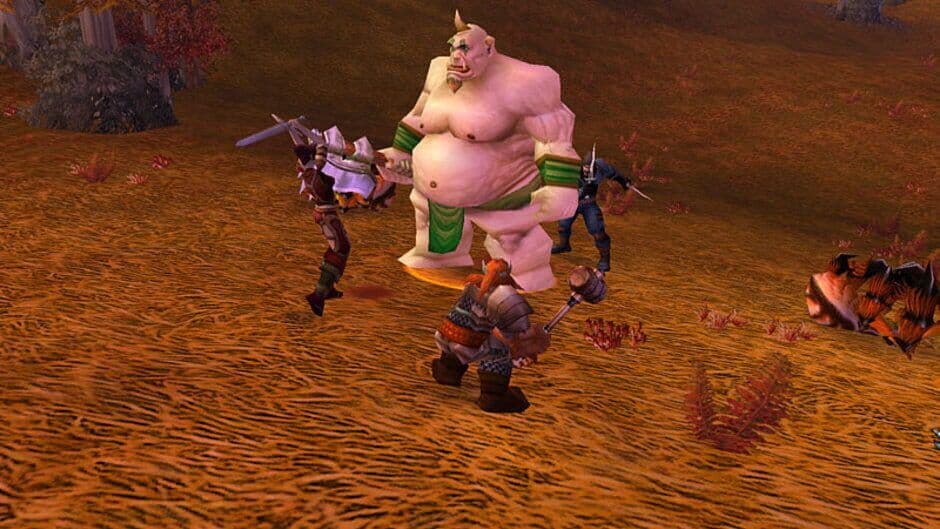
Endgame environments are designed to support repeatable world content.
Delves Make the Endgame More Accessible
The strongest addition is Delves, twelve launch scenarios designed for solo players or small groups. Each run lasts roughly 10–15 minutes and combines varied objectives, modifiers, boss encounters, treasure rooms, temporary powers, and gear rewards. That structure matters because it gives World of Warcraft a compact endgame activity with a clear beginning and end: a player can complete meaningful content without committing to a full dungeon session or waiting for a raid group to assemble. With 11 difficulty options planned across the system, Delves also offer a progression ladder rather than a single casual diversion.
Their best quality is how naturally they accommodate different levels of commitment. A player can enter alone with a customizable NPC companion such as Brann Bronzebeard, bring a few friends, and still pursue gear progression that connects to the broader endgame. Follower Dungeons serve a similar purpose by letting players experience dungeon-style encounters with NPC allies instead of depending on a fixed group. These systems do not merely make World of Warcraft easier; they remove the social scheduling barrier that has historically prevented players from seeing parts of it. That is a meaningful shift for an MMO whose audience increasingly includes people who want progress without treating the game like an appointment.
Delves are World of Warcraft’s clearest admission that “multiplayer” should mean shared possibility, not mandatory dependence.
However, the format is not consistently compelling. Some Delves lean on repetitive combat and familiar objectives, while others burden the player with mechanics such as managing air bubbles underwater or avoiding webs during spider-themed encounters. At their best, these mechanics create a small-scale adventure with its own identity; at their worst, they turn a 15-minute activity into a checklist of interruptions. One review found the Diablo-like structure and solo combat less satisfying than simply running a normal dungeon, a criticism that lands because Delves can lack the tactical escalation and enemy variety that make traditional group content memorable. The concept is excellent, but repetition exposes how much of the experience depends on future variation and tuning.
The Traditional Endgame Still Holds Up
The War Within does not abandon World of Warcraft’s established pillars. Mythic+ dungeons retain their escalating challenge, while Nerub-ar Palace supplies a conventional raid spectacle with engaging mechanics in both LFR and Normal modes. Its presentation is not the only strength: encounters ask players to manage mechanics across a coordinated group, giving gear upgrades a genuine purpose beyond making routine world enemies die faster. This is where the game’s earlier combat foundation pays off; the responsive class systems remain satisfying when encounters finally demand positioning, timing, and role discipline.
The contrast with open-world content is stark. World quests often reduce Azeroth’s carefully written zones to contextless objectives that convert repeated kills, collections, or event participation into gear and currency. Once the story campaign is complete, the player can be funneled toward routines whose main purpose is increasing numbers rather than pursuing a narrative goal. Some reviewers found even dungeon combat insufficiently challenging outside higher-end content, which makes the reward loop feel backward: the game keeps offering better equipment without always providing a compelling reason to master the tools that equipment improves. The endgame’s problem is not a lack of activities; it is that too many of them feel like maintenance.
This becomes especially evident after the campaign’s strongest character-driven quests. The new zones encourage players to explore cultures, factions, and personal stories, but the endgame often replaces that context with a map full of icons and a currency bar edging upward. The transition is functional, yet emotionally abrupt. World of Warcraft remains excellent at telling players what they can do next; it is less reliable at explaining why that next task matters.
Warbands Fix the Alt Problem
Warbands are a far more consequential improvement than their quality-of-life label suggests. Account-wide reputations and Renown, currencies, map completion, achievements, and transmog collections mean that progress on one character benefits the entire account. Many items—and some gear—can also be shared between characters, while transmog collections let players collect appearances even when the active character cannot equip them. With four new factions offering 25 Renown tiers each, this change prevents reputation progression from becoming a separate wall every time a player tries a new class.
The impact on alternate characters is immediate. Before Warbands, repeating reputation grinds could make an alt feel like a second job: the player already understood the story and had earned the rewards, but the game demanded the same labor again. In The War Within, completed quests can be hidden from the map, while Renown and collection progress continue contributing to the account rather than remaining locked to a single hero. That makes experimentation more rewarding and reduces the fear that choosing a new class means abandoning months of work. World of Warcraft’s long-term progression finally feels less like a chain around one character and more like an investment in the player’s entire account.
Professions, unfortunately, still preserve some of the game’s older friction. Players are limited in their primary-profession choices, and escalating material requirements can make crafting lag behind character progression. The resource relationships are uneven: Blacksmiths can pair their craft with Mining to support weapons and armor, while Leatherworkers rely on Skinning and may still need materials associated with other gathering paths; Tailors face similar complications when higher-level recipes demand resources beyond their most obvious specialty. Failed crafting attempts do not waste materials, and multiple items can be produced at once, but those conveniences do not erase the underlying problem. When a profession requires too many detours simply to keep pace with a character, crafting stops feeling like a parallel adventure and starts feeling like unpaid inventory management.
World of Warcraft’s endgame is therefore more accommodating than its earlier eras without being fully liberated from the MMO grind. Delves and follower content make solo progression credible, Warbands make alts worth playing, and Mythic+ dungeons and Nerub-ar Palace preserve the high-skill group challenges that give the gear chase purpose. Yet repetitive Delves, shallow world quests, and profession friction reveal the same design tension that has always defined the game: every system is built to keep progress moving, but not every activity gives that movement meaning. The result is an endgame with more player choice than ever—and just enough routine to remind you that choice alone is not the same as freedom.
World of Warcraft PvP: Faction Conflict That Rarely Reaches Its Potential
World of Warcraft has always promised a war between two factions, yet its most memorable conflicts often feel like interruptions to the real game rather than its central drama. The tools are there—duels, contested territory, battlegrounds, honor, PvP realms, and later War Mode—but PvP rarely receives the same structural attention as dungeons, raids, and gear progression.
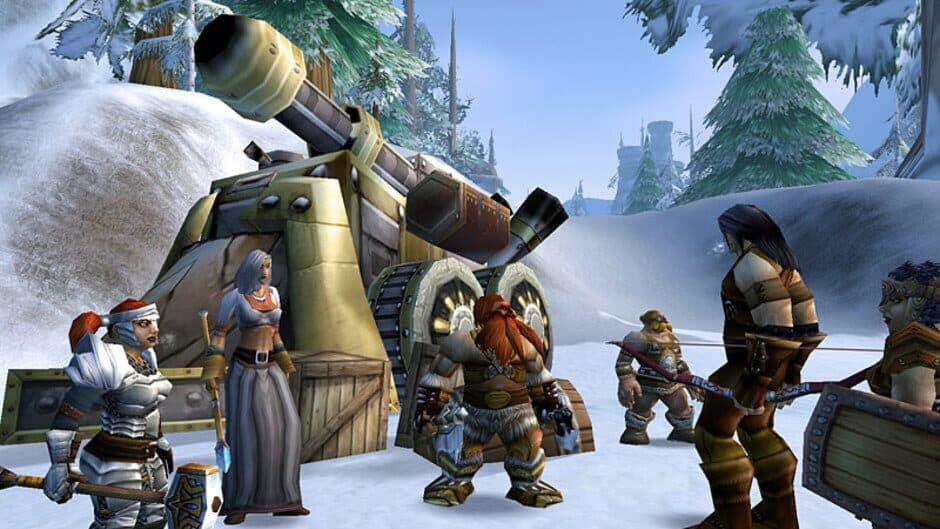
PvP gear often rivals PvE rewards, creating a compelling progression alternative.
Conflict With Too Little to Gain
The early PvP design reveals the problem clearly. Faction combat could happen in contested zones and on dedicated PvP realms, but it offered limited experience, money, items, or abilities compared with ordinary PvE progression. Honor points and battleground rewards provided some direction, yet the incentives were thin enough that PvP often felt bolted onto the questing game rather than integrated into it. A player could risk entering enemy territory, lose time to an ambush, and gain little that advanced their character more efficiently than killing creatures or completing quests. That imbalance taught players an unfortunate lesson: the faction war was exciting when it happened, but rarely worth seeking out.
The range of entry points is still one of World of Warcraft’s better design decisions. Duels provide consensual, low-stakes practice; contested zones create the possibility of spontaneous conflict; PvP realms make faction hostility a constant threat; battlegrounds offer organized competition; and later systems such as War Mode let players opt into open-world danger without committing an entire character to a PvP server. This layered approach respects different appetites for competition. A newcomer can test a build in a duel, a thrill-seeker can cross hostile territory, and an organized group can enter a battleground with clear objectives. The problem is not a lack of ways to fight—it is that those modes have not always been connected by rewards strong enough to make them feel like parts of one coherent PvP ecosystem.
World of Warcraft gives players many doors into PvP, but too often they open onto separate rooms rather than one functioning war.
The Risk of the Open World
Contested zones are at their best when geography creates a real decision. Green areas are defensive, yellow zones are contested, and red territories are openly hostile, giving travel a readable risk gradient. Crossing into an enemy region can transform a routine quest into an expedition: hostile NPCs already make the route dangerous, and enemy players can turn a familiar road into an ambush point. The language barrier between factions, which renders opposing speech as gibberish, even reinforces the sense that the other side is not simply another group of adventurers but an unknowable political enemy.
However, risk does not automatically produce meaningful strategy. Level disparities can make a fight effectively unwinnable, while organized groups can overwhelm lone travelers before they have any chance to respond. A level 20 Undead Warlock entering the Wetlands already faces hostile creatures and NPCs in an Alliance zone designed for characters around levels 20–30; adding a high-level player or coordinated faction group can turn that danger into ganking rather than warfare. The player is not making a tactical choice between competing objectives—they are often just gambling on whether someone stronger happens to be nearby. World of Warcraft makes enemy territory dangerous, but it does not always make that danger legible or fair.
Battlegrounds offer a more convincing alternative because they give conflict a purpose beyond killing whoever happens to cross the road. The War Within’s Deephaul Ravine is particularly effective in miniature: teams escort carts, contest a central crystal, and fight across a symmetrical map built around vertical layers. Displacement abilities can knock opponents from elevated routes, while fall damage turns positioning into an actual resource rather than a cosmetic advantage. The result is a battleground where a player can influence the match without simply winning a damage race. Its compact layout and clear objectives demonstrate what World of Warcraft PvP needs more often: spaces designed around decisions, momentum, and victory conditions.
A Secondary Pillar
Deephaul Ravine is a strong battleground, but one good arena cannot change PvP’s position within the larger game. World of Warcraft’s deepest long-term systems remain PvE-focused: quests lead into dungeons and raids, gear progression is largely framed around defeating increasingly difficult enemies, and endgame activities such as Mythic+ establish a clear ladder of mastery. PvP has honor and battlegrounds, but its progression has historically felt less consistently connected to the rest of the character journey. The result is a competitive mode that can be enjoyable on its own while still feeling secondary to the game’s primary reward economy.
That weakness becomes more apparent beside dedicated PvP MMOs, where territorial control, coordinated campaigns, or structured objectives make victory itself the central currency. World of Warcraft’s faction conflict often lacks that sustained layer of organization. A contested zone may produce a memorable skirmish, but it rarely develops into a campaign with persistent consequences; a battleground may reward participation and performance, but it does not usually reshape the wider world. Even class balance can push players toward favored roles or builds, just as it does in group PvE, narrowing the practical meaning of “play what you want” when competitive pressure rises. The combat remains responsive—the core strength discussed earlier—but responsive combat needs a strong competitive framework around it.
This is why World of Warcraft’s PvP feels like an unrealized promise rather than a failed experiment. The ingredients are compelling: faction identity, readable danger levels, class-specific tools, battleground objectives, and the possibility of sudden conflict during ordinary travel. What is missing is a durable reason to care about the outcome beyond the immediate match or encounter. Without stronger merit-based rewards and larger-scale coordination, PvP becomes an optional flavor of Azeroth instead of the living faction war the setting continually advertises.
The game’s modern accessibility philosophy introduces a related tension. Solo-friendly systems such as Delves, follower dungeons, and account-wide progression make World of Warcraft easier to approach and reduce the need to schedule every activity around a guild. That is a genuine improvement for players with limited time, but it also weakens the social friction that once pushed strangers into parties and guilds. If a player can progress alone through most of the meaningful reward structure, there is less reason to recruit allies, negotiate group roles, or form the spontaneous relationships that distinguish an MMO from a single-player RPG. PvP should be the natural counterweight—a system that requires other people and creates unpredictable social stories—but its uneven incentives often fail to fill that role.
World of Warcraft’s PvP is therefore broad but not deep enough. Duels, open-world conflict, battlegrounds, honor systems, PvP realms, and War Mode give players plenty of ways to engage, while Deephaul Ravine proves that Blizzard can still build sharp, tactically readable competitive spaces. Yet the faction war remains peripheral to the strongest progression systems, and open-world danger too often collapses into level-based harassment instead of strategic conflict. PvE is where World of Warcraft delivers its most reliable long-term structure; PvP remains the alternate path with the most exciting possibilities and the least convincing destination.
World of Warcraft Presentation and Technology: Timeless Art, Aging Foundations
World of Warcraft has aged unevenly, but not in the way its raw technology suggests. Its polygon counts, character models, and texture fidelity belong to another era; its visual language remains immediately recognizable. That distinction explains why Azeroth can look dated and still feel more memorable than many technically superior fantasy worlds.
Art Direction Outlasts the Hardware
The game’s stylized, comic-book fantasy aesthetic gives World of Warcraft a durability that realism rarely enjoys. Exaggerated silhouettes, bold colors, oversized weapons, and expressive animations make a Tauren readable at a glance and turn a distant city skyline into a visual promise. The original 3D engine was not cutting-edge even at launch, but its artistic consistency allowed low-detail assets to belong together instead of exposing every technical limitation as a mismatch. This is why WoW’s graphics have aged better than its technology: the art communicates identity before fidelity.
Its capital cities remain the clearest proof. Undercity’s macabre, subterranean design carries a Beetlejuice and The Nightmare Before Christmas sensibility, while Orgrimmar’s painted mesas and rough-hewn construction make the Horde capital feel carved from a hostile frontier. Ironforge’s enormous central forge gives the Dwarven city a literal industrial heart, and Darnassus’s towering Ancients create a sense of living scale that no texture upgrade could replace. The War Within adds another standout in Hallowfall, where a colossal crystal functions as both the zone’s light source and its defining landmark. These places are not merely attractive backdrops; their architecture explains the cultures that inhabit them.
World of Warcraft’s greatest visual trick is making a city’s silhouette tell you who lives there before a single NPC speaks.
Atmosphere in Motion
Khaz Algar demonstrates that Blizzard can still build atmospheric spaces within an aging framework. Isle of Dorn’s open greenery and dwarven architecture give way to the industrial pipes, rail lines, furnaces, and mining towns of the Ringing Deeps, while Hallowfall expands into a vast cavern that avoids feeling like a single dark corridor. The crystal’s changing illumination is especially effective: Hallowfall can shift from an almost holy sanctuary into a place overwhelmed by void-darkness, transforming the same terrain through lighting rather than replacing it with a new map. Azj-Kahet is gloomier and more visually uniform by comparison, but its Nerubian structures and sprawling City of Threads still provide a strong sense of place.
That environmental variety builds on a longstanding strength. Azeroth’s terrain transitions smoothly between forests, mountains, settlements, roads, and wilderness, while weather effects, the real-time day-and-night cycle, fluttering birds, skittering animals, and other ambient details make the world feel active when no quest is demanding attention. A familiar road can look entirely different at night, and a zone theme can shift from quiet exploration to combat as enemies close in. These touches are modest individually, but together they prevent the world from feeling like a static collection of quest hubs. World of Warcraft rarely simulates realism; it uses motion, color, and sound to make fantasy geography feel inhabited.
The presentation also benefits from restraint. Unlike games that flood every scene with visual noise, WoW’s exaggerated forms keep enemies, landmarks, and interactable objects legible during crowded encounters. That clarity matters in an MMO, where dozens of characters, spell effects, and environmental objects can occupy the same screen. The trade-off is obvious: contemporary games deliver denser materials and more naturalistic lighting, while WoW prioritizes readability and broad hardware compatibility. For this game, that compromise is not a weakness in itself. It becomes a weakness only when the simplified assets are asked to carry emotional or cinematic weight they were never built to support.
Sound Gives Azeroth Its Memory
The soundtrack remains one of World of Warcraft’s most durable achievements. Orchestrated music changes with location and circumstance, giving zones distinct identities rather than allowing exploration to dissolve into one endless fantasy loop. Combat cues add urgency without overwhelming the action, while quieter town themes make returning to a capital feel like a genuine change of pace. The music is memorable without becoming exhausting, which is a difficult balance for a game designed to be played for hundreds of hours.
The ambient audio does just as much work. Footsteps, battle sounds, environmental effects, NPC greetings, and race-specific voice lines—whether a character calls for healing or a Tauren simply bellows “Mooo”—give the world a sense of local personality. Warcraft III’s influence is audible in the weight of its combat sounds, while different environments receive their own sonic texture instead of relying only on visual cues. A player may not remember every quest objective, but they remember the music of a capital or the soundscape of a familiar zone. That is presentation doing more than decorating gameplay; it is turning location into memory.
Where the Models Show Their Age
Character presentation is considerably less successful. Early World of Warcraft offered modest creation tools—race, sex, hair, facial hair, and skin color—without allowing players to alter height, posture, or body shape. With one basic body type per gender for each race and visibly blocky hands, many characters can look too similar, especially when standing together in a capital city. Race and armor provide broad silhouettes, but the system gives players far less control over personal appearance than modern RPGs routinely provide. That limitation weakens the fantasy of inhabiting a unique hero, particularly in a game where players may spend years looking at the same character.
Later model updates improve individual races and enemies, but the enormous age of WoW’s asset library creates an uneven result. Updated characters can stand beside older creatures, armor sets, or environmental objects that still carry the proportions and textures of the original client. The inconsistency is more distracting than simple low fidelity because it reveals the game’s history asset by asset. A deliberately stylized model can remain charming; a modernized face beside a visibly outdated body or creature makes the technical compromise harder to ignore.
The gap is even clearer beside contemporary competitors. World of Warcraft’s art direction still has more personality than many higher-fidelity open worlds, but modern games expose the limits of its lower-detail models, aging animations, and layered rendering technology. The solution is not to replace the comic-book style with photorealism—that would erase the visual language that makes Azeroth distinctive—but to modernize the foundations beneath it. WoW needs more than isolated model updates if it wants its environments, characters, lighting, and effects to feel like parts of the same generation.
A Live Service With an Old Foundation
The original client’s technical efficiency was once remarkable. Historical reports put its minimized memory use at roughly 70–90 MB, allowing players to keep World of Warcraft running while consulting forums, databases, or other external resources. That footprint helped the game remain approachable on modest hardware and supported the MMO’s practical rhythm: players could check information, return to the client, and continue without closing the game. The low requirement was not glamorous, but it was exactly the kind of invisible engineering that expanded WoW’s audience.
The early live-service roughness is harder to romanticize. Launch queues, crashes, and connection problems reflected the strain of an unexpectedly crowded MMO, while some nVidia 6800 users encountered mouse-pointer lockups. Full-screen bloom could also make textures look blurry and text more difficult to read, turning a visual effect into a usability problem. These issues were addressed and the game became notably more stable, but they reveal the compromises of an evolving platform: World of Warcraft was never a sealed product with a fixed technical endpoint. It was a living service that had to absorb a growing player base while continuing to run across a wide range of systems.
That adaptability remains part of the game’s appeal, but it also explains why modernization is so difficult. Every new zone, model, lighting pass, and interface improvement must coexist with two decades of accumulated content. The result is a client that can deliver striking modern spaces such as Hallowfall while still carrying visible remnants of its earliest technology elsewhere. World of Warcraft’s performance history is therefore both a strength and a warning: broad accessibility helped make the game a phenomenon, but preserving that compatibility has made deeper technical renewal increasingly urgent.
World of Warcraft’s presentation is a triumph of art direction over hardware and a reminder that visual identity can outlive graphical fashion. Its capitals remain iconic, Khaz Algar proves that its atmosphere can still surprise, and its music and environmental sound continue to give Azeroth emotional texture. Yet the limited character customization, uneven asset updates, historical rendering problems, and widening fidelity gap show where the foundation is starting to crack. The graphics may no longer impress through technical power, but the world still earns attention through design—and that distinction is why World of Warcraft remains visually timeless even as its technology grows unmistakably old.
Final Verdict: Is World of Warcraft Still Worth Playing?
World of Warcraft is no longer the only MMORPG worth playing, but it remains the one that makes the genre’s enormous ambition feel most immediately usable. Its greatest strength is breadth: few games can move a player from a 15-minute solo session to a multi-year pursuit involving classes, professions, collections, dungeons, raids, PvP, seasonal systems, and social play without making those activities feel like entirely separate products. Its greatest weakness is the same breadth turned inward, where the next objective can become another obligation in a service that never truly ends.
The MMO With Something for Everyone
The value of World of Warcraft lies in how many different kinds of player it can accommodate. A newcomer can follow accessible quest chains through Azeroth, an explorer can pursue zone stories and hidden rewards, a crafter can build a character around professions and the auction house, and a dedicated group can spend months mastering raids or Mythic+ dungeons. Collections, transmog, achievements, reputations, alternate characters, battlegrounds, and seasonal progression add long-term goals beyond the central level-and-gear climb. The result is exceptional content density: even when one activity becomes tiring, another can provide a different rhythm without requiring the player to leave the game.
That flexibility is not merely a matter of volume. World of Warcraft’s systems are readable enough that a short session can still produce a clear result—a quest completed, a Delve finished, a reputation tier advanced, or a useful appearance added to a collection—while longer sessions can lead into coordinated group content. The game’s reliable social infrastructure, from quest sharing and group finders to dungeon and raid matchmaking, reduces the logistical burden that has historically made MMOs difficult to enter. It is possible to play alone, but the route into playing with others is clearer than in most older competitors. World of Warcraft remains the benchmark for turning an enormous online world into a sequence of understandable choices.
The Best Place for Returning Players
For lapsed players, The War Within is the strongest modern entry point World of Warcraft has offered. Two decades of expansions had accumulated layers of reputation grinds, currencies, collections, and character-specific progress, but Warbands now make much of that investment account-wide. Renown, map completion, achievements, transmog collections, and selected currencies benefit multiple characters, so creating an alt no longer feels like discarding the work done on a main. That change directly addresses one of the MMO’s oldest barriers: returning players can experiment instead of spending their first weeks rebuilding systems they already completed.
The expansion’s other additions reinforce that welcome. Delves provide short solo or small-group scenarios with gear rewards, Follower Dungeons let players learn instance content alongside NPCs, and the campaign can be experienced without treating a guild schedule as a prerequisite. A returning player can explore Khaz Algar, follow its character-focused stories, try a new class, and reach meaningful endgame activities without immediately needing a permanent raid team. The short main campaign—roughly eight hours at a leisurely pace—also makes the initial return manageable, even if its abrupt ending leaves the story feeling incomplete. World of Warcraft does not erase its accumulated complexity, but Warbands and solo-friendly systems finally stop that complexity from functioning as a wall.
This is where the game’s modern design philosophy earns its trust: it meets players where they are. Someone with limited time can use Delves and world content; someone seeking mastery can move into Mythic+, raids, or competitive PvP; someone who simply wants to inhabit Warcraft’s world can follow the campaign and side stories. The flexibility is genuine, though the increased ability to play alone carries a cost. When so much progression can be earned without relying on other players, World of Warcraft sometimes feels less like a communal world and more like a single-player RPG with a vast population nearby.
How WoW Compares Now
Against older MMORPGs such as Dark Age of Camelot, World of Warcraft remains more polished, more immediately readable, and less hostile to newcomers. Its clear quest markers, forgiving death system, rapid recovery, accessible interface, and efficient group tools remove the downtime and confusion that older MMO design often treated as unavoidable. Dark Age of Camelot still offers a stronger identity for players seeking large-scale faction warfare, while World of Warcraft’s PvP rarely turns its Horde-versus-Alliance premise into a persistent campaign. WoW wins the broader usability contest; it does not win every specialized one.
Modern peers make the comparison more complicated. Guild Wars 2 is a stronger alternative for players who prefer event-driven exploration and less rigid progression, The Elder Scrolls Online can appeal more to those who want a vast single-player-style world with extensive story content, and Final Fantasy XIV is often the better fit for players seeking a more continuous, character-led narrative. Dedicated PvP MMOs can also provide deeper territorial conflict than WoW’s underdeveloped faction warfare. None matches World of Warcraft’s exact combination of combat readability, class variety, endgame infrastructure, content volume, and two-decade history, but that does not make WoW the automatic winner in every category. It makes the choice more dependent on what a player wants from an MMO.
Historical reception explains why the game still occupies this position. Major launch-era reviews awarded World of Warcraft scores including 9.1/10, 9.5/10, and 9/10, reflecting not just enthusiasm for its setting but recognition of how thoroughly it refined the genre’s rough edges. Those scores were earned by a game that made progression feel active, combat feel immediate, and a massive world feel approachable. The modern version inherits that design achievement while carrying far more systems, content, and technical history than the original could have imagined.
The Cost of an Endless Game
The subscription model changes the value proposition. World of Warcraft is excellent value for players who want an ongoing hobby with long-term goals, but it is a poor fit for anyone seeking a finite campaign that can be completed and put away. The game’s enormous scope can become a second job: daily routines, weekly objectives, gear upgrades, reputation tracks, seasonal resets, and repeated endgame activities all create pressure even when none is formally mandatory. The endless reward structure that makes the game satisfying at hour one hundred can also make logging out feel like falling behind.
That pressure is most visible after the strongest story content ends. The War Within’s zones offer memorable characters and carefully constructed cultures, but its endgame can reduce those spaces to world quests, currencies, and numerical upgrades. Delves broaden access but can repeat objectives; Hero Talents promise meaningful class fantasy but often function as passive packages whose balance determines the “correct” choice; PvP supplies exciting combat without a consistently strong reason to pursue it. The core combat remains excellent, but the endgame sometimes trivializes that excellence by placing it inside routines that demand repetition without demanding much adaptation. This is where the seams start to show.
The game also retains clear structural shortcomings: questing still relies heavily on familiar kill, collection, and delivery templates; class and Hero Talent balance can make some choices more desirable than others; character customization remains limited compared with modern RPGs; expansion campaigns can be short and unevenly focused; and the Horde is still underrepresented in The War Within’s central narrative. Aging technology and under-realized PvP compound those issues. None destroys the experience, but together they explain why World of Warcraft can feel both peerless and strangely stuck.
Pros
- Accessible questing with clear objectives and readable difficulty
- Fast, responsive combat and deep class variety
- An exceptional world with memorable zones, capitals, and music
- Reliable social infrastructure for dungeons, raids, quest sharing, and group formation
- Strong modern alt progression through Warbands
- Meaningful solo endgame options through Delves and Follower Dungeons
- Enough content to support brief sessions, long campaigns, and years of play
Cons
- Repetitive kill, collection, and delivery quest structures
- Uneven class and Hero Talent balance
- Grind-heavy endgame routines built around currencies and gear numbers
- Limited character customization and visibly aging technical foundations
- Short expansion campaigns that can feel like setup rather than resolution
- One-sided narrative focus, particularly in The War Within
- PvP systems that provide skirmishes and battlegrounds without fully realizing faction warfare
World of Warcraft is still worth playing, but the recommendation depends on accepting what it has become. Choose it if you want a living fantasy world, flexible solo-to-group progression, deep class experimentation, reliable social systems, and long-term goals that can occupy months or years. Approach it cautiously if you dislike subscriptions, repetitive endgame routines, numbers-driven progression, or games that make self-imposed limits necessary to prevent play from becoming a schedule.
Verdict: World of Warcraft remains the benchmark for approachable, content-rich MMORPG design, even as live-service repetition, aging technology, and weakened communal conflict dull its original edge. The game is no longer an unquestionable recommendation for every MMO player, but it is still the most complete recommendation for players who want one fantasy world capable of supporting almost any style of play. After more than two decades, Azeroth is not flawless—and it is not finished—but it remains extraordinarily difficult to replace.
Score: 9/10