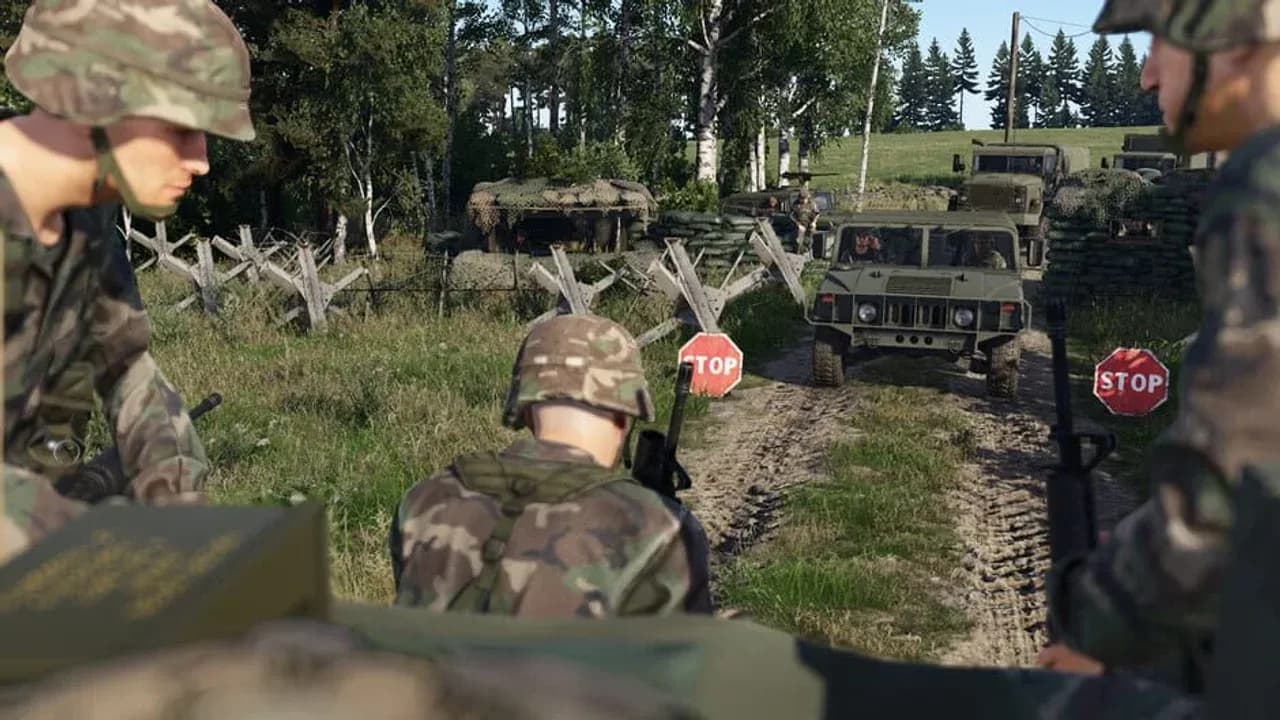
Arma Reforger’s Identity: A Multiplayer Military Sandbox in Transition
Arma Reforger is not a military shooter with a campaign waiting to be discovered; it is a battlefield that expects players to create the campaign themselves. That distinction defines the entire experience. Arma Reforger recreates a fictionalized 1980s conflict between U.S. and Soviet-aligned forces across Everon and Arland, but its real subject is not the plot of that war—it is the uncertainty, coordination, and improvisation that emerge when no mission script tells everyone what to do next.
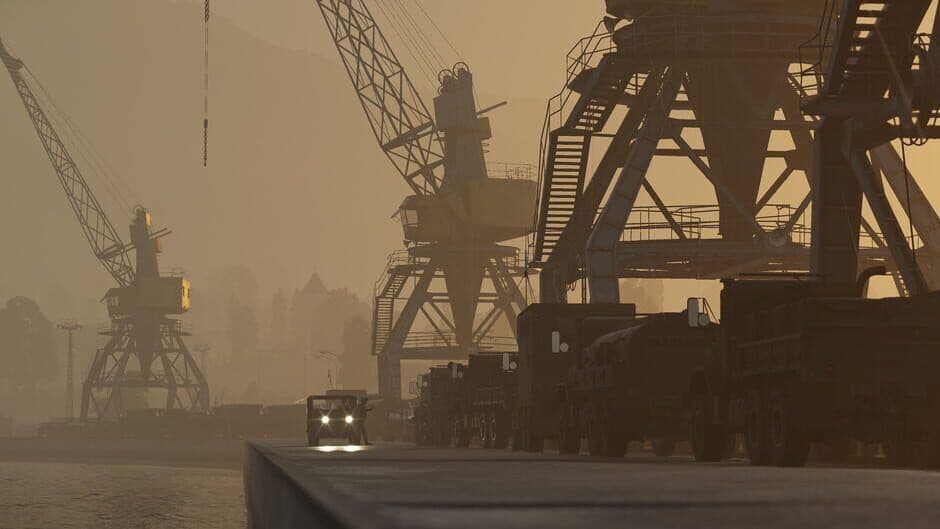
Simulation-first design defines the core gameplay loop.
The game’s identity is therefore closer to a focused Cold War military sandbox than to Battlefield, Call of Duty, or a conventional campaign-driven RPG. There is no character arc to anchor the experience and no sequence of authored set pieces guaranteeing a dramatic payoff; instead, the player joins a multiplayer conflict and decides whether to scout a route, defend a position, transport supplies, or follow a squad into an attack. That freedom produces situations structured missions cannot easily replicate: a routine push can stall because a road is exposed, a defensive line can hold because players communicate, and an apparently minor reconnaissance trip can determine whether the next assault succeeds. Arma Reforger’s design intent is clear—make the player responsible for the war—but that responsibility also means the game cannot manufacture momentum when a server lacks coordination.
Arma Reforger’s best stories are not told to the player; they happen because players leave gaps in the plan.
This player freedom is the game’s strongest hook and its most demanding condition. A structured shooter protects the player from dead time by funneling them toward objectives, while Arma Reforger allows uncertainty to dominate: teammates may pursue different priorities, an attack may collapse before reaching its target, and a quiet stretch of movement may matter only in retrospect. The payoff is genuine ownership when an unscripted battle comes together, particularly when communication and preparation turn a vulnerable position into a successful defense. The cost is inconsistency. Without a cooperative squad or a server culture that values teamwork, the same freedom can become aimless wandering rather than meaningful military decision-making.
The game’s early-access legacy remains central to that judgment. Arma Reforger began with limited content and has continued developing rather than presenting itself as a finished, campaign-sized package, so its current value depends less on a fixed inventory of missions than on how much players enjoy inhabiting an evolving framework. That makes its roughness easier to understand, but not automatically easier to tolerate: a sandbox with fewer authored activities has less to fall back on when a match loses momentum, and every missing or unfinished system is felt more sharply because player freedom is the product. Arma Reforger can feel like a promising foundation one moment and a complete military playground the next; the tension between those impressions is not a footnote to the review—it is the review’s central question.
Critical and player consensus generally converges on that same divide. The agreement is strongest around the concept: Arma Reforger creates emergent multiplayer situations, rewards communication more than individual kill counts, and gives the Cold War setting a practical purpose through factional conflict rather than treating it as mere decoration. The disagreement concerns the price of admission. Players willing to accept an evolving sandbox can find depth in the freedom, while those expecting polished structure, dependable content, or the immediate clarity of a traditional shooter are more likely to see the limited foundation as a weakness. That split is not contradictory; it reflects two legitimate standards for judging the same design.
Arma Reforger is at its best when it trusts players to supply the drama and at its weakest when the surrounding structure cannot support that trust. As an opening statement of intent, it is unusually coherent: this is a multiplayer military simulation built around unscripted conflict, not a thin campaign shooter dressed in tactical clothing. Whether that identity becomes a lasting strength depends on the quality of the people, servers, and evolving systems surrounding it—a promising proposition, but one that asks the player to do more work than most games ever would.
Arma Reforger Combat: Tactical Gunplay With Serious Friction
Arma Reforger’s infantry combat is built on a simple, unforgiving truth: the player who sees the fight first usually controls it. Arma Reforger gives every rifle round enough authority to make positioning matter, while recoil, weapon sway, stamina, and the time required to bring a gun on target punish careless movement. A firefight across a village street is not a test of who can strafe more accurately; it is a contest over windows, tree lines, angles, and the few seconds before the other side identifies your position. That weight is the game’s greatest mechanical achievement. It turns ordinary terrain into a tactical problem and makes a successful ambush feel earned rather than scripted.
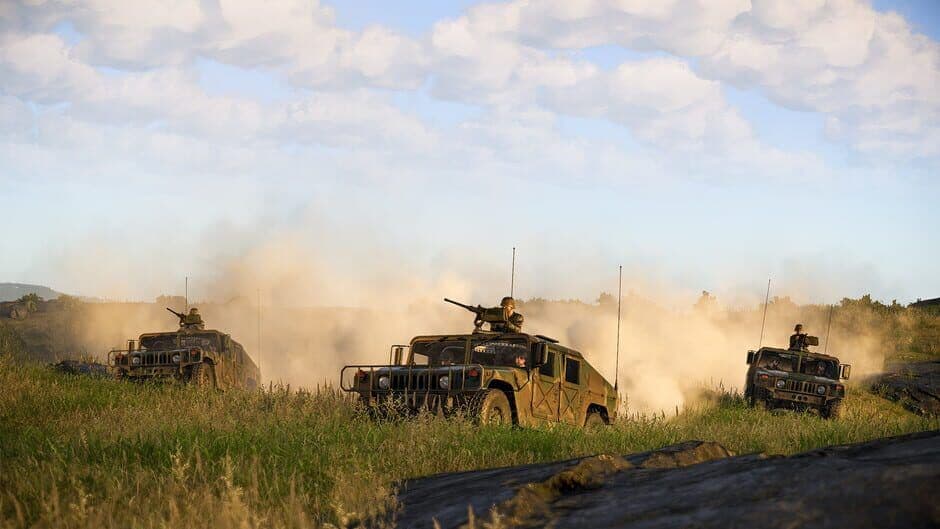
Squad-based tactical movement
The realism, however, is not uniformly elegant. Ammunition management, magazine changes, aiming posture, stamina, and basic medical demands create tension because preparation directly affects survival: entering a fight with the wrong ammunition or a wounded weapon hand can turn a theoretically favorable engagement into panic. The problem is that Arma Reforger often communicates these demands through friction rather than useful instruction. A player can spend significant time checking equipment, managing a cumbersome inventory, treating injuries, or recovering from a badly chosen loadout before understanding what went wrong. Compared with Battlefield’s immediate clarity or Squad’s more structured teamwork, Reforger asks the player to learn by failure—and sometimes the lesson is simply that an interface or medical interaction was not intuitive enough.
Arma Reforger makes patience powerful, but it does not always make the reason for patience clear.
That patience pays off when the battlefield offers enough information to support judgment. Concealment is not cosmetic: a hedge, forest edge, or darkened room can determine whether an enemy notices movement before a shot is fired. Suppression also changes behavior, forcing players to keep their heads down while another soldier moves, searches for a firing angle, or closes distance. Fire discipline matters for the same reason. Shooting at every distant silhouette wastes ammunition and broadcasts a position, while waiting to confirm a target can preserve an entire squad’s advantage. Arma Reforger therefore rewards the habits of a deliberate infantry game—observe, identify, communicate, then fire—instead of the run-and-gun rhythm that defines more accessible military shooters.
The cost of that design is combat readability. Uniforms and silhouettes can be difficult to distinguish at range, especially when foliage, shadows, and long sightlines reduce an enemy to a brief shape between trees. There are no dependable arcade-style cues to explain every hit, missed shot, or incoming angle, so sudden deaths can feel less like the consequence of a readable mistake and more like an ambush the player was never equipped to understand. That uncertainty is authentic to the simulation, but authenticity does not automatically equal good learning design. Veterans can reconstruct the engagement from muzzle flashes, sound, terrain, and the direction of fire; newcomers are more likely to spend several lives learning only that open ground is dangerous.
Loadouts have practical identity because their value changes with the situation rather than merely their damage statistics. Rifles are the dependable foundation for most engagements, machine guns control lanes and punish exposed movement, grenades clear rooms or disrupt a defended position, and launchers give infantry a way to threaten vehicles and fortified approaches. Support equipment matters when a squad has a plan: radios improve coordination, medical supplies extend a defense, and extra ammunition sustains a position that cannot safely be resupplied. Yet specialization can become a liability when nobody fills the necessary role or when the squad’s plan changes mid-operation. Arma Reforger’s weapon variety works because each choice implies a responsibility, but it also exposes the game’s dependence on cooperative players; a perfectly equipped machine gunner contributes little if the team never creates a firing position worth holding.
The weakest part of the infantry experience is the downtime between those meaningful decisions. A player may travel through quiet countryside, wait for a formation to move, search for an enemy hidden beyond a long sightline, or retrace a route after dying before ever making a consequential choice. That slow pace is sometimes deliberate—the tension of approaching a suspected position is real—but it becomes dead time when the player has no information to interpret and no squad communication to sustain the journey. This is where the sandbox’s freedom, praised earlier, can turn against the combat loop: without a coordinated squad providing reconnaissance, security, or a clear destination, the player is not practicing tactical patience but simply waiting for the game to produce contact.
Arma Reforger’s gunplay is therefore excellent at the moment of contact and demanding everywhere around it. Its lethality, positioning, suppression, and role-based loadouts create infantry encounters with more consequence than conventional shooters, while ambiguous targets, opaque feedback, and long stretches of travel raise the entry cost substantially. The design succeeds when friction produces caution; it falters when friction merely obscures the lesson. That distinction defines Arma Reforger’s combat: a powerful tactical system that rewards players who learn to read the battlefield, but offers too little help to those still learning how.
Arma Reforger Conflict Mode: Logistics, Objectives, and Team Coordination
Arma Reforger’s Conflict mode succeeds when a map stops feeling like a collection of objectives and starts behaving like a war. A player-led assault can begin with reconnaissance, become a supply problem, and end in a desperate counterattack after the original route is cut off. That chain of consequences is the mode’s defining strength: unlike a scripted mission, it allows a patrol, defensive stand, or improvised flank to change what the entire team does next. The catch is that Conflict only produces this kind of drama when players understand how its systems connect.
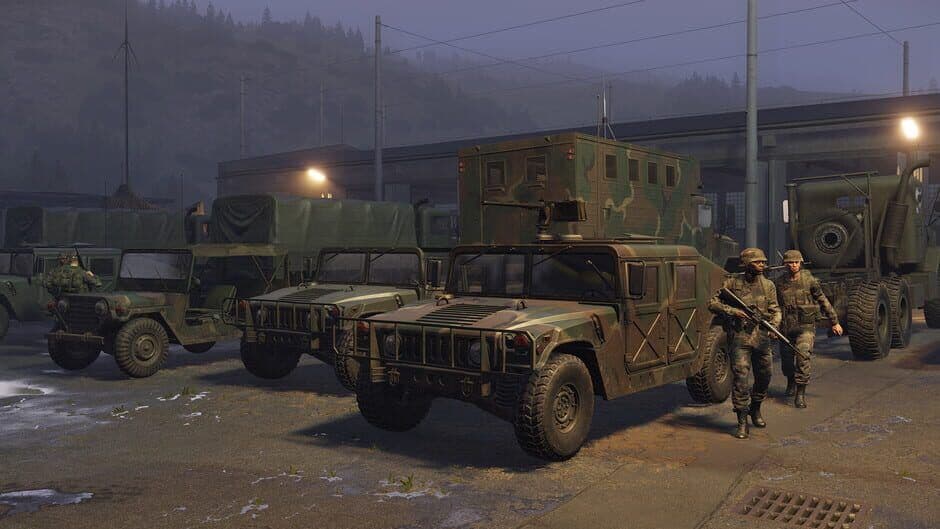
Strategic positioning is essential for objective control.
A Front Line Made by Players
Conflict’s territory-control structure gives the battle a readable strategic shape. Teams capture strategic points, establish positions from which to operate, and contest the routes between them, so the ideal match develops a front line rather than a series of disconnected firefights. Capturing an isolated objective can still be meaningful if it opens a route or threatens an enemy position, but the system does not guarantee that coherence. When squads attack different points without communicating, the result is often repetitive point trading: one side captures a location, the other recaptures it, and neither move changes the wider balance of the battle.
This is where Arma Reforger’s objective design reveals both its ambition and its dependence on player judgment. A strong team treats an objective as part of an operation—first securing the approach, then building a sustainable position, then defending against the inevitable response. A weaker team treats the same point as a magnet, repeatedly sending infantry into a defended area because the map says it is the next place to capture. The objectives are therefore structurally sound but not self-explanatory; they create the possibility of a coherent front without reliably teaching players to create one.
Conflict is at its best when capturing a point is the conclusion of a plan, not the beginning of another identical firefight.
Logistics gives that plan real weight. Ammunition and construction materials determine whether a captured position can remain useful, while radios, transport, and forward operating bases connect distant objectives to the team’s ability to reinforce them. A squad that pushes ahead without supplies may win the first engagement and still lose the position because it cannot sustain ammunition, replace losses, or establish a dependable route back to the wider force. Conversely, a modest defensive base can become strategically valuable when it supports repeated attacks and gives teammates somewhere practical to regroup. This is the moment Arma Reforger earns your trust: resources are not abstract points on a scoreboard but the infrastructure that turns territorial control into battlefield momentum.
The supply system also gives non-combat roles a reason to exist beyond waiting for the next gunfight. Driving transport, moving equipment forward, maintaining a radio network, or preparing a base can determine whether an assault has a second phase after the initial contact. These tasks are rarely glamorous, and the game does not always make their importance immediately visible, but their effects are clear when they are neglected: attackers arrive without the means to hold ground, defenders cannot reinforce a threatened position, and a promising advance collapses into a long retreat. Arma Reforger understands that an army is more than the soldiers pulling triggers; its problem is making that understanding consistently legible to players who would rather move toward the objective than support it.
Spawning and reinforcement systems sit at the center of that tension. Radios and established bases can shorten the distance between a player and the active fight, while losing territory removes convenient staging points and forces the team to operate from farther away. That creates consequences for territorial defeat without making every death permanently ruinous. A forward position can support a flank or keep pressure on an objective, but if it is exposed or poorly supplied, it becomes a liability that feeds soldiers into an unwinnable fight. The pacing can be excellent when a lost base forces a genuine operational rethink; it becomes punishing when players spend more time traveling back to relevance than making decisions that affect the battle.
Conflict’s greatest weakness is its coordination dependency. The best matches demand organized squads, clear voice communication, or a server community where players already understand how to divide responsibilities; without those conditions, a solo player can struggle to influence anything beyond the immediate firefight. A lone soldier may scout, carry supplies, defend a point, or attempt a flank, but those actions lose much of their value when nobody responds to the information or protects the route. Arma Reforger gives individuals considerable freedom, yet freedom without a responsive team often means limited agency: the player can choose where to go, but not whether that choice will matter.
Team imbalance magnifies the problem. A match can be undermined by uneven player skill, disconnected teammates, an absent commander, or one faction simply having the more coordinated group. When one side communicates and the other scatters across objectives, the result is not a competitive back-and-forth but a cascade: one team captures ground, establishes better spawn options, controls reinforcement routes, and converts every subsequent engagement into another advantage. The system’s emergent structure cannot solve a social failure of that scale. In fact, because logistics and spawning amplify good organization, a weak team may feel increasingly powerless as the match progresses rather than merely outgunned in individual encounters.
That imbalance explains why Conflict can produce both Arma Reforger’s most memorable stories and its most exhausting sessions. A successful counterattack feels extraordinary because it requires more than winning a duel: players must recognize the threat, preserve a route, move supplies, establish a forward position, and arrive before the enemy consolidates. But when communication collapses, the same mechanics turn into scattered assaults, abandoned bases, and long commutes between objectives. Conflict is not a shallow capture mode wearing simulationist clothing; it is a genuinely interlocking war game whose rewards depend on whether a team is willing and able to use its systems together. That makes Arma Reforger’s main loop unusually powerful—and unusually fragile.
Arma Reforger Maps and Vehicles: When Scale Creates Tactical Possibility
Arma Reforger’s islands are not backdrops between firefights; they are the machinery that makes those firefights unpredictable. Everon and Arland give infantry more than a route from one objective to the next, combining forests, villages, open fields, roads, coastlines, and elevation changes into a network of tactical decisions. A forest can conceal a flank, a village can become a close-quarters strongpoint, and an exposed road can turn routine transport into an ambush. The design succeeds because these environments change the value of every approach rather than simply changing the scenery. In Arma Reforger, geography is often the first weapon either team brings to a fight.
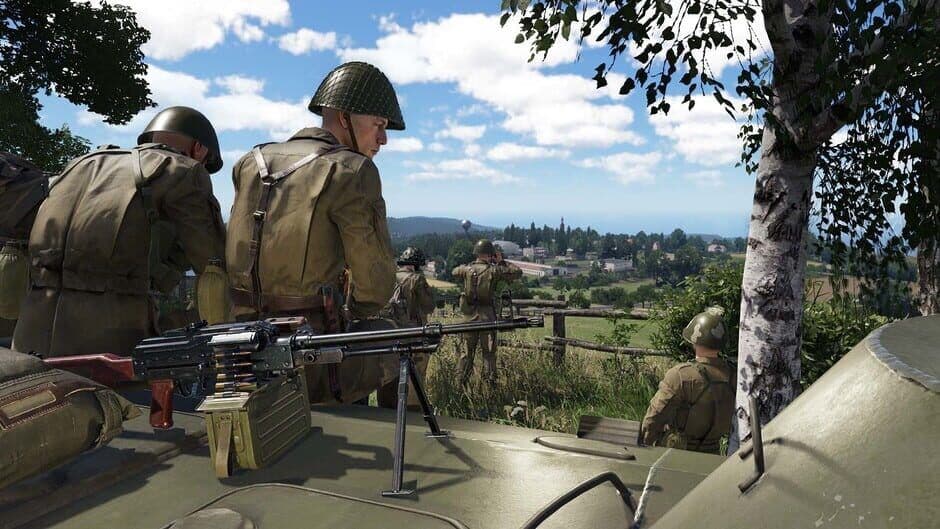
Scale and vehicle integration
Islands Built for Approaches
Everon’s larger, more varied spaces are particularly effective at creating operational possibilities. A squad can move along a road for speed, cut through woodland to avoid observation, or use elevated ground to watch a village before committing to an attack. Fields create dangerous stretches where concealment is limited, while coastlines and peripheral roads offer routes that may be overlooked by a team focused on the obvious objective. Arland provides a more compact setting, but that compression does not eliminate tactical variety; it makes route choice more immediate because villages, roads, and defensive positions collide more frequently. The best engagements begin before contact, when players decide whether speed, concealment, or a longer approach offers the greater advantage.
Arma Reforger’s maps make “the fastest route” and “the safest route” fundamentally different answers.
That variety gives the game a credible foundation for combined-arms warfare. Infantry can clear and hold terrain that vehicles cannot safely enter, trucks can move soldiers and supplies across the island, armored vehicles can dominate exposed approaches, and helicopters can change how quickly a force reaches a threatened sector. Reconnaissance is valuable because it tells those assets where to matter: an armored push through a field is far less reckless when infantry has identified likely firing positions, while a convoy without route security is simply a larger target. Indirect fire can extend that relationship by disrupting a defended area before an assault, but it still depends on someone locating the target and communicating useful information. Arma Reforger’s combined-arms potential is therefore not about stacking powerful units together; it is about making each one compensate for another’s vulnerability.
The scale is both the maps’ greatest achievement and their most persistent tax. Long sightlines, separated settlements, and alternative approaches support the kind of maneuver warfare the sandbox is trying to simulate, but they also create empty stretches where the player’s only meaningful decision is how long to keep moving. A patrol through a forest can build tension when it is guided by reconnaissance or squad communication; the same journey becomes dead time when the front has shifted and nobody knows where contact is occurring. The distance between an operating base, a contested objective, and the next useful position can make a successful redeployment feel less like a strategic adjustment than a commute. Arma Reforger earns its large environments when movement changes the battle, and exposes its seams when movement merely delays participation.
The Cost of Knowing the Island
Map knowledge gradually changes the balance between uncertainty and control. Players who learn the roads, sightlines, elevation breaks, objective locations, and defensible buildings gain advantages that are not reflected by weapon choice alone. They know which forest edge can hide an approach, which road exposes a convoy, and which overlook can observe a village without immediately announcing its presence. This knowledge makes repeat matches more tactical because veterans begin planning around terrain rather than reacting to the nearest marker. It also raises the entry cost: newcomers can follow the same objective as experienced players while arriving through an inferior route, exposing themselves to a firing position they did not know existed.
That dependence on familiarity is mostly a strength because Arma Reforger’s maps reward learning rather than memorizing a rigid mission script. A position that was safe during one attack may be vulnerable after the front line shifts, and a route that worked for infantry may be disastrous for vehicles or a supply convoy. However, the game does not always provide enough immediate context to distinguish a deliberate tactical setback from simple unfamiliarity. When a player dies after crossing an open field or reaches an objective too late to matter, the lesson is often clear only after several failed attempts. Map knowledge deepens the sandbox, but it also means the first hours are spent paying tuition in wasted movement and unseen threats.
Vehicles should reduce that friction, yet their handling can make transportation feel less dependable than the strategy behind it. Trucks are essential because they connect soldiers and supplies to distant positions, but their usefulness depends on navigating roads and terrain without turning a routine journey into an awkward obstacle course. Armored vehicles bring welcome combined-arms pressure, particularly when infantry and reconnaissance identify a route where their firepower can dominate, but vehicle combat is less satisfying when controls, aiming, damage feedback, or collisions fail to communicate what just happened. A hit that does not clearly reveal its effect, a vehicle that behaves unpredictably against terrain, or an engagement decided by awkward positioning rather than tactical judgment weakens the player’s confidence in the machine. Arma Reforger’s vehicles make the battlefield larger and more strategically interesting, but they do not always make it feel more controllable.
Helicopters sharpen that contradiction. Their ability to move personnel toward a threatened sector can bypass the worst travel delays and create dramatic opportunities for rapid reinforcement, insertion, or evacuation. Yet air transport also magnifies the consequences of unclear handling and battlefield awareness: an approach that is not properly reconnoitered can deliver a squad into danger faster, not more safely. The same principle applies to indirect fire and armored support—these tools are powerful when coordinated, but their value collapses when players lack target information or a shared plan. The design intent is sound: every vehicle should extend the team’s operational reach while requiring protection and communication. The execution is less consistent when vehicle interfaces and combat feedback make that intent difficult to read in the moment.
Travel and redeployment ultimately determine whether Arma Reforger’s scale feels meaningful or merely exhausting. Transport systems preserve the importance of logistics because someone must move players and supplies rather than treating every soldier as an instantly available resource. Alternative redeployment options can return players to the broader fight more quickly, but they do not erase the strategic cost of losing a forward position or abandoning a route; a team still needs a functioning network of bases and transport to sustain pressure. The balance works when a squad chooses between a risky fast insertion and a slower, safer convoy, or when losing ground forces the team to rebuild its approach from farther away. It breaks down when players spend long stretches traveling with no reconnaissance, contact, or decision to occupy them.
Arma Reforger’s maps are therefore more than large—they are consequential. Everon and Arland create ambushes, flanks, defensive lines, and combined-arms opportunities that smaller, more tightly scripted shooters cannot reproduce, while their scale demands patience and a willingness to accept dead time. Vehicle warfare expands that possibility but remains undermined by awkward handling and inconsistent combat clarity, and map knowledge separates thoughtful maneuver from blind movement. When transport, reconnaissance, and coordination align, the islands feel like living military spaces; when they do not, their impressive distance becomes empty distance. That tension is central to Arma Reforger’s overall quality: the game’s best battles are made possible by scale, but the player must continually earn the right to enjoy it.
Arma Reforger Game Master and Workshop: A Sandbox Built Around Its Community
Game Master is where Arma Reforger stops simulating a battlefield and starts handing someone the keys to it. A human host can place units, shape encounters, direct opposing forces, and improvise new threats while players are already in the field, turning a routine patrol into an ambush or a successful assault into an emergency defense. That intervention creates something Conflict cannot guarantee: pacing. Instead of waiting for a server’s frontline to produce contact, a Game Master can respond to what players are doing and build a scenario around their decisions.
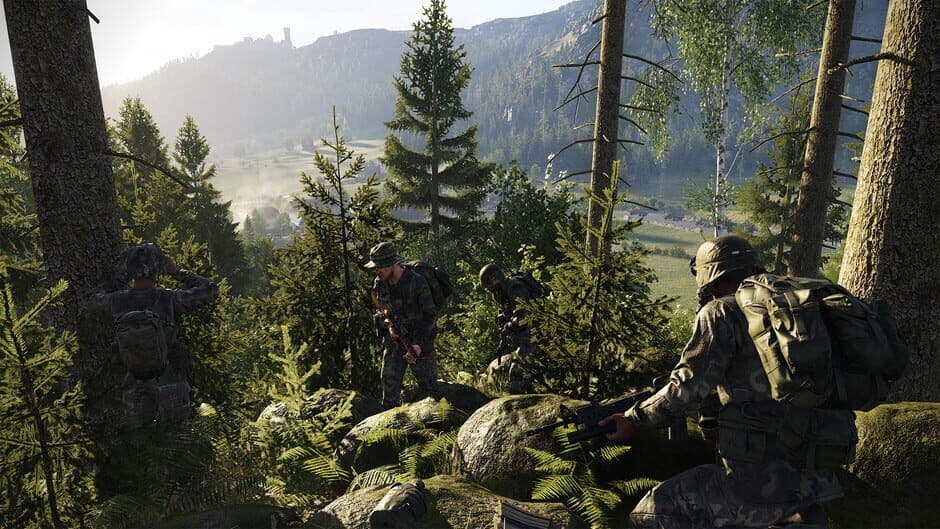
Modding support allows for highly detailed assets in Arma Reforger.
The Human Factor
The mode’s strength is not simply that it allows someone to spawn enemies; it is that it gives the host a way to frame player actions as part of a larger military situation. A squad investigating a quiet position can encounter a sudden defensive reaction, while a force that secures an area can be rewarded with a counterattack rather than an abrupt end to the session. The best Game Master sessions feel like living operations because events respond to player behavior instead of following a fixed chain of objectives. Arma Reforger earns some of its most convincing stories here, when the host understands that uncertainty and restraint are more valuable than constant action.
That last qualification matters. Game Master is only as good as the person operating it, and poor judgment can destroy the military tension almost instantly. An inexperienced host can flood an area with enemies, place threats without a readable tactical purpose, or interrupt a careful approach with arbitrary encounters; players stop making decisions and start reacting to the host’s mistakes. Conversely, a disciplined host allows reconnaissance to matter, gives failed attacks consequences, and uses new events to develop a situation rather than erase it. The mode therefore shifts authorship from the developer to the community, but it does not eliminate the need for authorship—it makes that skill part of the game.
Game Master is Arma Reforger’s closest equivalent to a campaign director, but the quality of the campaign depends entirely on the person holding the controls.
This dependence produces a sharp divide between curated sessions and public experimentation. With a capable host, a small patrol, a defensive operation, or a rescue mission can develop a clear rhythm: players receive a problem, gather information, choose an approach, and deal with consequences. With a careless host, the same tools become a novelty dispenser, generating enemies and vehicles without regard for terrain, pacing, or the squad’s previous decisions. Arma Reforger’s simulation systems make good scenario design especially important because a bad encounter does not merely feel narratively weak; it can waste travel, invalidate preparation, and turn the game’s deliberate combat into arbitrary punishment.
Workshop as a Second Content Pipeline
The Workshop gives Arma Reforger a crucial answer to its limited authored package. Community creators can expand the sandbox with weapons, vehicles, factions, maps, and scenarios, allowing servers to offer experiences that official modes alone would not provide. This breadth matters because it changes the game from a fixed military product into an evolving platform: one community may emphasize period-authentic operations, another may build more experimental battles, and a third may use custom scenarios to give Game Master sessions a stronger structure. The Workshop does not merely add cosmetic variety; it expands the rules and situations players can inhabit.
Accessibility is the feature that makes this ecosystem viable. Players can browse community content and join servers built around it rather than needing to create every scenario themselves, while server operators can assemble a distinct identity from the available additions. That lowers the barrier between discovering a new idea and actually playing it, a significant advantage for a game whose replayability depends on people creating reasons to return. A well-curated Workshop server can make Arma Reforger feel far more substantial than its official modes suggest, particularly when custom content gives a Game Master new tools for building a coherent operation.
The trade-off is that the best experiences are often no longer self-contained. A player may find an appealing server only to discover that it requires a collection of downloads, a particular version of a mod, or content unavailable on another server. Version mismatches and server restrictions can turn joining a match into a compatibility exercise, while inconsistent mod quality makes the catalogue difficult to judge from its existence alone. One custom vehicle may deepen a scenario by giving a faction a meaningful capability; another may introduce awkward balance, unclear controls, or an experience that clashes with Arma Reforger’s slower tactical rhythm. Community content compensates for the official package, but it also makes the game’s quality increasingly dependent on curation.
That dependency affects the game’s learning curve as much as its content volume. Official systems provide a common baseline, while heavily modded servers can change available equipment, objectives, rules, and expectations from one session to the next. A newcomer who learns one server’s conventions may arrive at another and find that familiar assumptions no longer apply, even though both are presented through the same basic interface. The variety is valuable for veterans seeking fresh scenarios, but it weakens the clarity that a new player needs when learning how Arma Reforger’s multiplayer ecosystem actually works.
Finding the Right Community
The server browser is the gateway to this entire experience, and its usefulness depends on more than showing a list of available matches. Players need to identify servers with compatible mods, active populations, appropriate rules, and a community culture that matches their preferred level of seriousness. A highly coordinated tactical server and a casual public sandbox may use the same maps and weapons while offering completely different expectations about communication, roleplay, or administrator intervention. Arma Reforger’s community is rich enough to support those variations, but finding the right fit can require trial and error rather than a reliably transparent first choice.
That friction is amplified by the consequences of joining the wrong server. In a game built around long approaches, shared objectives, and deliberate combat, a poorly moderated lobby can waste an entire session rather than merely spoil a few minutes. Griefing, trolling, aimless team play, or an administrator who deploys scenarios without understanding their pacing can turn carefully prepared operations into noise. A public match may begin with players organizing a convoy or securing a position, then collapse when participants ignore the plan, interfere with vehicles, or treat Game Master tools as an opportunity to create chaos. The sandbox gives players extraordinary freedom, but public servers do not always provide the social structure needed to make that freedom productive.
The community does not simply extend Arma Reforger; it determines whether the game feels like a military simulation or an improvised toy box.
Curated sessions demonstrate how high the ceiling is. When moderators enforce rules, hosts resist the temptation to over-script events, and players understand their roles, the game’s systems reinforce one another: a scenario has direction without becoming predictable, and improvisation creates consequences rather than random spectacle. Public servers demonstrate the opposite truth. Inexperienced administrators can design objectives that encourage repetitive attacks, allow disruptive behavior to persist, or fail to communicate what the session expects, leaving players unable to tell whether confusion is intentional or simply mismanagement. The gap between those experiences is too large to dismiss as ordinary multiplayer variance; it is a defining part of Arma Reforger’s value proposition.
The result is a community-powered sandbox with remarkable potential and an unusually high dependence on gatekeepers. Game Master supplies the creative authority, Workshop supplies the material, and servers supply the social rules that bind both into a playable experience. When those elements align, Arma Reforger can produce scenarios more responsive and memorable than a conventional mission because every event is shaped around real player behavior. When they do not, downloads, incompatible content, weak administration, and public-server chaos expose how little structure the official package provides on its own. This is why the game’s community content is both its greatest asset and its most serious qualification: Arma Reforger is not merely a platform for military stories, but a test of whether its players know how to make those stories worth playing.
Arma Reforger’s Cold War Atmosphere: Sparse Story, Strong Simulation Context
Arma Reforger does not tell the story of its Cold War conflict so much as surround the player with the evidence that a conflict is happening. There is no protagonist to follow, no authored campaign to provide context, and no dramatic sequence waiting at the end of a mission. Instead, Arma Reforger builds atmosphere through period equipment, military procedure, radio communication, and the uneasy quiet between engagements. That restraint gives the setting unusual credibility, but it also leaves the game’s identity dependent on whether players are willing to read meaning into a battlefield that rarely explains itself.
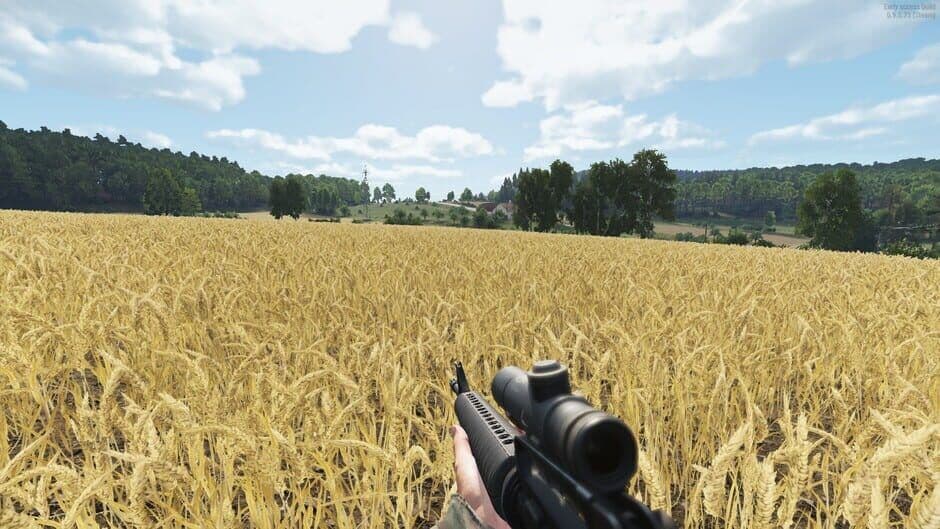
The Enfusion engine brings the Cold War setting to life with high-fidelity environments.
A War Without a Campaign
The absence of a conventional single-player campaign is both Arma Reforger’s clearest limitation and its most deliberate design choice. Without character-driven missions, scripted dialogue, or a fixed progression through the fictionalized 1980s conflict, the player never receives a traditional narrative reason to care about a particular village, installation, or offensive. A capture-and-defense operation can feel urgent because teammates are relying on one another, but there is no authored commander, personal history, or dramatic arc to turn that urgency into a story larger than the current match. For players expecting the campaign structure of Call of Duty or the guided military fiction of older tactical shooters, this is not a missing feature they can overlook; it changes what the game is asking them to value.
The payoff is that Arma Reforger never has to force its war into a sequence of cinematic beats. A defensive stand matters because the team built the position, occupied it, and watched it come under pressure—not because a cutscene declared the location important. A failed assault does not reload until the player succeeds; it changes the battlefield and leaves the next decision to the server. That freedom creates stronger ownership than authored melodrama when the right players are involved. It also makes the game’s emotional range narrower: Arma Reforger can produce tension, apprehension, and pride in a coordinated operation, but it rarely delivers the personal drama or catharsis associated with a conventional campaign.
Arma Reforger has no war story to tell you. It gives you the tools to make one, then trusts the battlefield to supply the meaning.
Cold War Detail as World-Building
The Cold War setting earns its place through practical detail rather than exposition. Period weapons, uniforms, vehicles, radios, and faction-specific equipment make the U.S. and Soviet-aligned sides feel like opposing military systems instead of interchangeable teams with different colors. The distinction matters because equipment becomes part of the game’s tactical language: the sound and silhouette of a weapon can influence identification, while radios and military procedures reinforce the idea that players are operating inside an organized force rather than a collection of independent avatars. Arma Reforger’s authenticity works best when these details affect behavior—how squads communicate, how they move supplies, and how they prepare an attack—rather than merely decorating the interface.
This is a more convincing approach than simply covering a modern shooter in retro styling. The setting is present in the machinery of the conflict: field positions, transport, communications, and infantry roles all suggest a world where information moves through people and equipment rather than appearing instantly as a polished stream of objective data. That friction supports the Cold War mood because the battlefield feels dependent on vulnerable networks and human judgment. The game does not need to explain every factional distinction in a briefing when the equipment, uniforms, and procedures consistently communicate that the two sides belong to different military cultures.
Still, authenticity has limits when it is not paired with authored context. A period-accurate rifle can establish when the conflict takes place, but it cannot explain why a particular operation matters. Arma Reforger understands the first problem better than the second: its Cold War identity is instantly legible at the level of material and procedure, while its political and human dimensions remain deliberately thin. That makes the setting an effective simulation context, but not a developed historical drama.
Landscapes That Remember the Fighting
Environmental storytelling fills some of the space that a campaign would normally occupy. Villages, military installations, roads, fields, forests, and coastlines give the conflict a sense of place, while abandoned positions, wreckage, and the aftermath of combat can suggest that the island has been contested before the player arrived. These details work because they are embedded in spaces players must actually navigate. A damaged route can affect a convoy, a military compound can become a defensive anchor, and a village can shift from quiet landmark to contested strongpoint depending on how the battle moves. The landscape communicates conflict through use and consequence rather than collectible notes or explanatory monologues.
That environmental storytelling is strongest when the player encounters a location after the battle has already changed it. A position that was once a safe staging point may become exposed after the frontline advances, while a road that seemed routine can acquire significance after an ambush or failed reinforcement attempt. The world therefore develops memory through multiplayer events, not through permanent scripted set dressing. In Arma Reforger, the most believable aftermath is often the one created by the players themselves: a captured installation becomes a forward base, a wrecked vehicle marks a failed push, and a quiet village carries the tension of knowing that fighting may return.
Where this approach falls short is in specificity. The environments establish a believable military space, but they rarely reveal individual lives, local politics, or the civilian cost of occupation with the depth of a narrative-focused game. Players can infer that these places matter because soldiers are fighting over them, yet the game offers limited authored detail about who lived there or what the conflict has already taken from them. The result is effective atmosphere without much historical texture. The island feels contested, but not deeply inhabited.
The Sound of an Unseen Enemy
Sound design is one of Arma Reforger’s most important narrative systems because it gives shape to events the player cannot see. Weapon reports distinguish a nearby exchange from distant contact, explosions establish scale, vehicle audio signals movement before a machine enters view, and footsteps turn a building or treeline into a source of immediate uncertainty. Radio traffic adds another layer: a call for support, a report of contact, or the sudden absence of useful information can change how a player reads the battlefield. These sounds are atmospheric, but they are also tactical information, which makes them more valuable than a purely cinematic soundtrack.
Directional audio is particularly effective because Arma Reforger’s combat often denies the player visual certainty. When foliage, terrain, and distance obscure an enemy, the direction of fire can be the only clue that allows a squad to orient itself, return fire, or avoid exposing a flank. Footsteps inside a structure can turn a supposedly secured position into a room-by-room problem, while vehicle noise can warn defenders that an attack is developing along an unexpected route. The soundscape reinforces the same patient observation praised in the combat system: listen first, identify the threat, then decide whether firing is actually wise.
The limitation is that this information-rich soundscape can also intensify the game’s readability problem. When a player dies without understanding whether the shot came from a window, field, or distant treeline, realistic audio has created tension but not necessarily comprehension. Veterans can interpret layers of weapon reports and radio calls as a tactical map; newcomers may hear a wall of distant gunfire and learn only that the battlefield is dangerous. Even so, Arma Reforger’s sound design succeeds where many military shooters settle for spectacle. It makes the unseen battlefield feel active, and it gives silence a tactical purpose.
A Grounded Visual Identity
Visually, Arma Reforger chooses credibility over spectacle. Its presentation emphasizes natural terrain, utilitarian military equipment, restrained faction design, and the visual clutter of a working battlefield rather than constant explosions or cinematic framing. That grounded direction supports the simulation because the player is encouraged to study a treeline, road, rooftop, or defensive position instead of waiting for the environment to announce the next objective. The graphics are at their most effective in quiet moments: a patrol moving through woodland, a convoy crossing open ground, or a distant installation emerging through the landscape can create more tension than a scripted destruction sequence.
The same restraint can make the game appear less dramatic than its genre peers. There are no character performances carrying an emotional arc, no authored camera angles transforming an assault into spectacle, and no cinematic progression to ensure that every major battle looks significant. Arma Reforger asks the player to supply the drama through context and anticipation. A village is visually convincing because it is a place squads must approach, secure, and defend—not because the game pauses to explain its importance. That is a demanding form of visual direction, and it will feel sparse to anyone who expects a military shooter to constantly foreground its production values.
The visual design also benefits from consistency between appearance and mechanics. Uniforms are functional, vehicles belong to the same period and military logic, and terrain is important because it actually affects observation, movement, and engagement distance. The world does not merely look like a Cold War battlefield; its visual organization encourages players to behave as if it is one. Arma Reforger’s graphics therefore lack the authored drama of a campaign, but they provide something more useful to this particular sandbox: a coherent visual language for uncertainty, concealment, and contested space.
Arma Reforger’s narrative is sparse by conventional standards, but its atmosphere is not. Period equipment, faction presentation, environmental aftermath, sound direction, and grounded visuals establish a convincing Cold War context even when the game offers no protagonists or dramatic plot to carry it. The trade-off is clear: players who need authored characters and narrative progression will find the setting underwritten, while players willing to treat each operation as a fragment of a larger war will find the absence of a campaign strangely liberating. Arma Reforger does not deliver a story in the traditional sense; it delivers the conditions under which a believable military story can happen.
Arma Reforger Performance: Bugs, Netcode, and the Cost of Large-Scale Warfare
Arma Reforger’s technical ambition is easy to admire until a crowded firefight exposes the machinery underneath. Arma Reforger uses the Enfusion engine to render sprawling terrain, dense foliage, distant settlements, vehicles, and dozens of players within the same military sandbox, but that scale comes with visible instability. A quiet patrol through woodland can look remarkably convincing, with layered terrain, atmospheric lighting, and long sightlines encouraging careful observation; the same battlefield can become less reliable once explosions, vehicles, smoke, and multiple squads collide. The game’s simulation is strongest when the technology disappears. In large engagements, it often reminds you that the technology is still catching up.
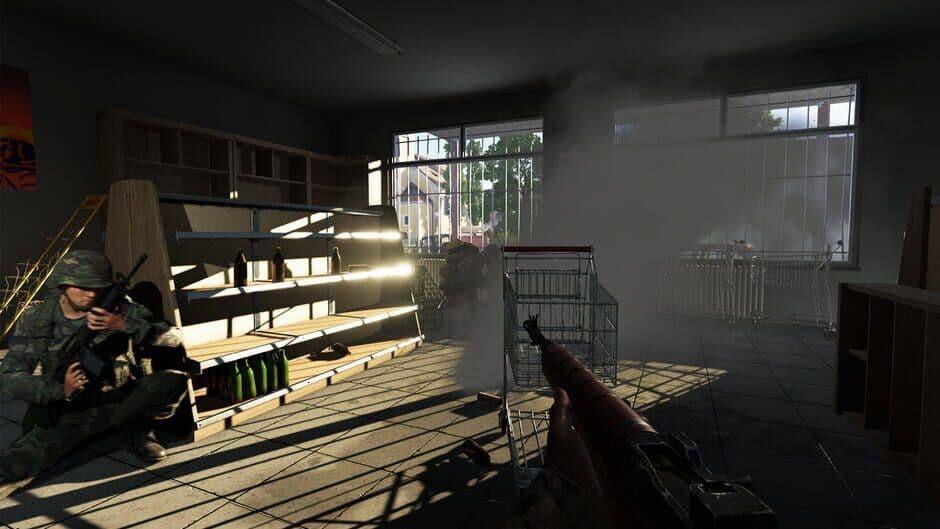
Stability and hit registration are critical factors in the game's tactical experience.
Enfusion’s Battlefield
Enfusion gives Arma Reforger a visual identity built around scale rather than spectacle. Terrain detail holds up well during slow exploration, and lighting helps separate open fields, shaded forests, village streets, and interior spaces without turning the environment into a series of artificial set pieces. Foliage is particularly important because it is both visual cover and tactical information: a treeline can conceal movement, while an exposed field communicates danger before the first shot is fired. At distance, however, the visual fidelity becomes less consistent. Vegetation, objects, and terrain detail can appear less precise across long sightlines, and the subdued Cold War palette sometimes makes enemy identification difficult even when the scene is technically impressive.
Animation quality is similarly functional rather than polished. Weapon handling, stance changes, reloading, healing, and entering vehicles communicate the player’s actions clearly enough for the simulation to work, but transitions can feel rigid and occasionally lack the fluidity expected from a modern action game. That roughness matters because Arma Reforger asks players to read small changes in posture and equipment during tense encounters. When a movement transition looks awkward or an interaction does not visually resolve cleanly, the player loses confidence in whether the problem was tactical or technical. The game’s visual fidelity supports immersion, but its animation rarely sells the physicality with the same conviction as its weapons and environments.
Performance instability is the more serious concern. Arma Reforger can feel responsive during quiet exploration and smaller encounters, yet crowded battles place simultaneous demands on rendering, simulation, physics, and networking. Large firefights with vehicles, smoke, explosions, and many players are where frame pacing becomes most vulnerable, producing stutter or visible frame-rate drops that make aiming and movement less dependable. That is not a cosmetic complaint: this is a lethal shooter in which a fraction of hesitation can determine whether a player identifies a muzzle flash, reaches cover, or lands a shot. Hardware and platform differences naturally affect how severe the problem feels, but no version is entirely insulated from the cost of large-scale warfare.
Server performance complicates that judgment further. A match may look smooth from the player’s perspective while the battlefield simulation struggles to keep every soldier, vehicle, projectile, and interaction synchronized. When server load rises, delayed responses become especially damaging in close combat: a player can appear to reach cover locally while remaining exposed to the server, or fire at a target whose position has already shifted elsewhere. Arma Reforger’s tactical design depends on cause and effect being trustworthy—spotting an enemy, firing, moving, and taking cover must produce predictable outcomes. Technical instability breaks that chain and turns a tactical mistake into a question of whether the game registered the same moment the player experienced.
In Arma Reforger, a network problem is not a minor inconvenience; it can rewrite the outcome of an entire operation.
When the Simulation Comes Apart
The game’s bugs are most damaging when they affect systems that players must use repeatedly. Animation glitches can make character states difficult to read, physics can produce awkward vehicle behavior or collisions, and inventory interactions can interrupt the preparation that the combat loop depends on. Spawning and interaction prompts are similarly important: if a player cannot immediately tell where they can deploy, what equipment they can access, or which object is currently interactable, the resulting confusion feels like interface failure rather than meaningful simulation. None of these issues destroys every match, but their cumulative effect is substantial because Arma Reforger makes players perform more administrative actions than a conventional shooter.
Vehicles reveal the gap between design ambition and technical reliability particularly clearly. A truck, armored vehicle, or helicopter is supposed to extend the team’s operational reach, but awkward physics, inconsistent collision behavior, or unclear interaction states can turn transportation into a source of avoidable risk. That risk is more frustrating here than in a standard vehicle shooter because a vehicle often carries ammunition, supplies, or an entire squad’s time. Losing it to enemy action creates a compelling battlefield consequence; losing it because the machine behaved unpredictably makes the same consequence feel arbitrary.
AI is another pressure point, especially in experiences that rely on non-player forces or Game Master-created scenarios. AI units can populate a battlefield and provide opposition, but their usefulness depends on whether they move, detect, and engage in ways that support tactical decision-making rather than simply generate targets. When behavior is inconsistent, a carefully planned approach can become difficult to interpret: an enemy may fail to react to an obvious threat, while another engagement escalates for reasons the player cannot identify. Arma Reforger’s player-versus-player battles are less dependent on this layer, but unfinished AI systems still limit the sandbox’s ability to provide dependable solo or hosted military scenarios.
Audio and prompts can fail in subtler ways. The soundscape is one of the game’s strongest information systems, yet any inconsistency in directional audio, radio communication, or weapon feedback damages the player’s ability to reconstruct an engagement. Likewise, an interaction prompt that appears late, disappears unexpectedly, or does not make the available action clear adds friction without deepening the simulation. The combat loop praised earlier remains excellent when the player can read the battlefield; bugs and interface ambiguity are most harmful because they interfere with that reading process.
Progress, Not Polish
Arma Reforger has improved materially through post-launch development. Continued patches, content additions, and technical work have expanded the game beyond its early limited foundation, while improvements to stability, gameplay systems, vehicles, and multiplayer functionality have made the sandbox more dependable than it was at release. That progress deserves credit because the game’s core promise requires more than new weapons or scenery; it needs a functioning framework in which servers can host large battles without constantly undermining them. The direction is encouraging, and the difference between the early version and the current experience is meaningful.
However, improvement is not the same as completion. Post-launch fixes can reduce recurring problems without eliminating the underlying volatility of a game simulating a large number of interconnected systems. New content also increases the number of interactions that must remain stable across official modes, community scenarios, and Workshop configurations. Arma Reforger’s development has therefore strengthened the foundation while preserving its central tension: each update makes the sandbox more capable, but the game still feels like an evolving platform rather than a technically settled military shooter.
The interface remains one of the clearest barriers for newcomers. The map contains valuable information about objectives, friendly positions, bases, and movement routes, but understanding what matters in the current battle requires more than following a marker. The compass supports orientation, yet players must combine it with terrain, map knowledge, radio calls, and squad instructions to navigate effectively. Inventory management, radio controls, equipment access, and respawn information are functional once learned, but they rarely form a smooth first impression. Arma Reforger teaches its systems through repetition and mistakes, which suits veterans who enjoy mastering procedures but leaves new players uncertain about whether they are making a tactical error or simply missing an undocumented interaction.
The onboarding problem is especially severe because the game has no single context in which every system is introduced at a comfortable pace. A newcomer can encounter combat, logistics, vehicles, radio communication, construction, and deployment decisions almost immediately, often while surrounded by teammates who already understand the routine. The absence of clear guidance makes early deaths difficult to interpret: was the player exposed, poorly equipped, out of position, or unable to use the relevant interface quickly enough? Arma Reforger’s commitment to player responsibility is admirable, but responsibility works better after the game has established the basic vocabulary of the battlefield.
Accessibility options do little to soften that entry cost. The game’s complexity is not just a matter of difficulty; it comes from the number of simultaneous demands placed on the player, from identifying targets and managing equipment to reading the map and communicating under pressure. Limited assistance for navigation, visual clarity, audio interpretation, and simulator-specific controls means that players who need more readable UI options or stronger guidance must often compensate through external knowledge and practice. Control customization can reduce some personal friction, but it cannot solve unclear prompts, dense information, or the absence of meaningful difficulty customization across the broader sandbox. Arma Reforger’s realism is a deliberate design choice; its accessibility limitations are less defensible because they make learning the design harder than mastering it.
The technical verdict is therefore inseparable from the game’s tactical identity. Arma Reforger’s Enfusion presentation creates convincing military spaces, and post-launch development has made the platform broader and more stable, but frame-rate instability, server strain, desynchronization, awkward interactions, and unfinished systems still intrude at precisely the moments when precision matters most. The interface teaches slowly, accessibility tools do not sufficiently reduce the simulator’s barriers, and network problems can turn a carefully planned operation into an unreliable exchange of delayed outcomes. Arma Reforger remains capable of producing extraordinary battles, but its technology does not yet support those battles with consistent confidence. That cost will matter heavily when deciding whether the game is worth playing, particularly for anyone approaching this demanding sandbox without an experienced community to absorb its rough edges.
Is Arma Reforger Worth Playing? Content, Replayability, and Genre Competition
The uncomfortable truth about Arma Reforger is that its value cannot be measured by a mission count. Its replayability comes from Conflict matches, human-directed Game Master sessions, persistent server communities, and Workshop content—not from a traditional campaign or a fixed sequence of scenarios. That makes the game unusually durable when its social ecosystem is healthy, but unusually thin when a player logs in alone and finds no coordinated group to join. Arma Reforger is worth playing, but only if you are buying into a living multiplayer sandbox rather than a complete military shooter with a conventional content package.
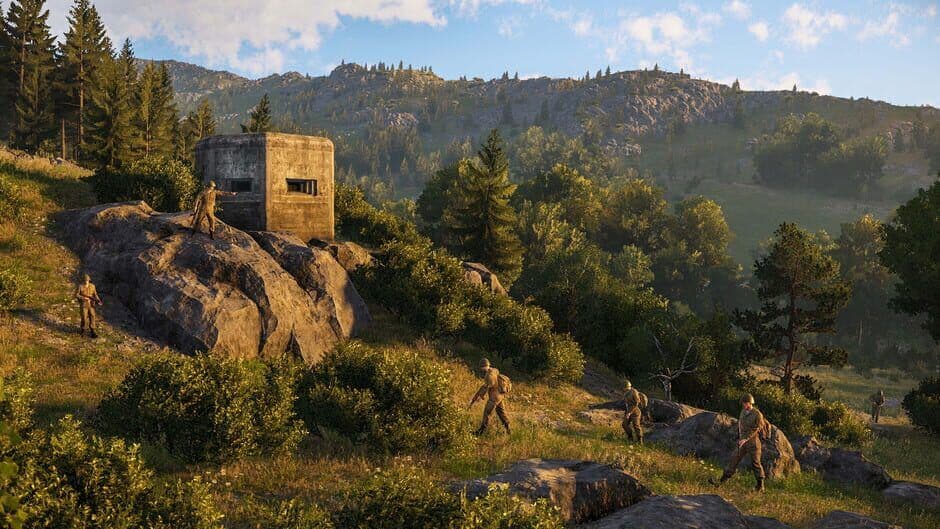
High-fidelity weapon models and gear customization.
A Sandbox Instead of a Campaign
The core content model is remarkably clear. Conflict provides the repeatable frontline, Game Master supplies human-authored scenarios, and Workshop content expands the available equipment, factions, maps, and rules. Persistent communities bind those elements together by establishing server cultures, recurring operations, and expectations about communication and roles. A fixed mission list would offer more predictable content, but it would also impose a ceiling; a good Arma Reforger server can generate a reconnaissance operation, a failed assault, and an improvised defensive stand from the same basic tools.
That player-driven structure is the game’s strongest argument for long-term value. Conflict remains fresh when player behavior changes the battle: a squad that secures a supply route creates a different match from one that ignores logistics and rushes objectives, while a Game Master can turn an ordinary patrol into a developing operation. Workshop additions can also change the practical possibilities of the sandbox rather than merely adding cosmetic variation. A new vehicle, faction, or scenario matters when it creates a different problem to solve—how to defend against an unfamiliar threat, move supplies across a new map, or coordinate equipment that the official modes do not provide.
Arma Reforger has more replayability than authored content because its real content is the behavior of the people occupying the battlefield.
However, player-driven longevity is not the same as infinite variety. Once the novelty of Everon, Arland, the weapon handling, and the major Conflict routines fades, repeated matches can settle into familiar patterns: capture an objective, establish a base, attack the next point, and respond to the counterattack. The systems create room for improvisation, but they do not guarantee that players will use that room imaginatively. A server dominated by uncoordinated point pushes can make the game feel repetitive long before its underlying mechanics are exhausted, while a skilled community can keep the same map compelling by changing routes, roles, and operational priorities.
Game Master sessions offer greater variety, but they inherit the limitations of their host. A restrained host can make a quiet patrol meaningful by allowing reconnaissance and preparation to matter; an inexperienced one can fill the map with enemies until every scenario becomes an arbitrary shooting gallery. Workshop content extends the game’s lifespan, but mod quality, server requirements, and compatibility determine whether that content feels like a genuine expansion or another barrier between the player and a match. Arma Reforger’s replayability is therefore best understood as a ceiling rather than a guarantee: the tools support years of play, but the community must continually convert those tools into worthwhile situations.
The Solo-Player Question
For solo players, the value proposition is much less secure. A lone player can join public Conflict matches, scout routes, defend objectives, transport equipment, operate vehicles, or contribute through a specialist role, and those activities can still produce satisfying moments. A well-timed observation report, a successful supply run, or a defensive position held long enough for reinforcements to arrive can matter even when nobody knows the player’s name. But those contributions depend on a team responding to them. Without communication, a solo player often has freedom of movement without meaningful influence over the wider battle.
The absence of a conventional campaign makes that limitation impossible to ignore. There is no authored solo progression that teaches the systems through escalating missions, no narrative structure to justify playing independently, and no dependable offline alternative capable of replacing a populated server. Game Master can provide more directed scenarios, but only when a human host is present and competent enough to create them. A solo player who dislikes voice communication, public-server uncertainty, or the time required to find a suitable community will encounter far less content than the Workshop catalogue suggests.
This is where the game’s technical and interface friction also carries greater weight. In an organized squad, another player can explain deployment, identify an enemy, direct a vehicle, or clarify why a position matters. Alone, the same player must learn inventory management, map interpretation, radio use, logistics, and battlefield awareness through repetition and failure. The slow travel previously identified as a strength when it builds anticipation becomes far more punishing when nobody is talking and the player has no reliable sense of where the battle is moving. Arma Reforger does not reject solo players, but it does make them pay the full price of its learning curve without providing the social reward that justifies it.
Who Should Buy It?
Arma Reforger is aimed first at military-simulation veterans and organized squads. Players who enjoy treating a radio call as actionable information, choosing between a fast route and a concealed one, or spending a match supporting an operation rather than chasing kills will find a system that consistently rewards their priorities. Sandbox creators and experienced Game Masters are another natural audience because the game’s most distinctive feature is not a weapon roster but the ability to shape circumstances for other players. The ideal buyer is comfortable with uncertainty, procedural learning, and the possibility that a successful session may contain long stretches of preparation before a decisive engagement.
Casual shooter players are a different proposition. Reforger gives up immediate target clarity, rapid respawns, constant action, transparent progression, and convenient matchmaking in exchange for lethal combat, uncertain information, and player responsibility. A mainstream shooter can deliver a satisfying match within minutes because its objectives, enemy silhouettes, loadouts, and rewards are designed for immediate comprehension. Arma Reforger may spend those same minutes on deployment, equipment checks, movement, and reconnaissance before the player even sees an opponent. That friction is not an accidental flaw in the game’s identity, but it means casual players are likely to experience the cost before they understand the payoff.
The game also sits between different kinds of tactical shooter. Compared with Squad, Arma Reforger is less tightly structured and more willing to let logistics, exploration, and improvised activity determine the shape of a match. Squad generally gives teamwork a clearer institutional framework, while Reforger gives players more freedom to decide what the operation should become. Compared with Hell Let Loose, Reforger is less immediately readable and less focused on a clearly defined front-line rhythm; Hell Let Loose makes objective progress and battlefield roles easier to understand, while Arma Reforger asks players to interpret a more open-ended situation. The result is that Squad and Hell Let Loose are more dependable recommendations for players who want organized teamwork without learning an entire military sandbox, whereas Reforger offers the higher ceiling for players willing to manage that complexity.
The comparison is not simply about realism. Squad and Hell Let Loose both demand communication, but their pacing and objective structures make cooperation more visible to the average player: squads move toward identifiable goals, defensive failures are easier to read, and the battle generally communicates its intended rhythm. Arma Reforger’s logistics, radios, forward positions, and transport can produce deeper operational consequences, yet those systems become valuable only when players coordinate beyond the immediate objective. A team in Reforger can build a sustainable attack from supplies and staging positions; it can also scatter across the island and make every individual effort feel irrelevant. That volatility is the price of its greater freedom.
Arma 3, Reforger, and the Wider Genre
The most important comparison is with Arma 3, and it is not an easy victory for the newer game. Arma Reforger benefits from a newer engine, a more streamlined scope, a more modern interface direction, and console availability that makes the series’ simulation more accessible to players outside the traditional PC audience. Its focused Cold War setting also gives the sandbox a cleaner identity than Arma 3’s broader, more accumulated framework. But Arma 3 has the larger content library and a mature mod ecosystem built over years, giving it a depth of missions, scenarios, factions, and community traditions that Reforger cannot simply reproduce by having newer technology.
Reforger’s advantage is coherence rather than volume. Its systems are easier to understand as parts of one multiplayer battlefield, and the smaller scope makes it a more approachable entry point into Bohemia Interactive’s style of simulation. Arma 3 remains the stronger choice for players who want an enormous catalogue of established content and a deeply developed mod scene; Arma Reforger is preferable for players who want a more focused, contemporary platform with a lower conceptual ceiling at the start. The newer engine and console reach matter, but they do not erase the practical value of Arma 3’s accumulated ecosystem. Choosing between them depends on whether accessibility and cohesion matter more than breadth and maturity.
Against mainstream military shooters, Reforger wins through consequence. A supply route can determine whether a captured position survives, a radio report can redirect a squad, and a concealed approach can succeed because the enemy never receives enough information to respond. Those outcomes are more varied and personally meaningful than a progression system assigning points for a familiar objective. But Reforger sacrifices convenience at every stage: movement is slower, enemy locations are less obvious, deaths are harder to interpret, progression is not the central reward, and the game often expects players to create their own momentum. Battlefield and Call of Duty are better at delivering immediate entertainment; Reforger is better at making a single successful operation feel like something the player and their team actually accomplished.
The asking price must therefore be judged against time and temperament, not just against the amount of installed content. A buyer receives a multiplayer framework with substantial replay potential, but also an early-access legacy, technical roughness, limited conventional modes, and a learning process that can consume many sessions before the systems become intuitive. That is a fair exchange for a player who will join organized communities, explore Workshop servers, or learn to use Game Master tools. It is a poor exchange for someone expecting a campaign, polished solo progression, or a straightforward casual shooter. Arma Reforger can justify its cost through hundreds of emergent hours, but it cannot promise that value to every type of player.
The recommendation is consequently specific rather than universal. Buy Arma Reforger if the idea of joining a server, learning its culture, and turning ordinary systems—radios, transport, supplies, terrain, and objectives—into a shared operation sounds more appealing than unlocking another weapon skin. Choose Squad or Hell Let Loose if you want structured teamwork with clearer battlefield communication and a gentler path to competence. Choose Arma 3 if the breadth of its established content and mature mod ecosystem matters more than Reforger’s newer foundation and focused scope. Choose a mainstream shooter if immediate action, clear objectives, progression, and convenience are non-negotiable.
Arma Reforger is worth playing because its best content is not consumed once; it is reconstructed every time a group of players makes different decisions under pressure. Its value weakens sharply for solo players, casual audiences, and anyone unwilling to tolerate technical instability or a demanding interface, while its strongest competition is often more accessible or more content-rich. Yet for military-simulation veterans, organized squads, and sandbox creators, the combination of Conflict, Game Master, Workshop support, and persistent communities provides a durable alternative to fixed mission lists. Arma Reforger is not the most complete military shooter available—it is the one with the most room for players to make the battlefield their own.
Final Arma Reforger Verdict: A Rewarding Sandbox With a High Entry Cost
Arma Reforger is a game that can make a routine supply run feel more important than a scripted boss fight—and then waste that momentum on a broken interface or an uncoordinated server. Its greatest achievement is the way reconnaissance, preparation, communication, and battlefield positioning combine into stories no mission designer could reliably stage. Its greatest liability is that the game still asks players to tolerate too much friction before those stories emerge.
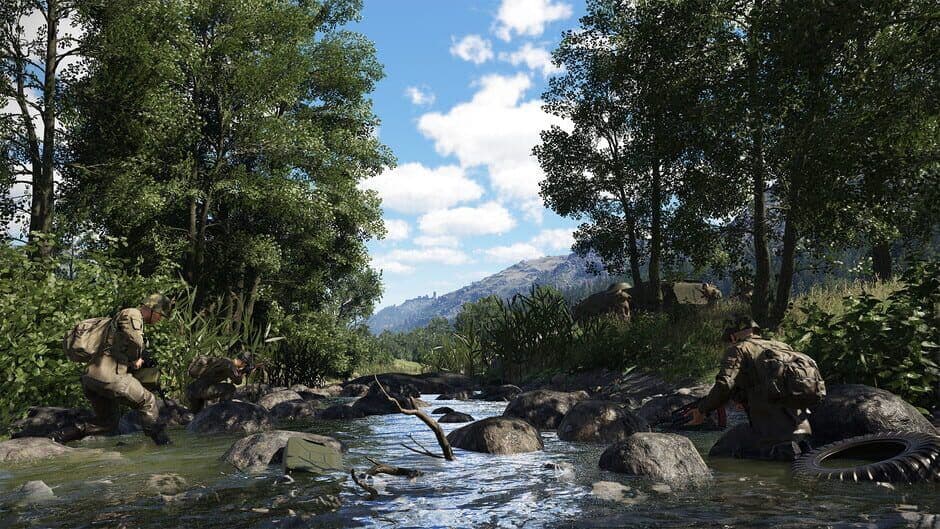
High-fidelity assets reflect the game's commitment to realism.
The Battlefield Is the Reward
The best reason to play Arma Reforger is the possibility of an operation developing its own logic. A squad scouts a forest route, discovers that an enemy position is stronger than expected, redirects a transport convoy, establishes a defensive line, and eventually launches a counterattack with infantry and vehicle support. None of those events needs to be scripted for the sequence to feel authored; the game’s systems create the circumstances, and the players supply the decisions. That relationship between communication, preparation, resources, and success is unusually satisfying because victory belongs to the whole operation rather than the player with the highest kill count.
Arma Reforger’s finest moments are not spectacles the game performs for you; they are plans that survive contact with another team.
The simulation depth is valuable precisely because its systems reinforce one another. A radio call can redirect a squad, map knowledge can make a concealed approach safer than a direct route, ammunition and construction supplies can determine whether a captured position remains useful, and a vehicle becomes strategically meaningful only when someone gives it a target worth reaching. These mechanics create consequences across different roles: the player driving a truck may enable the assault that an infantry squad later receives credit for, while a careful reconnaissance report can prevent an armored push from entering an ambush. Arma Reforger succeeds here where many tactical shooters separate support work from combat; its strongest battles make every contribution part of the same chain.
That payoff remains conditional, however. A defensive stand is thrilling when teammates understand the position, maintain supplies, and respond to enemy movement; it is merely a long wait when the squad scatters or nobody communicates. The same is true of combined-arms play: infantry, vehicles, transport, and reconnaissance can create a layered operation, but the game does not guarantee that players will coordinate those tools. Arma Reforger has a higher ceiling than most military shooters because it leaves more decisions to the players, but that freedom also means a bad team can turn extraordinary depth into disconnected errands.
The Entry Cost Is Still Real
The technical roughness is serious enough to affect the recommendation, not merely the presentation. Performance and server strain become most damaging during the large engagements that are supposed to justify the game’s scale, when vehicles, smoke, explosions, and many players place simultaneous demands on rendering and simulation. Network instability is especially harmful in a lethal shooter: delayed hit registration, desynchronization, or an interaction that fails to resolve can make the difference between a tactical mistake and an outcome the player never had a fair chance to understand. Inconsistent vehicle behavior, awkward animations, unclear prompts, and interface friction further undermine confidence in a game that depends on precise cause and effect.
Continued updates have improved Arma Reforger’s foundation, but progress does not make the current experience technically settled. The game is more capable than its early limited version, and Workshop growth gives it a broader future than its official modes alone suggest. Still, a player buying it today is investing in an evolving platform, not receiving a fully polished military package. That distinction matters most because Arma Reforger’s authored content is sparse: when a server loses momentum, there is no conventional campaign or curated mission structure waiting to provide a dependable fallback.
Accessibility is the other major cost. Limited onboarding leaves newcomers learning deployment, radio use, equipment management, logistics, vehicle roles, and map reading through repeated failure, often while trying to understand why they died in the first place. Long travel stretches can create meaningful anticipation when a squad has a clear plan, but they become empty time when the frontline has shifted and nobody knows where the battle is happening. Teamwork is therefore not just a bonus feature; it is the mechanism that converts Arma Reforger’s friction into purpose. Without it, the player pays for the simulation’s complexity without receiving its social and strategic reward.
Your Server Matters as Much as the Game
The public-server experience is too inconsistent to ignore. Poor matchmaking or uneven teams can produce a cascade in which one side captures ground, secures better forward positions, controls reinforcement routes, and repeatedly overwhelms a scattered opponent. Uncoordinated teammates can reduce Conflict to repetitive point trading, while griefing, trolling, or weak administration can ruin a carefully prepared operation before it begins. Game Master quality varies just as sharply: a disciplined host can build a responsive scenario around reconnaissance and consequences, while an inexperienced one can flood the map with arbitrary enemies and turn the simulation into a shooting gallery.
This makes the recommendation unusually dependent on context. A curated server with active communication can reveal Arma Reforger’s intended experience within a single evening; a poor public lobby can make the same game feel empty, hostile, or unfinished. The community is not simply extra content surrounding the game—it is part of the game’s practical quality. Workshop growth strengthens the long-term outlook by adding new maps, equipment, factions, and scenarios, but it also increases the need for curation, compatibility management, and trustworthy server administration.
Who Should Buy Arma Reforger?
Buy Arma Reforger now if you want a demanding multiplayer military sandbox and are prepared to find the right community. Organized squads, military-simulation veterans, aspiring Game Masters, and players who enjoy logistics as much as firefights will find depth that conventional shooters cannot replicate. The game is particularly rewarding for anyone who considers a successful supply run, a well-timed reconnaissance report, or a defense held until reinforcements arrive to be a genuine victory rather than a distraction from the shooting.
Wait for further updates if you are interested in the concept but unwilling to tolerate technical volatility, unclear onboarding, or a still-evolving content foundation. The core systems are already strong enough to justify the investment for committed players, but the unresolved roughness is concentrated in the moments where reliability matters most: crowded battles, vehicle operations, public matchmaking, and the basic interfaces newcomers must learn. Waiting is sensible for players who want the platform to mature before committing their time, particularly if they do not already have a group or server community in mind.
Arma Reforger is a poor fit for anyone seeking a campaign, fast progression, immediate target clarity, or dependable action every few minutes. Arma 3 remains the better choice for players who value a much larger established content and mod ecosystem. Squad is the stronger recommendation for structured teamwork with clearer battlefield roles, while Hell Let Loose offers a more readable front-line rhythm and a gentler path into large-scale coordination. Players who want convenience, authored spectacle, and rapid matches should choose a conventional military shooter instead.
Pros and Cons
Pros
- Emergent multiplayer battles: Reconnaissance, defensive stands, supply operations, and counterattacks develop from player decisions rather than scripted sequences.
- Meaningful simulation depth: Communication, positioning, preparation, ammunition, construction, transport, and terrain affect one another instead of functioning as isolated systems.
- Strong Cold War coherence: Period equipment, factions, radios, vehicles, and military procedures give the sandbox a consistent identity.
- High replayability ceiling: Conflict, Game Master, persistent communities, and Workshop content can produce dramatically different operations on the same maps.
- Community creativity: Workshop additions and capable hosts can expand the game beyond what its official package provides.
Cons
- Technical instability: Performance drops, server strain, desynchronization, awkward vehicle behavior, and unreliable interactions can directly alter firefights and operations.
- Severe onboarding burden: Limited guidance forces new players to learn complex systems through failure, often without explaining whether the cause was tactical or technical.
- Long stretches of dead time: Travel and redeployment are meaningful only when tied to a coordinated plan; otherwise they become empty commutes.
- Dependence on teamwork: Solo players and uncoordinated squads have far less influence over the wider battle than the game’s freedom initially suggests.
- Inconsistent public servers: Poor matchmaking, uneven teams, griefing, weak administration, and uneven Game Master quality can undermine the entire session.
- Sparse authored content: Without a conventional campaign or reliable solo structure, the game’s value depends heavily on its community and continued development.
Arma Reforger’s long-term outlook is promising because its foundation is unusually expandable. Continued updates can improve the technical systems that currently interrupt the simulation, while Workshop growth can provide the scenarios and variety that a fixed campaign would otherwise supply. But that potential should be treated as an investment, not a guarantee: community content only helps when it is well made, servers only matter when they are well run, and future updates cannot retroactively give every current match meaningful coordination.
The final verdict is clear. Arma Reforger is a rewarding military sandbox with a high entry cost, not a universally polished shooter. Its best battles are among the most convincing examples of emergent multiplayer design, built from plans, mistakes, supplies, terrain, and human communication. Its worst sessions expose the limits of unfinished technology and player-dependent structure. Buy it now if you want to participate in that evolving simulation and are willing to do the work; wait if you need greater reliability; choose Arma 3, Squad, Hell Let Loose, or a conventional shooter if you want a more complete and immediately legible experience.