Sooner or later every Barotrauma crew ends up doing the same stupid, irresistible thing: swimming out of a perfectly good submarine, cutting into a structure that has been sitting in the rock since before anyone on Europa was born, and carrying something back out of it that screams the whole way home. The ruins are the one place in the game where the fiction is older than the colony, and the beings who built them are its largest open question.
Start with what to call them, because that is where the trouble begins. The name that circulates in fan summaries and aggregated lore write-ups appears nowhere in the game, nowhere in its data files, and nowhere in a decade of developer posts. Barotrauma's own word, worn by a creature ID, an update title and the lead developer's own writing, is the Ancients.
The more interesting surprise is that the game does tell their story, and tells it more completely than its reputation suggests. Six translatable inscriptions on ruin walls, a handful of item descriptions, a scatter of loading-screen text and one endgame encounter describe a civilisation that formed under the ice in total safety, encountered something it called YOH-WEY, built a fortress and a "Great Sphere" to house it, stopped growing, and wore away. What the ruins are engineered never to hand over is the one piece of evidence that would settle any of it: a body.
So this is a reconstruction, not a recap, and it shows its working. Everything below is labelled by where it comes from — text the game itself displays, statements the developers have made, or interpretation, whether that interpretation is a wiki editor's or ours. That distinction is the whole game with Barotrauma lore, because almost every false claim in circulation is an inference that quietly lost its qualifier. The final section hands you the method so you can run the check yourself, and it contains no plot at all. Only one section spoils the campaign, and it is fenced off and announced; everything else is safe for anyone mid-campaign.
The Game Never Names Them Outright — But It Does Call Them the Ancients
Nobody in Barotrauma sits you down and tells you who built the ruins. There is no codex entry, no archivist at the outpost with a lore dump, no mission briefing that opens with a species name. (For anyone who arrived here from a search rather than from a campaign: Barotrauma is a 2D co-op survival horror submarine simulator from FakeFish and Undertow Games, published by Daedalic, set beneath the ice of Jupiter's moon Europa, and it reached 1.0 on 13 March 2023.) The naming happens somewhere much less dramatic than a cutscene — in the game's data files, in the title of an update, and in the way the developers write when they are not writing fiction at all.
Start with the piece of evidence that no third party can edit. Barotrauma ships a creature entity whose internal identifier is the single word Ancient — that is game data, not wiki wording and not marketing copy. Internal IDs are the strings the developers type into the content files so the engine can find things, which makes them about the closest thing a game has to a legal name; nobody picks one to sound good. Where you actually encounter that creature, and what it looks like when you do, belongs to the spoiler-fenced section near the end of this article and arrives with a warning. For now the only thing that matters is that somebody at the studio typed that word into the game.
The next two pieces are the developers speaking in their own voice. On 27 October 2021 the studio shipped a complete overhaul of the alien ruins and put the species in the product name: the update is called Among the Ancients. You do not title a release after a people you have not settled on a word for. Three years later, in a September 2024 developer post about further work on the ruins, Regalis — Barotrauma's lead developer — writes about "the ancients" in passing, lowercase and unglossed, the way you use a term you assume your reader already shares. Neither of those is a lore document, and that is precisely why they carry weight: neither one is being careful. The fourth piece is the quietest of the lot, and it sits in the game's own files, where the same root is bolted onto things that have nothing to do with any lore page — the Ancient Weapon you can pull out of a ruin, and an achievement whose identifier is achievement_ancientnovelty.
Now run the same question from the other direction, against the proper noun that circulates in third-party lore summaries of this game:
| Where the game and its developers use their word | Where the circulating name turns up |
|---|---|
In the game's own data, as a creature with the internal ID Ancient |
In no in-game text or data reference we could check |
| In a product name — the October 2021 ruins overhaul, "Among the Ancients" | In no update title and no developer post, across a decade of them |
| In the lead developer's own prose, used without explanation in a 2024 post | Nowhere on the official wiki, including across 46,186 archived wiki URLs |
In shipped assets — the Ancient Weapon, and the ID achievement_ancientnovelty |
Nowhere in the community Fandom wiki's full-text index, which returns zero |
Those four checks on the right are worth spelling out, because they are the kind you can repeat. The official wiki was enumerated through the Internet Archive — every page it has ever captured under that path, 46,186 URLs — and not one page title carries the name. The community-run Fandom wiki's full-text index returns nothing for it at all, while the same search for "Ancients" returns the Ancient Weapon, Alien Ruins, the Fractal Guardian and more besides. Negative evidence is never absolute, so the honest sentence is "no source we could check uses it," not "the word does not exist in Barotrauma." But four independent angles all coming back empty is about as close to settled as a question like this gets. How that happened is guesswork, and this is ours: it is a perfectly serviceable science-fiction common noun for a vanished elder species, it fits the setting well enough that nobody thought to check, and somewhere along the line it hardened into a capitalised proper name the game has never used.
None of which, though, gets you the thing most lore summaries quietly assume next — that the beings called Ancients are the beings who built the ruins. Watch where the evidence actually splits, because this is the seam the rest of the article is built over. That the ruins had alien builders is stated: an in-game loading tip says so in the game's own words, describing "the presumably extinct alien civilization that built the ruins scattered all across Europa." That those builders are the Ancients is not stated anywhere. The official wiki — hosted by the developers but written by players, a distinction the final section turns into a whole working method — marks the gap with a single word, saying the Ancients are "implied" to be the civilization that built the ruins. That is a wiki editor's inference, flagged as an inference by the editor who wrote it, and it is the most important qualifier in this piece. Everything that follows sits on top of it.
Read that loading tip once more for its hedges, too, because it is being careful in a way that is easy to skim past. "Very little is known," it opens — known by whom? Not by the game. By Europa's colonists, the people whose salvage runs, research contracts and expedition reports make up the entire human half of this fiction. "Presumably extinct" is their presumption. The loading tips are written from inside the setting, as a colony's working knowledge rather than as narration from above, which means that when the game says nobody knows something, it is telling you as much about the people doing the looking as about the thing being looked at. Keep the word "presumably" somewhere you can see it.
So you need two standards of proof, held apart, because the game holds them apart. The name is solid — use "the Ancients," which is what the data, the update title and the developers themselves use. The attribution is an inference: "the Ancients are implied to have built the ruins" is the accurate sentence, and "the Ancients built the ruins" is a slightly stronger claim than anything Barotrauma actually makes. Get fussy about that distinction this early, because the gap between what the game writes down and what has been worked out from it is where every open question in this article lives.
Which leaves an awkward problem for anyone trying to reconstruct a history. If nobody in the fiction can name these people, and no scene in the game sits you down and explains them, then the only testimony they left is what they wrote on their own walls — and reading a single word of it depends on an item the game refuses to even name.
The Item Called ??? Is How You Read a Dead Language
The thing you need is a disc, and the game refuses to tell you what it is. Its in-game description reads, in full: "Strange symbols are etched on this circular tablet." That is the entire text — one sentence, purely physical, the note of a salvager describing an object they cannot identify. The game has it turn up rarely inside alien ruins, so plenty of crews go whole campaigns without ever holding one. And where every other object in your inventory carries a name, this one carries three characters: ???. That is not a placeholder waiting on a patch. It is the item's name field, and it stays that way for as long as you play.
Which is a deliberate withholding, because the game's own files are perfectly clear on the point. The internal identifier is alientranslator — and internal IDs, as the naming evidence in the previous section showed, are the closest thing an object in a game has to a legal name. The object in your hands is an Alien Translator. Somebody at the studio typed that word into the content files and then built an interface that will not say it out loud. The developers know what the disc is. Your character is not permitted to.
What the Alien Translator buys you is a single extra option. With one in your inventory, the game gives you the choice to listen when you interact with alien writing. Notice the verb, because a game with a translator item in it has "read," "decipher" and "translate" sitting right there, and this one reached past all three for the word that belongs to sound. That is our reading of the word choice rather than anything the game states — but the mechanic underneath it is not ambiguous. You are not standing at a wall working out a script. You are standing at a wall receiving something.
And before it gives you anything, the game files a disclaimer against its own output. Every single translation, all six of them, is prefaced by the same line, which the game itself puts on screen: "A thought forms in your mind. Not clear words or an image, but an understanding nonetheless:" Read that as the specification it is. Not clear words — so what follows is not a transcript. Not an image — so it is not a memory or a vision either. An understanding, which is the vaguest available noun for the contents of a mind, arriving through an instrument nobody has named, in a language whose speakers are gone. Then a colon, and a few lines of flat capitals broken by dashes, with none of the punctuation or grammar you would use to judge tone. The colon is doing a lot of work it cannot support. Everything after it is a rendering, and the game says so before it starts.
Then there are the holes. Across the six texts the token [UNTRANSLATABLE?] appears four separate times, and this is the part worth being precise about: not one of those four falls on a connective or a verb or some piece of grammatical scaffolding you could infer around. Every one of them lands on the noun the line is built on: the subject the sentence exists in order to name. The structure survives the translation intact and the thing it was about does not. Note too that even the failure hedges itself: the game does not print [UNTRANSLATABLE], it prints [UNTRANSLATABLE?], question mark inside the bracket, as though the instrument is not fully confident it has failed. Our reading is that four blanks landing four times on the load-bearing word is not the shape random noise makes. It is placement. The channel is built to drop exactly the words you would most want back.
So the full transaction, start to finish, runs like this. You break into a ruin and come out, if you are lucky, with an Alien Translator the interface calls ??? and describes only as having strange symbols etched on it. You carry it — nameless, taking up a slot on faith — until you find a wall of glyphs somewhere in the next ruin. The prompt does not offer to read it to you; it offers to let you listen. A thought forms in your mind, not clear words or an image but an understanding nonetheless. And then, at the exact point where the sentence names what it is about, the game hands you a bracket with a question mark in it. That is the best available access anybody in this fiction has to what the builders wrote down, and it is worth knowing its condition before you read a word of it.
The economy around the disc says something too, and it says it in numbers the game keeps in its own price data. The tablet has a base price of 500 marks. Habitation, Colony and Military outposts will pay you 30 for one. Most merchants will pay 150. Research outposts will pay 300. A ten-to-one spread between the bottom of that market and the top, with the ordinary trader sitting in the middle, is the kind of signal a game does not put in by accident: to a colony this is a curiosity, and to the people whose entire job is understanding Europa it is a piece of equipment they will bid an order of magnitude to get their hands on. That inference is ours; the numbers are the game's.
Players have not universally enjoyed the joke. In a public discussion thread on the game's own code repository, a community critique of Barotrauma's lore delivery singles out "the language translator being '???' for the entire game," arguing that once you have worked out what the item does, the interface ought to start calling it by its name. That is a community position rather than a developer one, and it is a coherent complaint — you can put hours into an object and never earn the dignity of a label for it. But the anonymity is consistent with everything else here, right down to the question mark inside the failure token. The Alien Translator, an item that will not tell you its own name, is a fitting instrument for a civilisation that will not tell you its own name either.
So read what follows the way an archaeologist reads a damaged tablet, not the way you read a subtitle. Every inscription in the next section is genuine in-game text, and none of it is a direct quotation of anything an Ancient wrote: it is an impression, arriving through an unnamed device, pre-labelled by the game as something short of clear words, with its most important nouns knocked out. The gaps are not a wiki editor's ellipsis and not something a future patch is expected to fill in. They are what the game chose to show you — which is what makes the six texts readable as evidence rather than as scripture. So here they are, and there are only six.
Six Wall Texts, and the Only Time the Ancients Speak for Themselves
Six. That is the entire surviving literature of a species that filled a moon with buildings — six short inscriptions on ruin walls, eighteen lines between them, and not one of them legible without the Alien Translator from the previous section. The official wiki reproduces all six word for word, and a page quoting the game is quoting the game whoever maintains it, so everything in the blocks below is Tier 1: Barotrauma's own text, printed as Barotrauma prints it. The heading above needs one asterisk, and here it is: apart from a single encounter this article fences off behind a spoiler warning at the end, these six are the only occasion in the whole game where the Ancients speak in their own voice instead of being described in somebody else's.
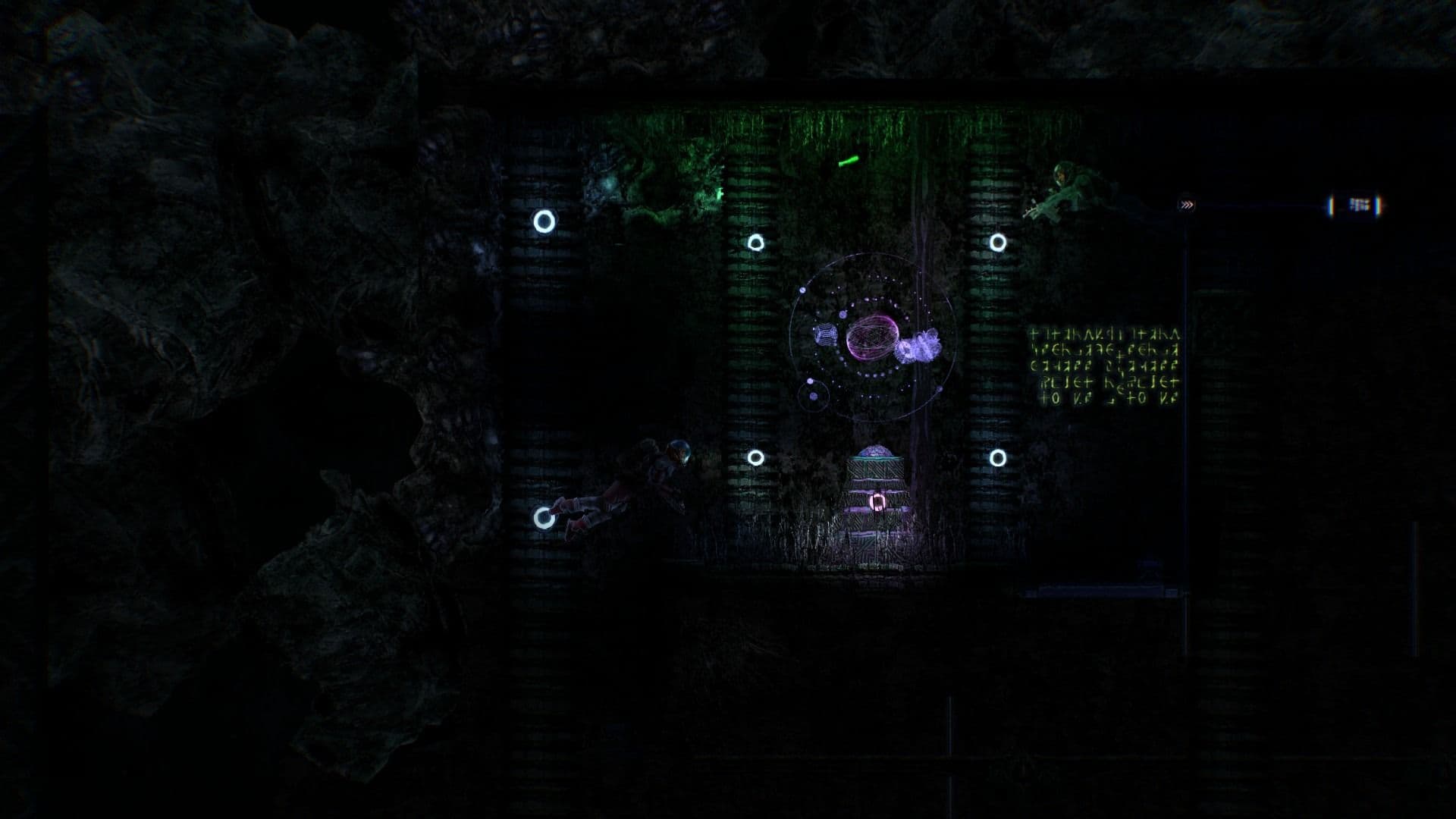
Alien writing on a ruin wall — unreadable without the Alien Translator.
They do not arrive as a document, either. The writings are scattered — found piecemeal, one wall at a time, across separate ruins in separate campaigns, with no index, no dates and nothing carved on them to say whether the one in front of you is a beginning or an ending. A crew can finish a campaign having read two of them and never know it. The numbers below are the wiki's presentation order and nothing more: a filing convention for a page that had to list them in some sequence. The game states no sequence at all. So read them cold, in that arbitrary order, before anyone — this article emphatically included — starts arranging them.
Writing 1
A SINGER IS BORN — AUDIENCE GATHERS
[UNTRANSLATABLE?] SPREADS — OUTGROWS THE CRADLE
FORTRESS IS BUILT — TO HOUSE — TO PROTECT
Writing 2
LIFE INCUBATED UNDER ICE — CONSCIOUSNESS FORMS
KNOWLEDGE COMPOUNDS — CIVILIZATION DEVELOPS
INSULATED FROM DANGER
Writing 3
SONG CONTINUES — GROWTH STAGNATES
THERE ARE NO STARS ONLY HOME
NO THOUGHTS ONLY [UNTRANSLATABLE?]
Writing 4
THE SINGER IS ALONE - THE DEVOTED LONGING FOR [UNTRANSLATABLE?]
A BRIDGE TO BRING NIGH
THE GREAT SPHERE IS BUILT
Writing 5
WHICH CAME FIRST - YOH-WEY, THE DEVOTED, THE ONES FROM THE SKY
THIS ONE DOES NOT KNOW, BUT IS SURELY ONE OF THE LAST
LEST THEY CAN QUENCH THE RADIANCE
Writing 6
THE RADIANCE OF THE GREAT SPHERE
DID WE NOT UNDERSTAND OR DID WE NOT [UNTRANSLATABLE?]
THE BRIDGE CALLS IT FORTH
That is all of it. Eighteen lines, no verbs of tense you can date anything by, and the four blanks the previous section warned about — one apiece in writings 1, 3, 4 and 6, spread evenly enough across the corpus that no single text survives intact as a group.
Five things in those eighteen lines carry capitals of their own, and the game names every one of them without defining any: YOH-WEY, the GREAT SPHERE, the FORTRESS, the BRIDGE, and THE ONES FROM THE SKY. YOH-WEY appears exactly once, in writing 5, inside a list of three items whose order the writer immediately admits they cannot establish. There is no description attached to it, no pronoun that would tell you whether it is a person, a place or an event, and nothing in the other five texts that picks the name back up. Barotrauma does eventually state what YOH-WEY is — in the last hour of the campaign, at the end of the map — and that is where this article deals with it, behind the spoiler warning further down. For the entire ruin-diving span of the game, which is the part almost every player actually experiences, it is a name on a wall with nothing fastened to it.
The others are barely better served. The FORTRESS is built "TO HOUSE — TO PROTECT," and the game's text never says what is housed or what the protection is against. The BRIDGE is named twice — once being built in writing 4, once doing something in writing 6 — and Barotrauma never states what it is or where it goes. THE ONES FROM THE SKY turn up in a single line of writing 5 and are never mentioned again, which is quietly strange for a people whose own words elsewhere are THERE ARE NO STARS ONLY HOME; that observation is ours, and we will leave it there, because guessing who they were would be exactly the kind of theory this article exists to separate out.
Set the ordering problem aside for a moment, though, because two of the six make claims that do not depend on sequence at all — and they are the safest structural ground in this entire piece. Writing 2 is the only origin account the Ancients left. It runs a causal chain with the game's own dashes doing the joining: life incubated under ice, consciousness forms, knowledge compounds, civilization develops. Nothing there is inferred; the text asserts the whole ladder in two lines. And it closes on a condition rather than an event — INSULATED FROM DANGER — which reads less like a boast than like an explanation for the three lines above it. Writing 3 then supplies the only reported turn in the corpus: SONG CONTINUES — GROWTH STAGNATES. Note precisely what that does and does not say. A dash is not a causal claim, and the game never writes that the song caused the stagnation. What it does is put the two in one breath, in one line, as the only place in the six where anything is described as having stopped improving. A rise and an arrest, both stated, neither requiring you to have decided which wall came first.
THERE ARE NO STARS ONLY HOME, the next line of writing 3, is the one sentence in the six that works completely on two levels at once. Literally it is just accurate astronomy: you cannot see a star from beneath kilometres of Europan ice, and a civilisation that grew up down there would have no word for the night sky because it never had one. Thematically it is a description of a horizon that only ever points inward. Our reading is that writing 2's INSULATED FROM DANGER and writing 3's THERE ARE NO STARS ONLY HOME may be the same fact reported twice from opposite ends of a history: first as the shelter that let them rise at all, and then as the ceiling they eventually hit.
Now for the arrangement, and here is the part that matters more than the arrangement itself. The order that follows is ours. Barotrauma supplies none. Nothing in the game numbers these texts, dates them, or indicates which wall was carved first; the wiki's 1-to-6 is a list, not a chronology, and the writings are physically encountered in whatever order the level generator hands them to you. Rearranged, the same eighteen lines will tell you a different story — so treat the sequence below as this article's editorial act performed on the game's words, and keep the two things separate in your head from here on.
Read 2 → 1 → 3 → 4 → 6 → 5, and a shape appears without a single invented word.
It opens under the ice with writing 2: life incubates, consciousness forms, knowledge compounds, insulated from danger. Writing 1 introduces the disturbance — A SINGER IS BORN — AUDIENCE GATHERS — and reports that something the translator cannot name SPREADS — OUTGROWS THE CRADLE, followed immediately by the first building programme: FORTRESS IS BUILT — TO HOUSE — TO PROTECT. Writing 3 is the cost: the song continues, growth stagnates, no stars only home, and a mind reduced to NO THOUGHTS ONLY [UNTRANSLATABLE?]. Writing 4 escalates — THE SINGER IS ALONE - THE DEVOTED LONGING FOR [UNTRANSLATABLE?], a bridge built TO BRING NIGH, and then a second, larger construction project: THE GREAT SPHERE IS BUILT. Writing 6 is the doubt, and it is the only line in all six where the writing says we: DID WE NOT UNDERSTAND OR DID WE NOT [UNTRANSLATABLE?]. And writing 5 closes it, because writing 5 is the only text in the corpus that places its own author in time.
That last point is why writing 5 belongs at the end of any arrangement, and it is worth reading carefully rather than quickly. It is first person and singular — THIS ONE — where the rest of the corpus speaks in passive constructions and collective nouns, and it states its own position plainly: THIS ONE DOES NOT KNOW, BUT IS SURELY ONE OF THE LAST. Nothing else in Barotrauma comes closer to a deathbed note. But look at what the same text opens with. It asks WHICH CAME FIRST - YOH-WEY, THE DEVOTED, THE ONES FROM THE SKY — a question about the order of events — and then answers it with THIS ONE DOES NOT KNOW. Our reading, and it is only a reading: the one Ancient in the game who tries to work out the sequence of their own history is the one who admits they cannot. If you were going to build a refusal to date anything into a corpus of six texts, that is roughly how you would do it. Which leaves LEST THEY CAN QUENCH THE RADIANCE and writing 6's THE RADIANCE OF THE GREAT SPHERE as two lines that genuinely resist a careful reading — there is a THEY there with no antecedent anywhere in the eighteen lines, and no source consulted for this article explains it. That is not a gap we are going to fill.
So the honest summary is a two-parter, and the reader outcome for this section is being able to say which half is which. What Barotrauma states, in its own capitals, is: they grew under the ice in safety, a singer was born and gathered an audience, a fortress was built to house and protect, growth stagnated while the song continued, a bridge and a great sphere were built, someone asked whether they had failed to understand, and someone else wrote that they were surely one of the last. That is quotation, and every word of it is checkable against the six blocks above. What this article added is an order and a set of connections between the texts — that the stagnation follows the fortress, that the sphere answers the loneliness, that the deathbed note comes last. Those are arrangement. It is a good arrangement, we think, and it is still not evidence. The test is simple enough to run on anything you read about this game afterwards: if a claim is in flat capitals with the game's dashes in it, you can go and verify it on a wall; if it is in sentences, somebody put it in that order, and the interesting question is who.
The texts name two building programmes, and the Ancients' own account of themselves is largely an account of construction: a fortress raised to house and to protect, and later a great sphere. Whatever else this civilisation did, by its own testimony it built — and building is the one thing it left behind in bulk. Every ruin any crew has ever cut into is what remains of that programme, which makes the architecture the next witness worth questioning.
The Ruins Were Built to Outlast Their Builders
Start with the question anyone asks a ruin first, and watch Barotrauma decline to answer it. How old is this?
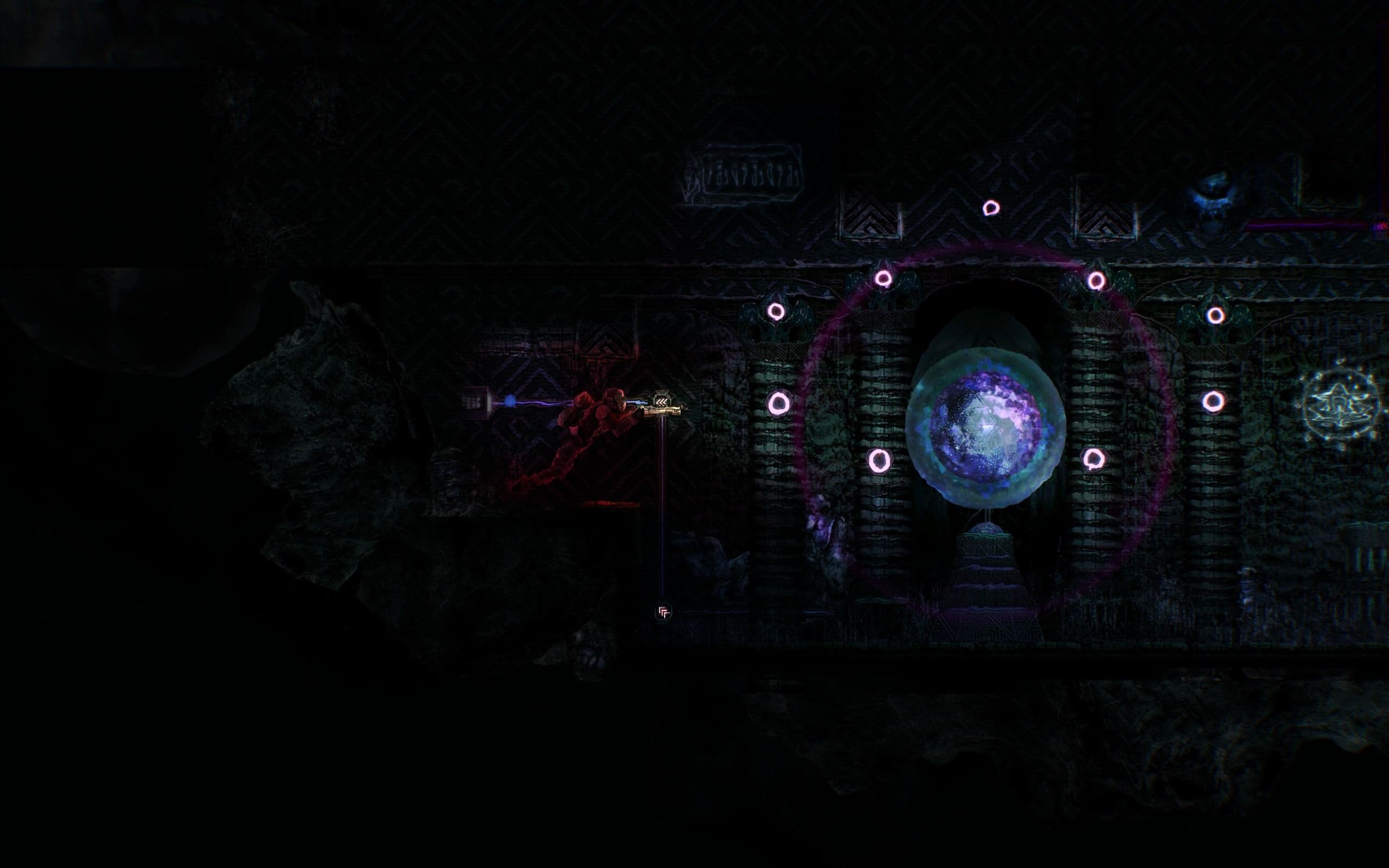
Carved masonry and a working Gravity Sphere trap in the same corridor.
The in-game loading tip this article's first section read for its hedges has a second sentence, and the second sentence is the more interesting half: "The age of the ruins is also a mystery, since the self-repairing properties of the structures and devices make chronological dating methods wildly inaccurate." That is the game's own text, and it is not a shrug — it names a mechanism. Every method of dating a built thing works the same way: find something that changes at a knowable rate and read how far it has got. Corrosion, settling, wear worn into a threshold, a material decaying towards a known state. All of it assumes the building sits still and gets worse. A structure that repairs itself resets the instrument continuously, and the tip is careful to say the devices do it too, not just the walls — so the fittings inside are no more datable than the masonry. Whatever you measure in an Ancient ruin, you are measuring the most recent repair. The building is not old in any readable sense; it is maintained.
That has a consequence worth stating plainly, because it constrains this article as much as it constrains the colonists. There is no timeline. Nothing in Barotrauma supports a sentence beginning "the Ancients died out roughly," because the game has explicitly closed off the only way anyone inside the fiction could find out. The ruins are the primary physical evidence and they have been engineered — deliberately or otherwise — to be silent on the one axis that would turn the wall texts into a history rather than a story.
The material does the same job from the other direction. Another loading tip states that some of the alien structures on Europa "have been constructed of a metamaterial that's outstandingly resistant to physical damage" — note some, not all, which is the game hedging its own claim. Then look at what has happened to those walls in patch notes. In-game trivia records that before the "Thunder Under the Ice" update, a Plasma Cutter would not open an Alien Door at all and players had to use a Crowbar; and in a September 2024 developer post, Regalis wrote that most walls and doors inside alien ruins had been "made stronger, so you can't cut through as easily." Read those three facts as one fact, because they are one: a structure built of a damage-resistant material, described in-fiction as continuously repairing itself, and one the developers have gone back into and reinforced. The fiction and the design agree on this building in a way they rarely agree on anything.
So what does the shape of it tell you? The official wiki's description of ruin architecture — the checkable part, the part anyone who has swum through one can confirm — reads: "sturdy walls, massive rooms completely filled with water, and the absence of ladders or stairs in vertical passages." That page carries a banner stamping it to version 1.0.7.0 against a live game at 1.11–1.12, and the 2024 pass added modules rather than replacing the design, so treat it as broadly current and the specific numbers below as dated. The absent stairs are a positive statement, not a missing feature. A vertical passage with no climbing provision is a passage for something that does not climb. The rooms are not flooded, in the sense of water having got in over the centuries — being completely full of water is what they are. Set that against the vessel you arrived in: your submarine has ladders, decks, dry compartments and an airlock, because it was built for animals that fall. The ruin makes no such provision anywhere. Every route through it assumes swimming. That is real information about the builders, and it is information about their mobility rather than their identity, which turns out to be the pattern for everything the architecture is willing to give up.
Except for one measurement, and it is the one that has caused the most trouble. The same architectural description continues: "many doors and corridors connecting the rooms are slightly smaller in size than a regular human, implying that the species that constructed them are smaller than humans." That is two claims wearing one sentence, and they are not the same grade of evidence. The doorways being slightly undersized is a description of the game — you notice it the first time you have to angle a diver through a gap. Everything after the word "implying" is a wiki editor's inference, and the editor flagged it as one by writing "implying" rather than "meaning." It is a perfectly sensible inference; you size a door for whatever goes through it. It is also, and this is worth flagging here rather than discovering later, an inference the game itself goes on to contradict. Barotrauma eventually puts something on screen that does not fit that conclusion at all. That collision is handled behind the spoiler warning at the end of this article, and it is not tidied up there either. For now, hold the two halves of that sentence apart: the doorway is a measurement, and "therefore they were small" is a hypothesis the game will later argue with.
The developers have said one thing about the ruins that reaches past engineering, and it is worth quoting exactly because of how small a claim it actually is. In the same September 2024 post — a developer statement, not in-game text — Regalis wrote that new ruin modules had been added "to make exploring alien ruins more varied and interesting, and to make it look like the ancients didn't just live in square boxes but had other pursuits in life as well," alongside "pillars, sculptures and new background textures." That is an art-direction note explaining why a level generator got more room types. It is also the closest the developers have ever come to describing the Ancients as a culture rather than as a construction programme, and they do it by negation: not what the pursuits were, only that there were some, with columns and carvings placed in the rooms as the evidence. So when you swim past a sculpted pillar in a ruin, that ornament is deliberate and it is meant to read as a people with something on their minds besides load-bearing. What was on their minds, the game does not say, and no amount of squinting at a wall texture is going to tell you.
The rest of what is built into a ruin is defensive, and the inventory has a shape worth seeing whole. Per the ruins page's own listing of game data — again, stamped 1.0.7.0 — Alien Coils discharge electricity that electrifies a room's walls, stunning and heavily burning whatever is inside; Alien Turrets track and fire while active; Motion Sensors sit in the circuit as triggers; Gravity Spheres attract any character within 10 metres and slowly crush anything that gets within 5; and Ruin Vents disgorge Swarm Feeders in great numbers when a player comes near. The doors themselves are a lock rather than an obstacle: three Alien Buttons and two corridors of three doors apiece, each button toggling a different set, and all three doors of a single corridor have to stand open at once before anything can pass. Regalis's 2024 post adds a "current generator" module to that list, "where an area is flooded with strong currents which you'll need to shut down." Our reading, offered as a reading: that is not a monster den, it is building services. Sensors wired to countermeasures, a hazard installed at a chokepoint, a lock designed to be solved instead of forced — the fittings of a structure somebody meant to keep people out of. And per the dating tip, the devices mend themselves along with the walls.
Which brings you to the fixture the whole ruin turns on. Alien Terminals control various installations and many of the ruin's doors, and the game's own data is specific about the condition: they "require one of the minor artifacts inserted into them in order to be operable." There are exactly three of those — the Alien Trinket, the Alien Curio and the Alien Ornament — and they are not tokens the building issues you at the entrance. They are loot. Each is salvage worth carrying home in its own right, breaking down into a unit of rare material, and each sits on the same roster of alien-origin objects as the artifacts this article gets to further down.
Until the 2024 update that transaction was survivable. Then the developers changed what a key does, and the phrasing carries its own history: doors locked and unlocked using a terminal "will now only stay open as long as the item required to operate the terminal is in place." Will now only tells you what it used to do — open, and stay open, while you pocketed the key and moved on. That is finished. The key is no longer a step you complete; it is a state you maintain. For as long as you want that door open, that trinket is sitting in that terminal and not in your hands. Regalis says why in the very next line: "This means you will need to think a bit more about how to traverse a ruin, as you only have so many trinkets and curios to go around."
Which is the joke the whole architecture is built on: the key is the treasure. There is no separate class of ruin key, no dedicated keycard lying in a drawer. The Ancients' doors take payment in exactly the substance the ruin exists to contain, so a route through one is a budget rather than a path. Every door you leave standing open behind you is a piece of salvage you are not carrying out. Pull the trinket back and the door shuts — possibly with you on the far side of it, possibly severing the open line back to the sub. Leave it and you have spent a curio on a corridor. On the way out the same arithmetic runs backwards: the ruin closes itself behind you as you collect your own property, one room at a time. Which changes how you run a ruin: you plan it by counting minor artifacts before you count anything else, you decide in advance which doors are worth holding open as an exit route, and you accept that the deepest rooms are the ones you reach with the smallest number of keys left. The building charges admission in its own contents, and it charges continuously.
So a ruin does read as a document, provided you stop asking it the wrong question. Dating: refused by design, and refused by a mechanism the game names. Circulation: built for something that swims and never climbs. Materials: chosen to outlast, and reinforced twice since. Security: sensor-triggered, self-mending, and gated on consumables the intruder has to supply. Culture: asserted by the developers in one clause and left entirely unspecified. And a doorway that is the single physical measurement in the building pointing at the shape of a body — a measurement whose obvious conclusion the game later contradicts and never settles. Everything the architecture will tell you is about capability and intent. None of it is about identity.
It is also not idle. Walls that mend, devices that mend along with them, terminals that still test a key and still take payment, turrets that still track — an entire maintenance loop running in a building nobody has come home to. Something in there is keeping all of that going, which makes the next question the obvious one: what is actually still moving inside a ruin?
Nothing Alive Is Left Inside — Only the Machines That Maintain It
Barotrauma answers that in one loading tip, and it is the flattest, hardest sentence the game has on the entire subject. The in-game text reads: "No remains of the alien lifeforms that built the ruins scattered all across Europa have ever been discovered. The only life encountered inside the structures are the biomechanical entities that maintain and guard them."
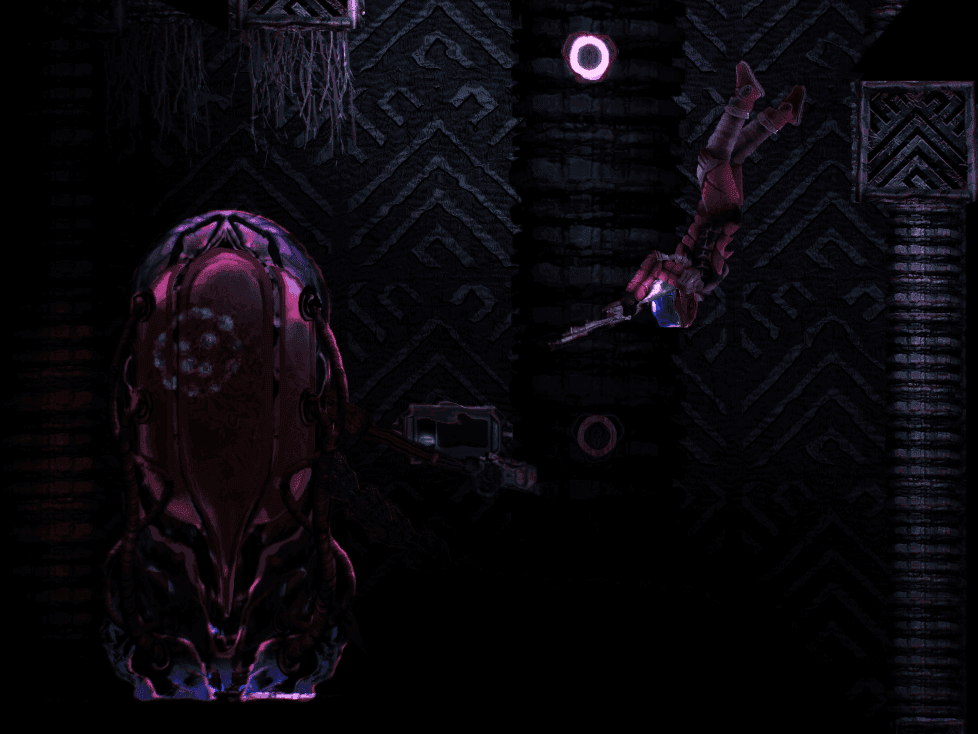
A wounded guardian withdraws to a pod built to repair it — the ruin still runs its maintenance loop.
Take it as two claims, because it is two claims.
The first is negative and it is total. Not "few remains," not "no intact remains" — none, ever, in any ruin anybody has opened, across a moon whose crews have been cutting into these structures for as long as there has been a colony to send them. Every other kind of evidence survives down there in quantity: walls, fittings, writing, hardware that still works. The one category that is completely absent is the one that would end the argument. That is the specific reason the architecture in the previous section could tell you so much about capability and nothing at all about identity — you can read a building for what its occupants could do; you need a body to know what they were. And keep the framing this article set out in its first section: the loading tips report what Europa's colonists have found, not what the universe contains. "Have ever been discovered" is a statement about the searchers. The game does eventually complicate this tip, and it does it at the end of the campaign, which is where this article deals with it, behind the spoiler warning. Until then, take the sentence at face value, because for the entire ruin-diving span of the game it is simply true.
The second claim is the stranger one, and it hides in a word. The only life encountered inside the structures — the tip files what is in there under life, and then in the same breath calls it biomechanical and gives it two jobs: maintain, and guard. Set that beside the dating tip from the previous section, which credits the self-repairing properties of the structures and devices, and the game is describing a building that mends itself and still keeps a maintenance crew on the premises. Nobody has come home to it in an unmeasurable length of time. It is still staffed.
You meet the guard half first, because it comes to find you. The Fractal Guardian is, in the wiki's description of it — editor's prose summarising observable behaviour rather than a line of the game's data, and graded accordingly here — a mechanical entity that roams the hallways of alien ruins; it is much larger than a person, it is capable of opening ruin doors, and it navigates the structures with ease. It carries two things that description calls weapons — a blade-like spear it can fire, and a "hook cannon" comparable to a harpoon gun — and the same page gives it exactly one habitat: Fractal Guardians only spawn in alien ruins. Not in caves, not in wrecks, not in the open water. It also comes in three catalogued variants, distinguished by what each one is carrying: a Steam Cannon guardian, an Ancient Weapon guardian and an EMP guardian. That is a machine-like fact rather than an animal-like one, and the reading is ours — animals do not ship with loadouts.
And they discriminate, in a way the same page flags as unusual — "rather uniquely," in its editor's words: Fractal Guardians attack and kill crew members, but ignore submarines. Stop on that for a second, because a hostile animal has no reason to make that distinction and a security system has every reason to. Your sub is the largest, loudest, most heavily armed object in the level and the guardian will not touch it. The diver who came through the wall is what it goes for. The observation is ours; the behaviour is the wiki's description of what the guardians do, not a line of the game's stats. Graded that way it is still the single clearest signal that what you are fighting is not fauna.
The game says so outright three separate times, in three separate places, which is more corroboration than almost anything else in this article gets. An NPC conversation in the game says that fractal guardians are, quote, "not organic - closer to a robot than an animal" — a line worth one caveat, since neither wiki that records it names the NPC or the conversation, but two independent wikis reproduce it identically, which is a good sign it is real game text rather than one editor's paraphrase. The Alien Circuitry item's in-game description says it a second time from a completely different direction: "Advanced looking circuitry, typically found within the inorganic guardians of the alien ruins." That is the game's own adjective, on a page the wiki stamps as current, in text a player reads off an object in their own hands. And the game's damage model says it a third time without saying anything: per the creature data, a Fractal Guardian has 400 health and is immune to Stun, to Bleeding and to Poisons — the three afflictions that only mean something to a body with a nervous system, blood and metabolism. It was immune to EMP too, until the developers changed that in version 0.20.15.0. Reading a creature's immunity list as a statement about what it is made of is our inference; the list itself is game data.
There is one wobble in the vocabulary worth flagging rather than smoothing. The loading tip's word is "biomechanical," which implies something organic in the mix; the item description's word is "inorganic," and the NPC's phrasing is "closer to a robot than an animal." Those are not quite the same claim. The game does not reconcile them and neither will we — but if you ever see a confident sentence about whether the guardians are partly alive, that is where it came from — and the game states neither version confidently itself.
The circuitry itself is the only piece of a guardian you get to keep. It drops from them, the wiki describes it as a fragmented piece of a larger alien circuitboard, and the page says its purpose is widely unknown — then adds that it is "speculated to be the main component behind the behaviors of the Fractal Guardians." That clause is a wiki editor's inference, flagged as one by the editor's own verb, and it is worth resisting even though it is the obvious guess. Nothing in the game states that the circuitry is what makes the machine work. One thing about it is not speculation at all: the game's item data has Alien Circuitry deconstruct into copper and tin. What follows is our observation and not the game's, because the game never comments on it — the control hardware of a machine that has outlasted its entire civilisation breaks down into the two metals that gave the Bronze Age its name. Whatever the Ancients were doing, they were not doing it with exotic matter — or at least, not with exotic matter that survives being taken apart by a human machine.
Now the maintenance half, and this is where the ruin stops being a building and starts being a system. Follow one guardian from the moment it notices you.
It comes down a corridor and through a door — a door you would have needed a plasma cutter and a plan for, and which the wiki's description says it simply opens. It goes past your submarine without registering it and puts a spear into the diver. Say the fight goes your way. At below 30% health the game's data has the guardian's head flash red and emit a siren-like sound; it starts taking internal damage, gains 50 Vigor, and it disengages. It does not fight to the death, and it does not wander off. It withdraws to a Guardian Pod — a ruin fixture whose stated function, per the ruins page the game's data is drawn from, is to "provide a secure place for wounded Fractal Guardians to retreat to, and heal," where the guardian is slowly treated with vigor. That page is stamped to version 1.0.7.0, so treat the surrounding mechanics as of that build; the pod's purpose is the part that matters and it has not changed.
Which means the ruin has a triage protocol. Somebody designed a security machine, and then designed a second installation whose entire job is to receive that machine when it is hurt and put it back together, and built enough of them into the floor plan that a wounded guardian can reach one. The walls mend themselves. The devices mend themselves. The guards have a hospital. And the thing all of it is guarding has been empty of its builders for a length of time nobody can even measure, because — per the same tip that opened this section — the only life anyone has ever met in there is the staff.
So that is the answer to how a ruin can be simultaneously ancient, lethal and completely uninhabited: it is not inhabited, it is operated. The absence of remains is not evidence that the builders vanished into thin air; it is a fact about a building that never needed anyone to stay in it. And the guardians are the strongest surviving evidence of what Ancient engineering could actually do: a self-directed machine that identifies an intruder, distinguishes a person from a vehicle, opens its own doors, knows when it is losing, and knows where to go to be put back together. It is the only Ancient thing left in the ruins that still makes decisions.
Except for one, and it is the reason the next section exists. The wiki's description of the Fractal Guardian says it is "incredibly aggressive towards anything aside from Husks, Swarm Feeders and other Ruin Guardians" — and Husks are listed, in the game's own inventory of ruin inhabitants, among the creatures found inside alien ruins. So the security system that kills every human on sight lets a husk walk through it. Two of the three exemptions on that list are the ruin's own products, which is our observation and not a claim about the third: another guardian is the same machine, and the Swarm Feeders come pouring out of Ruin Vents that are themselves ruin fixtures. The husk is not the ruin's. Whatever else it is, it is something that came in from outside — and the building's defences do not object to it.
Nothing in Barotrauma explains this. Not a loading tip, not an item description, not a line of NPC dialogue, not a developer post. Players have proposed reasons; none of those reasons is grounded in anything the game states, and this article is not going to add another one to the pile. The behaviour is the fact. The explanation does not exist.
It is also, precisely because it is unexplained, the crack that most of the bad Barotrauma lore comes through — a husk standing unmolested in an Ancient ruin is exactly the kind of image from which a connection gets assumed, then repeated, then cited. So before this article reads a single one of the objects the Ancients actually left, it is worth going through what has been filed under their name by association and does not belong there.
Three Things Blamed on the Ancients That Demonstrably Are Not Theirs
The Ancients are the most convenient explanation in Barotrauma. They are old, they are unaccounted for, and their name is already attached to the strangest things on the moon — so anything else strange with no stated origin can be parked under it without anyone having to check. Three of the game's best-known horrors have ended up there. In all three cases Barotrauma rules them out, and it does it not by silence but with a specific fact you can go and read for yourself. They are worth taking one at a time, because each one is wrong in a different way.
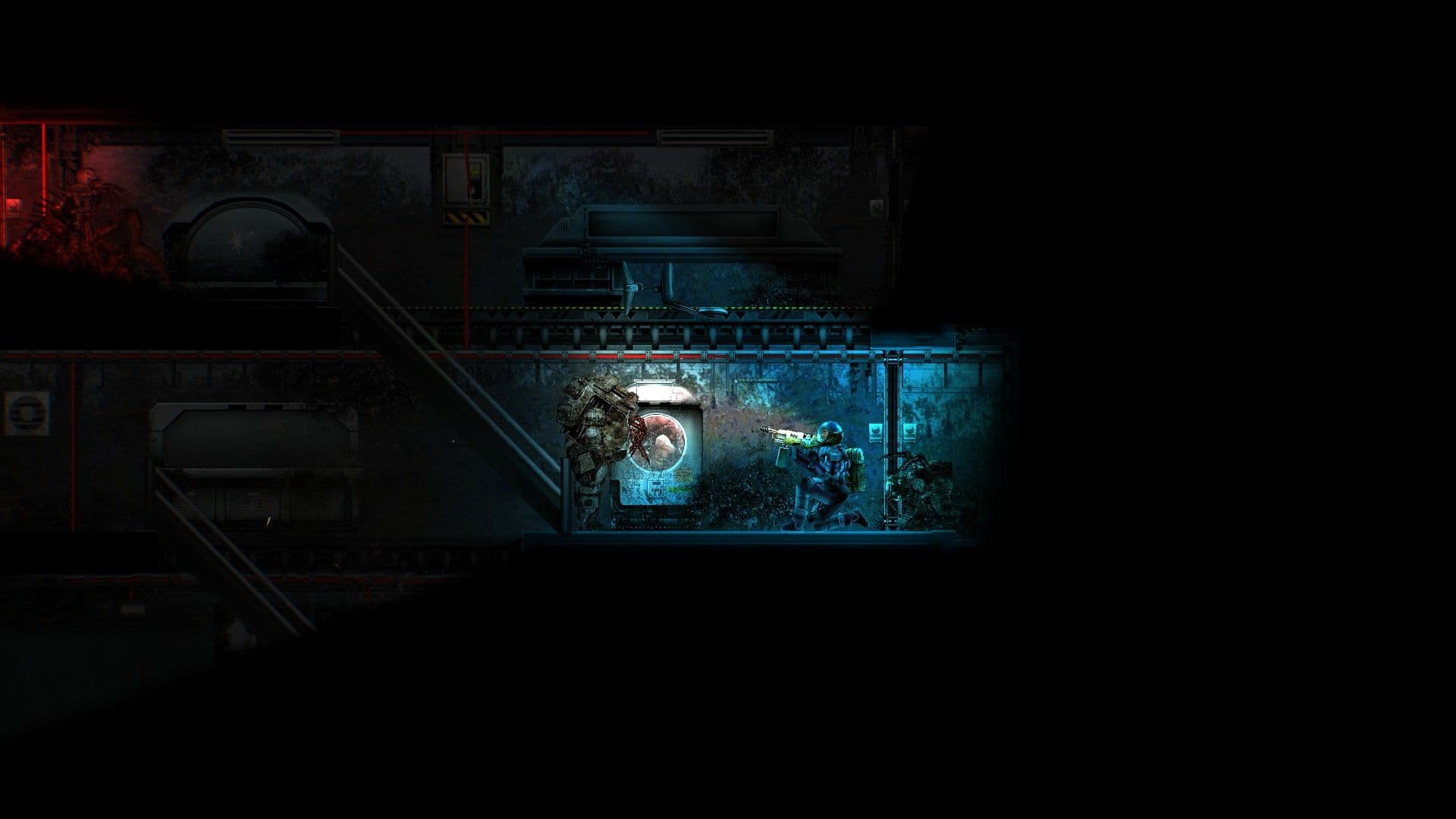
Husks are a parasite the game connects to no one — not to the Ancients, and not to the ruins they wander into.
Start with the Thalamus, where the mistake is easy to make and impossible to keep. You board a derelict, the walls are lined with wet organs, something has taken the hull's own turrets and pointed them at you, and the whole thing reads as engineered by something that was not human. It was not engineered at all.
An in-game loading tip gives the entire origin story in one sentence: "If left undisturbed for several years, a colony of Ballast Flora can eventually grow into a Thalamus, an intelligent organism capable of exerting some degree of control over the systems of the submarine it's inhabiting." That is horticulture. Ballast Flora is the growth that gets into a submarine's tanks and that every crew is taught to burn out early; a Thalamus is what one colony becomes when nobody deals with it for years. The official wiki's description of the mature form — community-written, but describing behaviour any crew that has boarded one can confirm — is a stationary botanical entity that infests shipwrecks, with its exterior and interior "lined with various Thalamus 'organs'," pulling in passing submarines with its tentacles, injecting Terminal Cells through a hull-piercing spike, and operating the shipwreck's own offensive and defensive weaponry. And a wreck, per the game's own one-line definition of the structure, is a "sunken, deteriorated version" of a submarine or shuttle. Human hulls.
So the disqualifying fact is not one thing but two, and they point the same way: a Thalamus is Europan plant life, and the vessel it has grown through is ours. The guns it shoots at you with are the guns that were already bolted to that wreck when it sank. Even its name is pointing away from the Ancients — Fandom's trivia note, a community observation but one consistent with the official page and the loading tip, records that "Thalamus" is taken from the plant organ, not the brain. Set it beside a ruin for one second and the two have nothing in common: a ruin is masonry that mends itself and machinery that does not rot, staffed by something the game calls inorganic. A Thalamus is pulp and organs in a rusting human hull, and it is exactly as old as the wreck it started in.
The Watcher gets filed with the ruins for a different reason: it is the most alien-looking thing in the ocean, and the game itself is theatrical about it — one in-game loading tip consists, in full, of "Behold the Watcher. Don't lose your mind." If you have seen it described as a psychic entity that induces hallucinations and disables a submarine's systems, none of that is in the game.
Here is what the game's creature data and the wiki's description of it actually say. It is an enormous orb-shaped creature "reminiscent of a turtle or a crab," a jet-black body under thick armour and spikes, named for the single red eye. It is completely deaf, relying entirely on its sight. It is solitary and is never found with another of its own. It is passive but inquisitive: a second loading tip states that Watchers are "docile but inquisitive creatures: despite having no desire to attack submarines, they frequently approach ships to gaze at human activities." It lacks any true method of attack. What it does instead is inflict Watcher's Gaze, an affliction that sickens people — vomiting, heavily reduced speed, Psychosis effects — and buffs the hostile creatures around it, raising their vitality and speed. That is a very unpleasant thing to have looking at you. It is not a thing that reaches into your electrical system.
Two entries in the creature data finish the argument. The Watcher cannot enter a submarine — which makes "it disables your ship's systems" mechanically impossible, since it has no attack and cannot get in. And it lives in open water, common in The Great Sea, while the game's list of what inhabits an Alien Ruin names Fractal Guardians, Swarm Feeders and Husks, and does not include it. The Watcher is Europan fauna doing what Europan fauna does. The reason it feels like it belongs in a ruin is that it is uncanny, and uncanny is not evidence.
The third one, the Husk parasite, has a real hook in it, and the hook is a word. Husk infection's internal affliction type, in the game's own data, is alieninfection, and it is caused by Velonaceps calyx. Read that identifier as a claim about the ruin builders and you have a chain: alien infection, alien ruins, therefore the parasite came from the people who built the ruins.
The word does not mean that. In Barotrauma, "alien" is the generic term for not human, and there is a clean item in the game that proves it. Alien Blood is a real, lootable, tradeable object, and its in-game description reads: "Blood extracted from a Europan lifeform. Can be further processed into a blood substitute for the treatment of blood loss." Not an Ancient lifeform — a Europan one. And where do you get it? Off the organs of a Thalamus, the overgrown plant from a few paragraphs ago. So an item with "Alien" printed on the label turns out to be plant fluid harvested out of a human shipwreck. The prefix tells you the thing is not human. It does not tell you which non-human, and it certainly does not certify a ruin as the source.
Strip the word away and look at what the game says about the parasite itself, which is only ever biology. A loading tip: "The so-called husk parasites slowly take over and consume the body of their host, eventually turning them into nothing but an empty exoskeleton controlled by the parasite." Another notes that husks surviving to an advanced age may outgrow their host's shell and start collecting body parts to sustain their growth. The game's own affliction data runs through four stages, a stinger growing out of the host's throat, pressure immunity and underwater breathing in the transformed stage, and a cure that has to be taken before the end. Every word of that is parasitology. No source consulted for this article — not a loading tip, not an item description, not a page on the parasite, the husk or the ruins — attaches Velonaceps calyx to the Ancients at any point.
There is a reason the association forms anyway, and the previous section supplied it: husks are among the creatures found inside alien ruins, and the ruins' guardians, which kill humans on sight, do not attack them. That is a real, sourced, unexplained fact about the guardians, and it is not a fact about where the parasite came from. So the honest sentence is the careful one, and the difference matters. The game does not connect them. That is not the same as asserting that no connection exists — that would be a claim of its own, and nothing supports it either.
Laid out side by side, the three of them make the pattern obvious — and each row's last column is the fact to reach for the next time one of these turns up in a lore summary with the Ancients attached to it.
| Blamed on the Ancients | What it actually is | Where it actually lives | What rules the Ancients out |
|---|---|---|---|
| Thalamus | The mature stage of an untreated Ballast Flora infestation — botanical, stationary, grown from a plant colony | Inside shipwrecks: sunken human submarines and shuttles | It is a plant, it grew in our wreckage, and it fires the wreck's own weapons. Its name comes from the plant organ, not the brain |
| Watcher | An enormous armoured orb-shaped animal, deaf and solitary, with no true attack — it inflicts Watcher's Gaze | Open water, commonly in The Great Sea | It cannot enter a submarine, so it cannot disable one's systems — and it is not listed among the creatures found in alien ruins |
| Husk parasite | Velonaceps calyx, a parasite that consumes a host and wears the shell, filed internally as alieninfection |
In hosts, and in husked creatures across the map — including inside ruins | "Alien" is the game's word for non-human — the same sense as Alien Blood, "extracted from a Europan lifeform." The game does not connect them. |
The practical version is short. A Thalamus is a wreck job, not a ruin job, and nothing you learn about it will tell you anything about the Ancients. A Watcher is a hazard to be endured and swum around rather than a puzzle to be solved, and it is not evidence of anything in a ruin. And a husk standing in an Ancient corridor is a husk that walked in, in a building whose security happens not to object — not a specimen, not a servant, and not a clue.
Which leaves one thing, and it deserves better than being lumped in with the three above, because it is not a misattribution. It is a genuine, sourced, mechanical link between an object the Ancients left and an animal that lives on Europa, and it is completely unexplained.
The Psychosis Alien Artifact — one of the five relics the next section reads in detail — inflicts Watcher's Gaze on anyone near it. That is the same affliction described above, and the Watcher is the only other thing in Barotrauma that produces it. An artifact recovered from an alien ruin does something that otherwise only one Europan animal can do.
That is the whole fact, and it is where this article stops. Barotrauma never comments on the overlap: not an item description, not a loading tip, not a creature page, not a developer post. Every explanation that suggests itself here requires inventing a relationship the game has never stated, which is precisely the move that put a Thalamus, a Watcher and a parasite in this section in the first place — and it would be a poor piece of work to spend three corrections on that habit and then indulge it in the last paragraph. So: an Ancient artifact inflicts an affliction otherwise unique to a Europan animal, and nobody knows why. It is a real question with no answer in the fiction. Note it, enjoy it, and leave it standing.
With the borrowed horrors handed back to their owners, what remains under the Ancients' name is a short list of objects that unambiguously are theirs — and the game is far more precise about what they do than about why they exist.
Five Artifacts, and a Game That Refuses to Say What They Were For
Barotrauma's own account of the artifacts opens with a shrug, and the shrug is the most important sentence in this section. The game's framing text for the whole category reads: "Artifacts is the term given to a series of relics left behind by extraterrestrials on Europa. Both the origin of these artifacts and their purpose is unknown. They are rare and powerful." That is in-game text, and it does something nothing else in this article does — it states the limit of the evidence up front, before you have had a chance to overreach. Note the construction of the first clause, too, because it is doing quiet work: the term given to. Given by whom? Not by the people who left them. Every name in this section is a human label, applied by Europan salvagers and scientists to objects nobody can read, in the same spirit as naming a fossil after the man who dug it up.
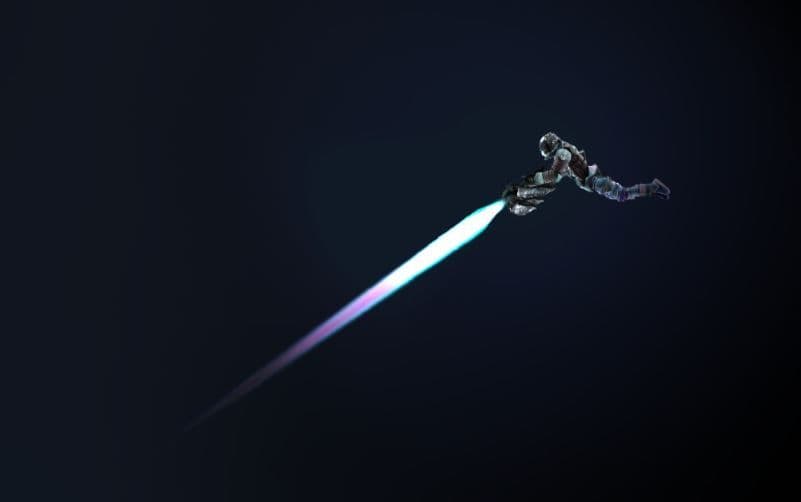
The Ancient Weapon — filed in the game’s own data not as a weapon but as a Tool.
There are exactly five of them, and the game's data lists them by name: the Faraday, Nasonov, Psychosis, Sky and Thermal Alien Artifacts. Five is not a wiki convenience either — the same five appear on the artifacts page, in the ruins page's deconstruction table and in the official wiki's own Alien Items navigation template, three separate reproductions of the game's data that agree exactly. The artifacts page describes them as five sorts "distinct in appearance, composition and effect," and adds the line that turns out to organise everything below: each type of artifact has an adverse effect on its environment. One of the five even wears the fingerprints of the human naming process. The Sky artifact's internal identifier in the game files is skyholderartifact, and the older community sources call it the Skyholder; the game changed what it prints on the label and the file name never caught up. That is a fossil of Europa's taxonomy, not of the Ancients'.
Now the behaviour, which is where the game stops being vague. Before the figures, the caveat that goes with them: the page reproducing the game's artifact data carries a banner stamping it to version 1.0.7.0, against a live game at 1.11–1.12. That gap matters enough that the final section of this article turns it into a procedure. For now, treat every number in the five paragraphs below as a 1.0.7.0 figure, because that is the only honest way to quote them — the character of each effect has been stable for years, but the metres and the seconds have a date on them.
The Faraday artifact, as of 1.0.7.0, sends out an eight-metre EMP blast every fifteen seconds, damaging installations within range, and if you bring it out of the water it starts emitting an electrical shock instead — comparable to an electrical discharge coil, inflicting stun and burns on the same fifteen-second beat. Carry it through your own sub and it works its way methodically through your electronics.
The Nasonov, at 1.0.7.0, attracts creatures towards it from up to a hundred metres away and causes sonar disruption on top of that. A hundred metres is an enormous radius for a handheld object in this game: everything within it that is not currently eating something else turns and comes. Our observation, not the game's: the name is borrowed from the Nasonov gland of honeybees, which produces a real-world recruitment pheromone — the chemical a hive uses to tell its own members where to gather. Whoever named this thing in the fiction had noticed what it does.
The Psychosis artifact, at 1.0.7.0, emits a burst of Psychosis and Watcher's Gaze to characters within fifteen metres, every thirty seconds. Both afflictions in one pulse; that second one is the overlap the previous section raised and deliberately left open, and it stays open here. What is worth adding is what the object turns into when you break it down, because it is the only artifact whose substance the developers have ever described. Deconstructing a Psychosis artifact yields dementonite, and in a September 2024 developer post Regalis calls it "the mysterious 'higher-dimensional material' you can acquire by deconstructing psychosis artifacts," and, a line later, "a rather esoteric substance." That is a developer statement, and it is worth quoting as developer prose rather than as physics: it tells you the studio thinks of this material as something outside ordinary matter, and it does not tell you what that means.
The Sky artifact, at 1.0.7.0, consumes oxygen at fifty thousand per second — fast enough, in the game's own description, to drain an entire submarine of oxygen in seconds. It also drains water incredibly quickly inside a hull, which the game spells out as the reason you cannot solve it by dropping the thing in a ballast tank. It is the only one of the five that does not attack anything. It removes the conditions under which anything can be there.
The Thermal artifact, at 1.0.7.0, generates fire at thirty-second intervals, and underwater — where fire is not an option — it emits scalding steam every fifteen seconds for five seconds at a time, doing structure damage and burns within two metres. Above the waterline it burns your sub down; below it, it cooks whatever is holding it.
Handling them is its own statement, and this part carries no version-sensitive numbers at all. An artifact requires both hands and cannot be put into a character's inventory, so a crew member carrying one is a crew member carrying nothing else and doing nothing else. It constantly plays a unique sound loop unless it is sealed inside an Artifact Transport Case, which is also the only thing that suppresses its adverse effects. And on sonar it reads as a large infrared oval blip. So the object announces itself audibly to everyone aboard, occupies a person entirely, and is visible on your instruments as a contact in its own right. Nothing about that is loot behaviour. Loot goes in a crate.
They are also not scattered. As of 1.0.7.0 an artifact always spawns in a treasure room inside an alien ruin, sitting in a fixture called an Artifact Holder, with a one-percent chance of turning up in a secure steel cabinet in a wreck instead. That last detail is the only place artifacts appear outside a ruin, and one percent is close enough to nowhere. It is worth retiring an older community reading here in one line, because it still circulates: players used to say that every generated level in Barotrauma contains an artifact somewhere, even lying loose on the cavern floor, and used it to argue that the builders must have been everywhere. That claim comes from pre-2021 pages and the current spawn rules contradict it. Artifacts are ruin furniture, kept in a room built to hold them.
Which is the point at which it becomes worth reading the five as a set rather than as five entries. Line up what they do and ignore, for one paragraph, that they are things you sell. One kills the electronics in a compartment. One calls every predator within a hundred metres to your position and blinds your sonar while they come. One breaks the minds of anyone within fifteen metres, on a thirty-second cycle, indefinitely. One sets the room on fire, or fills it with scalding steam if the room is flooded. And the fifth takes the atmosphere out of a sealed space faster than anything in it can react. Four area-denial effects and one that removes the air: not five tools, not five power sources, not five instruments — five ways of making a specific volume of space unusable to anything that swims, breathes, thinks or runs on electricity. Ask what kind of installation those five would be standard equipment in, and the answer that suggests itself is not a laboratory or a workshop.
So let us say it plainly, in the one place where this article is most tempted to cheat: the step from "these five behave like area denial" to "so they were probably defences" is our inference and not Barotrauma's, and the game declines to confirm it. No item description, no loading tip and no developer post says the artifacts were built to defend anything. The game's only statement on the subject is the one this section opened with — that both their origin and their purpose are unknown — and it has had a decade of updates in which to revise that sentence and has not. What we have is behaviour, documented to the metre and the second. Purpose is the thing the game is holding back, and it is holding it back on purpose.
If you want proof that the obvious reading of an object's behaviour is not the same as its function, the game supplies one in its own data. The Ancient Weapon, very rarely found in the ruins, takes both hands, loads with Alien Power Cells and fires a medium-range beam that does burn damage and heavy structure damage with recoil violent enough that players use it to fly. It will also detach minerals from a wall. It is, by any behavioural test, the deadliest handheld thing in Barotrauma. And internally — in the game's classification of its own items — the Ancient Weapon is not a weapon at all, but a Tool: one that damages structures instead of repairing them, which makes it, in the game's own framing, essentially an upgraded Plasma Cutter. The temptation there is enormous and we are going to label it rather than take it: "so perhaps it was never a weapon in the first place" is interpretation, ours and other people's, and the data supports only the narrower statement that the object is filed as a tool. A game's item taxonomy is an engineering decision as much as a fictional one. But it is a very good illustration of the section's problem — you can watch a thing work perfectly and still be wrong about what it is.
The last useful fact about the artifacts is how few of them there are, in the broadest sense. The full roster of alien-origin objects in Barotrauma is closed and short. The official wiki's Alien Items navigation template lists thirteen: the three minor artifacts — the Alien Trinket, Alien Curio and Alien Ornament, whose second job inside the ruins the earlier section on the architecture already covered — the five Artifacts above, and then the Alien Pistol, Alien Power Cell, Ancient Weapon, Alien Translator and Alien Circuitry. Add the Alien Flare and the Alien Data Storage that turn up as ruin loot and you have fifteen objects, total, from an entire civilisation. That count is ours; the list is the wiki's, drawn from the game.
Fifteen is short enough to memorise, which turns out to be the practical payoff of this whole section. A closed roster is a test rather than a trivia item, and this test takes about a minute and does not require you to own the game. Check the name against the official wiki's own Alien Items template, which is the list itself. If it is not there, check it against a full enumeration of every page that wiki has ever had archived — all 46,186 of them. An item that a decade-old wiki has never once had a page for is not an item. So learn the five artifacts by name, the three minor ones and the seven other objects, and the next time something is handed to you as Ancient hardware you can settle it yourself before you repeat it.
The game refuses to say what the artifacts were for. It is entirely explicit, though, about what Europa has done with them since — and that half of the story comes with receipts.
Europan Science Runs on Salvage From the Ruins
The receipts are in your own crafting menu, and the game hands them over in item text rather than in lore.
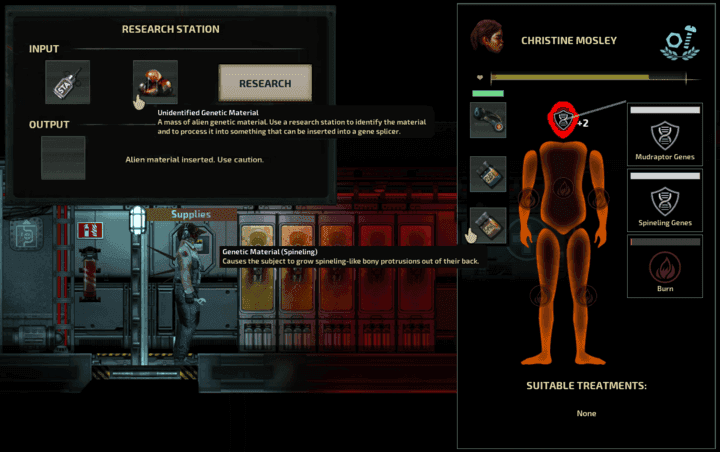
Unidentified genetic material pulled from a ruin, researched into something a crew member can carry.
Start with the most valuable thing anybody has ever carried out of an alien ruin, because it is not a weapon and it is not one of the five artifacts. It is a file. The Alien Data Storage (Unidentified) is a small object whose entire in-game description reads: "An undeciphered alien data storage unit. Should be brought to a research table to be studied." That is Tier 1 game text, and it is one of the few item descriptions in this game that is also an instruction — it does not tell you what the thing is, it tells you where to take it. The game's own files are less coy: the internal identifier is alienblueprint. Somebody at the studio filed it as a blueprint long before anybody in the fiction managed to open it.
The price data tells you what Europa thinks of it. Per the item's own game data — on a page the wiki stamps as up to date, unlike several this article has had to date-check — the unidentified data unit carries a base price of 2,500 marks, the highest of any alien-origin item recorded in the sources this article is built from, and Research and Military outposts will pay 1,500 marks for one. Set that beside the Alien Circuitry you prise out of a dead guardian, which the same data gives a base price of 80. That is our arithmetic on the game's numbers, not a statement the game makes: one unreadable file is worth roughly thirty pieces of the hardware that runs the machine guarding it. Nobody pays that for a curiosity. They pay it for what the file becomes.
Which the game also spells out, twice. A loading tip — Tier 1, one of the seventy-one the game rotated through as of version 1.10.5.0 — says: "Alien data storage units can be found in alien ruins. These may contain powerful item crafting recipes, but require researching at research tables to make sense of them." And the item's own data records the output: researched at a Research Station, one unidentified unit yields one of three usable blueprints — Physicorium, Gravity or Incendium.
So follow one object all the way through, because the whole argument of this section is in that one journey. A diver cuts into a structure whose age nobody can measure and pulls a brick out of an alien chest. It is the most expensive thing in the haul and it is completely inert — no sound loop, no adverse effect, no both-hands problem; unlike the artifacts of the previous section it goes in a pocket like a wrench. It rides home in the sub. It gets carried to a research table, which is the only place in the fiction where it stops being a paperweight, and what comes off that table is a recipe. Then a mechanic stands at a fabricator and builds the recipe, in a workshop, out of materials from the shelf, and the thing that comes out is a normal part of a working submarine. The most expensive thing in the ruin is not a weapon. It is a file nobody can open yet — and the entire 2,500 marks is the opening, not the file.
That is one item. The pattern is much wider than one item, and the game states each piece of it flatly.
Take the walls this article read as architecture earlier on. The loading tip that describes them does not stop at the description: some alien structures on Europa "have been constructed of a metamaterial that's outstandingly resistant to physical damage, and as such has become an important subject of research to Europan scientists." The second clause is the one that belongs here. The building is not just an obstacle a crew cuts through — it is on somebody's research programme. Tier 1, stated in the game's own loading-screen text, and it tells you that the colony has looked at a material that outperforms everything it can make and put scientists on the problem.
Then take the thing the ruins are actually best at supplying, which is not artifacts at all. The ruins page — stamped 1.0.7.0, so read the mechanics as of that build — states that Alien Ruins are the best location to gather sizable amounts of rare materials and unidentified genetic materials, the latter found inside Incubation Bubbles in the structures themselves. Unidentified is the operative word: it is a raw sample and nothing else until it is processed. Per the game's genetics data, researching it takes one sample plus one Stabilozine in a Research Station, and returns a random one of 12 gene types at 10–60% quality, which can then be refined or combined into something better. What survives that goes into a crew member through a Gene Splicer, into the health interface, and stays there until it is removed or that character dies.
The loop is deliberate, and this is one of the few places in this whole article where a developer says so outright. Genetics did not arrive in some later patch that happened to reuse the ruins; it shipped in the same October 2021 update as the ruins overhaul, and in the update post announcing it Regalis wrote that "the addition of genetics ties together the improved alien ruins" — you find unidentified alien genetic material out in the world, and that material is then researched and refined at a research station. That is a Tier 2 statement of design intent, not a player's reading of a coincidence. Three years later the 2024 developer post says the same thing from the other end: the gene splicing system had been rebalanced to give "more and more worthwhile uses for all those genetic materials you can find in ruins." Our reading of it: the ruins are where a Europan submariner goes to stop being entirely human, and the studio built that road on purpose.
The mission board makes the institutional version of the same point, and it is easy to miss because two of the contracts are the ones everybody remembers. As of 1.0.7.0 the game lists four ruin mission types — and the names are corroborated in the game's own achievement identifiers, achievement_scanruin, achievement_clearruin and achievement_artifactmission, which is a stronger check than a wiki table on its own.
| Ruin contract | What the crew is actually asked to do | What kind of job it is |
|---|---|---|
| Salvaging an Artifact | Find the vault, bring the artifact back to the sub | Salvage |
| Clear Ruin | Eliminate every Fractal Guardian and destroy every Guardian Pod | Raid |
| Scan Ruin | Scan three marked spots using the Ruin Scanners you are issued, then return the scanners | Research |
| Lost in Ruins | Find an associate of the scientists, and get his datapad to the sub | Research |
Two of the four are archaeology. Look at what Scan Ruin actually is: somebody hands you instruments, tells you which three spots they want read, and wants the instruments back — that is a funded survey with a returnable equipment list, not a treasure hunt. And Lost in Ruins gives away more than it means to, because of what it takes for granted. The contract presupposes that Europa's scientists already have associates going into ruins, often enough that one can go missing and generate paid work. The stated deliverable is not a body and not loot. It is his datapad, reaching your sub. Somebody wants the readings.
The material side has the same shape, and the developers are candid about the reasoning. Dementonite — the substance the previous section described the developers calling higher-dimensional and esoteric — is already in production use. In the 2024 post Regalis lists what humans have made from it: an item that resets talent points, railgun shells with gravity-altering effects, and a "second sight" ability that spots nearby enemies without goggles. Read the sentence he builds those on: "As we're dealing with a rather esoteric substance, it stands to reason you might be able to create some powerful tools with it." That is Tier 2 developer prose, and the logic in it runs backwards from ignorance — nobody knows what the material is, therefore powerful things can probably be made of it. Which is exactly what Europa has done. The unexplained substance is not sitting in a lab awaiting characterisation; it is loaded into railgun shells that a crew fires into Europan water.
And there is a bill for all of this that the game states in its own voice, in the flattest register it owns. A loading tip reads: "Mental disorders such as psychosis are unfortunately common among submarine crews, particularly after ruin expeditions. If your crewmates start seeing or hearing things others don't see or hear, report it to a medical doctor immediately."
That is written as workplace safety advice. The first sentence is an epidemiological claim about a profession and the second is an instruction to the people reading it, and the game spends one of its limited pool of loading tips telling submarine crews to watch each other for symptoms. Be precise about what it does and does not say: it reports a correlation, "particularly after ruin expeditions," and it names no cause at all. This article has already described one Ancient object that pulses Psychosis into everyone near it on a timer, and it would be easy to close that circuit here — but the tip does not cite it, and neither will we. What the tip establishes on its own is enough. On Europa, going into a ruin has a known psychiatric signature. The colony has noticed the pattern, published advice about it, and kept sending crews anyway, because the recipes are down there.
So the salvage economy is priced in minds as well as marks, and that is the honest accounting for everything above. The blueprint that made a fabricator recipe, the gene sitting in a crew member's health interface, the survey contract that paid for the fuel, the metamaterial on a laboratory bench and the gravity-altering shell in the railgun locker all came out of the same buildings that the colony's own medical advice treats as an occupational hazard. You can audit this yourself in about a minute the next time you play: open the fabricator and look for the recipes a research table produced, open a crew member's health interface and look at what is spliced into them, and read down the mission board for how many of the ruin contracts are asking for readings rather than for cargo. Whatever else the Ancients were, they are the reason a modern Europan submarine works the way it does — and every crew on the moon has a standing financial reason to go back into their buildings, indefinitely, at a cost the colony has already documented.
Which raises the question of where those buildings actually are. A moon's worth of ruins scattered at random would be a level-generation detail. They are not scattered at random, and the map turns out to be doing something a great deal more deliberate than that.
The Campaign Map Is a Descent Into the Eye of Europa
There are five biomes in Barotrauma, and in order, shallowest to deepest, they are the Cold Caverns, the Europan Ridge, the Aphotic Plateau, The Great Sea and the Hydrothermal Wastes. One piece of housekeeping before anything is built on them, because the page that holds the level-generation data is the oldest source in this article: the official wiki's Biomes page is stamped "last updated for version 0.19.14.0" against a live game at 1.11–1.12, a wider gap than the 1.0.7.0 pages earlier sections have been date-checking. The count and the order survive that banner comfortably, because they are corroborated four separate ways: the Biomes page's own list; each individual biome page repeating its own ordinal in its own words, so that the Great Sea calls itself the fourth major biome and the Hydrothermal Wastes call themselves the final one; the developers' environment-overhaul post, which walks through all five in sequence; and the game's level-generation parameters, which are filed per biome by name. So take the names and the sequence as solid, and treat any percentage in this section as a 0.19.14.0 figure.
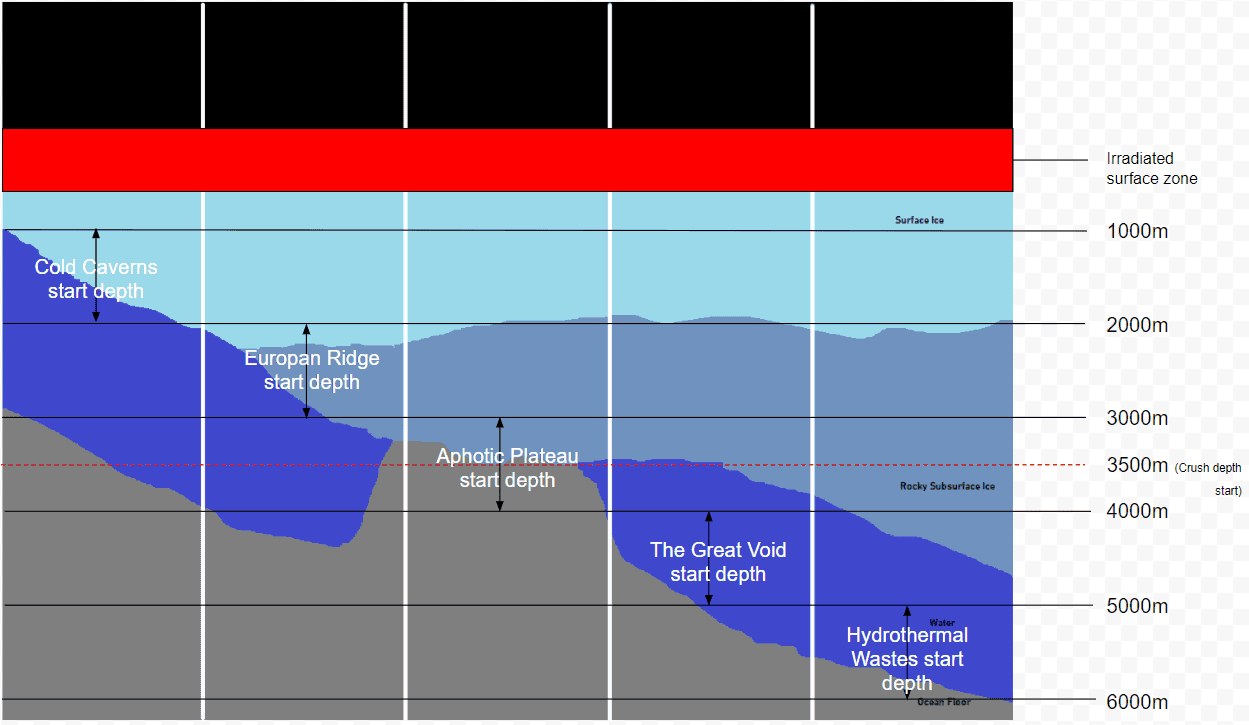
The developers’ own cross-section of Europa. It is a pre-1.0 design document, and it still labels the fourth biome by its former name, The Great Void.
The Biomes page's own framing is that each one is progressively deeper than the last, and that Europa's interior is a system of trenches under the surface ice — "the farther submarine crews travel down these trenches, the more flora and fauna they will discover as the water's temperature increases." That is Tier 1 in-game data reproduced by the wiki, and it is the first hint that the axis that matters here is not distance. It is depth.
The Cold Caverns is where you start and where nearly everyone lives. An in-game loading tip states it directly: "Most of the human habitation on Europa is situated in the so-called Cold Caverns. Due to the cold water and relative proximity to the surface, this biome is biologically less diverse than others." The developers' description matches — in their environment post they call it the zone where your journey starts, right under the ice crust, and quote their own designers describing "a very dim and shadowy, crystalline world of ice." Cold, shallow, thin on life, thick with people — and since the game's own framing has the water warming as the trenches drop, the biome you start in is also the coldest one on the map. Hold on to that combination, because it is about to become the section's sharpest fact.
Now the part that reframes the whole map, and it is a Tier 2 statement of design intent — the developers describing, in their own voice, what they built. Across four consecutive paragraphs of that same post, they place four of the five biomes on a single landform. The Europan Ridge "makes up the western slope that leads to the Eye of Europa gravitational anomaly site," and they add that "the after effects of the impact that created the Eye in the first place can still be seen here, or so our scientists assume, anyway." The Aphotic Plateau "sits on the precipice of the Eye of Europa impact crater." The Great Sea is "found inside an ancient impact crater." And the Hydrothermal Wastes "occupy the bottom of the crater," with the promise that "if you can survive them, you'll be getting close to the Eye of Europa." The game's own loading tips say the same thing from inside the fiction, which is unusual enough to note: the Ridge is "the area along the western-most slope of the Eye of Europa," and the Plateau "sits atop the western rim of an ancient impact crater known as the Eye of Europa."
Slope. Precipice. Interior. Floor. Those are not four locations. They are four positions on one hole.
It is worth noticing why the map has read as a journey rather than as a descent for so long, because the game supplies that impression itself. Every one of the direction words in the sentences above is a compass word — the western slope, the western rim, "the end of the temperate western zone." Read the labels and you get a crew travelling steadily in one direction across a moon. Read the nouns those labels are attached to and you get something else entirely: a submarine going over the lip of a crater and down the inside of it, one biome per stage of the wall.
The depth figures make that concrete, and they come with the heaviest caveat in this section. They are read off the official design-documentation cross-section of Europa — a diagram from the developers' own material rather than a measurement taken in a current build, produced before 1.0, and still carrying the old name The Great Void on the biome now called The Great Sea. Treat it as design intent, medium confidence, approximate. With that stamped on it:
| Biome | Where the developers place it | Depth (pre-1.0 design cross-section) | Difficulty band (0.19.14.0) | Alien Ruins in the generation rows |
|---|---|---|---|---|
| Cold Caverns | Not on the crater at all — directly under the ice crust, where the journey starts | ~1,000–2,000 m | 0–15% | None |
| Europan Ridge | The western slope leading down to the Eye | ~2,000–3,000 m | 15–35% | 0–1 per level |
| The Aphotic Plateau | The precipice, on the crater's western rim | ~3,000–4,000 m (crush depth from ~3,500 m) | 35–50% | 0–1 per level |
| The Great Sea | Inside the crater itself | ~4,000–5,000 m | 50–65% | No row recorded |
| Hydrothermal Wastes | The bottom of the crater | ~5,000–6,000 m | 65–80% | No row recorded |
That last column is the checkable one, and it is the best single piece of evidence this section has. The Biomes page reproduces the game's Level Generation Parameters — the data the engine reads when it builds a level — and in the Alien Ruins column, the Cold Caverns rows contain nothing at all. Not a low number: no entry. The basic, advanced, maze and transition variants of the starting biome are all blank for ruins. The Ridge's three rows — basic, advanced and transition — and the Plateau's basic row each read 0–1 per level. Those four are the rows this article has actually read; no row was recorded for The Great Sea or the Hydrothermal Wastes, which is why the table above says so rather than guessing. And the Ridge's own page confirms the change in prose, with a sentence that reads like a changelog: "Alien Ruins can now be encountered randomly in levels."
The same page also contains a sentence that flatly contradicts its own table. In its opening summary it says that caves, alien ruins, wrecks and beacon stations "are features all biomes have." Prefer the table, and here is the reason, which is the same reason the final section of this article will hand you as a general procedure: the table is the game's generation data reproduced row by row, and the sentence is a page-level generalisation written to introduce a concept — the loose kind of prose that gets a detail approximately right in the course of getting a shape across. The table disagrees with it in one specific biome, and a second page, written by someone else about the Ridge, disagrees with it in the same direction. One loose summary against two pieces of data is not a close call.
So the honest version of the claim, without the flourish it usually gets: ruins are absent from the Cold Caverns rows and possible from the Europan Ridge down. What the recorded rows do not show is ruins getting denser as you descend — the four that have them all carry the same 0–1 band, and nothing anybody has read shows the number climbing. What changes at the Ridge is not the density. It is the possibility.
And that is where the two halves of this section meet, in an observation the game never makes and never needs to. The crater description starts at the Europan Ridge. The ruins start at the Europan Ridge. The one biome the developers do not place on the Eye's slope is the one biome whose generation rows have no ruins in them — and it is also the biome where the loading tips say most of the human population lives. The colonists' home water is the only stretch of Europa in the campaign where nobody built anything. Barotrauma does not connect those facts, and this article is not going to connect them for it; what it does is start both at the same wall.
Which brings you to the thing at the centre, and to the one claim in this section that has to be stated with real care. The Eye of Europa is, per an in-game loading tip, an ancient impact crater with a "strange gravitational phenomenon" around it: "The Eye of Europa, and the strange gravitational phenomenon around it, has puzzled scientists ever since it's discovery by the first unmanned missions to Europa. Conveniently for Europan colonists, the gravity around the Eye is close to that of Earth's, instead of the normal 0.13 G surface gravity elsewhere on the moon." Read that number twice, because it is the physical fact that makes the setting work: everywhere else on this moon, gravity is roughly an eighth of what a human body evolved in. Around one crater, it is not.
Note precisely what the game does and does not say there. It says the anomaly exists, that it was visible to the first unmanned missions long before anyone was living down here, that it has puzzled scientists ever since, and that it is convenient. It does not say what causes it. Nothing in any loading tip, item description or developer post identifies a cause, and any sentence you meet that supplies one has been written by somebody other than Barotrauma. It is also worth resisting the tidy version of "convenient," which the tip's own neighbours undercut: if Earth-like gravity had pulled the colony toward the Eye, the population would sit near it, and the game says the opposite — most human habitation is up in the Cold Caverns, at the far end of the map from the crater. The anomaly is a documented curiosity that the colony has largely not moved toward. That observation is ours; both tips are the game's.
The campaign's structure agrees. The End Location is defined, in the campaign's own rules, as the endpoint of a submarine crew's journey to the centre of the Eye of Europa, and it is gated by hardware: only submarines with tier 3 hull upgrades can withstand the pressure to complete the final level. Every other location on the map can eventually become a colony — clear its hunting grounds or shut down its radiation and people move in. The End Location is the single exception. It is the one place in the campaign that can never be settled, and the only way to reach it is to have spent the whole game upgrading a hull for a pressure nobody normally goes to.
So read the map as a cross-section rather than a route, and the shape of the campaign changes. You begin about a kilometre and a half under the ice, in the cold water where the outposts are and where, according to the generation data, no ruin has ever been placed. You go over the western slope, and that is where the first alien structures start appearing — one at most per level, and often none. You cross the rim at around the depth where crush depth begins. You drop into the crater's interior, which the developers say is passable only by a submarine specifically outfitted for deep diving. You reach the floor. And at the middle of it is the one patch of Europa where a body weighs what it would on Earth, with the final location sitting at the centre and a hull requirement standing between you and it. The campaign is not a line across a moon. It is a slow fall into a hole, and it ends in the middle of one.
Two things follow that you can read straight off your own campaign map. The first is a ruin forecast: if you are still in the Cold Caverns, the generation data says you will not find an alien ruin, and every ruin mission, artifact, genetic sample and translator tablet this article has described is waiting on the far side of the Ridge. The second is a heading. Progress toward the centre of the Eye is not only a difficulty setting — it is the direction the fiction has been pointing since the first loading screen, and choosing to keep going is a narrative decision as much as an equipment one.
Everything in this section is map information: the shape of the hole, the depth of each stage, where the ruins start, and the rule that stops you reaching the middle without a tier 3 hull. What is actually at the centre of the Eye is the point where Barotrauma stops implying and starts stating outright — and it will spoil the campaign for anyone who has not finished it, so the next section says so before it says anything else.
Endgame Spoilers: What the Final Location Actually Shows You
Spoiler warning: everything below this paragraph is the ending of Barotrauma's campaign. The final location, what is on the far side of it, what lives there, and the single sentence the previous nine sections have been deliberately working around are all in what follows. Nothing above gave any of it away. If you are mid-campaign and would rather reach the centre of the Eye without knowing what is waiting in it, stop here and rejoin the article at the next heading — that section is about how to check a lore claim for yourself, and it contains no plot at all.
Everyone else: this is the point where Barotrauma stops implying.
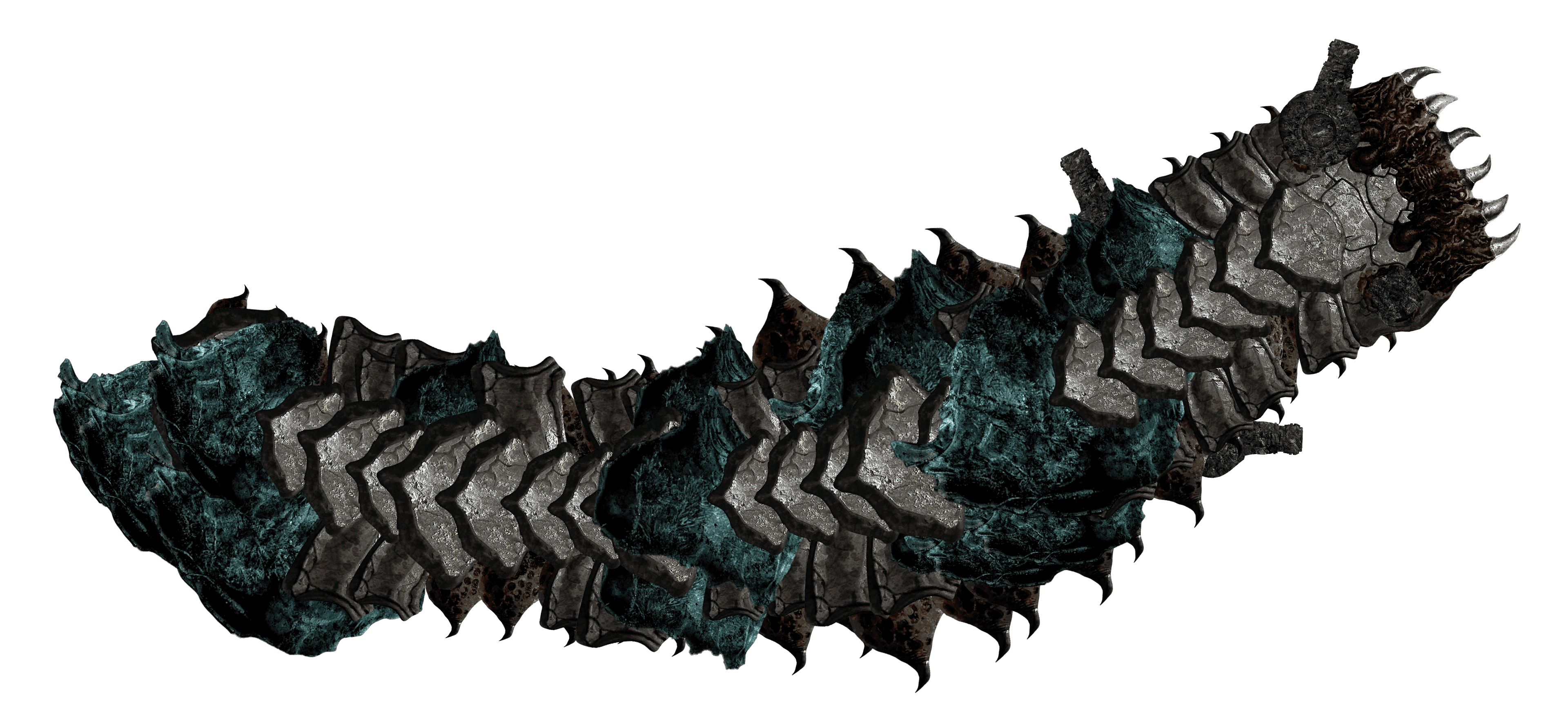
A familiar Europan predator, rebuilt with alien plating and alien turrets, standing guard in the fortress.
The game's creature data for the final boss opens with a paragraph that does more work than anything else in this article. It is reproduced on a page the wiki stamps "last updated for version 1.0.9.0," so date every mechanical figure below to that build. It reads: "Jove is the final boss of Barotrauma that was introduced in 1.0.7.0. An ancient god-like creature found in the Eye of Europa, it is worshipped by Ancients." And then, in the same breath, the sentence this piece has been building toward since it printed writing 5:
"Ancients refer to Jove as YOH-WEY."
That is Tier 1 — the game's own data, not a wiki editor's reading — and it is the only weld in the entire fiction between the wall texts and anything you can look at. Recall what YOH-WEY was in the ruins: a name occurring exactly once, inside a list of three whose order the writer immediately admitted they could not establish, with no pronoun, no description and no second mention anywhere in the other five texts. It was a proper noun with nothing fastened to it. The final location fastens three things at once. YOH-WEY is a creature. It is in a specific place, the Eye of Europa the whole campaign has been sliding toward. And the relationship between it and the Ancients has a name: worship.
Be exact about the size of that, though, because it is smaller than it feels. What the game states is the identity and the worship. It does not state what the worship did to the worshippers. The synthesis you will meet everywhere — that the Ancients were held by Jove's song, and that this is why they stopped — is a wiki editor's reading built on the same six wall texts this article arranged in its own order back at the start, and it is Tier 3 twice over: an inference stacked on an arrangement. Our own reading is narrower: the corpus turns out to be full of religious vocabulary the reader had no way to identify as religious. THE DEVOTED appears in two of the six texts as a group of somebodies. A SINGER, a SONG, a RADIANCE. Read cold, in a ruin, those are strange nouns. Read after the last hour of the campaign, they are the language of a congregation. That reframing is the whole of what the ending gives the wall texts, and it is genuinely a lot — but it is a reframing, not a new fact.
The Ancients themselves are not on Europa. Per the game's page for the creature — one the wiki stamps as up to date at version 1.10.7.1, which makes it a better-maintained source than the boss page — "the only Ancients in the game are encountered in Jupiter, which can be reached through a portal located inside a massive alien ruin at the center of the Eye of Europa." The portal and its location are Tier 1. And the same sentence carries the same hedge this article's first section built its standard of proof on: that enormous ruin at the centre is "also implied to be built by the Ancients." At the very end, standing at the largest structure in the game, on the doorstep of the thing their own walls say a fortress was raised around, the attribution is still an inference. Barotrauma never closes it.
There is an inference here that suggests itself so strongly it is worth naming and then refusing. Writing 4 records A BRIDGE TO BRING NIGH; writing 6 ends on THE BRIDGE CALLS IT FORTH. There is now, at the centre of the Eye, a portal that carries a crew somewhere else. The game states no connection between the two. Nothing in any item description, loading tip or developer post identifies the BRIDGE as the portal, and reading it that way is interpretation — ours, and plenty of other people's. It goes on the open-questions list rather than into the history.
What you actually meet through that portal is described in the plainest possible terms, and the description is worth reading slowly. An Ancient is "a vaguely humanoid creature, though it's much larger than a Human," with ribbed appendages nearly the length of its body. In the game's creature data it has 100 health, is passive, and drops nothing at all. On first contact it speaks to the crew in riddles — the wiki reads the delivery as a form of telepathy, which is the wiki's reading rather than the game's, and the riddles are as much as the sources will support. It has no audio files whatsoever. And it is the only creature in Barotrauma that, on death, slowly fades away into nothing.
Sit with that last one, because it is our observation and we think it is the sharpest thing in the section. The game spends an entire campaign telling you, in its flattest loading-screen register, that no remains have ever been found. Then it puts one of the builders in front of you — and if you kill it, there is still nothing to carry home. The one creature in the game whose corpse would settle the largest open question in the fiction is the one creature engineered to leave no corpse. Their behaviour is equally withholding: they swim around Jove while it sleeps, and the moment it wakes they swim away and vanish. Sever Jove's shield and the damage in the surrounding five metres causes them to flee. Outside of that, per the game's own data, they have no other in-game behaviour or function at all. They are there to be seen, briefly, and not to be examined.
The building they are seen in is the other confirmation, and it arrives through a monster. The Cyborg Worm is, in the game's words, "a modified version of the Endworm," and "its origins are unknown." Physically it is an Endworm with parts of its shell replaced by alien materials and its mandibles replaced by alien turrets, considerably shorter than a normal one, and it spawns only in the second stage of the final location. All of that is Tier 1. So is the line about where it lives, and this is the line to read twice: the Cyborg Worm "resides in the fortress built by the Ancients to house Jove on Jupiter."
Set that against writing 1, scratched on a ruin wall thousands of metres above and long before: FORTRESS IS BUILT — TO HOUSE — TO PROTECT. Same structure, same verb, same purpose clause. This is the only moment in Barotrauma where something the wall texts describe being built has a counterpart you can be standing inside, and it is the strongest single corroboration the six texts ever receive. It is also, note, narrow. The game confirms that a fortress exists and that it houses Jove. It still says nothing about the third clause — what the protecting was for, or from.
The wiki goes one step further and labels the step as it takes it: the alien augmentations plus the location "implies it might be an Endworm modified and enslaved by the Ancients to serve as their 'watchdog'," and the missing length "possibly" means part of its tail was cut off. Both of those are Tier 3, flagged by the editor's own verbs, and nothing in the game states either. What is not in doubt is the object itself: a familiar Europan apex predator, the same species crews have been fleeing for the whole campaign, wearing alien plating with alien guns where its mouth used to be, on station in an Ancient building. Whatever the Ancients were doing at the end, they were doing it to local wildlife.
That is as far as this article goes into the fight, and one beat is the entire budget. As of the 1.0.9.0 page, Jove has 10,000 health behind a shield that blocks projectiles and all damage, and the shield comes down only when three pylons are destroyed — each destroyed pylon also costing Jove ten percent of its health. It is included here as architecture rather than as tactics: the god at the centre of the Eye cannot be touched at all until you have taken apart the installation around it. The rest of the encounter is out of scope. For anyone mapping the ending as a whole, the official wiki's own creature navigation box files exactly five entries under a category labelled "Ending / Spoilers" — the Ancient, the Cyborg Worm, the Guardian Repair Bot, Jove and the Portal Guardian. Five entities. That list is the endgame cast.
Now go back and look at what the game had quietly been doing all along, because the foreshadowing is real and it is stranger than a codex entry would have been. The boss page notes that Jove is "hinted at throughout the game in various subtle ways," and gives two. The first is a crewmate. A bot line, quoted verbatim in the game's own words, runs: "Why is it 'Jovian'? Why not 'Jupiterian'? What the hell is Jove?" An AI crew member asks this article's title question out loud, unprompted, about a word the player has been reading off the mission board and the faction reputation screen since the first hour — because one of Europa's human factions is the Jovian Separatists. The second hint has no words in it at all: "the sounds Jove makes can be heard in some of the music tracks played throughout the game." The final boss has been audible in the soundtrack for the entire campaign.
The practical implication is not that attentive players could have worked it out — they could not. A bot's grumble about a Latin adjective, a faction name, and a sound in a music cue do not add up to a god-like creature at the bottom of a crater, and no chain of reasoning gets you there before the game tells you. What they tell you is where Barotrauma keeps this material: in the incidental channels. Bot chatter, faction names, the score. Not in anything shaped like a lore page. If you want to catch the next reveal early in this game, that is where to listen — and it is the same instinct that made the internal creature ID in this article's first section better evidence than any page of prose.
Which brings us to the bill. The ending confirms a great deal, and in doing so it breaks two things the rest of the game told you, and this article is going to leave both of them broken.
The first is the bodies. The loading tip this article quoted in full a few sections ago states flatly that no remains of the builders have ever been discovered, and that the only life inside the structures is biomechanical. The ending puts living Ancients on screen, swimming.
In-universe, those are compatible, and the reason is worth stating precisely because it is the article's own first-section argument coming back around. The tip is a report of what Europa's colonists have found — it is written from inside a colony, about a colony's searching, and "have ever been discovered" is a claim about searchers rather than about the universe. The Ancients are on Jupiter, through a portal inside a ruin at the centre of a crater that a submarine cannot even reach without a tier 3 hull. Nobody in the fiction whose knowledge that tip represents has walked through it. The colonists' sentence is entirely true of Europa. This is what the word "presumably" was doing in the other tip all along, and it turns out to have been load-bearing.
What is not defensible is quoting one half. A lore summary that opens with "no remains of the builders have ever been discovered" is presenting a colony's dossier as narration. One that opens with "the Ancients are alive" drops the fact that no human being on Europa has ever found evidence of one. Both sentences are Tier 1 game text. Neither is honest on its own, and the fiction is the tension between them rather than either one of them.
The second is the size, and this one does not resolve at all. The earlier section on architecture quoted the ruins' description — many doors and corridors slightly smaller than a regular human, with the wiki inferring from that a species smaller than we are — and flagged, without saying in which direction, that the game later contradicts it. Here is the contradiction. The creature Barotrauma calls an Ancient is much larger than a Human. Both statements sit on the current official wiki, neither is legacy text, and they cannot both describe the same body.
Three readings circulate. That the ruins were not built for the beings that ended up in them. That the undersized passages are the guardians' maintenance network rather than anybody's living space. That the population on Jupiter is not the population that built on Europa. None of the three is supported by anything in the game — not an item description, not a loading tip, not a developer post, not a line of dialogue. They are three ways of being comfortable, and picking one is precisely the move that put a plant, an open-water animal and a parasite under the Ancients' name in the first place. This article spent a whole section undoing that habit and is not going to indulge it now. The doorway is a measurement. The creature is a measurement. They disagree, and that is the current state of the evidence.
So the honest ledger for the ending runs like this. Confirmed, in the game's own text: YOH-WEY is Jove; the Ancients worship it; a fortress was built to house it; a portal sits inside a massive ruin at the centre of the Eye; and living Ancients are on the other side of it. Broken, in the same hour: the flattest sentence in the game about remains now needs a qualifier it never carried, and the only physical measurement anyone had of a builder's body disagrees with the only body anyone has ever seen. You can state all of that from the game's own words, without arranging anything and without deciding anything.
Which is a good haul and an uncomfortable one, and it is roughly where any honest reconstruction of this material lands: a short list of things stated, a shorter list of things that follow, and two live contradictions nobody gets to close. That leaves exactly one job worth doing before you go and read somebody else's account of the same evidence — learning to tell, quickly and without taking anyone's word for it, what Barotrauma has actually stated from what has merely been repeated often enough to sound stated.
Where the Evidence Ends and the Theories Begin
That job comes down to two checks, and neither of them takes longer than about ten seconds on the page in front of you. One is a verb. The other is a banner. Almost every false claim about Barotrauma's Ancients in circulation today is either an inference that lost its qualifier somewhere in transit, or a real figure that lost its version — and both of those leave a mark on the page they came from, if you know which part of the page to look at.
Check the verb first. Start with the thing the official Barotrauma wiki says about itself, in its own footer, on every page it serves: it is "hosted by the developer but maintained by the Barotrauma community." That is not a warning that the wiki is unreliable — it is a very good wiki, and this article is built on it. It means the domain name certifies nothing about which sentence you happen to be reading. What a page quotes is the game: item descriptions, loading tips, wall inscriptions, creature IDs, stat tables, generation parameters. Those are Barotrauma's own words, reproduced, and they are as solid as anything gets. What a page reasons is a player's reading — and it sits in the same font, on the same official domain, often one line below the quotation it is reasoning from.
The good news is that the editors flag their own reasoning, and the flag is almost always a verb. Implied. Possibly. Speculated. Suggests. This could explain. Appears to be. You have watched this article lean on that tell in every section: the Ancients "implied" to be the builders, the Alien Circuitry "speculated" to be what drives the guardians, the Cyborg Worm's alien plating that "implies it might be" a modified watchdog. Nobody was hiding anything. Every one of those hedges was placed there deliberately by the person who wrote the sentence.
The qualifier does not die on the wiki. It dies in transit. A summary paraphrases the page, a video paraphrases the summary, a forum reply paraphrases the video, and the first word a paraphrase drops is the hedge, because the hedge is the least interesting word in the sentence. "Implied to be the civilization that built the ruins" becomes "the civilization that built the ruins," which becomes "the Ancients built the ruins." Three links down that chain nobody has told a lie and the claim is now stronger than the evidence underneath it. So the working question is short: what is this quoting? If the answer is an item description, a loading tip or a line of game data, go and read it — it will be there. If the answer is a sentence that reasons rather than reproduces, you have found a reading, and readings are worth having, provided they are carrying their label.
Sometimes the answer to that question is nothing at all, and that is the sharpest case this article has. The name it handed back in its first section — the one that circulates in third-party lore write-ups of this game — quotes no item, no tip, no creature ID and no developer post. Ask what it is reproducing and there is no answer to give. The 46,186-URL archive enumeration that came back empty is the second check run across every build of the wiki at once: not stale, not outdated, simply never there. A claim that fails the verb test at the first question and the version test across a decade is not a contested claim. It is a habit.
Then check the banner. Every page on the official wiki carries a version stamp at the top, and almost everyone scrolls past it. It tells you two things: which build the page was last checked against, and whether an editor currently considers the data current. The spread is wider than you would guess. Alien Ruins and Artifacts are stamped 1.0.7.0. Biomes is stamped 0.19.14.0. Jove is 1.0.9.0 and Husk is 1.2.6.0 — against a live game at 1.11–1.12. Meanwhile Alien Translator, Alien Circuitry, Alien Data Storage and Ancient are all flagged as up to date.
That split is useful in a specific way, and it is worth internalising rather than memorising: the pages this article leaned on hardest for verbatim game text are the maintained ones, and the pages holding the numbers are the stale ones. So weight the up-to-date pages for anything mechanical, and prefer a structural fact that several sources corroborate — five biomes, ruins from the Ridge down, five artifacts and no more — over a lone figure sitting on a page nobody has revisited in several major versions. Note too, as our own reading rather than the wiki's, that the two halves of the banner are not the same kind of statement: the version number is a record of when someone last looked, and the "up-to-date" flag is that someone's assessment. The first is a fact about the page. The second is a judgement about the game.
Now watch that check run on this article's own figures, because an article that hands you a standard and then exempts itself is not handing you anything. Section seven told you the Nasonov Alien Artifact pulls creatures toward it from up to a hundred metres away. Where did that number come from? The official wiki's Artifacts page, which reproduces the game's artifact data. What does that page's banner say? Data is potentially outdated — last updated for version 1.0.7.0. What is the live game? 1.11–1.12. So the accurate sentence is not "the Nasonov has a hundred-metre radius." It is: as of 1.0.7.0, the Nasonov attracted creatures within 100 metres — and if you are planning a run around that figure today, confirm it in your own build, because years of balance passes sit between that page and your game. The same tag belongs on Faraday's eight metres and fifteen seconds, on Psychosis's fifteen metres and thirty, on Sky's fifty thousand oxygen per second and on Thermal's two-metre scald. Every one of those numbers carried "as of 1.0.7.0" when this article printed it. That was not throat-clearing. It was this check, running quietly, and this is it running out loud.
What survives version drift far better is the character of a thing rather than its calibration. That the Nasonov summons predators, that the Sky artifact empties a compartment of air, that a guardian withdraws to a pod when it is hurt — those have been true across every build anyone has documented. It is the metres and the seconds that move.
That is also what a failed version check looks like at full size, and there are two good specimens still doing the rounds. One is the claim, retired in a line earlier in this article, that every generated level contains an artifact. The other is more instructive because it is not merely a stale number, it is a theory built on one: that because the Thermal artifact is only active inside a submarine's hull, the Thermal artifacts must have been their creators' territorial defence. The current description contradicts the premise outright — the thing emits scalding steam underwater too — and when the premise goes, the conclusion resting on it goes with it. Both claims come from a page carrying an explicit outdated tag, which is the same banner check in a blunter form. Neither is useless: as a record of what players believed about the Ancients a decade ago, they are genuinely interesting. As evidence about the Ancients, they are nothing.
Two honest caveats before the list of what nobody knows. The first is that the community does not universally admire how any of this is delivered. In a discussion on the game's own code repository, a well-argued player critique holds that "the lore feels forced," that "everything important feels slapped in your face immediately in the final mission," and that Jove "isn't in the game physically until the final level" despite engravings of it — by that player's account — existing in the ruins throughout. That is a community position rather than a developer one, and it is a fair one. An article that spends this long reconstructing a story should say plainly that a reasonable player can find the story badly served by the game that contains it.
The second caveat is that the record is not closed. In the same 2024 post that has supplied this article with several of its developer statements, Regalis wrote that new ruin events were being added, and said why: "to give you more insight into the beings that originally built these structures." That is a Tier 2 statement of intent rather than a promise of specifics, and it does not answer the critique above so much as sit beside it. What it does mean for you is that everything stated here is current-as-of, not final. The Ancients are a subject the developers are still writing.
Which leaves the short list. These are the questions Barotrauma has genuinely not answered — not the ones it answered somewhere you have not looked. Each was explained where it came up in this article; here they are as an inventory, and nothing more:
- Why the ruins' guardians kill every human on sight and let a husk walk past.
- Why an Ancient artifact inflicts an affliction otherwise unique to a single Europan animal.
- Whether the
BRIDGEof the wall texts is the portal at the centre of the Eye. - How big the builders actually were, given a doorway and a body that disagree.
- What the four
[UNTRANSLATABLE?]nouns were. - What order the six writings were meant to be read in.
Six questions. That is the whole of it, and a list that short is a sign of how much this game does state, not how little. Anything you meet that closes one of them is a theory — sometimes a good one, occasionally a beautiful one, never a fact — and treating it as a theory costs you nothing except the pleasure of being certain.
So: the next Barotrauma lore claim you run into, whether it is in a video, a thread, a summary, a reply to this article, or the sentence that sent you looking in the first place, check the verb, then check the version — and if it fails either one, enjoy it as a theory instead of repeating it as a fact.