
The RP label tells you less than the live rulebook. In the pages checked on July 31, 2026, DayzUnderground publishes no rule for initiation or killing, while Metro: Heart of Moscow defines hostile triggers, rights, and timers. Decode a server's RP server rules through the same four questions: what triggers the rule, whom it covers, how long it lasts, and what cancels or changes it.
Start With the Live Rulebook, Not the RP Label
Open the community's current rules page and save both its URL and the date you checked it. The DayzUnderground rules describe Organic RP without rules for initiation or killing. The Metro rules define both. A screenshot, old guide, or definition from another Discord cannot settle what the server enforces now.
DayzUnderground's rules page shows why the RP label must be checked against the live rulebook.
Translate every actionable rule into four fields:
- Trigger: What event activates the rule?
- Scope: Which players or actions does it cover?
- Timer: How long does it remain active?
- Exception: What changes, cancels, or overrides it?
Keep whitelist requirements on a separate line. DayzUnderground can punish false information in an application, while Metro may consider recent VAC bans during screening. Those are access checks. The four fields above tell you how to act once connected. If the live page leaves one field unclear, ask staff before the situation occurs.
On Metro, a Clear Demand Starts the Clock
Metro's page turns a hostile encounter into four checkpoints:
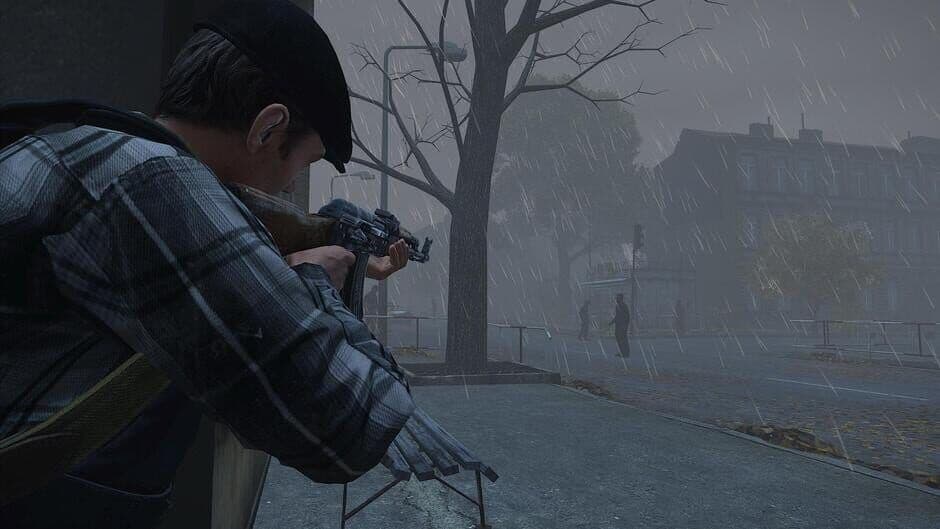
On Metro, a clear demand, participant scope, timer, and exception define the hostile situation.
- Trigger: State an understandable demand and an obvious consequence. “Put your hands up or you will be shot” supplies both; a raised weapon without a clear demand does not supply the example the rule requires.
- Scope: Assisting an initiation makes a player part of the situation. The page names overwatching or holding an exit as examples, and says theft or vandalism gives the victim situational kill rights. Do not expand that list merely because someone is nearby or affiliated.
- Timer: A firefight or melee intended to kill creates a one-hour kill-rights window for the participants. Renewed lethal force resets that window.
- Exception: If both parties leave amicably, the rights are void. Even while the window is active, kill rights do not replace the need for an in-character reason.
Suppose two survivors surround a neutral player. One gives the demand while the other blocks the only exit. The demand supplies the trigger; blocking the exit places the second survivor inside the scope. If the encounter becomes a firefight, the one-hour timer starts. If both sides later agree to separate without continuing the threat, the exception cancels those rights. If “amicably” is disputed in the moment, disengage and ask staff rather than turning an unclear word into a later ambush.
Keep Discord Knowledge Out of Your Character's Head
Metagaming starts when player knowledge becomes character action without an allowed in-character path. Metro includes information from a live stream, Discord, or TeamSpeak; DayzUnderground likewise tells players to keep in-character actions separate from ordinary OOC Discord comments.
Suppose a stream reveals that a group is preparing an ambush at a specific location, or someone posts the location in an OOC Discord channel. You cannot reroute your character, warn an ally, or approach the site ready for that ambush unless your character learns the information through an allowed in-character source. The test is not whether the information is accurate; it is whether your character has a valid path to know it.
An IC radio channel can provide that path only under the server’s radio rules. On Metro, using the IC Discord radio while playing requires you to double-mic: speak in game as well as in Discord. If your character is restrained, unconscious, dead, or otherwise unable to use a radio, you cannot transmit through that channel. Before acting on useful Discord information, identify the channel as IC or OOC, confirm how your character received it, and check whether your character was physically capable of sending or receiving the transmission.
Escaping the Scene Does Not End the Encounter
Reaching cover or putting distance between yourself and the other players does not necessarily end the encounter. On DayzUnderground, logging out—or staying offline after a crash or restart—to avoid players or negative consequences is combat logging. Its page uses a contextual finish rather than a fixed combat logging timer: after combat or another interaction, leave the area or wait because the interaction may still be active. Logging out while unconscious also counts.
Creating distance in game does not automatically satisfy a server's logout rule.
Metro makes the timing more mechanical. After a lethal-force situation ends, you must remain in game for at least 20 minutes. The clock begins when the situation ends, not when you escape the immediate scene. The involved players can give you permission to leave earlier, so treat that permission as the exception you need—not your distance from the gunfire.
If real life forces you away, DayzUnderground says to inform the other players as soon as possible. Metro allows an earlier exit with their permission. After a crash, Metro expects reasonable attempts to reconnect or notify the people involved. Use the community's accepted contact channel and preserve the message.
Death follows a different rule. Under Metro’s New Life Rule, a non-permadeath character forgets the events leading to death and may not return to the active situation. The page allows a return to the location after 30 minutes only once the situation has ended, and it prohibits returning to the body for gear. Combat logging controls when you may leave; the New Life Rule controls what the surviving character may remember and do after respawning.
Make One Rules Card Before You Join
Put the live rulebook URL and the date checked at the top. Add four setup lines before the table:
- Access: Whitelist or application requirements.
- IC/OOC: Allowed text, voice, radio, and stream sources; mark any channel that could cause metagaming.
- Crash/report contact: The channel to notify and the server's reconnect expectation.
- Evidence: Recording hotkey and report location.
Then give every high-stakes rule the same four fields:
| Rule | Trigger | Scope | Timer | Exception |
|---|---|---|---|---|
| Hostile action | What words or acts start it? | Who is involved? | When does it end? | Which zones or agreements change it? |
| Kill rights | What grants them? | Who receives them? | What starts or resets the clock? | What voids them? |
| Combat logging timer | What counts as an active encounter? | Which players must agree? | When may you leave? | What is the crash or IRL procedure? |
| New Life Rule | What kind of death activates it? | What must the character forget? | When may you return? | Are body or gear recovery barred? |
Fill the card from the community's page, not from the examples in this guide. For a report, DayzUnderground asks for names, timestamps, chat logs, screenshots, and video. Bohemia's administration logs may confirm a disconnect, hit, or death, but a spoken demand can still depend on your recording. Start recording before the encounter becomes disputed.
If any high-stakes row still has a blank, do not connect and hope context will solve it. Check the live page or ask staff until the trigger, scope, timer, and exception are explicit enough to guide your next action.