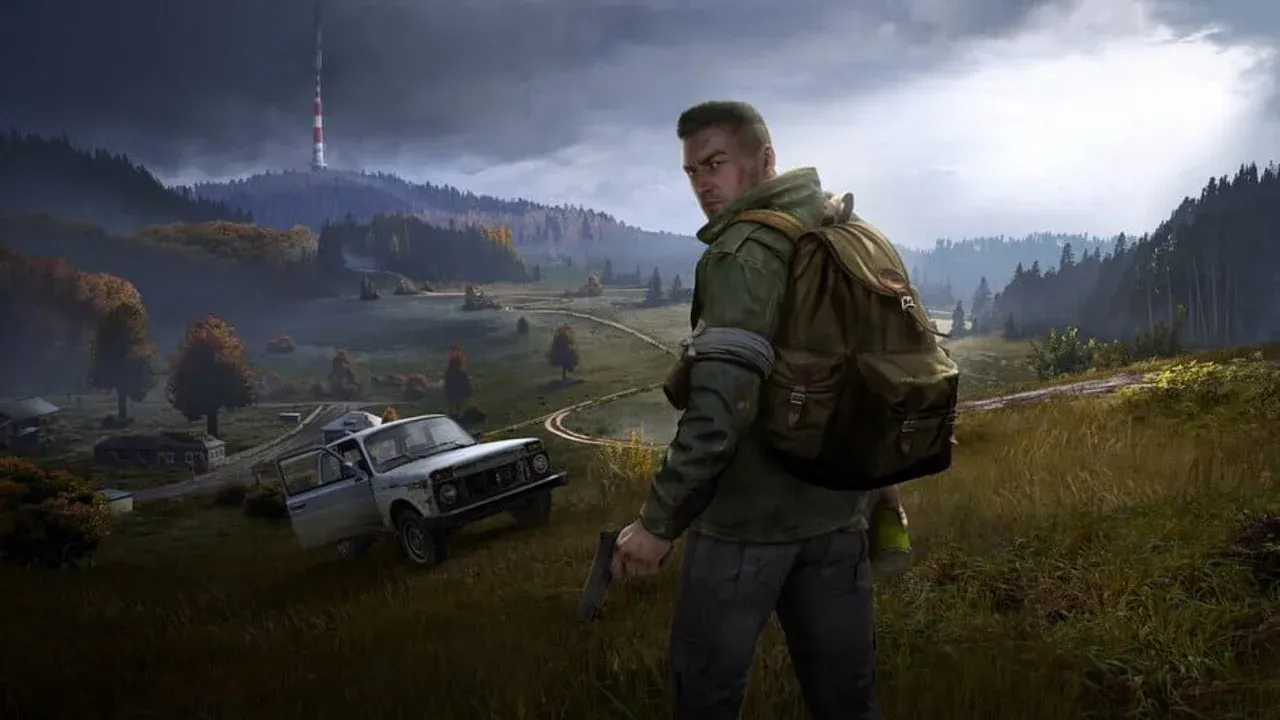
DayZ does not hide its collapse in a final cutscene. It leaves the evidence in the places you pass while looking for food: a mass grave beyond a settlement, an abandoned checkpoint narrowing a road, a military position that no longer controls anything. Chernarus tells one clear story even while it leaves the details open: an organized response narrowed into disposal. The useful question is not who can invent the most complete survivor theory. It is what the world still shows you.
The Grave Marks When Care Became Disposal
A mass grave is the map's most damning object because it records a final act: bodies handled collectively after ordinary burial stopped being possible. It tells you less about the pathogen's origin than about the moment when the people responsible for the dead ran out of time, space, or both.
The April 9, 2015 post "[Discovery] Largest Mass Grave to Date" on the official DayZ Forums describes mass graves as a recurring sight and treats a possible connection to Green Mountain as unresolved. That distinction matters. The grave is an environmental fact inside the game; the story attached to it is not automatically canon.
Read the site as a record of pressure, not as a code. Its distance from a settlement suggests that someone wanted the dead moved away from daily life. Its proximity to military infrastructure suggests that an organized response still had resources to spend. Neither observation proves who ordered the burial or what caused the outbreak. They do establish the scale of the failure: the response had reached the point where people were being processed as a problem.
A Checkpoint Is a State in Concrete
The DayZ Wiki's Chernogorsk entry specifically records abandoned car wrecks, makeshift roadblocks, and military checkpoints. That is more useful than calling the city "post-apocalyptic." It gives the collapse a procedure. Someone tried to regulate access, put equipment on a route, and keep an organization present long enough for the barrier to matter.
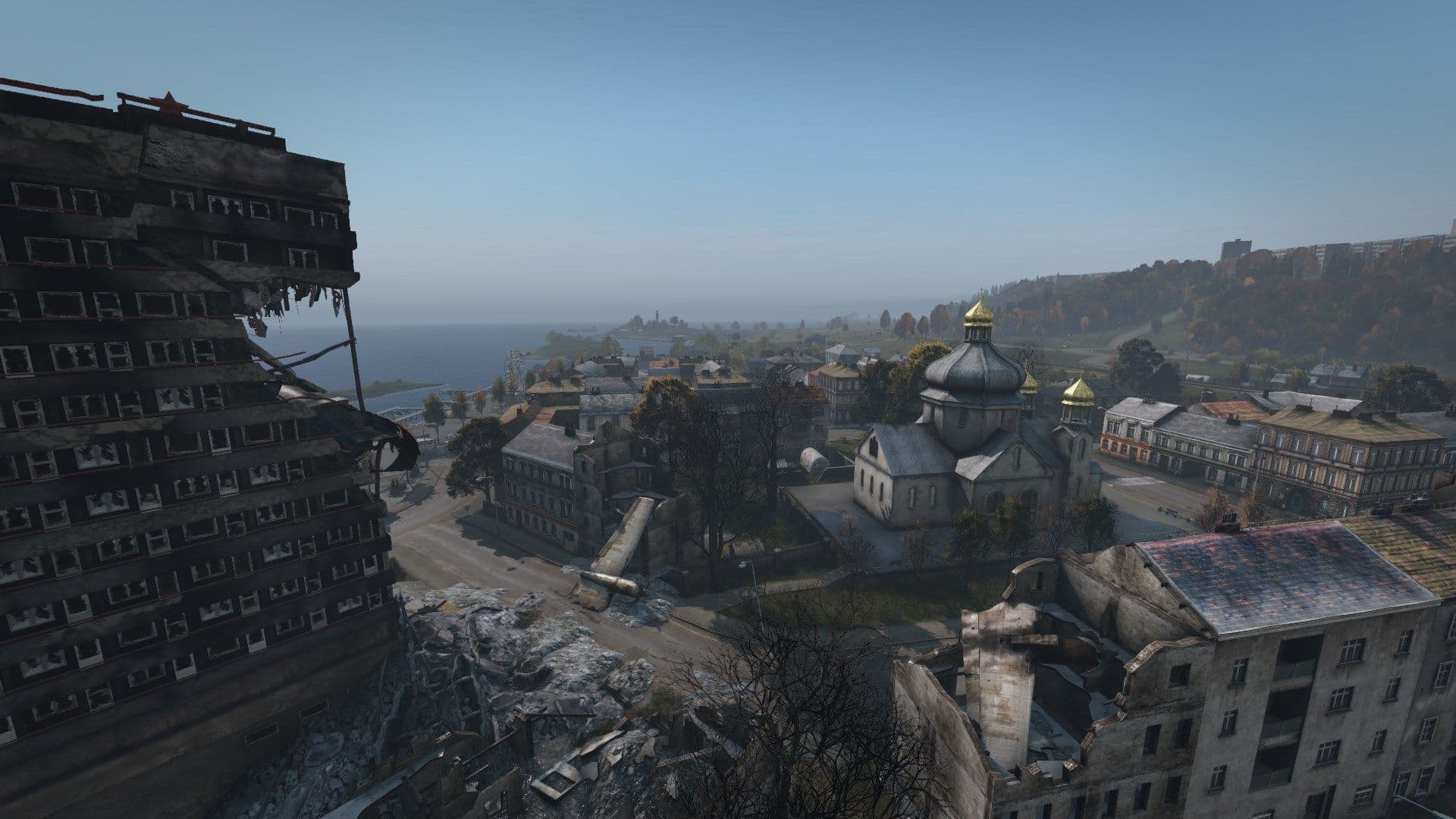
Chernogorsk's ruins keep the city's old public layout visible.
The checkpoint is therefore not just scenery. It is a state reduced to a piece of road furniture. A barrier still tells travelers to stop, but the empty position tells you that the institution behind the order has spent its authority and disappeared. The road remains; the system that gave the road rules does not.
This is where Chernarus becomes sharper than a generic ruined city. Its public routes, civic buildings, military remnants, and abandoned cars still preserve the outline of a functioning place. The checkpoint exposes the break between that outline and the people who once operated it. It is not proof of one faction's final stand. It is evidence that control was attempted and could not be maintained.
The Route Turns Scenery into a Timeline
The useful reading is sequence, not inventory. A town presents civic systems and ordinary movement. A checkpoint turns that movement into a controlled boundary. A mass grave shows the response after control has become too small for the disaster. The game does not label those stages with dates, but the material order is legible.
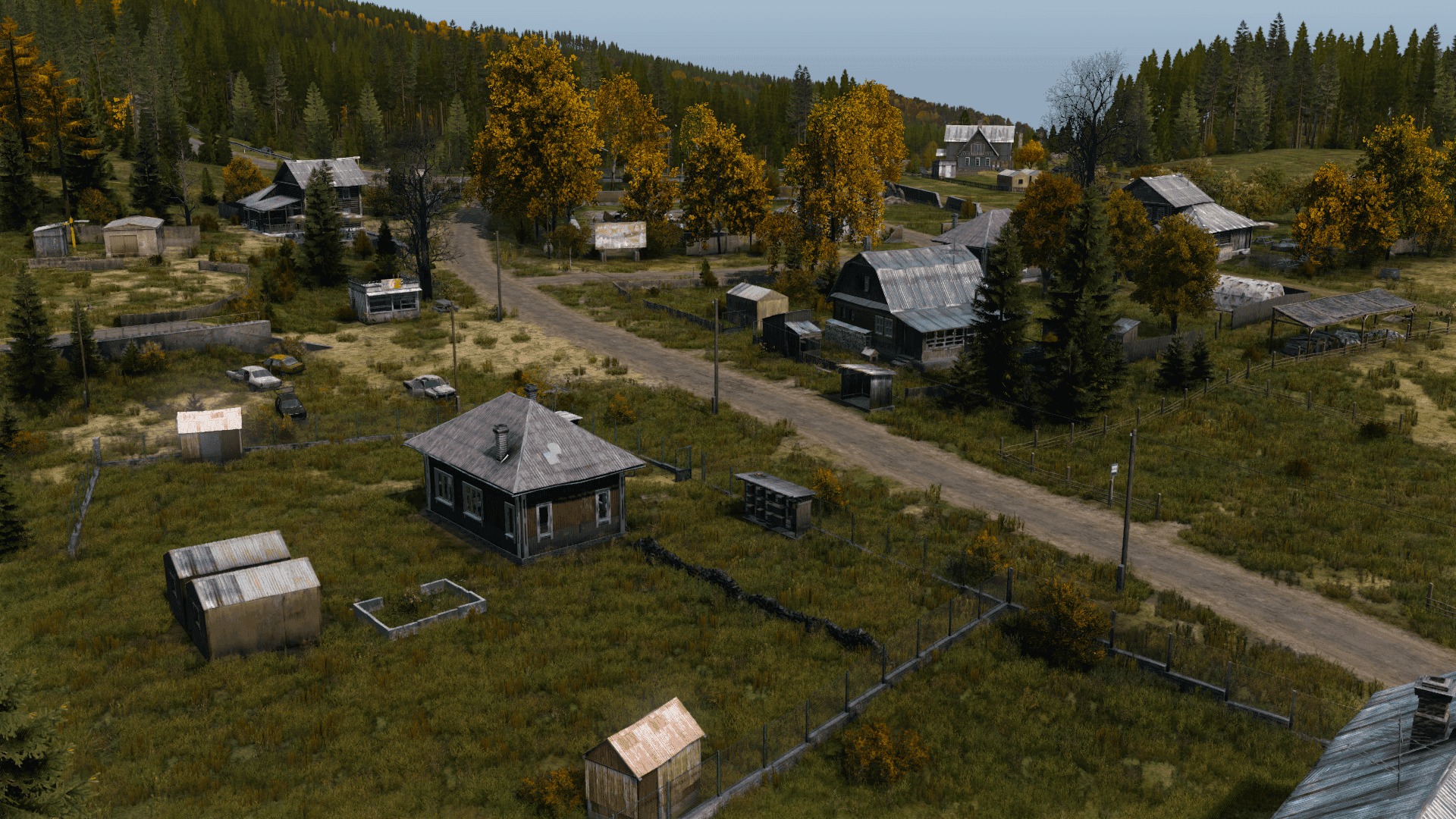
A Kamensk road cuts through a settlement where everyday infrastructure persists after the collapse.
Follow a road out of a settlement and pay attention to what changes. The damaged city keeps its streets and public buildings; the roadblock interrupts them with a demand for inspection; the burial site removes the public from view altogether. That is not an official chronology, and it does not need to be. It is a way to understand why the same trip can feel like scavenging and historical investigation at once.
The map's environmental storytelling works because the landmarks do different jobs. The checkpoint explains how authority looked when it was still active. The grave explains what authority had to handle when it failed. Put them in one journey and the world stops being a backdrop for loot: it becomes a record of institutions shrinking under pressure.
Stop Where the Evidence Stops
Bohemia Interactive's July 2022 Community Spotlight points players toward a DayZ lore documentary and says the developers can "neither confirm nor deny" its speculations. The same post repeats the game's guiding idea: "This is your story." That is an instruction for method, not permission to turn every theory into canon.
Keep observation and inference separate. You can say the checkpoint is abandoned. You can infer that it belonged to a containment effort because that is what a roadblock is built to do. Do not add a faction, date, or ground-zero claim unless a source actually gives you one. Green Mountain is a useful thread because it shows how DayZ invites theories; it is not a license to close the case.
Your survivor is not restoring the old order or completing its final report. You are moving through the evidence left by people who tried to keep one alive. Next time a roadblock interrupts a loot run, stop and ask what the object required people to believe—and what the nearby grave says about the cost of that belief.