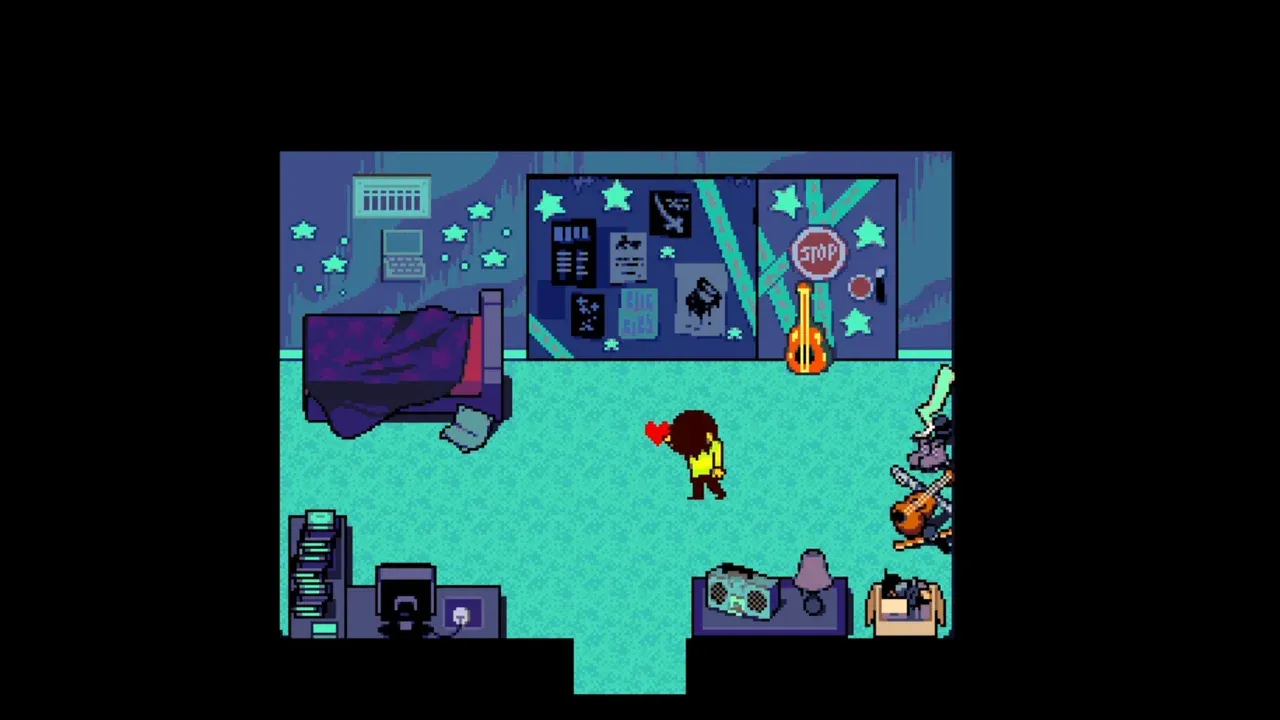
Deltarune Chapters 1-4: A Parallel Universe That Defies Expectations
To call Deltarune a sequel to Undertale is to miss the point entirely. This is not a continuation but a refraction, a parallel universe where familiar faces are cast in strange new roles, and the very act of playing is put under a microscope. Toby Fox’s episodic project, now four chapters deep into a planned seven, defies the expectations it so deliberately cultivates, weaving a narrative that is as much about the player’s complicity as it is about its silent protagonist’s journey.
Kris and Susie venture into the Dark World, the core setting of Deltarune's narrative.
The game’s relationship to its predecessor is its first and most brilliant subversion. You’ll see Toriel, Sans, and Undyne walking the streets of Hometown, but here they are teachers, cops, and shopkeepers—ordinary citizens in a world where monsters won the war. This isn’t fan service; it’s world-building with a haunting, uncanny edge. It creates a sense of déjà vu that serves the game’s larger mystery, suggesting we are observing a different permutation of a cosmic story. Deltarune uses this familiarity not as a crutch but as a foundation, allowing it to explore new, more complex themes of destiny, agency, and fractured identity without the burden of direct exposition.
The opening “Vessel Creation” sequence is a masterstroke of meta-commentary. After you meticulously design an avatar, a disembodied voice casually discards it, stating, “No one can choose who they are in this world.” This isn’t just a joke—it’s the game’s thesis statement, establishing a core tension between player agency and predetermined narrative that will define the entire experience.
This tension crystallizes in the protagonist, Kris. Unlike Undertale’s blank-slate Frisk, Kris has a history, a family, and a palpable sense of otherness. The most chilling and fascinating mechanic is watching Kris move autonomously in cutscenes, separate from the red heart—your soul—that you control in battle. This creates a parasitic dynamic; you are a passenger, or perhaps an intruder, in a life that was already being lived. The game constantly asks: whose story is this? Kris’s, or the player’s who puppeteers them? This ambiguity fuels the central narrative mystery, transforming what could be a simple monster-of-the-week adventure into a compelling “mystery box” that rewards scrutiny. Every hidden line of dialogue, every cryptic hint from characters like the shopkeeper Seam, and every deviation on a second playthrough feels like a piece of a vast, ever-growing puzzle.
This structure is perfectly suited to Deltarune’s episodic release. With Chapters 1-4 now available (the first two originally free, the latter two part of a paid release leading to three more free chapters), the game feels like a serialized novel. Each chapter delivers a self-contained story in a uniquely themed Dark World—a card kingdom, a cyberspace city, a chaotic TV studio, a somber cathedral—while meticulously advancing the overarching plot about sealing Dark Fountains and preventing a prophesied calamity called “The Roaring.” The slow-burn reveals and deepening character arcs across these 20+ hours make the current package feel substantial, even as the “To Be Continued” screen at the end of Chapter 4 leaves you craving the next installment. This isn’t a half-finished game; it’s a deliberately unfolding one, and the journey so far is a masterclass in building anticipation through rewarding, dense storytelling.
Deltarune Combat and Gameplay: Bullet Hell Meets Strategic Party Management
Deltarune’s genius isn't just in its narrative subversion—it's in how it weaponizes the fundamentals of the RPG. It takes Undertale’s brilliant but solitary combat loop and evolves it into a full-fledged tactical conversation, where every turn is a puzzle of party management, resource allocation, and split-second dodging. This is a bullet hell symphony conducted by three conductors, and it’s the most compelling turn-based system to come from the indie scene in a decade.
The core innovation is the shift from a single combatant to a three-person party. Controlling Kris, Susie, and Ralsei isn't just a cosmetic change; it fundamentally alters the strategic calculus. You’re no longer just managing your own HP—you’re juggling three health bars, a shared pool of Tension Points (TP), and the unique abilities of each character. Susie is your raw damage dealer, Ralsei your dedicated healer and buffer, and Kris your versatile wildcard. This creates a tangible sense of synergy. A classic opening gambit might see Ralsei cast Pacify to calm a rowdy enemy (spending TP), Susie follow up with a perfectly-timed axe swing to build more TP, and Kris use that pooled resource for a powerful healing spell or a defensive buff. The system forces you to think in combos and rotations, transforming battles from a series of isolated actions into a cohesive, turn-based dance.
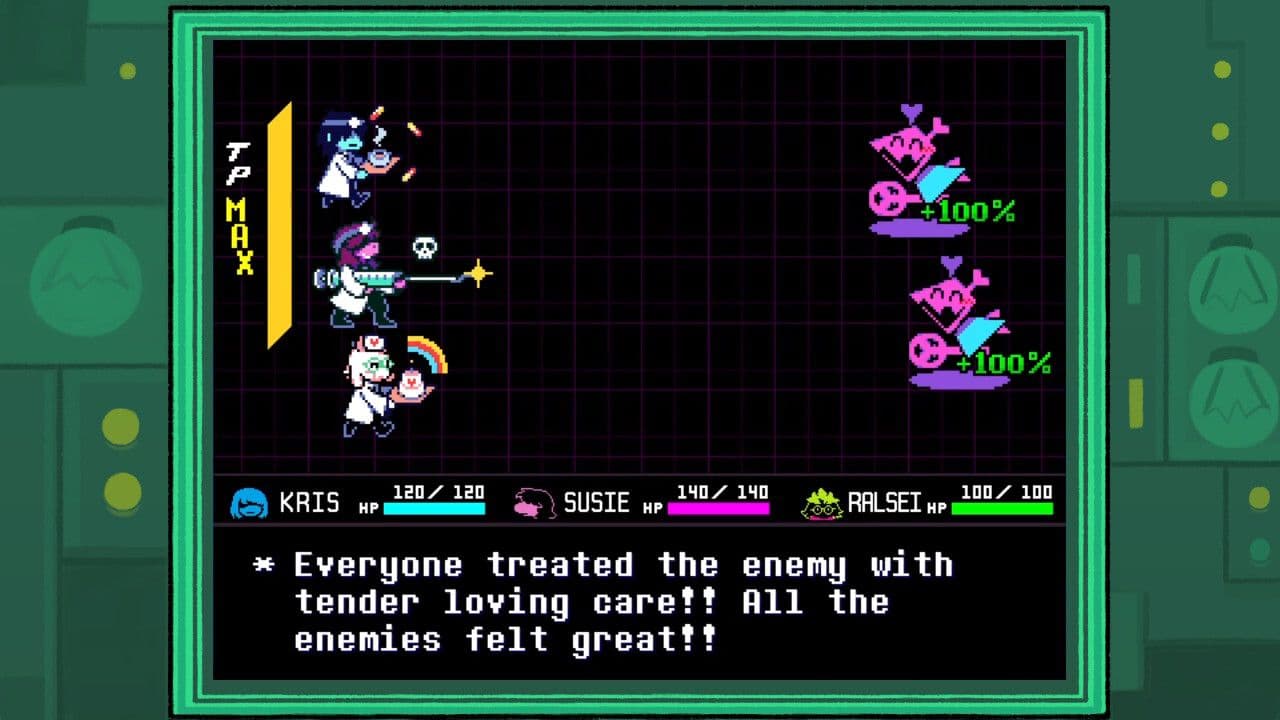
The battle system emphasizes non-violent interaction through the Act command.
The brilliance of the TP system is how it actively rewards defensive skill. You gain TP not by attacking, but by successfully Defending (reducing incoming damage) or, more thrillingly, by grazing enemy bullets—dodging them at the last possible millisecond. This elegantly ties the frantic bullet-hell segments directly to your offensive and supportive capabilities. Mastering the dance of evasion doesn't just keep you alive; it fuels your entire party's magical arsenal.
This synergy is most brilliantly expressed through the expanded ACT system. Where Undertale gave you a list of contextual mercy options, Deltarune distributes these actions across your party, each with their own flavor. Ralsei might Pacify with gentle words, Susie might Threaten with a snarl, and Kris might try to Check for weaknesses. In one memorable Chapter 3 fight against ambulance-themed adversaries, the solution involves having Kris Flirt distractingly while Susie literally rips out a "plug" during the bullet-hell phase. These aren't just menu choices; they're character-driven minigames that make pacifist runs a constant source of invention and humor. Choosing to spare enemies also has a tangible, world-building reward: recruited Darkners populate your Castle Town hub, offering new shops, mini-games, and dialogue, giving peaceful resolutions a satisfying, persistent payoff.
However, this elegant complexity has a barrier to entry. The bullet-hell segments, while more forgiving than something like Touhou, can still be a brutal wall for players with slower reflexes or those unfamiliar with the genre. While the game offers plentiful healing items and the option to retry most fights instantly, certain bosses—especially the brutal secret ones—demand a level of dexterous precision that can feel at odds with the strategic, turn-based layer. It’s a design choice that firmly establishes its challenge ceiling; this isn't a game you can purely think your way through. You must also perform.
Yet, when the system clicks, it's transcendent. Later chapters introduce wrinkles that keep you on your toes: enemies with armor that must be broken before they can be spared, multi-phase bosses that change the bullet patterns and available ACTs mid-fight, and even moments where control of the soul shifts between party members. Deltarune refuses to let its combat grow stale, constantly remixing its own rules. It takes the intimate, personal struggle of Undertale and scales it into a collaborative, strategic effort, making every victory feel earned not just by your reflexes, but by your ability to command a team.
Chapter 3 vs. Chapter 4: A Contrast Between TV Chaos and Somber Reflection
If Deltarune’s first two chapters established its thematic and mechanical language, Chapters 3 and 4 serve as a masterclass in tonal range. This is where the game flexes its narrative muscles, moving from a hyperactive, nostalgic sugar rush to a somber, character-driven meditation on grief, all while proving its episodic structure is a strength, not a limitation. The contrast isn’t just for show—it’s a deliberate, gut-punch demonstration of the series’ emotional bandwidth.
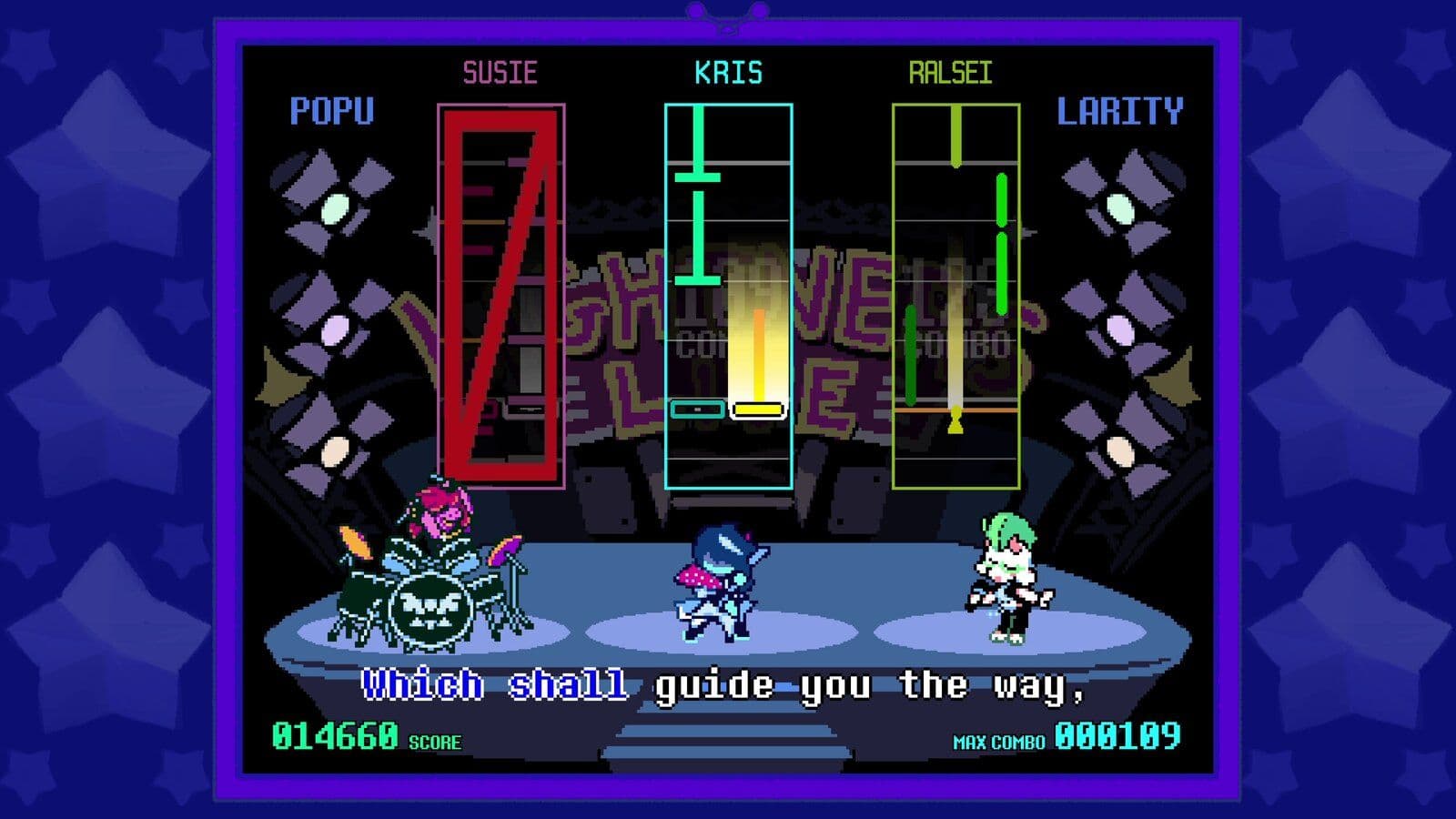
Musical segments highlight the frantic pacing of the TV-themed Chapter 3.
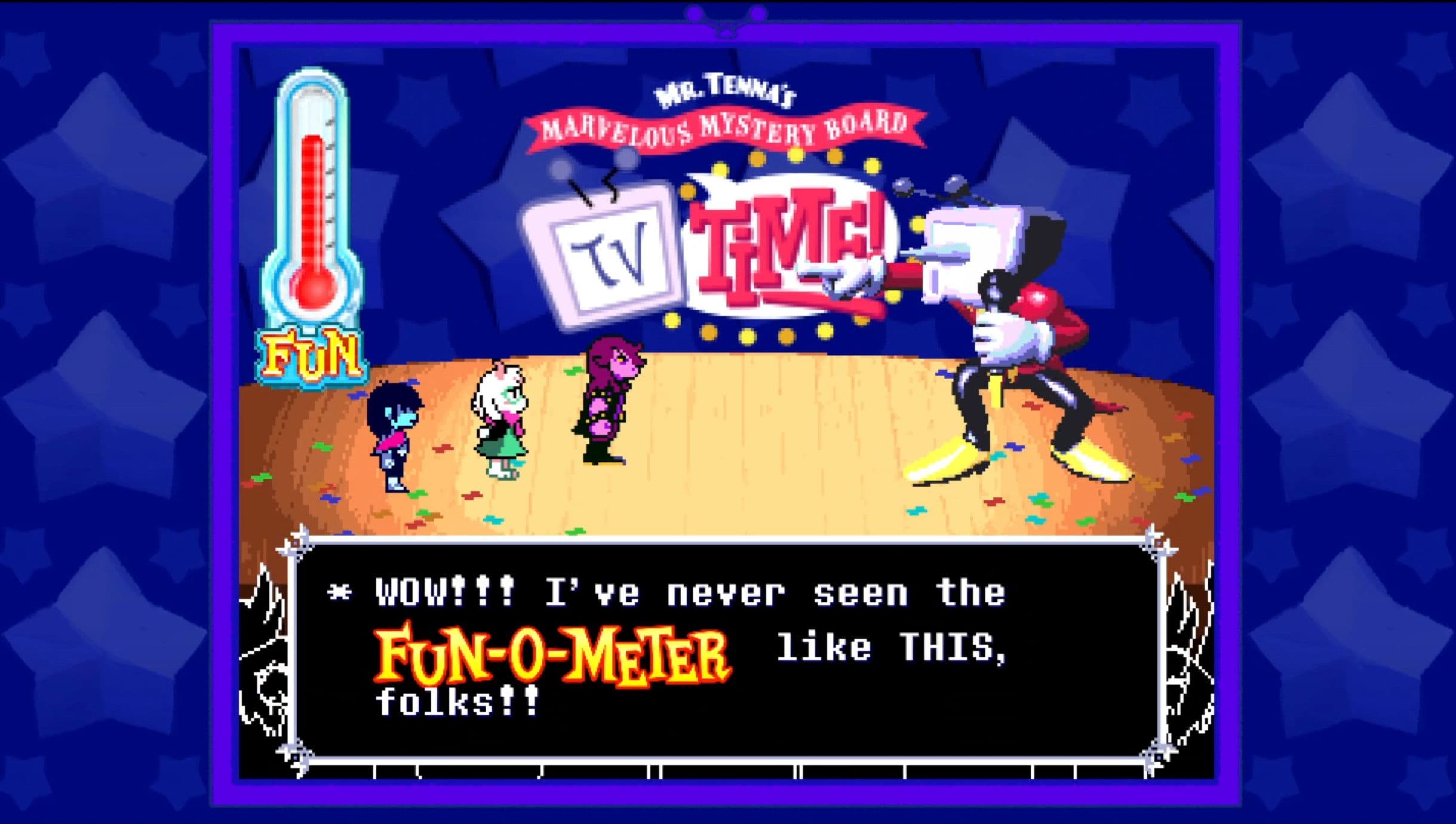
Chapter 3, titled “The TV World,” is a delirious, unhinged love letter to channel-surfing chaos and the collective memory of Saturday morning cartoons. It’s a madcap sugar rush where the antagonist is a sentient, melodramatic CRT television named Tenna who hosts a deranged game show, and the world’s logic is dictated by the rapid-fire absurdity of late-night infomercials and 8-bit gaming tributes. The design is a barrage of non-sequiturs: one moment you’re in a rhythm-based cook-off, the next you’re navigating a top-down Zelda parody, and the next you’re dodging bullet-hell attacks shaped like animated GIFs. The humor is relentless, a stream of meta-jokes and fourth-wall pokes that lands with impressive consistency. However, this is also where Deltarune’s pacing risks exhaustion. The chapter’s breakneck commitment to zaniness offers little narrative breathing room, and the extended segments that parody old-school RPG exploration—complete with fetch quests for keys—can feel like padding amidst the sensory overload. It’s a hilarious, inventive spectacle that occasionally forgets to let the player come up for air.
Where Chapter 3’s comedy shines is in its self-awareness. Tenna’s existential crisis over being rendered obsolete by streaming services isn’t just a joke; it’s a poignant, if absurd, reflection on the media that shapes us. The game weaponizes nostalgia not just for laughs, but to ask what we’re clinging to, and why.
Then, with the subtlety of a record scratch, Chapter 4 pivots into a somber, church-inspired setting that trades manic energy for profound unease. The “Dark World” this time is a cathedral of grief, its halls echoing with themes of mortality, broken families, and the quiet trauma of being forgotten. The visual palette dims, the music adopts haunting, liturgical chords, and the puzzles shift from game-show gimmicks to time-sensitive platforming across collapsing architecture. This tonal whiplash is intentional and devastatingly effective. After the cacophony of Chapter 3, the silence of Chapter 4 feels heavy, forcing you to sit with the characters’ anxieties. The shift exposes a core strength: Deltarune uses its wildly different settings not as disconnected vignettes, but as externalizations of its characters’ internal struggles.
This is where Susie’s evolution from class bully to the game’s emotional core becomes undeniable. While Kris remains the enigmatic vessel and Ralsei the increasingly troubled prophet, Susie steps into the spotlight. Her tough-girl act crumbles as she confronts the reality of the prophecy, her burgeoning feelings for Noelle, and her own fear of abandonment. A pivotal, quiet moment where she desperately asks Ralsei if he can ever visit the Light World is delivered with a vulnerability that would have been unthinkable for her in Chapter 1. Chapter 4’s narrative stakes are personal, testing the party’s bonds not with cartoonish villains, but with the specter of loss and the weight of destiny. Susie’s journey from aggressive loner to protective, emotionally raw co-protagonist is Deltarune’s most compelling arc, and this chapter is her masterpiece.
The mechanical execution of these themes, however, is mixed. Chapter 3’s barrage of minigames, while creative, can feel disjointed from the core combat loop. Conversely, Chapter 4’s commitment to its somber atmosphere creates a tangible frustration: its environments are purposefully, punishingly dark. Navigating its labyrinthine, pitch-black corridors—even with an echolocation mechanic that briefly illuminates your surroundings—becomes an exercise in tedious stumbling. This isn’t a challenge born of clever puzzle design, but of impaired visibility, a rare instance where the game’s artistic ambition directly impedes player engagement. It’s a misstep in an otherwise flawlessly paced chapter, a moment where mood undermines function.
Yet, this contrast between chapters is the point. Deltarune is proving itself to be a story about integration—of light and dark, of comedy and tragedy, of our past and present selves. Chapter 3’s frantic, nostalgic television static and Chapter 4’s solemn, echoing hymns are two sides of the same coin, examining how we process our world through the media we consume and the faith we cling to. One chapter leaves you breathless from laughter; the other leaves you breathless from a quiet, lingering dread. That Deltarune can execute both, back-to-back, without breaking its own reality is a testament to the staggering confidence of its vision.
The 'Weird Route' and the Weight of Player Morality
The most chilling aspect of Deltarune isn't a jump scare or a grotesque monster—it's the quiet, creeping realization of what you, the player, are capable of. The game’s much-discussed "Weird Route," most fully realized in Chapter 2's Snowgrave path, is a masterclass in psychological manipulation, transforming the RPG’s playful mechanics into tools of coercion and its vibrant world into a stage for a deeply personal tragedy. This isn't Undertale's blunt-force Genocide route; it's a slow-acting poison, and its symptoms are hauntingly subtle.
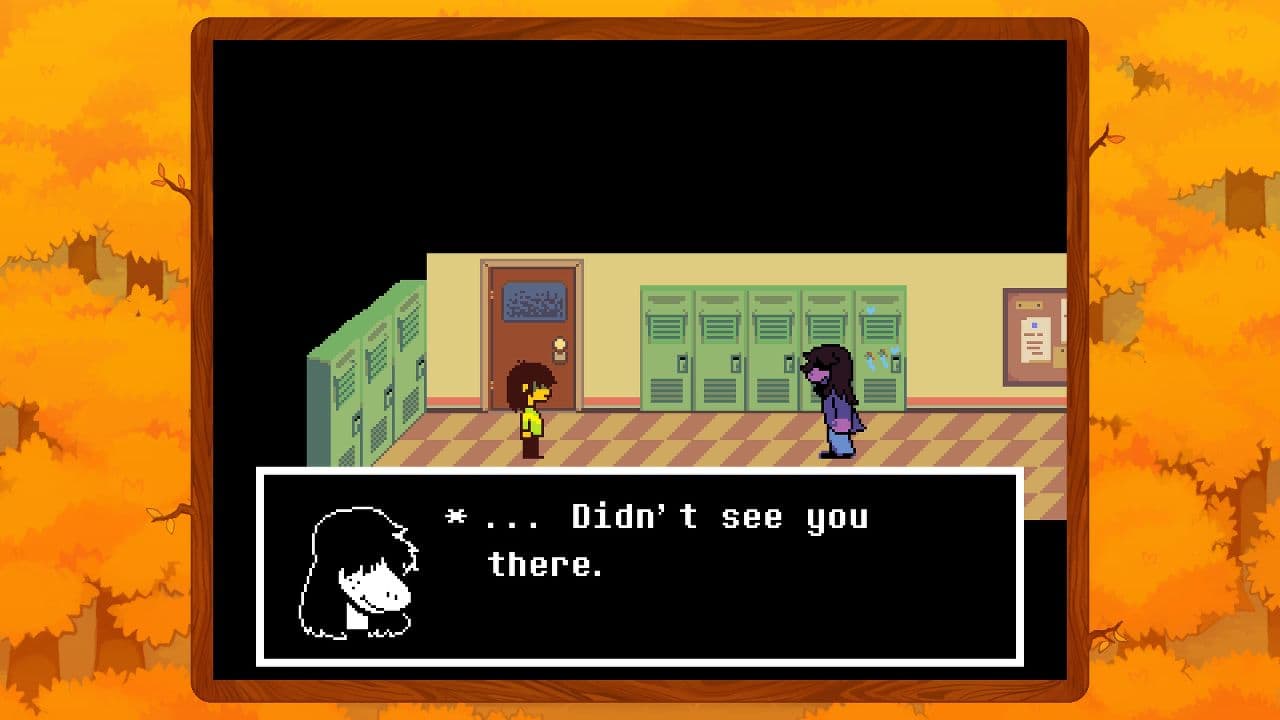
Early character interactions set the stage for the game's exploration of morality.
Where Undertale’s darker path was a systemic purge, Deltarune’s Weird Route is a targeted corruption. It doesn't ask you to kill everything indiscriminately; it demands you methodically groom a specific character—Noelle, the anxious, kind-hearted deer—into an unwitting weapon. The horror isn't in the violence itself, but in the chillingly specific commands you must issue. You don't "Fight"; you instruct Noelle to use a spell called Iceshock on innocent enemies, a spell she learns only because you, controlling Kris, guide her down this frigid path. The game mechanics themselves become complicit. You aren't just choosing "bad options" from a menu; you are actively constructing a narrative of dependency and fear, watching Noelle's dialogue shift from cheerful uncertainty to terrified compliance. The crushing weight comes from seeing a friend's personality fracture in real-time, not from a rising body count.
The route’s emotional apex isn't a grand boss fight, but a quiet, visceral moment in a frozen alleyway. After being manipulated into a horrific act, Noelle breaks down, sobbing "This isn't a game anymore" directly to Kris—and by extension, to you. It’s a fourth-wall shattering accusation that lands with the force of a physical blow, designed not to punish your stats, but to scar your conscience.
This approach creates consequences that are more haunting because they are less overt. Unlike a reset-friendly Genocide run, the Weird Route’s aftermath in Deltarune lingers as a tonal stain. Characters in the Light World become subdued or suspicious; familiar interactions carry a newly ominous subtext. The game doesn't flash a "YOU DIED" screen—it simply makes the world feel colder, emptier, and irrevocably tainted by your actions. This is Toby Fox refining his craft, moving from punishing the player-character to indicting the player's curiosity and their willingness to exploit the system just to see what happens.
However, this brilliance underscores the game’s most debated tension: the illusion of choice. Toby Fox has stated Deltarune will have a single ending, and the Weird Route, for all its profound impact, is framed as a deliberate deviation, a "wrong" path. For some players, this knowledge can make the minor story ripples and altered dialogue of a standard playthrough feel like shallow rewards. If the destination is fixed, does the scenic route truly matter? This is where Deltarune’s philosophy becomes clear. It’s not about choosing your ending; it’s about defining your journey and your relationship with its characters. The "consequences" are emotional, not logistical. The game measures its impact not in branching cutscenes, but in whether you, by the end, feel like a hero or a parasite sharing Kris's body. It’s a gamble that pays off spectacularly in its harrowing alternate path, but one that requires a buy-in to its specific, character-driven brand of storytelling over traditional RPG agency.
Art, Music, and Technical Polish: The Soul of Deltarune
The soul of Deltarune isn't found in its plot twists or its combat systems, but in the spaces between—the haunting melody that underscores a quiet conversation, the flicker of a perfectly-timed pixel animation, and the tactile feel of a menu that morphs to suit its world. This is where Toby Fox’s project transcends its role-playing framework to become a cohesive, living artifact, a testament to how presentation can elevate a great story into an unforgettable atmosphere.
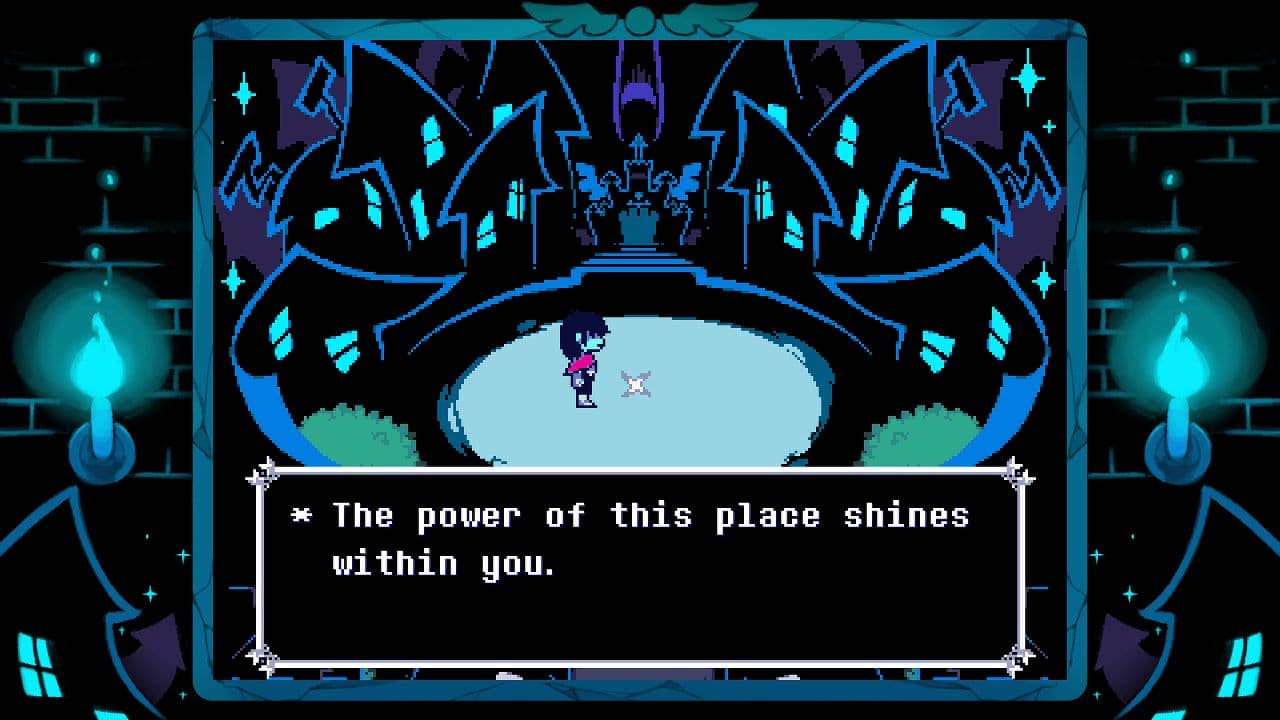
Creative environmental design contributes to the technical polish of the game's hub world.
The soundtrack is, without hyperbole, the game’s beating heart. Toby Fox’s compositions have evolved from Undertale’s iconic chiptune foundations into a sprawling, emotionally intelligent soundscape. The genius lies in its versatility: the frantic, funky basslines of A CYBER’S WORLD? perfectly capture the neon absurdity of Chapter 2’s internet sprawl, while the melancholic piano of My Castle Town provides a safe, wistful haven. Fox’s use of leitmotifs is masterful, weaving recurring themes for characters and concepts that pay off with devastating emotional precision. The shift from Tenna’s manic, game-show fanfare in Chapter 3 to the liturgical, echoing dread of Chapter 4’s church themes isn't just a change in track—it’s a narrative tool that guides your emotional state. The secret boss themes, like the frenetic THE WORLD REVOLVING or the hauntingly beautiful ANOTHER HIM, aren't just rewards for skilled play; they are character studies in musical form, often more complex and layered than the main battle themes.
The soundtrack’s peak moment might be its simplest: the use of a raw, live piano track during a pivotal, silent character moment. Stripped of all chiptune artifice, it feels like a direct line to the game’s emotional core, a reminder that beneath the 8-bit veneer and meta-humor beats a profoundly earnest heart.
Visually, Deltarune executes a clever magic trick, using a deliberately retro aesthetic not as a limitation, but as a focused stylistic choice. The 8-bit pixel art is deceptively simple, serving as a clean canvas for extraordinarily expressive character animations. You don’t need voice acting to hear Susie’s swagger in her walk cycle or feel Ralsei’s gentle anxiety in the way he adjusts his glasses. The game constantly finds ways to innovate within this framework, most notably in Chapter 4’s climax, which introduces stunning 3D-esque parallax scrolling effects. Watching layered backgrounds of stained glass and crumbling architecture scroll independently creates a sense of depth and grandeur that a purely 2D sprite scene couldn’t achieve, proving the art team’s commitment to pushing their chosen style to its limits. This extends to character design, where newcomers like the deranged spam-bot Spamton or the tragically nostalgic TV-host Tenna (complete with a clashing, wonderfully ugly 3D model) become instant icons through their visual audacity alone.
Technically, the package is polished. Performance across platforms—PC, PlayStation, and Nintendo Switch—is reported as solid, with the expected stable framerates for a 2D game. The Nintendo Switch 2 version includes a charming, if non-essential, exclusive: a Mouse Mode mini-game that utilizes the console’s dual-pointer controls for a cat-and-mouse bullet-hell distraction. It’s a fun tech demo that respects the hardware without compromising the core experience. More importantly, the inclusion of a robust save import feature for players transitioning from earlier chapters on original Switch hardware demonstrates a thoughtful approach to its episodic, platform-hopping life cycle.
However, this polished presentation stumbles when it comes to accessibility. Certain design choices create unnecessary barriers. Chapter 4’s deliberate, oppressive darkness is a key atmospheric tool, but navigating its pitch-black corridors—even with a brief echolocation flash mechanic—can be an exercise in frustrating guesswork for players with any level of visual impairment. Similarly, several puzzles and combat mechanics across chapters rely heavily on differentiating colors or reacting to specific audio cues without providing alternative feedback options. In a game so deeply invested in making its narrative and themes accessible, this oversight in functional accessibility feels like a missed opportunity. The bullet-hell combat, while a core pillar, already presents a significant reflex-based challenge; layering on sight-dependent navigation in key sections can transform thoughtful mood-setting into a source of player friction.
Ultimately, the art, music, and technical craft of Deltarune don't just support the game—they are the game’s personality. From the way a battle menu redesigns itself upon entering a new Dark World to the way a single, recurring musical motif can make a mundane patch of moss feel like an old friend, every aesthetic choice is in conversation with the player. It’s a world that feels handcrafted, dense with love and intention in every pixel and note, and it’s this cohesive, soulful presentation that makes the journey through its unfinished story feel so complete in the moment.
Final Verdict: Is Deltarune Worth Playing in its Unfinished State?
The question isn’t whether Deltarune is a complete game, but whether its first four chapters—a sprawling, 20+ hour narrative that’s only halfway told—constitute an experience worth your time and money right now. The answer is a resounding, albeit complicated, yes. This is a masterpiece in progress, and the journey to its midpoint is already one of the most inventive, heartfelt, and mechanically rich RPGs of its generation, flaws and all.
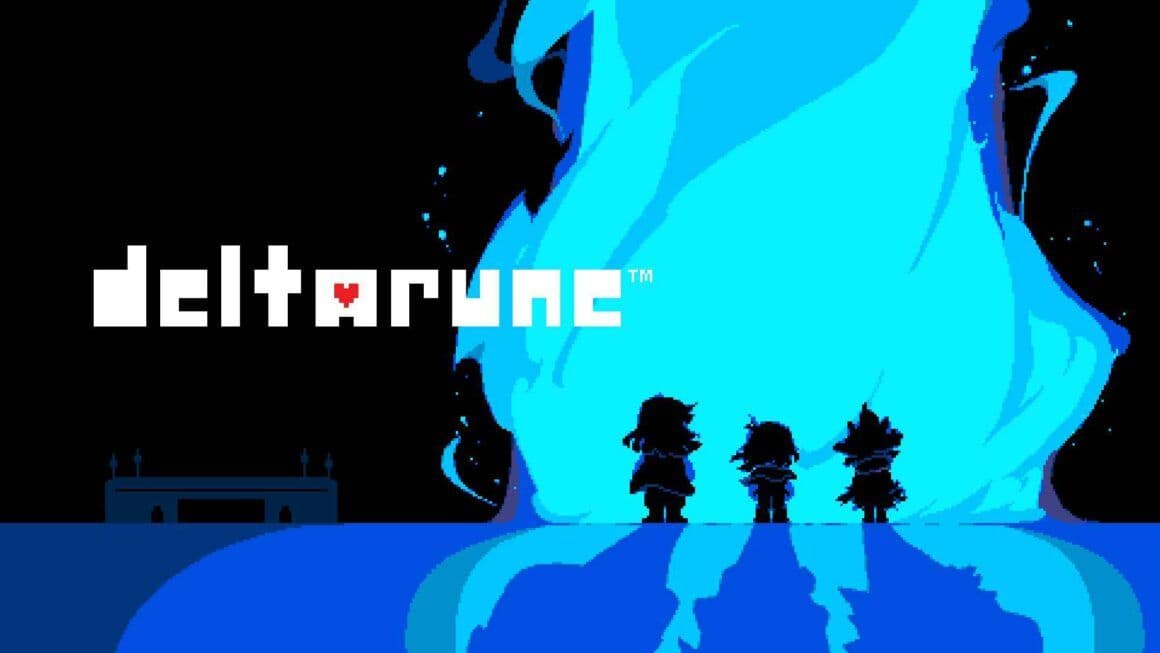
Deltarune offers a compelling experience even in its early chapters.
The value proposition is clear and compelling. Purchasing the package for Chapters 3 and 4 (which includes the first two chapters) is not a gamble on potential, but an investment in a substantial, self-contained arc. Across four distinct Dark Worlds—from a card castle to a digital city, a chaotic TV studio, and a somber cathedral—you get a complete emotional journey for its core trio. Susie’s transformation from bully to vulnerable hero, Ralsei’s unsettling cheerfulness, and the parasitic mystery of Kris form a narrative backbone that feels satisfyingly advanced, even as the overarching “Prophecy” remains unresolved. The 20-hour runtime is packed with density; every corner hides a joke, a secret, or a poignant character moment, making the current package feel more substantive than many “finished” titles.
This is the game’s core paradox: it feels complete in its character arcs and moment-to-moment ingenuity, yet undeniably unfinished in its overarching plot. Reaching the “To Be Continued” screen after Chapter 4’s harrowing climax doesn’t feel like hitting a demo’s wall—it feels like closing a brilliant novel’s first volume, desperate for the sequel you know is years away.
That waiting period is the most significant, and perhaps only major, drawback. The development cycle, with Chapter 5 not expected until 2026 and the finale potentially years later, casts a shadow. The knowledge that you’re committing to a story that may take a decade to conclude can understandably give some players pause. However, Deltarune’ episodic structure is its strength, not a weakness. Each chapter is a compact, thematically rich episode that builds upon the last, offering closure on its internal conflicts while escalating the central mystery. The dissatisfaction isn’t from a lack of content, but from the agony of having to leave a world you’ve become deeply invested in.
As a work within its genre, Deltarune doesn’t just surpass Undertale—it evolves its ideas into a more ambitious, mechanically deeper framework. It’s the “anti-RPG” that fully embraces the genre’s tools to subvert them. The three-party combat system adds a layer of strategic synergy and resource management that its predecessor lacked, while the ever-expanding ACT commands and the tangible reward of a populated Castle Town make pacifism a more engaging and world-changing pursuit. The storytelling has matured from Undertale’s potent parable into a complex, character-driven epic that isn’t afraid to sit in silence or wallow in grief, as Chapter 4 proves. It trades the former’s iconic, unified punch for a more novelistic, cumulative depth.
Your mileage will vary based on your appetite for its specific flavors. The pacing lull in Chapter 3’s extended RPG parody sections can feel like padding amidst the comedy. The oppressive, often frustrating darkness of Chapter 4’s navigation is an artistic choice that directly impedes playability. And the bullet-hell core, while more accessible than pure shmups, remains a hard reflex-based gate for some. But these are quibbles against a towering achievement in writing, character, and atmospheric craft. The pros so overwhelmingly dominate that the cons feel like notes in the margin of a classic.
Deltarune is essential for anyone who cherishes Undertale, and it’s a must-play for RPG fans who value narrative innovation over sheer scale. It’s a game that trusts its audience with quiet moments and complex themes, that rewards curiosity with profound emotional payoffs, and that proves an unfinished story can still deliver a perfectly complete feeling. You’re not buying a promise; you’re buying a ticket for the first, unforgettable leg of a journey you’ll be thinking about until the next chapter arrives.
Pros:
- A subversive, hilarious, and deeply moving narrative that builds unforgettable character arcs.
- A combat system that masterfully blends strategic party management with kinetic bullet-hell action.
- An incredible, leitmotif-driven soundtrack that acts as the game’s emotional backbone.
- Dense, rewarding world-building filled with secrets, minigames, and poignant details.
Cons:
- The unfinished state means a long, uncertain wait to see the story’s conclusion.
- Chapter 3’s pacing has noticeable lulls amidst its comedic chaos.
- Chapter 4’s purposefully dark environments can make navigation a frustrating chore.
- The bullet-hell segments present a steep challenge ceiling for players averse to reflex tests.