Free Fire First Impressions: Why This Mobile Shooter Dominates the Genre
In a mobile gaming landscape where high-fidelity graphics and sprawling 50-minute battle royale matches are often the benchmarks, Free Fire has built an empire by defiantly ignoring both. Its dominance isn't a mystery of marketing; it's a masterclass in understanding its platform. This is a game that prioritizes the feeling of playing over the look of playing, delivering a potent, 10-minute survival shooter experience designed to run on the phone already in your pocket. With a staggering 4.3-star rating from over 123 million reviews on the Google Play Store, its success is a data point you can't argue with—it has become the world's casual battle royale.

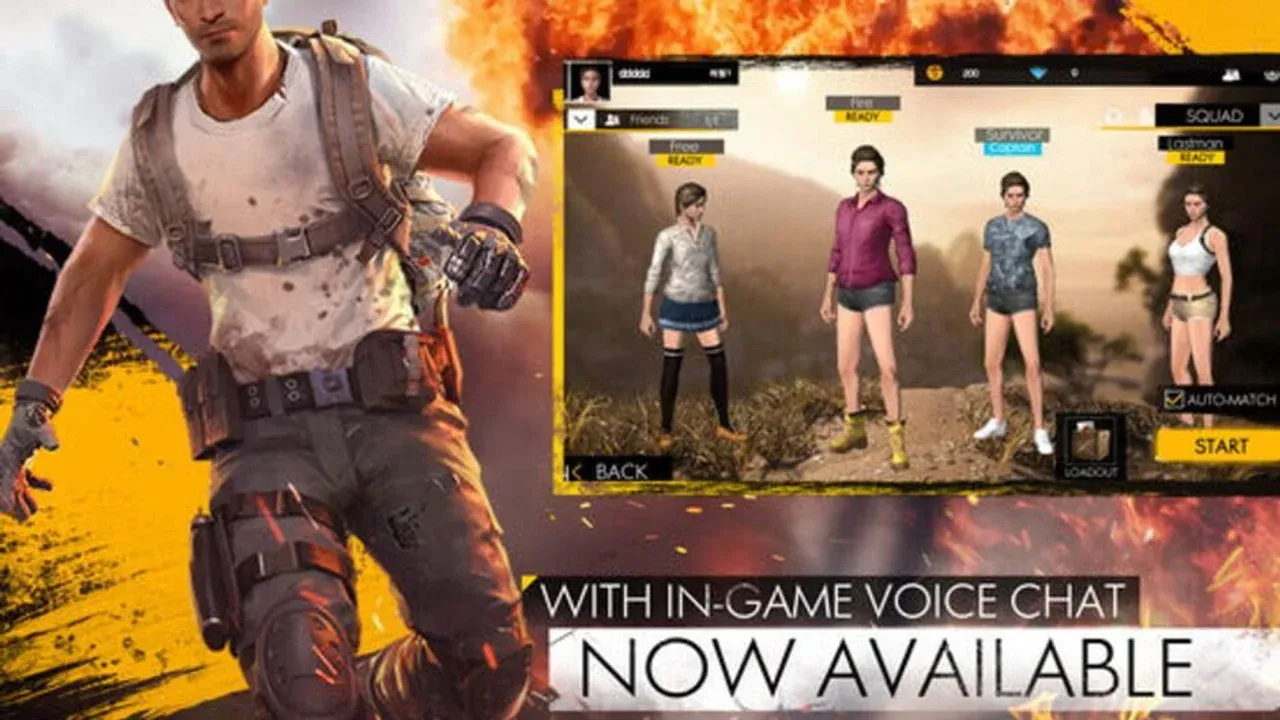
Free Fire mobile performance
The game’s identity is laser-focused: a fast-paced, accessible survival shooter. Where competitors demand commitment, Free Fire offers a quick fix. The core loop is ruthlessly efficient: 50 players parachute onto an island, and within a precise 10-minute timeframe, a winner is crowned. This isn't an epic tale of survival; it's a sprint. The condensed match time fundamentally changes player psychology, encouraging aggressive, decisive action over cautious camping. You don't plan a 20-minute rotation; you fight for the next building, the next airdrop, right now. This design creates a consistent, snackable adrenaline rush that fits perfectly into a commute, a lunch break, or any spare moment.
This commitment to accessibility is Free Fire's true superpower. It is engineered not for the latest flagship device, but for the global median—phones with under 2GB of RAM. This technical pragmatism, developed by 111dots and published by Garena from its Singapore/Vietnam base, is the unglamorous foundation of its billion-player reach.
The impact of this optimization can't be overstated. While players of premium competitors debate graphical settings, Free Fire simply works. It delivers smooth, responsive controls and stable performance on hardware that would choke on more demanding titles. This democratization of the battle royale experience means the game's community isn't gated by device cost, creating a massive, vibrant player base where the only entry requirement is an internet connection. The trade-off, as we'll explore, is a visual style that leans into stylized characters over realism, but for its intended audience, the ability to play at all will always trump playing in 4K.
Free Fire Gameplay Mechanics: Fast-Paced Combat and Strategic Depth
The moment-to-moment action in Free Fire is where its identity as a fast and lite shooter crystallizes, but also where its compromises with mobile hardware become most apparent. This is a game of instant, aggressive decisions, where the 10-minute match timer forces constant engagement over methodical planning. The core loop—parachute in, scavenge for weapons, and fight to stay within the shrinking safe zone—is battle royale fundamentals executed with ruthless efficiency. It works because it removes downtime; you’re never more than a sprint away from a firefight or a coveted airdrop. This creates a consistent, high-tempo rhythm that’s perfect for short sessions, though it sacrifices the atmospheric tension and long-term strategic plotting of its larger-scale competitors.
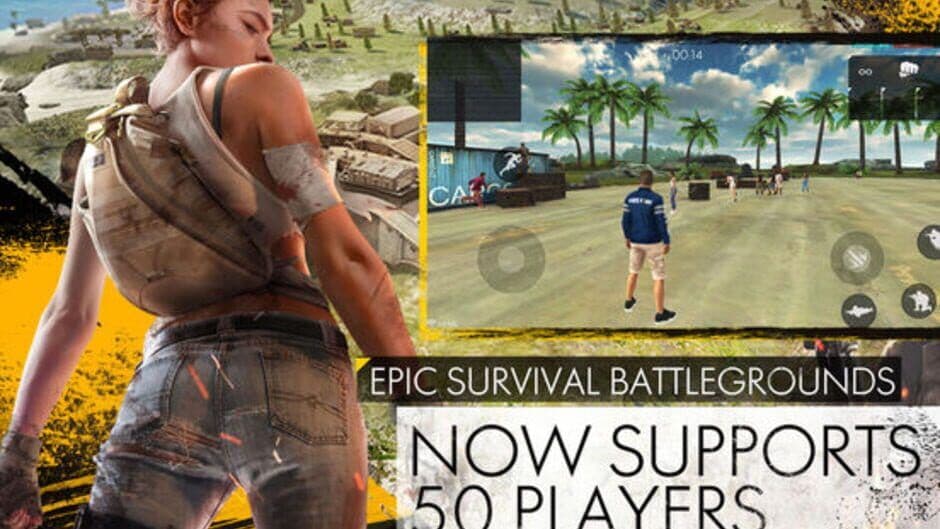
Skill boosts differentiate Free Fire from other battle royales.
Where Free Fire introduces meaningful depth is through its layered progression systems, particularly the Skill Boost and Awakened Weapons mechanics. These aren't just cosmetic upgrades; they are tangible power spikes that allow for build customization mid-match. Choosing to invest in strengthening a character’s unique skill or using a Weapon Awakener to unlock enhanced firearm capabilities adds a compelling meta-game to each round. It’s a smart way to introduce RPG-like specialization into a genre often defined by loot RNG, giving veterans a strategic edge to pursue. However, this system walks a fine line, as these power advantages can feel decisive in final circles, blurring the line between skillful play and acquired power—a tension that feeds directly into player concerns about fairness.
The Clash Squad mode is Free Fire's purest distillation of its competitive ethos. This 4v4, round-based arena strips away the looting phase of Battle Royale, replacing it with economy management. You purchase weapons at the start of each round, creating a tense risk-reward loop: do you save credits for a powerful loadout next round, or spend everything to win the current fight? It demands sharp team coordination and map knowledge, offering a focused, repeatable PvP experience that complements the chaos of the main BR mode perfectly.
Tactical variety within the large-scale battle royale is another of Free Fire's strengths, born from its accessible toolset. The ability to drive vehicles for rapid rotations, go prone in tall grass for ambushes, or hold a vantage point with a sniper rifle provides multiple viable paths to victory. This freedom of approach is crucial for replayability, allowing players to develop personal styles. Yet, this potential is sometimes undermined by the controls. User reports consistently cite "dull detailing" and a lack of precision compared to titles like PUBG Mobile or Call of Duty: Mobile. On-screen buttons can feel mushy, and fine-grained aiming—especially at range—lacks the tactile feedback needed to make every shot feel earned. In a game where a single encounter decides the match, this imprecision can be a source of immense frustration.
Acknowledging this potential skill gap is likely why Garena introduced the BR Match Review feature. This post-match analytics tool, allowing players to replay their movement paths and study enemy positions, is a genuinely smart addition for a competitive mobile title. It transforms a loss from a moment of frustration into a learning opportunity, encouraging strategic growth beyond simple aim training. It signals an understanding that for a game to retain players long-term, it must help them improve. This feature, combined with the strategic options already present, shows Free Fire is more than a simple arcade shooter—it’s a ecosystem trying to cultivate smarter survivors, even if the controls themselves occasionally fight against that goal.
The 9th Anniversary Update: Fresh Content and Social Innovation
For a game that thrives on its 10-minute match cadence, the most ambitious update in Free Fire’s history dares to ask: what happens when you slow players down and make them socialize? The 9th Anniversary update answers with a bold experiment, layering a persistent social hub and meta-progression systems onto its fast-paced core. This isn't just a content drop; it’s a statement of intent, showing a veteran game actively evolving beyond its battle royale roots to foster a more cohesive community and strategic depth.
The centerpiece is the new 3D party lobby, a dedicated social space that marks a significant departure from the game’s traditional menu-based navigation. This is Free Fire inviting players to hang out. You can explore, interact with others through emotes, and participate in arena challenges directly from this persistent environment. The design intent is clear: to create a digital “third place” where the community gathers between matches, fostering a sense of belonging that pure matchmaking lobbies lack. Completing tasks here to unlock event items and milestone rewards further incentivizes engagement beyond just queueing for another round. It’s a smart, if long overdue, evolution for a social game, transforming the pre-game experience from a loading screen into an event itself.
The update’s most transformative gameplay addition is the Themed BR mode, a limited-time makeover of the Factory area in Bermuda. This is where the anniversary’s spirit truly comes alive, layering a new objective-based loop onto the classic survival formula.
In this mode, completing specific anniversary quests allows you to upgrade interactive elements like Coin Machines, vending machines, and Revival Points scattered across the map. This introduces a compelling risk-reward dynamic: do you divert from the safe zone to power up a machine for better loot, potentially exposing yourself? More crucially, it introduces an on-the-spot revival mechanic where teammates can be brought back by interacting directly with their loot box. This single change dramatically alters squad tactics in the Themed BR, rewarding aggressive team play and recovery over a lone-wolf survivalist approach. It’s a fantastic innovation that reduces the frustration of early eliminations and should be strongly considered for integration into the core Battle Royale experience.
The strategic layers deepen further in Clash Squad with the introduction of the CS Perk Points system. This allows players to unlock temporary skill boosts, Awakened Weapons, and other buffs within a match, adding a new meta-progression element to the already tense 4v4 economy management. It creates meaningful choices each round: do you spend your points early for a tactical advantage, or save for a potentially game-winning power spike later? This system elegantly builds upon the existing Skill Boost & Awakened Weapons mechanics praised earlier, offering veterans another avenue for strategic expression and rewarding deep knowledge of the mode’s flow.
Of course, this flurry of new systems and the ongoing 'Enter Your BLUE LOCK!' collaboration event underscore the game’s relentless update schedule. For players, this means the content pipeline never dries up, but it also risks creating a sense of feature bloat where new mechanics come and go before they can be fully mastered. The true test of this anniversary update will be which elements, like the brilliant on-spot revival, become permanent fixtures. As a celebration, it’s a generous and inventive package that proves Free Fire is still looking forward. As a piece of game design, it successfully plants seeds for a more socially connected and strategically rich future, even if not all of them are guaranteed to take root.
Free Fire Visuals and Technical Performance: Smoothness vs. Realism
In a genre where competitors chase photorealism, Free Fire has built its empire on a different philosophy: playability over prettiness. This is a game engineered for the global median smartphone, a technical marvel of optimization that runs smoothly on hardware its rivals wouldn't bother to support. The trade-off is a visual identity that has become its most defining—and divisive—characteristic, a stylized aesthetic that prioritizes high, stable frame rates above all else.

Conceptual art helps define the visual goals for mobile game performance.
The performance optimization is Free Fire's unsung triumph and the bedrock of its billion-player reach. User reviews consistently praise the "smooth gameplay" and "stunning graphics" even on mid-range devices, a claim backed by the game's explicit design for phones with under 2GB of RAM. Where titles like PUBG Mobile or Call of Duty: Mobile serve as hardware benchmarks, Free Fire functions as a utility. It just works. This technical pragmatism means the core 10-minute battle royale loop is consistently responsive; firefights are decided by player reaction and positioning, not by sudden frame drops or thermal throttling. This reliability is a form of respect for the player's time and device, creating a level competitive playing field inaccessible in more demanding games.
This commitment to smoothness necessitates a stylized art direction. Characters are cartoonish and environments lack fine detail, a conscious choice that allows the game to maintain high frame rates across a dizzying array of hardware. It’s a trade-off that has aged visibly against the increasingly sophisticated visuals of its competitors.
The graphical compromise is the most immediate critique. Descriptors like "dull detailing" and comparisons noting it's "not as advanced as PUBG" are common and valid. The island of Bermuda won't win awards for its texture work, and character models lack the granular realism expected in 2026. However, to dismiss this as simply "bad graphics" misses the point. The stylized approach ensures visual clarity in chaos—enemy silhouettes are distinct against greenery, and effects like gunfire and airstrikes are readable at a glance. In a fast-paced mobile shooter where split-second decisions matter, this functional clarity is arguably more valuable than realistic grass physics. It’s a design for play, not for screenshots.
However, Free Fire's technical polish shows cracks under sustained scrutiny. The research points to persistent, if not universal, technical glitches: distorted sound, profile level display bugs, and login issues. A profile level failing to update properly is a minor irritant, but distorted audio in a game where directional sound cues are life-or-death is a critical flaw. These bugs suggest a codebase straining under the weight of years of rapid updates and collaborations, where new content sometimes outpaces foundational stability. Furthermore, network stability remains a recurring pain point. Reports of inconsistent connectivity, lag, and sudden connection drops undermine the game's core promise of reliable performance. When a match can end in an instant, a half-second of rubber-banding isn't just annoying—it's often fatal, transforming a skillful play into a frustrating defeat.
For veterans of more graphically intensive titles, Free Fire's world will always feel like a compromise. But for its massive global audience, the ability to engage in a full-featured battle royale on a budget device isn't a compromise—it's liberation. The game’s visuals and performance are two sides of the same coin, minted for accessibility. It chooses to be the smoothest, most reliable shooter on the most devices, even if that means it will never be the prettiest. In the context of mobile gaming, where consistency is king, that’s a trade-off that continues to pay dividends for millions of players every day.
The Monetization Problem: Is Free Fire Pay-to-Win?
No discussion of Free Fire is complete without confronting its economic model—a system that fuels the game’s relentless updates but casts a long shadow over its competitive integrity. This is the uncomfortable truth behind the vibrant skins and flashy events: Free Fire walks a razor-thin line between rewarding dedication and incentivizing spending, and it frequently stumbles into pay-to-win territory.
The core of the controversy lies in systems like Evo Guns and the gacha-style Spins for exclusive gear. These aren't mere cosmetics; they are direct power upgrades. An evolved weapon from a lucky spin or a paid battle pass can offer statistically superior damage, range, or magazine size compared to its standard in-match counterpart. This creates a fundamental imbalance before a match even begins. A player who has invested real money in Diamonds to roll for an Awakened Weapon variant enters the island with a tangible, often decisive, advantage. When victory in a 10-minute match can hinge on a single bullet's worth of damage, this monetization of power feels less like a reward for skill and more like a toll for parity.
The skin economy exemplifies this pressure. User reviews on the Play Store are filled with complaints that the "best skins and bundles [are] too expensive," requiring players to "top up with real money." This isn't about vanity; many premium skins come bundled with minor but persistent stat boosts or unique visual effects that can provide a slight edge in combat, such as harder-to-see scopes or quieter footsteps. The game dangles constant reminders of this premium tier, from the splash screens for new collaborations to the in-game storefront, creating an environment where the optimal competitive experience feels locked behind a paywall.
For non-paying players, the grind can feel Sisyphean. While the game deserves praise for its steady stream of free event items and milestone rewards—such as those from the 9th Anniversary's party lobby challenges—these are often cosmetic trinkets or temporary boosts. The most powerful, permanent gameplay advantages are almost exclusively gated behind Diamonds or extremely time-intensive grinding that demands a near-professional level of engagement. This creates a two-tiered ecosystem: the haves with optimized loadouts from paid spins, and the have-nots making do with standard gear. In a game where we previously praised the Skill Boost system for adding strategic depth, it's disheartening to see similar power spikes made readily available for cash, undermining the very skill-based progression the game otherwise cultivates.
The aggressive monetization extends beyond the store. The presence of excessive ads for premium bundles and the psychological pressure of limited-time "spin" events with exclusive gear foster an environment that can feel predatory, especially toward younger players. The game's design brilliantly creates friction—the desire to compete on equal footing—and then sells the solution. While Free Fire is undoubtedly playable and enjoyable for free, the path to the highest competitive ranks is paved with either immense patience or a credit card. This isn't a unique sin in free-to-play gaming, but in a title with Free Fire's massive reach and competitive aspirations, it's a glaring flaw that taints an otherwise brilliantly accessible and engaging core loop. The game proves you can build a masterpiece of mobile optimization, but its soul is forever negotiating with the marketplace.
Free Fire vs. The Competition: How It Stands Against PUBG and COD Mobile
To understand Free Fire’s enduring dominance, you don't compare its graphics or gunplay to the competition—you compare its audience. This is a game built for a specific, massive demographic that its rivals often overlook: the casual player with a mid-range or budget phone and only ten minutes to spare. While PUBG Mobile and Call of Duty: Mobile chase the hardcore tactical fan with sprawling maps, realistic ballistics, and matches that can stretch past 25 minutes, Free Fire offers a fundamentally different value proposition. It is the espresso shot to their slow-brewed coffee; a concentrated, immediate hit of battle royale action engineered for a lifestyle, not a commitment.
This distinction crystallizes in the core match design. Where PUBG Mobile emphasizes simulation and tension through methodical looting and long-range engagements, Free Fire’s 10-minute timer creates a frenetic, close-quarters brawl. The safe zone shrinks faster, the player count is halved, and the map is more compact. This isn't a flaw—it's a deliberate design for accessibility. There's no time for analysis paralysis or 15-minute stealth crawls; you land, you fight, you adapt. For players seeking a quick, satisfying competitive fix during a commute or between tasks, Free Fire is peerless. However, for veterans who relish the strategic depth, atmospheric tension, and military sim-lite feel of its competitors, Free Fire can feel shallow and arcadey. The game makes no apologies for this; its "fast and lite" mantra is a filter, not a failing, and it successfully captures a segment of the market that finds its rivals intimidatingly slow.
Free Fire's embrace of a more fantastical, game-y arsenal is its most charming differentiator. While PUBG and COD Mobile ground themselves in real-world weaponry, Free Fire isn't afraid to get weird.
This philosophy extends to its unique equipment, items that would feel utterly out of place in a more serious military shooter. The Plasma gun and Shield gun mentioned in player reviews aren't just reskinned weapons; they introduce unconventional tactical options that break the standard "see-shoot-kill" loop. Similarly, the inclusion of a quad bike with Nitro boost and jumping tires transforms traversal from a mundane necessity into a chaotic, high-risk stunt. These elements cement Free Fire’s identity as an action-packed playground rather than a gritty survival simulator. They lower the barrier to entry by making the moment-to-moment play inherently fun and unpredictable, even if you're not winning. For its target audience, the joy of pulling off a mid-air bike jump to escape a firefight is as valuable as a perfectly executed tactical flank in a more "serious" game.
Yet, this very community that has propelled Free Fire to global heights is now showing signs of a deep fracture, a tension between long-term loyalty and mounting frustration. The player sentiment captured in the research is a tale of two extremes. On one side, you have veterans who have played for four years or more, praising the game as a "stress reliever" and the "Best game ever" for low-RAM devices. On the other, you have equally dedicated players decrying recent updates as "rubbish," citing complicated new systems, persistent glitches, and an unchecked hacker problem. This isn't typical gamer hyperbole; it's the symptom of a live-service game straining under its own weight. The introduction of complex meta-progression like the CS Perk Points and Awakened Weapons, while adding depth, can alienate players who loved the simpler, purer shooter of years past. When combined with technical issues like distorted sound, login errors, and the ever-present specter of "players with unbelievable abilities," the game risks betraying the very reliability that built its empire.
Ultimately, Free Fire doesn't compete with PUBG Mobile or Call of Duty: Mobile on their terms—it has carved out its own category. It wins by being the most accessible, least demanding, and fastest-paced option in the genre. Its value isn't in matching the graphical fidelity or tactical realism of its rivals, but in consistently delivering a complete, fun battle royale experience to the broadest possible audience. For the casual player on a budget device, the choice isn't between good graphics and bad; it's between playing Free Fire smoothly and not playing a battle royale at all. That is a competition this game has already decisively won, even as it battles to keep its own most loyal soldiers from defecting due to the pressures of its success.
Final Verdict: Is Free Fire Still Worth Playing in 2026?
After nine years, hundreds of updates, and a billion downloads, the question isn't whether Free Fire is a good game—it’s whether it’s the right game for you. This final verdict must reconcile its undeniable global success with the persistent friction points that define its daily experience. For the right player, it remains an unparalleled portal to quick, social, competitive fun. For the wrong one, it’s a frustrating grind walled by aggressive monetization and technical gremlins.
The core value proposition for the free-to-play player is surprisingly robust. Despite the monetization pressures detailed earlier, the sheer volume of accessible, high-quality gameplay is staggering. You can drop into a complete, tense 10-minute battle royale or a strategic 4v4 Clash Squad match without spending a dime. The game’s relentless content pipeline, from the inventive 9th Anniversary events to regular collaborations, ensures the experience never feels stale. For players who can resist the siren call of premium spins and accept competing with standard gear, Free Fire delivers hundreds of hours of entertainment at the unbeatable price of free. This isn't a hollow shell gated by paywalls; it's a fully-featured, brilliantly optimized shooter that monetizes advantage, not access.
The game’s greatest strength remains its technical democratization. In a world where mobile gaming often demands flagship hardware, Free Fire’s ability to run smoothly on a $200 phone is nothing short of revolutionary.
This commitment to accessibility is the bedrock of its pros. Exceptional optimization means consistent, responsive gameplay where skill and positioning, not frame drops, decide fights. The fast match times are a masterstroke of modern game design, fitting a complete narrative of survival—from parachute drop to final circle—into a coffee break. And the frequent content updates, like the social 3D party lobby and the tactical Themed BR mode, prove the developers aren’t resting on their laurels; they are actively evolving the experience to foster community and strategic depth. These aren't minor features; they are the pillars of a live-service titan that understands its audience’s need for reliability, speed, and novelty.
However, the cons are not trivial annoyances; they are systemic issues that directly challenge the game’s competitive soul. The pay-to-win mechanics surrounding Evo Guns, Spins, and stat-boosting skins create a pre-match imbalance that undermines the skill-based progression it otherwise cultivates. Inconsistent network performance and lag, as reported by players, transform tactical duels into rubber-banding frustration, betraying the smoothness that is its core promise. And while the aging, stylized graphics are a conscious trade-off for performance, they have undeniably fallen behind the visual fidelity of competitors, making the world feel more like a game board than a believable island to many. These flaws aren't dealbreakers in isolation, but together they create a ceiling on the experience, a sense that you are playing a brilliant game that is constantly negotiating with its own business model and technical debt.
So, who is Free Fire for in 2026? Our final recommendation is precise: this is the definitive game for social mobile gamers looking for quick, accessible action. It is for the player with a mid-range device who wants to squad up with friends for a few adrenaline-fueled matches without a 30-minute commitment. It is for the casual competitor who prioritizes consistent, fast-paced fun over graphical realism or pure military simulation. It is emphatically not for the hardcore tactician seeking a sim-lite experience, the player sensitive to pay-for-power mechanics, or anyone whose primary concern is cutting-edge visual fidelity. Free Fire owns its niche completely, and within that lane, it has no equal.
A final, crucial note for 2026 concerns data safety & privacy. According to the Play Store listing, the app shares no data with third parties, a significant point in its favor. However, it does collect personal information, financial info, and five other data types. Data is encrypted in transit, and users can request deletion. This is a fairly standard profile for a free-to-play game with in-app purchases, but it warrants awareness, especially for younger players navigating its ecosystem.
Free Fire is a paradox—a game of staggering accessibility shadowed by monetized advantage, of brilliant optimization occasionally betrayed by network instability. It is not a perfect game, but for its intended audience, it is often the perfect choice. After nine years, it remains a titan not by being the best at everything, but by being the only thing that works for everyone.
Pros:
- Unrivaled optimization for low-to-mid-range devices, ensuring smooth, reliable gameplay.
- Perfectly paced 10-minute matches that deliver a complete battle royale experience in a snackable format.
- A relentless stream of inventive new content and social features, like the 9th Anniversary’s party lobby and revival mechanics.
- A fully-featured, genuinely fun game that is completely free to download and play.
Cons:
- Pay-to-win elements via Evo Guns, Spins, and stat-boosting skins that undermine competitive integrity.
- Persistent reports of network instability, lag, and connection drops that can ruin matches.
- A stylized visual design that has aged visibly and lacks the detail of premium competitors.
- An aggressive monetization environment that constantly pressures spending to remain competitive.