
Genshin Impact Identity: More Than Just a Breath of the Wild Clone
When Genshin Impact launched in 2020, the conversation was almost exclusively about what it borrowed. The comparisons to The Legend of Zelda: Breath of the Wild were immediate and undeniable—the pastel-hued, cel-shaded vistas, the stamina-based climbing on nearly any surface, and the liberating glide from every precipice. It was easy, and not entirely unfair, to dismiss it as a free-to-play clone. But to do so is to miss the forest for the very beautiful, meticulously crafted trees. Genshin Impact’s true identity isn't found in its inspirations, but in the ambitious hybrid it forges from them: a sprawling, live-service RPG that marries Breath of the Wild's exploratory freedom with the deep, character-driven progression systems of a premium mobile RPG.

The game's distinct character designs help it stand out in the RPG space.
The Breath of the Wild DNA is its foundation, not its ceiling. Yes, you'll activate towers to reveal the map, cook meals at campfires, and scour enemy camps for treasure chests. This initial familiarity, however, is a Trojan horse. Where Nintendo’s masterpiece is a solitary meditation on quiet discovery, Genshin Impact is a vibrant, communal, and constantly evolving world. Its world, Teyvat, isn't a static landscape to be conquered once, but a narrative and geographical project that has grown for years. From the initial regions of Mondstadt and Liyue, the game has expanded to include six full, distinct nations—each with its own architecture, folklore, and soundtrack—with a seventh on the horizon. This isn't just added map space; it's a commitment to world-building on a scale that rivals subscription-based MMOs, delivered in substantial free updates every six weeks.
This is the game's first masterstroke: it functions less like a traditional open-world game and more like a live-service epic in the vein of Final Fantasy XIV, treating its world as an ongoing story that deepens with each chapter.
This live-service framework allows Genshin Impact to occupy a unique space. On one hand, it offers the premium, hundreds-of-hours experience of a buy-to-play RPG, with hand-crafted quests, environmental puzzles, and a globe-trotting narrative following the Traveler's search for their lost sibling. On the other, its core progression loop—unlocking new characters, optimizing their gear, and managing daily resources—is pure mobile RPG, designed for long-term engagement. The genius is that these two identities are not mutually exclusive. You can spend an entire weekend getting lost in the rainforests of Sumeru, solving multi-layered puzzles and uncovering lore, and then switch to a 20-minute daily session to manage your team's development. This hybrid design is why it’s available and fully cross-save compatible across PC, PlayStation, and mobile; it’s built to be played both as a deep dive and a daily habit.
Ultimately, labeling Genshin Impact a "Breath of the Wild clone" in 2024 is a profound disservice. That initial inspiration provided a lexicon of exploration that players intuitively understood, but miHoYo (now HoYoverse) used that foundation to build something vastly more complex and sustained. It’s a game that understands the addictive joy of uncovering a hidden chest on a cliffside, but pairs it with the long-term satisfaction of building a perfect team of characters whose abilities fundamentally change how you interact with that world. The seams between its inspirations have long since dissolved, replaced by a confident, singular identity as the benchmark for open-world live-service games.
Combat and Elements: The Strategic Depth of Elemental Chess
The genius of Genshin Impact isn't in its swords, bows, or elemental bolts in isolation, but in the electrifying conversation that happens when you combine them. While many action RPGs offer character switching, Genshin Impact elevates it to a form of strategic, real-time puzzle-solving often described as "elemental chess." This is where the game's true depth reveals itself, transforming simple encounters into a playground for creative destruction.
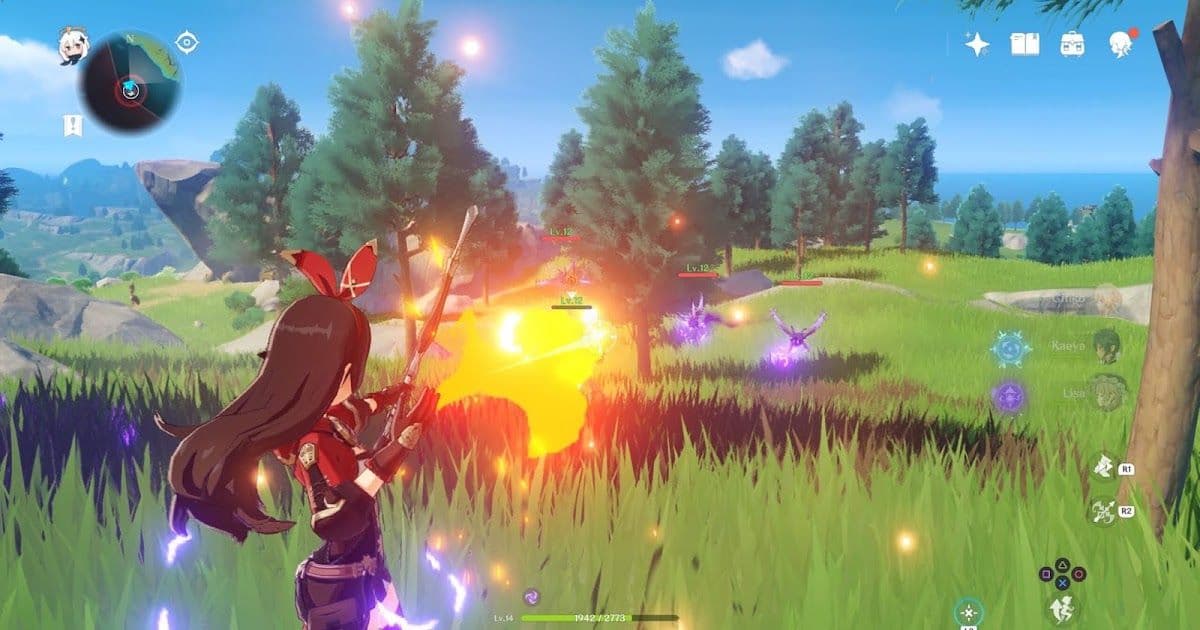
Elemental combat in action featuring Pyro reactions.
At its core, the system is deceptively straightforward: seven core elements—Pyro (Fire), Hydro (Water), Anemo (Wind), Electro (Lightning), Cryo (Ice), Dendro (Nature), and Geo (Earth)—interact to trigger specific reactions. The magic is in the layering. Applying Hydro to an enemy makes them Wet; following up with an Electro attack triggers Electro-Charged, dealing continuous area-of-effect damage. A Cryo attack on a Wet foe freezes them solid, enabling devastating follow-ups. This isn't just bonus damage; it's a fundamental shift in combat priorities. Success hinges not on mashing a single character's attack string, but on orchestrating a rapid-fire ballet of four characters, each applying their element to set up a climactic, reaction-fueled payoff from your primary damage dealer.
This is Genshin Impact’s combat at its best: a satisfying, tactile loop of setup and execution that makes you feel like a tactical maestro.
The game's immense roster of over 50 playable characters exists primarily to feed this system. Each new fighter isn't just a fresh face; they're a new piece for your elemental chessboard. A character like Xingqiu is invaluable not for his raw sword damage, but because his abilities apply Hydro off-field, enabling constant reaction triggers. The thrill of pulling a new character often lies less in their power level and more in the novel team compositions they unlock. This design creates a compelling long-term chase, as building the perfect team to exploit reactions like Vaporize (Pyro + Hydro) or Bloom (Dendro + Hydro) becomes a deeply engaging meta-game. However, this spectacle comes with a cost to clarity. In intense engagements, especially with a fully optimized team, the screen can become a chaotic light show of damage numbers, swirling elemental effects, healing blooms, and shield particles. While visually rewarding, it can sometimes obscure enemy attack tells, forcing players to rely on audio cues or instinct during the most frantic moments.
Where this system shows its age is in the pacing and complexity of individual encounters. Compared to the more mechanically dense, combo-oriented combat of newer action gacha titles like Wuthering Waves, fights in Genshin Impact are often shorter and resolved through efficient ability rotations rather than precision parries or complex dodges. For veterans, this can make overworld combat feel trivial outside of specific challenges. The strategic depth is front-loaded in team building and rotation planning; once the battle starts, the execution is often about cycling through your pre-programmed sequence as quickly as possible. This isn't necessarily a weakness—it makes the game incredibly accessible—but it does mean the moment-to-moment adrenaline comes from pulling off your perfect combo, not from reacting to an enemy's nuanced attack pattern.
Ultimately, Genshin Impact’s combat is a system of glorious, casc cause-and-effect. It’s a game that teaches you to see enemies not as health bars to deplete, but as canvases upon which to paint with elemental energy. While the visual noise can occasionally overwhelm and the encounter design prioritizes strategic preparation over twitch reflexes, the sheer joy of triggering a perfect chain reaction—watching a group of enemies vanish in a series of overlapping Overload explosions—remains one of the most consistently satisfying loops in any live-service game. It’s a system that rewards creativity and foresight, ensuring that after hundreds of hours, pulling off a flawless elemental sequence still feels as electrifying as the first time you combined water and lightning.
Exploring Teyvat: A Masterclass in Environmental Storytelling
The most compelling argument for Genshin Impact isn't found in its story or its gacha banners, but in the simple, profound pleasure of getting lost. Where many open worlds feel like theme parks with curated attractions, Teyvat feels like a living, breathing ecosystem of secrets, where every cliff face, suspicious rock formation, and stray Seelie is an invitation to a mini-adventure. This is environmental storytelling at its most potent: a world that communicates its history, culture, and magic not through exposition, but through the act of discovery itself.
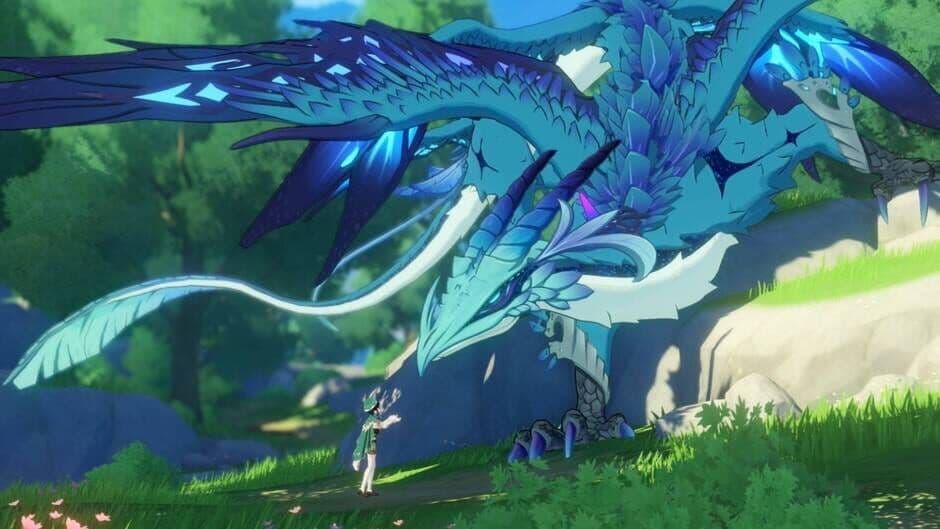
Official screenshot of the diverse biomes found throughout Teyvat.
The core exploration loop is masterfully engineered to trigger a dopamine-fueled chain reaction. You climb a ridge to scan the horizon, spotting a puzzle mechanism. Solving it reveals a hidden chest, whose contents help you defeat a nearby enemy camp guarding a precious Anemoculus collectible. Delivering that collectible to a Statue of the Seven permanently increases your stamina, allowing you to climb even higher to repeat the cycle. It's a perfectly closed, addictive loop that makes "just one more thing" a dangerous mantra, effortlessly consuming hours as minor distractions blossom into full-fledged quests. The genius lies in density and reward; there is never a ten-minute horseback ride through empty plains. Every corner of the initial regions, from Mondstadt's wind-swept cliffs to Liyue's mineral-rich valleys, is packed with intentional content, making exploration feel consistently purposeful.
This is the moment the game earns your trust: when you realize that your curiosity is always, without fail, rewarded with something tangible—a puzzle solved, a vista unlocked, a chest revealed.
Traversal is the backbone of this joy, and Genshin Impact smartly evolves it beyond its Breath of the Wild foundations. While the universal stamina-based climbing and gliding provide a fantastic base, the game layers on character-specific mechanics that fundamentally reshape the map. Unlocking the Cryo-user Kaeya turns rivers into frozen highways. Pulling the Anemo archon Venti lets you create wind currents to scale mountains in seconds. Later regions introduce their own permanent gimmicks, like the grapple points in Inazuma or the four-leaf sigils in Sumeru. This design ensures that the world feels fresh and re-contextualized as your roster grows, a brilliant incentive that ties character acquisition directly to exploratory freedom. However, this vertical, climb-anything philosophy has a subtle cost: it can trivialize environmental design. Why navigate a treacherous mountain path when you can simply scale the sheer cliff face beside it? The trade-off is clear—unfettered freedom over curated challenge—and for most players, the exhilaration of the climb is worth the loss of designed pathways.
This sense of perpetual renewal is supercharged by Genshin Impact’s staggering regional diversity. Each new nation isn't just more landscape; it's a distinct cultural and biomechanical overhaul. Liyue trades European fantasy for sweeping, painterly Chinese mountains and stone forests. Inazuma shifts to a stormy, Japanese-inspired archipelago of purple hues and electro-charged danger. Sumeru presents a massive dichotomy between dense, puzzle-filled rainforests and vast, archaeologically rich deserts. This isn't cosmetic. The music, architecture, puzzle mechanics, and even the local wildlife are completely retooled, making the arrival in a new region feel like starting a new game within the game. The commitment to this cultural verisimilitude, supported by an impeccable, region-specific soundtrack from HOYO-MiX, creates an unparalleled sense of place and immersion in the genre.
The system governing this journey, the Adventure Rank (AR) and World Level system, is a double-edged sword. Early on, it's a satisfying metronome for progression: every chest opened, every quest completed, every boss slain contributes to your AR, which periodically increases your World Level. This scales up enemy difficulty and loot quality, providing a steady sense of power growth and a reason to engage with all content. Yet, this very system exposes the game's live-service seams. Progression is intentionally gated, especially at higher AR thresholds, requiring players to grind specific activities or wait for daily resets to advance the main story. For some, this pacing creates a rewarding rhythm of alternating between story bursts and open-world cleanup. For others, it feels like an artificial brake, a design clearly intertwined with the retention goals of the gacha economy.
And that economy inevitably casts a shadow on the late-game exploration. Once the hand-crafted quests of a new region are complete and the novelty of its puzzles wears off, exploration can devolve into a checklist. Hunting the last few hundred Primogems from hidden chests or chasing every Oculus collectible becomes a repetitive, completionist task rather than an organic adventure. The magic of stumbling upon a secret is replaced by the efficiency of consulting an online map. This isn't a flaw unique to Genshin Impact—it's the curse of any massive open world—but it’s particularly noticeable here because the initial exploration is so exceptionally good. The game’s greatest strength, therefore, is the journey, not the destination. It offers dozens, even hundreds, of hours of world-class exploration and discovery before that checklist fatigue ever sets in, which is a trade-off most players will gladly accept.
Narrative and Presentation: High Production Value vs. Anime Tropes
Genshin Impact’s presentation is a breathtaking, high-budget spectacle that often feels like it’s carrying a narrative held together by anime tropes and duct tape. The dissonance is palpable: you’re exploring a world of staggering visual and auditory craftsmanship, only for the story to frequently stall for arbitrary progression gates or default to archetypal character writing. This is the game’s most persistent friction—a production value that sets a sky-high bar for immersion, constantly undercut by a script that struggles to meet it.
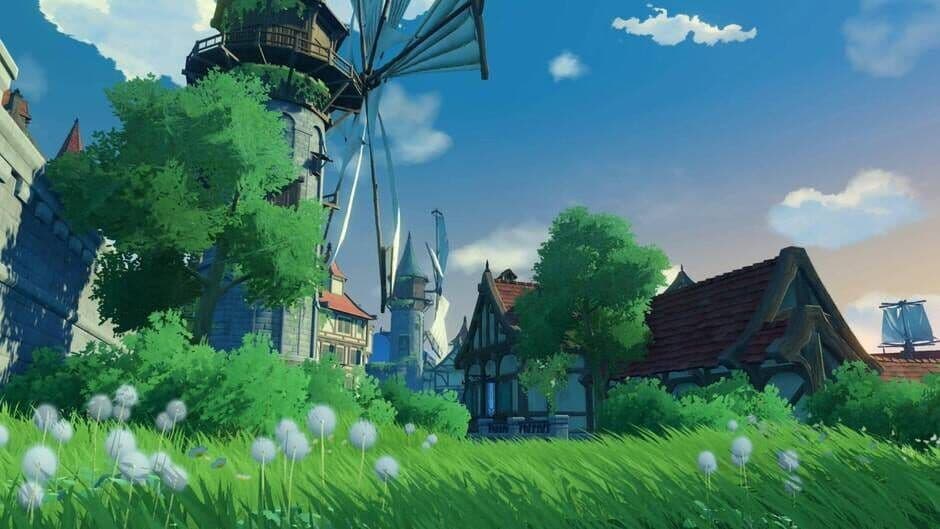
Technical polish is evident in the game's lighting and character models.
The main narrative, following the Traveler’s search for their lost twin, is structurally its own worst enemy. It suffers from severe XP-gating, where advancing the core Archon Quest requires reaching specific, increasingly steep Adventure Ranks. This design forces a hard stop on the story’s momentum, mandating hours of side exploration and grinding before you’re allowed to see the next plot beat. Where this breaks down is in tonal whiplash; you might be dealing with a nation’s existential crisis one moment, then be told to go collect mushrooms and fight random hillichurl camps for three hours to continue. The plot itself often meanders, padding runtime with repetitive explanations of in-world magical jargon that treat the player like a forgetful child. While the overarching lore of Teyvat is deep and intriguing—found in environmental clues and countless readable books—the moment-to-moment storytelling frequently defaults to a checklist of anime-inspired misadventures.
Character writing amplifies this feeling of missed potential. The immense cast is a parade of familiar archetypes: the diligent knight, the lazy astrologist, the mischievous fox envoy, the workaholic funeral director. They are concepts first and people second, which makes forming a deep attachment difficult. However, Genshin Impact executes a brilliant salvage operation through its technical presentation. The synergy between expressive, fluid animation and committed voice acting (in multiple languages) injects these archetypes with genuine charm and personality. A character’s exaggerated yet precise gestures, paired with a vocal performance that understands rhythm and cadence, can elevate a simple trope into a memorable presence. The visual and audio direction does the heavy lifting that the script often neglects.
This is the game’s narrative paradox in a nutshell: you may not remember the specifics of a character’s dialogue, but you’ll remember the way they moved, the tone of their voice, and the sheer style of their presentation.
No discussion of the narrative experience is complete without addressing Paimon, the Traveler’s fairy-like companion who serves as both guide and incessant narrator. For many players, she is the single most aggravating element of the story. Her role is to over-explain every plot point, reiterate obvious information, and fill every silence with squeaky commentary, effectively acting as a voice for a silent protagonist who doesn’t need one. Her constant presence and penchant for stating the obvious can infantilize the experience, pulling you out of the world’s grandeur. While intended as a source of comic relief and emotional anchoring, her execution often crosses into grating territory, making her a definitive litmus test for player tolerance.
Where the presentation soars without reservation is in its artistic and musical direction. The cel-shaded aesthetic is a masterclass in stylistic coherence, opting for vibrant, pastel-hued clarity over gritty realism. Landscapes are rendered with a painterly sensibility—the golden peaks of Liyue look lifted from a classical Chinese watercolor, while the neon-drenched streets of Inazuma pulse with electric life. This approach ensures the game ages gracefully and performs consistently across platforms, from phones to consoles. It is, quite simply, one of the most consistently beautiful worlds in gaming.
The musical score by HOYO-MiX is nothing short of a landmark achievement. It’s not just background music; it’s a core pillar of world-building. Each region receives a fully localized soundtrack, with Liyue’s themes featuring traditional Chinese instruments, Inazuma’s incorporating Japanese shamisen and koto, and Sumeru’s blending Middle Eastern and South Asian motifs. The music adapts seamlessly, shifting from melancholic exploration themes to thunderous, orchestral boss arrangements. It’s the secret glue that binds the visual splendor to the emotional experience, encouraging you to simply stop and exist in these spaces. In a game where the written story can falter, the environmental storytelling—powered by this impeccable art and sound—often succeeds brilliantly.
Ultimately, engaging with Genshin Impact’s narrative requires a specific mindset. You must be willing to embrace the grand, beautiful spectacle and the compelling lore buried in its world, while developing a high tolerance for its stop-start pacing, trope-heavy characterizations, and an overly chatty travel companion. The production values are so exceptional that they frequently compensate for the script’s weaknesses, creating an experience that is visually and awrally immersive even when the plot is not. For players who prioritize world-building and atmosphere over tight, character-driven narrative, it’s a more than fair trade. For those seeking a gripping, well-paced story, the journey through Teyvat will feel like a magnificent painting hung on a somewhat rickety frame.
The Gacha Economy: Balancing Generosity and Predatory Design
This is where the beautiful fantasy of Teyvat collides with the spreadsheet reality of its business model. Genshin Impact is a game of breathtaking generosity, giving away an entire premium RPG for free, yet its foundation is a monetization system engineered to exploit human psychology with surgical precision. The resulting experience is a masterclass in balancing on a knife's edge—offering a genuinely complete journey for free players while constructing a labyrinth of friction designed to tempt out your wallet.

Managing resources and equipment for character builds.
The heart of the system is the gacha or Wish mechanic, a lottery where you spend currency (Primogems) for a randomized chance at new characters and weapons. The base odds are notoriously slim, with a 0.6% chance for the highest-rarity 5-star items. This is where the game’s famed "generosity" reveals its first caveat: you are showered with free Primogems during the initial 40-50 hours of exploration and story, creating a thrilling rush of early pulls. This carefully orchestrated dopamine hit builds a powerful association between play and reward, hooking you into the chase before the well begins to run dry. The system isn't purely predatory, however. A pity system acts as a crucial safety net: a guaranteed 5-star item within 90 pulls, with a 50/50 chance it will be the featured banner character. This mechanic transforms the terrifying randomness of a 0.6% chance into a calculable goal, allowing free-to-play players to strategically save for months to guarantee a specific character they love. It’s a concession to fairness that also brilliantly sustains long-term engagement.
This is the core tension of the gacha: it simultaneously empowers meticulous planning and preys on impulsive desire. You can play the long game and win, or you can pay to skip the wait.
Where the model's pressure truly intensifies is in the late-game progression systems, which are inextricably linked to the gacha economy. After the initial bounty of exploration Primogems dries up, the primary free income becomes a trickle from daily commissions and limited events. Critics rightly label Genshin Impact’s Primogem economy as stingy compared to peers; a free player might only amass enough for that 90-pity guarantee once every three to four months. This forces brutal prioritization, making every pull a high-stakes decision and turning the simple act of wanting a new character into a months-long savings plan. The impact is psychological: it manufactures a sense of scarcity and urgency around time-limited character banners, directly fueling the temptation to spend.
This scarcity extends beyond character acquisition into the very act of strengthening your team. The Resin system is the universal gatekeeper for endgame progression. This stamina-like resource, which slowly regenerates over real-world time, is required to claim rewards from nearly all activities that yield meaningful character and weapon upgrade materials. Once your daily Resin is exhausted, your ability to progress your account grinds to a near-halt. The design intent is clear—to regulate player engagement and prevent burnout from excessive grinding—but the execution feels like an artificial brake. It transforms what should be a satisfying power climb into a daily chore list, a routine you must complete to stay "efficient." Paying players can bypass this gate by purchasing Resin refreshes, accelerating their progress exponentially. This creates the game's most tangible "pay-for-convenience" divide, not in raw power, but in the speed at which you can experience new content with a fully leveled team.
The culmination of these systems is the progression wall that multiple reviews identified around the 40-50 hour mark. This is when the thrilling, open-ended exploration that defines the early game begins to recede, and the structured, resource-managed live-service loop takes over. Advancing your Adventure Rank to unlock the next story chapter requires grinding specific, often Resin-gated activities. Leveling a character from 70 to 80 demands exponentially more resources than from 1 to 70. The game stops giving and starts asking. For some, this transition into a predictable rhythm of dailies and resource management is a comforting hobby. For others, it's the moment the magical world of Teyvat starts to feel like a part-time job with a very demanding boss.
Genshin Impact ultimately asks you to accept a fundamental trade-off: in exchange for hundreds of hours of a world-class, free-to-play adventure, you must navigate an economy meticulously crafted to monetize your patience. It is possible—and many dedicated players prove it daily—to experience everything the game has to offer without spending a cent, relying on skill, planning, and persistence. Yet the architecture of temptation is always present, a silent partner in every session. The game doesn't just sell you characters; it sells you time, convenience, and the sweet relief of instant gratification. Whether that balance feels generous or predatory depends less on the game's design and more on your own tolerance for its uniquely modern form of friction.
Technical Performance and User Experience
A game's technical polish is the silent foundation of its world—it's either invisible, letting you sink into the fantasy, or a constant, grating reminder of the machinery underneath. Genshin Impact largely achieves the former, delivering a surprisingly robust and beautiful experience across a dizzying array of platforms, but it stumbles in the places where you're forced to interact with its systems rather than its world.
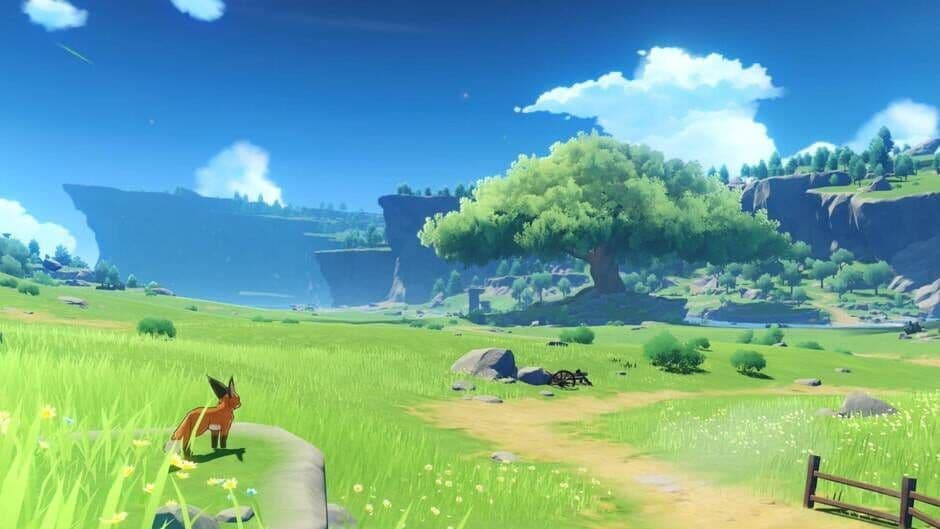
Visual fidelity in Genshin Impact's diverse biomes.
The game's cross-platform ambition is its most impressive technical feat. The fact that you can enjoy a largely identical, visually sumptuous experience on a high-end PC, a PlayStation, and a modern smartphone is nothing short of remarkable. On current-gen consoles and capable PCs, the cel-shaded world of Teyvat sings, maintaining a stable frame rate even during chaotic elemental battles. The art style, prioritizing vibrant clarity over raw fidelity, ensures the game ages gracefully and performs consistently. However, the seams show under pressure. On last-gen hardware like the PS4, and during particularly intense combat sequences, players report noticeable frame rate drops and texture pop-in. When your screen is already a kaleidoscope of elemental effects, these hitches can obscure crucial enemy attack tells, turning a strategic encounter into a frustrating guess. It’s a trade-off: the game pushes visual spectacle to its limit, occasionally at the cost of buttery-smooth performance on older devices.
This is the core of Genshin Impact's technical identity: a masterclass in scalable, stylish presentation that occasionally buckles under the weight of its own ambition.
Where the experience falters more consistently is in its user-facing design. The user interface (UI) is a cluttered, menu-heavy labyrinth that becomes a daily antagonist. Progression in this game is a constant dance of equipping artifacts, leveling talents, and managing resources, all requiring frequent dips into nested menus. The layout feels unintuitive, burying key functions and overwhelming players with icons and sub-menus from the start. This isn't a minor nuisance; it actively hampers the joy of character building, turning what should be a satisfying power fantasy into administrative busywork. On PC, this is compounded by one of the game's most baffling oversights: awkward controller support. Players must manually re-enable controller mode on each launch, and the default button mapping is counter-intuitive—often swapping confirm and cancel buttons from standard console conventions. For a game that otherwise excels at accessibility, this feels like a glaring, unforced error that disrupts the initial setup for any player wanting a couch-based experience.
The logistical footprint of this ever-expanding world is its final, unavoidable technical hurdle. Genshin Impact demands a significant storage commitment, especially on mobile. With each major region update adding several gigabytes, the game can easily balloon to over 30GB on a phone, pushing the limits of standard device storage and forcing players into a cycle of managing space. This isn't just an inconvenience; it's a tangible barrier to entry for players with older devices and a constant reminder of the game's live-service, ever-growing nature. The initial download is merely a down payment on the space Teyvat will eventually occupy.
Ultimately, Genshin Impact gets the big picture right: it delivers a stunning, consistent world across more devices than it has any right to. The occasional frame dip or texture hiccup is a forgivable sin given the scope. But its sins against user experience—the cluttered menus, the finicky PC controller support, the storage hunger—are felt constantly. They are the friction points between you and the fantasy, a series of small papercuts that remind you you're managing a live-service product, not just exploring a world.
Final Verdict: Is Genshin Impact Still the Open-World Benchmark?
The final verdict on Genshin Impact is a paradox of extremes: it is simultaneously one of the most generous and one of the most predatory games you can play. This is the uncomfortable truth that defines the experience. For the price of absolutely nothing, it offers a breathtaking, hundreds-of-hour open-world odyssey that rivals premium RPGs in scope and craft. Yet, to sustain that world, it employs a gacha economy and progression systems meticulously designed to monetize your patience. The ultimate question isn't whether it's good—it’s exceptional—but whether you can navigate its friction to enjoy the masterpiece beneath.

This is the game's core value proposition: a staggering amount of high-quality, handcrafted content that is permanently available and entirely free. You are not buying a game; you are being given the keys to a sprawling, six-nation fantasy epic.
The sheer volume of content is its most compelling argument. A new player in 2024 isn't just starting a game; they are stepping onto an enormous, meticulously constructed runway. From the wind-swept highlands of Mondstadt to the neon-lit streets of Fontaine, the game offers dozens of hours of authored quests, intricate environmental puzzles, and world-class exploration per region, all without a single paywall. This is not procedurally generated filler; it's the curated, hand-built density of a premium title, delivered in massive free updates for years. For players who prioritize immersion, discovery, and living in a beautifully realized world, Genshin Impact is peerless in the free-to-play space. It’s a game best approached as a journey, a hobby of exploration where the joy is in uncovering Teyvat's secrets and building your dream team of characters, not in conquering a challenging endgame.
And that’s crucial, because the endgame is where the experience plateaus. Once the story quests of a region are complete and the initial exploration high wears off, the recurring combat loop is surprisingly thin. The Spiral Abyss and similar challenge domains offer a bi-weekly test of your team-building prowess, but they represent a fraction of the content volume. For players seeking a deep, repeatable action-RPG endgame—the kind that demands constant mechanical refinement—Genshin Impact will feel lacking. The grind shifts from adventurous discovery to a routine of managing daily Resin, farming upgrade materials, and chasing the last few percentage points of optimization on your characters. This transition, which multiple reviews pinpoint around the 40-50 hour mark, is the game's most significant pivot. It reveals that Genshin Impact is a master of the curated journey, not the endless destination.
Your relationship with its systems will define your long-term enjoyment. The gacha mechanics are a constant, psychologically sophisticated presence. The initial flood of free Primogems creates a thrilling sense of abundance, but the economy tightens into a strategic, long-term savings plan. The 0.6% base rates and the 50/50 pity system demand careful planning, forcing free players to prioritize their desires over months. This can feel stingy, but it also adds a layer of meta-strategy and delayed gratification that many find engaging. The friction comes from the game's masterful orchestration of temptation—the time-limited banners, the Resin gates on progression, the ever-present storefront—all designed to convert frustration into spending. It’s a balance that respects your time and planning if you let it, but relentlessly tests your willpower if you engage impulsively.
Genshin Impact is not for everyone. It demands a high tolerance for anime trope storytelling, a forgiving ear for the often-grating companion Paimon, and the patience to navigate its cluttered menus and progression gates. But for the player it targets—someone who values world-building over plot, strategic team-crafting over twitch combat, and who can find joy in a daily ritual of exploration and incremental growth—it remains an unmatched proposition. It is a living, breathing world first and a gacha game second, a place you return to for the vistas, the music, and the quiet satisfaction of solving one more puzzle on a distant cliffside.
Final Verdict
Genshin Impact is a landmark achievement in live-service design and open-world exploration, though its brilliance is inextricably tied to a monetization model that will test your tolerance. It offers an absurd amount of premium-quality content for free, wrapped in a stunning, ever-expanding world. Just be prepared for the journey to include some mandatory paperwork and a persistent sales pitch.
Pros:
- A stunning, painterly open world packed with intelligent environmental puzzles and rewarding exploration.
- A deep, strategic "elemental chess" combat system that makes team-building a compelling long-term pursuit.
- An exceptional, culturally authentic soundtrack by HOYO-MiX that is a landmark achievement in game audio.
- A staggering volume of permanently free, high-quality story and exploration content across multiple massive regions.
- Consistent, substantial updates that expand the world and narrative every few weeks.
Cons:
- A gacha economy that, while manageable with planning, is psychologically predatory and can feel stingy for free players.
- Thin endgame combat content that fails to satisfy players seeking deep, repeatable challenge.
- Narrative pacing hampered by arbitrary progression gates and a reliance on familiar anime tropes.
- The companion Paimon’s incessant, explanatory dialogue will test the patience of many players.
- A cluttered, menu-heavy user interface and awkward PC controller support create unnecessary friction.