After 30 days, sustainable food is not a single project. It is a decision about which resource your base can spare: water, travel time, or bait. Farming is worth starting when you can water and protect a seasonal plot. Foraging is worth doing whenever it extends a trip you were already taking. Trapping becomes worthwhile when you can place traps in a legal habitat, keep them baited, and check them without crossing a zombie route.
Build 42 rewards that division of labor. Build an anchor system first, then add a cheaper support system instead of trying to run three hungry projects at once.
Farming Wins When Water, Not Seeds, Is Your Limiter
Start farming when three conditions are true: you have a seed that fits the current planting window, a plot you can protect, and a water plan that survives the utility shutoff. If any one is missing, farming is preparation rather than food.
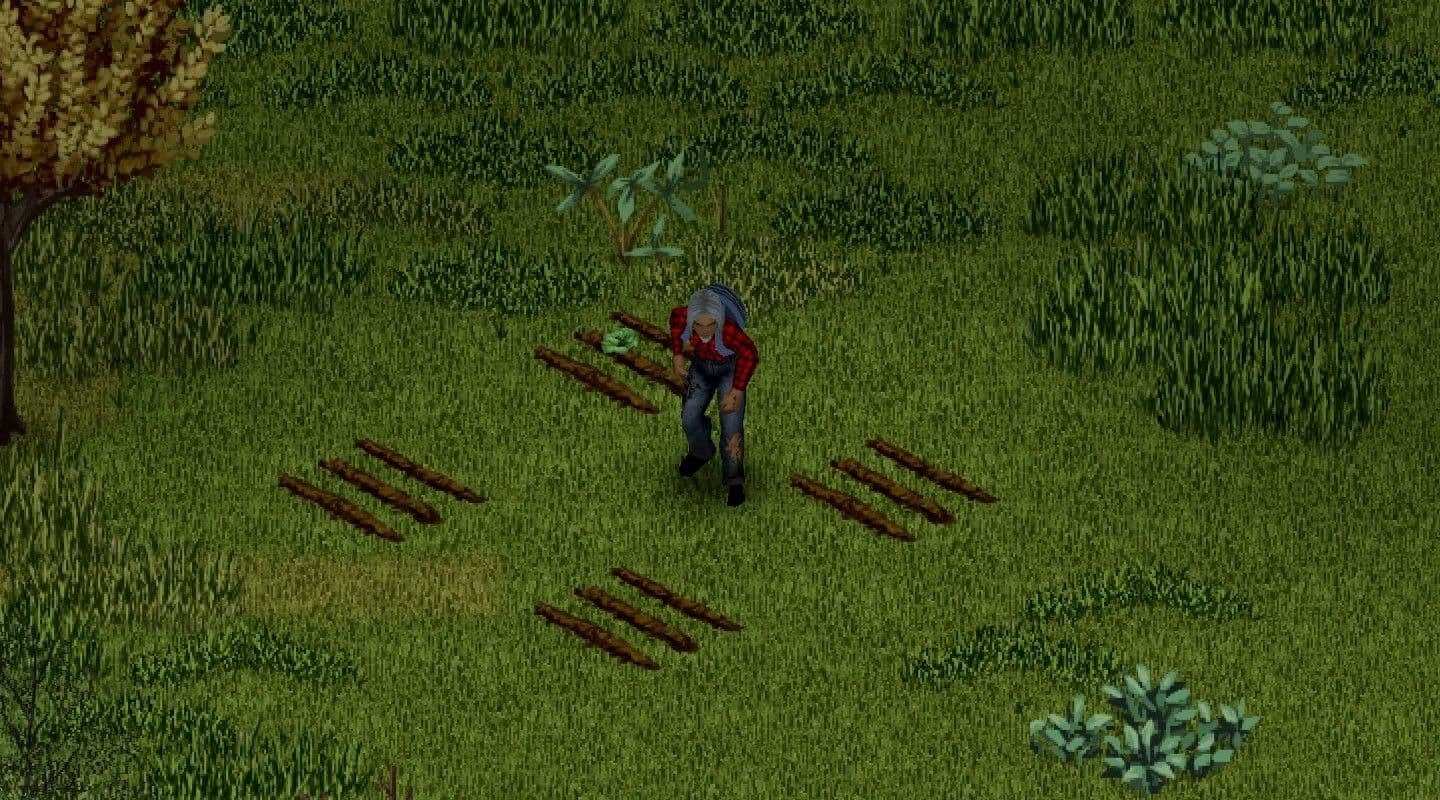
A small plot is easier to water, protect, and keep producing.
Build 42 renamed the old Farming skill category to Agriculture, and the crop tooltip now deserves attention before you plant. Do not sow every packet immediately. Crop windows vary, and a seed planted at the wrong time ties up your labor and water without giving you a dependable harvest.
Prepare the plot with a digging tool, leave space between plants, and inspect crop health and disease as the plants advance. Manual watering is manageable for a small garden; a larger field needs rain collectors, a well, or nearby natural water before it becomes practical. This is the real expansion test: can you carry the next water load without exposing the character to a worse risk than a food run?
Compost gives the farm a second loop. A composter turns rotten perishable food into compost that you collect with sacks. Fertilizer can speed growth, but repeated applications can damage a plant, so do not treat a fertilizer bag as permission to spam it. Use the safer repeatable input when the farm grows beyond what scavenged supplies can support.
Harvesting is also how the Agriculture skill pays back. Take food when you need it, but let some plants reach their seed-bearing stage when your seed stock is low. A farm becomes self-sustaining when each harvest can feed you and fund the next planting cycle.
Expand only after you can water and inspect the current plot safely. If the water trip or the farm perimeter is dangerous, a smaller garden is the correct size.
Foraging Is the Cheapest Bridge to More Bait
Foraging needs no planted plot and no trap recipe, so it is the most useful bridge between scavenged food and a mature base. Open Search Mode with the magnifying-glass icon, use Investigate Area, and choose a Search Focus that supports the job you are already doing. Search the forest edge or field beside a route you are clearing instead of making a special food expedition.
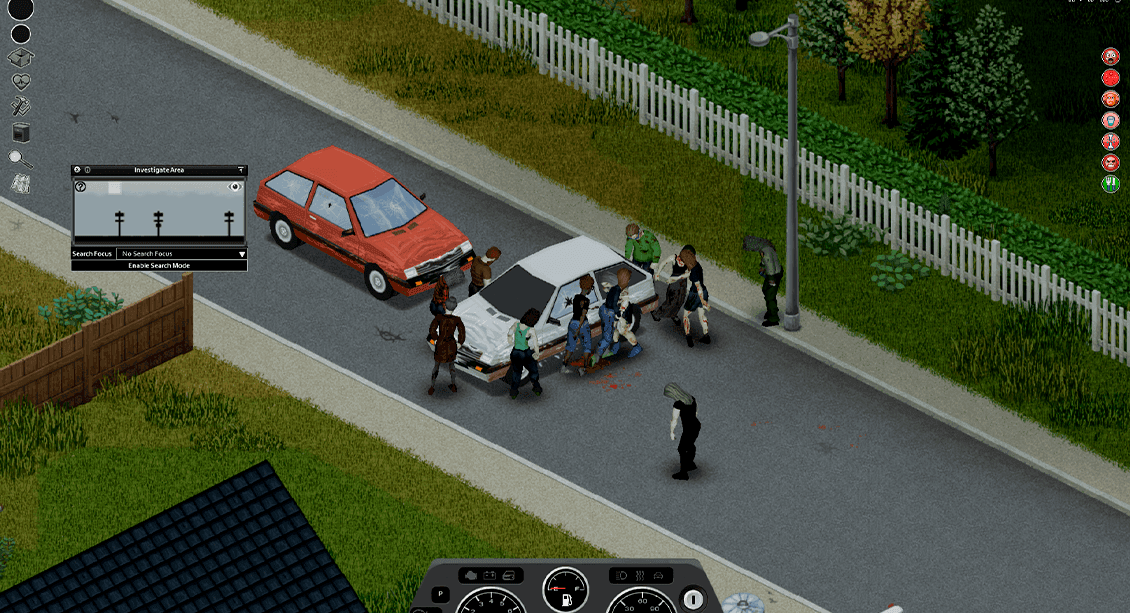
Search mode helps turn a route into a food and bait run.
The white eye marker tells you the search has found something, but the UI does not make the surrounding map safe. Walk slowly, keep a weapon ready, and stop the search when zombies make the route more dangerous than the food is valuable. This is not generic caution: foraging consumes attention, and attention is the resource that keeps a character from being surprised.
Foraging pays immediately in three ways:
- It adds wild food while you scout or travel.
- It supplies bait and seeds that feed farming or trapping.
- It levels the Foraging skill through the same routine that collects the resources.
Its output is less predictable than a planted crop, and the value changes with area, skill, weather, and season. That makes Foraging the right anchor for a mobile survivor and the right support system for a secure farmer. It is not a reason to abandon a farm once you have water and protection.
Read the relevant skill book before grinding Agriculture or Foraging. The experience multiplier is more valuable than rushing a few low-yield actions, and the better skill information helps you decide whether a search route is still worth your time.
Trapping Pays Only Beyond the 75-Tile Line
Trapping is the best of the three at turning unattended time into protein, but it has the strictest setup. Learn the recipes through the Park Ranger occupation, the Hiker or Hunter traits, or the Hunter magazines. The Park Ranger starts with trapping knowledge and skill; Hiker and Hunter provide a smaller start and unlock different recipe coverage.
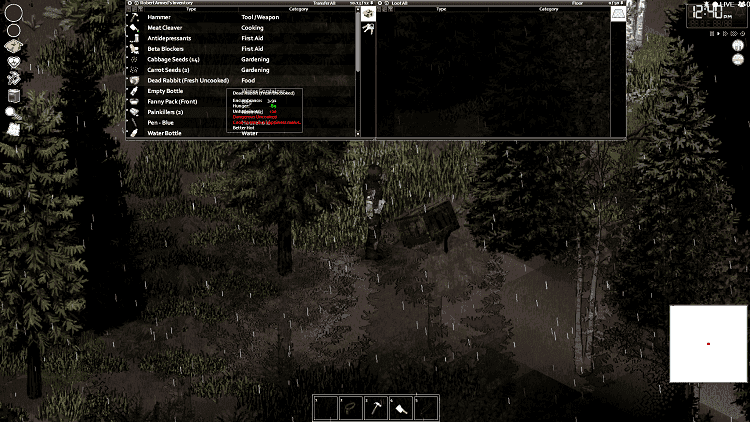
A trap route turns matching bait into a repeatable protein run.
A Trap Crate is a practical first target: it uses one saw, three planks, and five nails, and it does not require a Trapping level to craft. A snare is another early option once you have the skill and twine. Build only the number of traps you can replace; a broken trap is a material cost, not a reason to empty your tool shed.
Place rabbit and squirrel traps in forest or deep forest, at least 75 tiles from areas where you regularly walk. Mark the location on your map. The distance matters because frequent human activity suppresses trapping, while an unmarked forest route turns every check into a search of its own.
Use bait that matches the target. Carrots and cabbage from farming can feed rabbit traps; apples and other forageable items can turn Foraging into the bait supplier. Rabbits and squirrels are nocturnal in the default trapping rules, with the catch window running from 7:00 p.m. to 5:00 a.m., while other animals use different timing. Check the traps on a daily route so meat does not sit unattended long enough to attract trouble.
Build 42 also means you should inspect what a trap returns before planning the meal. A trap can return live wildlife that needs an interaction and care step rather than a ready-to-cook ingredient. Keep the first setup small until you know how your current save handles the catch and have the tools for processing it.
Trapping is worth expanding only when the bait comes from your own farm or foraging route and the check trip is safe. If you are importing bait from risky loot runs, the trap is not yet a sustainable food system.
After Day 30, Build One Anchor and One Backup
Use this table to choose the next investment:
| System | Start it when... | It pays for itself by... | Keep it small when... |
|---|---|---|---|
| Farming | You have seasonal seed, a protected plot, and dependable water. | Harvests provide food, Agriculture experience, and future seeds. | Watering or disease checks are unsafe or irregular. |
| Foraging | You already have a clearing, scouting, or supply route. | The same trip returns food, bait, seeds, or materials. | Search mode is pulling you into zombie exposure. |
| Trapping | You know a trap recipe, have matching bait, and can reach a forest route 75 tiles away. | Traps produce catches while you work at the base or forage. | You cannot replace traps, bait them, or check them safely. |
For a secure base, make farming the anchor and Foraging the backup: the garden handles continuity while wild finds fill gaps and feed traps. For a mobile survivor, reverse them and delay a larger plot until water and security are real. For a rural base with carpentry supplies, add trapping after Foraging can supply bait; do not make the trap route your only food line.
The practical rhythm is short and repeatable: inspect crops when you pass the plot, forage on a trip that already has a destination, and check traps on the same mapped route. If one system fails, the other should be able to cover the gap while you repair it.