Build 42 has two scarcity systems that are easy to mistake for one another. A building can be populated as already looted, while a separate long-term curve reduces the quantity in later loot rolls. The right fix depends on which result you are seeing: more food or weapon rarity cannot restore a building that spawned ransacked, and respawn settings do not rewind a world-age curve.
This guide separates the clocks, shows how they combine, and gives you a clearly labeled starting experiment for a campaign that should still have meaningful scavenging in year two.
Is the building empty, or is its loot roll thin?
Use this diagnostic as a clue, not a proof. Test several not-yet-generated buildings in an unvisited area before changing settings; ordinary loot rarity, random rolls, respawn rules, and previously generated containers can produce similar symptoms.
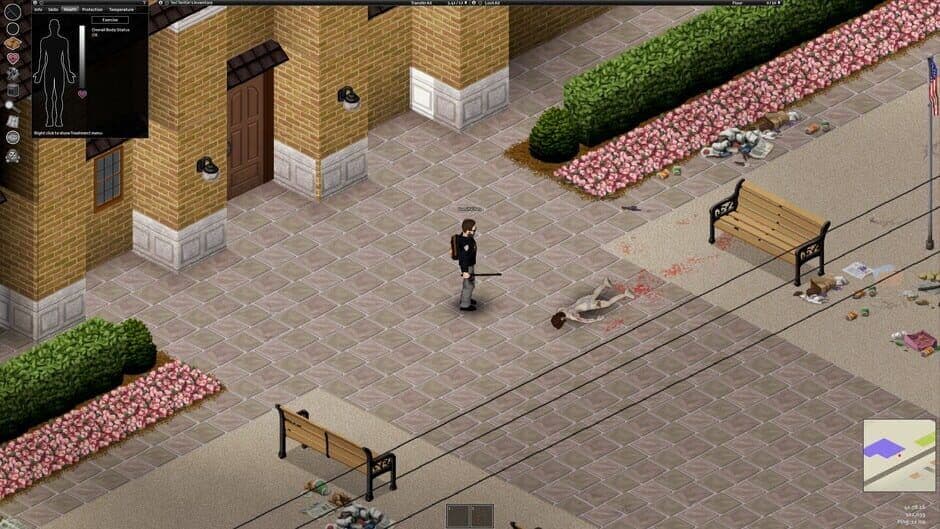
Treat an empty destination as a configuration clue, not a reason to search the same container forever.
| What you observe | Check first | Why |
|---|---|---|
| Trashed interior and many empty containers | MaximumLooted |
A building-level pre-looted result can be applied when its contents are first populated. |
| Intact rooms but weaker results in new buildings | MaximumDiminishedLoot |
This is the long-term quantity curve, separate from the pre-looted-building roll. |
| A fresh save starts with late-run scarcity | TimeSinceApo |
The starting age can advance both long-term checks before you explore. |
| Changing loot rarity does not revive a known destination | Generated map data | Existing buildings are not repopulated just because a setting changed. |
The table identifies where to investigate; it does not let you infer one setting from a single empty container. For a clean test, compare the same kinds of buildings in a fresh world or in cells nobody has loaded.
MaximumLooted decides whether a building starts ransacked
MaximumLooted sets the cap on the chance that an eligible building is already picked over. DaysUntilMaximumLooted controls how quickly that chance reaches the cap. A successful roll can leave empty containers and the trashed interior that Build 42 uses to represent a location reached by other survivors first.
Two settings filter that roll:
RuralLootedmultiplies the chance for rural buildings. At0.5, a rural location receives half the base chance; at1.0, it receives the full chance.MaximumLootedBuildingRoomslimits the feature to buildings below the room threshold. The documented reference value is50, keeping the largest multi-room locations outside the normal pre-looted pool.
The numeric row used in this guide comes from a Build 42.19 SandboxVars reference: MaximumLooted=25, DaysUntilMaximumLooted=90, RuralLooted=0.5, and MaximumLootedBuildingRooms=50. Build 42.20 is now the stable branch, so treat the generated SandboxVars file for your installation as authoritative if its preset differs. The official 42.20 feature overview confirms the behavior—some houses can already be looted and trashed—but does not publish a replacement numeric table.
The 25 value is a ceiling for the eligible-building chance, not a promise that one quarter of every town is empty on day 90. The rural multiplier, room limit, and individual building roll still matter.
MaximumDiminishedLoot makes new rolls weaker
MaximumDiminishedLoot limits how much quantity later loot rolls can lose, and DaysUntilMaximumDiminishedLoot controls how long the curve takes to reach that limit. It does not turn a building into a pre-looted shell: an intact house can have weaker new rolls, while a ransacked house may be affected by both systems.

Intact rooms and weak results point toward a different clock than a trashed building.
The same Build 42.19 reference lists MaximumDiminishedLoot=20 and DaysUntilMaximumDiminishedLoot=3650. That is about 122 thirty-day months, or roughly ten years—not ten months. Read 20 as the maximum quantity loss at the end of that curve, not as a flat 20% reduction from day one.
TimeSinceApo pre-ages a new world. Project Zomboid uses 30-day month steps, so a value representing thirteen months supplies roughly 390 days to the long-term age input before you explore the first building. That can make a fresh save feel like a late run immediately: the pre-looted curve has already advanced, and the diminished-loot curve is no longer at zero.
Treat TimeSinceApo as a scenario choice, not as a repair tool. If you change it or change either depletion setting, judge the result in a new world or an unvisited area. Editing the file does not rewrite containers that were already generated.
ZombiePopLootEffect cannot refill a shelf
ZombiePopLootEffect is a separate population-linked loot setting. It is not a second name for MaximumDiminishedLoot, and it does not restore containers removed by MaximumLooted. The reference row used here lists ZombiePopLootEffect=0; older Build 42 snapshots document nonzero values, so check the generated file for your branch before treating it as a guaranteed bonus.
That gives you a clean order of operations. If a rural hardware store loads trashed, test MaximumLooted, RuralLooted, and the room cap. If intact buildings have consistently thin new results, test MaximumDiminishedLoot and its timeline. Only after those checks should you decide whether a population-linked setting belongs in your scenario.
The same caution applies to HoursForLootRespawn, SeenHoursPreventLootRespawn, and MaxItemsForLootRespawn: they govern separate container-respawn rules. They may create new eligible rolls where respawn is supported, but they do not turn an already generated pre-looted building pristine.
Keep year-two scavenging alive without making loot common
The following is a starting experiment, not a new official preset. It lowers the two scarcity ceilings and stretches the pre-looted curve, while leaving the rural multiplier and large-building guardrail unchanged. The tradeoff is straightforward: fewer early buildings are sacrificed, so a long campaign has less pressure to abandon every town for untouched territory.
| Goal | Setting | Starting experiment | Tradeoff |
|---|---|---|---|
| Fewer buildings spawn picked over | MaximumLooted |
10 |
More dependable destinations, less late-game scarcity. |
| Spread that chance over the early campaign | DaysUntilMaximumLooted |
365 |
The map changes more slowly. |
| Keep rural locations less exposed | RuralLooted |
0.5 |
Rural buildings remain more protected than urban ones. |
| Reduce the late-game quantity penalty | MaximumDiminishedLoot |
10 |
New rolls stay stronger for longer. |
| Keep that penalty gradual | DaysUntilMaximumDiminishedLoot |
3650 |
The full reduction remains a long-run effect. |
| Exclude only very large locations | MaximumLootedBuildingRooms |
50 |
Large sites remain outside the ordinary pre-looted pool. |
| Avoid a preset-specific bonus while testing | ZombiePopLootEffect |
0 |
You can judge the two depletion clocks without a third variable. |
Change one lever at a time. If the problem is ransacked buildings, lower MaximumLooted before raising every food, weapon, and medical category. If the problem is timing, raise DaysUntilMaximumLooted instead. If intact containers are consistently weak, lower MaximumDiminishedLoot; do not expect a respawn change to repair old map data.
For a server, back up the SandboxVars file, stop the server before editing, restart it, and judge the result in cells nobody has visited. Existing loot is evidence of the old rules, not a clean test of the new ones.
Questions players ask about loot depletion
How do the two depletion systems stack?
MaximumLooted can decide that a building starts picked over. MaximumDiminishedLoot can then reduce the quantity in later loot rolls over its own timeline. They are separate checks, so an intact building and a trashed building are not evidence of the same outcome.
Why did raising food or weapon rarity not fix a gun store?
Category multipliers affect valid loot rolls. They do not guarantee that a building generated with the pre-looted result will be refilled, and they do not rewrite containers you already generated.
Does TimeSinceApo make the first town empty?
No. It advances the starting age used by the depletion curves, but the preset, rural multiplier, room cap, and individual building rolls still affect what you find.
Does loot respawn undo a pre-looted building?
No. Respawn settings govern eligible container refills. They do not reverse a building-level result that was applied when the location was first populated.
Which setting should I change first?
Use MaximumLooted for too many ransacked buildings, DaysUntilMaximumLooted for a problem that arrives too early, and MaximumDiminishedLoot for intact buildings whose new rolls are too weak. Test in fresh content after each change.