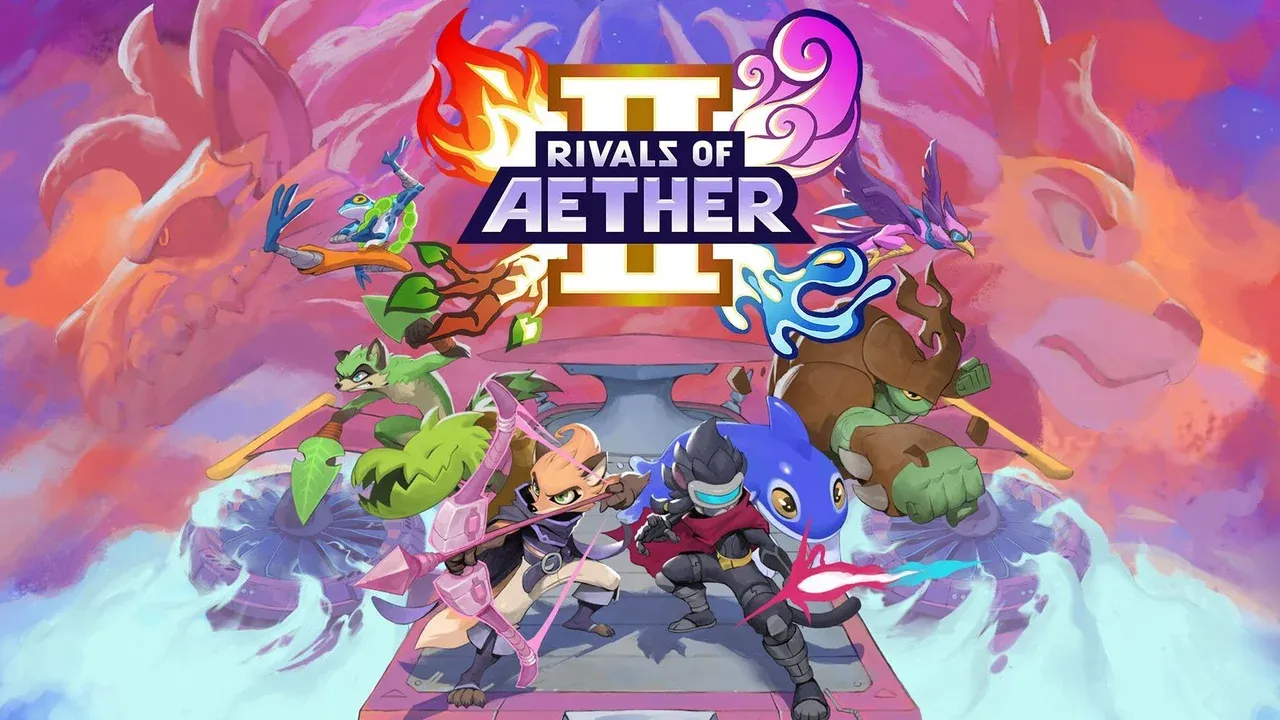
Rivals of Aether II: The New Gold Standard for Platform Fighters?
For over twenty years, Super Smash Bros. Melee has existed in a state of veneration and frustration. Its unparalleled mechanical depth and speed are legendary, but so are its punishing execution barriers and reliance on a controller lottery and techniques that can literally destroy hands. Rivals of Aether II asks the obvious, ambitious question: what if you could have the soul of Melee without the physical baggage? Developed by Aether Studios and published in partnership with Offbrand Games (co-founded by streamer Ludwig Ahgren), this sequel isn't just a tribute act; it's a deliberate, modern reinterpretation, moving from the pixel-art niche of its predecessor to a 3D, mainstream contender priced at a compelling $29.99.
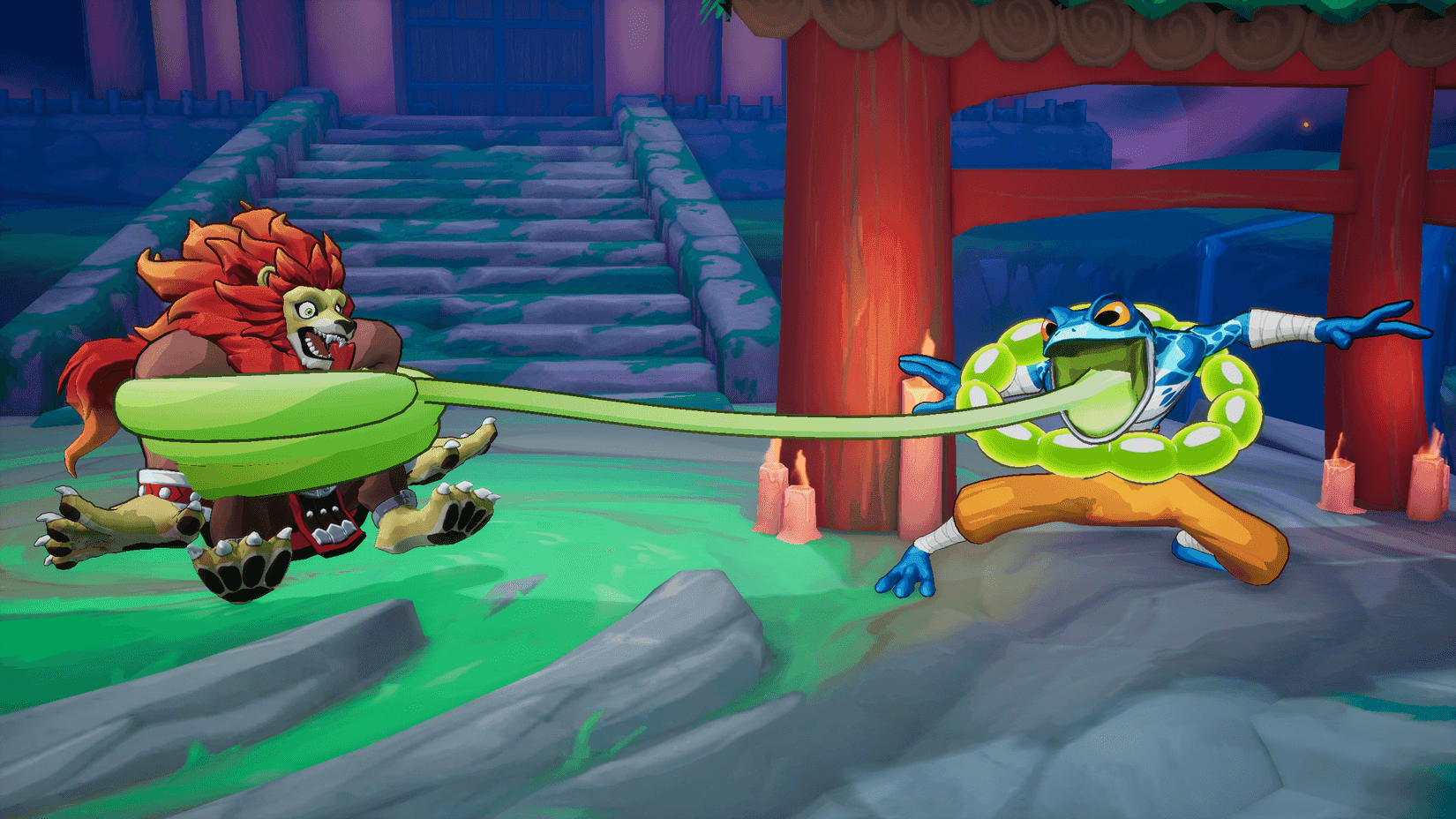
Rivals of Aether II aims to capture the competitive spirit of Melee without its technical barriers.
The design philosophy here is one of surgical removal and thoughtful addition. This isn't about cloning Melee; it's about distilling its essence. The "controller lottery"—the hunt for specific GameCube controllers with perfect potentiometers to execute consistent inputs—is gone. So is the frantic, button-mashing struggle to escape grabs or gain height on special moves, mechanics that felt more at home in Mario Party than a precision fighter. By supporting a wide range of PC controllers, including keyboards that can emulate leverless fightsticks, Rivals of Aether II systematically dismantles the archaic, hardware-dependent barriers that have kept countless players from experiencing high-level platform fighter gameplay.
This is the game's core promise: the exhilaration of Melee's freedom, but with a welcome mat laid out for the modern player.
However, positioning itself as the accessible heir to Melee creates a fascinating tension. The original Rivals of Aether carved its own identity by removing staples like shields and ledges, creating a faster, more aggressive meta. Rivals of Aether II reintroduces them, bringing its mechanics closer to the Smash Bros. mainstream. This isn't a betrayal, but a strategic pivot. The goal is clear: to be the definitive, community-supported platform fighter for a generation that never owned a GameCube. The commitment to free future characters and modes reinforces this as a live service built for longevity, not a one-off passion project. The question isn't whether it captures Melee's magic—early impressions from veterans suggest it comes closer than anyone expected—but whether it can forge its own lasting legacy while carrying that torch.
Rivals of Aether II Gameplay: Familiar Mechanics with Modern Depth
The leap from the original Rivals of Aether to Rivals of Aether II is less a step forward and more a deliberate, calculated bridge. Where the first game famously stripped away shields and ledges to forge a uniquely aggressive identity, the sequel welcomes them back into the fold. This is a fundamental shift in philosophy: Rivals of Aether II isn’t content to be a cult favorite for the hardcore; it’s building a comprehensive platform fighter toolkit designed to feel immediately familiar to anyone who’s ever played a Smash Bros. game, while retaining the precision that defines its lineage.
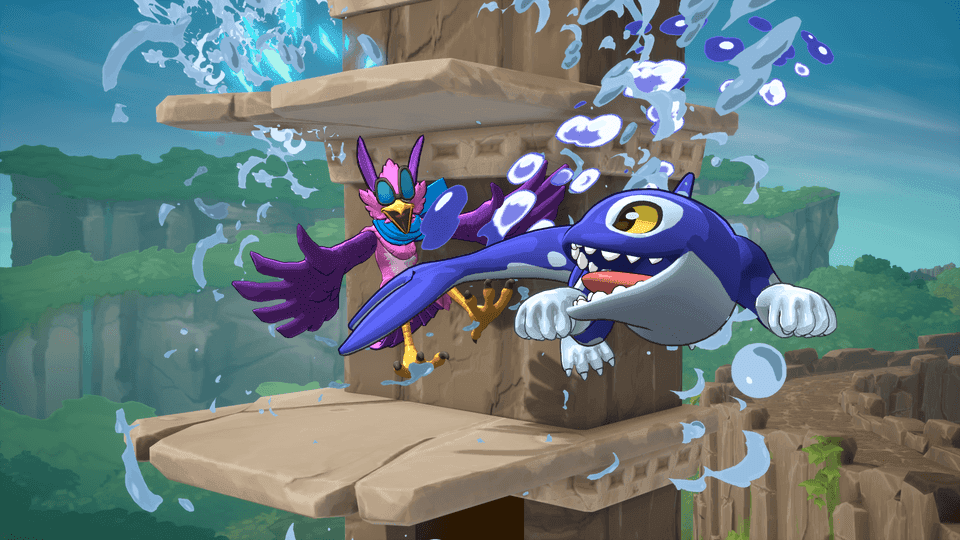
Rivals of Aether II introduces shields and ledge grabbing to the core combat.
The addition of shields, ledge grabs, and a full throw game immediately changes the rhythm of combat. Matches in Rivals of Aether II have a more deliberate, neutral-heavy pace than its predecessor, trading some of that game’s relentless aggression for a wider spectrum of defensive and positional options. This isn't a bad thing—it’s a strategic expansion. The defensive tools are robust but punishable; holding shield for too long leads to a break, and ledge vulnerability is real. The genius, however, lies in the new offensive wrinkles woven into these returning mechanics. The Pummel Special (pressing special while grabbing), Ledge Special, and Getup Special are brilliant additions that turn disadvantage states into potential mix-up opportunities. Being knocked to the ledge isn't just a moment of vulnerability—it's a decision point where you can choose a standard getup, roll, or a unique, character-specific special attack that can catch an aggressive opponent off-guard. This system injects a layer of mind games and player expression that Smash Ultimate often lacks, ensuring that even when you're on the back foot, you're never truly out of options.
The new special move integrations are a masterclass in adding depth without bloat. They feel less like new mechanics to memorize and more like natural extensions of your existing toolkit, rewarding creativity and matchup knowledge.
Where Rivals of Aether II truly honors its Melee inspiration is in its movement. Core techniques like wavedashing and hitfalling (cancelling aerial landing lag by fast-falling) are not only present but intentionally designed to be more accessible. The input windows are more generous, and the game’s overall snappiness makes chaining these movements together feel intuitive rather than a test of frame-perfect execution. This creates a playground for advanced players to express themselves while lowering the barrier for newcomers to feel the thrill of fluid, tech-driven movement. The result is a game that feels faster and more dynamic than Smash Ultimate, offering a skill ceiling that clearly nods to Melee, but without demanding you destroy your hands to reach for it.
However, this modernized approach isn't without its friction points. The game employs a mandatory input buffer system, a stark contrast to Melee's zero-buffer, "you get what you input" purity. For veterans migrating from that scene, this can be a source of frustration, leading to unintended actions—like committing to an aerial attack after your opponent has already interrupted your approach—that feel outside of your control. It’s a trade-off for accessibility, and your tolerance for it will depend heavily on your background. Similarly, some emergent defensive techniques have drawn early competitive scrutiny. The strength of crouch canceling (reducing knockback and hitstun while crouching) and certain interactions with the new ledge mechanics are points of contention, with some players finding them overly potent or unintuitive. These aren't fatal flaws, but they highlight a game that, while incredibly polished in its feel, is still actively discovering its own balanced meta. Aether Studios has already shown a commitment to tuning this via post-launch patches, treating Rivals of Aether II as a living platform fighter in every sense.
Ultimately, the gameplay of Rivals of Aether II succeeds by refusing to be just one thing. It captures the exhilarating freedom of Melee-style movement, grounds it with the familiar defensive framework of modern platform fighters, and then seeds it with ingenious new options that deepen every interaction. It feels both classic and freshly inventive, a testament to a development team that understands not just how to copy a genre's highlights, but how to thoughtfully evolve them.
The Roster and Visuals: From Pixel Art to Unreal Engine 5
The leap to Unreal Engine 5 and a cel-shaded 3D world is the most immediately striking evolution in Rivals of Aether II, representing both a massive visual upgrade and a calculated risk. Where the original's pixel art was a charming, niche calling card, this sequel aims for mainstream appeal with a vibrant, explosive aesthetic that pops on screen. This isn't just a graphical update; it's a complete reimagining of the game's presentation, and for the most part, it's a resounding success that enhances the core fantasy of elemental combat.
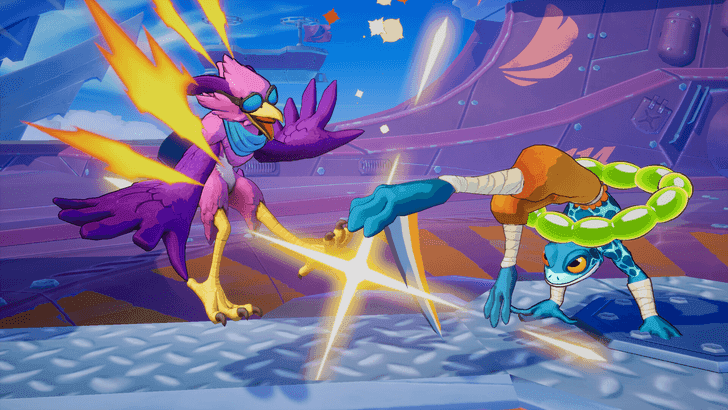
Dynamic combat effects and 3D environments highlight the shift to Unreal Engine 5.
The roster of 10-11 launch characters, blending veterans like Zetterburn with newcomers such as the hulking Loxodont, benefits immensely from this new dimension. Each fighter's elemental theme—Fire, Water, Air, Earth—is no longer just a mechanic but a visual spectacle. Zetterburn's fiery mane trails behind him as he dashes, Clairen's plasma sword leaves electric afterimages on her teleports, and Ranno's poison bubbles have a tangible, viscous weight. The character kits feel distinct not just in their movesets but in their entire visual language; you're not just playing a character with a gimmick, you're embodying a force of nature. This visual distinction is crucial for a game with such a diverse cast, helping players instantly parse complex action and understand the "rules" of each matchup at a glance.
The 2D particle effects layered over the 3D models are a masterstroke. Attacks don't just connect; they erupt in colorful, elemental bursts that change hue based on your character's alternate costume, adding a delightful layer of personalization to every strike.
However, this visual splendor has a notable accessibility wrinkle. In the chaotic free-for-all of a four-player match, clarity can occasionally break down. When two players select alternate costumes with similar color palettes—a problem exacerbated for colorblind players—distinguishing your fighter in the heat of a flurry of effects becomes a genuine challenge. It's a minor flaw in an otherwise brilliantly readable presentation, but it's one that highlights the tension between stylish expression and competitive necessity. For the majority of 1v1 play, it's a non-issue, but in the game's more casual, party-style modes, it can lead to moments of frustrating disorientation.
The auditory presentation is where Rivals of Aether II achieves near-perfection. Composer FlashyGoodness returns with a soundtrack that perfectly captures the game's dual nature: high-energy, pulse-pounding electronic tracks for combat that make every exchange feel epic, and more relaxed, atmospheric melodies for menus and character select. The sound design is arguably the best in the platform fighter genre. Every hit has a distinct, satisfying crunch, thud, or sizzle that sells the impact, from Kragg's rocky heaviness to Fleet's swift, slicing strikes. This audio feedback is as important as the visual; you don't just see a successful combo, you feel it through a cascade of perfectly timed sound cues. New voice lines for the cast, while occasionally cheesy to some ears, further cement each character's personality, and the option to adjust their volume is a welcome touch.
Ultimately, the presentation of Rivals of Aether II is a statement of intent. It declares that this is no longer a niche, pixel-art homage, but a fully-realized, modern contender ready to stand alongside the genre's giants. The visual shift to 3D is more than skin-deep—it amplifies the unique identity of every fighter and makes the high-speed action more legible and spectacular than ever. While the occasional color-clash in hectic multiplayer reveals a seam in this otherwise polished facade, it's far outweighed by a cohesive, thunderous, and immensely satisfying audiovisual package that makes every match feel like an event.
Online Play and Content: Is There Enough to Do?
For a game built on the legacy of a series known for its robust single-player offerings, Rivals of Aether II presents a paradox at launch: its online infrastructure is a masterclass in modern fighting game design, while its offline content feels conspicuously like a . This is the section where the game's identity as a live-service, competition-first platform fighter comes into sharpest focus, revealing both its greatest strength and its most significant current shortcoming.
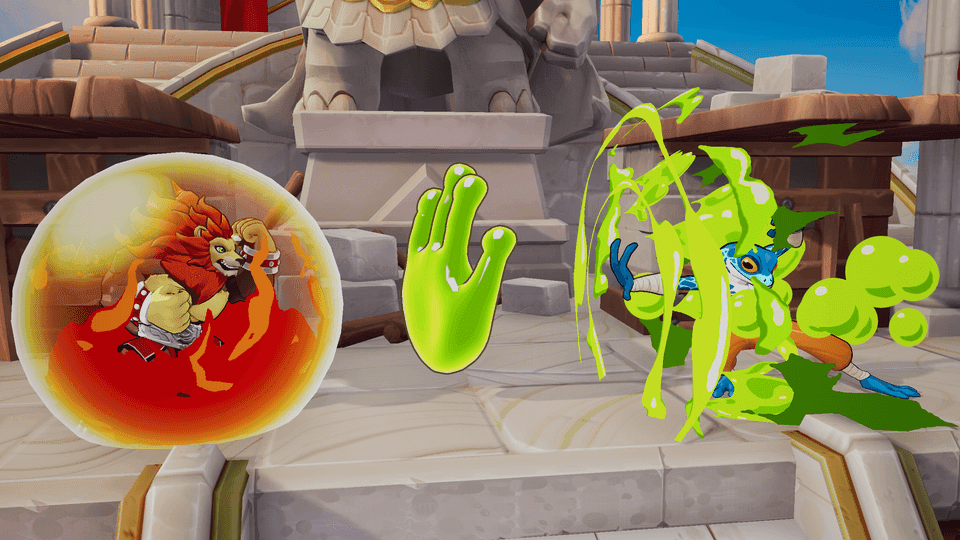
The game's core combat is fast and exhilarating, though single-player content remains sparse.
The online experience is, without hyperbole, the best the platform fighter genre has to offer. Rivals of Aether II utilizes rollback netcode, and its implementation is flawless. In 1v1 ranked or casual matches, even against opponents several states away, the action remains buttery-smooth, with inputs registering as crisply as they do offline. This technical achievement cannot be overstated—it’s the difference between online play feeling like a compromised fallback and a genuine, primary way to engage with the game. The netcode holds up remarkably well even in the chaos of 2v2 or free-for-all matches, where only the most severe connections cause noticeable warping. This infrastructure is the bedrock upon which the game’s competitive future is being built, and it’s already paying dividends by attracting a staggering roster of top-tier talent from other scenes, including Smash legends like Leffen, Plup, and Cody Schwab. The developer's support for this scene is proactive, with features like Twitch drops for tournament viewers and premium skins whose proceeds feed into prize pools, signaling a commitment to grow the ecosystem, not just the game.
This is the moment Rivals of Aether II earns the trust of the competitive community. By providing a near-perfect online dueling ground, it solves a problem that has plagued the genre for decades.
Contrast this with the current single-player offering, and the disparity is stark. Where the original Rivals of Aether featured a full Story Mode and the endless Abyss Mode, the sequel launches with a sparse Arcade Mode that, while functional, feels like an afterthought. It consists of a series of standard matches culminating in a "boss" version of another character, followed by a target-test stage reminiscent of Super Smash Bros. Melee. Completing it unlocks ending art for each fighter, a nice touch, but the complete absence of narrative or context is palpable. More critically, the game lacks a comprehensive Training Mode. There's a barebones practice area, but no in-depth tutorials, combo trials, or frame data tools to help players understand the deep mechanics praised in earlier sections. The developer has acknowledged this gap and is working on it, but at launch, new players are effectively sent to third-party YouTube guides and the community Discord to learn—a significant barrier for a game touting its accessibility.
This content gap is partially papered over by a compelling, if grindy, progression system. Every character has an individual level that climbs to 99, rewarding dedicated play with a steady drip-feed of cosmetic unlocks: alternate skins, player icons, and in-game currencies. It’s a satisfying loop that encourages you to stick with a main, and the cosmetic shop itself is a model of fair free-to-play design in a premium game. Skins are either earnable through gameplay or purchasable in permanently available bundles, aggressively avoiding FOMO tactics. However, this system underscores the current reality: Rivals of Aether II is a phenomenal fighting game engine in search of a complete product. The hours you’ll spend grinding character levels are hours not spent in a dedicated story campaign or a fleshed-out tutorial suite.
The verdict on content, then, is bifurcated. If you are a player who lives for the thrill of the match—for testing your skills against human opponents in ranked queues or with friends online—Rivals of Aether II is already a feature-complete and exceptional package. Its online play is best-in-class, and its core gameplay is deep enough to support thousands of hours of competitive refinement. But if your entry point into platform fighters is through ambitious single-player adventures like Subspace Emissary, or you need structured in-game guidance to climb the skill ladder, the current build will feel barren. The promise of a future story mode penned by Sonic writer Ian Flynn is exciting, but it remains just that: a promise. Right now, the game’s heart beats strongest in the online arena, and for a significant portion of its audience, that is more than enough.
Rivals of Aether II Verdict: A Must-Play for Competitive Fans
Rivals of Aether II Verdict: A Must-Play for Competitive Fans
This is the uncomfortable truth that defines the current state of Rivals of Aether II: it is simultaneously one of the most generous, technically impressive fighting games on the market and a product that feels fundamentally unfinished for a significant portion of its potential audience. Its value proposition is not a simple calculation; it hinges entirely on what you seek from a platform fighter. For the competitive-minded player, the $29.99 price tag is an absolute steal. For the casual solo adventurer, it’s a frustratingly hollow promise—for now.
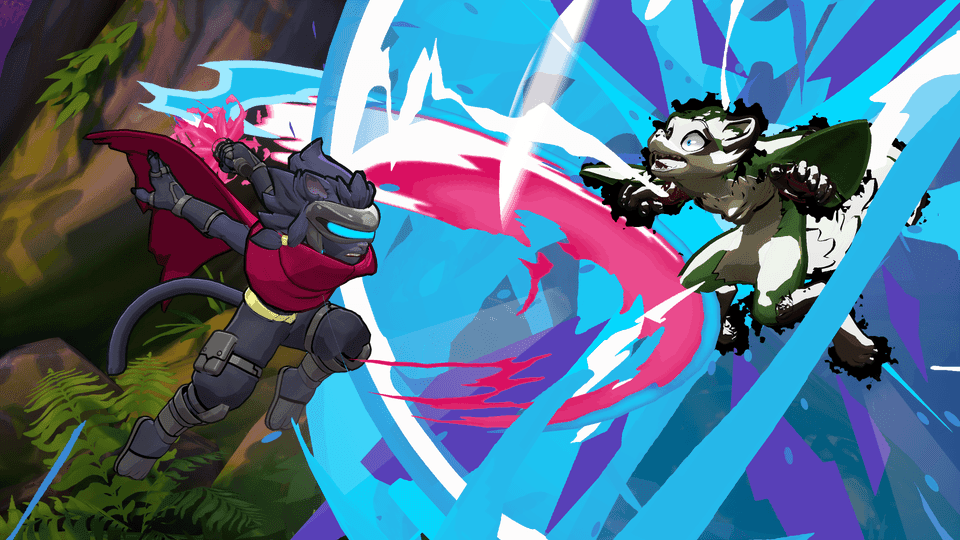
Creativity in combat is a core value proposition for Rivals of Aether II fans.
The game’s monetization model is arguably its most revolutionary feature, setting a new standard for the genre. Aether Studios has committed to releasing all future characters and game modes for free, a promise that immediately elevates the game from a one-time purchase to a long-term platform. The in-game shop is a masterclass in ethical free-to-play design grafted onto a premium product. Every cosmetic item—from the explosive, Genesis-themed Orcane skin to simple palette swaps—is either earnable through dedicated character grinding (levels that stretch to 99) or purchasable in permanently available bundles. There is no FOMO-driven rotation, no loot boxes, and critically, no pay-to-win elements whatsoever. This approach fosters a healthy ecosystem where spending money is a choice to support the developers and express yourself, not a requirement to stay competitive. In an era of aggressive monetization, Rivals of Aether II stands out as refreshingly player-respectful.
This commitment transforms the game from a product into a partnership. You’re not just buying a game; you’re investing in a platform with a transparent, sustainable future.
When evaluating the core experience, the pros are not just strong—they are genre-defining. The game feel, as dissected earlier, is sublime: a perfect alchemy of Melee’s fluid freedom and modern accessibility that makes every movement and combo string feel earned and explosive. This is complemented by industry-leading rollback netcode that makes online play feel indistinguishable from local matches, solving a decades-old problem for platform fighters and attracting top-tier competitive talent overnight. The mechanical depth, from unique character kits to advanced special integrations, ensures a skill ceiling high enough to support a thriving esports scene for years to come. For anyone whose primary joy comes from mastering systems and testing that mastery against others, Rivals of Aether II is not just a recommendation; it’s an essential.
However, the cons are equally stark and cannot be glossed over. The sparse single-player content is the game’s most glaring weakness. The Arcade Mode is a barebones series of fights, and the complete absence of a comprehensive training mode at launch is a baffling oversight for a game with such intricate mechanics. New players are left to fend for themselves with community guides, a significant barrier that undermines the game’s accessible design philosophy. Furthermore, while the visual presentation is generally excellent, minor clarity issues can arise in hectic four-player local matches, especially with similarly colored alternate costumes, occasionally reducing high-octane battles to confusing scrambles.
This brings us to the final, crucial analysis of its target audience. Rivals of Aether II is an unequivocal must-play for platform fighter veterans and competition-focused players. The quality of its online play, the depth of its mechanics, and the fairness of its business model create a package that is already best-in-class for that specific crowd. For casual players or those who derive equal pleasure from robust single-player adventures, the current picture is different. The promised story mode, penned by Ian Flynn, could be a game-changer, but it remains a future bullet point. Right now, the game’s heart beats strongest in the online arena. If that’s where you live, buy it immediately. If not, your verdict should be a hopeful, watchful wait.
Pros:
- Unmatched value proposition with all future characters and modes free.
- Exemplary, consumer-friendly monetization focused solely on cosmetics.
- Superb game feel that captures Melee’s spirit with modern polish.
- Flawless rollback netcode enabling truly competitive online play.
- Deep, expressive mechanics that reward mastery without extreme execution barriers.
Cons:
- Severely lacking single-player and tutorial content at launch.
- No comprehensive in-game training mode, pushing beginners to third-party resources.
- Visual clarity can suffer in chaotic local multiplayer scenarios.
- Feels like a live-service platform still actively being built around its stellar core.