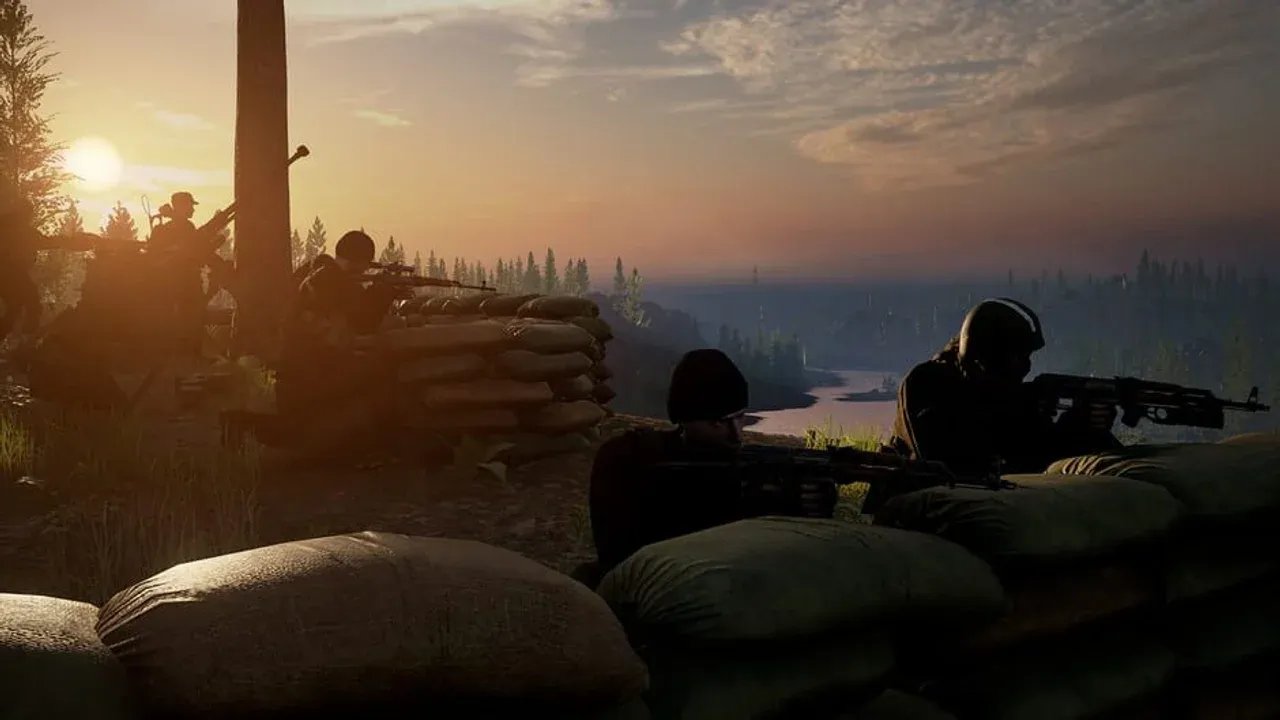
Squad’s Core Identity: A 100-Player War Sim That Demands Teamwork
Squad is a shooter where the scoreboard quietly tells you to stop playing like a shooter. Two teams of up to 50 players fight over objectives, but individual kills are secondary to the squad’s ability to capture ground, hold it, and keep its soldiers alive. That choice separates Squad from Battlefield and Call of Duty, where personal momentum can carry a match; here, a brilliant player cannot compensate for a team that refuses to coordinate. The game’s central promise is demanding but clear: your best moments belong to the unit, not to you.
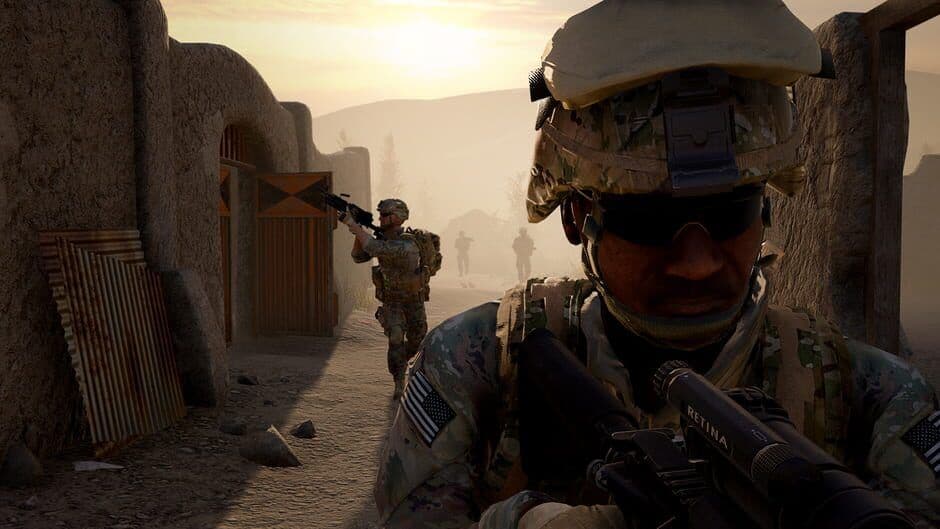
Strategic movement is a hallmark of Squad's team-first design.
The command structure gives that promise mechanical weight. Each team is divided into nine-player squads led by a Squad Leader, while a player-voted Commander coordinates the wider battle between squads. This creates layers of responsibility rarely seen in mainstream FPS design: a rifleman follows local instructions, a Squad Leader manages movement and spawn positions, and the Commander turns separate attacks into a broader plan. When those layers function, Squad produces genuine battlefield strategy rather than the illusion of it—one squad can pressure an objective while another builds defenses or attacks an enemy installation. The structure also restricts player freedom by design; wandering off to chase kills is not independence when your squad is missing a rifle, a medic, or a critical spawn point.
Squad’s most radical idea is that the match should remember what you contributed, even when you never fired the shot that mattered.
Its objective-driven scoring reinforces that philosophy. Capturing and defending control points, building structures, destroying enemy installations, and reviving or healing teammates can matter more than piling up kills, so the game recognizes the work that makes an assault possible rather than only its final trigger pull. A player constructing a defensive position or recovering a downed teammate may have more strategic value than a marksman securing an isolated elimination, because those actions preserve the squad’s ability to contest the next objective. This is where Squad earns its reputation as a war simulation: the meaningful decision is often whether to reinforce, revive, build, or withdraw—not whether to take one more shot.
The ticket economy turns those decisions into consequences instead of role-playing flavor. Enemy kills reduce the opposing team’s ticket pool, while losing players—and failing to recover them—weakens the team’s remaining resources, making a reckless assault costly even when it produces a few eliminations. A successful revive can therefore preserve more than one soldier; it can prevent the attrition that eventually collapses an offensive. Likewise, defending a point or destroying an enemy structure matters because it protects the team’s strategic position and drains the opponent’s capacity to continue. Squad’s combat systems will later make each death feel immediate and frightening, but the ticket system makes death matter at the level of the entire match.
The uncomfortable truth is that this design makes Squad’s quality heavily dependent on other people. A capable Squad Leader, an active Commander, and teammates willing to follow a shared plan can transform a match into a coordinated campaign; a silent squad with no coherent leadership turns the same systems into confusion and wasted effort. The experience varies dramatically between servers and even between adjacent squads, so the game cannot guarantee the teamwork it requires. That is both Squad’s greatest strength and its sharpest limitation: it creates strategic depth by surrendering individual control, then asks the player community to supply the discipline that the software cannot. When that social contract holds, Squad feels unlike almost any other multiplayer FPS; when it fails, its structure feels less like meaningful strategy than a set of rules preventing you from having fun alone.
Squad Combat and Roles: Realistic Firefights With Little Room for Error
Squad’s firefights are built to punish the instincts that make mainstream shooters feel comfortable. A rifle round can kill with one hit to the chest or head, while two hits to an extremity can be fatal, so exposure is not a minor inconvenience—it is often the end of the engagement. Long-range combat compounds that danger: players without suitable optics or the right equipment struggle to identify targets and judge distance, while those who use cover, flank patiently, and understand their weapon’s trajectory gain a decisive advantage. This is where Squad earns its reputation as a military simulation rather than a slower Battlefield: the game makes positioning more important than reflexes, and a bad route can leave you dead before you even locate the shooter.
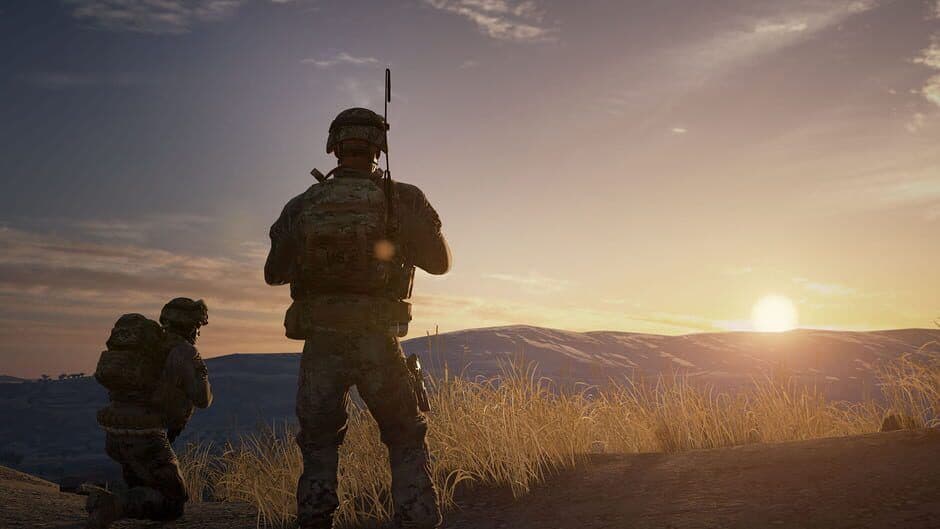
Each role in Squad offers unique tactical advantages and specialized weaponry.
The ballistics are convincing because they change how players think, not merely how weapons feel. Grenade launchers and sniper rifles require manual sight adjustment for different distances, and a sight calibrated for 200 meters is less effective at 100; the player must account for the shot instead of trusting an invisible aim assist. Partially used magazines are also retained rather than magically refilled, reinforcing the sense that ammunition and engagement timing matter. Weapon handling is harsh but fair: opportunities to fire are limited by concealment, distance, and the risk of revealing your position, so a successful kill feels earned rather than routine. When an enemy finally crosses an opening and your carefully placed burst finds its mark, the satisfaction comes from having read the battlefield correctly—not from winning a twitch duel.
In Squad, the best shot is often the one you spend several minutes preparing to take.
That preparation also explains why suppression matters. Heavy weapons are not useful only because they can produce kills; sustained fire can make bullets snap past a player’s head and temporarily blur their screen, impairing their ability to observe, aim, and respond. A machine gunner establishing a defensive fire zone can therefore control a road, treeline, or approach even when nobody on the opposing team is immediately eliminated. The effect gives suppressive fire a tactical purpose that many shooters reduce to visual noise: it denies information and movement, allowing another squad member to flank or cross exposed ground. However, this system rewards disciplined teams more than individual players, because suppression becomes strategically meaningful only when someone uses the pressure to maneuver.
The role system gives that maneuver a practical structure. Riflemen provide the dependable frontline presence and ammunition support; Medics recover wounded teammates and preserve the squad’s fighting strength; Automatic Riflemen create suppression; and Marksmen contribute precision fire from distance. Anti-Tank specialists threaten vehicles, Combat Engineers handle construction and explosives, while Crewmen make armored vehicles viable rather than decorative. These roles are not interchangeable skins: a squad without a Medic loses staying power, one without anti-vehicle capability risks being pinned by armor, and one lacking automatic fire struggles to control open approaches. Squad’s strongest firefights emerge when those functions overlap—a machine gunner fixes an enemy position, a rifleman supplies the ammunition, and another player uses the distraction to flank—because the kill becomes the result of several complementary decisions.
Where this design becomes less forgiving than it needs to be is anti-vehicle combat. An anti-tank rocket can fail to detonate when fired too close to its target, a realistic limitation that discourages careless point-blank shots but gives inexperienced players a particularly punishing lesson. The mistake is costly precisely because the opportunity is usually rare: after stalking an armored vehicle into position, watching the rocket fail can leave the specialist exposed and the squad’s best answer to the threat gone. That friction has tactical value—range, angle, and patience should matter—but Squad does little to make the consequence feel understandable in the moment. The result is a system veterans can respect and newcomers can reasonably find infuriating.
Squad’s combat is therefore at its best when every role, sightline, and burst of fire supports a larger tactical decision. Its lethality creates tension, its ballistics reward knowledge, and its suppression model turns gunfire into area control rather than a simple kill-delivery system. The cost is a steep margin for error, particularly when a player is still learning which equipment and positioning each role demands. But that severity is also the point: when a squad survives an approach, revives its wounded, suppresses a position, and lands the decisive shots, the victory feels like an operation executed under pressure—not a scoreboard transaction.
Squad Maps and Objectives: Strategic Scale Versus Too Much Downtime
Squad’s maps are so large that they can make a rifleman feel like a small part of an actual campaign—and occasionally like a courier trapped in one. Battlefields span several kilometers, moving from dense forests and urban areas to deserts, fields, bases, and underground bunkers. That variety is not merely visual: terrain creates natural chokepoints, ambush positions, defensive lines, and concealed approaches, so the same objective can demand a completely different assault depending on the surrounding landscape. A forest base rewards patience and close coordination, while an exposed field turns every crossing into a dangerous commitment. Squad’s scale gives its battles strategic geography, but it also makes every mistake in movement far more expensive than in a conventional shooter.
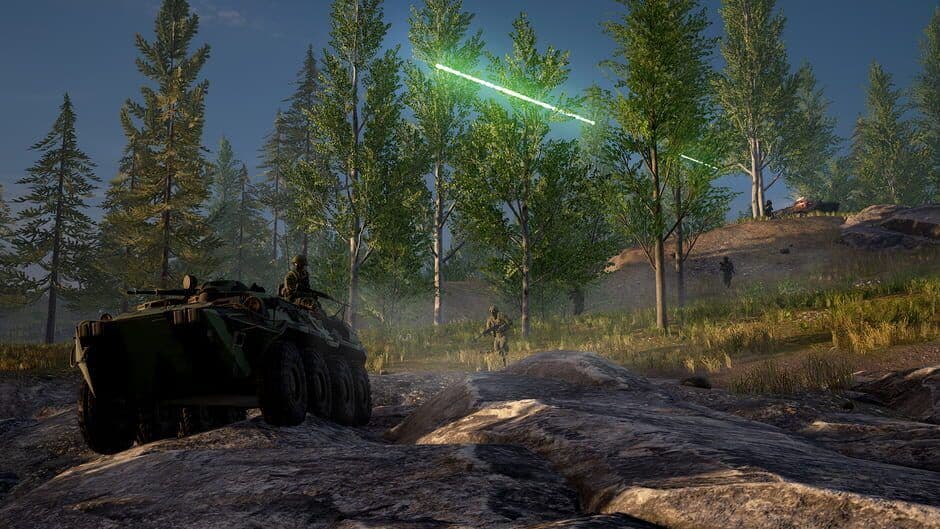
Defending objectives is critical to maintaining map control.
The attack-and-defend structure is familiar—teams capture and hold control points—but Squad makes that framework meaningful through the systems supporting each advance. A squad cannot simply sprint toward the next flag and expect momentum to carry the attack; it needs viable spawn locations, supplies, and enough coordination to keep pressure on the objective. Capturing ground matters because it changes where the team can operate, while losing a point can unravel an entire offensive if the next position has not been prepared. This turns the familiar conquest loop into a question of staging and sustainment rather than a sequence of isolated firefights. The design intent is clear: the objective is not just somewhere to shoot, but the center of a larger logistical problem.
In Squad, the most important fight may happen several hundred meters behind the frontline, where a squad decides whether its next attack has a place to begin.
That is where the spawn network becomes a second battlefield. Rally Points provide temporary spawn locations for an individual squad, while team-wide Forward Operating Bases require logistical support but give the broader force a more permanent foothold. Protecting those positions preserves the team’s ability to return to the fight; finding and dismantling enemy infrastructure can make an apparently secure objective suddenly impossible to reinforce. The result is a strategic layer that rewards teams for thinking beyond the visible capture zone: an assault may succeed tactically yet fail operationally if its spawn point is exposed, while a small unit destroying an enemy installation can matter more than a dozen kills. Squad’s strongest matches emerge when players understand that territory is valuable because of the network it enables, not simply because a marker changed color.
The downside is that the battlefield can be too large for its own good. Matches commonly last one to two hours, and substantial stretches can be spent crossing terrain before another enemy appears; after dying, repeating that journey can feel less like deliberate tension than unpaid transit. Lone-wolf play is especially ineffective because a solo soldier lacks the squad support and spawn infrastructure needed to influence distant objectives, while wandering away can actively weaken the unit holding the line elsewhere. The intended lesson is that players should move as part of a plan, but the game sometimes delivers that lesson through boredom rather than strategy. When a careful approach ends in a tense ambush, the distance feels justified; when it ends in an unseen death after a long trek, Squad’s scale starts to resemble downtime with gunfire attached.
That tension defines the map design’s ultimate success. Large battlefields, layered objectives, and competing spawn networks create meaningful maneuver when squads are actively shaping the front, protecting infrastructure, and choosing where the next attack should begin. However, the same distances produce long periods of inactivity and punish players for lacking a coordinated plan—especially on servers where leadership or teamwork breaks down. Squad therefore makes movement strategically important but not consistently entertaining, a trade-off that tactical-shooter veterans may accept more readily than players accustomed to constant engagement. Its maps are not just arenas; they are the reason the game can feel like a battle, and also the reason some battles take too long to start.
Squad Communication and Onboarding: The Community Is the Tutorial
Squad’s most important piece of equipment is not a rifle or a rally point—it is a working microphone. The game’s proximity VoIP turns communication into a gameplay system: nearby teammates can speak within roughly 20 yards, while squad and command channels carry information across the wider operation. That separation gives every message a natural scale, from a quiet warning to the soldier beside you to a broader order relayed between squad leaders. A short callout about a sniper, a request for a revive, or an improvised plan to flank a building can prevent a death before the player ever sees the threat. This is where Squad earns its atmosphere: the battlefield feels alive not because soldiers deliver scripted dialogue, but because human beings are constantly interpreting and reacting to danger.
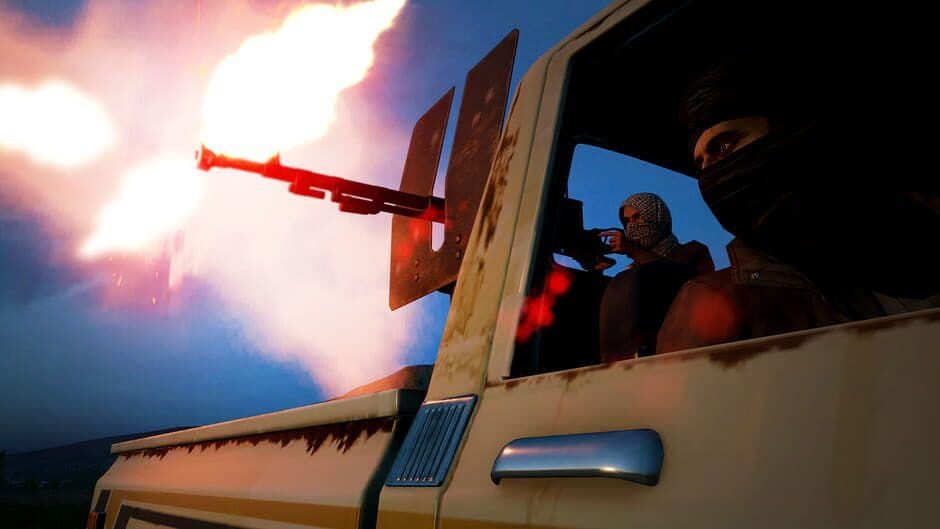
Strategic planning requires constant dialogue between different squad leaders.
Squad’s best stories are spoken into existence: “Sniper, left treeline,” followed by a crouched advance, a smoke grenade, and a revive that keeps the assault alive.
Those moments are more than pleasant social details. A medic coordinating a recovery while another player covers the body changes the risk of staying in the fight; a squad leader using radio traffic to synchronize movement with another unit can turn an exposed crossing into a viable attack. Because enemy positions are often hidden and engagements unfold across enormous distances, information itself becomes a resource—something a player can supply even without scoring a kill. The result is tension that scripted content cannot reproduce, since the warning arrives at the exact moment it matters and may be incomplete, mistaken, or brilliantly timed. When communication works, Squad makes ordinary actions—holding a doorway, marking a suspected position, waiting for a vehicle—feel like parts of a living operation.
The problem is that Squad does almost nothing to teach players how to participate in that operation. Its tutorial and practice area cover too little of the interconnected systems surrounding squads, spawning, roles, objectives, and communication, leaving newcomers to consult wikis, watch videos, or ask veteran players for guidance. A beginner can understand how to fire a rifle yet remain completely lost about where to move, which channel to use, why the squad is defending a particular position, or how their death affects the team. That gap creates a learning curve harsher than the combat alone: new players are likely to wander, miss instructions, and die repeatedly before they understand what they were supposed to do. Squad’s design intent is clear—knowledge should be earned through participation—but the execution mistakes opacity for depth.
The community therefore becomes the game’s real onboarding system, and its quality varies by server and squad. Experienced players are often patient with newcomers who openly admit they are learning, listen to instructions, and communicate when they are unsure; a veteran explaining a route, role, or spawn decision can teach more in one match than the official tutorial does. That generosity is essential because Squad’s systems are too interdependent to learn in isolation: a player cannot fully understand the value of a Medic, a rally point, or a defensive position without seeing how those choices affect everyone nearby. However, the same dependence makes the first hours precarious, since a silent or impatient squad can leave a newcomer with no clear path into the game. Accessibility here is social rather than technical, and that is both unusually welcoming when it works and remarkably exclusionary when it does not.
A microphone is not strictly required to launch Squad, but playing without one removes much of the experience that makes the game distinctive. A silent player cannot reliably warn teammates about a sniper, answer a squad leader’s question, coordinate a revive, or contribute to the quick decisions that keep an attack coherent; even a player who follows orders is reduced to receiving information rather than sharing it. Conventional shooters can treat voice chat as an optional convenience, but Squad builds its most important tactical layer around spoken coordination, so refusing to communicate substantially weakens both effectiveness and atmosphere. For players willing to talk, listen, and tolerate an uncomfortable opening stretch, the community can transform the learning curve into a memorable apprenticeship. For everyone else, Squad’s communication design is not a bonus—it is the locked door standing between the player and the game’s best experience.
Squad Vehicles and Combined Arms: Tactical Utility With Rough Edges
Squad’s vehicles turn its enormous battlefields from a test of endurance into an actual combined-arms war—but they also expose the distance between military simulation and game-world physics. Transports, technicals, motorbikes, and armored vehicles give squads new ways to move, attack, and reinforce distant objectives, while air vehicles can redefine an entire team’s mobility. A transport can place infantry near a contested flag instead of forcing them to cross kilometers on foot; a technical can provide fast fire support; an armored vehicle can lock down an approach that small arms cannot. This variety matters because Squad’s maps are too large for infantry movement alone to sustain every offensive, yet the machines meant to solve that problem demand their own specialized knowledge.
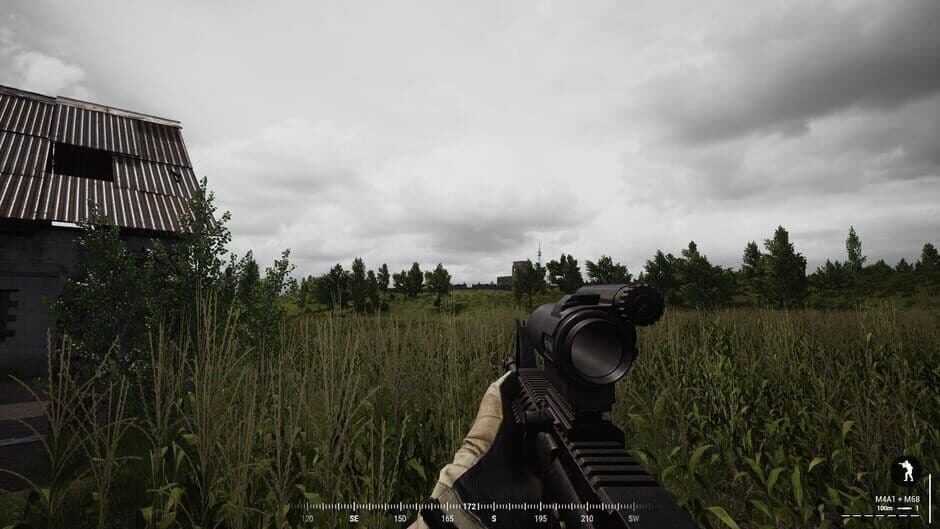
Vehicle handling often clashes with environmental inconsistencies.
Ground vehicles are useful, but “manageable” is the more accurate compliment than “smooth.” Their handling recalls Battlefield’s accessible vehicle model, only with less forgiveness: uneven terrain can overturn a vehicle, turning a routine approach into an embarrassing—and strategically expensive—wreck. That risk gives drivers a meaningful responsibility, since a vehicle is not just personal transportation but a squad’s mobility, firepower, and sometimes its ammunition supply. However, Squad’s commitment to realism becomes difficult to take seriously when indestructible trees and fences can halt a tank in its tracks. The battlefield may model ammunition management and armor vulnerability with care, but watching heavy armor lose momentum against scenery creates a conspicuous mechanical contradiction: the terrain looks like a real obstacle course while behaving like a collection of invisible walls.
Squad’s vehicles are most convincing when they extend a plan—and least convincing when the environment decides that a fence has the stopping power of a tank trap.
The tactical systems surrounding vehicles are considerably stronger than their physical handling. Strykers can deploy smoke screens, vehicle weapon variants expand their battlefield roles, and ammunition and construction supplies must be loaded and transported rather than appearing magically at the front. Anti-armor combat likewise rewards preparation: penetration matters, and vulnerable areas such as the rear, underside, and wheels give crews and attackers clear reasons to think about angle and positioning instead of simply trading fire. A vehicle that exposes its rear to an anti-tank specialist has made a tactical error; an armored crew that uses smoke to break an enemy’s sightline can preserve both the vehicle and the squad it is carrying. These details make armor part of the team’s plan rather than an overpowered reward for the player who reaches the driver’s seat first.
Air vehicles offer the biggest mobility advantage and the steepest penalty for inexperience. Helicopters can move soldiers and supplies across terrain that would otherwise consume much of a match, but their controls are especially demanding: takeoffs require attention to speed and altitude, turns can induce disorientation, and landings are precarious enough to end in crashes. The difficulty has a defensible design purpose—pilots should not casually deliver an entire squad into combat—but Squad gives beginners very little room to learn without risking valuable assets. A failed landing is not merely a personal mistake; it can strand an attacking force, waste logistics, and remove a transport route that the whole team was relying on. Helicopters therefore create some of the game’s highest tactical possibilities while also making vehicle access feel reserved for players who have already done their homework.
That homework is the larger problem. Combined arms adds meaningful depth, but it multiplies the knowledge a new player must acquire before they can contribute safely: drivers need to understand terrain and vehicle behavior, crews must learn ammunition and weak points, pilots must master controls, and infantry must know how to support or avoid their own armor. Squad’s external-learning burden, already severe in its infantry systems, becomes heavier when a player must consult veterans or outside resources simply to understand why a rocket failed, where to hit an armored target, or how to operate a helicopter without crashing. The payoff is substantial when preparation meets execution—an armored push screened by smoke, supplied from the rear, and supported by infantry feels like a genuine operation—but the barrier to reaching that moment is formidable. Squad’s vehicles expand the game beyond infantry combat with real strategic consequences; their rough edges ensure that combined arms is powerful, memorable, and far less accessible than the rest of the genre.
Squad’s Audio and Visuals: Immersion Built From Information, Not Spectacle
Squad’s battlefield is most convincing when you stop looking at it and start listening. The game does not rely on spectacle alone to sell its military atmosphere; gunfire, artillery, movement, and environmental space constantly communicate tactical information. A distant weapon report can suggest an enemy’s type, direction, and approximate range, while incoming artillery announces danger before the impact arrives. This makes audio a combat system rather than background decoration, and it gives Squad a level of situational tension that visually louder shooters often lack.
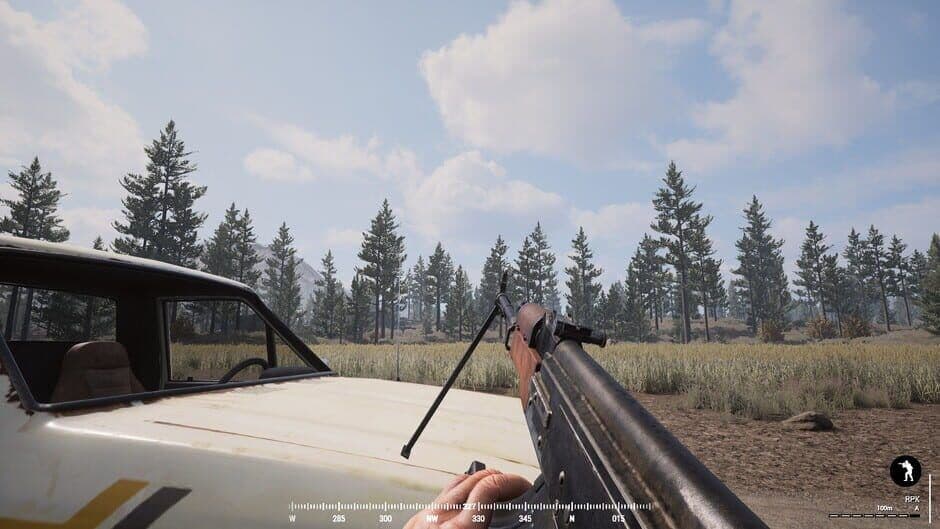
The scale and graphical detail of Squad's diverse environments.
In Squad, sound is reconnaissance. A burst from a distant rifle is not merely an effect—it is a question about where the enemy is, what weapon they carry, and whether your squad is already being bracketed.
The explosive quality of the effects gives those questions real weight. Gunfire cracks across the landscape, impacts kick up dust, and suppressive rounds snapping past a player’s head make exposure feel physically dangerous rather than mechanically inconvenient. That detail reinforces the combat model discussed earlier: when a single rifle round can end an engagement, a muzzle report or impact plume becomes a warning with immediate consequences. Squad’s audio succeeds because it changes behavior; players pause after hearing fire from a treeline, avoid a road under artillery, and use the direction of distant combat to infer where the frontline is moving. The soundscape turns otherwise empty stretches between firefights into active information-gathering.
The visual presentation supports that same purpose without chasing cinematic excess. Realistic lighting and shadows help forests conceal movement, make open fields feel exposed, and give underground bunkers a distinct claustrophobic identity, while Afghan-style settlements, opium fields, and brown stone buildings create sharply different tactical environments. The maps’ visual variety matters because it affects readability: a dense green treeline suggests concealment and ambush, whereas a sunlit settlement or barren approach advertises the danger of crossing it. Character models and vehicles are detailed enough to sustain the military-fiction illusion, but Squad’s presentation is ultimately more interested in making terrain legible than in showcasing cutting-edge spectacle. That restraint is appropriate for a game where recognizing a firing position matters more than admiring facial detail.
The trade-off is hardware demand. Reviewers praised Squad’s detailed environments and effects while also reporting that a powerful gaming PC may be necessary to achieve a decent frame rate, which is a meaningful concern in a shooter where visual clarity and reaction time are tied to survival. PC Gamer tested the game on a GeForce GTX 1650, an AMD Ryzen 5 3550H, and 8 GB of RAM, providing a useful lower-end reference point without turning that configuration into a universal performance guarantee. The game’s large battlefields, lighting, shadows, and effects create a heavier presentation than its relatively restrained visual style might suggest. Squad therefore favors performance-conscious realism over pure graphical ambition, but players on weaker hardware may still pay for that scale through reduced visual smoothness or the need to compromise settings.
That hierarchy is the key to understanding Squad’s presentation. Audio usually does more gameplay work than graphical fidelity: a weapon signature can locate a threat, artillery can force movement, and dust kicked up by impacts can expose the violence of an unseen exchange. The visuals give those sounds a credible world—forests, bunkers, fields, and settlements with lighting that supports concealment and exposure—while avoiding the distraction of a purely spectacle-driven war game. Squad looks strong, but it sounds strategically indispensable. That is why its presentation remains effective even when the hardware cost and occasional visual roughness remind you that this is a working battlefield simulation, not a tech demo.
Squad’s Friction Points: Friendly-Fire Confusion and Unfriendly Systems
Squad’s realism becomes most frustrating when the interface withholds information that players need to make responsible decisions. Teammate usernames can disappear at close range while appearing over distant soldiers, making the identification system feel random rather than tactical. Character models offer too little reliable distinction between friend and foe, so even a cautious player can fire on an ally—or hesitate long enough for an enemy to shoot first. The bright green star over a Squad Leader is visible from a considerable distance, proving the game can communicate identity clearly when it chooses to, but ordinary riflemen receive no equivalent clarity. Friendly fire is supposed to create tension; unreliable friend-or-foe readability turns that tension into guesswork.
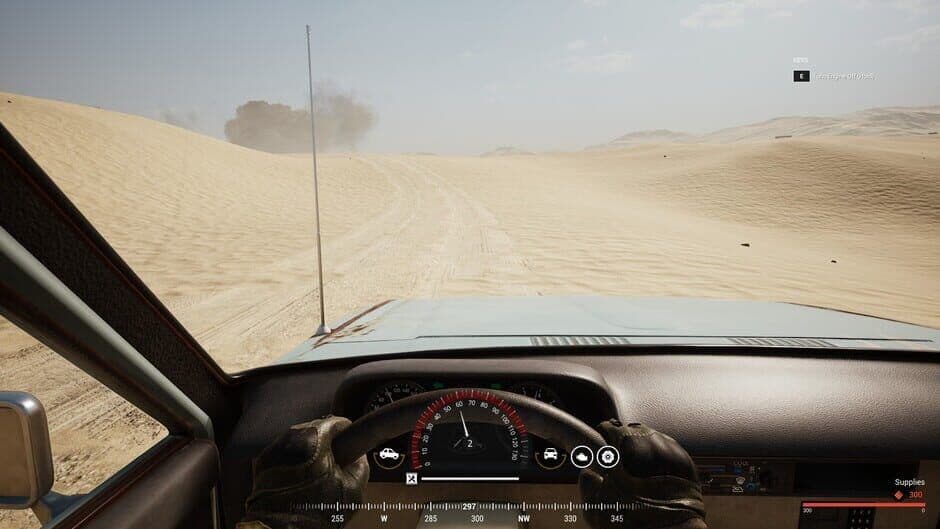
Large-scale battles in Squad can become chaotic without strong leadership.
Squad asks players to treat every shot as consequential, then occasionally makes the hardest question—“Is that my teammate?”—an interface problem instead of a judgment call.
That contradiction damages the game’s most carefully built combat habits. Players are encouraged to hold fire, verify silhouettes, use callouts, and protect their squad, yet the disappearing identifiers undermine each of those precautions when an ally appears at the wrong moment or fails to display a name at all. The resulting team kill is especially punishing because it can cost tickets, disrupt an attack, and erode trust between players; it is not a harmless mistake that disappears at the end of a round. Squad’s visual language is strongest when a clearly marked Squad Leader or known uniform confirms a target, but it becomes brittle in forests, buildings, and close-range confusion—the exact environments where identification matters most. Veterans learn to recognize movement, uniforms, and context, but that knowledge is a workaround for an interface that should be helping them.
Movement has carried the same sharp-edged quality, particularly in earlier versions of Squad. Low walls and minor obstacles could be awkward or impossible to cross, forcing players to search for a gap around a calf-high barrier instead of vaulting it, even while the game presented itself as a military simulation built around navigating real terrain. That limitation did more than slow traversal: it broke the relationship between what the environment appeared to permit and what the player could actually do, making a tactical retreat or flank fail because of geometry rather than enemy pressure. Later additions such as vaulting and climbing addressed some of this friction, but the older problem reveals a broader weakness in Squad’s design philosophy. The game is willing to model the inconvenience of warfare, yet not always the basic physical affordances players reasonably expect from a modern first-person shooter.
This is where realism and usability collide. Severe lethality, manual sight adjustment, bleeding, saved partial magazines, and friendly fire all create authentic stakes, but authenticity only feels fair when the game explains the rule before punishing the player for breaking it. A player can survive a hit only by treating bleeding, must account for a sight calibrated to one distance when engaging at another, and cannot assume a partially used magazine will be conveniently restored; those systems reward knowledge and careful preparation. However, a new player who does not understand why an anti-tank rocket failed at close range, why a wound continues to drain their effectiveness, or why a teammate’s name vanished is not making a meaningful tactical error—they are discovering hidden rules through failure. Squad’s realism is therefore most persuasive when it changes decisions, and least persuasive when its lack of explanation makes those decisions impossible to understand.
The game does at least provide meaningful ways to contribute when shooting is not going well. Healing and reviving a downed teammate preserves the squad’s fighting strength and can keep an assault alive; constructing and maintaining bases protects the spawn network that lets the wider team return to the frontline; supplying those positions turns logistical work into a direct tactical investment rather than busywork. A player who spends an engagement recovering wounded soldiers, building defenses, or maintaining a Forward Operating Base may have more influence on the match than someone chasing isolated kills, because those actions preserve the team’s ability to attack and defend. This consequential support play is one of Squad’s best correctives to its identification and interface problems: even when the firefight is unreadable or the movement systems are awkward, the game still recognizes work that sustains the operation. The friction remains real, but it sits inside a design that understands warfare is decided not only by who shoots first, but by who keeps the unit functioning.
Squad’s Evolution and Value: A Deep Multiplayer Commitment, Not a Casual Shooter
Squad’s reputation was built during nearly five years in Early Access, and that history explains both its remarkable depth and its abrasive first impression. By the time of its official release, the game had accumulated interconnected systems for roles, spawning, logistics, vehicles, communication, and objective control—far more than a conventional shooter can teach in a short tutorial. That density gives Squad its identity as a Project Reality successor, but it also makes the opening hours feel like an examination the player was never told they had to study for. The design is ambitious; the onboarding remains the price of that ambition.
Offworld Industries has continued to develop Squad rather than leaving that complexity frozen in place. Updates have added vehicles, fixed bugs, and introduced mechanics that materially change how players move and fight, with Alpha Update 10 providing a particularly clear example: vaulting and climbing opened routes over low and high walls, free-look improved awareness without forcing the character to turn, and changes to flag-rushing reduced the effectiveness of reckless early captures. The same update expanded combined-arms options through Stryker smoke screens, new vehicle weapon systems, high-explosive rounds for some armored vehicles, burst-fire M4s for selected roles, and deployable machine-gun bipods. These are not cosmetic additions; a machine gunner stabilizing a defensive position or a Stryker masking an advance with smoke changes the tactical choices available to an entire squad.
Squad’s value comes from accumulated depth: every update adds another reason to coordinate rather than another excuse to play alone.
That ongoing evolution also places Squad in a valuable middle ground. Battlefield is more immediately readable and forgiving, while Arma demands a heavier military-simulation commitment; Squad borrows the large-scale combined-arms battlefield without requiring Arma’s full procedural complexity, yet it preserves enough lethality, logistics, and communication to punish arcade habits. Its role structure, ticket economy, spawn networks, and vehicle coordination create a simulation-minded experience, but the game remains centered on accessible first-person firefights rather than exhaustive military procedure. That balance is why Squad can appeal to players who find Battlefield too shallow but Arma too demanding—although “more accessible” should not be confused with “easy.”
Replayability comes from the fact that no match is entirely authored by the game. Team composition changes the quality of leadership and the shape of each attack; map scale creates different approaches; objective flow can turn a successful defense into a desperate retreat; and human communication produces plans, mistakes, and recoveries that cannot be repeated on command. A squad with a strong leader may build a coherent advance around a rally point and vehicle support, while another server turns the same systems into scattered movement and wasted tickets. That variability gives Squad stories rather than predictable rounds, but it also makes the game’s replay value dependent on finding an active, cooperative server. The software supplies the battlefield; the players determine whether it becomes a war or a long collection of disconnected errands.
The commitment is substantial. Matches typically last roughly one to two hours, and those sessions include meaningful downtime as squads cross enormous maps, reposition, wait for logistics, or recover after a failed assault. That pacing makes a successful ambush or coordinated push feel more consequential because it emerges from sustained preparation, but it also makes Squad a poor fit for players looking for a quick drop-in match between other obligations. A death can send a player back into another long approach, and a disorganized team can stretch that downtime without producing the strategic payoff the design promises. Squad’s slow rhythm is a deliberate alternative to constant engagement, not a flaw to be patched away—but it demands time, patience, and a willingness to let tension accumulate.
The reported launch price of $50/£40 is justified for players seeking a long-term team-based mil-sim, especially those prepared to learn its roles, communicate consistently, and return to servers where organized play is common. The game’s value is not in a campaign or a finite content checklist; it is in the depth generated by repeated matches, evolving updates, varied factions and vehicles, and the unpredictable decisions of 100-player battles. For casual players, solo players, or anyone unwilling to use a microphone, that same price is much harder to defend: the weak tutorial, long match commitment, dependence on teammates, and punishing early learning phase can prevent them from reaching the experience they paid for. Squad is therefore not a universally good-value shooter—it is a specialized investment, and for the right player, that investment keeps paying off long after the novelty of another conventional FPS has disappeared.
Final Verdict: Is Squad Worth Playing for Tactical Shooter Fans?
Squad is at its best when a match stops feeling like a multiplayer shooter and starts feeling like a war story you and 99 strangers accidentally wrote together. A coordinated advance through open ground under suspected sniper fire, a desperate battlefield revive, or the slow construction of a new base behind the frontline creates tension and ownership that Battlefield and Call of Duty rarely approach. These moments work because Squad makes every player dependent on the unit: survival, spawning, logistics, and information all become shared problems rather than individual conveniences.
The catch is that Squad makes players earn access to those moments through an unnecessarily hostile first learning phase. Its minimal tutorial does not adequately explain the relationship between roles, rally points, Forward Operating Bases, tickets, vehicle logistics, and communication, while the game’s lethal firefights can kill a beginner before they even identify the enemy. Add the expectation of using a microphone and the likelihood of long walks after death, and many players may quit before they discover why the systems matter. Squad’s ruthlessness is its defining strength, but it is also opaque: a failed anti-tank shot, an unclear spawn decision, or a team kill caused by unreliable identifiers often teaches nothing except that the game is willing to punish ignorance.
That barrier is softened by a community capable of doing what the tutorial does not. Veteran players and organized servers are often patient with newcomers who admit they are inexperienced, listen to instructions, and make a genuine effort to communicate; a squad leader explaining where to regroup or why a base matters can turn confusion into participation within a single match. This is the moment Squad earns your trust, because the community’s guidance reveals the logic beneath the game’s harshness rather than merely telling you to endure it. However, that support is not guaranteed, and server friction can make finding it difficult: reviews have reported North American servers that are either completely full or effectively empty, while the quality of a match can change dramatically depending on the squad and leadership you happen to receive. The game’s social design is therefore both its best accessibility feature and its most unpredictable one.
Squad is worth learning only if you want the learning itself to be part of the game.
That makes the target audience unusually clear. Squad belongs to players who enjoy methodical positioning, leadership, logistics, realistic weapons, and cooperative problem-solving more than rapid individual highlights; the ideal session involves holding a firing line, supplying a forward base, coordinating a vehicle push, or reviving a teammate under cover rather than chasing a personal kill streak. Compared with Battlefield, Squad offers deeper tactical interdependence because a capture depends on spawn infrastructure, role coordination, and ticket management rather than individual momentum. Compared with Arma, it is more approachable: the match remains centered on readable infantry objectives and squad-level teamwork instead of demanding the same breadth of simulation. That middle ground is valuable, but it is purchased with convenience—less guidance, slower pacing, more severe consequences, and a far greater dependence on strangers behaving like teammates.
The critical response reflects that exact compromise. Reported scores range from 75/100 to 89%, with other coverage awarding 86%, 8.5/10, and 9/10; the spread does not suggest confusion about Squad’s strengths so much as disagreement over how much its friction should cost. Reviewers consistently admire the audio, realism, teamwork, and unpredictable battlefield stories, while reservations center on the steep learning curve, downtime, rough systems, performance demands, and dependence on a suitable community. That balance is fair: when players communicate and follow the intended structure, Squad delivers a uniquely tense and rewarding multiplayer war experience, but when they do not, its elaborate systems can feel like obstacles placed between the player and the fun. No update can fully solve the fact that the game’s greatest feature—human coordination—is also outside the developer’s control.
The verdict is decisive: Squad is worth buying for committed tactical-shooter fans and organized groups, but it is a poor recommendation for casual FPS players seeking immediate action. Bring a microphone, expect to spend several matches learning, and find a server with leaders willing to teach; under those conditions, Squad can produce some of the most memorable cooperative combat in modern PC gaming. If you want quick rounds, solo agency, forgiving gunplay, or a tutorial that explains the rules before demanding mastery, choose Battlefield or another more accessible shooter instead. Squad does not meet players halfway—it asks them to cross the field together, under fire, and the reward is extraordinary only if they are willing to make the crossing.
Pros
- Coordinated advances, tense crossings, revives, and base-building create stories rarely found in competitive shooters.
- Team objectives, roles, tickets, spawning, and logistics produce genuine tactical interdependence.
- Realistic weapons and methodical positioning reward judgment over individual reflexes.
- A mature, patient community can make the steep learning curve manageable.
- More tactically demanding than Battlefield while remaining more approachable than Arma.
- Ongoing development has expanded Squad’s vehicles, movement, and tactical options.
Cons
- Minimal guidance leaves newcomers to learn through repeated deaths or external resources.
- Communication demands, long matches, and map-scale downtime make Squad a serious time commitment.
- Inconsistent teammate identification can turn friendly fire into interface-driven guesswork.
- Server population and community quality vary, making the best version of the game difficult to find.
- Technical and physical rough edges remain visible beneath the simulation’s ambition.
- The same ruthlessness that makes Squad distinctive can drive away players before its strengths emerge.