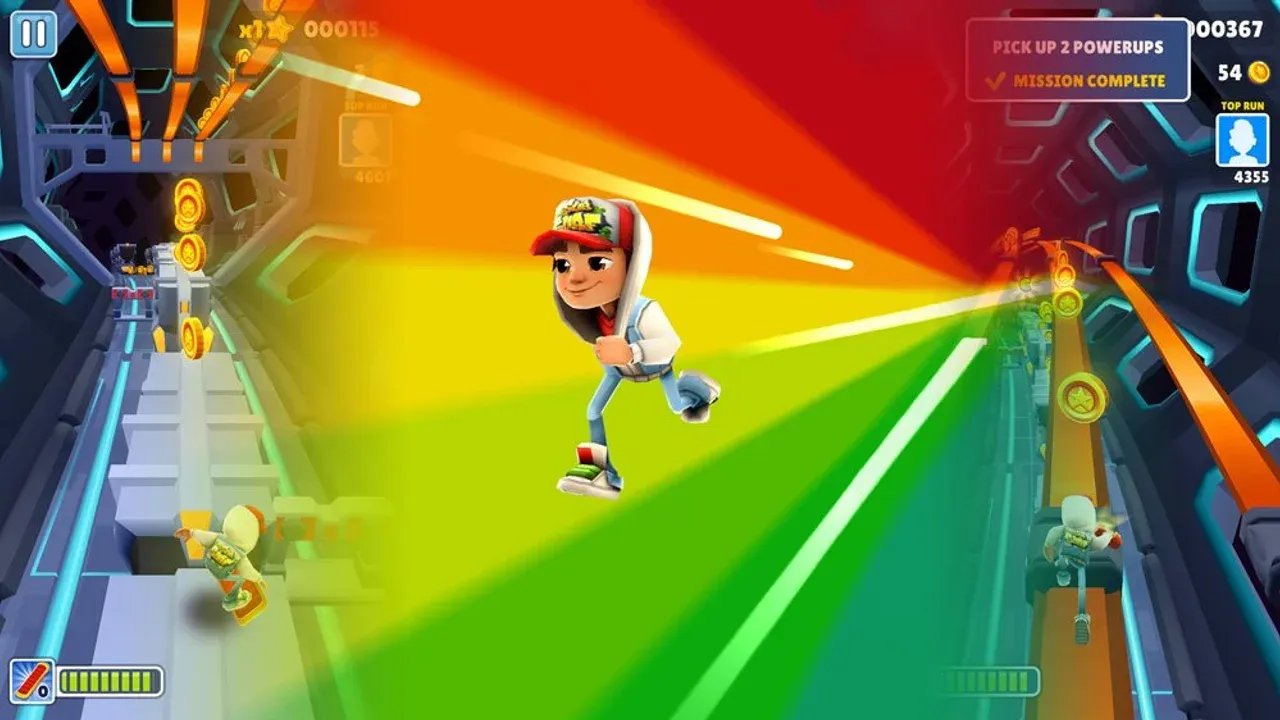
Subway Surfers First Impressions: Why This 2012 Classic Still Dominates
There’s a certain magic in a game that feels instantly understood. You don’t learn Subway Surfers; you just do it. Within seconds of your first run, your thumb is swiping, your character is jumping, and you’re caught in the timeless chase of a kid with a spray can fleeing a grumpy inspector and his dog. This isn’t just familiarity—it’s the foundation of a cultural juggernaut. To understand why this 2012 artifact isn’t just surviving but utterly dominating a decade later, you have to look past its simple premise and examine the raw, frictionless appeal of its first impression. This is a game that, from the moment you start, feels like it’s been on your phone forever.
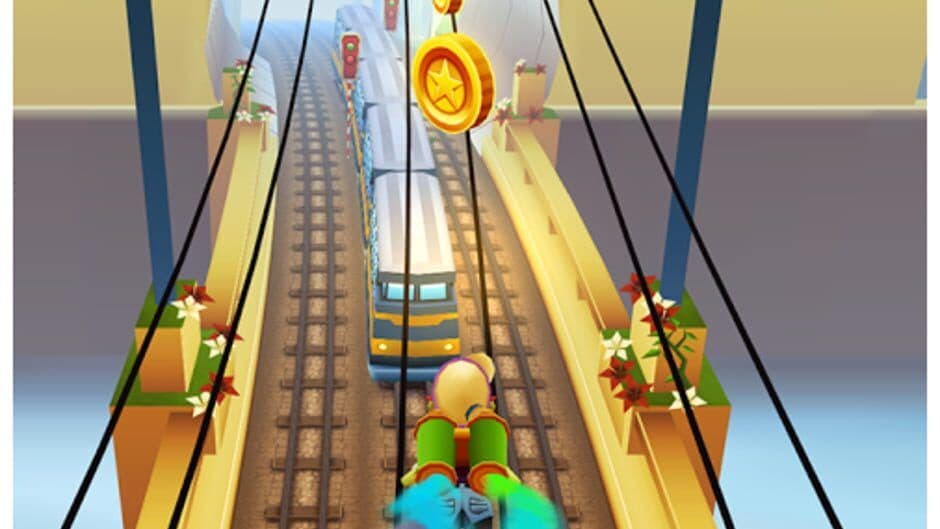
Official screenshots highlight the polished visual identity of the game.
The numbers are staggering, but they tell the story of a phenomenon, not an accident. For four consecutive years, Subway Surfers was the most frequently downloaded game on Google Play, a feat of sustained relevance in a market defined by fleeting trends. It has charted at number one in over 80 countries simultaneously and boasts over 4 billion lifetime installs—a scale that transcends “popular” and enters the realm of digital infrastructure. This isn’t a game people try; it’s a game everyone has. Its premise—a lighthearted, rebellious dash through subway yards—is a universal language free of complex lore or moral ambiguity. You’re not saving the world; you’re outrunning the consequences of some cheeky graffiti. This narrative simplicity is its superpower, offering immediate, guilt-free fun that bypasses the need for tutorials or investment.
That accessibility is engineered into its very DNA. Where its genre predecessor, Temple Run, asked players to navigate twisting paths using gyroscope tilts—a recipe for motion sickness and blind-corner frustration—Subway Surfers streamlined the formula into pure, two-dimensional instinct. It removed the turns and the tilting, locking you onto a straight, infinite track divided into three clear lanes. The control scheme is reduced to four intuitive swipes: left, right, up, and down. There are no on-screen buttons, no combos, no ambiguity.
This is the genius of its first minute: it presents a problem space you can comprehend entirely at a glance, then asks you to master it through reflex alone.
The result is a loop that reviewers aptly describe as “brainless in the best way.” You don’t plan; you react. A train rushes toward you, you swipe left. A barrier appears, you swipe down. It’s a rhythmic, almost meditative dance of evasion that requires your full attention yet asks for no cognitive overhead. This immediate, tactile satisfaction is why you can pick it up for a two-minute break and lose thirty minutes—the game meets you exactly where you are, with zero barrier to entry. It’s the perfect distillation of the mobile gaming promise: instant engagement, anywhere, anytime. That first flawless run, where you seamlessly chain jumps, slides, and lane changes, is where Subway Surfers earns its place on your home screen and, as history has shown, on millions of others.
Subway Surfers Gameplay: Mastering the Three-Lane Infinite Loop
The genius of Subway Surfers isn't just in how easy it is to start, but in how it sustains that initial thrill across thousands of runs. The game's core loop is a masterclass in minimalist design, where a handful of mechanics are polished to a mirror sheen and layered with just enough tactical spice to keep your thumbs twitching. This is where the game earns its reputation as a genre pillar: by making every swipe feel vital and every crash feel like a lesson, not a failure.
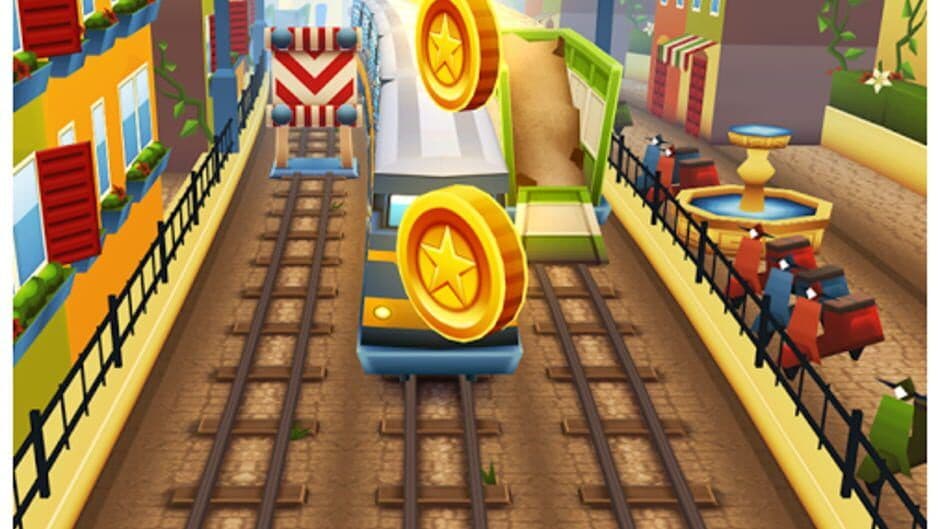
Tactical movement in the three-lane system.
At its heart, the gameplay is a rhythmic conversation between your reflexes and a procedurally generated obstacle course. The three-lane track is the game's entire universe, and its division is its primary strategic demand. You're not just swiping left; you're evaluating the threat density across all lanes, planning a path two or three moves ahead as trains, barriers, and parked cars scroll toward you. This constant, low-level tactical switching prevents the experience from feeling like a simple timing test. The controls are the perfect conduit for this dance—responsive to the point of feeling like an extension of your nervous system. The four swipe gestures (up to jump, down to slide, left/right to switch lanes) have no on-screen buttons to obscure your view, creating a direct, tactile connection to the character. A perfectly chained sequence—jumping over a train, swiping left mid-air to land on a clear lane, then immediately sliding under a barrier—delivers a fluidity that makes you feel like a parkour master.
The hoverboard is the single most important power-up in the game, not for its brief invincibility, but for the psychological safety net it provides. It transforms a fatal mistake into a second chance, letting you breathe during a chaotic run.
Power-ups introduce crucial moments of strategic breathing room and acceleration. The Coin Magnet turns frantic collection into a relaxed harvest, letting you focus purely on navigation. The Jetpack offers a glorious, if brief, vacation from the tracks altogether, soaring above the chaos. The Super Sneakers grant exaggerated, bounding jumps that change your relationship with obstacle spacing. Each one temporarily alters the game's rules, providing welcome variety. However, their tactical depth is ultimately shallow; they are bonuses to be used, not tools to be mastered. The real strategic layer comes from the hoverboard. Acting as a disposable, one-time shield, it is your get-out-of-jail-free card, activated with a double-tap. This isn't just a power-up—it's a core progression mechanic. Managing your board inventory, knowing when to save it for an inevitable mistake or burn it to plow through a dense cluster of trains, adds a thin but meaningful layer of resource management to the pure reflex test.
Where the Subway Surfers formula begins to show its age is in the inherent repetition of its premise. The core actions—swipe, jump, slide, collect—are identical on your first run and your thousandth. While the World Tour updates provide a visual refresh, the fundamental interaction never evolves. The game attempts to combat this with a clever difficulty curve, gradually increasing the run speed and layering in more moving obstacles like drifting trains or low-hanging cranes. This forces you to process the three-lane puzzle faster, ensuring that a high-score chase remains a genuine test of escalating reflexes. Yet, for all its polish, extended play sessions can highlight the monotony. The game is engineered for short, intense bursts—the perfect five-minute distraction. Push beyond that, and the lack of mechanical evolution or deeper systemic goals can lead to a sense of fatigue, where you're executing flawless muscle memory without any novel cognitive engagement.
This is the delicate balance Subway Surfers strikes: it is endlessly replayable, but not infinitely engaging. It asks for your attention in short, rewarding sprints, using its impeccable controls, smart lane design, and life-saving power-ups to make every second count. It’s a loop that has captivated billions because it respects your time even as it asks for just one more run.
The 'World Tour' and Progression: How Kiloo and SYBO Solve Player Retention
The brilliance of Subway Surfers is that it understands a simple, perfect loop isn’t enough. To survive for over a decade, you need to give players a reason to come back tomorrow. This is where Kiloo and SYBO’s true design mastery shines, transforming a casual runner into a retention engine that caters to nearly every player psychology. They don’t just give you a high score to beat; they build a world of micro-aspirations that makes every run feel like progress.
Official screenshot of the fast-paced subway navigation.
The flagship of this strategy is the World Tour. Every few weeks, the entire game’s visual palette is overhauled, transporting the subway tracks to a new global city like Tokyo, Paris, or Rio. This isn’t a superficial skin swap; it’s a complete environmental retheming where trains, billboards, and background architecture are redesigned to reflect the locale. The effect is profound. It prevents the visual monotony that plagues most endless runners, offering a fresh, culturally energetic backdrop that renews your interest. More importantly, it reframes the act of collection. Picking up coins or tokens in London feels distinct from collecting them in Miami, adding a thin but effective layer of emotional context to the grind. This monthly renovation is a masterstroke in perceived novelty, convincing you the game has changed meaningfully even when the core three-lane dance remains identical.
The Daily Challenge—often a simple “Word Hunt” where you collect scattered letters—is a masterclass in low-commitment hook design. It takes 30 seconds, offers a small reward, and, most crucially, forces you to open the app and see what else is new.
Supporting this are layered progression systems that target different player types with surgical precision. For the achiever, there are multi-stage missions (collect 500 coins, jump 20 times) that reward permanent score multipliers, directly tying effort to tangible power growth. For the explorer, rare collectibles like Trophies are hidden on the track, encouraging hundreds of runs in pursuit of completionist bragging rights. The character roster, featuring over a dozen unlockable avatars like Jake, Tricky, and Fresh, serves as a long-term cosmetic carousel. While they offer no gameplay differences—a smart balance choice that avoids pay-to-win—their acquisition through coins, event tokens, or mystery boxes provides a constant “just one more” goal. The social killer is catered to by real-time leaderboards that pit you directly against friends’ high scores, turning every personal best into a public declaration of supremacy.
However, this elegant web of incentives has a calculated, darker side. The late-game progression curve is engineered to slow to a punishing crawl. Unlocking the final characters or upgrading power-ups to their maximum level requires a staggering accumulation of coins—a grind that can feel intentionally designed to frustrate you into opening your wallet. What begins as a rewarding loop of “run, collect, unlock” gradually morphs into a “coercive grind,” where the time investment needed for the next reward feels disproportionately large. The game cleverly offers an escape valve: the Double Coins permanent purchase, which effectively halves all future grinding. This isn’t an accident; it’s a monetization lever dressed as a player-friendly convenience, revealing the retention system’s ultimate purpose.
Despite this friction, the machinery is undeniably effective. Subway Surfers successfully mimics the endless engagement loops of an MMO on a mobile screen. It provides a daily reason to log in, a weekly visual refresh, and a sprawling menu of long-term goals to chip away at. It makes you feel productive during a five-minute bus ride. This complex architecture of rewards is the invisible scaffold holding up the simple, timeless act of running, and it’s the primary reason this 2012 artifact doesn’t just live on your phone—it periodically demands your attention.
Visuals and Audio: A Vibrant but Expressionless Urban Landscape
The world of Subway Surfers is a vibrant, high-energy diorama that feels perpetually caught in a beautiful, sunny afternoon. This is a game that understands its role as a visual stress-reliever; its ultra-colorful, cartoony art style and vivid HD graphics are deliberately non-threatening, designed to be a cheerful alternative to doom-scrolling. The palette is pure pop art—sun-drenched yellows, lush greens, and bold primary colors dominate the tracks and trains, creating an environment that’s more playful urban playground than gritty transit system. This aesthetic choice is a masterstroke for accessibility, reducing player anxiety and making the high-speed chase feel like a joyful romp rather than a tense survival horror. The visual clarity is impeccable: obstacles like red barriers or blue trains pop against the background, and the three-lane division is always intuitively readable, even as your speed blurs the periphery. This isn't just pretty; it's functional design that ensures your failures feel like lapses in reflex, not in perception.

However, sprint through this polished world long enough, and you’ll notice its inhabitants are strangely lifeless. The character models are the game’s most glaring aesthetic flaw. While the environments burst with personality, avatars like Jake and Tricky possess exaggerated, glossy proportions and stiff, expressionless faces that lean disconcertingly toward the uncanny valley. As noted in critiques, their front-facing animations are rigid, and their facial features lack the cartoony charm the world around them radiates. They feel like synthetic mannequins in a vibrant painting, a disconnect that becomes particularly evident in menus and victory animations where their soulless stares undermine the game's intended youthful flair. This is a stark contrast to the hoverboards and environmental details, which are animated with more fluidity and character than the people riding them.
The environmental artistry of the World Tour is Subway Surfers’ saving grace and its most powerful retention tool. When the scene shifts to Tokyo or Paris, it’s not a simple filter; the trains are reskinned, the background architecture is reimagined, and new thematic obstacles appear, offering a genuine visual renewal that tricks your brain into feeling the game itself has changed.
This dichotomy between world and character highlights the game's priorities. The environmental detail in each World Tour location is where the artists truly excel. Textures on brick walls, graffiti tags, and distant cityscapes show a commendable level of care, and lighting effects give the metallic trains a satisfying sheen. Yet, this detail exists within a fundamentally linear corridor. The track is a beautifully rendered tube—you admire the scenery as you race past it, but you never interact with it. There are no alleyways to duck into or platforms to explore; the visual depth is an illusion of parallax scrolling. This limitation is a necessary sacrifice to the endless runner format, but it means the world, for all its color, remains a spectacular backdrop rather than a place you feel you could inhabit.
The audio design follows a similar pattern of strong initial impact undermined by repetition. The sound effects are a highlight: the satisfying ching of collecting a coin, the deep roar of an approaching train, and the futuristic hum of a Jetpack provide excellent, immediate feedback that ties your actions directly to the game world. These cues are essential for the rhythmic gameplay, often allowing you to react to threats just by sound. The music, however, is where the experience wears thin. The upbeat, synth-heavy tracks are perfectly calibrated for short bursts of energetic play, but they loop with a relentlessness that multiple sources describe as becoming "grating" over extended sessions. There’s no dynamic shift that corresponds to your score or the rising intensity of the run; it’s the same perpetual cheerfulness, which can transform from motivating to mildly annoying during a long grind for coins. It’s the audio equivalent of the repetitive gameplay loop—engaging in small doses, but lacking the variation needed for true longevity.
Ultimately, the visuals and audio of Subway Surfers serve its core design perfectly: they are optimized for instant, frictionless engagement. The bright, stress-free art gets you in the door, and the crisp visual and audio feedback makes every run feel tactile and responsive. The trade-off is a certain superficiality. The characters lack soul, the music lacks dynamism, and the beautiful worlds are strictly for viewing. This creates an experience that is polished and enjoyable but emotionally sterile—a vibrant, expressionless landscape that provides the perfect, undemanding stage for its timeless game of chase.
Monetization and Privacy: The Cost of 'Free-to-Play' Success
The brilliance of Subway Surfers lies in its ability to make a free-to-play game feel generous, but that generosity is a meticulously crafted illusion. The uncomfortable truth is that the game’s entire ecosystem—from its daily missions to its vibrant World Tours—is engineered to funnel you toward its monetization levers. While you can absolutely chase high scores on skill alone, the moment you desire any meaningful progression or cosmetic collection, you’re navigating a landscape designed to make patience feel like punishment.
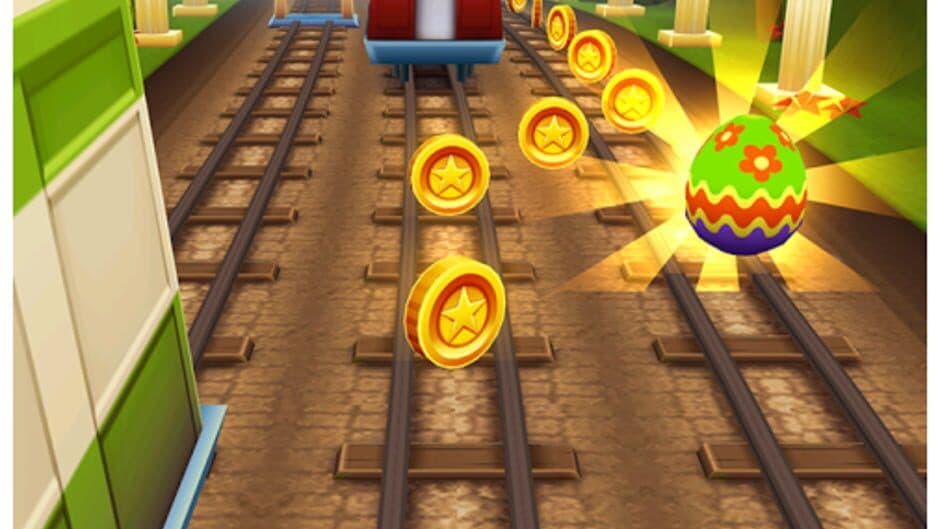
Level design is optimized for continuous engagement and ad placement.
The game’s monetization strategy is a classic two-tiered system. On the surface, it champions a skill-based path, allowing dedicated players to earn everything through grinding. This is the "moderate" model critics reference. Yet, the grind is intentionally coercive. Upgrading a power-up like the Coin Magnet to its maximum level or unlocking premium characters like Brody or Prince K requires a staggering accumulation of coins—a mountain so high it can feel insurmountable through play alone. This is where the aggressive in-app purchases (IAPs) enter, with coin packs scaling up to $99.99. The storefront isn't subtle; it's a constant reminder that your time is a currency the game is happy to exchange for real money. Missions can be skipped for cash, and one-shot boosts let you leapfrog the early, boring segments of a run. This creates a friction where every moment of frustration—a failed run just short of a coin goal, a mission you can't be bothered to complete—is met with a convenient, paid solution.
The Double Coins permanent bonus is the most psychologically savvy purchase in the game. Marketed as a player-friendly convenience, it’s actually a monetization trap that acknowledges the grind is unbearable, offering a one-time fee to halve your future suffering.
Advertisement is the other, more relentless revenue stream. Unlike the optional IAPs, ads are a mandatory tax on your attention. Reports from detailed playtests cite 365 ads over three weeks, with full-screen video interruptions appearing predictably after every game over. These aren't just skippable promotions for the game itself; they include paid placements for other apps and, concerningly, ads for slot-machine games. This ad cadence isn't an interruption to the product—it is the product. The "annoying pop-ups" on the main menu further commercialize every inch of the interface, transforming what should be a gateway to fun into a digital billboard. For younger players, this constant commercial pressure is particularly problematic, blurring the lines between play and consumption.
This leads to the most serious critique: privacy and safety. Subway Surfers has a history that should give any parent pause. The game was involved in a settled COPPA class-action lawsuit (McDonald v. Kiloo APS, 2021) concerning data collection from children. Analysis of the Android build reveals 32 third-party trackers, including major ad networks like Facebook Ads and AdMob, harvesting data for behavioral advertising. Common Sense Media flags a 29% Privacy Warning, noting it's unclear if the product is truly intended for under-13s or requires parental consent. While the COPPA settlement led to a redesigned age gate and the use of kid-safe ad networks for identified young users, the fundamental architecture of surveillance remains. For a game with an "E for Everyone" rating and massive appeal to children, this track record is a significant stain.
For those seeking the clean, vibrant gameplay without this oppressive commercial layer, a legitimate alternative exists: Subway Surfers Tag (or Subway Surfers+) on Apple Arcade. For a $6.99 monthly subscription, this version strips out all ads and IAPs, delivering the pure, uninterrupted runner experience the 9+ rating implies. It’s the definitive proof that the core game is mechanically excellent and that the aggressive monetization is a deliberate business choice, not a technical necessity. The existence of this version frames the free game’s true cost not in dollars, but in data, attention, and patience. In Subway Surfers, "free" is the most expensive option.
Final Verdict: Is Subway Surfers Still the King of Endless Runners?
So, after a decade of updates, billions of downloads, and countless near-misses with oncoming trains, what’s the final score? Subway Surfers remains a paradoxical masterpiece of mobile design—a game whose core brilliance is inseparable from its most cynical, profit-driven mechanics. This isn’t a simple recommendation; it’s a conditional endorsement based entirely on how you choose to engage with its meticulously crafted ecosystem.
For its target audience of casual players seeking short-burst entertainment, Subway Surfers is nearly peerless. It’s the quintessential “study break” or commute game, offering a perfectly calibrated five-minute rush of reflex-testing action with zero setup. The controls are still the gold standard for responsiveness, the World Tour updates provide a genuine visual refresh that staves off monotony, and the low entry threshold means anyone can pick it up and feel competent instantly. On modern hardware, it runs with a polished stability that belies its age, maintaining smooth frame rates even during chaotic, high-speed chases. This technical reliability is a silent pillar of its success, ensuring the core experience of swiping and dodging feels impeccably tactile.
When stacked against its genre rivals, its dominance makes sense. Compared to the twisting, gyroscopic demands of Temple Run 2, Subway Surfers’ straight-track, three-lane design is more accessible and less disorienting. Against the single-lane focus of Jetpack Joyride, it offers greater moment-to-moment tactical variety with its lane-switching puzzle. It lacks the character-specific gimmicks of Sonic Dash but compensates with a more consistent and visually cohesive global tour. Its true victory is in balance; it doesn’t excel in any one area to the detriment of others, instead offering the most complete and frictionless package of the bunch. It’s the endless runner perfected as a utility—always there, always reliable, always fun for a few minutes.
The uncomfortable truth is that there are two distinct Subway Surfers experiences: the free version, which is a masterclass in player retention wrapped in a coercive grind, and the ad-free Apple Arcade version, which is a pure, unadulterated celebration of its brilliant core loop.
This duality defines the final verdict. To recommend the free version is to endorse a game that is brilliant despite its business model. You are signing up for the aggressive ad interruptions, the psychological pressure of microtransactions designed to shortcut an intentional grind, and the privacy concerns that come with its network of third-party trackers. You will master its repetitive core loop, only to then confront its shallowness—the expressionless characters, the gratingly repetitive music, and the realization that after a certain point, you’re just grinding for cosmetics in a prettier skin. The game’s design intentionally places a ceiling on pure skill, funneling you toward its monetized progression systems.
Ultimately, Subway Surfers is still the king of endless runners, but it’s a monarch that rules through a mix of generosity and manipulation. Its gameplay foundation is timeless, its content updates are impressively sustained, and its accessibility is unmatched. For pure, skill-based high-score chasing in short bursts, it remains unmatched. But to fully enjoy its kingdom without paying a toll in ads, data, or patience, you need to seek out its paid, sanitized counterpart. The crown is still golden, but how you obtain it says everything about the modern free-to-play landscape.
Pros:
- Perfectly Responsive Controls: The four-swipe scheme is intuitive, precise, and creates a direct, tactile connection to the action, making every run feel fair.
- Vibrant & Ever-Renewing World: The monthly World Tour updates provide a genuine visual refresh that prevents aesthetic stagnation and renews player interest.
- Low Barrier to Entry: Instantly understandable, perfectly suited for short play sessions, and runs smoothly on a vast range of devices.
- Sophisticated Retention Hooks: Daily challenges, missions, and collectibles create a compelling web of micro-goals that expertly motivate return visits.
Cons:
- Aggressive Monetization Ecosystem: Intrusive ads, high-priced IAPs, and a late-game grind calibrated to frustrate create a constant commercial pressure.
- Repetitive Core Loop: The fundamental swipe-jump-slide mechanic never evolves, which can lead to fatigue during longer play sessions.
- Shallow Character & Audio Design: Lifeless character models and looping, eventually grating music undermine the otherwise vibrant presentation.
- Significant Privacy Concerns: A history of COPPA violations and a dense network of data trackers make the free version a questionable choice for young players.