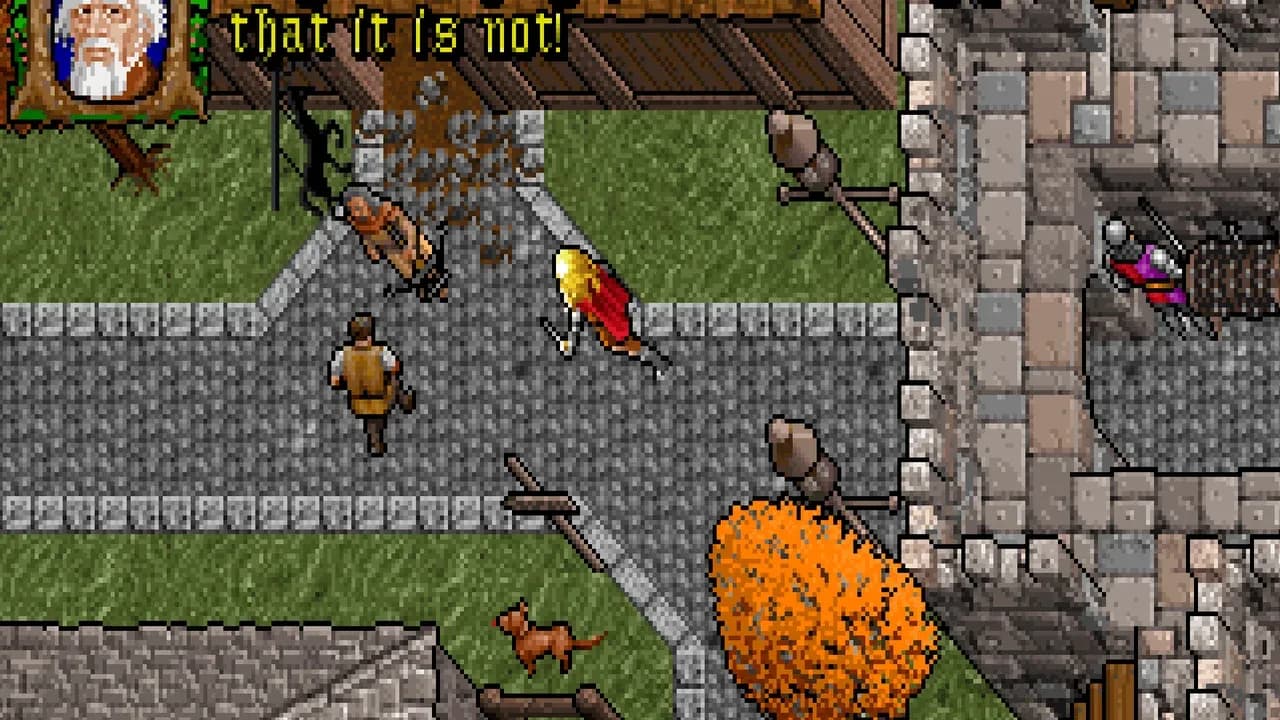

Ultima VII The Black Gate: A Landmark in Immersive RPG Design
In 1992, a game arrived that didn't just ask you to play a role; it dared you to live in its world. Ultima VII: The Black Gate remains less a historical artifact and more a permanent benchmark, a startlingly complete simulation of a fantasy realm that has arguably never been surpassed in its commitment to systemic immersion. This is where the game earns its reputation as the pinnacle of the Ultima series and a quiet pioneer of the immersive sim philosophy years before the genre had a name. Its genius lies not in graphical fidelity—though for its time, pushing DOS hardware to its limits was a feat—but in a radical, almost obsessive dedication to player agency and environmental logic.
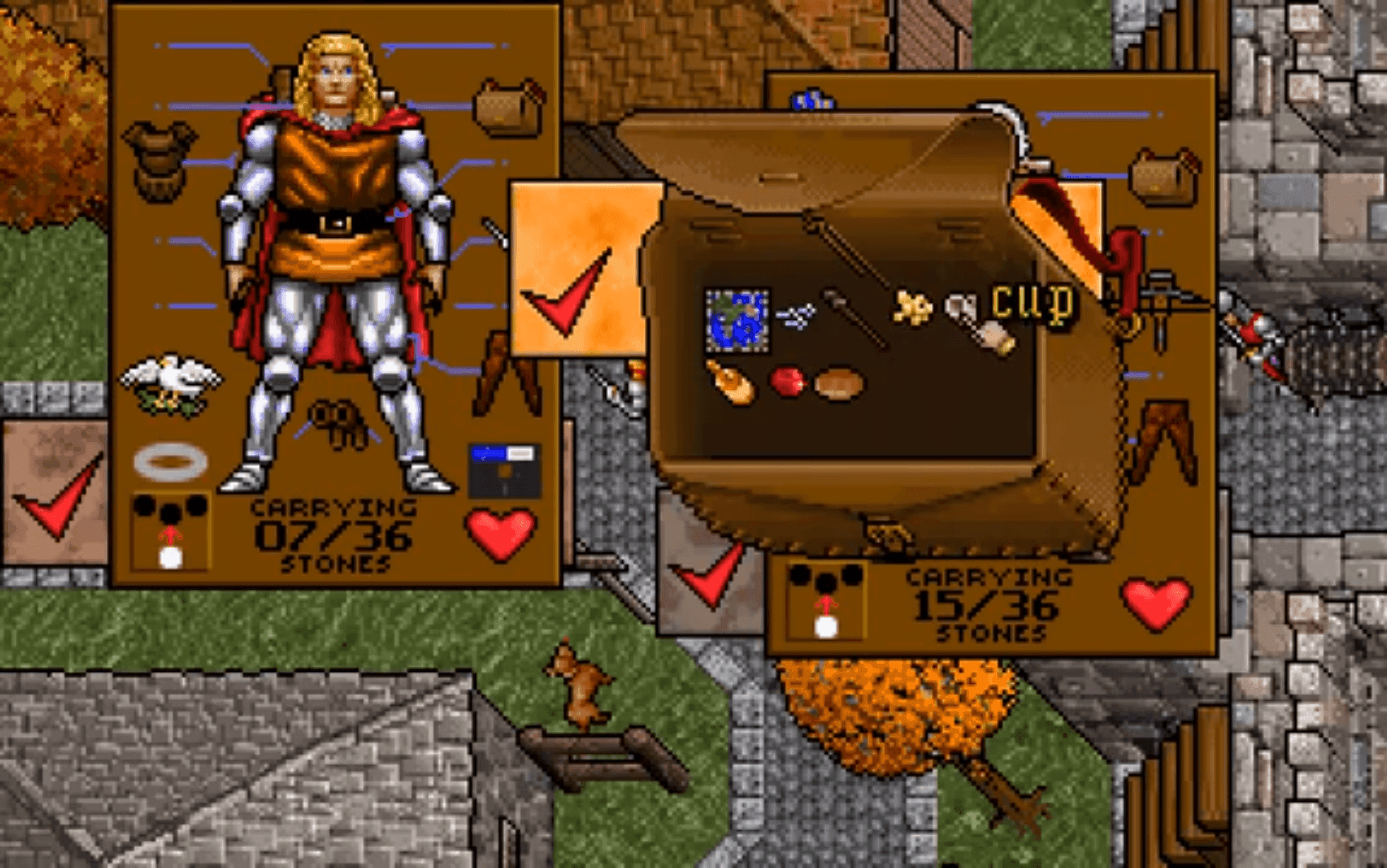
Ultima VII's revolutionary drag-and-drop inventory system.
The opening moments cement this philosophy. You, the Avatar, return to Britannia after a 200-year absence, summoned to investigate a grisly, ritualistic murder in the city of Trinsic. The narrative hook is immediate and personal, framed not as a world-ending cataclysm but as a localized, sinister mystery. This is crucial: Ultima VII grounds its epic scope in tangible, human-scale horror. You don't begin by slaying dragons; you begin by examining a blood-stained altar and questioning townsfolk who have their own schedules to keep. This intimate start establishes the game's core tenet: this world operates with or without you.
Where Ultima VII truly separates itself from every RPG before or since is in its unparalleled world interactivity. Almost every object you see has physics and purpose. You can pick up a sack of flour from a mill, combine it with water at a well, use a nearby oven to bake bread, and then feed it to a hungry party member. You can forge a sword by mining ore, smelting it at a furnace, and hammering it on an anvil. This isn't just set dressing; it's a fully realized economic and physical ecosystem that validates exploration with tangible, systemic rewards.
This level of detail wasn't just innovative; it was revolutionary for a 1992 release. While contemporaries were building worlds of static scenery and NPCs who existed only as quest dispensers, Ultima VII: The Black Gate presented Britannia as a living, breathing entity. The historical significance is immense: it demonstrated that an RPG's power could stem from simulation as much as from stats or story, directly influencing the design DNA of later immersive sims like Deus Ex and Dishonored. For players at the time, it was a revelation; today, it stands as a masterclass in world-building ambition, a reminder of how deep immersion can run when a game trusts its players to engage with every last breadcrumb—literally.
Exploring Britannia: Why Ultima VII's World Still Feels Alive
The true magic of Ultima VII: The Black Gate isn't found in its main quest, but in the quiet, lived-in moments that happen just outside its frame. This is where the game earns its reputation for a world that feels truly alive, a feat achieved not through graphical power but through an almost anthropological dedication to simulating a society. Where other RPGs of its era built sets populated by cardboard cutouts, Ultima VII built an ecosystem with a pulse, demanding you learn its rhythms to navigate it.

The open-world design of Ultima VII encourages exploration and environmental interaction.
The foundation of this illusion is the NPC schedule. Every citizen of Britannia—from the lowliest beggar to Lord British himself—operates on a 24-hour cycle. The blacksmith in Britain isn't just a static vendor; he wakes at dawn, walks to his forge, works his bellows, eats lunch at the inn at noon, and locks up his shop at dusk to return home. If you need to speak with him, you must track him down according to the time of day. This transforms towns from mere hubs into dynamic habitats. You witness the ebb and flow of daily life, overhear conversations that change based on the hour, and feel the consequence of interrupting someone’s routine. It’s a masterclass in systemic world-building that makes the populace feel like genuine inhabitants, not quest-givers waiting in stasis for the player’s arrival.
This sense of a seamless, breathing world is amplified by the game's revolutionary technical achievement: a complete lack of loading screens between exterior and interior spaces. In 1992, walking from the streets of Trinsic directly into a tavern, then upstairs to a private bedroom, all without a single fade to black, was nothing short of sorcery. It shattered the fourth wall, reinforcing the physical reality of Britannia. You could follow an NPC from their workplace to their home, watching their entire simulated day unfold. This seamlessness is the glue that binds the living NPC ecosystem together, making their schedules feel tangible rather than abstract. It’s a design choice that prioritized immersion over technical convenience, and its impact on the feeling of place is immeasurable.
The environmental storytelling woven into this seamless world remains a benchmark. House interiors aren't generic templates; they are curated snapshots of a life. A fisherman's hut smells of the sea (via descriptive text), with nets hung on the wall and a solitary, unmade bed. A scholar's study is littered with scrolls, an inkwell, and a half-eaten loaf of bread. You can find hidden, missable notes—love letters, shopping lists, incriminating diaries—that flesh out characters you may never formally meet. This attention to detail rewards the curious player with narrative depth, suggesting a world that exists independently of the Avatar's journey.
However, this commitment to a pure, unguided simulation comes with a significant, deliberate cost: navigation is a deliberate challenge. Ultima VII offers no quest log, no objective markers, and no automap. Progress hinges on listening carefully to dialogue, remembering key names and locations, and—most critically—taking physical notes. If an NPC tells you to meet them at the east bridge at midnight, the game will not remind you. You either write it down or you fail. This design philosophy is a double-edged sword. On one side, it creates an unparalleled sense of discovery and intellectual engagement; you are not following a UI marker, but solving a real mystery using your own wits and observations. On the other, it can lead to moments of pure frustration, where you’re left wandering Britannia aimlessly because you forgot a crucial clue mentioned ten hours prior.
This is the core tension of exploring Britannia: Ultima VII: The Black Gate trusts you to be a resident, not just a tourist. It asks you to learn its streets, understand its people’s routines, and engage with its world on its own organic terms. The reward is a depth of immersion that few games have ever matched. The price is the surrender of modern gaming's hand-holding conveniences. Whether this is a flaw or the game's greatest strength depends entirely on your appetite for being truly, and sometimes helplessly, lost in a world that doesn't revolve around you.
Ultima VII Gameplay: The Double-Edged Sword of Real-Time Combat
If the world of Ultima VII: The Black Gate is a masterclass in simulation, its real-time combat system is the chaotic, frustrating exam that follows the lecture. This is where the game's lofty ambitions for player freedom crash headlong into the technical limitations and design quirks of its era, creating a double-edged sword that can feel both exhilaratingly emergent and utterly uncontrollable.
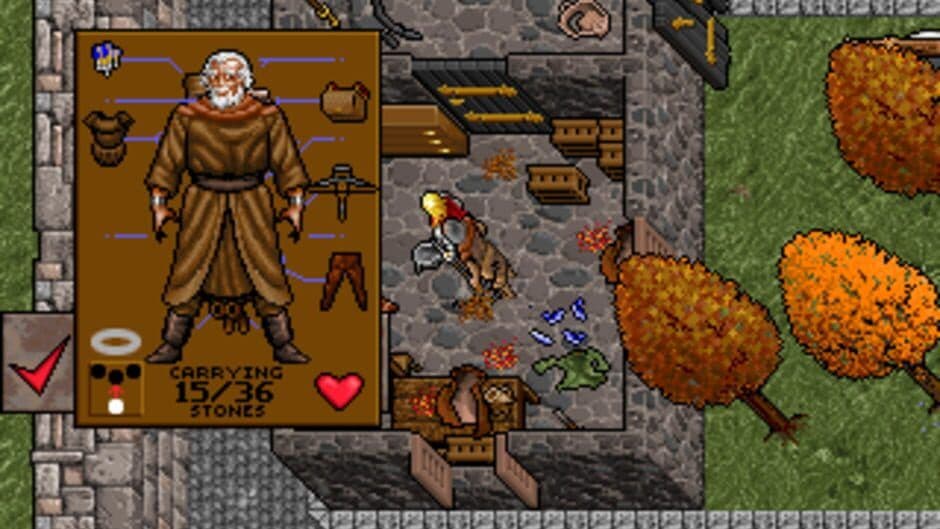
Official screenshot of the game's unique overhead perspective.
The core issue is one of perspective and control. Unlike the tactical, turn-based engagements of its predecessors, Ultima VII thrusts you into real-time skirmishes where your party of up to eight companions acts on individual AI scripts. In a simple one-on-one fight, this works well enough. But introduce a second enemy, or fight in a confined space, and the screen dissolves into a pixelated mosh pit. Characters pathfind into each other, block doorways, and swing wildly at the air while the enemy you targeted slips behind you. The infamous "headless corpse bug," where a slain foe's body parts continue to animate and chase you, is less a glitch and more a perfect metaphor for the system's delightful anarchy. The design intent—to make combat feel like a dynamic, unfolding event within the living world—is clear. The execution, however, often robs you of tactical agency, reducing complex battles to a hope that your heavily armored knights survive the scrum.
Managing your fellowship outside of combat is a deeper, more strategic game than the fighting itself. Each companion has their own hunger meter and expansive inventory, governed by the notorious paper doll system. Forgetting to feed your party results in stat penalties and complaints, while organizing gear becomes a puzzle of nesting containers—a bag within a pouch within a backpack. This micromanagement is the price of the game's celebrated realism. It makes your party feel less like disposable units and more like a vulnerable expedition that requires logistical support, a constant reminder that you are responsible for these digital lives.
This grounded philosophy extends brilliantly to the spellcasting system, which stands as a high-water mark for tactile magic in RPGs. There are no abstract mana points here. To cast a spell, you must first find or purchase its recipe in the game world, memorize the required reagents (like sulfur, garlic, or blood moss), and physically combine them in your inventory. Want to cast Fireball? You'll need black pearl and sulfur. Need to resurrect a fallen comrade? That requires a rare mandrake root. This system does more than add complexity; it weaves magic directly into the economy and exploration of Britannia. Finding a ginseng plant in a forest or purchasing spider silk from a shady mage in Buccaneer's Den feels meaningful because these items have tangible, powerful utility. Magic becomes a crafted art, not a regenerating resource, making every successful cast feel earned.
Character progression follows a similarly worldly, non-abstracted path. You don't gain experience points from slain foes. Instead, you improve your skills—like swordsmanship, magic resistance, or begging—by seeking out specific trainers across Britannia and paying them gold for lessons. To become a master swordsman, you must find the right teacher, often completing a quest for them first. This design brilliantly incentivizes engaging with the world's social and economic layers. You don't grind monsters; you engage with people, spend your hard-earned coin, and actively seek out knowledge. It’s a progression system that reinforces the core theme: you are a citizen of this world, and power is gained through social interaction and exploration, not mindless slaughter.
Ultimately, the gameplay of Ultima VII: The Black Gate is a package deal of profound immersion and profound jank. You cannot have the exhilarating freedom of a spell system grounded in physical reagents without also wrestling with the inventory chaos it creates. You cannot have the realistic pressure of managing a hungry, vulnerable party without also enduring the chaotic melees their AI sometimes creates. This is the game's uncompromising bargain. It asks you to engage with every system on its own intricate, often messy terms, offering a depth of simulation that is as rewarding as it is, at times, frustratingly opaque.
The Fellowship and Philosophy: Narrative Depth in The Black Gate
Where Ultima VII: The Black Gate truly ascends from a remarkable simulation to a masterpiece is in its narrative ambition. This isn't a story about saving the world from a generic evil; it's a chilling, methodical dissection of how societies rot from within, using the fantasy framework of Britannia to explore themes most games wouldn't touch today, let alone in 1992. The central mystery of the Trinsic murders is merely the entry point to a sprawling critique of corruption, blind faith, and environmental decay, making Ultima VII feel less like an escapist fantasy and more like a vital piece of speculative fiction.
The Black Gate introduced a new level of philosophical depth to the Ultima series.
The brilliance of its storytelling is embodied by its primary antagonist: not a dragon or a demon, but The Fellowship. This pseudo-religious organization presents itself as a benevolent self-help group promoting peace and prosperity, yet its methods are insidiously cult-like. You witness this firsthand in the town of Paws, where Fellowship members spout platitudes about community while exploiting the impoverished locals, or in the opulent halls of Lord British's castle, where the cult's influence has seduced the highest echelons of power. The Fellowship’s doctrine is a masterstroke of moral ambiguity; their promises of order and enlightenment are superficially appealing, forcing you, as the Avatar, to question whether your disruptive quest for truth is truly for the greater good. This narrative layer transforms exploration into investigation. Talking to a disillusioned ex-member in a tavern or finding a hidden Fellowship ledger detailing bribes feels more impactful than any epic boss battle, because you are dismantling a poisonous ideology piece by piece.
The game’s dialogue system is the engine of this investigation, and it remains a benchmark for naturalistic interaction in RPGs. Eschewing rigid dialogue trees, Ultima VII uses a keyword-based conversation system. You type or click on words like “Fellowship,” “murder,” or “Black Gate” to steer the discussion, and NPCs react with unique, context-aware responses. This creates the illusion of a real conversation, not an interrogation. Asking a farmer about the weather might yield a lament about blighted crops, which you can then follow up by asking about “blight,” potentially uncovering a clue about the Fellowship’s toxic mines. The system rewards curiosity and attentive listening, making you feel like a detective assembling a case file from scattered testimonies rather than a hero collecting quest objectives.
This grounded, human-scale conflict is juxtaposed with the introduction of a villain of cosmic, metafictional menace: The Guardian. Appearing as a red, polygonal face that materializes in your inventory screen or on dungeon walls, he directly taunts you, the player, breaking the fourth wall with a chilling, sarcastic voice. “I am the Guardian. I watch from beyond the void. Your world is my toy.” These encounters are not just jump scares; they are philosophical assaults. The Guardian frames your entire journey as a futile game he orchestrates, injecting a layer of existential dread into the fantasy. He represents a faceless, systemic evil beyond the Fellowship’s mortal corruption, suggesting that even if you cleanse Britannia of one poison, a more profound, nihilistic threat looms in the code of reality itself. This bold narrative gambit elevates the stakes from saving a kingdom to defending the very integrity of the narrative world.
The maturity of Ultima VII: The Black Gate’s writing is evident in how it trusts the player to sit with uncomfortable themes. The environmental decay of the blighted lands around Minax’s castle isn't just scenery; it’s a direct consequence of unchecked industrial exploitation tied to the plot. The stark classism between the wealthy citizens of Britain and the destitute, Fellowship-exploited residents of Paws isn't merely backdrop; it’s the fertile soil in which the cult takes root. The game presents these issues not with simplistic moralizing, but as interconnected symptoms of a world losing its Virtues. Your role is to bear witness to this decay and piece together its causes, a process that feels more intellectually substantive than any fetch quest. This is where the game’s much-praised immersion achieves its highest purpose: it makes the sociological and philosophical stakes feel as tangible and urgent as the bloodstain on the altar in Trinsic. You’re not just playing a hero; you’re conducting an audit of a broken society.
Technical Legacy and the Modern Experience of Ultima VII
Playing Ultima VII: The Black Gate today is a lesson in the enduring power of a brilliant design and the graceful aging of its presentation, yet it is inextricably tied to the stubborn, archaic quirks that were born with it. The game’s visual and auditory identity remains surprisingly robust, while its most infamous mechanical friction—the inventory—demands a level of patience the original design assumed as standard. Navigating this divide is the central challenge for any modern player, a challenge elegantly solved not by nostalgia, but by modern software like the Exult engine.
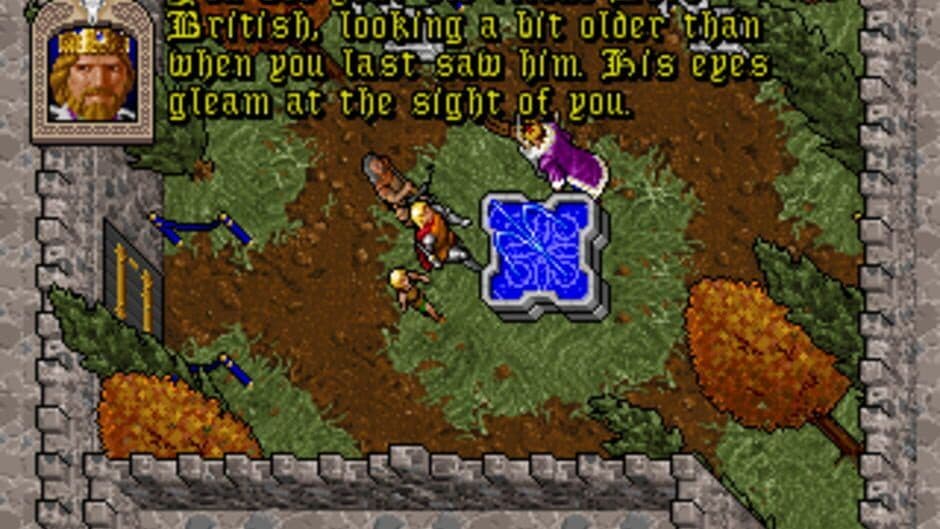
The game's dense world remains impressive on modern high-resolution monitors.
Ultima VII’s visual design is a masterclass in resourcefulness, a vibrant VGA canvas that transcends its 256-color technical limits through sheer artistic craft. The top-down, isometric-style perspective isn’t a graphical limitation; it’s a conscious design choice that provides a clear, strategic view of the world’s intricate clockwork. You can see a blacksmith’s entire routine at his forge, watch patrons move between tables in a tavern, and track the patrol path of a guard on a distant rampart—all without the camera ever getting in the way. The pixel art is dense with character: the cobblestone texture of Britain’s streets, the worn wood grain of a peasant’s hut, and the grimy, oppressive stonework of dungeon walls each tell a story. This visual coherence holds up not because it’s photorealistic, but because every tile is thoughtfully composed to serve the simulation. A pile of flour sacks doesn’t just look like a pile; it is a pile you can interact with, grounding the beautiful art in tactile function.
The soundscape is where the technical achievement becomes pure magic. Dana Glover’s iconic MIDI soundtrack is a character in its own right, shifting dynamically to match your environment and situation with a sophistication that feels modern. The moment you step into the somber, rain-drenched streets of the blighted town of Paws, the hopeful Britannian overture dissolves into a lonely, mournful dirge of piano and strings. The tense, staccato strings that accompany a surprise combat encounter are not just a cue; they’re a systemic alert, seamlessly woven into the living world. This adaptive audio reinforces the game’s core tenet of immersion, proving that a world feels most alive not when it looks real, but when it sounds consistent.
Where this seamless fantasy grinds to a frustrating halt is in the user’s personal space: the inventory. The celebrated “paper doll” system, which allows you to equip items visually on your character, is a novel idea torpedoed by the notorious bag-in-a-bag management. Every container you own—backpack, pouch, chest—can hold other containers, creating a nesting-doll nightmare of disorganization. To find a specific reagent, you might need to open your backpack, then a large sack, then a small pouch, scanning tiny, low-resolution icons for a sprig of ginseng. This isn’t just tedious; it actively punishes experimentation. The tactile joy of baking bread or forging a sword is undercut by the logistical migraine of finding the flour or the ore amidst the clutter. It’s the one area where the game’s devotion to simulation crosses the line into unintentional parody, reminding you that you’re wrestling with an interface, not the world of Britannia.
This is why playing Ultima VII: The Black Gate in its original DOSBox form is an exercise in masochism for all but the most dedicated purists. The game was designed for 320x240 resolution on a 4:3 monitor. On a modern widescreen display, it becomes a postage stamp surrounded by black void, and its original code is riddled with minor bugs and control quirks that can obstruct the experience. This is where Exult ceases to be a mere fan project and becomes an essential preservation tool. This open-source engine rebuilds the game from the ground up, offering high-resolution widescreen support, stable performance on any modern OS, and a suite of quality-of-life fixes. Crucially, it doesn’t alter the core game. It simply removes the technical barriers, allowing the living world, the beautiful visuals, and the adaptive soundtrack to shine without the accompanying friction of archaic system compatibility. For any modern player, Exult isn’t a mod; it’s the definitive way to experience the game’s genius as it was intended to be felt.
Final Verdict: Is Ultima VII The Black Gate Still Worth Playing?
So, is Ultima VII: The Black Gate a game worth playing in 2024? The answer is a resounding yes, but with a crucial, non-negotiable caveat: you must be willing to meet it on its own terms. This isn't a nostalgic trip; it's a demanding, brilliant, and often frustrating masterclass in world simulation that will either captivate you for 60 hours or repel you within the first two. Your enjoyment hinges entirely on whether you view its most notorious quirks—the chaotic combat, the inventory labyrinth—as charming period texture or unacceptable barriers to entry.

The attention to detail in the game world sets a high bar for the genre.
The game’s value proposition is its unparalleled depth of immersion, a quality that modern AAA RPGs often simulate with graphics but rarely match with systemic integrity. Where a contemporary open world might offer a beautiful vista, Ultima VII offers a functioning mill where you can steal the grain, grind it into flour, and bake it into bread to feed your starving companions. This is a 40-60 hour epic where progress is measured not in experience points, but in your growing understanding of Britannia’s social rhythms, economic networks, and hidden secrets. The reward is a sense of agency and discovery that feels genuinely earned, not guided by a constellation of map markers. You don't just complete quests; you solve a mystery by living inside it.
This is a game for the curious, the patient, and the detail-obsessed. If your ideal RPG experience involves optimizing a combat build for the final boss rush, look elsewhere. If, however, you find joy in eavesdropping on NPC conversations to uncover a hidden side plot, or in methodically testing every object in a room to see if it can be picked up, Ultima VII is your holy grail.
When stacked against genre peers, its unique stature becomes clear. Compared to its contemporary, Wizardry VII: Crusaders of the Dark Savant, which offered a more traditional, party-based dungeon crawl, Ultima VII focused on societal simulation over tactical combat. In the modern landscape, its DNA is most visible in games like Divinity: Original Sin 2 and Baldur’s Gate 3, which inherit its commitment to environmental interactivity and object-based puzzles. Yet, even these successors often streamline the "living world" aspect in favor of tighter narrative pacing and polished combat. Ultima VII remains the purest, most uncompromising expression of the fantasy life simulator, a game less concerned with being fun in a conventional sense than with being believable.
Ultimately, Ultima VII: The Black Gate is essential playing for RPG historians and aficionados of immersive sims. It is the blueprint. The frustrations are real and documented—the mosh-pit battles, the bag-in-a-bag inventory management, the complete lack of hand-holding—but they are the price of admission to a world so richly realized that its echoes are felt in games three decades later. Playing it today, preferably via the Exult engine to smooth the technical edges, is less about revisiting a classic and more about auditing a standard. It asks a simple, enduring question of the player and the genre: how much are you willing to engage, and how much should a game do for you?
Final Verdict
Ultima VII: The Black Gate is a monumental achievement in interactive world-building that remains thrillingly unique. Its commitment to a living, systemic world creates a depth of immersion few games have ever matched. However, its archaic interface and chaotic real-time combat demand significant patience. This is not a casual recommendation, but for the right player, it is an indispensable one.
Pros:
- An unmatched, systemic living world where every object has purpose and every NPC a life.
- A mature, philosophically rich narrative that explores cult mentality and corruption with startling depth.
- A spellcasting and skill progression system deeply woven into exploration and economy, making every advancement feel earned.
Cons:
- Real-time combat that often devolves into chaotic, uncontrollable scrums.
- The infamous "paper doll" inventory system is a tedious exercise in nested container management.
- A steep learning curve that rejects modern conveniences like quest logs or objective markers, demanding notetaking and patience.