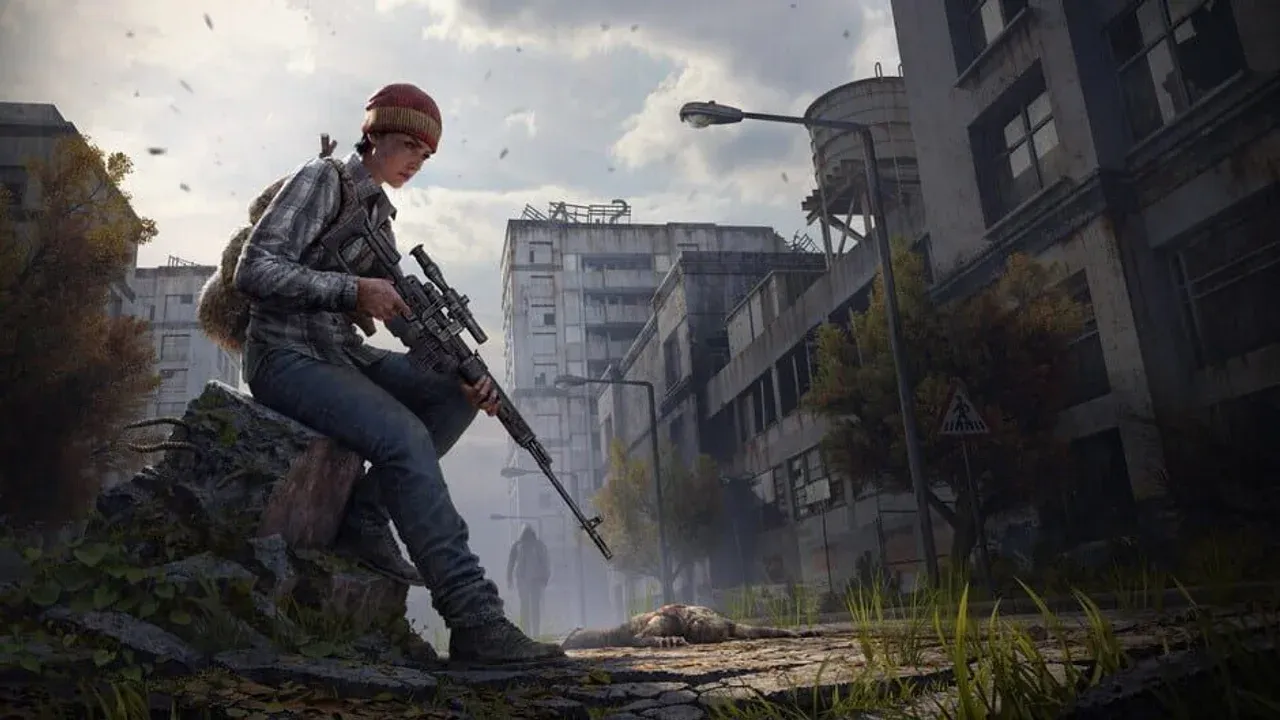
Every veteran gives the same advice: don't get attached to your gear. It is bad advice, because gear fear is not a character flaw. It is your brain correctly noticing that you are carrying something scarce and refusing to spend it blindly. The problem is the timing. You feel the fear at the moment you spot another player, and by then the decision has already been made — not by you, and not in that moment. It was made an hour earlier, when you chose what to put on your character.
The heavy vest you are wearing does not slow you down at all. It shortens how long you can run before you have to stop, and that is the number that decides whether "run" was ever on the menu. Whether you fight or run in DayZ is a loadout problem wearing the costume of a courage problem, and the game gives you the arithmetic to solve it.
Price the Death Before You Fear It
When you die, everything on your body drops with it, and your corpse can be searched freely by any survivor who walks past. You respawn at a random location you do not choose, wearing a T-shirt, crop hiking pants and athletic shoes, carrying a glow stick, one bandage, and one apple, pear or plum.
The part nobody prices correctly is what happens to the pile you left behind. Items lying in the world are cleaned up on a timer, and in vanilla DayZ that timer is wildly uneven:
| Item | Default time on the ground |
|---|---|
| Most ruined items | 5 minutes 30 seconds |
| Plate Carrier | 45 minutes |
| Combat Helmet | 1 hour 30 minutes |
| Assault Vest, Tactical Helmet | 2 hours |
| M4-A1 | 3 hours |
| Mountain Backpack, Field Backpack | 6 hours |
Read the ordering, because it inverts your instinct. The single rarest thing you own is on the shortest clock. Your backpack — uncommon, bulky, the item you would least mourn — sits there for six hours. The plate carrier that made you feel untouchable is gone in forty-five minutes, and if the shot that killed you ruined it on the way through, in five and a half.
Two caveats worth knowing. These are vanilla defaults, set per server in configuration a community host can and often does change, so treat them as the shape of the problem rather than a promise. And the pool they draw from is finite: the Central Loot Economy caps how many of each item can exist on a server at one time, which is why "Very Rare" describes a constraint on the world rather than a label on a wiki page.
What all this prices out to is narrower than the panic suggests. Losing a fight costs you the two or three genuinely scarce items you were wearing. The rest you either replace inside an hour of looting, or recover from your own body if you get back inside its clock. That is the real bill, and it is what your gear fear should be charging you for — not the whole inventory.
Twelve Kilograms Is Five Seconds of Sprint
Every survivor starts with a stamina ceiling of 100. You can carry up to 6 kg with no penalty. Past that, every kilogram costs 1.75 points off that ceiling, to a floor of 95 points lost.
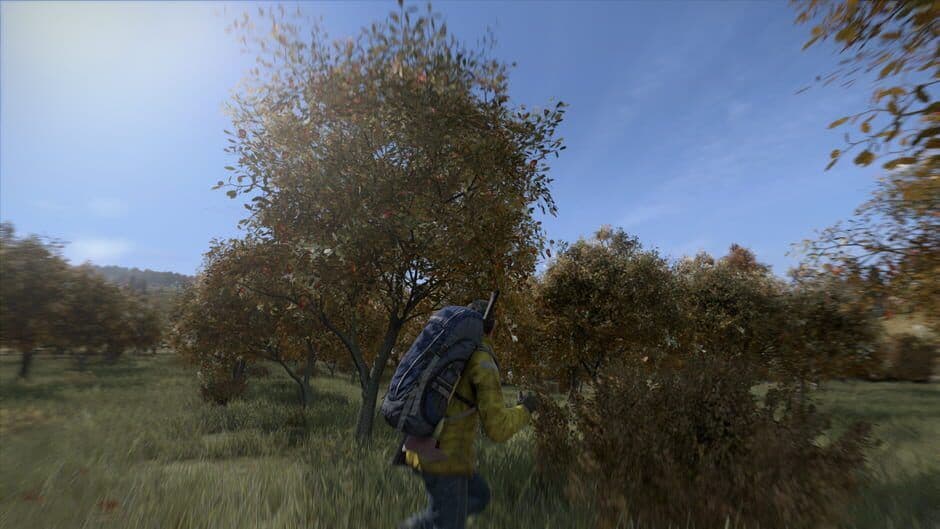
Weight does not slow you down — it decides how many seconds of sprint you get before you stop.
Sprinting on your feet burns 4 stamina per second and regenerates nothing while you do it, and you lose the ability to sprint once your stamina falls below 25. So the usable sprint in any loadout is (ceiling − 25) ÷ 4 seconds:
- A fresh spawn in a T-shirt, ceiling 100: 18.75 seconds of continuous sprint.
- A geared survivor at 40 kg — plate carrier, rifle, magazines, full backpack, water — ceiling 40.5: under four seconds.
The Plate Carrier alone accounts for 12 kg of that, which is 21 points of ceiling, which is 5.25 seconds of sprint. An Assault Vest weighs 220 grams and costs four tenths of a point.
Here is what makes weight so much worse than it looks: load does not reduce your sprint speed, and it does not slow your stamina regeneration. It only lowers the ceiling. You run exactly as fast as the freshie chasing you — you simply stop sooner. That is the worst possible penalty to be carrying, because breaking contact is a duration problem, not a speed one. You never needed to outpace the person shooting at you. You needed enough unbroken sprint to put a treeline or a ridge between you and their scope, and four seconds does not buy much treeline.
Below the sprint cutoff sit two more, and they are cliffs rather than slopes:
| Stamina below | You lose |
|---|---|
| 25 | Sprinting, heavy melee attacks |
| 20 | Jumping and vaulting |
| 10 | Holding your breath to steady a shot |
A jump costs a flat 20 points, which is where these interact viciously. The 40 kg survivor above vaults one fence and lands on 20.5 — still standing, still armed, and now unable to sprint at all until they stop moving and recover. One waist-high wall took away their entire escape. The fresh spawn makes the same jump and is still 55 points clear of the cutoff.
Past roughly 49 kg of total load the ceiling itself drops under 25, and sprinting stops being something you ration and becomes something you no longer have.
The counter is to move like the weight you are carrying. Crouched sprint costs 1 stamina per second rather than 4, and a fast crawl costs 3. Recovery runs at 2 per second while jogging and 5 while at rest, so a heavy survivor moving crouched between cover can cross a town more or less at will. It is standing up in the open that costs everything.
Your Plate Carrier Trades Death for Capture
The Plate Carrier's numbers are excellent on one axis and mediocre on the one that decides your fate. It cuts projectile health damage by 70% and blood damage by 100%. Against shock, it cuts 40%.
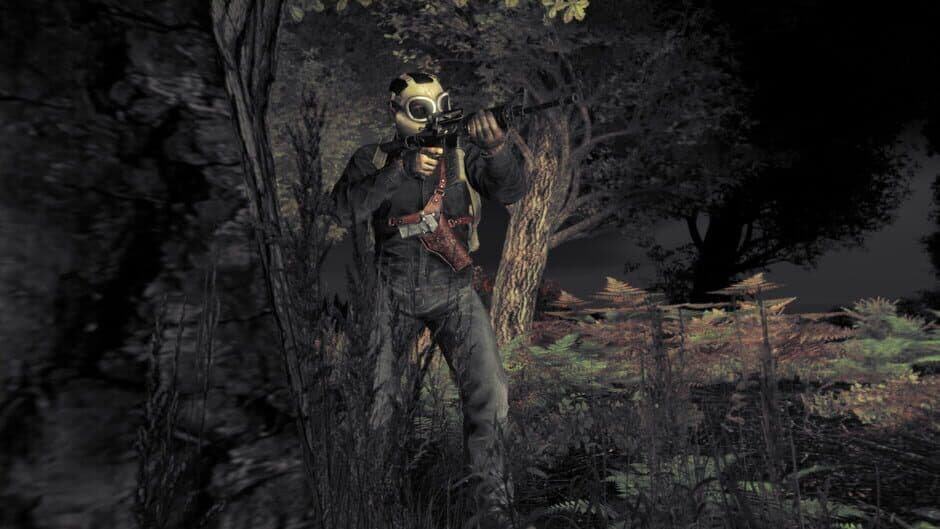
Full kit changes what a hit does to you. It does not change who decides what happens next.
Shock is a 0–100 stat measuring trauma absorbed in a short window. Drop below 25 and you fall unconscious; you do not wake until it climbs back over 50, and unassisted it recovers at somewhere between 1 and 5 points per second.
That ratio — 70% health protection against 40% shock protection — is the whole story of the vest. Rounds that would have killed an unarmoured survivor no longer take enough health to do it, but they still deliver most of their shock. The damage does not disappear; it changes category. The armour converts you die and drop everything into you lie still while somebody else decides what happens to you, and against another player that is not a rescue. It is a delay in which the person who shot you walks over and makes the choice.
Against infected the same mechanic works exactly as advertised, and it is the vest's best moment: infected break off and stop attacking a survivor who goes unconscious. Players do not.
Which means the plate carrier is not really an armour item. It is a team item. Unconsciousness is the one kind of losing that can be undone — an Epinephrine Auto-Injector restores shock instantly, and a partner performing CPR moves it at about 2.5 per second instead of one. With somebody standing over you, 21 points of ceiling buys a second life. Alone, it buys you the climb from under 25 back over 50 while a stranger walks toward your body.
Two things follow for how you build a kit.
Buy consciousness by the kilogram, not by the plate. A Ballistic Helmet weighs 1 kg and cuts shock damage by 50% — better than the plate carrier manages — and the Tactical, Combat and Assault helmets all match that figure. They cover the head rather than the torso, so this is not a straight substitution, but twelve times the weight for ten percentage points less shock reduction is a terrible exchange rate on the only stat that governs whether you stay awake.
Know what is protecting nothing. The Assault Vest, Smersh Vest, Field Vest and Chest Holster reduce projectile damage by exactly zero. They are rare, they look tactical, they hold your magazines, and ballistically they are a T-shirt. If one of them is the reason you feel geared enough to be nervous, you are paying the fear without owning the armour.
The honest middle is the Press Vest: 7 kg — 12.25 points of ceiling, about three seconds of sprint — for 50% projectile health reduction, 25% shock, and sixteen slots of storage the plate carrier does not have unless you have also found Pouches. It is common rather than very rare, which is most of its appeal. Its real cost is that it is bright blue or red.
Surrender Is the Branch With No Way Back
Hands up looks like the safe third option. Mechanically it is the only branch where you stop making decisions altogether, and the asymmetry is brutal: restraints go on in two seconds — handcuffs, duct tape, wire — and coming out of them is measured in a different unit entirely.
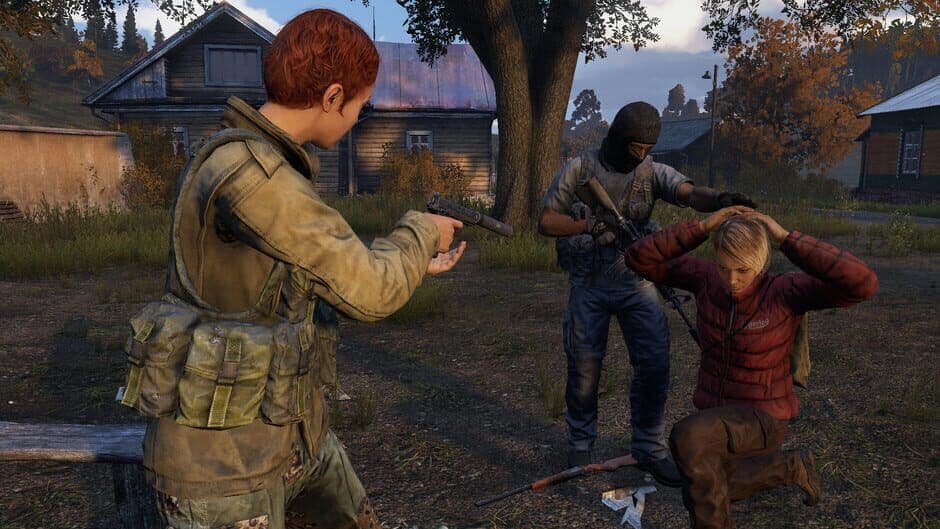
Restraints take two seconds to apply. Getting out of them takes somebody else.
Restrained, you cannot sprint, cannot open your inventory, and cannot raise your hands. You cannot feed yourself or drink, which makes your survival your captor's decision as well as your gear. Freeing yourself means holding the mouse button and grinding at the restraint; the fast ways out all require somebody else — another survivor untying you, Handcuff Keys opening cuffs in three seconds, or a rescuer shooting the restraint off, which takes several rounds and frequently hits the captive instead.
Two seconds in, minutes and a third party out. That is the trade you are accepting, and you accept it before you know whether the person aiming at you wants your rifle or your character.
Logging out is not an exit from it either. Your character stays in the world through the disconnect countdown and can be killed during it. Choosing to exit immediately only means you do not get to watch.
Fight When You Cannot Leave
Now the decision is small enough to make in the two seconds you actually get.
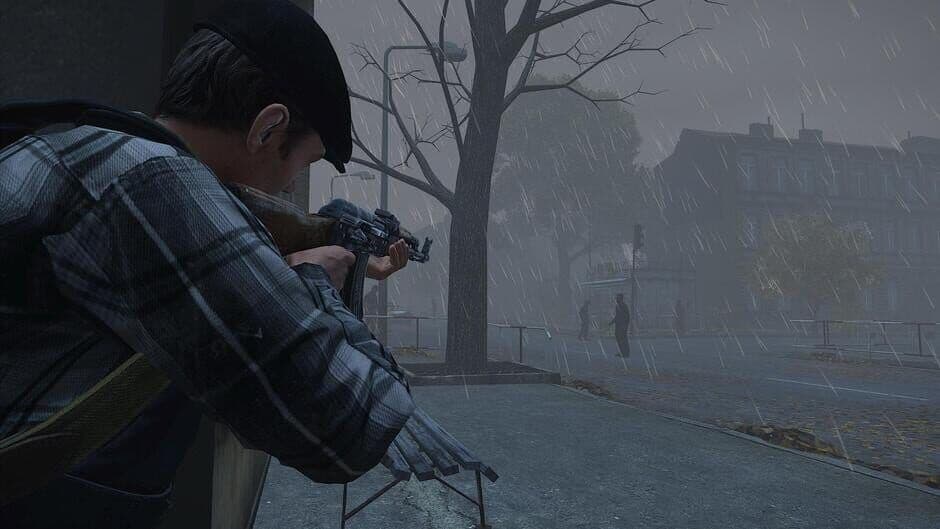
Firing settles the question of whether they know where you are, permanently.
Work out your run branch before contact, not during it. You know your ceiling; usable sprint is (ceiling − 25) ÷ 4 seconds. Look at the ground between you and the nearest thing that genuinely breaks line of sight — a ridge, a treeline, a building corner, not a bush — and ask whether you cover it in that many seconds. Under four, the honest answer in open ground is almost always no.
If the run branch is empty, fight. Not because your gear is worth it, but because the position you are standing in is the best one you will ever have in this encounter. Sprinting into a field with four seconds of stamina is not escaping; it is dying tired, at range, with your back turned. Fighting from the cover you already occupy at least makes them solve a problem.
Fight when you can be picked up. With a partner, the worst realistic outcome of a lost firefight is unconsciousness, and unconsciousness is reversible. Solo, it is the same thing as death with a delay. The plate carrier and the two-person squad are the same decision made twice.
Run before they know where you are, and stay crouched doing it. Crouched sprint costs a quarter of what standing costs, so an unspotted heavy player can reposition almost indefinitely. The run branch is cheap right up to the moment you stand up, and it never gets cheaper than it is right now — health loss slows your jog, your sprint and even your crawl, so the disengage you decline while healthy is easier than the one you attempt after the first hit lands.
Assume you have already been seen on a third-person server. The 3PP camera sits behind and above the shoulder, letting a stationary player watch over a wall or roofline without exposing anything to you. Bohemia runs official servers as separate 1PP and 3PP hives, so the answer to "does he know I'm here" is partly a property of the server you joined, not of how well you moved.
Count the cost of shooting into your estimate. A gunshot broadcasts your position to every player in earshot and pulls infected toward the noise. Firing does not just start the fight in front of you; it schedules a second one behind you a minute later, which means "fight" needs a plan for leaving the position afterwards — and you will be leaving it on the same stamina ceiling you started with.
That is the whole discipline: carry the weight you can still sprint out of, and treat the plate carrier as a two-person item. Its 21 points of ceiling are worth paying only when somebody is there to stand you back up.