
Most groups arrive in Chernarus with a radio habit imported from somewhere else, where a channel is a room you close the door on. DayZ's transceivers do not work like that, and the gap between what players assume and what the item actually does is where groups get killed. A radio here does not create a private channel. It takes the voice you are already broadcasting to everyone within shouting distance and repeats it up to five kilometres away, on one of seven frequencies that any survivor can cycle through in a couple of seconds. Every rule worth following about radios in DayZ falls out of that one fact: you are not managing a squad channel, you are managing a leak.
Your Radio Is a Speakerphone, Not a Headset
Caps Lock is the only voice key. Hold it to talk and it behaves like push-to-talk. Double-tap it and the microphone latches open until you double-tap it again — which, with a transceiver switched on in your inventory, means a hot mic feeding a public frequency for as long as you forget about it. There is no separate radio push-to-talk to reach for: the microphone icon on screen tells you your voice is live, but nothing on it tells you the radio is carrying it. Use the hold.
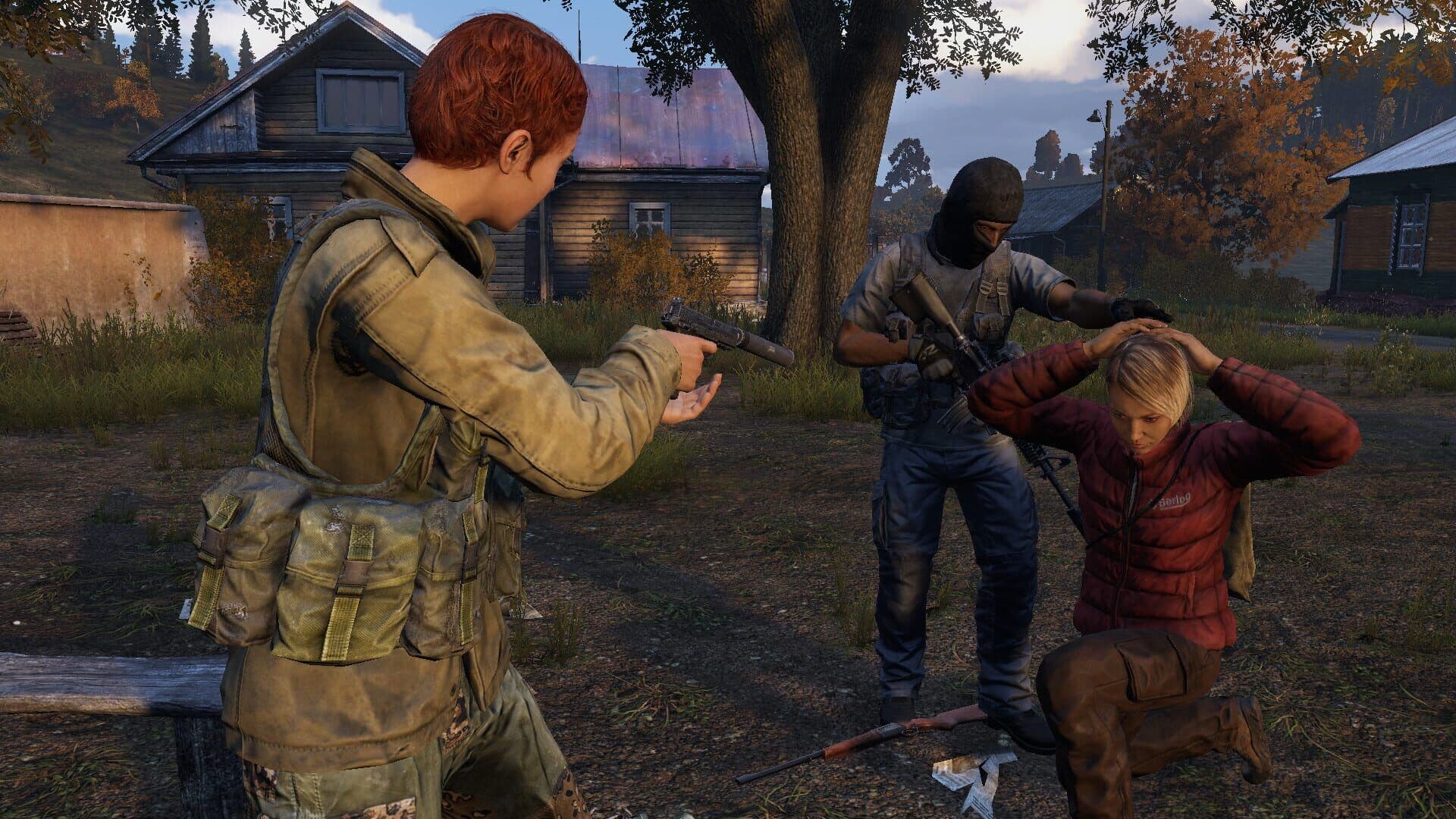
Anything you say into a radio at this distance is heard by the people in front of you as well.
Every transmission you make is two broadcasts: one to your frequency, one to everyone standing near you. The local half is bigger than most players picture. Tapping the up arrow cycles three voice levels — whisper, standard and yelling — carrying 7, 25 and 45 metres respectively. Standard is the default, and 25 metres reaches from the house you are looting out to the treeline you have not checked yet. Tapping down to a whisper cuts that local radius to 7 metres, which is the difference between the room you are in and the street outside it.
The other half is worth doing the arithmetic on, because five kilometres sounds abstract until you put it on the map. Five kilometres is five grid squares. Chernarus is 225 km², so roughly fifteen kilometres on a side — your handheld reaches a third of the way across the map. That is the useful part: a scout at the North-West Airfield can talk to a base south of it without either of them moving. It is also the exposure. Every survivor inside that same circle who happens to be sitting on your frequency is in the conversation, and you will never know they joined.
Then there is the leak that costs bases. A radio switched on and sitting on the ground plays incoming traffic out loud to anyone nearby — so a transceiver left running in a tent, or lying in the loot pile of a body near your camp, is a listening post you built for someone else. DayZ's wikis go further and say that a radio carried on your person is audible to those around you too; players dispute that one, so the safe assumption is the wikis' and the safe habit is to keep the radio on you and switched off between calls.
Seven Frequencies Is Not a Secret
Holding left click on a handheld transceiver cycles the dial. This is the complete list:
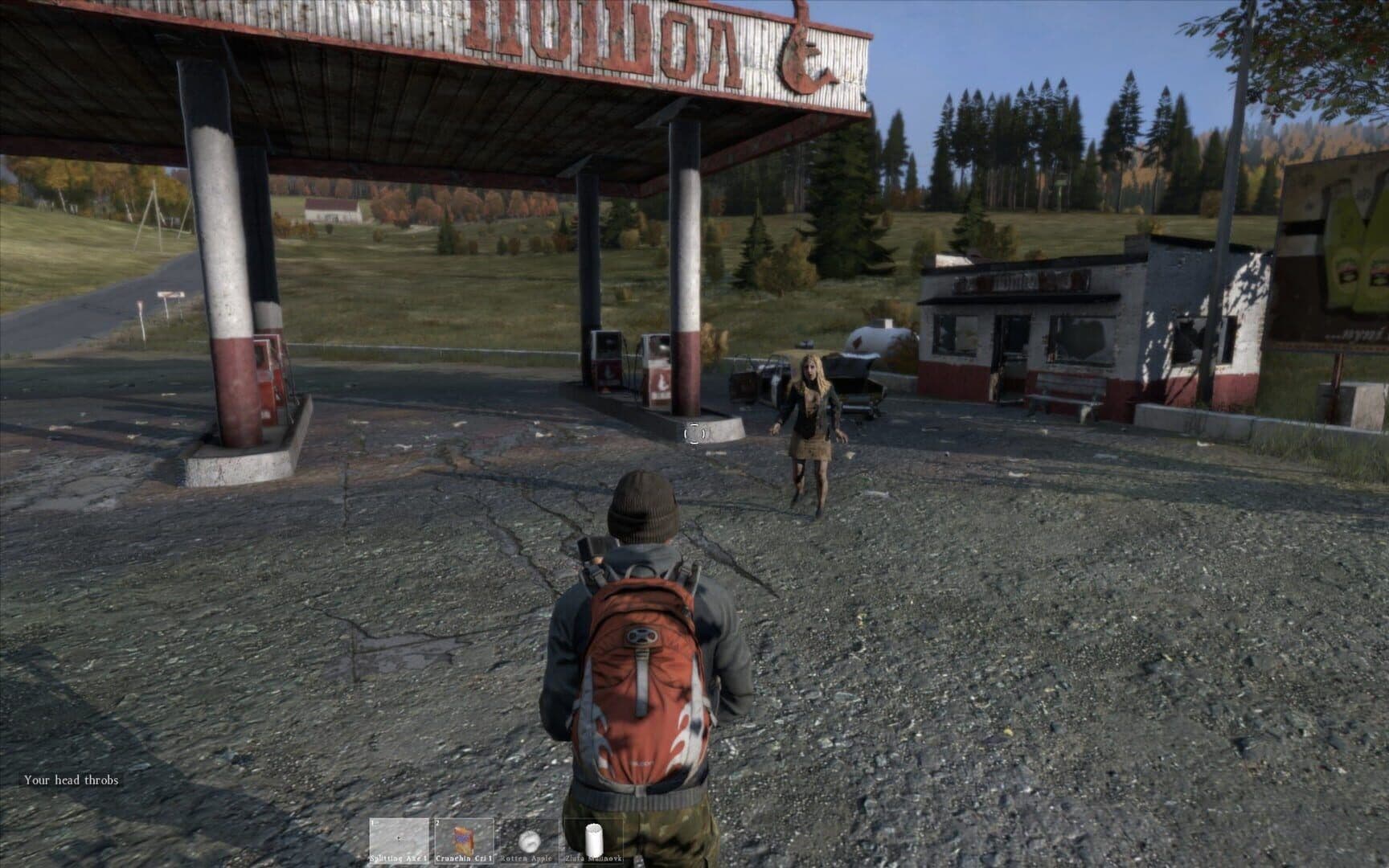
There are only seven frequencies, and the stranger walking towards you can reach every one of them.
- 87.8
- 89.5
- 91.3
- 94.6
- 96.6
- 99.7
- 102.5
Seven, fixed, for every player on the server. No custom channels, no passwords, nothing encrypted. A stranger with one radio and one battery can walk the entire spectrum in the time it takes to cross an open field, and 87.8 is where every radio sits when it is found — which is why the long-standing convention is to make contact there and then move somewhere quieter.
So treat your frequency as a filter, not as security. No plain-language navigation over the air: say "the barn we hit yesterday", not a set of map coordinates. Agree callsigns before the group splits up. And when an unfamiliar voice turns up on your channel, the correct response is to change frequency, not to interrogate them on it.
The reverse of that is the cheapest intelligence in the game and almost nobody collects it. Receiving costs you nothing but battery, and unlike every other form of scouting in DayZ it cannot give you away — a radio that is only listening emits nothing at all. Leaving one parked on 87.8 while you move through a contested area is a free early-warning system, paid for by a battery you were carrying anyway.
A 9V Battery Buys You Forty-Two Minutes
The handheld transceiver runs on a 9V alkaline battery, and the arithmetic is unforgiving. The battery holds 50 energy units and the radio draws 0.02 per second: 2,500 seconds, a little under 42 minutes of being switched on. Condition does not change that — a pristine 9V and a nearly ruined one hold the same charge, and neither can be recharged.
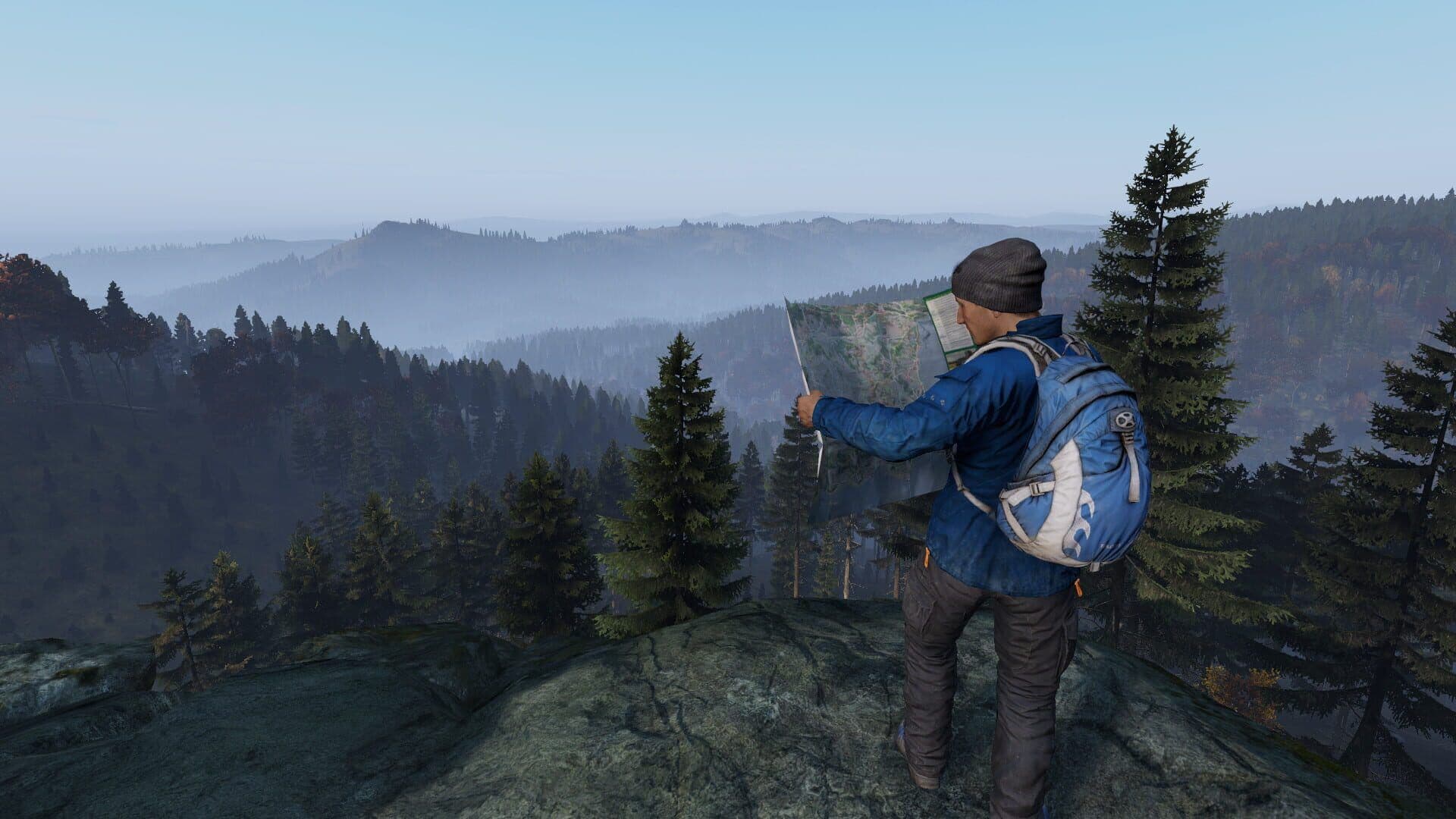
Check-ins built around landmarks are what let the radio stay switched off in between.
Forty-two minutes is not a session. It is a patrol. The radio is therefore not something you leave on, it is something you turn on, and the groups that get real value out of radios in DayZ run to a schedule: at an agreed interval, or on reaching an agreed landmark, both ends switch on for a couple of minutes and then switch off again. Radio silence stops being a discipline anyone has to enforce and becomes the default state of the equipment.
That schedule is only supplyable because the two halves of the kit sit at opposite ends of the loot economy. The transceiver is the rare one — hunting and camping sites, police stations and eastern military loot, flagged rare in all of them — and losing it means going without until you find another. Batteries are common, spawning through industrial buildings, towns and villages, and cost one inventory slot and 10 grams each. Four spares is 40 grams and four slots for nearly three hours of uptime, which is the cheapest insurance in your bag; the radio itself is three slots and 250 grams.
The Field Transceiver Is a Building That Happens to Be Portable
The field transceiver's range is not five kilometres. It is the entire server — send and receive anywhere on the map, to anyone listening, with no distance to plan around at all. The in-game description calls it "An R-105 portable base radio station", and the word doing the work is base.
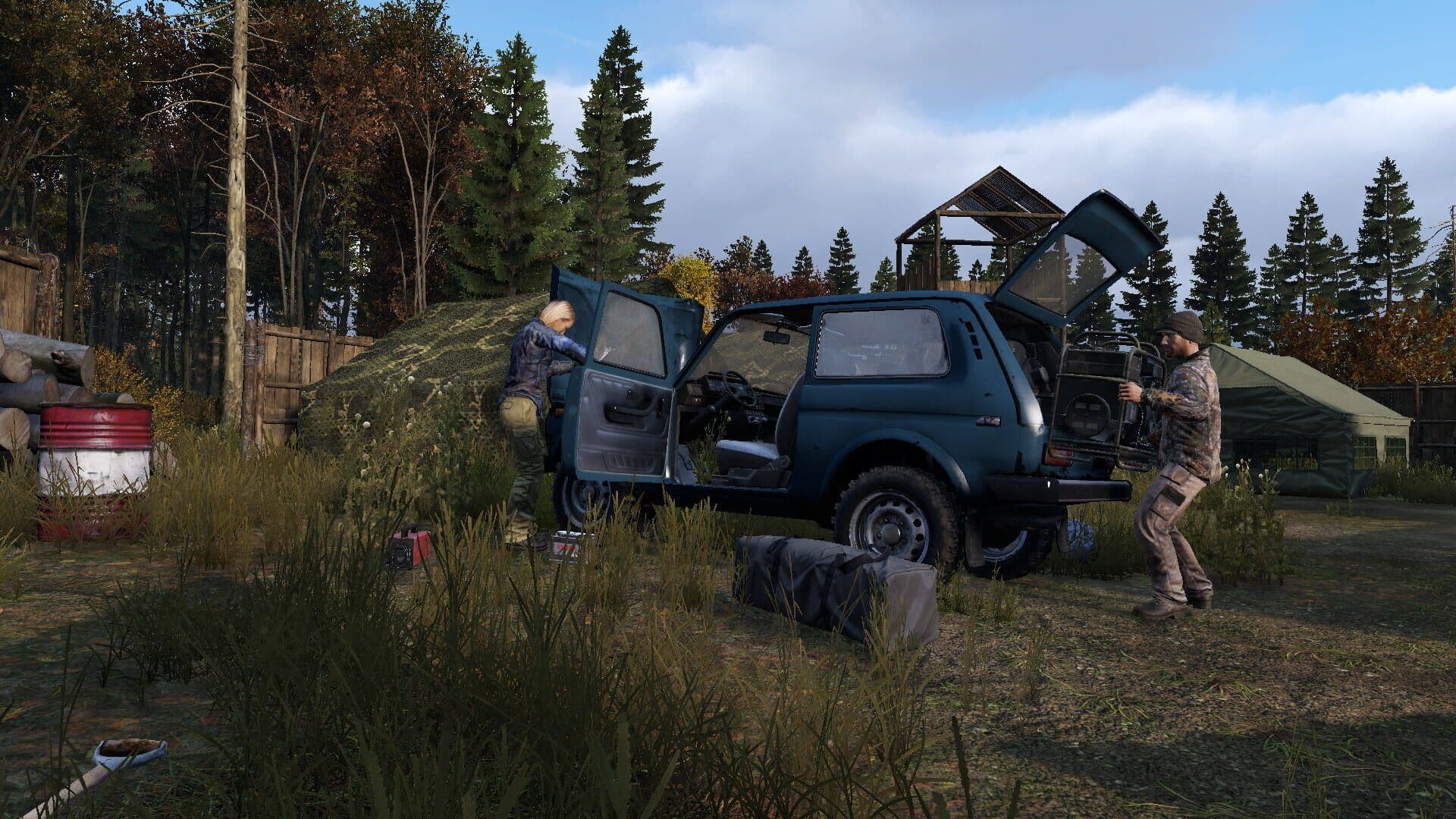
A car battery and a fixed position are what the field transceiver is actually asking for.
It occupies your back slot in place of a backpack, and the only thing it has room for is its own power supply: fifteen kilograms of radio whose entire listed capacity is one battery. Carried rather than worn it takes a 5x5 block — 25 slots, which only the largest packs in the game can swallow. It will not accept a 9V, either. The battery it wants is a car battery, ten kilograms and nine slots more, though that one at least recharges from a running engine or a charger.
Twenty-five kilograms of communications equipment and nothing on your back to carry anything else is not an oversight; it is the item telling you where it belongs. Bolt it to a base or a vehicle, feed it the car battery, and it becomes the anchor of a relay — one fixed station that can reach the whole map, and handhelds on the people actually out in it. Set up once, it never has to move again, and the fifteen kilograms stop being anybody's problem.
Every Death Puts a Live Microphone in Someone Else's Hands
Permadeath is the most discussed mechanic in DayZ and the least applied to communications. When a teammate goes down their radio does not disappear with them. It stays on the body, still switched on, still tuned to your frequency, and whoever killed them is now holding a working receiver on your channel. If they set it down while they loot, everyone within earshot of that corpse is listening in as well.
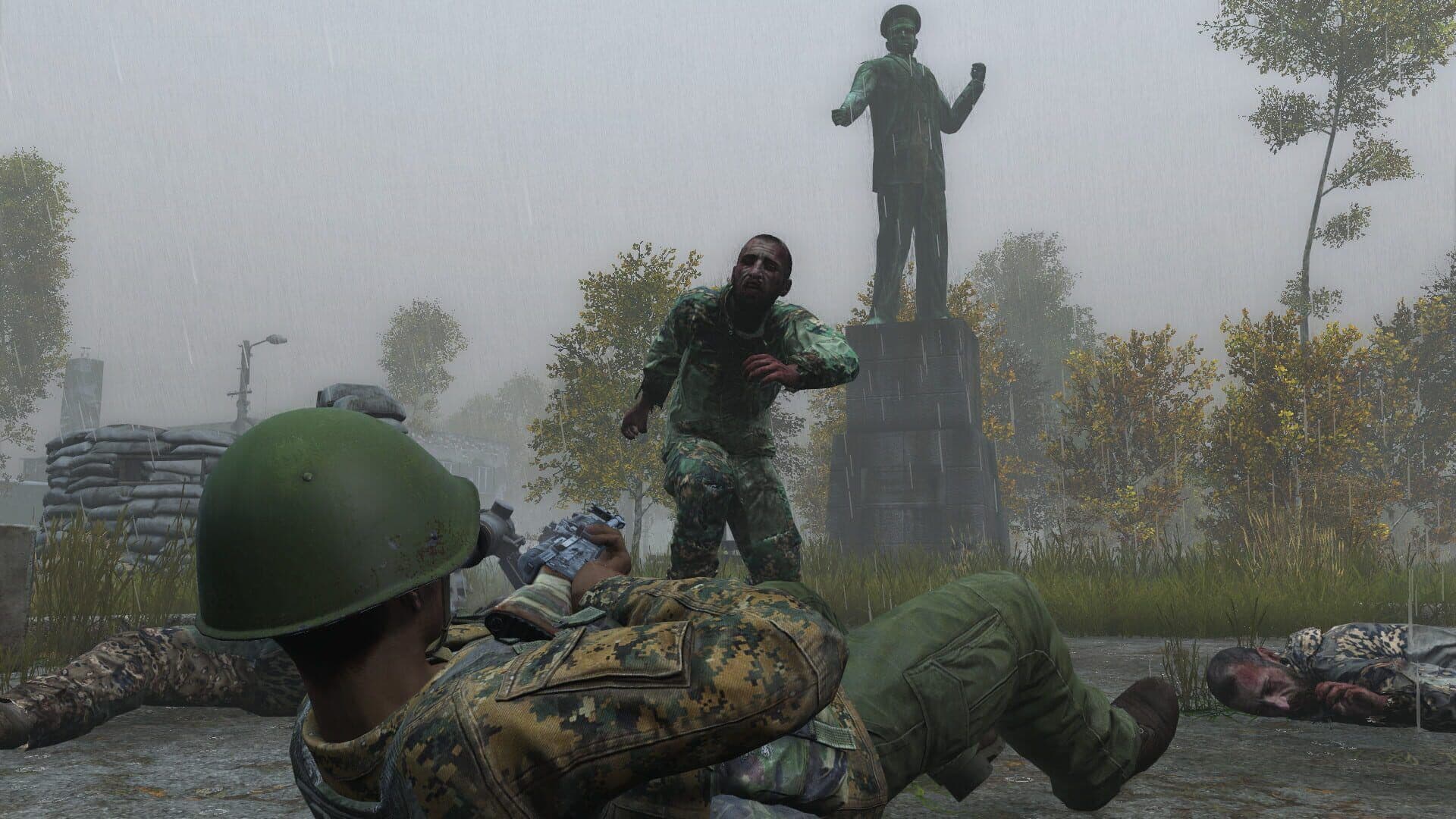
Whatever your teammate was carrying, the radio included, stays where they fell.
There is nothing to revoke. You cannot lock a survivor out of a frequency once they are holding a radio, and no amount of good discipline before the fight undoes it. Rotation is the entire remedy.
So make it a drill rather than a reaction. The moment someone dies and cannot be recovered, everyone still breathing moves to a pre-agreed fallback frequency — and nobody announces the change on the channel they are abandoning. Choose that fallback before you leave the base, give it a name you can say out loud without saying the number, and rotate again after every loss. Do that and a death costs you one loadout. Skip it and the next thing you lose is the place you were coming back to.