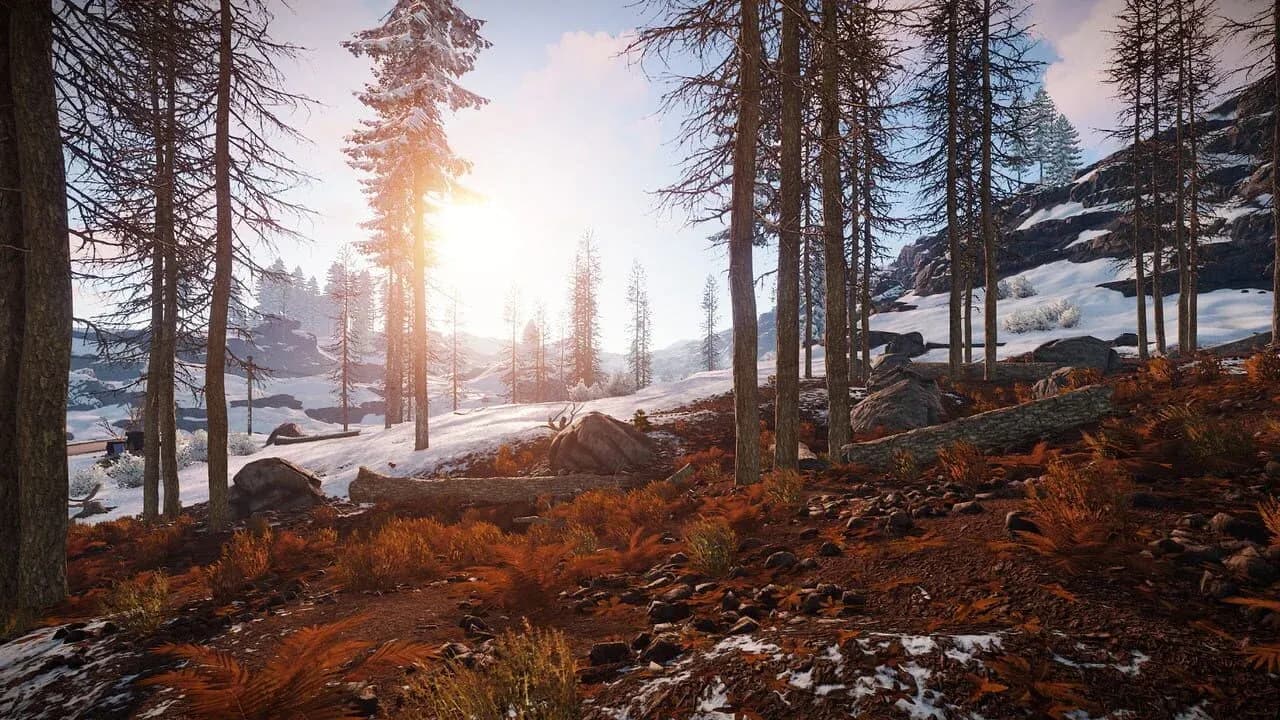
Rust tracks how wet you are on a bar separate from temperature, and that bar is why players dressed for the snow still freeze in an ordinary forest. It is the clearest case of a pattern running through all three of the game's environmental hazards: none of them behave the way their names suggest, and all three are settled by what you put on before you leave rather than by where you go.
Cold, heat and drowning are not three regions to avoid. They are three loadout decisions with very different price tags. Two of them you can fix on the spot. The third you cannot fix at all once you are in the water.
Wetness Is What Actually Kills You
Rain fills that bar. So does swimming, so does wading a river, and so does anything else that puts water on you — a sprinkler you walked past in your own compound, a water bottle emptied over your head, a squirt gun. Wetness does not merely add to cold exposure. It is what turns a survivable night into a lethal one.
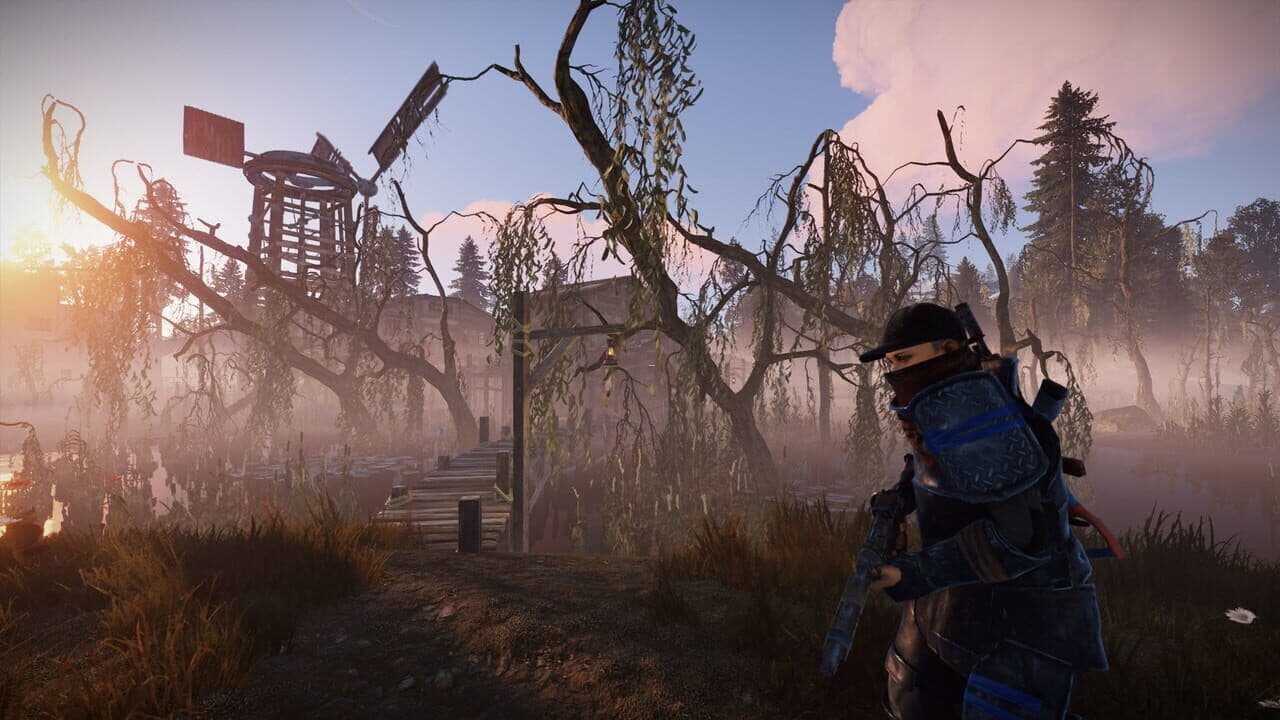
Wetness is tracked separately from temperature, and it is the bar that kills.
That is why the deaths never happen where you expect them. Hit 50% wet during the night cycle and the temperate biome alone — the green, unremarkable middle of the map you have crossed a hundred times — gets cold enough to start taking your health. You did not travel anywhere dangerous. You swam a river at the wrong hour, or the weather turned while you were out, and familiar ground became lethal underneath you. The snow biome is honest about what it is. A rainy forest is not, and that is exactly why it catches people who have been playing for weeks.
Cold has three causes in Rust: the winter biome, the desert at night, and wetness. Two of those are places you choose to go. The third follows you everywhere. And by the time your screen edges fog and crystallize, you are not managing a problem anymore, you are running from one.
The behavioral rule falls straight out of the mechanic. Heat alone does not cure cold while you are still getting wet: a campfire in the rain is fighting the rain the entire time you stand at it, and the rain does not get tired. You need heat and cover. If the only fire you can reach is an open one in a downpour, the fire is not your solution — the doorway next to it is.
One loadout answer removes the variable outright. The Wetsuit makes you immune to the wet effect, so you never accumulate it at all. Everything else is a matter of degree.
The Warmest Jacket You Can Build Costs You Your Chest Plate
Three garments carry meaningful cold protection, and they rank in almost the reverse order of how much bench progress they represent.
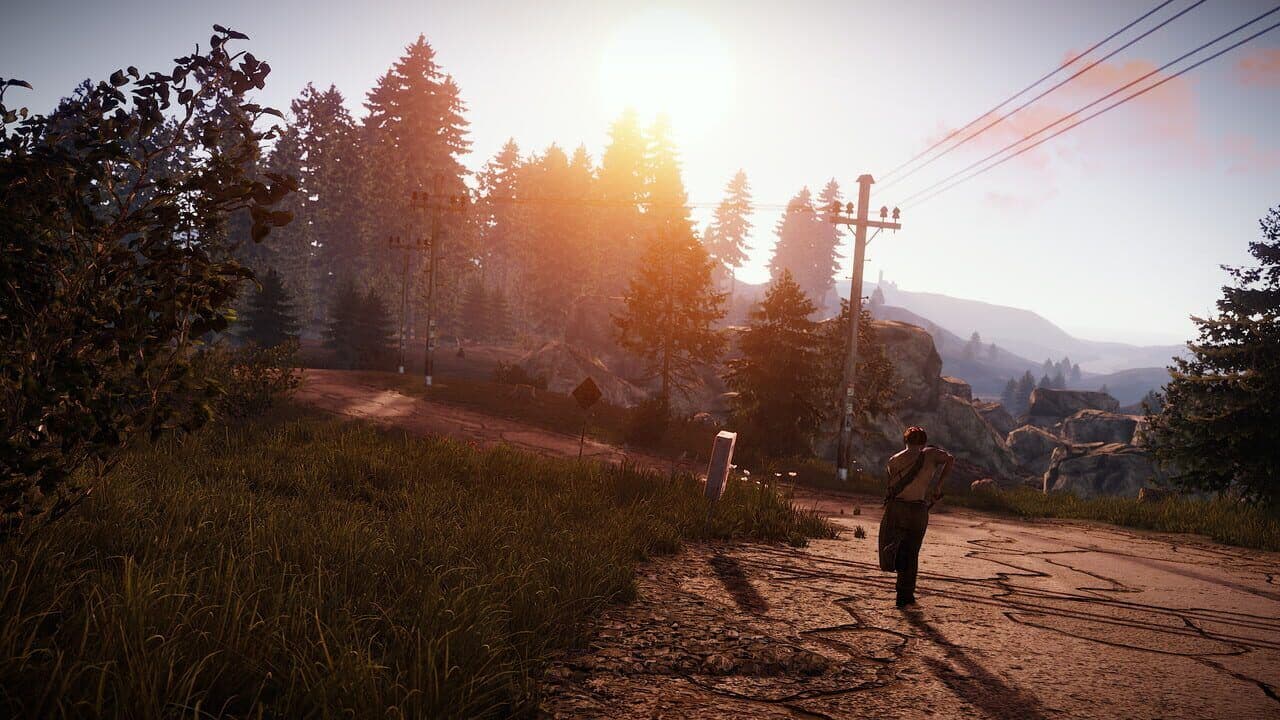
The jacket goes on for the walk out and into your bag before the fight.
| Garment | Cold protection | Slots it occupies | How you get it |
|---|---|---|---|
| Wetsuit | 80% | chest and legs, clothing layer | vendor or crate only |
| Snow Jacket | 67% | chest, clothing and armor layer | craft at Workbench Level 1, or buy |
| Hazmat Suit | 50% | full body | craft at Workbench Level 2 |
The Wetsuit wins on the number and has no recipe at all — it cannot be crafted, it cannot be researched, and it cannot be repaired. What it does not do is fight. It brings 10% melee, 30% bite and 15% radiation, and nothing else. It is a travel garment in the strictest sense.
The Snow Jacket is the warmest thing you can actually build, and it comes with real combat numbers attached: 20% projectile, 30% melee, 20% bite, 20% radiation. The catch is the slot. It is a full-torso item occupying both the clothing layer and the armor layer at your chest, and it is incompatible with any other chest armor — no hoodie underneath, no metal chest plate over the top. Wear it and your torso stops at 20% projectile protection. That is the trade, and it is why the jacket belongs on you for the walk out and in your bag for the walk in.
The recipe is where it catches people. Sixty Cloth and one Sewing Kit at Workbench Level 1, thirty seconds of crafting. That reads like an early-wipe project, and the Level 1 requirement sells the illusion. But a Sewing Kit is a Workbench Level 3 craft — 20 Cloth and 3 Rope — or 30 scrap to research, or 500 scrap through the Level 3 tech tree. The jacket is gated behind an ingredient two bench tiers above the bench you make it on. Sewing Kits do drop from barrels and crates, so if one is already sitting in your loot, spend it. If it is not, Outpost sells the finished jacket for 20 scrap, which is less than researching its ingredient. Early wipe, you buy this thing. You do not build it.
The Hazmat Suit is not the cheap option either. Eight High Quality Metal, five Tarp and two Sewing Kits at Workbench Level 2, with the blueprint at 60 scrap on a Research Table or 250 through the tech tree — twice the gated ingredient the jacket needed, one tier lower. Its value is not that it is easy to reach. It is that you already paid for it to survive radiation, and nobody mentioned that it carries 50% cold protection across the full body while it does that. If a Hazmat is in your box, you are already dressed for a cold monument run and do not need a second layer.
Which leaves a cleaner decision than four columns of numbers suggest. If you can reach a vendor, the Wetsuit is the best cold protection in the game and the one that costs you the least bench progress. If you cannot, the jacket is the warmest thing you can make — and since it eats your chest plate, it goes on for the crossing and comes off before the fight.
Overheating Is Something You Do to Yourself
The most useful thing to know about heat in Rust is that the obvious cure fails in exactly the gear you are most likely to be wearing when you need it. Get into water, everyone says. With a Wetsuit or a Hazmat Suit on, water does nothing at all — the waterproofing that kept the rain off you blocks the way out.
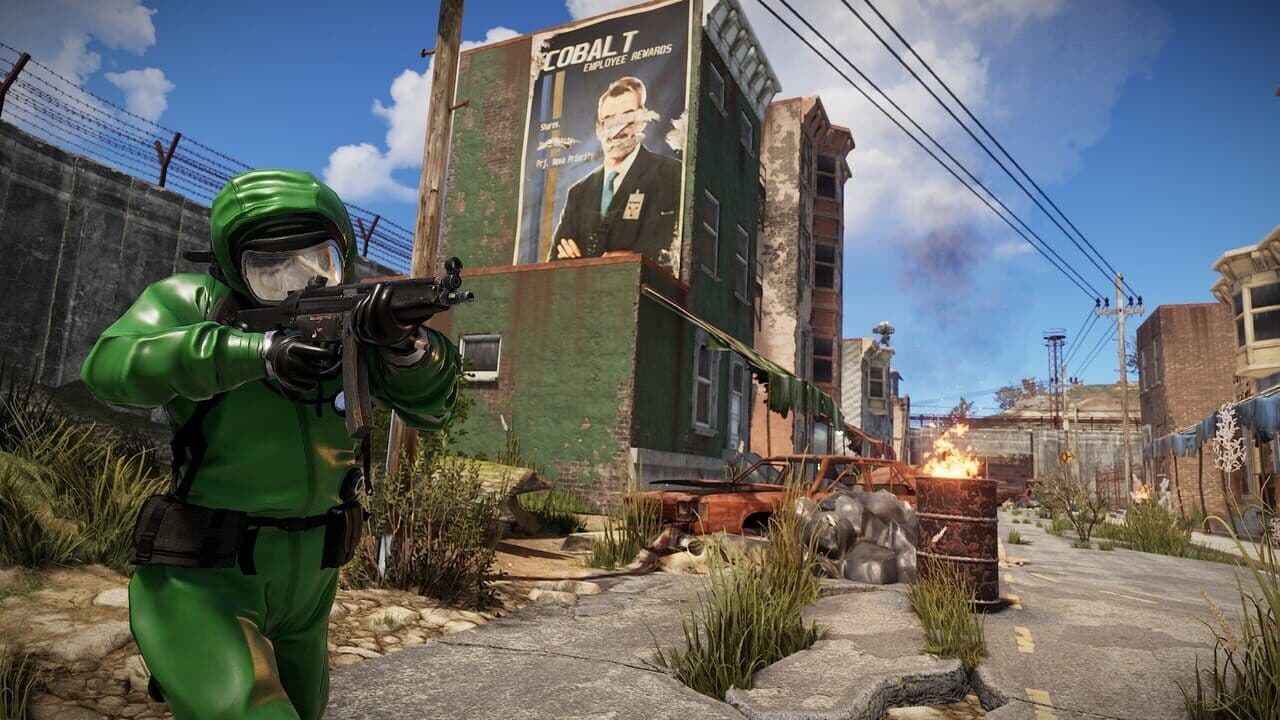
High cold protection plus a nearby heat source is the overheating everyone forgets.
That matters because of where overheating actually comes from. The desert by day is hot, and a Flame Thrower or an Oil Rig flame spout will cook you, but those are places you deliberately walked into. The cause that catches people is having abnormally high cold defense while standing near a heat source. It happens while you are standing still, doing chores, in the safest place you own.
The escalation is what makes it lethal rather than annoying. The Hot effect opens as minor health loss — a trickle easy to mistake for a scratch you took earlier — and then turns into progressive damage that will kill you if you keep standing there. The visual tell is sunspotting: bright blotches washing across your view. See that inside your own base and you are not being raided. You are wearing a Snow Jacket next to a bank of furnaces.
So the order matters. Strip the cold layer first, because that one always works. Turn off the campfires around you, or step away from them. Swim only if you are not the thing blocking it. Heat is the cheapest of the three hazards to solve — one inventory slot and a moment of attention — and the only one people routinely solve in the wrong order.
Every Piece of the Drowning Kit Is Loot-Only
Cold and heat both have an answer you can make. Drowning does not. Rust contains no blueprint for any of the four items that let you work underwater: the Diving Tank, the Diving Mask, the Diving Fins and the Wetsuit are all uncraftable and unresearchable. No bench tier unlocks them, and no amount of scrap in the tech tree puts you in the water. Every piece routes through a vendor or a crate, which makes the dive a decision taken on land, before the swim, and the one hazard here where progression buys you nothing.
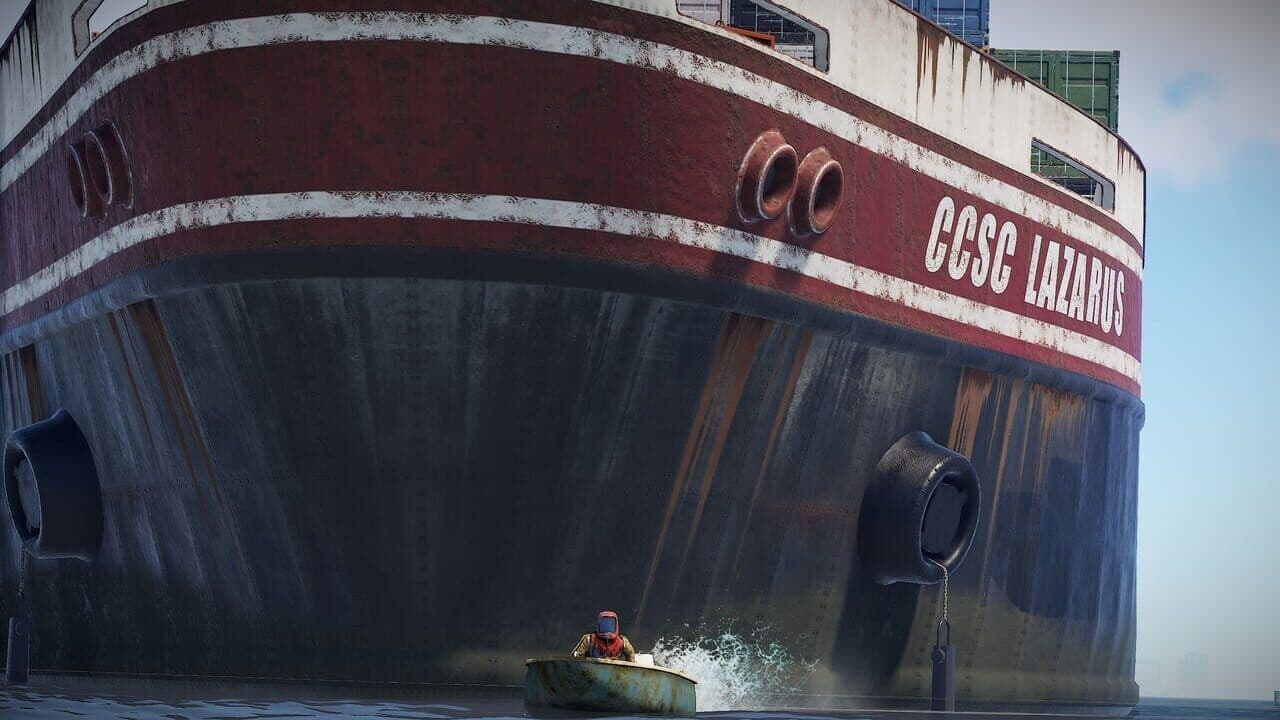
No blueprint exists for any of it. The dive is decided before you leave the shore.
The tank is what the trip is built around, and it holds 600 seconds of oxygen. The Double Diving Tank holds 1,080, and you cannot shop for that one — it is the reward for the Dive Master's Important Broadcast mission at Fishing Village, and each of his missions can only be completed once per wipe. One player takes one Double tank per wipe. Everyone else plans around ten minutes.
The other two pieces are trades rather than upgrades. The Diving Mask buys clear underwater vision at the cost of reduced peripheral vision. The Diving Fins give 50% more speed in the water and take 30% off your movement speed on land.
Which is why the Fishing Village stall matters more than any bench you own. The mask is 15 scrap, the Wetsuit 20, the fins 25 and the tank 35 — 95 scrap for the complete kit, on a stall that restocks every minute. There is no research price to weigh that against, because there is no research entry. Ninety-five scrap is not a discount on a blueprint; it is the only door that is reliably open. The alternative is crates, where the tank shows up at 2.5% in Brown Crates and Underwater Labs crates, 1.6% in Tools Crates and 1.1% in Underwater Basic Crates.
The tank is also the one uncraftable piece you can keep alive. A Repair Bench takes it back to full for 20 Metal Fragments and 2 High Quality Metal at 5% condition loss each time, where a worn-out Wetsuit is simply gone. Plan the dive around the air pockets inside Underwater Labs, too: surfacing in one refills the tank completely, which turns a single 600-second tank into a route rather than a countdown.
So treat the dive as a shopping trip, and do the shopping first. If the stall is empty when you arrive, wait the minute rather than swim without a tank. Put the mask, the Wetsuit and the tank on there, and leave the fins in your bag until you are standing at the water's edge — 30% off your land speed is a long, slow walk to the coast, and slow is how you get shot before you ever get wet.