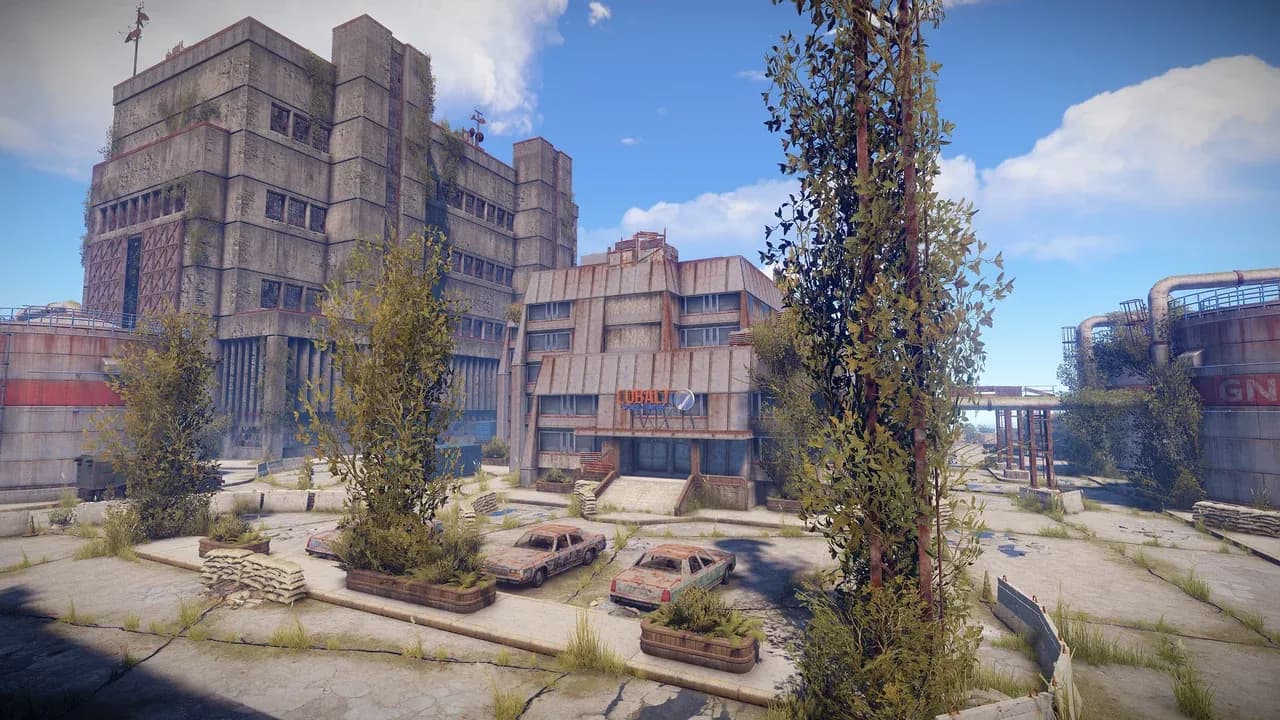
Rust’s strongest lore is not an answer to what caused the apocalypse. It is the visible history of places built for a purpose and then stripped of their original context. Launch Site reveals a named Cobalt space program with a factory-to-pad production chain. Military Tunnels combines protected research, military storage, and an unexplained piece of aerospace hardware—but never names Cobalt as its owner. The scientists prove that these places remain valuable in the present, not who controlled them before the island fell.
Keeping those confidence levels separate does not make the mystery smaller. It replaces a tidy fan-made chronology with something stranger: several institutions, or several parts of one system, whose relationship is still hidden.
Treat Every Clue at the Right Confidence Level
Environmental storytelling works in layers. A Cobalt Space Center sign is direct evidence. Rails connecting a rocket factory to a launch pad support a strong inference about how the complex operated. A story about dirty bombs, cloning, or immortality is speculation unless another source closes the gap.
That distinction gives you a practical way to read Rust. First identify what an object is and where it sits. Then ask what process joins it to the objects around it. Only after that should you connect separate monuments. Launch Site survives all three steps cleanly; Military Tunnels becomes more interesting precisely where the third step stops being certain.
Launch Site Preserves a Broken Production Line
The rocket is the landmark, but the rails explain it. In Devblog 153, Facepunch described a factory where the rocket was manufactured and a train route that carried it to the platform. The hangar, transport line, crane, pad, fuel infrastructure, offices, and underground access therefore belong to an operating sequence rather than a collection of dramatic props.
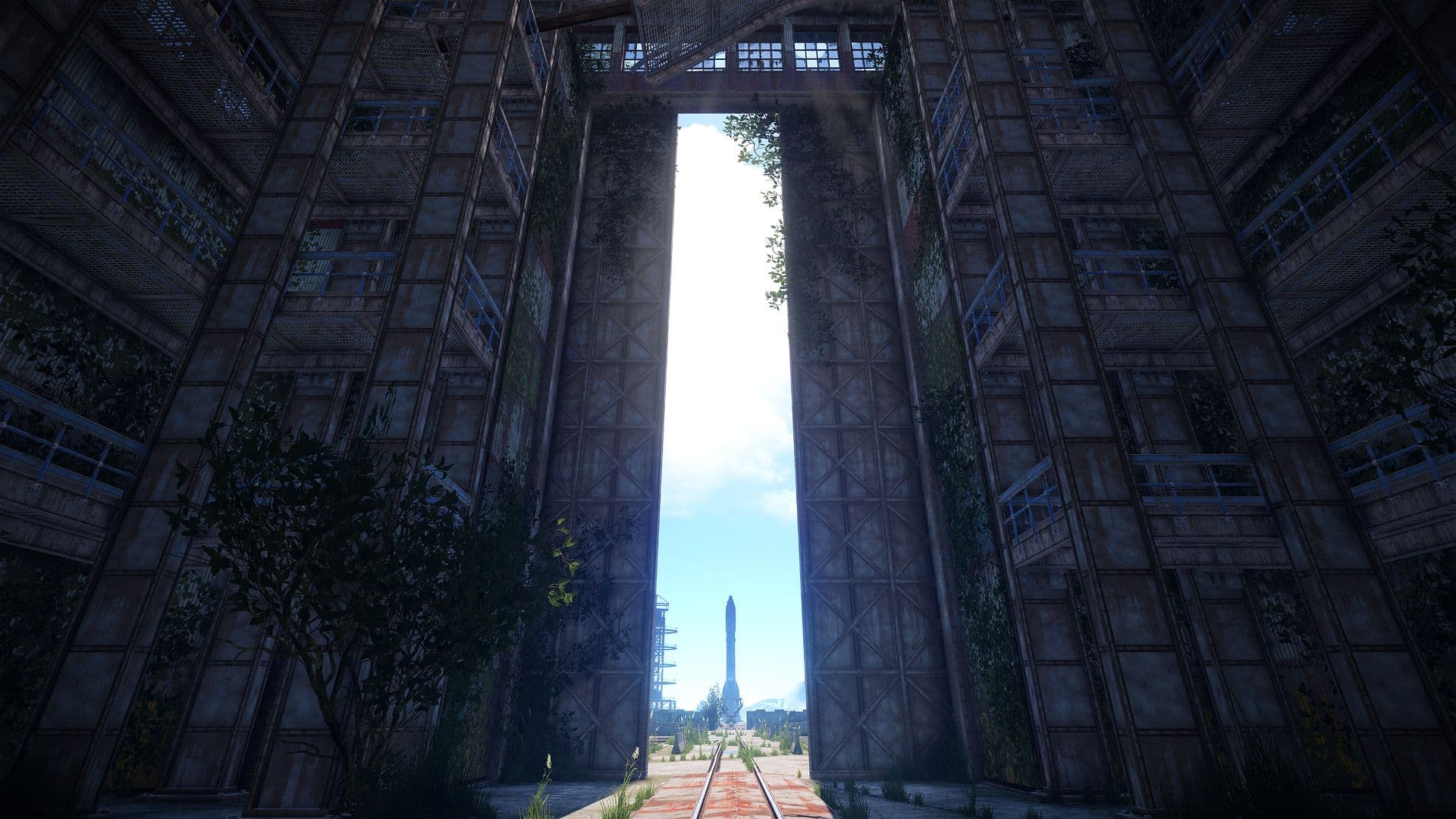
The factory, rail line, and pad form one visible production chain.
That sequence gives Cobalt scale. It needed manufacturing, movement, administration, fuel, and security to put one vehicle on the pad. The abandoned rocket and parts still suspended in the factory preserve different stages of work, as if the site lost its purpose before anyone dismantled the line. Devblog 167 identifies the completed monument as one of the island’s largest man-made complexes, which makes Cobalt’s absence more conspicuous than the hardware it left behind.
Radiation marks the site’s present as hazardous, but it does not identify the disaster. Launch Site establishes capacity: Cobalt could build, move, and prepare a rocket. The ruins never say whether that capacity caused the island’s collapse.
Cobalt Sold Tomorrow From a 1970s Office
The office block changes the scale from machinery to management. In Devblog 171, Facepunch said the rooms were deliberately furnished with 1960s- and 1970s-style assets. Teal filing cabinets, wood-veneer partitions, rotary telephones, and old computer equipment give Cobalt a retro-corporate identity instead of a generic science-fiction one.
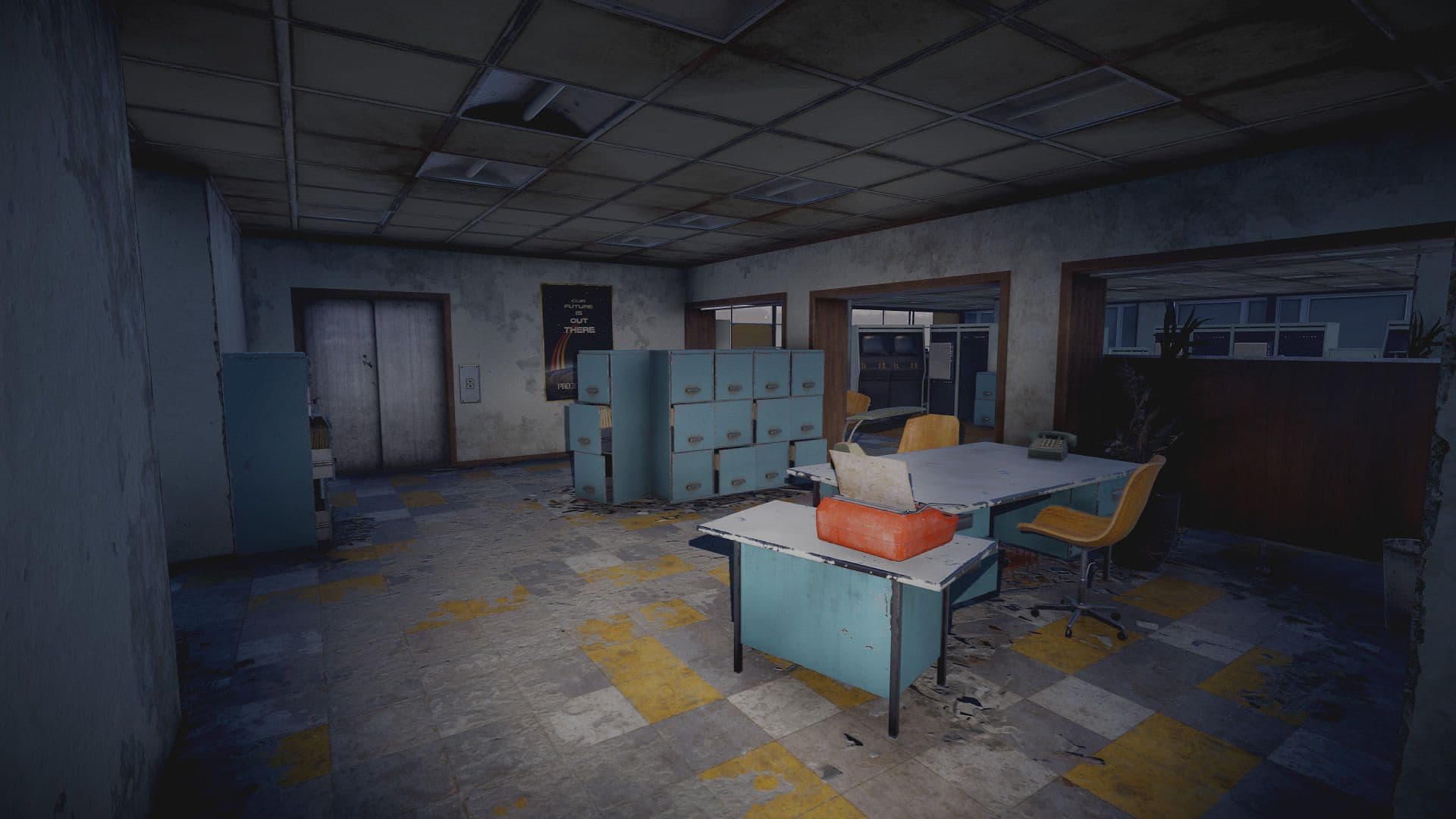
Facepunch deliberately styled the Cobalt offices with 1960s and 1970s assets.
A wall poster reads, “Our future is out there.” The slogan proves ambition, not a specific mission plan. Its real value is contrast: Cobalt advertised tomorrow from rooms whose technology already looked historical. The project imagined a future through the visual language of an earlier space age.
That detail also sets a limit on dating the world. Facepunch chose a period style; the props do not stamp an in-world year on the collapse. The offices tell you how Cobalt wanted to be seen—orderly, technical, optimistic—while the empty desks show how completely that institutional identity has lost its audience.
Military Tunnels Join Logistics to Research
Military Tunnels hides its scale. Roads and modest surface structures feed entrances in the rock; below them, rail branches pass storage, fortified positions, secured doors, and laboratory routes. Signs divide the network into functions such as Armory, Shelter 4 Storage, and Laboratory Section Y.
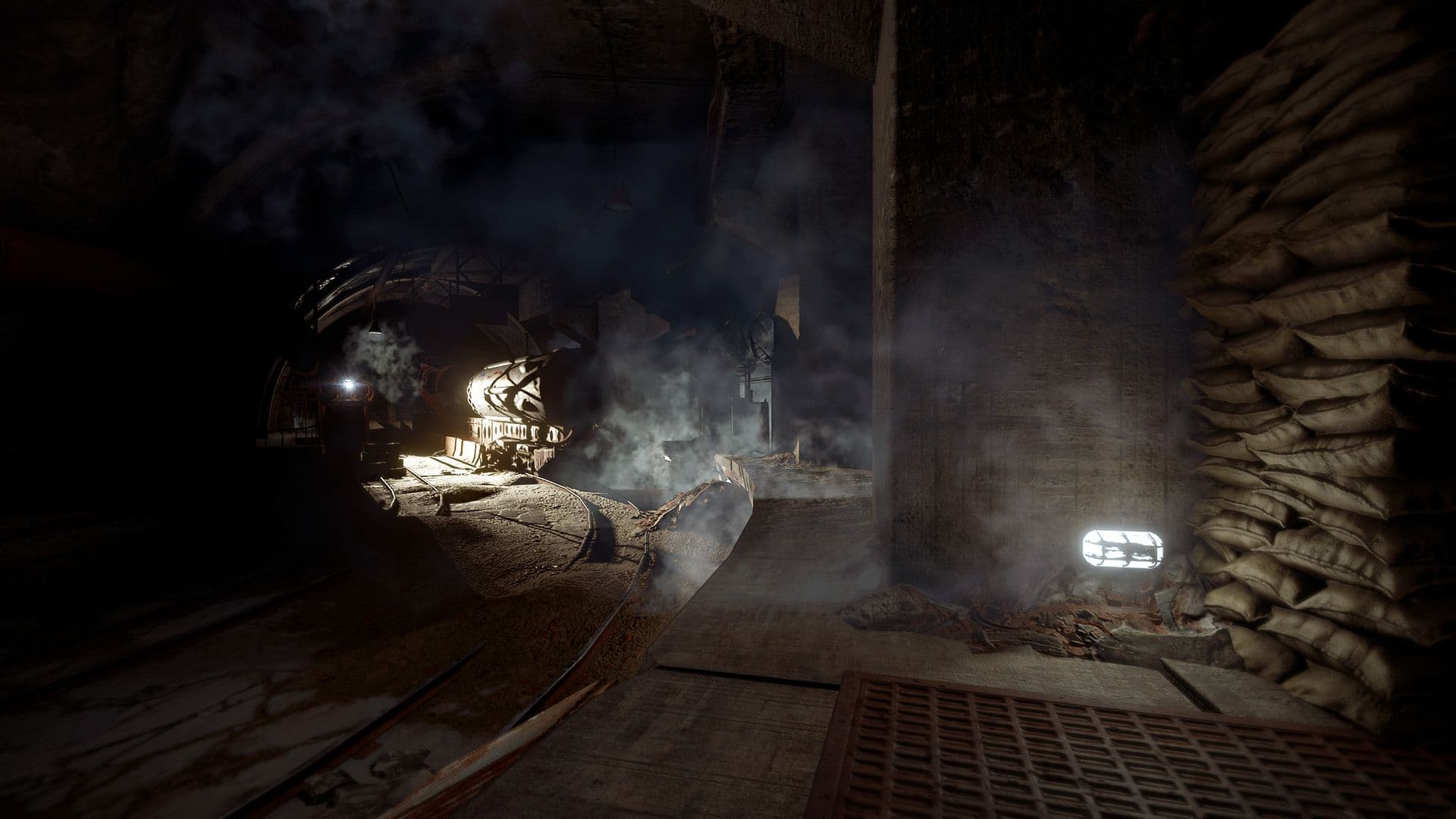
Heavy rail links military logistics to an unexplained aerospace object beneath the island.
One object makes the space harder to classify: a white aerospace fuselage rests on a purpose-built rail carrier beneath the Laboratory Section Y sign. The current Corrosion Hour monument guide documents that placement, while laboratory rooms contain tanks or vats whose contents are never labeled. The combination supports military-controlled research and heavy underground logistics. It does not identify a weapon, a cloning program, or the owner of the facility.
The distinction matters because the tunnel has no clear Cobalt sign. Its aerospace hardware creates a material echo of Launch Site, but an echo is not proof of common ownership. Devblog 196 also explains that the interior was substantially refreshed to support combat and scientist traversal, so barricades and blocked routes cannot all be treated as untouched records of the fictional disaster. The tunnels establish a second strategic layer beneath the island; their exact place in Cobalt’s organization remains the missing link.
Scientists Turn the Ruins Into a Live Site
Scientists do more than decorate the aftermath. Devblog 198 describes them guarding Military Tunnels, reacting to light and noise, and researching vehicle junkpiles with Geiger counters. At Launch Site, Bradley APC patrols around an inert rocket. Whatever their origin, these forces actively secure and inspect a world whose old infrastructure no longer performs its intended job.
The development notes use playful language about scientists “invading” the tunnels, but that is not enough to date their arrival inside the fiction. They could be later investigators, remnants of an earlier organization, or a gameplay faction whose history has not been written. What the game shows directly is more useful: the monuments are ruins, yet they are not abandoned.
That turns Rust’s lore from a dead crime scene into a continuing contest. Someone still treats contaminated debris, sealed laboratories, and dormant aerospace hardware as assets worth guarding. The unanswered question is not only what ended the old project, but why its remains still command armed attention.