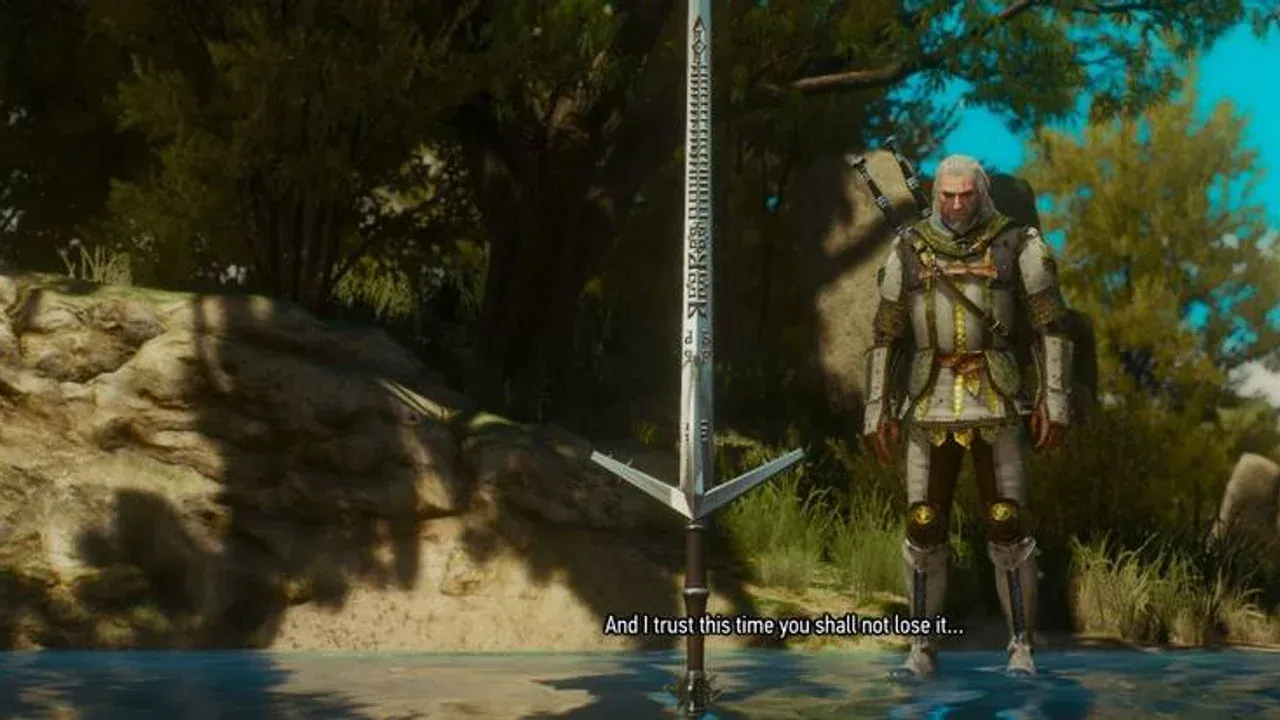
How to Unlock Aerondight in The Witcher 3: Wild Hunt
In The Witcher 3: Wild Hunt, the legendary Aerondight isn’t just another sword—it’s the ultimate silver blade that grows in power with you, making it a coveted prize for any endgame Geralt. This guide will walk you through every step to claim it, starting with how to even begin the hunt.
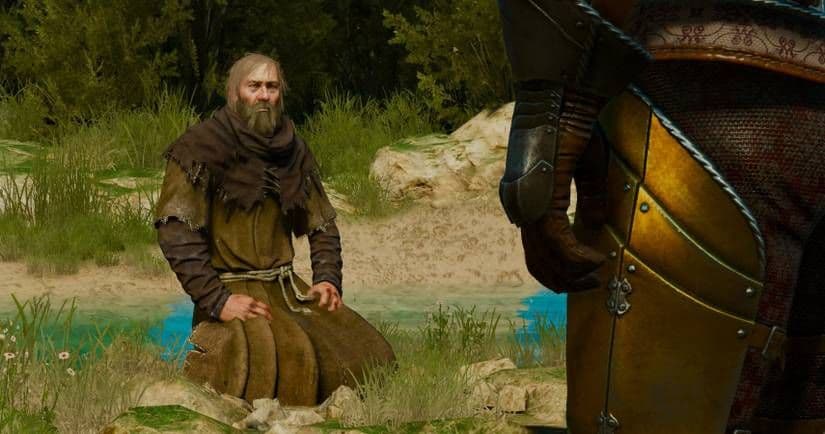
The Hermit at Lac Célavy explains the requirements for the sword.
First, you need access to the sun-drenched realm of Toussaint. This requires the Blood and Wine expansion, a high-level endgame adventure recommended for players level 34 or higher. Your ticket in is the quest ‘Envoys, Wineboys’, which you can pick up from a notice board in Velen. Complete it to unlock the Toussaint region.
Once you’re in Toussaint, head to the capital, Beauclair. Your quest for Aerondight officially begins at the notice board in The Gran’Place. Look for and read the notice titled ‘Test yourself with the Trials of the Virtues’ to start the quest ‘There Can Be Only One’.
The notice will direct you to Lac Célavy, a lake located north-west of Beauclair (or directly east of Corvo Bianco, your vineyard). Swim to the small, donut-shaped island at its center. Here, you’ll meet the Hermit, a mysterious figure who explains the core challenge: to prove you are worthy of the sword beneath the lake, you must demonstrate mastery of the five chivalric virtues of Toussaint—Compassion, Generosity, Honor, Valor, and Wisdom.
Don’t worry about rushing to the lake immediately. The game tracks your virtuous actions throughout the entire Blood and Wine story. You may have already unlocked some virtues before you even pick up the notice!
This opening act sets the stage. You now know where to go and who to talk to. The real work—proving your virtue across the duchy—comes next.
How to Prove the Virtue of Compassion in Toussaint
Compassion in The Witcher 3: Wild Hunt isn’t about grand gestures—it’s found in the quiet moments of mercy and empathy scattered across Toussaint. This virtue is tracked throughout your playthrough, and proving it is essential for claiming Aerondight. Here’s how to demonstrate your compassionate heart through three key opportunities.
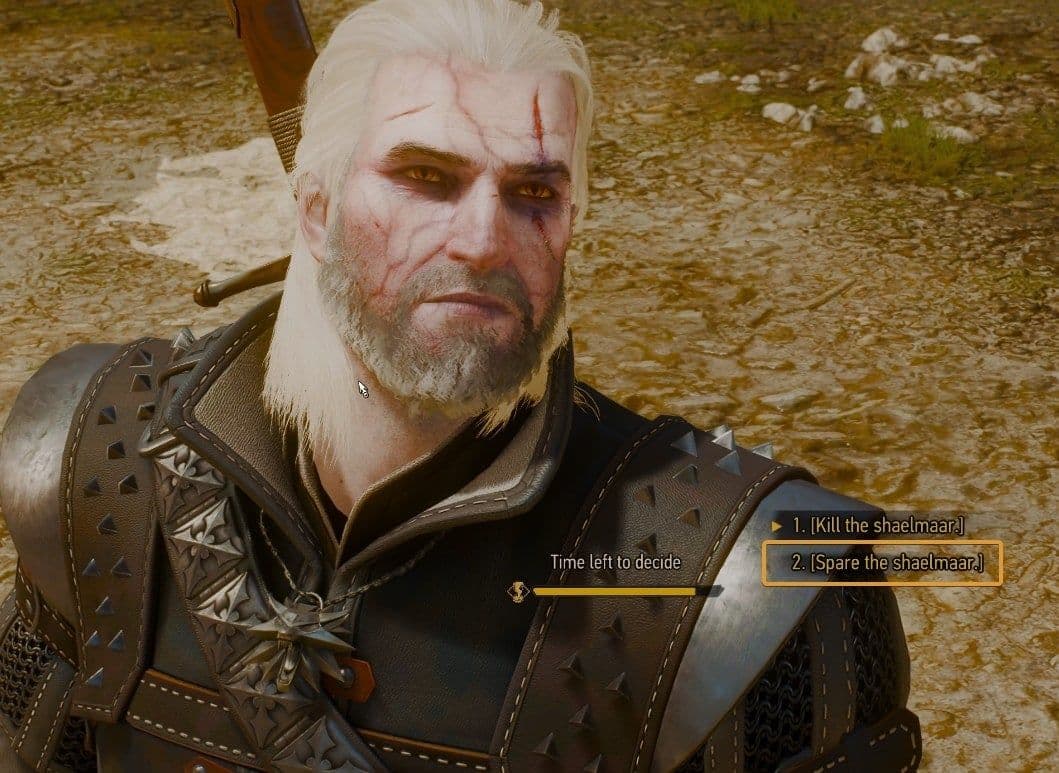
Sparing the Shaelmaar is a key choice for the Virtue of Compassion.
Compassion Choice 1: Spare the Shaelmaar
During the main quest ‘The Beast of Toussaint’, you’ll face a Shaelmaar in the arena. After the fight, you’re given a choice: kill the creature or spare it. Choosing to spare the Shaelmaar’s life is the most direct and reliable way to earn the Compassion virtue. It’s a clear act of mercy that the game’s hidden tracker recognizes immediately.
Compassion Choice 2: Show Mercy to Beasts and People
The secondary quest ‘The Big Game Hunter’ offers a two-part opportunity. First, at Count Beledal’s Camp, you’ll find a panther caught in a trap. Use the Axii sign to calm and free the trapped panther instead of killing it. Later, after the main hunt, accept the Count’s invitation to his exhibition. When speaking with him, choose dialogue options that show concern, specifically asking about his daughter. This combination of kindness to an animal and empathy for a person solidifies your compassionate nature.
Compassion Choice 3: A Less Conventional Mercy
A more nuanced option appears in the whimsical side quest ‘Goodness, Gracious, Great Balls of Granite!’ After tracking down the missing sculpted stones, you’ll have the choice to return them to the art curator in Beauclair. To prove Compassion here, you must do the opposite: choose NOT to return the stones to the art curator. While seemingly mischievous, this act is considered compassionate within the quest’s peculiar logic, as it spares the obsessive sculptor from his curator’s wrath.
You only need to complete one of these actions to satisfy the Compassion requirement for Aerondight. If you’ve already spared the Shaelmaar, you’re all set!
Remember, these compassionate deeds are recorded in the background as you play. Once you’ve performed one, you’ve proven this virtue and can move on to demonstrating the others. Your capacity for mercy is now confirmed, bringing you one step closer to the Lady of the Lake’s legendary gift.
How to Prove the Virtue of Generosity in The Witcher 3
Generosity in The Witcher 3: Wild Hunt is about open-handedness—a willingness to part with coin for a good cause, even when you don’t strictly have to. It’s one of the five virtues you’ll need to prove to earn Aerondight, and thankfully, the opportunities are straightforward and often tied to the main story. Here’s exactly how to demonstrate it.
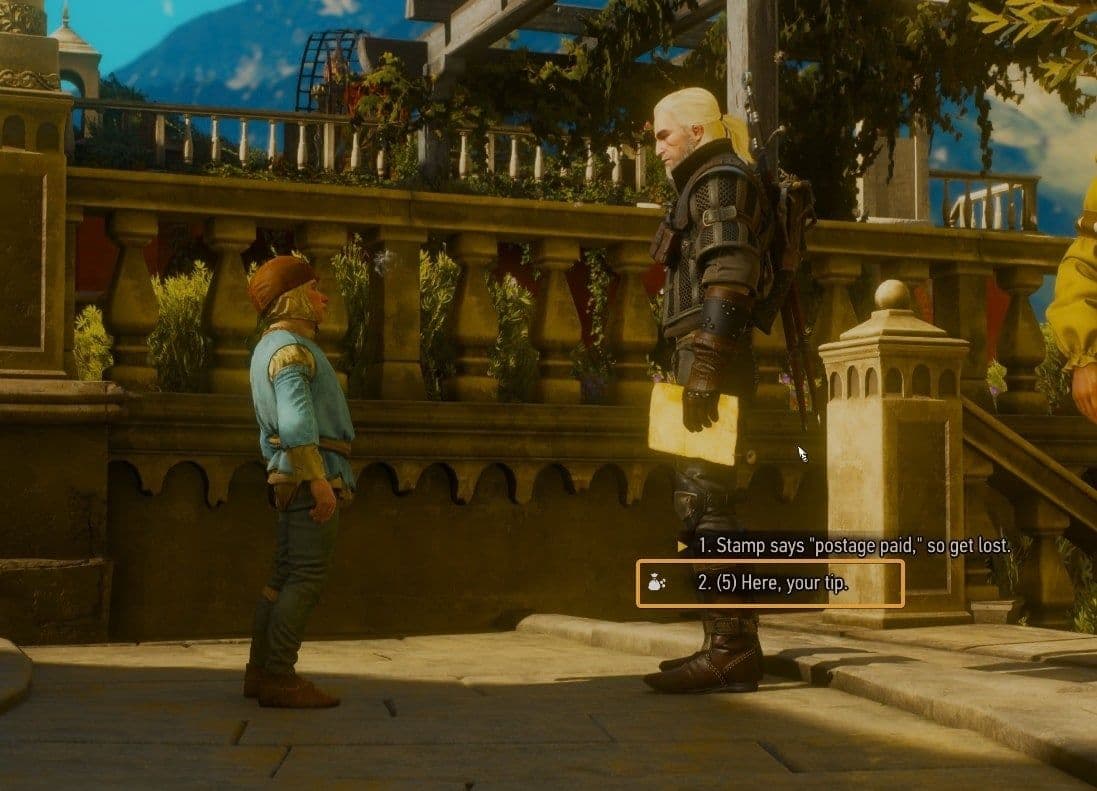
Tipping the messenger boy is a key way to prove your Generosity.
How to Prove Generosity
Your first and easiest chance comes early in the Blood and Wine expansion. During the quest ‘Turn and Face the Strange’, a messenger boy will run up to you in Beauclair with a letter. When he hands it over, press [A] to give him a 5 crown tip. That’s it—a small, simple act that the game tracks.
A more substantial test of your generosity occurs during the main quest ‘Blood Run’. While investigating in Beauclair, you’ll meet a shoeshine boy who offers information for a price. To prove your virtue, you must pay him the full 500 crowns he asks for. Crucially, you cannot use the Axii sign to persuade him, nor can you negotiate the price down. Pay the full amount willingly.
Finally, you can demonstrate generosity through the side quest ‘A Portrait of the Witcher as an Old Man’. After the painter finishes his work, he’ll offer to sell it to you. Press [A] to purchase the finished painting for 1000 crowns. While it’s a significant sum, this choice solidly counts as an act of generosity.
The ‘Turn and Face the Strange’ tip is the most reliable and earliest method. Don’t skip it—it’s an effortless way to lock in this virtue long before you even think about the Hermit’s challenge.
Remember, you only need to complete one of these actions to satisfy the Hermit’s requirement for Generosity. The game tracks your progress silently, so even if you did one of these long before picking up the ‘There Can Be Only One’ quest, it still counts. With this virtue secured, you’re one step closer to claiming the legendary sword from the lake.
How to Prove the Virtue of Honor in Blood and Wine
Honor in The Witcher 3: Wild Hunt is more than just a word in Toussaint—it’s about keeping your word, fighting fairly, and upholding the knightly code. Proving this virtue to the Hermit at Lake Lac Célavy involves making honorable choices throughout your adventures, and luckily, you have several clear opportunities.
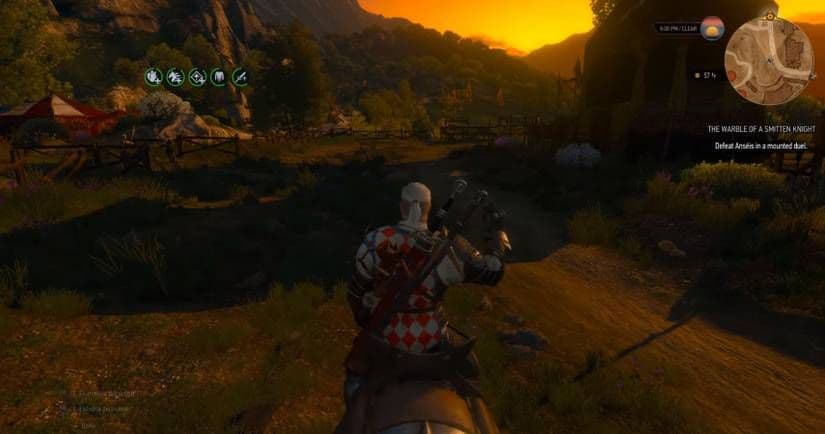
The mounted duel against Prince Anseis tests Geralt's Honor.
The most straightforward path is during the grand tournament in ‘The Warble of a Smitten Knight’. When you register, you’ll be given a choice of names. Here’s the trick: you must register as ‘Geralt of Rivia’ and then later accept and win the mounted duel against Prince Anséis. This public display of valor and honesty is a classic act of chivalric honor. Alternatively, within that same quest, you can prove your honor more discreetly. If you learn Vivienne’s secret about her curse, you must keep it confidential and not reveal it to anyone, including Guillaume, until the quest concludes.
You only need to complete one of these honorable acts to satisfy the virtue for the Aerondight quest. If you’ve already finished the tournament storyline, check your progress by speaking to the Hermit—you may have already passed this test.
If you missed the tournament, don’t worry. Other side quests in Toussaint offer a chance to prove your integrity. In the quest ‘Till Death Do You Part’, which starts at the Clever Clogs Tavern in Beauclair, you’ll mediate a dispute between two ghostly lovers. After investigating, return to the quest giver at the tavern and tell him the honest truth: ‘Actually, just a marital spat’. This act of straightforward, non-sensational honesty counts as a deed of honor.
Finally, the quest ‘Father Knows Worst’, found in a cave southwest of Lac Célavy, presents a grim moral choice. You’ll find a man named Hugo trapped by his vengeful brothers. To prove your honor here, you must make the hard but just choice to save Hugo and kill his brothers, upholding your duty to protect the innocent from clear evil.
With any one of these honorable deeds completed, you’ve satisfied the Hermit’s requirement. Your word is your bond in Toussaint, and now the game has taken note.
How to Prove the Virtue of Valor in The Witcher 3
Valor isn’t just about swinging a sword—it’s about facing a true challenge head-on and emerging victorious. In The Witcher 3: Wild Hunt, proving this virtue for the Aerondight quest requires you to step into the arena, whether that’s a formal tournament or a brutal fistfight, and win.
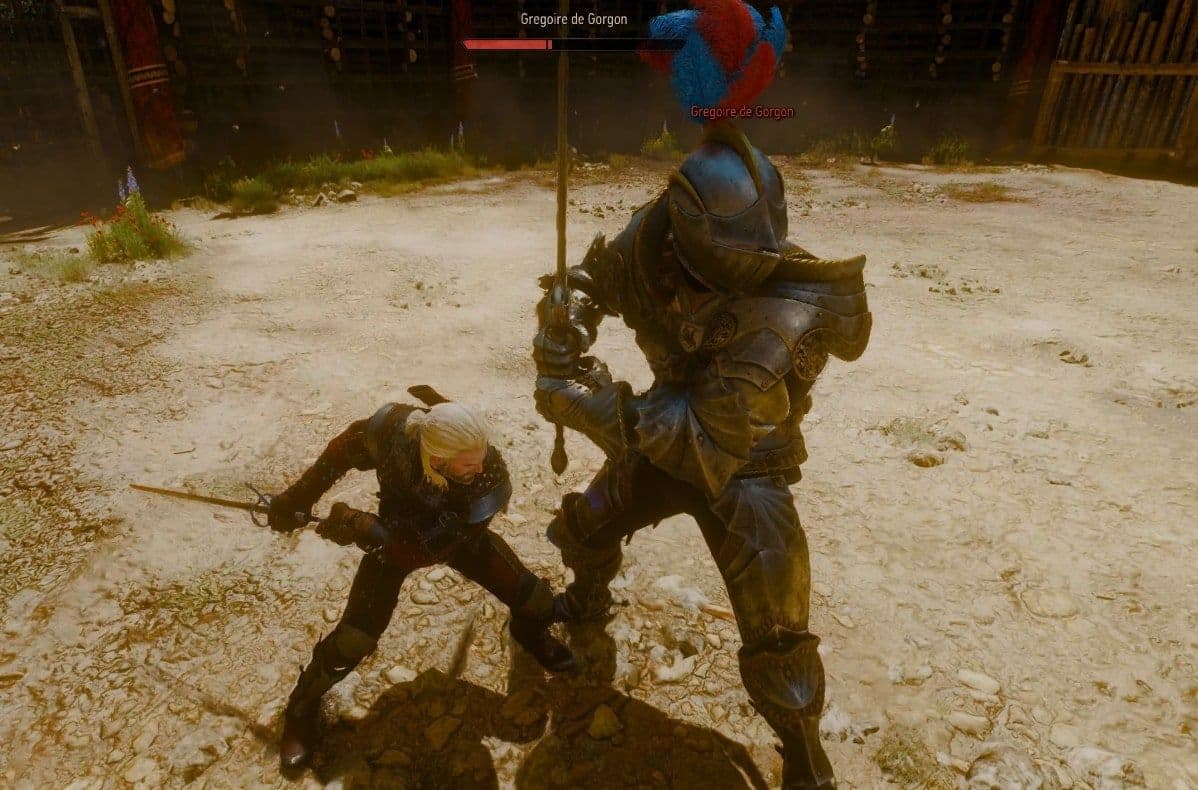
Defeating the champion Gregoire de Gorgon is a key requirement for Valor.
Here’s how to prove your courage to the Hermit at Lake Lac Célavy.
Win the Grand Tourney
Your most straightforward path to proving valor is to complete the ‘The Warble of a Smitten Knight’ side quest. After following Vivienne into the woods and returning to the Tourney Grounds, you’ll be asked if you wish to continue. This is the critical choice. You must choose to continue the tournament after the woods and win the overall championship. This means triumphing in the archery contest, the horse race, the melee brawl, and finally defeating the champion, Gregoire de Gorgon. It’s a multi-stage gauntlet, but coming out on top is a clear demonstration of knightly valor.
Dominate the Fists of Fury
If brawling is more your style, the ‘Fists of Fury: Toussaint’ questline will serve you well. You can find posters for this fighting competition on notice boards across the duchy. To prove valor, you need to see it through to the very end. This means traveling to different locations in Toussaint, defeating all three opponents and then beating the Maestro in the ‘Raging Wolf’ quest. The Maestro is the final boss of this underground fighting ring, and taking him down proves you’re the toughest witcher in the land.
Complete a Knight’s Icy Trial
A third, less common option involves helping a knight in distress. Northwest of Beauclair Palace, you’ll find a cave where the quest ‘Feet As Cold As Ice’ begins. Help the knight Francois by venturing into the cave to kill Grottore. After the beast is slain, Francois will be hesitant to claim his trophy. To prove your own valor, you must encourage him to seize his glory by telling him to ‘Take the damned head’. This decisive, encouraging act is counted as a deed of valor.
The tournament in ‘The Warble of a Smitten Knight’ is the most reliable method, as it’s a main story-adjacent quest you’re likely to complete anyway. Just remember to say “yes” when asked to continue after the woods segment.
With any one of these deeds accomplished, your courage is officially recognized in The Witcher 3. The path to Aerondight is getting clearer—one virtue down, a few more to go.
How to Prove the Virtue of Wisdom in Toussaint
Wisdom isn't about brute force in Toussaint—it’s about knowing when to listen, when to solve, and when to show mercy. This virtue is proven by making the clever, thoughtful choice when others might rush to violence or give up. In The Witcher 3: Wild Hunt, you have several key opportunities to demonstrate this quality.
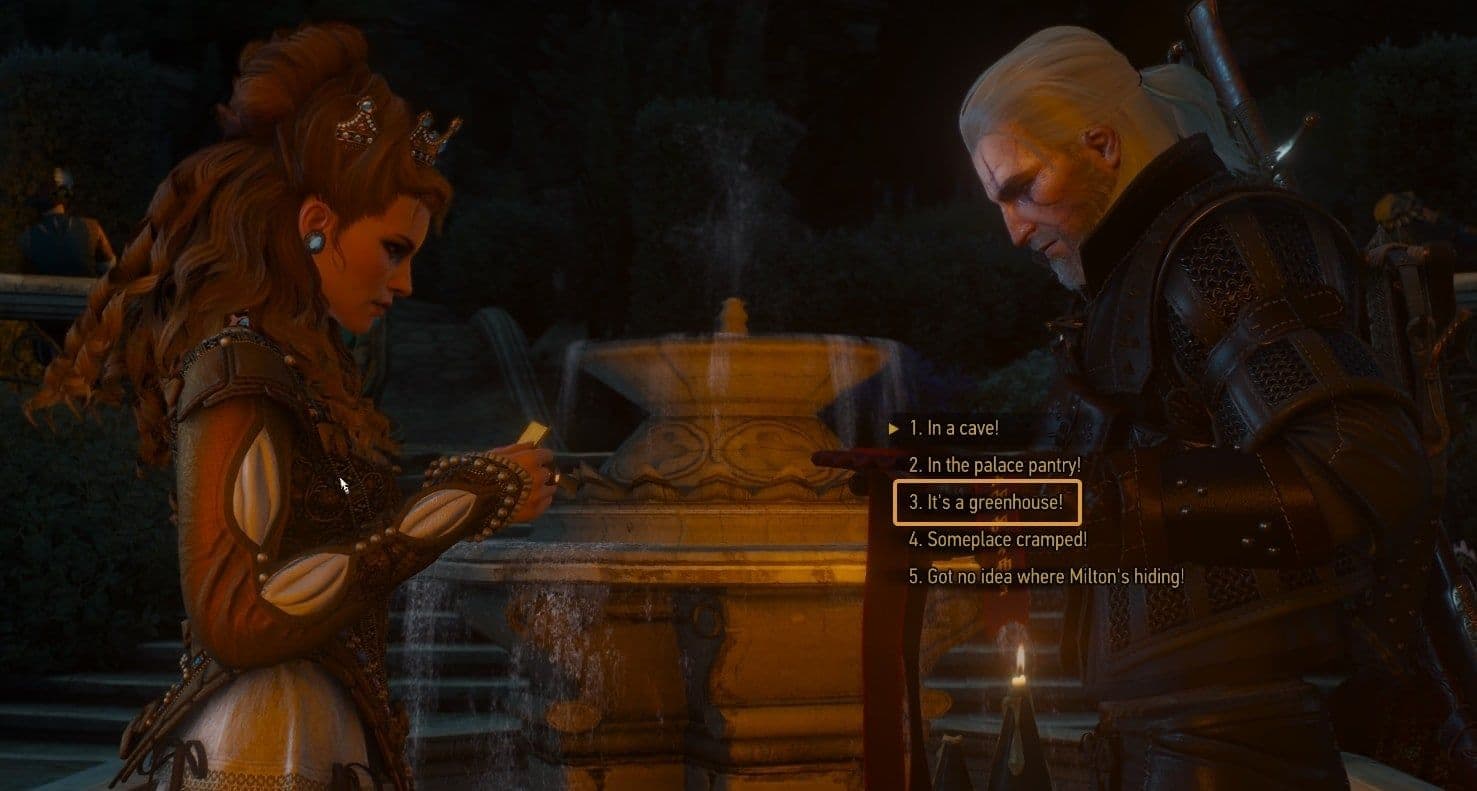
Solving the riddle correctly is a primary way to prove Wisdom.
The most reliable path to proving Wisdom is during the main quest ‘La Cage au Fou’. In the Wight's Lair, you’ll find the Spotted Wight. Instead of attacking her, choose to lift her curse. This involves sharing a meal with her without using spoons and following the scent trail afterward, which leads you to the transformed woman, Marlene. For the full virtuous act, later invite Marlene to stay at your home, Corvo Bianco. This compassionate resolution shows deep understanding and wisdom.
When eating with the wight, the game will prompt you to “Eat without spoons.” Selecting this specific dialogue option is the only way to proceed with the curse-lifting ritual.
Another clear-cut opportunity comes from the earlier main quest, ‘The Beast of Toussaint’. When searching for Milton de Peyrac-Peyran in the Palace Gardens, you’ll be presented with a riddle about the beast’s location. The correct, wise answer is to identify the ‘Greenhouse’. Choosing this option demonstrates perceptive problem-solving over guesswork or force.
For a third method, seek out the notice board at Castel Ravello in central Toussaint to start the secondary quest ‘A Knight's Tale’. Your objective is to lift a curse from a haunted tree near Lynx Crag. To do this, you must find and use Sir Gareth's Bone, located under a house in the same area. Successfully completing this quest by freeing the spirit proves your wisdom in handling supernatural affairs.
While these are the most direct methods, other actions like winning the Toussaint Gwent tournament or resolving conflicts through dialogue in various side quests can also contribute. The game tracks these choices in the background, so if you’ve been paying attention to lore and choosing peaceful solutions, you might already have this virtue secured. Once you’ve made enough wise decisions, you’re one major step closer to claiming your legendary reward from the lake.
The Hermit Boss Fight and Lady of the Lake
This is it—the final trial. After proving the five virtues across Toussaint in The Witcher 3: Wild Hunt, you’ve earned your right to the legendary blade. Now, you must claim it from its guardian. Return to the island in the center of Lac Célavy, east of Corvo Bianco, to speak with the Hermit. If you’ve met all his requirements, he’ll acknowledge your worthiness and then challenge you to a duel to test your martial skill. Don’t worry—this fight is more about patience and timing than raw difficulty.
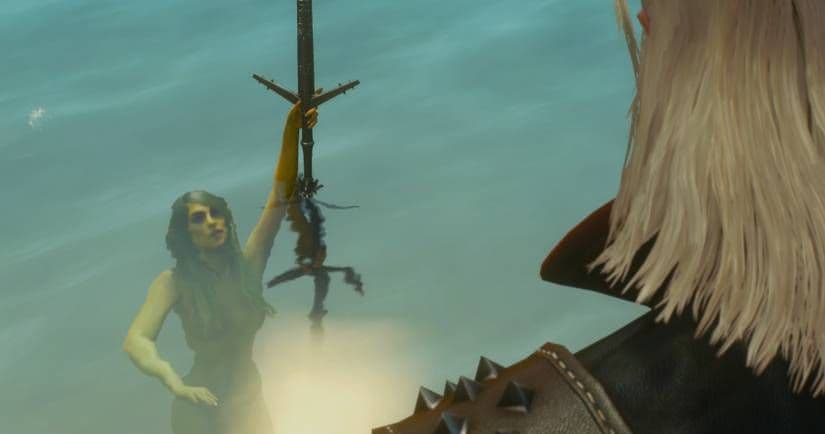
The Lady of the Lake rewards Geralt with Aerondight after the final trial.
Dueling the Hermit
The fight takes place on the water surrounding his island. The Hermit’s attacks are almost entirely water-based, but they’re well-telegraphed. He’ll launch water bolts, create a damaging water tornado, and occasionally teleport before striking. His most dangerous move is the water tornado; it can pull you in and deal heavy damage if you get caught. Your key is constant movement—use [B] to dodge sideways to avoid his projectives and create distance when you see the tornado forming.
While a silver sword is your default, the Hermit is considered a humanoid enemy. Switch to your Steel Sword for this fight and apply Hanged Man’s Venom oil for a significant damage boost.
For offense, don’t get greedy. The Hermit has low stagger resistance. Use [Axii] or [Aard] to stun him, which creates a perfect opening. Dash in, land 1-2 light attacks, then immediately [B] dodge away to reset. This hit-and-run tactic is safe and effective. If you’re feeling confident, his water-based nature makes him vulnerable to fire; a well-timed [Igni] can also stagger him for a follow-up heavy strike.
Claiming Your Reward
Once you deplete his health bar, a brief cutscene plays. The defeated Hermit vanishes beneath the water, and in his place, the Lady of the Lake rises from Lac Célavy to bestow your prize. She will present you with Aerondight, the legendary Relic Silver Sword.
The sword’s base damage will be scaled to Geralt’s level at the moment you receive it, making it immediately powerful. This is just the beginning of its potential, as its unique mechanics allow it to grow with you. With the blade finally in hand, your journey to unlock the best silver sword in The Witcher 3 is complete. Now, the real work of mastering it begins.
Aerondight Mechanics: How to Level the Best Silver Sword
You've earned Aerondight—now it's time to master it. This isn't a sword you just equip; it’s a living weapon that grows with you throughout The Witcher 3: Wild Hunt, and understanding its unique mechanics is the key to unlocking its true, game-breaking potential. Think of it less as a piece of gear and more as a permanent companion that scales to become the most powerful silver sword in the game.
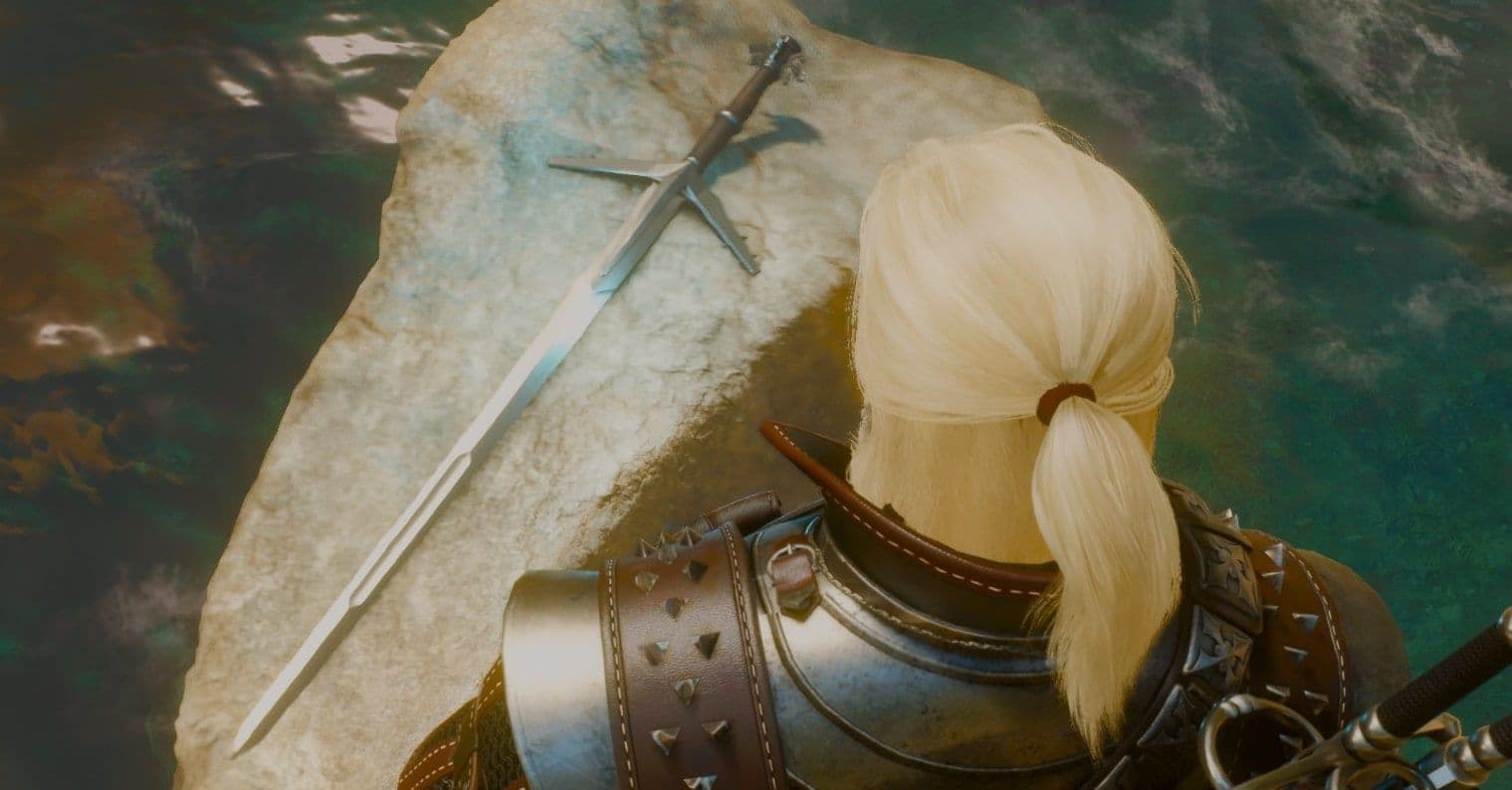
The sword lies at the bottom of Lac Célavy until Geralt is worthy.
Understanding the Charge System
The core of Aerondight’s power is its charge system. Every successful hit you land on an enemy builds one charge, increasing the sword's damage by 10%. You can stack this up to 10 stacks max, effectively doubling your base damage. Here’s the magic: landing the 11th hit at max charge is a guaranteed critical hit. You’ll know you’re fully charged when the blade begins to glow with a brilliant golden light.
Listen for the distinct, heavier sound effect on the 10th hit—it’s your audio cue that the next swing will be a devastating critical strike.
The Permanent Power-Up
This is where Aerondight separates itself from every other weapon. If you kill an enemy with the sword fully charged, you permanently gain +2 base damage. This increase has a cap that scales with your level, allowing you to gain up to +10 damage per Geralt level as you progress. This means Aerondight isn't just powerful when you get it; it actively levels up with you, ensuring it remains your best-in-slot silver sword from mid-game all the way through New Game Plus.
Managing the Penalties
This immense power comes with a catch: the charges are fragile. They are lost over time if you stop fighting, and more critically, they are halved instantly if Geralt takes damage. This means a single unlucky hit can cut your damage bonus from 100% down to 50% in a flash. This penalty makes defensive play not just smart, but essential for maximizing the sword's potential.
Strategies for Stacking and Sustaining
To reliably build and maintain those precious 10 stacks, you need a smart combat approach.
- Use [Quen] to block hits: Maintaining your Quen shield is paramount. If an enemy attack hits your Quen bubble instead of Geralt, it prevents charge loss. This makes the sign your best friend for farming permanent damage increases.
- Use the [Whirl] ability: Against groups of weaker enemies, the Whirl skill is your fastest tool for rapidly building stacks. Spinning through three drowners can get you halfway to max charge in seconds.
- Tip: Enable 'Enemy Upscaling': Found in the gameplay options, turning on Enemy Upscaling ensures enemies—especially lower-level ones—have enough HP to survive the 10 hits needed to fully charge Aerondight. If you're killing foes too quickly to build stacks, this setting is a must.
Putting It All Into Practice
Your goal in any fight is to enter a flow state: apply Quen, use fast attacks or Whirl to safely build to 10 stacks on a tanky enemy, then finish it with a heavy strike. Rinse and repeat. It might feel methodical at first, but once this rhythm clicks, you’ll be mowing down monsters with a sword that gets stronger every time you use it.
Master these mechanics, and Aerondight transforms from a legendary trophy into your most reliable instrument of monster-slaying justice. Let’s go.
Aerondight Upgrades: Runewright and New Game Plus
You’ve got the legendary sword in hand, but the journey with Aerondight in The Witcher 3: Wild Hunt is far from over. This final chapter is about turning your hard-earned relic into the single most dominant weapon in the game, both for your current playthrough and beyond. Let’s talk upgrades and longevity.
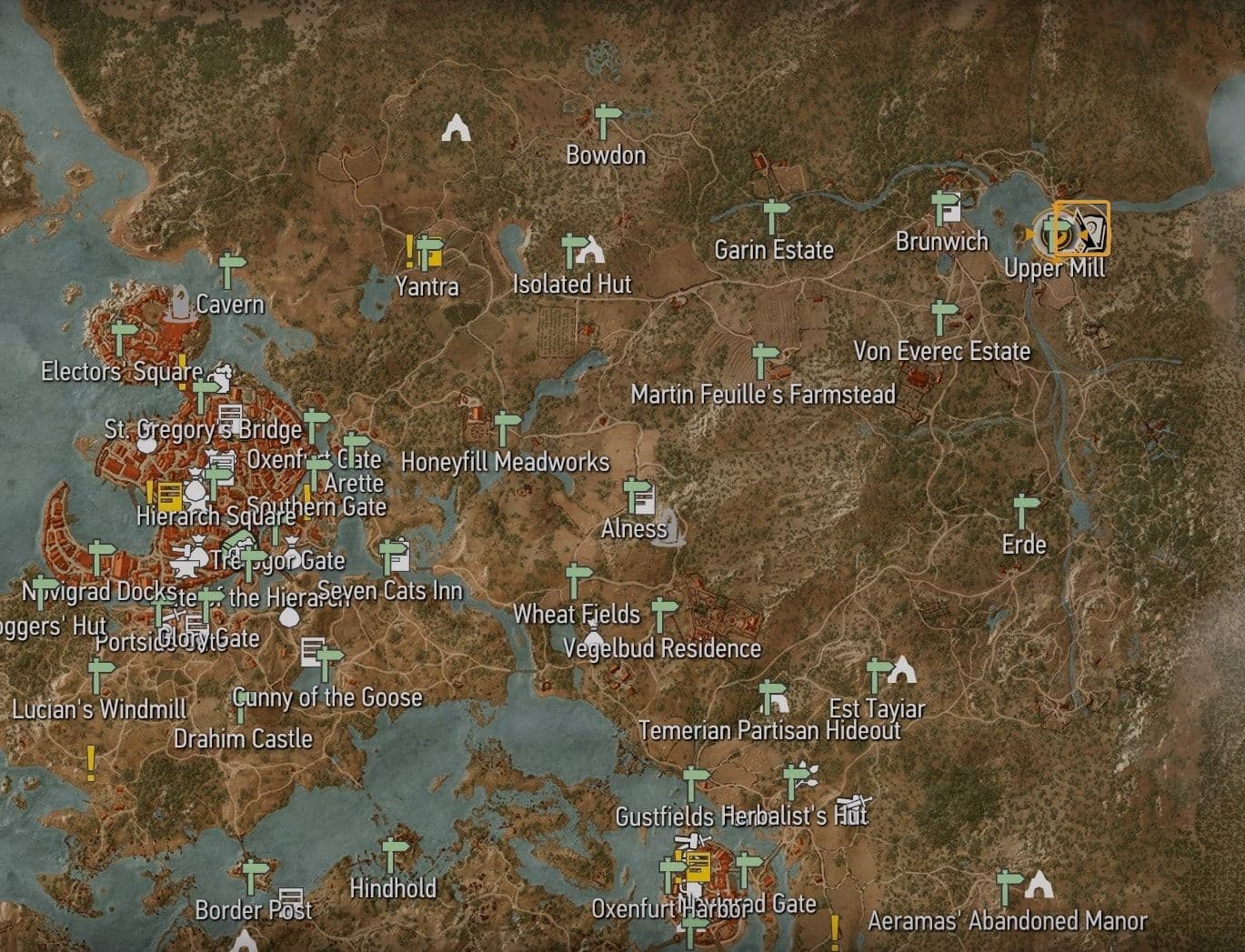
The Runewright's location in northeastern Velen.
Enhancing Aerondight with the Runewright
The true potential of Aerondight isn't just in its base stats—it's in the customization you can unlock. For this, you’ll need to visit the Runewright, a master craftsman located at the Upper Mill in northeastern Velen. Access to this NPC requires the Hearts of Stone DLC. He can add up to three rune sockets to Aerondight, though the gold cost increases with each socket. This investment is worth every crown, as it allows you to apply powerful Runeword enchantments.
Donate 10,000 crowns to the Runewright to unlock his full potential for crafting the best enchantments. This is a one-time investment that pays off for all your gear.
With sockets added, you can tailor Aerondight to your playstyle. A popular choice is the Severance Runeword, which significantly increases the range of your Whirl attack, letting you shred through groups of monsters with your charged, critical-hitting swings. This synergy between Aerondight’s charge mechanic and enhanced combat abilities is what pushes it into “overpowered” territory.
Aerondight in New Game Plus (NG+)
Here’s the best part: Aerondight isn’t just for one playthrough. When you start a New Game Plus (NG+), Aerondight carries over with you. More importantly, its unique scaling mechanic continues to work. The sword’s maximum potential damage increases as Geralt levels up, all the way to the game’s maximum level cap of 100. This means you can keep leveling it in your NG+ run, ensuring it remains the best-in-slot silver sword from White Orchard all the way to a second showdown in Toussaint.
⚠️ Keep in mind: While most non-quest items carry over to NG+, quest-specific items, Gwent cards, and books do not. Your Aerondight, however, is a glorious exception.
This makes the initial effort to obtain and level Aerondight one of the most rewarding long-term investments in The Witcher 3. No other weapon grows with you so consistently.
Aerondight vs. Gesheft: The Final Verdict
You might hear about Gesheft, another powerful craftable silver sword found northeast of Beauclair. It boasts high base damage and a perk that doubles critical hit damage. So, which is better?
For sheer burst damage on a single hit, Gesheft can be impressive. However, for long-term dominance, Aerondight’s scaling makes it the undisputed champion. Gesheft’s stats are fixed when crafted, while Aerondight’s damage permanently increases as you use it and as Geralt levels. In a full playthrough or NG+, Aerondight will outpace and outlast any static weapon. It’s the gift that keeps on giving.
Your Takeaway: With Aerondight enhanced by the Runewright and ready for New Game Plus, you’re not just holding a powerful sword—you’re wielding a legacy weapon that will define your entire Witcher journey. Go forth and let every critical hit be a reminder of your virtue.