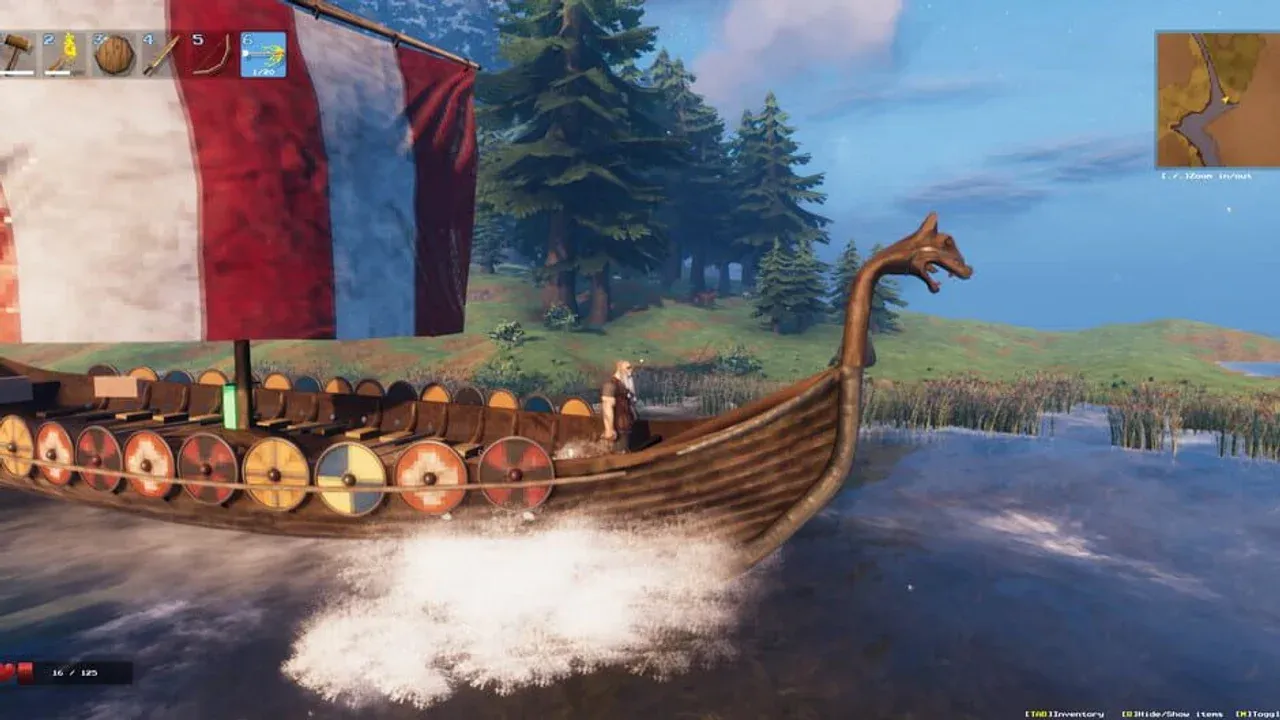
The Bog Witch update gives Valheim food a job beyond raising your combat stats. A feast stays at your settlement, serves ten times, and lasts 50 minutes per serving, so the payoff is measured in work completed rather than damage survived. If you treat it as a boss meal, it looks mediocre; if you treat it as infrastructure, it can remove an entire layer of kitchen busywork from a shared world.
Unlock the kitchen before you chase the recipe
The Bog Witch is a trader in the Swamps who sells the ingredients that complete the feast loop. You need her spice blends, a Food Preparation Table, and a Serving Tray: the table crafts the dish, while the tray places it on a flat surface so the group can eat.
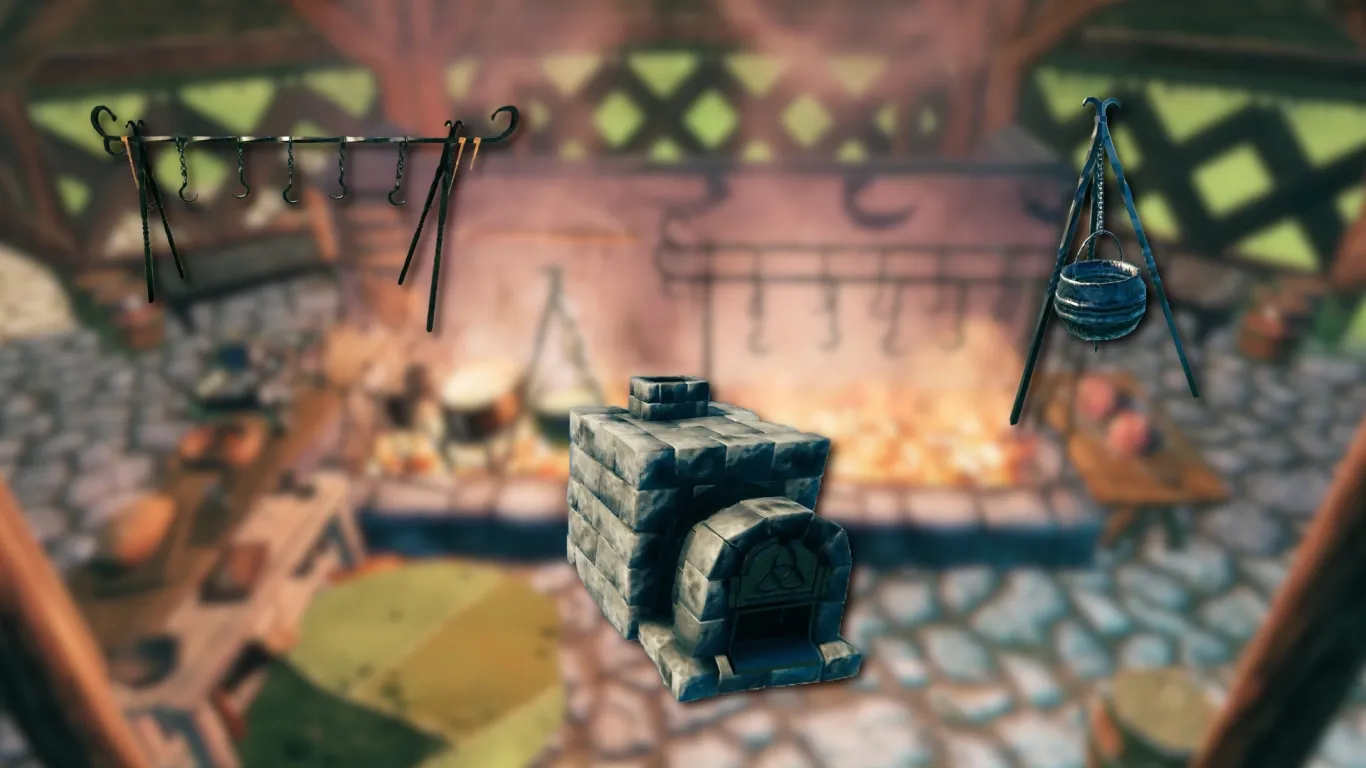
A prepared kitchen turns gathered ingredients into a repeatable production line.
That is the important progression change. The update does not replace the cauldron or turn every ingredient into one universal recipe. It adds a second production line that consumes the meat, vegetables, and biome ingredients you already gather, then adds a progression-gated blend to make the result worth sharing. New blends arrive as boss progression opens them, so the useful question is not “Which feast is strongest?” but “Which biome’s ingredients can my kitchen produce reliably?”
Make one trip to the Bog Witch part of your normal Swamp planning, then bring the ingredients home in a batch. A feast economy starts when the kitchen is stocked before the session begins, not when a player remembers food after the group has already sailed away.
Choose 50 minutes of uptime over peak combat stats
The update adds eight feasts. Every feast gives a balanced health-and-stamina boost; later options also add Eitr. Each placed feast gives ten servings, and each serving lasts 50 minutes. That turns one batch into a long, shared buffer: four players can eat from the same platter without four separate cooking runs, and a builder can work through a long session without refreshing food as often.
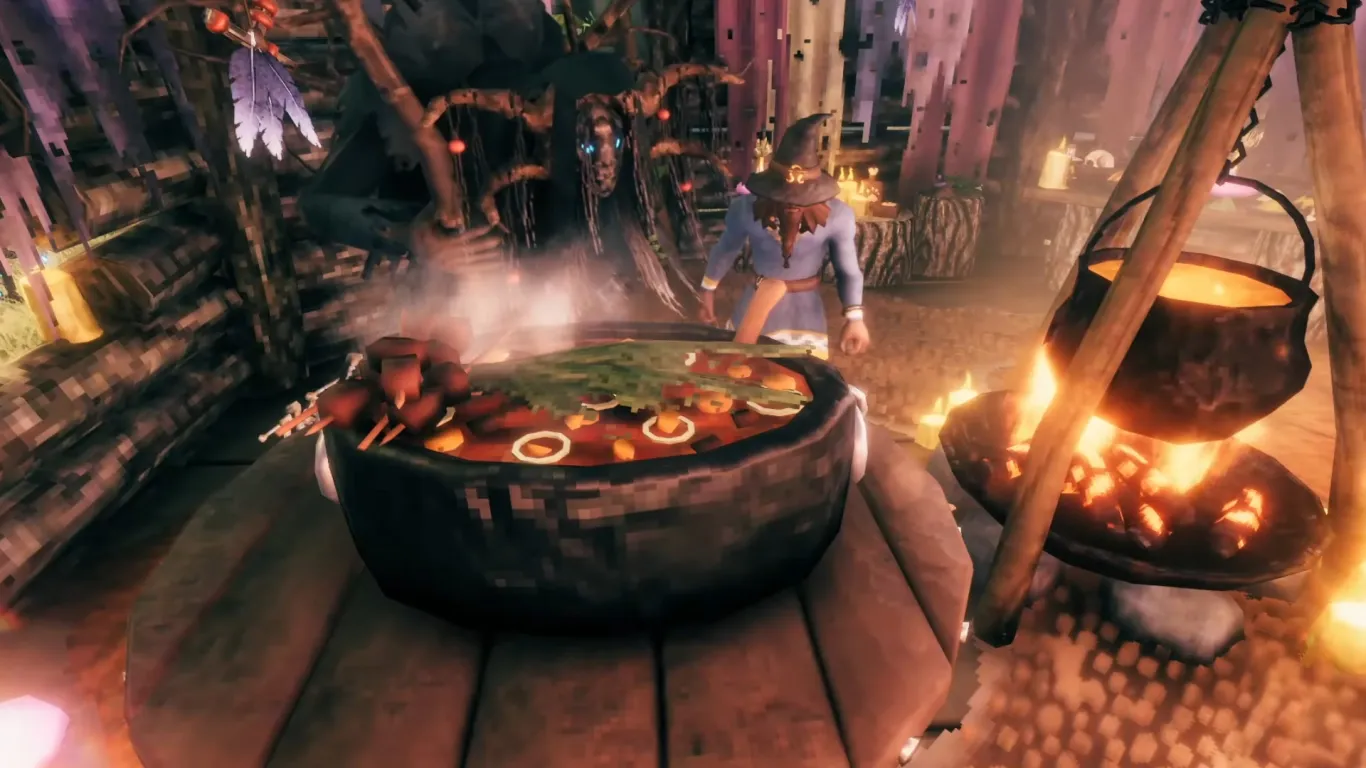
A placed feast turns one cooking session into shared long-duration food.
The tradeoff is deliberate. Feasts exchange peak specialization for uptime. The Plains Pie Picnic, for example, gives +55 maximum health and +55 maximum stamina for 50 minutes, while the Mistlands feast adds +65 health, +65 stamina, and +33 Eitr for the same duration. Those are excellent all-purpose numbers, but a dangerous fight still rewards a food choice built around the stat you are trying to maximize.
Place feasts in a dining hall, workshop, or dockside shelter before the group starts building or hauling. Once someone has taken a serving, removing the placed feast destroys what remains, so treat the platter as a consumable fixture rather than furniture you can rearrange freely.
Let three skills remove the kitchen bottlenecks
The Bog Witch’s three skills make the food loop cheaper through repetition. Cooking skill reduces the time needed to craft food and gives you a chance to gain one extra food, so a full pantry takes fewer crafting cycles.
Farming reduces the stamina cost of using the Cultivator, improves the durability of farming items, and gives you a chance at bonus crop yield. This makes the ingredient supply cheaper to maintain.
Crafting reduces crafting time, improves the durability of crafting items, and lowers the stamina cost of placing building pieces. Food production and base expansion therefore compete less for your stamina.
Cooking skill is the direct return on every feast batch, but Farming is what makes the input side sustainable. Crafting connects the two to the settlement itself: the same character who is processing food can spend less stamina placing the walls, floors, and storage that make a kitchen useful.
Do not grind these skills as a separate chore. Let Cooking skill build while you fill the pantry, Farming build while you maintain crops, and Crafting build while you turn the food stockpile into a better base. The benefit is not a flashy unlock; it is fewer repeated delays every time the server prepares for another expedition.
Set one feast rule for every kind of session
Use the job to decide whether a feast belongs on the table:
| Session | Put a feast on the table when… | Keep specialized food when… |
|---|---|---|
| Base building or hauling | Several players will stay near the base for a 50-minute work block | You are about to leave and need a combat-specific health or stamina peak |
| Routine sailing or travel | The group wants one balanced serving before departure and the trip is not a boss attempt | The route leads directly into a dangerous fight that demands a focused stat |
| Boss preparation | You are repairing, building the arena, or moving materials around the fight | The fight begins; use the meal that best supports your chosen defense or damage plan |
This rule keeps the economy honest. Feasts should absorb the hours around an expedition, not pretend to replace the specialized food that makes the expedition’s hardest encounter survivable. Cook them in batches, place them where the work happens, and reserve your best combat meals for the moment when balance is less valuable than a single maximized stat.