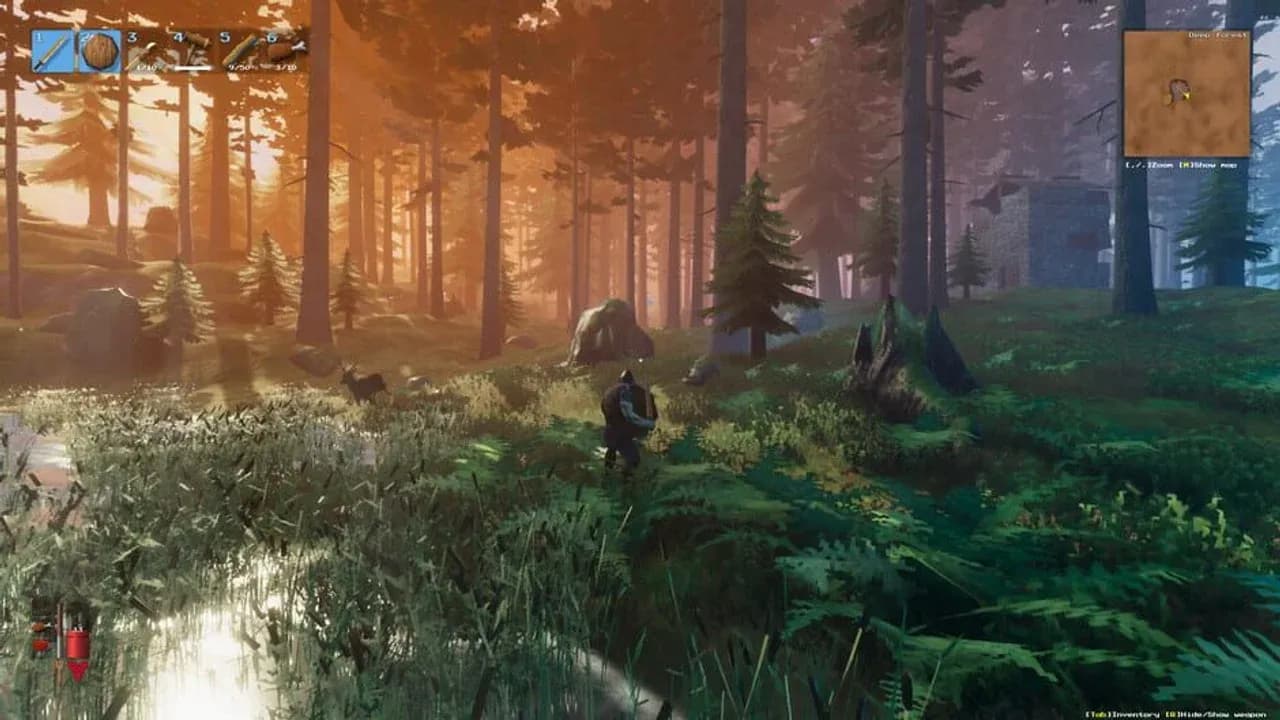
Hugin is not a tutorial. He is a receipt.
Valheim's raven fires on state changes — you picked up ore, you crafted a hammer, you crossed into the Black Forest, you died — so his message lands a beat after the moment it would have helped. Then he materialises beside you and keeps coming back until you stop and read him. Always late, always insistent: that combination is why the options menu ships a switch to shut him up.
Thirty-nine hints run through that stream between the Sacrificial Stones and the boiling waters south of the Plains. Ten of them sit on a mechanic the interface never shows you — some by stating it outright, several by pointing straight at it and then stopping one sentence short, which turns out to be where the useful part lives. The other twenty-nine are noise, and they are the reason the ten get binned unread.
Hugin Fires on Milestones, Not on Need
Every hint is bound to a milestone rather than to a difficulty. That sounds like the same thing until you watch the order it produces.
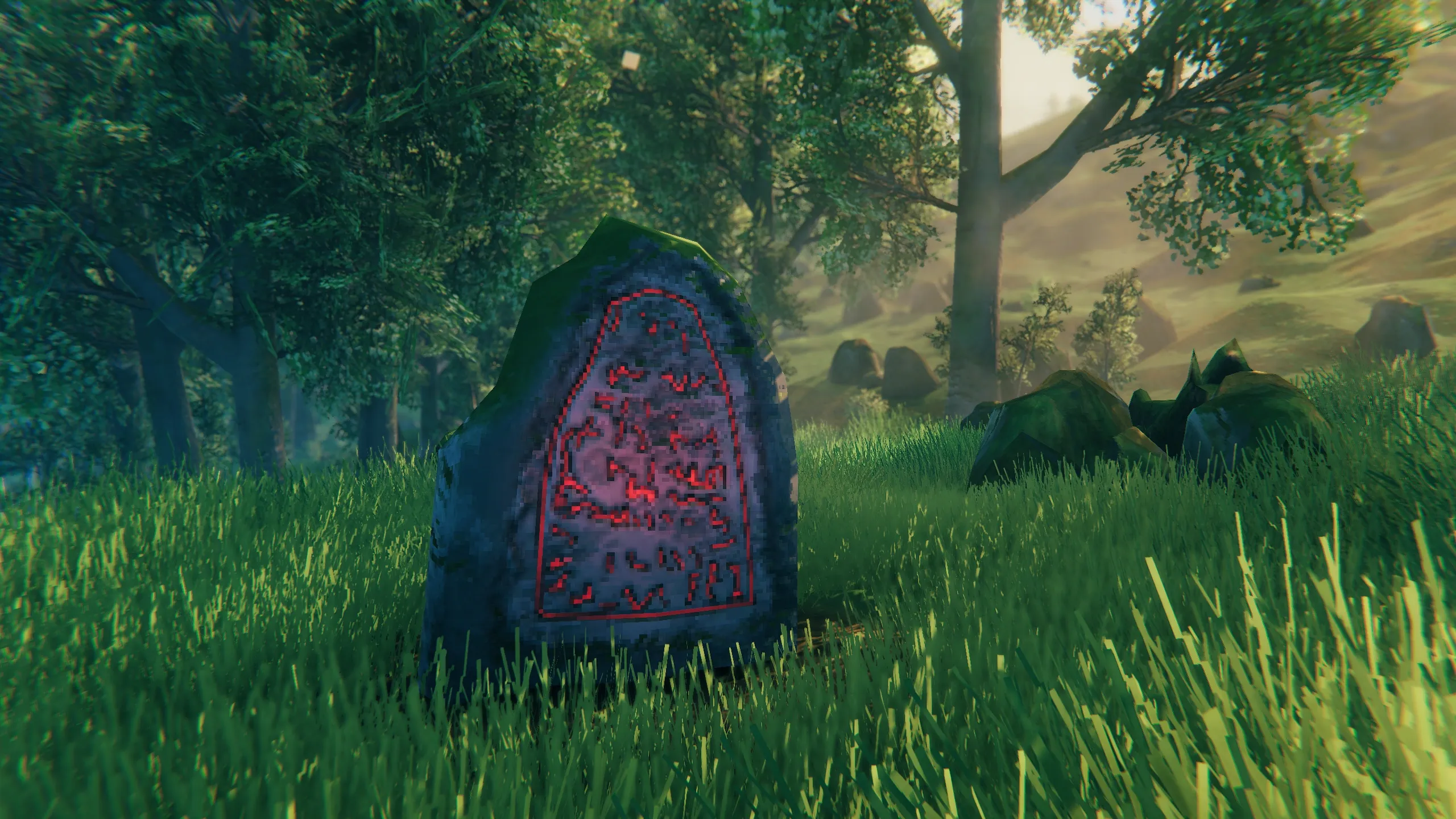
Runestones carry the same mix of lore and instruction as Hugin, and simply wait for you to walk up to them.
The Black Forest warning — "Turn back! This is a dangerous place" — cannot fire until you are already standing in the Black Forest, because standing in it is the trigger. The line explaining that death costs you a slice of every skill and leaves your belongings on the ground arrives after your first corpse, not before it. The encumbrance hint waits until you are over the limit and cannot run. In each case the raven is confirming a thing that has just happened to you, which is exactly the shape of information a player learns to dismiss unread.
He is also unkillable in the ordinary sense. Swing at him and he teleports a short distance away, and you bank experience in whichever weapon skill you used — which is the closest the game comes to admitting the reaction is expected.
Compare that with the runestones scattered through the world. They carry the same mixture of lore and instruction, and they sit still and wait for you to walk up to them. Nothing about a runestone interrupts anything. Hugin is the one part of Valheim's otherwise wordless teaching that pushes rather than waits, and pushing is what costs him the reader's attention.
Most of the Early Hints Only Confirm What You Just Did
Eighteen of the thirty-nine narrate the interface back at you. Two of them smuggle something in; the rest you can dismiss unread and lose nothing.
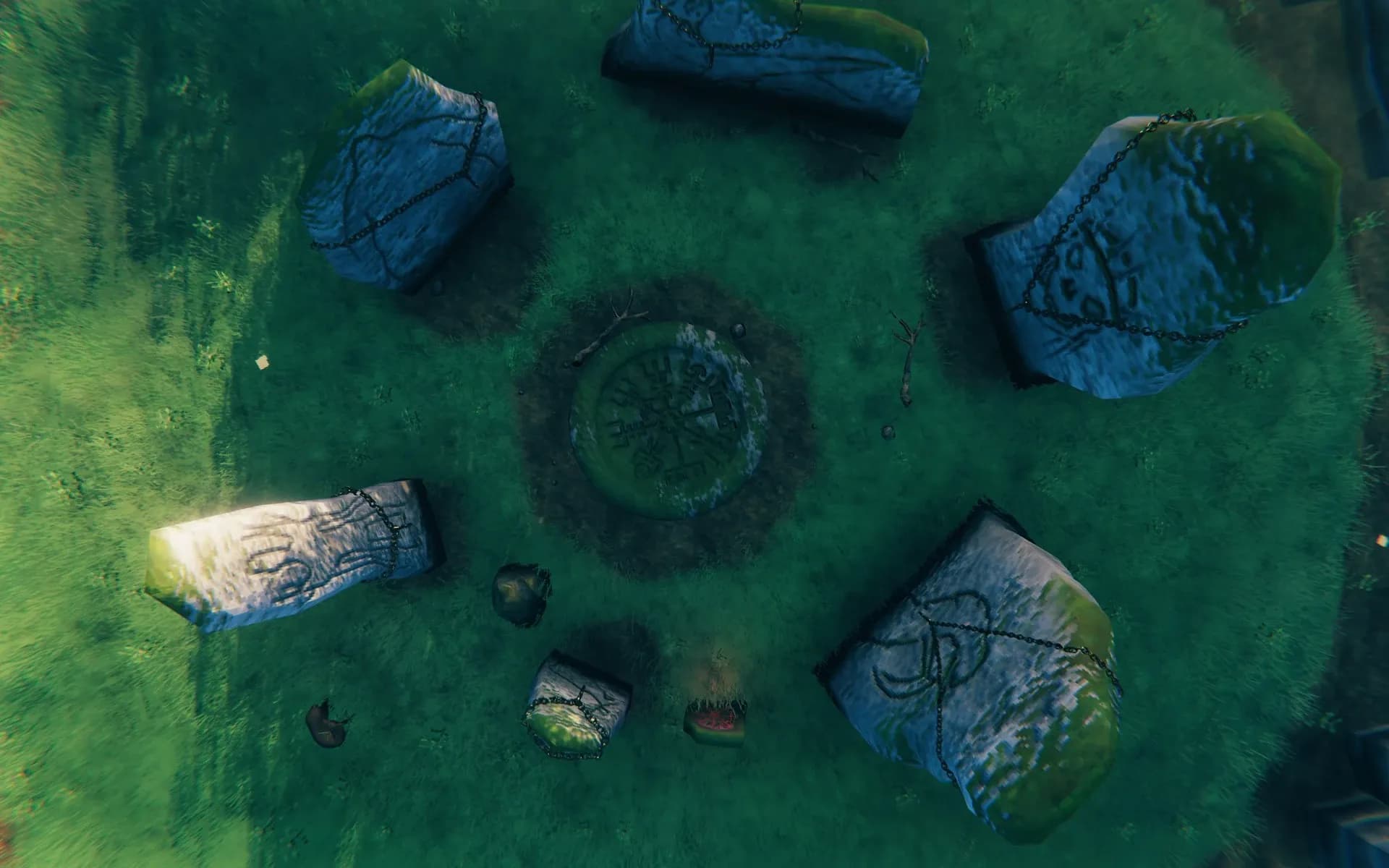
The seven Sacrificial Stones and the vegvisir at their centre — the subject of Hugin's first two hints.
- Welcome — the megaliths around you are the Sacrificial Stones, they represent the Forsaken, and the Forsaken must die for you to ascend. True, and carved into the seven stones you are standing between.
- Hunger, Food, Cold, Encumbrance — a full belly raises health and stamina, a snack is a snack, being wet or cold at night kills your stamina regeneration, and overloading stops you regenerating at all. All four are already status icons with tooltips.
- Hammer, Hoe, Workbench, Pickaxe — build a workbench first, level ground before you build on it, a workbench unlocks complex recipes, copper is in the ground and tin is on the shore. Each fires the moment you craft the tool in question.
- Death — you drop your belongings where you fell and forget part of your abilities, so build a bed.
- Invasions — raids happen, and walls beat weapons.
- Black Forest — you are somewhere dangerous; go kill Eikthyr first.
- Dungeons — delves are full of old riches, and bring a torch.
- Eikthyr defeated, Forsaken altars, Hildir's quest location — you won, altars need an offering, and this particular place is harder than it looks.
- Settling in — sleep in the bed, add chests, and keep a spare set of gear stored somewhere. That last clause is the first smuggled one: it is the only backup advice the game ever gives you, and it arrives before you have anything worth backing up.
The second smuggled hint is Inventory. It says most items must be crafted, and that since you have only just left Midgard you will "have to recall the true shape of objects. Just pick things up and it will all come back to you." That is the rule governing Valheim's entire recipe system — picking a material up unlocks what it builds — dressed as a joke about amnesia. It stays off the list below only because the crafting menu visibly changes the instant you obey it, so the game teaches it a second time whether you read him or not.
Ten Lines Sit on Mechanics the Interface Never Shows You
Roughly in the order the game hands them over. Several are worth more for the sentence they stop short of than for the one they say.
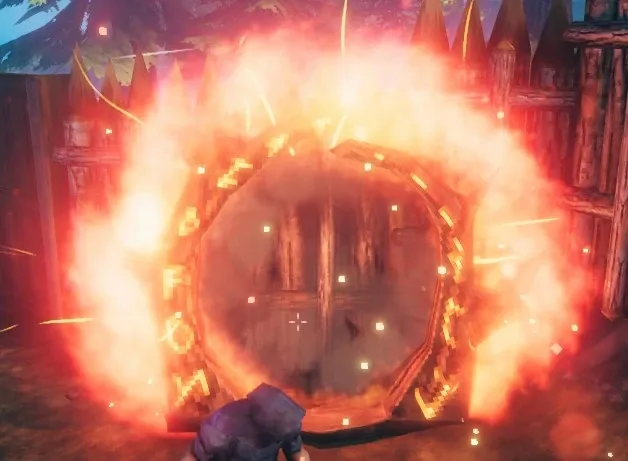
Portals only pair when both ends carry the same case-sensitive tag, which Hugin never mentions.
1. Vegvisirs. The carved stone at spawn marks the nearest Forsaken altar on your map. What it stops short of is the whole behaviour: a vegvisir reveals only the closest boss altar to itself, it reveals nothing at all if that altar is already marked, and you can summon any boss without ever having read one. A second vegvisir near the first is a wasted walk.
2. Ore. Raw ore has to pass through a smelter before the forge will touch it, and smelters need surtling cores — "search for them in the dark places beneath the earth." Those are Burial Chambers in the Black Forest, plus whatever Surtlings drop. It is the single most load-bearing sentence Hugin says, because cores also gate the charcoal kiln, the portal and the ward. Your first Burial Chamber is not a loot run, it is a core run.
3. Smelter. Coal fuels it, and coal comes from a charcoal kiln loaded with wood. Both the smelter and the kiln cost twenty stone and five surtling cores, and a portal is two more, so a single Burial Chamber rarely covers the set. The kiln is not strictly a gate — Surtlings drop coal, chests contain it, and overcooking meat on a cooking station produces it — but every other source is a trickle, and a smelter burns roughly one lump every fifteen seconds.
4. Portals. Build both ends, give the pair the same name. The half he omits is where people actually get stuck: tags are case-sensitive and capped at ten characters, and an untagged portal counts as having a blank tag, so two "empty" portals in different biomes will happily link to each other and strand you.
5. Forsaken trophy. Take the boss trophy back to the Sacrificial Stones and hang it. Nothing else in Valheim tells you that Forsaken powers exist, and a player who never reads this line simply never has one.
6. Wishbone. Bonemass leaves you a bone that finds things buried in the ground. Hugin names silver veins and hints at buried treasure, and undersells it badly — the same accessory pings muddy scrap piles in the Swamp, which is where your iron comes from. He advertises the luxury and skips the staple.
7. Shield. A perfectly timed block is a parry; block too much and you stagger; "the amount of damage you can block before becoming staggered depends on your maximum health." That clause is the only place the game connects what you eat to how many hits you can take without your guard breaking. The stagger bar sits at forty percent of maximum health, and only Slash, Pierce, Blunt and Lightning fill it — fire, frost, poison and spirit damage will hurt you but will never break a block.
8. Ward. It stops other players building near you and locks your doors. It also locks your chests, and its reach is thirty-two metres, neither of which he mentions — which matters the first time a friend cannot open the storage room you thought you had left open.
9. Cartography table. Exploration in Valheim is per-character, and this is the only object that moves it between people. Record your own progress with the toolbox, then copy everyone else's off the table. Nothing on the map screen suggests that sharing is possible at all.
10. Boiling waters. South of the Plains the sea starts eating hulls, and Hugin tells you to "build something sturdier" before you try it. The Drakkar is the only boat that crosses the ring of boiling water around the Ashlands undamaged, and it costs a hundred iron nails, thirty ceramic plates, fifty finewood and twenty-five Yggdrasil wood. Turning up in a longship is a lost boat and a lost cargo.
In the Mistlands and Ashlands, Hugin Stops Teaching
Twelve hints fire across the last two biomes. Eleven of them do not instruct at all — the twelfth is the boiling waters warning above, and it is the only time in the entire script the raven arrives before the mistake instead of after it.
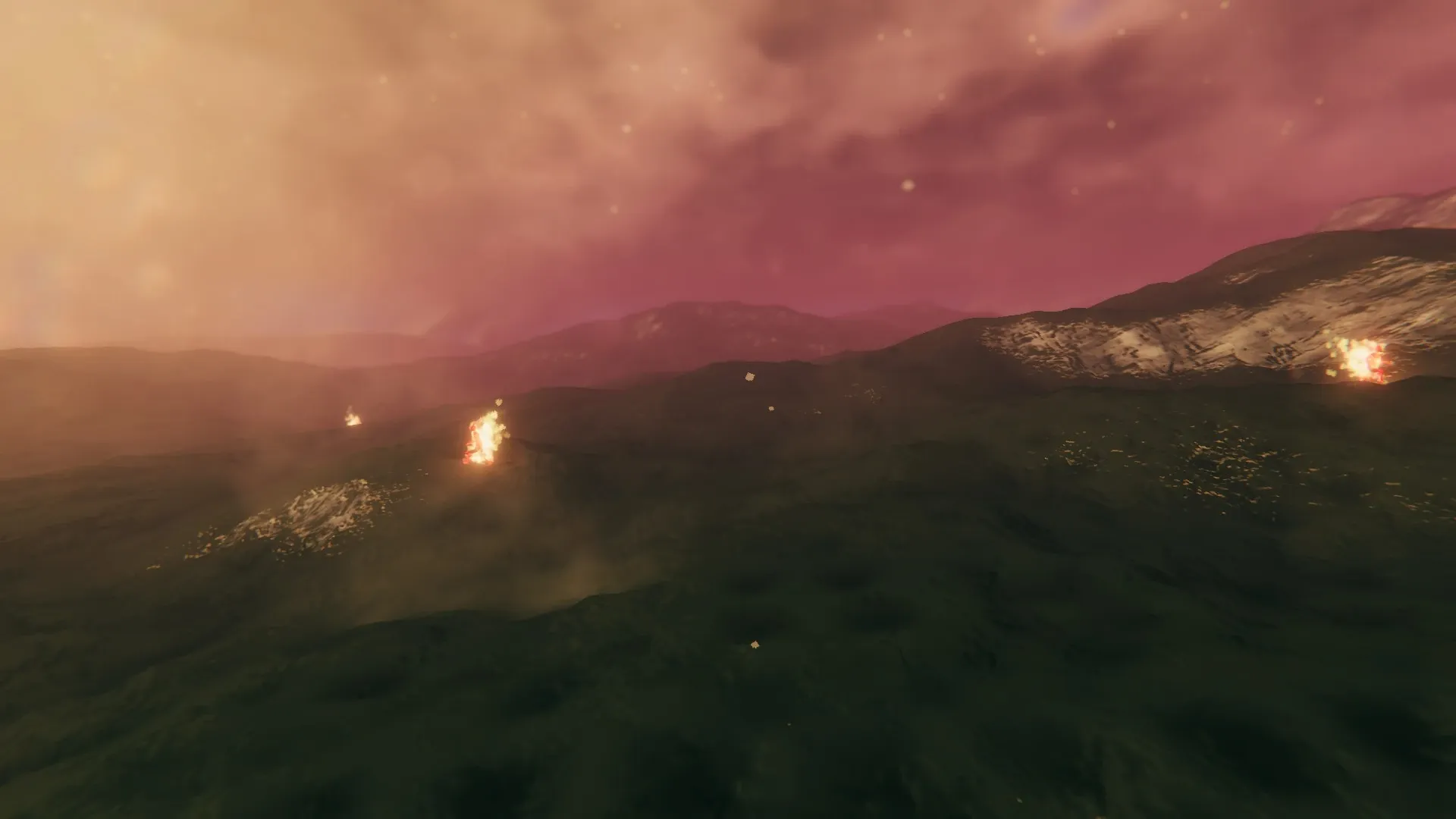
By the Ashlands, Hugin's messages are mood rather than instruction.
- Eitr — the mists are in you now, so go find more eitr-rich ingredients.
- Yggdrasil roots — no weapon of your design will break the bark. He declines to say what will.
- Giant remains — "Kraa! Pick their bones and break their domes!"
- Dvergr homes — impressive halls; try not to get lost in the passages.
- Dvergr — they tolerate strangers and anger quickly, and you will manage it sooner or later.
- Galdr table — he congratulates you as a sorcerer and tells you spellcasting will need feeding.
- Eitr refinery — "Warrior, what kind of contraption is this?! It looks dangerous..." A guide openly admitting he does not know what the machine does.
- Wisp fountain — he perches to watch, gets bored, tells you it is not his job to babysit you long into the night, and leaves.
- Ashlands — "Keep a cool head!" Water boils without a cauldron here.
- Shield generator — this should keep off whatever the sky throws at you.
- Battering ram — enemy fortresses are built from sturdy stuff.
Teaching does not resume after this. What replaces it is a second bird.
Munin Carries the Lore Hugin Never Gets To
The strangest thing about Valheim's second raven is how much of him is switched off. Nine of Munin's twenty lines never fire in normal play — including the one where he explains that he and Hugin have already agreed to split your eyes between them when you die, and the one that states outright that Odin himself is watching you. Iron Gate built a full personality, wired eleven triggers to it, and left the rest in the files.
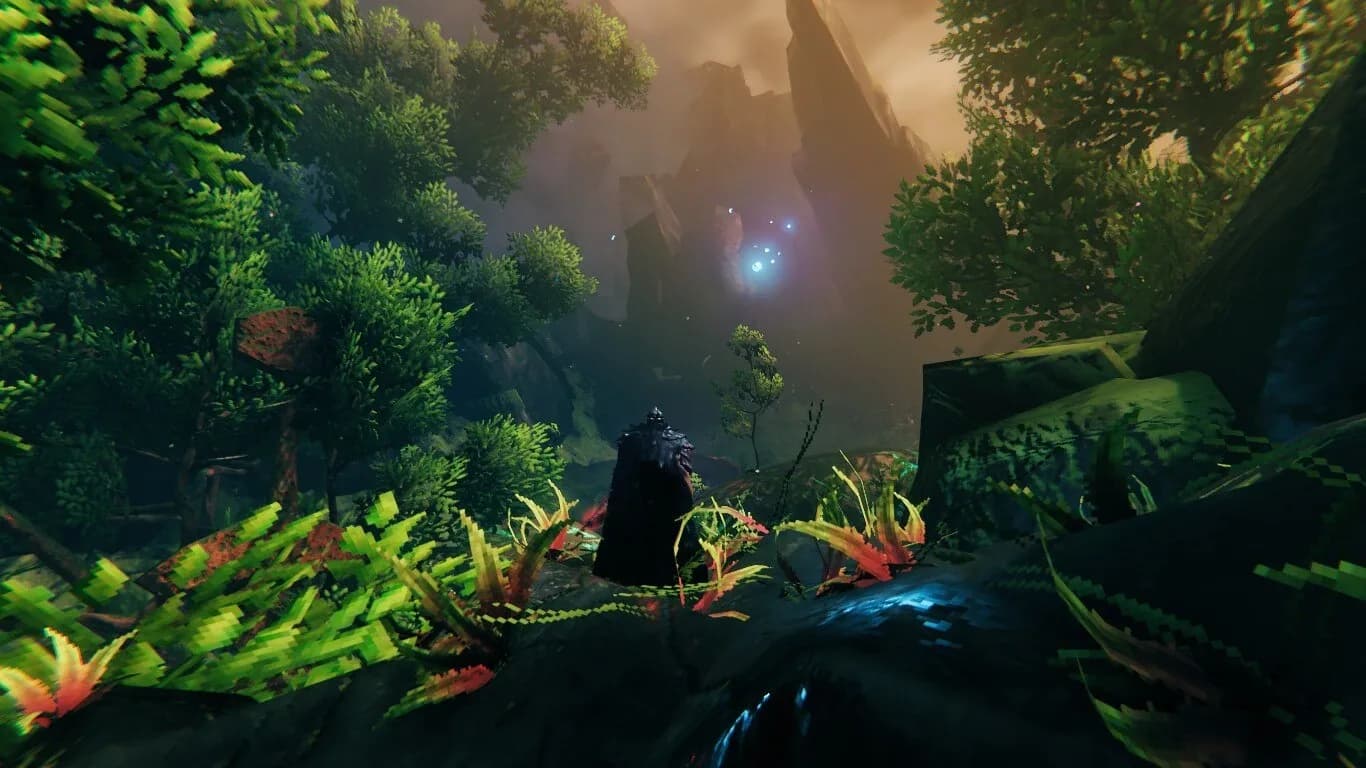
Munin arrives in the Mistlands, five biomes after Hugin first name-drops him.
What did survive is a deliberate change of register. Hugin explains systems; Munin talks about memory, and he is markedly better company for it. Where Hugin sees Dvergr who anger easily, Munin sees clans severed from Nidavellir, still working and still expecting a reprieve that will never come. His Ashlands greeting is the closest the game has to a second-act title card: the King stirs on his bed of embers, and "until today you have only quarreled."
Hugin name-drops him in the very first hint you ever receive — "My lesser brother, Munin, tells me one can fashion a stone axe out of wood and stone" — and then makes you cross five biomes before the introduction pays off. It is the longest setup in the game, and it lands.
Read These Ten, Then Turn Him Off
The switch is in Settings under Misc, labelled Enable Raven Hints, and tutorialtoggle does the same from the console with developer commands on. The timing is the only real decision.
Switching him off in the Meadows is a mistake, because the two most valuable lines in the script arrive later: the ore chain in the Black Forest, and the stagger rule whenever you first craft a shield. The clean cut-off is your first Ashlands crossing, by which point every entry on the list above has fired at least once and both ravens have said everything the game lets them say.
If you turn them off early anyway, or you are on a fresh character and cannot face the intro again, two numbers are worth writing down: your stagger bar is forty percent of your maximum health, and five surtling cores stand between you and your first refined metal — with five more between that and smelting at any useful pace.